

- Industry Size (2026)
- USD 270 Mn
- Forecast (2036)
- USD 383.8 Mn
- CAGR (2026 to 2036)
- 3.6%
Demand for Neuromuscular Transmission Monitor in United Kingdom Forecast and Outlook 2026 to 2036
The demand for neuromuscular transmission monitors in the United Kingdom is projected to increase from USD 270.0 million in 2026 to USD 383.8 million by 2036, reflecting a compound annual growth rate (CAGR) of 3.6%. The demand for neuromuscular transmission monitors in the United Kingdom is expected to grow steadily, driven by the increasing need for monitoring muscle function during surgeries and critical care procedures. Neuromuscular transmission monitors are essential for measuring the effects of neuromuscular blocking agents, ensuring that patients maintain appropriate levels of muscle relaxation and avoiding complications related to anesthesia. The growing focus on patient safety, advancements in anesthetic techniques, and the rise in surgical procedures are expected to contribute to market growth.
The increased adoption of these monitors in both routine and complex surgeries, particularly in orthopedic, cardiovascular, and neurological procedures, is expected to support the growth of this market. Additionally, the ongoing focus on improving the precision of anesthesia management in hospitals and surgical centers will further drive demand for neuromuscular transmission monitors.
Quick Stats for the Demand for Neuromuscular Transmission Monitor in United Kingdom
- Neuromuscular Transmission Monitor in United Kingdom Value (2026): USD 270 million
- Neuromuscular Transmission Monitor in United Kingdom Forecast Value (2036): USD 383.8 million
- Neuromuscular Transmission Monitor in United Kingdom Forecast CAGR (2026 to 2036): 3.6%
- Neuromuscular Transmission Monitor in United Kingdom Leading Segment: Nerve Stimulating Devices or Monitors (60% share)
- Key Growth Regions of Neuromuscular Transmission Monitor in United Kingdom: England
- Top Players of Neuromuscular Transmission Monitor in United Kingdom: GE HealthCare (Applied Precision), Nihon Kohden Corporation, Medtronics plc, Drägerwerk AG & Co. KGaA, Koninklijke Philips N.V.
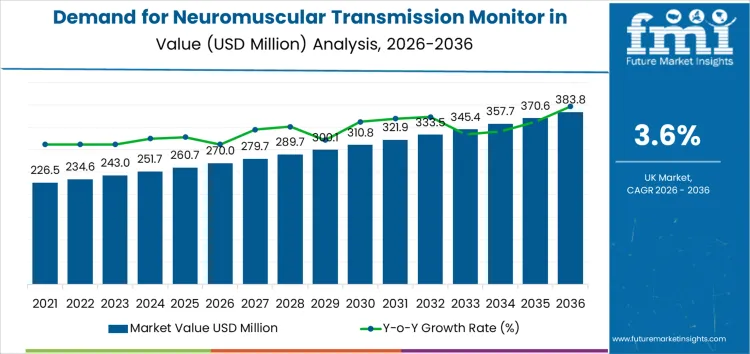
What is the Growth Forecast for Neuromuscular Transmission Monitor in United Kingdom through 2036?
The year-on-year growth analysis for neuromuscular transmission monitors indicates steady and predictable increases over the forecast period. Between 2026 and 2031, the market will experience consistent growth, with values increasing year by year, driven by factors such as the growing number of surgeries requiring muscle monitoring and advancements in anesthetic techniques. The YoY growth rates will remain moderate, with incremental gains reflecting ongoing adoption in clinical settings.
In the latter part of the forecast period (2031-2036), the YoY growth will likely continue at a slightly slower rate as the market reaches maturity, but demand will still rise steadily as hospitals and surgical centers continue to integrate these devices into their anesthesia management protocols. The overall trend indicates consistent, moderate growth driven by increasing awareness of the importance of neuromuscular monitoring in surgical and critical care settings.
Key Takeaways for Demand for Neuromuscular Transmission Monitor in United Kingdom
| Metric | Value |
|---|---|
| Industry Sales Value (2026) | USD 270 million |
| Industry Forecast Value (2036) | USD 383.8 million |
| Industry Forecast CAGR (2026 to 2036) | 3.6% |
Why is Demand for Neuromuscular Transmission Monitor in United Kingdom Growing?
Demand for neuromuscular transmission monitors in the United Kingdom has strengthened as anaesthesia departments, surgical centres, and critical care units prioritise precision and patient safety in the administration of neuromuscular blocking agents. Historically, clinicians relied on clinical judgement and basic peripheral nerve stimulators to assess neuromuscular recovery, which introduced variability in interpretation and heightened risk of residual blockade after surgery. Over recent years, UK hospitals and surgical facilities have integrated quantitative neuromuscular transmission monitors that provide objective measurements of muscle response to stimulation. These devices support more accurate titration of neuromuscular blockers, reduce the incidence of postoperative respiratory complications, and align with professional guidelines that emphasise monitoring to enhance perioperative outcomes. Clinical procurement teams recognised that investment in advanced monitoring equipment contributes to improved anaesthesia quality metrics and can reduce unplanned intensive care admissions linked to residual paralysis.
Forward looking demand in the United Kingdom is expected to continue climbing as healthcare systems refine perioperative pathways and reinforce standardisation of clinical practice. Decision makers in NHS trusts and private hospital groups will prioritise monitors that offer reliable, reproducible data, seamless integration with anaesthesia workstations, and ease of use across diverse surgical specialties. Suppliers that provide robust training and support programmes will appeal to clinical engineering departments responsible for device deployment and maintenance.
As surgical volumes grow and complex procedures requiring neuromuscular blockade increase, operational stakeholders will weigh features such as multi site monitoring capability, compatibility with electronic health records, and serviceability in high use environments. Manufacturers and distributors that engage with clinicians on performance outcomes and offer flexible financing or leasing arrangements may find greater traction among buyers focused on balancing capital budgets with quality imperatives. Continued emphasis on evidence based practice and reduction of perioperative risk positions neuromuscular transmission monitors as strategic investments within the UK acute care landscape.
What Are the Key Segments in the Demand for Neuromuscular Transmission Monitors in the United Kingdom?
Demand for neuromuscular transmission monitors in the United Kingdom is driven by product type and end-user sector. Nerve stimulating devices or monitors lead the product segment with 60%, while hospitals dominate the end-user segment with 60%. Other products, including electrodes and accessories, as well as end-users such as specialty clinics and ambulatory surgical centers, contribute to the overall market. These trends reflect the growing importance of neuromuscular monitoring in anesthesia, surgery, and critical care, as well as the increasing need for precise muscle function tracking in medical settings.
What Is the Product Segment of Demand for Neuromuscular Transmission Monitors in the United Kingdom?
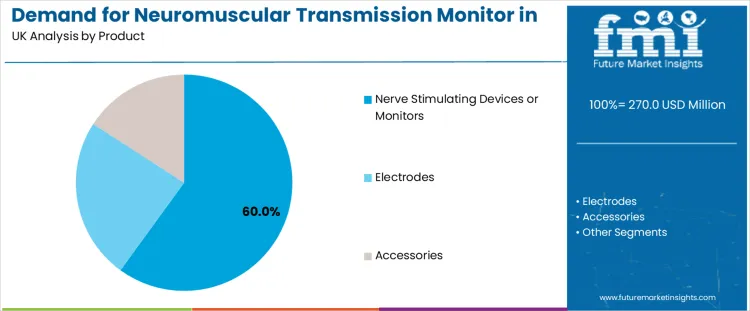
The product segment for neuromuscular transmission monitors in the United Kingdom is primarily led by nerve stimulating devices or monitors, which account for 60% of the market share. Nerve stimulating devices are crucial in assessing the function of the neuromuscular junction during surgery, particularly in anesthesia management. These monitors provide real-time feedback on the level of muscle paralysis, helping anesthesiologists ensure proper dosage of neuromuscular blocking agents and preventing complications such as prolonged paralysis. The demand for nerve stimulating devices is driven by their ability to enhance patient safety and improve surgical outcomes by allowing for more accurate control of muscle relaxation during procedures. Electrodes follow as another important product in the neuromuscular transmission monitor market, though they represent a smaller portion of the market.
Electrodes are used in conjunction with nerve stimulating devices to deliver electrical impulses to specific muscles and record the resulting muscle responses. They are essential for the proper functioning of the monitoring equipment and are widely used in clinical settings to ensure accurate readings. Accessories, while a smaller segment, are crucial for maintaining and enhancing the performance of neuromuscular transmission monitors. These may include cables, connectors, and specialized tools for calibration and cleaning. As the demand for precise and effective anesthesia monitoring continues to grow, the market for nerve stimulating devices, electrodes, and accessories is expected to expand, with nerve stimulating devices remaining the dominant product.
What Is the End-User Segment of Demand for Neuromuscular Transmission Monitors in the United Kingdom?
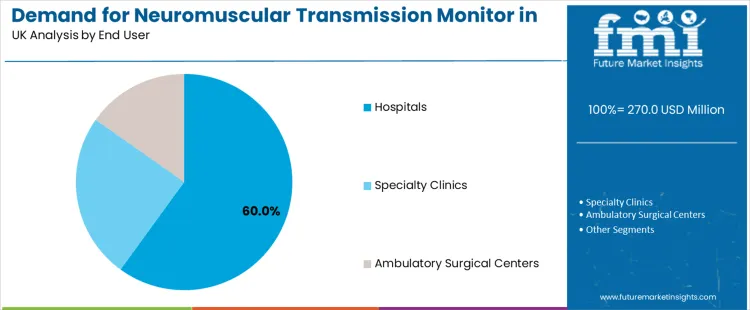
The end-user segment for neuromuscular transmission monitors in the United Kingdom is primarily driven by hospitals, which account for 60% of the market share. Hospitals are the largest consumers of neuromuscular transmission monitors, as these devices are integral to anesthesia management during surgery. Hospitals, particularly those with high surgical volumes or specialized departments, require these monitors to assess and manage the depth of muscle relaxation and ensure that patients are safely anesthetized during procedures. The increasing focus on patient safety and the demand for more precise, real-time monitoring in hospital settings continue to drive the adoption of neuromuscular transmission monitors.
Specialty clinics follow as another significant end-user, where these devices are used in less invasive procedures or for specific patient populations requiring neuromuscular monitoring. Specialty clinics may utilize neuromuscular transmission monitors for orthopedic, pain management, or certain diagnostic procedures that require muscle relaxation and monitoring. Ambulatory surgical centers (ASCs), while representing a smaller segment, are becoming increasingly important as end-users of neuromuscular transmission monitors. ASCs, which perform a wide variety of outpatient surgeries, require efficient, reliable monitoring solutions to ensure patient safety during anesthesia and minimize recovery time. The trend toward outpatient procedures and the growing emphasis on high-quality care in ASCs are expected to further drive demand for neuromuscular transmission monitors in these settings. As the need for accurate muscle function tracking in anesthesia and surgery continues to grow, the demand for these devices across hospitals, specialty clinics, and ambulatory surgical centers will remain robust.
What are the Key Dynamics in the Demand for Neuromuscular Transmission Monitors in the United Kingdom?
Demand for neuromuscular transmission monitors in the United Kingdom is expanding in tandem with clinical imperatives to improve perioperative patient safety and optimise anaesthesia management. These devices measure the depth of neuromuscular blockade during surgical procedures, helping clinicians titrate muscle relaxants with greater precision. Procurement activity is driven by hospital surgical volume, guidelines on monitoring standards, pressure to minimise postoperative respiratory complications, and the adoption of enhanced recovery after surgery (ERAS) protocols. Both NHS and private surgical centres integrate neuromuscular monitors into standard anaesthesia carts and operating theatre equipment lists.
What are the Key Drivers for Neuromuscular Transmission Monitor Demand in the United Kingdom?
Several factors are driving demand for neuromuscular transmission monitors in the United Kingdom. Focus on patient safety and quality measures encourages their use to reduce residual neuromuscular blockade, which is linked to postoperative complications and extended recovery times. Professional guidelines from bodies such as the Royal College of Anaesthetists recommend objective monitoring where muscle relaxants are used, reinforcing device adoption. Surgeons and anaesthetists value real time feedback that supports tailored dosing, improves operating theatre throughput, and reduces drug waste. Procurement decisions are also influenced by equipment interoperability with existing anaesthesia workstations and hospital IT systems that support documentation and audit trails.
What are the Restraints on Neuromuscular Transmission Monitor Demand in the United Kingdom?
Despite clinical benefits, several restraints affect demand for neuromuscular transmission monitors in the United Kingdom. Budgetary constraints in NHS trusts and private facilities can slow acquisition of additional monitoring devices when capital budgets prioritise other critical equipment. Variability in clinician familiarity and training on objective monitoring technologies can limit utilisation and influence return on investment considerations. Some operating theatres continue to rely on subjective clinical assessment methods, which may delay full transition to instrument based monitoring. Procurement planning is also affected by long equipment evaluation and approval cycles that assess value for money, interoperability, and maintenance commitments.
What are the Key Trends in Neuromuscular Transmission Monitor Demand in the United Kingdom?
Key trends influencing demand for neuromuscular transmission monitors in the United Kingdom include integration with digital anaesthesia management systems that support automatic data capture, documentation, and trend analysis. There is rising uptake of quantitative monitors that provide numeric outputs rather than qualitative signals, improving consistency in clinical decision making. Suppliers are offering modular solutions that interface with existing workstations and lightweight portable units suited for ambulatory surgery centres. Training and clinical support programmes bundled with device procurement are becoming differentiators, helping facilities overcome barriers to adoption. Additionally, quality benchmarking and audit initiatives by trusts are positioning neuromuscular monitoring as a standard of care indicator, reinforcing long term demand.
What is the Country-Wise Demand for Neuromuscular Transmission Monitors in the United Kingdom?
The demand for neuromuscular transmission monitors in the United Kingdom shows regional differences, with England leading the market. These monitors are essential for assessing neuromuscular function, particularly in anesthesiology and critical care settings, where they are used to monitor the effects of muscle relaxants during surgeries. In England, the higher concentration of healthcare facilities, particularly hospitals with specialized surgical units, drives the demand. Scotland, Wales, and Northern Ireland follow with growing demand, supported by the increasing use of neuromuscular monitoring in various medical fields, including intensive care, emergency medicine, and surgery. As the healthcare sector continues to adopt advanced technologies to improve patient safety and surgical outcomes, the demand for neuromuscular transmission monitors is expected to grow across the UK, with England maintaining the largest market share.
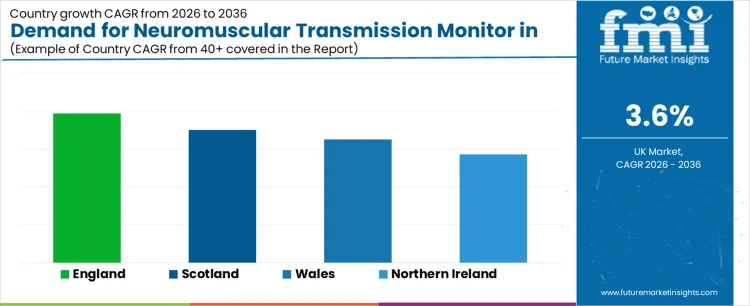
| Country | CAGR (2026 to 2036) |
|---|---|
| England | 3.9% |
| Scotland | 3.5% |
| Wales | 3.3% |
| Northern Ireland | 2.9% |
What is Driving the Demand for Neuromuscular Transmission Monitors in England?
The demand for neuromuscular transmission monitors in England is projected to grow at a CAGR of 3.9% from 2026 to 2036. The primary drivers of this demand include the increasing number of surgeries, advancements in anesthesiology, and the growing emphasis on patient safety during critical care and surgery. Neuromuscular transmission monitoring is vital in preventing residual paralysis from muscle relaxants and ensuring the appropriate recovery of muscle function after surgery. The ongoing expansion of the surgical sector, combined with advancements in medical technologies and the integration of neuromuscular monitoring in routine anesthesia practices, is contributing to the growth of the market. Additionally, as healthcare providers focus on reducing surgical complications and enhancing patient outcomes, the demand for neuromuscular transmission monitors is expected to remain strong in England’s hospitals, surgical centers, and intensive care units.
How is the Demand for Neuromuscular Transmission Monitors Performing in Scotland?
In Scotland, the demand for neuromuscular transmission monitors is expected to grow at a CAGR of 3.5% from 2026 to 2036. The healthcare sector in Scotland, particularly in its surgical and critical care units, is increasingly adopting neuromuscular monitoring technologies to ensure better management of anesthesia and improve patient outcomes. The rising number of surgeries and a growing focus on patient safety, especially in high-risk procedures, is driving the demand for these devices. Scotland’s healthcare system is also investing in advanced technologies to enhance surgical and anesthesiology practices, making neuromuscular transmission monitors an integral part of the process. As more healthcare institutions in Scotland embrace these technologies for routine use, the demand for neuromuscular monitors will continue to grow, particularly in hospitals with specialized surgical departments and intensive care units.
What Are the Growth Drivers for Neuromuscular Transmission Monitors in Wales?
The demand for neuromuscular transmission monitors in Wales is projected to grow at a CAGR of 3.3% through 2036. The growing focus on improving patient safety during surgeries and anesthesia practices is the primary factor driving the adoption of these monitors in Wales. Neuromuscular monitoring is increasingly being incorporated into standard anesthesia protocols to monitor the effects of muscle relaxants and ensure proper recovery of muscle function after surgery. As the healthcare system in Wales continues to modernize and emphasize the reduction of surgical complications, demand for neuromuscular transmission monitors will increase. Additionally, the increasing number of surgeries performed in hospitals and specialized surgical centers in Wales, coupled with the growing adoption of best practices in anesthesia care, will further contribute to the demand for neuromuscular transmission monitors.
What is the Outlook for Neuromuscular Transmission Monitors in Northern Ireland?
Northern Ireland’s demand for neuromuscular transmission monitors is expected to grow at a CAGR of 2.9% from 2026 to 2036. Although Northern Ireland represents the smallest market for these devices in the UK, steady growth is anticipated, driven by the increasing focus on improving surgical outcomes and patient safety. The adoption of neuromuscular transmission monitors in Northern Ireland’s hospitals, particularly in anesthesiology and intensive care units, is expected to rise as healthcare providers emphasize the importance of accurate monitoring during surgeries and in critical care settings. With the growing number of elective and emergency surgeries and the rising awareness about the risks associated with inadequate muscle relaxation monitoring, the demand for neuromuscular monitors in Northern Ireland is poised to expand gradually. Northern Ireland’s healthcare infrastructure continues to develop, and with advancements in medical technology, the region’s demand for these monitoring devices is expected to grow steadily.
What is the Competitive Landscape for Demand for Neuromuscular Transmission Monitors in the United Kingdom?
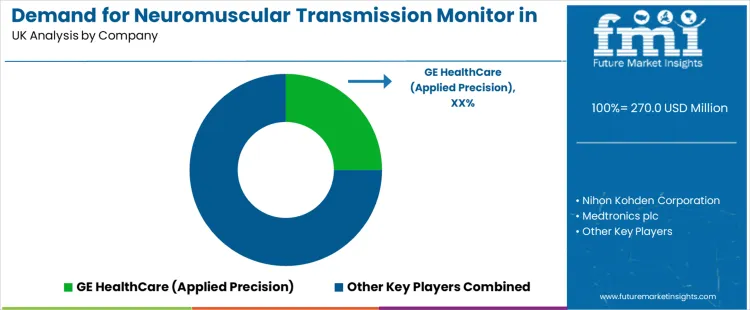
Demand for neuromuscular transmission monitors in the United Kingdom is driven by surgical volume, anaesthesia practice standards, and the need to reduce postoperative complications associated with residual neuromuscular blockade. NHS procurement teams, anaesthesia leads, and biomedical engineering departments evaluate devices on documented measurement accuracy, documented integration with anaesthesia workstations, and documented ease of use at the point of care. GE HealthCare (Applied Precision) is positioned as a leading supplier with product documentation that outlines documented algorithm performance, documented signal fidelity across muscle groups, and documented interoperability notes.
Clinical engineers and procurement professionals reference these materials to align device specifications with theatre workflow requirements and quality assurance frameworks. Technical brochures from GE HealthCare also include documented training modules and documented service support structures that inform selection during competitive evaluations.
Nihon Kohden Corporation competes with neuromuscular monitors supported by detailed specification sheets that present documented calibration procedures, documented sensor sensitivity data, and documented compliance with UK medical device regulations. Buyers in the United Kingdom consult these materials to ensure selected systems support clinical decision making and minimise the risk of residual blockade. Medtronics plc supplies documented products accompanied by performance summaries that record documented accuracy under varied physiological conditions and documented compatibility with standard monitoring ports. Drägerwerk AG & Co. KGaA offers devices with documented integration pathways into anaesthesia management platforms and documented maintenance schedules that assist hospital biomedical teams in planning service cycles.
Koninklijke Philips N.V. provides documented neuromuscular monitoring systems with literature covering documented waveform interpretation support and documented alarm thresholds. Procurement decisions include assessment of documented lead times, documented spare part availability, and documented post market support agreements. Clinical reviewers and departmental buyers examine documented performance metrics and documented user interface ergonomics to ensure that chosen monitors align with service delivery objectives, safety protocols, and clinician preferences. Competitive behaviour in this segment is grounded in measurable technical specifications and documented support commitments that guide formal procurement and clinical adoption processes.
Key Players of the Demand for Neuromuscular Transmission Monitors in the United Kingdom
- GE HealthCare (Applied Precision)
- Nihon Kohden Corporation
- Medtronics plc
- Drägerwerk AG & Co. KGaA
- Koninklijke Philips N.V.
Scope of the Report
| Items | Values |
|---|---|
| Quantitative Units (2026) | USD Million |
| Product | Nerve Stimulating Devices or Monitors, Electrodes, Accessories |
| Technology | Accelerography (ACG), Electromyography (EMG), Mechanomyography (MMG), Kinemyography (KMG) |
| End User | Hospitals, Specialty Clinics, Ambulatory Surgical Centers |
| Companies | GE HealthCare (Applied Precision), Nihon Kohden Corporation, Medtronics plc, Drägerwerk AG & Co. KGaA, Koninklijke Philips N.V. |
| Regions Covered | United Kingdom |
| Countries Covered | England, Scotland, Wales, Northern Ireland |
| Additional Attributes | Dollar by sales by product, technology, end user, and region. Includes market trends towards precision medicine, non-invasive monitoring, and the role of neuromuscular transmission monitors in clinical and surgical settings. |
Key Segments of Demand for Neuromuscular Transmission Monitor in United Kingdom
Product
- Nerve Stimulating Devices or Monitors
- Electrodes
- Accessories
Technology
- Accelerography (ACG)
- Electromyography (EMG)
- Mechanomyography (MMG)
- Kinemyography (KMG)
End User
- Hospitals
- Specialty Clinics
- Ambulatory Surgical Centers
Countries
- England
- Scotland
- Wales
- Northern Ireland
Bibliography
- Association of Anaesthetists of Great Britain and Ireland. (2024). Recommendations for standards of monitoring during anaesthesia and recovery. Association of Anaesthetists.
- National Institute for Health and Care Excellence. (2024). Perioperative care in adults (NG180). National Institute for Health and Care Excellence.
- Medicines and Healthcare products Regulatory Agency. (2024). Medical devices regulation and post‑market surveillance in the United Kingdom. MHRA.
Frequently Asked Questions
How big is the demand for neuromuscular transmission monitor in United Kingdom in 2026?
The demand for neuromuscular transmission monitor in the United Kingdom is estimated to be valued at USD 270.0 million in 2026.
What will be the size of neuromuscular transmission monitor in United Kingdom in 2036?
The market size for the neuromuscular transmission monitor in the United Kingdom is projected to reach USD 383.8 million by 2036.
How much will be the demand for neuromuscular transmission monitor in United Kingdom growth between 2026 and 2036?
The demand for neuromuscular transmission monitor in the United Kingdom is expected to grow at a 3.6% CAGR between 2026 and 2036.
What are the key product types in the neuromuscular transmission monitor in united kingdom?
The key product types in neuromuscular transmission monitor in the United Kingdom are nerve stimulating devices or monitors, electrodes and accessories.
Which end user segment is expected to contribute significant share in the neuromuscular transmission monitor in united kingdom in 2026?
In terms of end user, the hosiptals segment is expected to command 60.0% share in the neuromuscular transmission monitor in the United Kingdom in 2026.
Preview the report firsthand - request a free sample
Get SampleGet the brochure for pricing and purchase details.
Get PDFTable of Content
- Executive Summary
- UK Market Outlook
- Demand-side Trends
- Supply-side Trends
- Technology Roadmap Analysis
- Analysis and Recommendations
- Market Overview
- Market Coverage / Taxonomy
- Market Definition / Scope / Limitations
- Market Background
- Market Dynamics
- Drivers
- Restraints
- Opportunity
- Trends
- Scenario Forecast
- Demand in Optimistic Scenario
- Demand in Likely Scenario
- Demand in Conservative Scenario
- Opportunity Map Analysis
- Product Life Cycle Analysis
- Supply Chain Analysis
- Investment Feasibility Matrix
- Value Chain Analysis
- PESTLE and Porter’s Analysis
- Regulatory Landscape
- Regional Parent Market Outlook
- Production and Consumption Statistics
- Import and Export Statistics
- Market Dynamics
- UK Market Analysis 2021 to 2025 and Forecast, 2026 to 2036
- Historical Market Size Value (USD Million) Analysis, 2021 to 2025
- Current and Future Market Size Value (USD Million) Projections, 2026 to 2036
- Y-o-Y Growth Trend Analysis
- Absolute $ Opportunity Analysis
- UK Market Pricing Analysis 2021 to 2025 and Forecast 2026 to 2036
- UK Market Analysis 2021 to 2025 and Forecast 2026 to 2036, By Product
- Introduction / Key Findings
- Historical Market Size Value (USD Million) Analysis By Product , 2021 to 2025
- Current and Future Market Size Value (USD Million) Analysis and Forecast By Product , 2026 to 2036
- Nerve Stimulating Devices or Monitors
- Electrodes
- Accessories
- Nerve Stimulating Devices or Monitors
- Y-o-Y Growth Trend Analysis By Product , 2021 to 2025
- Absolute $ Opportunity Analysis By Product , 2026 to 2036
- UK Market Analysis 2021 to 2025 and Forecast 2026 to 2036, By Technology
- Introduction / Key Findings
- Historical Market Size Value (USD Million) Analysis By Technology, 2021 to 2025
- Current and Future Market Size Value (USD Million) Analysis and Forecast By Technology, 2026 to 2036
- Accelerography (ACG)
- Electromyography (EMG)
- Mechanomyography (MMG)
- Kinemyography (KMG)
- Accelerography (ACG)
- Y-o-Y Growth Trend Analysis By Technology, 2021 to 2025
- Absolute $ Opportunity Analysis By Technology, 2026 to 2036
- UK Market Analysis 2021 to 2025 and Forecast 2026 to 2036, By End User
- Introduction / Key Findings
- Historical Market Size Value (USD Million) Analysis By End User, 2021 to 2025
- Current and Future Market Size Value (USD Million) Analysis and Forecast By End User, 2026 to 2036
- Hospitals
- Specialty Clinics
- Ambulatory Surgical Centers
- Hospitals
- Y-o-Y Growth Trend Analysis By End User, 2021 to 2025
- Absolute $ Opportunity Analysis By End User, 2026 to 2036
- Market Structure Analysis
- Competition Dashboard
- Competition Benchmarking
- Market Share Analysis of Top Players
- By Regional
- By Product
- By Technology
- By End User
- Competition Analysis
- Competition Deep Dive
- GE HealthCare (Applied Precision)
- Overview
- Product Portfolio
- Profitability by Market Segments (Product/Age /Sales Channel/Region)
- Sales Footprint
- Strategy Overview
- Marketing Strategy
- Product Strategy
- Channel Strategy
- Nihon Kohden Corporation
- Medtronics plc
- Drägerwerk AG & Co. KGaA
- Koninklijke Philips N.V.
- GE HealthCare (Applied Precision)
- Competition Deep Dive
- Assumptions & Acronyms Used
- Research Methodology


