

- Industry Size (2026)
- USD 173.3 Mn
- Forecast (2036)
- USD 416.1 Mn
- CAGR (2026 to 2036)
- 9.2%
Demand for OTC Glucose Monitors in United Kingdom Forecast and Outlook 2026 to 2036
The OTC glucose monitors market in the United Kingdom is projected to grow from USD 173.3 million in 2026 to USD 416.1 million by 2036, at a CAGR of 9.2%. This category holds strategic importance within the broader healthcare ecosystem, driven by the increasing prevalence of diabetes and the growing shift towards home-based health monitoring. Control points such as regulatory compliance, technological innovation, and consumer trust play a pivotal role in shaping market outcomes. Suppliers must navigate stringent regulations while ensuring product accuracy and reliability, which are critical to consumer adoption.
Dependency on advanced technology, such as non-invasive monitoring, will also influence growth, as companies look to differentiate their offerings. Strategic trade-offs include balancing the cost of high-tech innovation with the need for affordability, especially in a market where consumer price sensitivity is significant. Companies that can align these factors while maintaining scalability will secure a competitive edge in this fast-growing sector.
Quick Stats for the Demand for OTC Glucose Monitors in United Kingdom
- OTC Glucose Monitors in United Kingdom Value (2026): USD 173.3 million
- OTC Glucose Monitors in United Kingdom Forecast Value (2036): USD 416.1 million
- OTC Glucose Monitors in United Kingdom Forecast CAGR (2026 to 2036): 9.2%
- OTC Glucose Monitors in United Kingdom Leading Segment: Diabetes type I (66.3% share)
- Key Growth Regions of OTC Glucose Monitors in United Kingdom: England
- Top Players of OTC Glucose Monitors in United Kingdom: Abbott Laboratories, Dexcom, Inc., Medtronic Plc., Roche Diabetes Care, Senseonics Holdings, Inc.
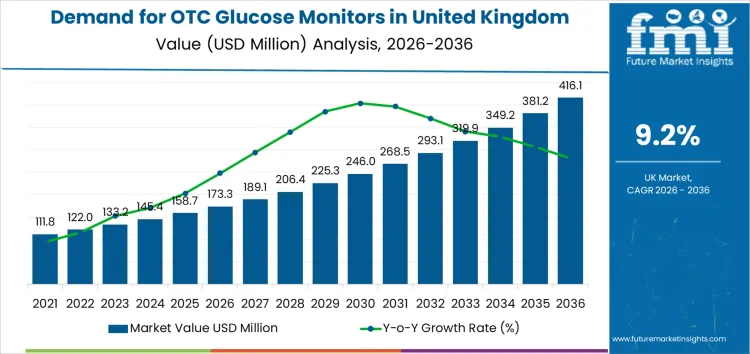
What is the Growth Forecast for OTC Glucose Monitors in United Kingdom through 2036?
The demand for OTC glucose monitors in the United Kingdom is projected to rise from USD 173.3 million in 2026 to USD 416.1 million by 2036, reflecting a compound annual growth rate (CAGR) of 9.2%. Between 2026 and 2031, the industry will experience steady growth, with values increasing from USD 173.3 million to USD 246.0 million. From 2031 to 2036, the growth will continue, reaching USD 416.1 million by the end of the forecast period.
The growth contribution index suggests that the majority of market growth will come from volume expansion, driven by the rising number of people diagnosed with diabetes and the growing awareness of the importance of regular blood glucose monitoring. While price increases, particularly for more advanced or feature-rich devices, will contribute to market value growth, the predominant driver of market expansion will be the increasing adoption and regular use of OTC glucose monitors among consumers. This is expected to reflect in a steady rise in demand for these devices over the forecast period.
Key Takeaways for Demand for OTC Glucose Monitors in United Kingdom
| Metric | Value |
|---|---|
| Industry Sales Value (2026) | USD 173.3 million |
| Industry Forecast Value (2036) | USD 416.1 million |
| Industry Forecast CAGR (2026 to 2036) | 9.2% |
Why is Demand for OTC Glucose Monitors in United Kingdom Growing?
Demand for OTC glucose monitors in the United Kingdom has increased as healthcare providers, pharmacies, and consumers placed greater emphasis on self monitoring and chronic disease management. Historically, glucose testing was conducted primarily in clinical settings, with patients visiting clinics for periodic measurement. Over recent years, UK patients with diabetes and pre diabetes shifted toward self testing at home to track blood glucose levels more frequently, which improved management of diet, medication, and lifestyle adjustments. Community pharmacies and retail health outlets expanded their offerings to include over the counter glucose monitors, making devices more accessible outside traditional medical channels. Procurement teams in healthcare organisations recognised that ease of access to reliable OTC monitors could reduce pressure on outpatient services and support early intervention. Manufacturers responded by supplying a range of devices that balance accuracy with user friendly interfaces, which appealed to a broad base of users, from newly diagnosed patients to long term condition managers.
Looking ahead, demand for OTC glucose monitors in the United Kingdom is expected to continue rising as health system stakeholders and consumers pursue improved chronic disease outcomes and operational efficiency. Trends such as ageing demographics and higher prevalence of metabolic conditions will underpin ongoing need for convenient monitoring solutions. Retail and e commerce channels will influence distribution strategies, with buyers evaluating devices based on accuracy, frequency of calibration, data connectivity, and integration with digital health platforms. Suppliers that offer comprehensive technical support, device education, and dependable supply assurance will gain traction among NHS practices, private clinics, and community pharmacies. Product planners in medical device companies will prioritise innovation that aligns with regulatory expectations and delivers consistent performance across varying user competencies, reinforcing OTC glucose monitors as essential tools in the UK healthcare landscape.
What Are the Key Segments in the Demand for OTC Glucose Monitors in the United Kingdom?
Demand for OTC glucose monitors in the United Kingdom is driven by product type and indication. Continuous glucose monitors (CGMs) lead the product type segment with 50%, while diabetes type I dominates the indication segment with 66.3%. Other product types, such as hybrid glucose monitoring systems and blood glucose monitors, as well as indications like diabetes type II and gestational diabetes, also contribute to the industry. These trends reflect the increasing need for accessible, effective glucose monitoring solutions for a growing diabetic population and the expanding use of such devices in clinical and home settings.
What Is the Product Segment of Demand for OTC Glucose Monitors in the United Kingdom?
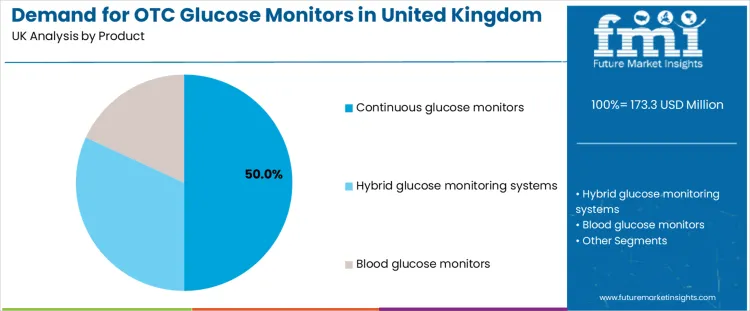
The product segment for OTC glucose monitors in the United Kingdom is led by continuous glucose monitors (CGMs), which account for 50% of the industry share. CGMs offer significant advantages over traditional blood glucose monitors by providing real-time, continuous tracking of glucose levels, allowing for more proactive management of diabetes. These devices are especially useful for individuals with diabetes type I, who require frequent and precise glucose monitoring throughout the day. CGMs help reduce the risk of dangerous fluctuations in blood sugar levels and enable better long-term management. The demand for CGMs is driven by their ability to provide detailed insights into glucose trends, which are invaluable for making timely adjustments to insulin dosages, diet, and exercise. Hybrid glucose monitoring systems, which combine CGM technology with traditional blood glucose monitors, are another growing segment.
These systems provide flexibility for users who may prefer using a traditional monitor at times but still want the benefits of continuous monitoring for a more comprehensive approach to managing their condition. Blood glucose monitors, while still widely used, represent a smaller share of the industry. These devices are favored for their simplicity, affordability, and ease of use, but they require frequent testing with finger pricks, making them less convenient than continuous monitoring systems. The continued adoption of CGMs and hybrid systems reflects the demand for more efficient, user-friendly, and comprehensive glucose monitoring solutions in the industry.
What Is the Indication Segment of Demand for OTC Glucose Monitors in the United Kingdom?
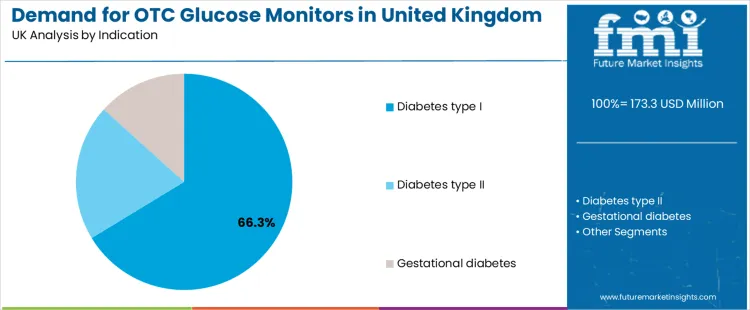
The indication segment for OTC glucose monitors in the United Kingdom is primarily driven by diabetes type I, which accounts for 66.3% of the industry share. Diabetes type I requires intensive, constant glucose monitoring due to the body's inability to produce insulin. Continuous glucose monitors (CGMs) are particularly beneficial for individuals with type I diabetes, providing real-time glucose readings and trends, which help in the timely adjustment of insulin doses. The increased prevalence of type I diabetes in the UK, along with advancements in CGM technology, is contributing to the growing demand for glucose monitoring solutions tailored for this group. Diabetes type II follows as another significant indication, although its demand for glucose monitors is slightly smaller compared to type I.
Individuals with type II diabetes often require monitoring for lifestyle management and medication adjustments. Hybrid glucose monitoring systems are increasingly popular in this segment, as they offer the benefits of continuous glucose tracking while also providing users the option to perform traditional finger-stick tests when necessary. Gestational diabetes, while representing a smaller portion of the industry, also drives demand for glucose monitors. Expectant mothers with gestational diabetes require regular glucose monitoring to ensure both their health and the health of their baby. Blood glucose monitors are commonly used for this indication due to their simplicity and affordability, though CGMs are beginning to see more use for higher-risk cases. The industry for glucose monitors in the UK is largely influenced by the growing awareness of the importance of managing diabetes and the increasing demand for convenient, accurate, and reliable monitoring systems to support diabetes management across various types.
What are the Key Dynamics in the Demand for OTC Glucose Monitors in the United Kingdom?
Demand for over the counter (OTC) glucose monitors in the United Kingdom is rooted in public health priorities, rising prevalence of diabetes and pre diabetes, and increased self management of chronic conditions. These devices enable individuals to monitor blood glucose levels without prescription, supporting daily care decisions and long term risk reduction. Demand correlates with primary care initiatives, pharmacy channel penetration, and consumer health awareness campaigns. Retailers, healthcare providers, and suppliers track seasonal and demographic patterns, with consistent demand from both newly diagnosed patients and long term users replacing consumables such as test strips and sensors.
What are the Key Drivers for OTC Glucose Monitor Demand in the United Kingdom?
Several factors sustain demand for OTC glucose monitors in the United Kingdom. The growing number of adults diagnosed with type 2 and type 1 diabetes increases baseline need for self monitoring tools. Government and NHS emphasis on early detection and preventive care stimulates consumer interest in home glucose monitoring. Wider availability of user friendly devices with digital connectivity appeals to tech savvy populations and integrates with remote care models. Pharmacies and online health retailers expand accessibility, often bundling monitors with consumables and support materials. Health insurers and care programmes that incentivise self monitoring reinforce purchases and repeat procurement of compatible accessories.
What are the Restraints on OTC Glucose Monitor Demand in the United Kingdom?
Despite strong underlying need, demand for OTC glucose monitors in the United Kingdom faces several restraints. Price sensitivity can deter adoption, especially where cost sharing for devices and test consumables is high and reimbursement pathways are limited. Consumer confusion about device accuracy, features, and compatibility with health apps may slow purchase decisions and increase product returns. Regulatory requirements for device certification and accuracy standards create entry barriers for new suppliers and may delay time to market. Competition from prescription only models, continuous glucose monitors (CGMs), and integrated health platforms fragments market share and influences buyer preferences.
What are the Key Trends in OTC Glucose Monitor Demand in the United Kingdom?
Key trends shaping demand for OTC glucose monitors in the United Kingdom include the shift toward connected and smart monitoring solutions that synchronise with mobile apps and remote clinician dashboards. Hybrid models that combine traditional finger stick devices with digital coaching and analytics are gaining traction among preventive care programmes and patient support services. Retail channels are enhancing bundled offerings with educational content to reduce user uncertainty and improve adherence. There is growing focus on accuracy and ease of use, with devices designed for simplified calibration and minimal user steps. Suppliers are also exploring subscription based consumables delivery and partnerships with telehealth providers to embed glucose monitoring within broader chronic care management ecosystems.
What is the Country-Wise Demand for OTC Glucose Monitors in the United Kingdom?
The demand for over-the-counter (OTC) glucose monitors in the United Kingdom varies by region, with England leading the industry. The demand in England is primarily driven by the country’s large diabetic population, growing health awareness, and increasing adoption of self-care practices. Scotland, Wales, and Northern Ireland also show significant demand, supported by the rising prevalence of diabetes and other health conditions that require regular blood sugar monitoring. As consumer awareness of the importance of diabetes management and early detection grows, the demand for OTC glucose monitors is expected to rise across all regions. While England remains the largest market due to its population size and healthcare infrastructure, all regions are expected to experience steady growth in demand for these monitoring devices.
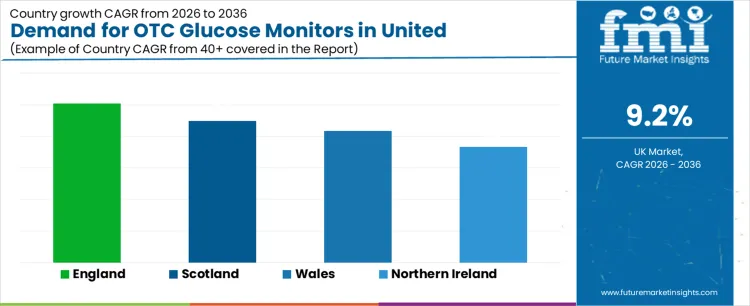
| Country | CAGR (2026 to 2036) |
|---|---|
| England | 10.1% |
| Scotland | 9.0% |
| Wales | 8.3% |
| Northern Ireland | 7.3% |
What is Driving the Demand for OTC Glucose Monitors in England?
The demand for OTC glucose monitors in England is projected to grow at a CAGR of 10.1% from 2026 to 2036. England's large diabetic population, combined with increasing consumer awareness of diabetes prevention and management, is a major driver of demand for glucose monitoring devices. OTC glucose monitors provide convenience, allowing individuals to check their blood sugar levels at home without a prescription. The rise in lifestyle diseases, particularly type 2 diabetes, is further contributing to the increasing use of these devices. Additionally, the growing trend of preventative healthcare, with a focus on early diagnosis and continuous health monitoring, is driving the demand for OTC glucose monitors. The expanding availability of these devices through pharmacies, e-commerce platforms, and retail channels ensures widespread adoption. As more people in England take proactive steps in managing their health, the demand for OTC glucose monitors is expected to continue rising.
How is the Demand for OTC Glucose Monitors Performing in Scotland?
In Scotland, the demand for OTC glucose monitors is expected to grow at a CAGR of 9.0% from 2026 to 2036. Scotland’s healthcare system is increasingly focused on empowering individuals to take charge of their health, leading to a greater emphasis on home health monitoring devices. With a rising prevalence of diabetes and an aging population, the demand for glucose monitors in Scotland is expected to grow steadily. Consumer demand is being driven by increased awareness about the benefits of self-monitoring for diabetes management and preventative care. In addition, Scotland's expanding network of pharmacies and health stores is improving access to OTC glucose monitors, ensuring greater availability across the region. The growing adoption of digital health tools and the increasing focus on personalized healthcare are also contributing to the steady rise in demand for these devices in Scotland.
What Are the Growth Drivers for OTC Glucose Monitors in Wales?
The demand for OTC glucose monitors in Wales is projected to grow at a CAGR of 8.3% through 2036. The key growth drivers are the rising prevalence of diabetes, particularly type 2 diabetes, and the growing awareness of the importance of regular blood sugar monitoring. As more people in Wales become conscious of the need for early detection and continuous management of diabetes, OTC glucose monitors are becoming essential tools in their healthcare routines. Additionally, the increasing availability of these monitors through retail pharmacies, health stores, and online platforms is making them more accessible to consumers. The Welsh government’s focus on improving public health and promoting self-care is further boosting the demand for OTC glucose monitors. As Wales continues to prioritize health and wellness, the industry for these devices is expected to see steady growth, especially with the increasing demand for home health monitoring solutions.
What is the Outlook for OTC Glucose Monitors Demand in Northern Ireland?
Northern Ireland’s demand for OTC glucose monitors is expected to grow at a CAGR of 7.3% from 2026 to 2036. Although Northern Ireland represents the smallest market in the UK, the demand for OTC glucose monitors is steadily increasing due to rising health concerns and the increasing prevalence of diabetes. The growing focus on self-care and the shift toward preventative healthcare are driving the demand for these devices. In Northern Ireland, more individuals are adopting home health monitoring devices as part of their efforts to manage diabetes and maintain overall health. Additionally, greater access to healthcare products through pharmacies and online retailers is making these monitors more readily available to consumers. As Northern Ireland’s healthcare system continues to evolve with an emphasis on improving patient outcomes through self-management, the demand for OTC glucose monitors is expected to grow consistently.
What is the Competitive Landscape for Demand for OTC Glucose Monitors in the United Kingdom?
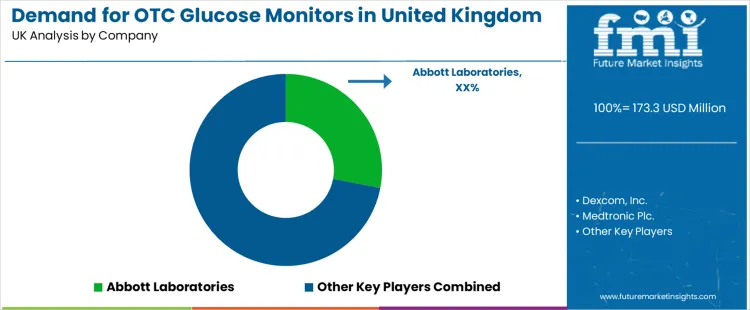
Demand for over the counter (OTC) glucose monitors in the United Kingdom is shaped by consumer self monitoring trends, primary care protocols, and retail pharmacy supply strategies. Buyers in healthcare retail, clinic procurement, and independent pharmacy groups specify monitors based on documented accuracy metrics, measurement range, sampling requirements, and device usability. Abbott Laboratories is positioned as a leading supplier, with product brochures that list documented measurement precision, documented device memory capacity, and documented compatibility with test strips and app interfaces. Technical sheets from Abbott include quality control checks and documented calibration protocols that are used by procurement professionals to align product choice with consumer expectations and clinical guidance. Dexcom, Inc. competes with continuous glucose monitoring (CGM) solutions that are supported by documented sensor life data, documented alert accuracy values, and documented interoperability with digital ecosystems. Buyers assess these documents to reconcile selection with adherence to local health authority recommendations for self monitoring.
Medtronic Plc. supplies glucose monitoring systems documented for integration with insulin delivery platforms and documented algorithm performance under varied physiological conditions. Documentation from Medtronic lists documented sensor accuracy across ranges and documented user support materials that are referenced by healthcare providers and wholesale buyers. Roche Diabetes Care offers OTC monitors with documented performance profiles, documented strip lot controls, and documented data connectivity options that assist category managers in evaluating supply offerings. Senseonics Holdings, Inc. provides implantable CGM solutions with documentation covering documented sensor longevity, documented safety data, and documented clinician support guidelines. Procurement teams in the United Kingdom evaluate documented technical specifications and documented service support frameworks during product selection cycles. Lead times and documented spare part availability appear in official brochures, informing inventory plans. Technical reviewers examine documented measurement validation against recognized standards to ensure compliance and reliability. Competitive activity focuses on measurable performance attributes, documented quality assurance practices, and documented supply terms that support healthcare retail and clinical procurement decisions.
Key Players of the Demand for OTC Glucose Monitors in United Kingdom
- Abbott Laboratories
- Dexcom, Inc.
- Medtronic Plc.
- Roche Diabetes Care
- Senseonics Holdings, Inc.
Scope of the Report
| Items | Values |
|---|---|
| Quantitative Units (2026) | USD Million |
| Product | Continuous Glucose Monitors, Hybrid Glucose Monitoring Systems, Blood Glucose Monitors |
| Indication | Diabetes Type I, Diabetes Type II, Gestational Diabetes |
| Technology | Sensor-Based Glucose Monitoring, Strip-Based Glucose Monitoring, Hybrid Technology |
| Distribution Channel | Drug Stores, Online Pharmacies, Retail Pharmacies, Specialty Stores, Hypermarkets & Supermarkets |
| Companies | Abbott Laboratories, Dexcom, Inc., Medtronic Plc., Roche Diabetes Care, Senseonics Holdings, Inc. |
| Regions Covered | United Kingdom |
| Countries Covered | England, Scotland, Wales, Northern Ireland |
| Additional Attributes | Dollar by sales by product type, indication, technology, and distribution channel. Includes market trends towards health management, convenience, and the role of OTC glucose monitors in diabetes care and monitoring. |
Key Segments of Demand for OTC Glucose Monitors in United Kingdom
Product:
- Continuous glucose monitors
- Hybrid glucose monitoring systems
- Blood glucose monitors
Indication:
- Diabetes type I
- Diabetes type II
- Gestational diabetes
Technology:
- Sensor-based glucose monitoring
- Strip-based glucose monitoring
- Hybrid technology
Distribution Channel:
- Drug stores
- Online pharmacies
- Retail pharmacies
- Specialty stores
- Hypermarkets & supermarkets
Countries:
- England
- Scotland
- Wales
- Northern Ireland
Bibliography
- Department of Health and Social Care. (2024). Medical devices regulation and consumer self-testing frameworks in the United Kingdom. UK Government.
- Medicines and Healthcare products Regulatory Agency. (2024). Guidance on in vitro diagnostic medical devices and over‑the‑counter glucose monitoring. MHRA.
- National Health Service England. (2024). Diabetes prevalence, self‑monitoring practices, and patient‑led care pathways in England. NHS England.
- Office for National Statistics. (2024). Health conditions, long‑term illness, and medical device use among UK households. ONS.
- World Health Organization. (2024). Self‑care interventions for health: Blood glucose monitoring and diabetes management. WHO.
Frequently Asked Questions
How big is the demand for otc glucose monitors in united kingdom in 2026?
The demand for otc glucose monitors in united kingdom is estimated to be valued at USD 173.3 million in 2026.
What will be the size of otc glucose monitors in united kingdom in 2036?
The market size for the otc glucose monitors in united kingdom is projected to reach USD 416.1 million by 2036.
How much will be the demand for otc glucose monitors in united kingdom growth between 2026 and 2036?
The demand for otc glucose monitors in united kingdom is expected to grow at a 9.2% CAGR between 2026 and 2036.
What are the key product types in the otc glucose monitors in united kingdom?
The key product types in otc glucose monitors in united kingdom are continuous glucose monitors, hybrid glucose monitoring systems and blood glucose monitors.
Which indication segment is expected to contribute significant share in the otc glucose monitors in united kingdom in 2026?
In terms of indication, diabetes type i segment is expected to command 66.3% share in the otc glucose monitors in united kingdom in 2026.
Preview the report firsthand - request a free sample
Get SampleGet the brochure for pricing and purchase details.
Get PDFTable of Content
- Executive Summary
- UK Market Outlook
- Demand-side Trends
- Supply-side Trends
- Technology Roadmap Analysis
- Analysis and Recommendations
- Market Overview
- Market Coverage / Taxonomy
- Market Definition / Scope / Limitations
- Market Background
- Market Dynamics
- Drivers
- Restraints
- Opportunity
- Trends
- Scenario Forecast
- Demand in Optimistic Scenario
- Demand in Likely Scenario
- Demand in Conservative Scenario
- Opportunity Map Analysis
- Product Life Cycle Analysis
- Supply Chain Analysis
- Investment Feasibility Matrix
- Value Chain Analysis
- PESTLE and Porter’s Analysis
- Regulatory Landscape
- Regional Parent Market Outlook
- Production and Consumption Statistics
- Import and Export Statistics
- Market Dynamics
- UK Market Analysis 2021 to 2025 and Forecast, 2026 to 2036
- Historical Market Size Value (USD Million) Analysis, 2021 to 2025
- Current and Future Market Size Value (USD Million) Projections, 2026 to 2036
- Y-o-Y Growth Trend Analysis
- Absolute $ Opportunity Analysis
- UK Market Pricing Analysis 2021 to 2025 and Forecast 2026 to 2036
- UK Market Analysis 2021 to 2025 and Forecast 2026 to 2036, By Product
- Introduction / Key Findings
- Historical Market Size Value (USD Million) Analysis By Product , 2021 to 2025
- Current and Future Market Size Value (USD Million) Analysis and Forecast By Product , 2026 to 2036
- Continuous glucose monitors
- Hybrid glucose monitoring systems
- Blood glucose monitors
- Continuous glucose monitors
- Y-o-Y Growth Trend Analysis By Product , 2021 to 2025
- Absolute $ Opportunity Analysis By Product , 2026 to 2036
- UK Market Analysis 2021 to 2025 and Forecast 2026 to 2036, By Indication
- Introduction / Key Findings
- Historical Market Size Value (USD Million) Analysis By Indication, 2021 to 2025
- Current and Future Market Size Value (USD Million) Analysis and Forecast By Indication, 2026 to 2036
- Diabetes type I
- Diabetes type II
- Gestational diabetes
- Diabetes type I
- Y-o-Y Growth Trend Analysis By Indication, 2021 to 2025
- Absolute $ Opportunity Analysis By Indication, 2026 to 2036
- UK Market Analysis 2021 to 2025 and Forecast 2026 to 2036, By Technology
- Introduction / Key Findings
- Historical Market Size Value (USD Million) Analysis By Technology, 2021 to 2025
- Current and Future Market Size Value (USD Million) Analysis and Forecast By Technology, 2026 to 2036
- Sensor-based glucose monitoring
- Strip-based glucose monitoring
- Hybrid technology
- Sensor-based glucose monitoring
- Y-o-Y Growth Trend Analysis By Technology, 2021 to 2025
- Absolute $ Opportunity Analysis By Technology, 2026 to 2036
- UK Market Analysis 2021 to 2025 and Forecast 2026 to 2036, By Distribution Channel
- Introduction / Key Findings
- Historical Market Size Value (USD Million) Analysis By Distribution Channel, 2021 to 2025
- Current and Future Market Size Value (USD Million) Analysis and Forecast By Distribution Channel, 2026 to 2036
- Drug stores
- Online pharmacies
- Retail pharmacies
- Specialty stores
- Hypermarkets & supermarkets
- Drug stores
- Y-o-Y Growth Trend Analysis By Distribution Channel, 2021 to 2025
- Absolute $ Opportunity Analysis By Distribution Channel, 2026 to 2036
- Market Structure Analysis
- Competition Dashboard
- Competition Benchmarking
- Market Share Analysis of Top Players
- By Regional
- By Product
- By Indication
- By Technology
- By Distribution Channel
- Competition Analysis
- Competition Deep Dive
- Abbott Laboratories
- Overview
- Product Portfolio
- Profitability by Market Segments (Product/Age /Sales Channel/Region)
- Sales Footprint
- Strategy Overview
- Marketing Strategy
- Product Strategy
- Channel Strategy
- Dexcom, Inc.
- Medtronic Plc.
- Roche Diabetes Care
- Senseonics Holdings, Inc.
- Abbott Laboratories
- Competition Deep Dive
- Assumptions & Acronyms Used
- Research Methodology


