

- Industry Size (2026)
- USD 111.1 Mn
- Forecast (2036)
- USD 173.5 Mn
- CAGR (2026 to 2036)
- 4.6%
Vertical Immersion Pumps Industry Forecast and Outlook in South Korea 2026 to 2036
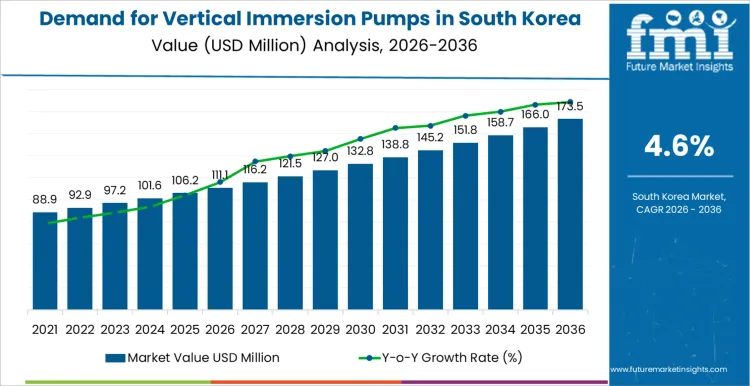
The vertical immersion pumps landscape in South Korea is projected to attain a valuation of USD 111.1 million in 2026. This sector is anticipated to expand to USD 173.5 million by 2036, progressing at a compound annual growth rate of 4.6%.
This growth is fundamentally anchored in the nation's continuous investment in critical water and industrial infrastructure, alongside the modernization of existing agricultural and municipal systems.
Demand is driven by the essential requirements for efficient fluid management across a diverse range of applications, from ensuring public water security to supporting the cooling processes of advanced manufacturing and power generation.
The operational advantages of vertical immersion pumps, including their space-saving design, reliability in handling large volumes, and suitability for deep sump or well applications, solidify their role as indispensable components within South Korea’s industrial and civic ecosystem, particularly in regions facing geographical and spatial constraints.
Quick Stats for the Vertical Immersion Pumps Arena in South Korea
- Vertical Immersion Pumps Industry Valuation in South Korea(2026): USD 111.1 million
- Vertical Immersion Pumps Industry Forecast Valuation in South Korea (2036): USD 173.5 million
- Vertical Pumps Industry in South Korea Forecast CAGR: 4.6%
- Leading Regional Growth: Jeju (CAGR 5.5%)
- Leading Product Type: Line Shaft Pump (55.0%)
- Leading Capacity: Up to 100m³/hr (38.0%)
- Leading Application: Irrigation (30.0%)
- Key Industry Participants: Grundfos Holding A/S, KSB SE & Co. KGaA, Sulzer Ltd., Flowserve Corporation, ITT Inc.
Why are Vertical Immersion Pumps a Critical Component of South Korea's Infrastructure?
The sustained demand for vertical immersion pumps is inextricably linked to national priorities surrounding resource management, agricultural productivity, and industrial efficiency. South Korea's need to optimize water usage for both food security and potable supply in the face of seasonal variability drives significant investment in modern irrigation and water supply networks, where these pumps are a core technology. The expansion and maintenance of water and wastewater management infrastructure for growing urban centers and industrial complexes require robust, high-capacity pumping solutions for drainage, supply, and treatment processes.
In the industrial realm, sectors such as power generation, chemicals, and manufacturing rely on these pumps for critical cooling water circulation and process fluid transfer, where their vertical design allows for installation directly into cooling towers or deep pits, saving valuable floor space in congested plant environments.
How is the Vertical Immersion Pumps Arena Segmented by Type, Capacity, and Use?
The sector is categorized by specific pump design, operational capacity, and primary end-use application. This segmentation reflects the precise engineering required to meet the distinct technical challenges of moving water from deep wells, managing large-scale agricultural cycles, or handling process fluids in industrial settings.
Understanding this structure is key to appreciating how manufacturers tailor reliability, material composition, and performance characteristics to suit environments ranging from corrosive groundwater to high-temperature cooling loops.
Which Product Type Dominates the Engineering Landscape?
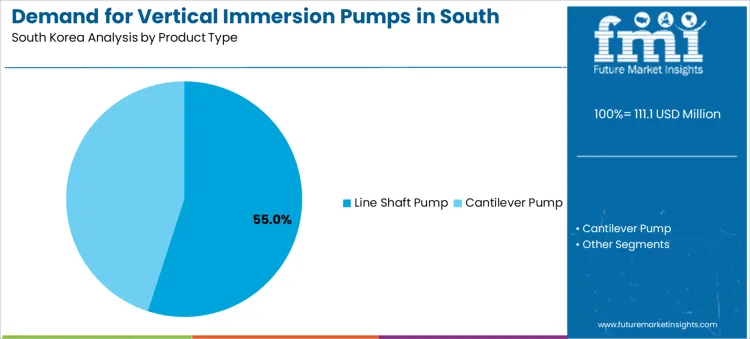
Line shaft pumps hold a commanding share, estimated at 55.0%. Their dominance is attributed to their superior efficiency and durability in deep-well applications, such as extracting groundwater for agricultural irrigation and municipal water supply.
The design, which features a long drive shaft connecting a surface motor to a submerged impeller, is engineered for reliability in continuous, heavy-duty operation, making it the cornerstone technology for large-scale water extraction projects.
Cantilever pumps, which eliminate the need for submerged bearings, serve important niche roles in handling abrasive or corrosive fluids in industrial sumps, particularly within the chemicals and mining sectors.
Which Capacity Range Addresses the Broadest Market Need?
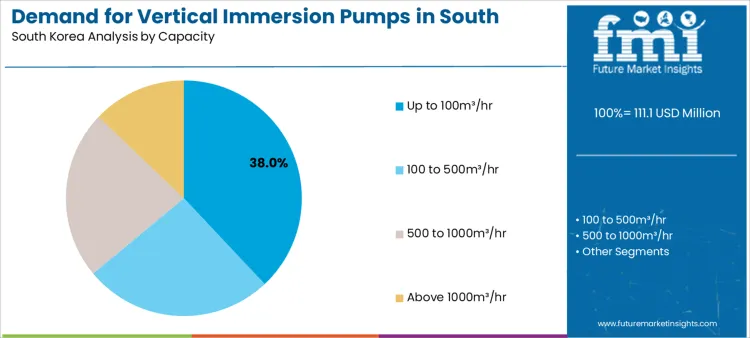
Pumps with a capacity of up to 100m³/hr constitute the largest segment, holding a 38.0% share. This prevalence underscores the widespread need for versatile, medium-duty pumping solutions across numerous small to medium-scale applications.
This capacity range is ideal for localized irrigation systems, water supply for smaller municipalities or residential complexes, and various industrial process and cooling water duties in manufacturing plants.
Large-scale municipal water works, major agricultural projects, and heavy industry, reflecting concentrated investment in core industrial process cooling systems and regional water infrastructure, drive the demand for higher capacity units, typically 100 to 500m ³/hr and above.
Which Application Serves as the Primary Demand Driver?
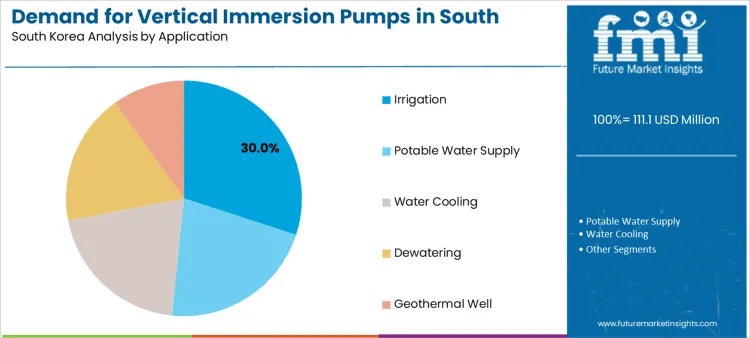
Irrigation stands as the leading application, accounting for an estimated 30.0% share. This highlights the critical role of mechanized water management in South Korea's agricultural sector, which strives for higher yields and efficient water use. The deployment of vertical turbine pumps in river intake, reservoir lift, and well-based systems is essential for both paddy field and greenhouse cultivation.
Potable water supply represents another major application, driven by urban development and the need to draw and transport water from deep sources or treatment plants. Furthermore, applications in geothermal well exploitation for district heating and power generation, along with plant cooling and dewatering in construction and mining, represent significant and growing verticals that demand specialized pump specifications.
What are the Dynamics, Restraints, Opportunities, and Threats Shaping the Sector?
How is Infrastructure Modernization and Agricultural Policy Driving Growth?
The primary growth catalysts are sustained government and private investment in upgrading aging water infrastructure and expanding precision irrigation networks to enhance climate resilience. National food security initiatives promote the adoption of efficient pumping systems to reduce water waste.
The ongoing development of industrial parks and power generation facilities creates consistent demand for reliable cooling water and process pumps, underpinned by the general growth trends in the South Korean Industrial Manufacturing landscape.
Do High Capital Costs and Technical Specialization Restrain Broader Adoption?
A significant restraint is the considerable initial capital expenditure required for high-capacity, engineered vertical immersion pump systems, which can deter budget-conscious municipalities or small-scale agricultural cooperatives.
The need for precise installation, deep well drilling, and specialized maintenance expertise creates a reliance on skilled engineers and service networks, potentially slowing deployment in remote areas. Competition from alternative pumping technologies for certain applications can also segment demand.
How are Efficiency Mandates and New Industries Creating Fresh Potential?
Substantial opportunities are emerging from the national push for energy efficiency and smart water management. Demand is rising for pumps integrated with variable frequency drives (VFDs) and IoT sensors for predictive maintenance and optimized operation.
The growth of the data center sector, with its massive cooling requirements, and the exploration of new energy and geothermal projects present new, technically demanding application frontiers for high-performance immersion pumps, encouraging innovation in materials and design.
What External Factors Could Challenge Steady Expansion?
The sector faces threats from volatility in raw material costs (e.g., specialty metals, castings), which can pressure manufacturer margins and lead to price increases for end-users. Intense competition from both global giants and regional suppliers may compress profitability. A prolonged economic downturn could delay or cancel large-scale public infrastructure and industrial capital projects, which are key demand drivers. Additionally, water scarcity regulations or shifts in agricultural subsidy policies could alter investment timelines in key application areas.
How is the Vertical Immersion Pumps Sector Evolving Across Key Regions in South Korea?
Growth potential within South Korea varies by region, closely aligned with local industrial bases, agricultural intensity, and infrastructure development agendas. The projected compound annual growth rate from 2026 to 2036 illustrates these geographic distinctions.
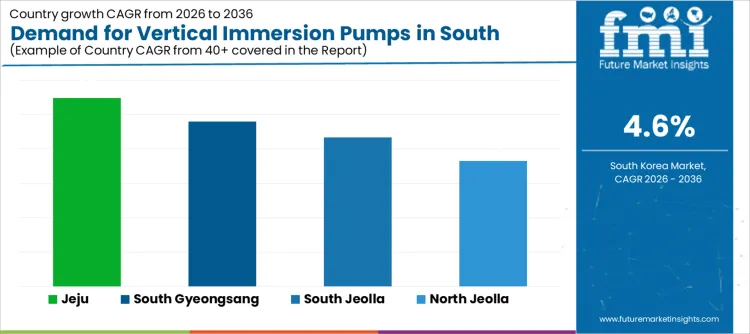
| Region | CAGR (2026 to 2036) |
|---|---|
| Jeju | 5.5% |
| South Gyeongsang | 4.8% |
| South Jeolla | 4.3% |
| North Jeolla | 3.6% |
What drives Accelerated Growth on Jeju Island?
Jeju Island leads regional growth with a projected CAGR of 5.5%. This is primarily fueled by its unique status as a center for tourism, agriculture, and renewable energy. Large-scale investment in greenhouse agriculture for high-value crops requires sophisticated irrigation systems.
Jeju’s pioneering projects in geothermal and renewable energy development for heating and power generation utilize deep-well immersion pumps for brine and fluid extraction, creating a specialized, high-value demand stream alongside ongoing municipal water supply projects to serve both residents and the tourism industry.
Why is South Gyeongsang a Core Industrial Demand Center?
South Gyeongsang exhibits a robust CAGR of 4.8%, driven by its dense concentration of heavy industry, petrochemical complexes, and major power generation facilities around cities like Ulsan and Busan.
These industries have continuous, high-volume requirements for cooling water circulation, process fluid transfer, and plant dewatering, necessitating frequent pump upgrades, replacements, and expansions. The region's large-scale port operations and associated infrastructure also contribute to demand for dewatering and drainage solutions.
What Factors Underpin Steady Demand in the Jeolla Provinces?
The Jeolla provinces demonstrate steady, agriculture-influenced growth. South Jeolla, with a CAGR of 4.3%, is a key agricultural hub where modernizing irrigation infrastructure for rice paddies and field crops is a persistent priority, supported by government programs.
North Jeolla, with a projected CAGR of 3.6%, shows moderate growth, with demand stemming from agricultural water management, regional potable water system upgrades, and supporting industries related to food processing, all of which align with broader agricultural automation and efficiency trends.
What Defines the Competitive Landscape of the Vertical Immersion Pumps Industry?
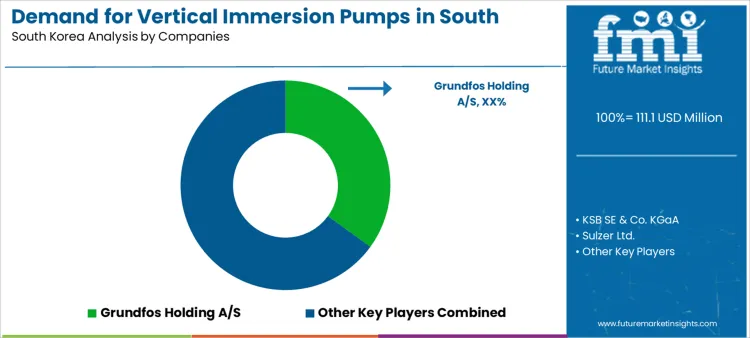
The competitive environment is defined by engineering excellence, product durability, and deep application-specific expertise. Global leaders compete on the basis of hydraulic efficiency, energy performance, material science for corrosion and abrasion resistance, and the robustness of their service and maintenance networks. Success hinges on providing not just a pump, but a reliable fluid handling solution, often involving custom engineering for large projects.
Key differentiators include the depth of product portfolios covering various materials and capacities, the integration of smart monitoring technology, and the ability to offer comprehensive lifecycle support. Competition is intensifying as providers emphasize total cost of ownership and sustainability credentials to win contracts in the municipal and industrial sectors.
Key Industry Participants
- Grundfos Holding A/S
- KSB SE & Co. KGaA
- Sulzer Ltd.
- Flowserve Corporation
- ITT Inc.
Scope of Analysis
| Items | Values |
|---|---|
| Quantitative Units | USD Million |
| Product Type | Line Shaft Pump, Cantilever Pump |
| Capacity | Up to 100m³/hr, 100 to 500m³/hr, 500 to 1000m³/hr, Above 1000m³/hr |
| Application | Irrigation, Potable Water Supply, Water Cooling, Dewatering, Geothermal Well |
| Regions Covered | South Gyeongsang, North Jeolla, South Jeolla, Jeju |
| Key Companies Profiled | Grundfos Holding A/S, KSB SE & Co. KGaA, Sulzer Ltd., Flowserve Corporation, ITT Inc. |
Vertical Immersion Pumps Sector in South Korea by Segment
By Product Type:
- Line Shaft Pump
- Cantilever Pump
By Capacity:
- Up to 100m³/hr
- 100 to 500m³/hr
- 500 to 1000m³/hr
- Above 1000m³/hr
By Application:
- Irrigation
- Potable Water Supply
- Water Cooling
- Dewatering
- Geothermal Well
By Region:
- Jeju
- South Gyeongsang
- South Jeolla
- North Jeolla
Bibliography
- Korea Water Resources Corporation (K-water). (2023). Annual Report on National Waterworks and Agricultural Water Facility Status.
- Ministry of Agriculture, Food and Rural Affairs (MAFRA). (2024). Policy Framework for Smart Agricultural Infrastructure Development.
- Korean Society of Mechanical Engineers (KSME). (2023). Journal of Fluid Engineering: Special Edition on Pump Technology and Efficiency.
Frequently Asked Questions
How big is the demand for vertical immersion pumps in south korea in 2026?
The demand for vertical immersion pumps in south korea is estimated to be valued at USD 111.1 million in 2026.
What will be the size of vertical immersion pumps in south korea in 2036?
The market size for the vertical immersion pumps in south korea is projected to reach USD 173.5 million by 2036.
How much will be the demand for vertical immersion pumps in south korea growth between 2026 and 2036?
The demand for vertical immersion pumps in south korea is expected to grow at a 4.6% CAGR between 2026 and 2036.
What are the key product types in the vertical immersion pumps in south korea?
The key product types in vertical immersion pumps in south korea are line shaft pump and cantilever pump.
Which capacity segment is expected to contribute significant share in the vertical immersion pumps in south korea in 2026?
In terms of capacity, up to 100m³/hr segment is expected to command 38.0% share in the vertical immersion pumps in south korea in 2026.
Preview the report firsthand - request a free sample
Get SampleGet the brochure for pricing and purchase details.
Get PDFTable of Content
- Executive Summary
- South Korea Market Outlook
- Demand-side Trends
- Supply-side Trends
- Technology Roadmap Analysis
- Analysis and Recommendations
- Market Overview
- Market Coverage / Taxonomy
- Market Definition / Scope / Limitations
- Market Background
- Market Dynamics
- Drivers
- Restraints
- Opportunity
- Trends
- Scenario Forecast
- Demand in Optimistic Scenario
- Demand in Likely Scenario
- Demand in Conservative Scenario
- Opportunity Map Analysis
- Product Life Cycle Analysis
- Supply Chain Analysis
- Investment Feasibility Matrix
- Value Chain Analysis
- PESTLE and Porter’s Analysis
- Regulatory Landscape
- Regional Parent Market Outlook
- Production and Consumption Statistics
- Import and Export Statistics
- Market Dynamics
- South Korea Market Analysis 2021 to 2025 and Forecast, 2026 to 2036
- Historical Market Size Value (USD Million) Analysis, 2021 to 2025
- Current and Future Market Size Value (USD Million) Projections, 2026 to 2036
- Y-o-Y Growth Trend Analysis
- Absolute $ Opportunity Analysis
- South Korea Market Pricing Analysis 2021 to 2025 and Forecast 2026 to 2036
- South Korea Market Analysis 2021 to 2025 and Forecast 2026 to 2036, By Product Type
- Introduction / Key Findings
- Historical Market Size Value (USD Million) Analysis By Product Type, 2021 to 2025
- Current and Future Market Size Value (USD Million) Analysis and Forecast By Product Type, 2026 to 2036
- Line Shaft Pump
- Cantilever Pump
- Line Shaft Pump
- Y-o-Y Growth Trend Analysis By Product Type, 2021 to 2025
- Absolute $ Opportunity Analysis By Product Type, 2026 to 2036
- South Korea Market Analysis 2021 to 2025 and Forecast 2026 to 2036, By Capacity
- Introduction / Key Findings
- Historical Market Size Value (USD Million) Analysis By Capacity, 2021 to 2025
- Current and Future Market Size Value (USD Million) Analysis and Forecast By Capacity, 2026 to 2036
- Up to 100m³/hr
- 100 to 500m³/hr
- 500 to 1000m³/hr
- Above 1000m³/hr
- Up to 100m³/hr
- Y-o-Y Growth Trend Analysis By Capacity, 2021 to 2025
- Absolute $ Opportunity Analysis By Capacity, 2026 to 2036
- South Korea Market Analysis 2021 to 2025 and Forecast 2026 to 2036, By Application
- Introduction / Key Findings
- Historical Market Size Value (USD Million) Analysis By Application, 2021 to 2025
- Current and Future Market Size Value (USD Million) Analysis and Forecast By Application, 2026 to 2036
- Irrigation
- Potable Water Supply
- Water Cooling
- Dewatering
- Geothermal Well
- Irrigation
- Y-o-Y Growth Trend Analysis By Application, 2021 to 2025
- Absolute $ Opportunity Analysis By Application, 2026 to 2036
- Market Structure Analysis
- Competition Dashboard
- Competition Benchmarking
- Market Share Analysis of Top Players
- By Regional
- By Product Type
- By Capacity
- By Application
- Competition Analysis
- Competition Deep Dive
- Grundfos Holding A/S
- Overview
- Product Portfolio
- Profitability by Market Segments (Product/Age /Sales Channel/Region)
- Sales Footprint
- Strategy Overview
- Marketing Strategy
- Product Strategy
- Channel Strategy
- KSB SE & Co. KGaA
- Sulzer Ltd.
- Flowserve Corporation
- ITT Inc.
- Grundfos Holding A/S
- Competition Deep Dive
- Assumptions & Acronyms Used
- Research Methodology


