

- Industry Size (2026):
- USD 800 Mn
- Forecast (2036)
- USD 1727.1 Mn
- CAGR (2026 to 2036)
- 8%
Textile-Integrated Silicone Elastomer Systems for Wearable and Soft Interfaces Market Forecast and Outlook 2026 to 2036
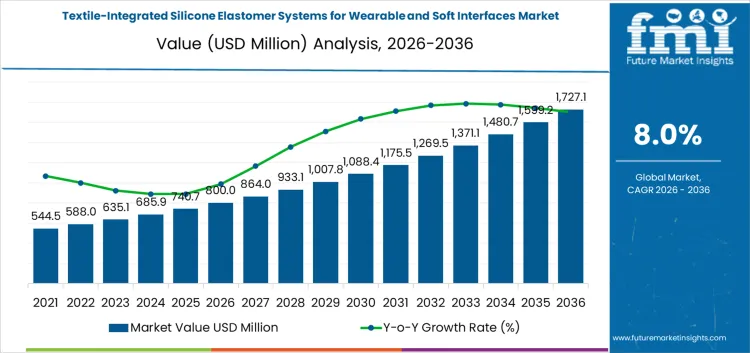
The global textile-integrated silicone elastomer systems for wearable and soft interfaces market is projected to reach USD 800 million in 2026 and USD 1,727.1 million by 2036, with a CAGR of 8%. This market is pivotal in shaping the future of wearable technology, as it directly impacts industries like healthcare, fitness, and electronics, where comfort, durability, and fleaxibility are paramount. As consumer demand for high-performance, flexible wearables increases, particularly in health monitoring and smart textiles, silicone elastomers provide the ideal solution.
The market's growth is also driven by technological advancements that enable more seamless integration of elastomers into textiles, enhancing the user experience while meeting stringent regulatory requirements. Buyers, from OEMs to material suppliers, must focus on advanced elastomer solutions that offer both functional and aesthetic value. This space holds significant economic relevance, with long-term decision-making largely influenced by the need for innovation in flexible, durable, and ergonomic wearable designs.
Quick Stats for Textile-Integrated Silicone Elastomer Systems for Wearable and Soft Interfaces Market
- Textile-Integrated Silicone Elastomer Systems for Wearable and Soft Interfaces Market Value (2026): USD 800 Million
- Textile-Integrated Silicone Elastomer Systems for Wearable and Soft Interfaces Market Forecast Value (2036): USD 1,727.1 Million
- Textile-Integrated Silicone Elastomer Systems for Wearable and Soft Interfaces Market Forecast CAGR (2026-2036): 8%
- Leading Elastomer Type in Textile-Integrated Silicone Elastomer Systems for Wearable and Soft Interfaces Market: Liquid Silicone Rubber (LSR)
- Key Growth Regions in Textile-Integrated Silicone Elastomer Systems for Wearable and Soft Interfaces Market: Asia Pacific, North America
- Top Key Players in Textile-Integrated Silicone Elastomer Systems for Wearable and Soft Interfaces Market: Dow Inc., Wacker Chemie AG, Shin-Etsu Chemical Co., Ltd.
Textile-Integrated Silicone Elastomer Systems for Wearable and Soft Interfaces Market Key Takeaways
| Metric | Value |
|---|---|
| Industry Value (2026) | USD 800 Million |
| Forecast Value (2036) | USD 1,727.1 Million |
| Forecast CAGR (2026-2036) | 8% |
How Is the Global Textile-Integrated Silicone Elastomer Systems for Wearable and Soft Interfaces Market Advancing?
The global textile-integrated silicone elastomer systems for wearable and soft interfaces market is experiencing strong growth, driven by the rising demand for advanced, comfortable, and flexible wearable technologies. These elastomer systems are increasingly used in the production of wearable devices, such as smartwatches, fitness trackers, health-monitoring sensors, and clothing with embedded electronics. Silicone elastomers are ideal for these applications due to their superior flexibility, biocompatibility, and durability, which make them well-suited for integrating with textiles to create comfortable, skin-friendly, and functional wearable devices.
The market's growth is fueled by the increasing adoption of wearable technologies in health, fitness, sports, and entertainment industries. As consumers seek more convenient ways to monitor their health and track their physical activity, the demand for wearable devices that incorporate soft interfaces and flexible materials is growing. The use of textile-integrated silicone elastomer systems offers significant advantages, such as the ability to conform to the body, providing a more seamless user experience without compromising on functionality or comfort.
Technological advancements in silicone elastomer formulations, such as the development of more sustainable, cost-effective, and performance-enhanced materials, are further propelling the market forward. As the wearable technology market continues to expand and demand for more innovative, soft, and flexible interfaces increases, the textile-integrated silicone elastomer systems market is poised for continued growth in the next decade.
What Is the Segment-Wise Analysis for the Textile-Integrated Silicone Elastomer Systems for Wearable and Soft Interfaces Market?
The textile-integrated silicone elastomer systems for wearable and soft interfaces market is segmented by elastomer type and application. Liquid Silicone Rubber (LSR) leads the market with a 40% share, followed by room-temperature vulcanized (RTV), high-temperature vulcanized (HTV), and silicone composites & hybrids. These elastomer types are chosen for their excellent flexibility, durability, and biocompatibility, making them ideal for wearable and soft interface applications. In terms of application, health & fitness wearables dominate the market with a 55% share, followed by smart textiles, medical & rehabilitation garments, augmented reality (AR), and protective or performance textiles.
Why Does Liquid Silicone Rubber (LSR) Lead the Market?
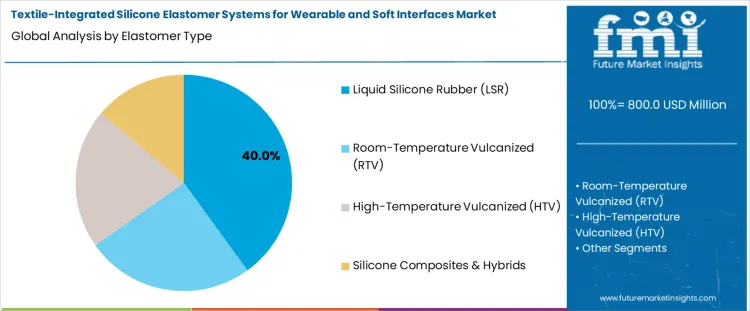
Liquid Silicone Rubber (LSR) accounts for 40% of the textile-integrated silicone elastomer systems market share due to its superior properties such as flexibility, durability, and biocompatibility. LSR is ideal for wearable and soft interface applications, as it provides excellent stretchability, comfort, and resistance to environmental factors like moisture and heat. LSR’s ability to be molded into intricate shapes also makes it perfect for integrating into textiles used in health & fitness wearables and smart textiles. As the demand for advanced wearables and flexible, skin-friendly materials increases, LSR remains the material of choice, reinforcing its leadership position in the market.
How Does the Health & Fitness Wearables Sector Contribute to the Market?
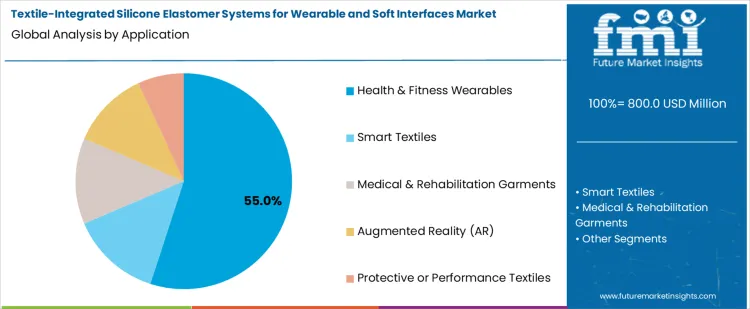
The health & fitness wearables sector represents 55% of the application segment in the textile-integrated silicone elastomer systems market. The demand for wearable devices in health and fitness is rapidly growing, driven by consumers’ increasing focus on monitoring their health, fitness, and well-being. Silicone elastomers, particularly LSR, are used in wearables for their softness, flexibility, and skin-friendly properties, ensuring comfort during prolonged use. These materials also offer durability and resistance to sweat, moisture, and environmental wear, which are essential for fitness and health tracking devices. As the wearables market continues to expand, health & fitness applications remain a key driver for growth in the silicone elastomer systems market.
What Are the Key Dynamics for the Textile-Integrated Silicone Elastomer Systems for Wearable and Soft Interfaces Market?
The Textile Integrated Silicone Elastomer Systems for Wearable and Soft Interfaces Market is shaped by increasing demand for smart, comfortable, and functional textile products in sectors such as healthcare, consumer electronics, sportswear, and industrial safety. Silicone elastomer systems integrated into textiles help create flexible, skin-friendly interfaces that improve fit, tactile feedback, and durability while enabling embedded sensors, haptics, and connectivity. As consumers seek higher comfort and performance in wearable devices and soft interfaces, manufacturers focus on seamless integration of silicone elastomers with fabrics. Advances in material engineering, coupled with growth in wearable adoption, are driving development of hybrid textile-silicone solutions.
How Are the Key Drivers Shaping the Textile Integrated Silicone Elastomer Systems for Wearable and Soft Interfaces Market?
Growth in the Textile-Integrated Silicone Elastomer Systems for Wearable and Soft Interfaces Market is driven by the growing adoption of wearable technology, including fitness trackers, smart garments, health monitors, and flexible electronics that demand soft, durable interfaces. Textile silicone hybrid systems offer excellent stretch, moisture management, and skin comfort, making them ideal for long-term wear. Increasing consumer focus on personalized comfort and performance enhances demand for materials that combine flexibility with electronic functionality. Collaboration between textile manufacturers, silicone compound developers, and electronics OEMs further accelerates innovation and deployment in consumer and medical wearables.
Why Are There Restraints Impacting the Textile Integrated Silicone Elastomer Systems for Wearable and Soft Interfaces Market?
The Textile-Integrated Silicone Elastomer Systems for Wearable and Soft Interfaces Market faces restraints due to the high development and integration costs associated with combining advanced silicone elastomers and textile substrates. Formulating compounds that balance elasticity, durability, and compatibility with textile knitting or weaving processes requires specialized expertise and testing. Production scalability remains challenging, as integration often involves custom tooling or processes that increase manufacturing costs. Ensuring consistent performance especially in wash durability, adhesion, and long-term skin comfort poses technical hurdles. Fragmented standards for wearable materials and variability in comfort expectations across regions further complicate broader adoption.
What is the Growth Outlook for the Textile-Integrated Silicone Elastomer Systems for Wearable and Soft Interfaces Market by Country?
| Country | CAGR (%) |
|---|---|
| China | 10.5% |
| USA | 8.0% |
| South Korea | 7.3% |
| Japan | 7.5% |
| Germany | 7.8% |
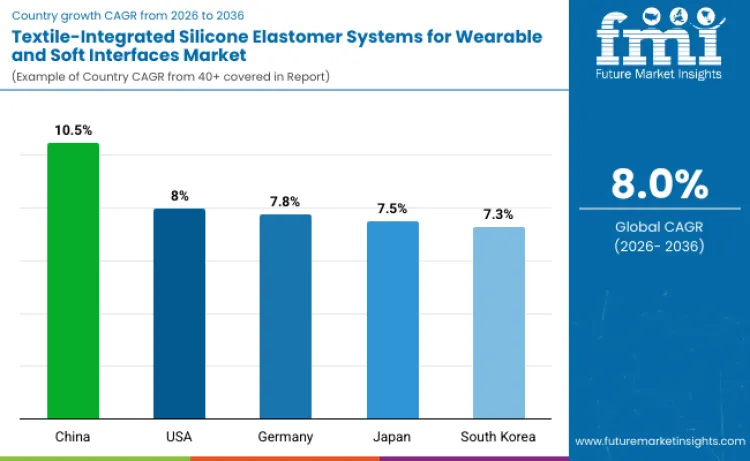
The textile-integrated silicone elastomer systems for wearable and soft interfaces market is experiencing robust growth across key regions. China leads with a 10.5% CAGR, driven by its expanding wearable technology market and rising demand for flexible, durable, and high-performance materials in consumer electronics and healthcare wearables, medical devices, and consumer electronics. The USA follows at 8%, supported by innovations in smart textiles and health-monitoring devices. South Korea’s market grows at 7.3%, backed by its commitment to advancing wearable technologies and flexible electronics.
Japan’s growth rate of 7.5% is fueled by its technological leadership in wearable devices and the adoption of soft interfaces. Germany grows at 7.8%, driven by strong demand for flexible, user-friendly wearables and medical solutions.
What is Driving the Growth of the Textile-Integrated Silicone Elastomer Systems for Wearable and Soft Interfaces Market in China?
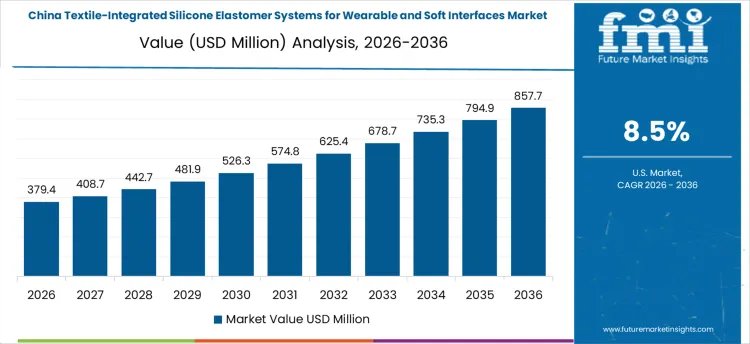
China’s textile-integrated silicone elastomer systems for wearable and soft interfaces market is growing at 10.5%, driven by the country’s rapid advancements in wearable technology, particularly in the healthcare and consumer electronics sectors. As wearable devices become more integrated into everyday life, there is a rising demand for flexible, durable, and comfortable materials like silicone elastomers. These materials are crucial for developing soft interfaces in wearables, including fitness trackers and medical monitoring devices.
China’s strong manufacturing base and focus on innovation in electronics and textiles are key factors contributing to market growth. The growing demand for smart textiles and wearable health devices further fuels the need for high-quality, textile-integrated silicone elastomers. With China’s commitment to becoming a global leader in wearable tech, the market for these systems is expected to continue its steady growth.
What is Contributing to the Growth of the Textile-Integrated Silicone Elastomer Systems for Wearable and Soft Interfaces Market in the USA?
The textile-integrated silicone elastomer systems for wearable and soft interfaces market in the USA is growing at 8%, supported by the increasing demand for wearable technologies in healthcare, fitness, and consumer electronics. As the USA leads in innovation and R&D, the need for soft, flexible, and durable materials for wearable devices is on the rise. Silicone elastomers, known for their ability to integrate with textiles, are playing a key role in enhancing comfort and functionality in wearable devices, such as smartwatches, fitness trackers, and health monitoring devices.
The demand for high-performance materials in these sectors is also driven by advancements in flexible electronics and sensor technologies. As wearable technology continues to grow in popularity and adoption, the market for textile-integrated silicone elastomers in the USA is expected to expand steadily, driven by both technological innovation and consumer demand.
How is the Textile-Integrated Silicone Elastomer Systems for Wearable and Soft Interfaces Market Expanding in Germany?
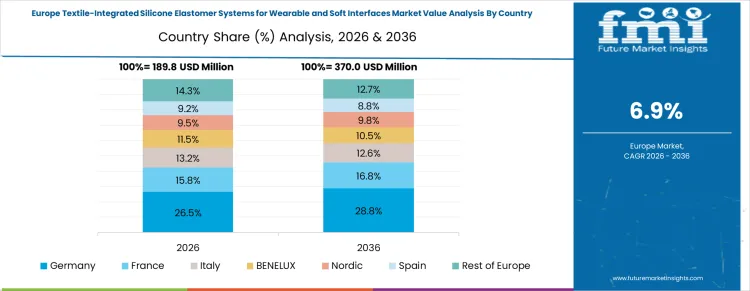
Germany’s textile-integrated silicone elastomer systems for wearable and soft interfaces market is growing at 7.8%, driven by the country’s strong industrial base, particularly in automotive and medical sectors. Germany’s focus on innovation and research in wearable technologies, including smart clothing and medical devices, is boosting the demand for textile-integrated silicone elastomers.
These elastomers provide a combination of flexibility, durability, and comfort, essential for wearable devices and soft interfaces in medical monitoring systems, fitness trackers, and automotive applications. As Germany continues to invest in advanced healthcare and wearable tech, the demand for high-performance materials like silicone elastomers in textiles is expected to rise. Germany’s commitment to sustainable manufacturing and its focus on creating cutting-edge technologies in textiles further contributes to the growing market for these advanced elastomer systems.
What is Driving the Growth of the Textile-Integrated Silicone Elastomer Systems for Wearable and Soft Interfaces Market in Japan?
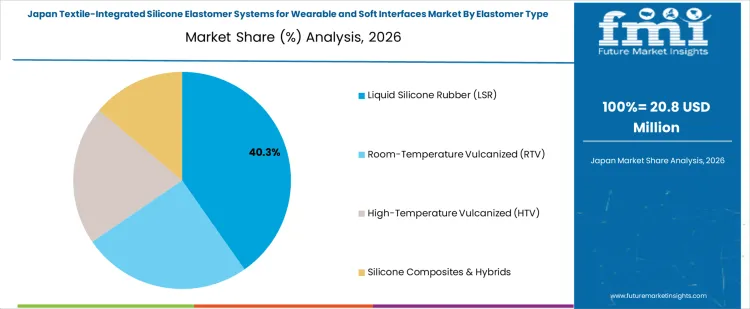
Japan’s textile-integrated silicone elastomer systems for wearable and soft interfaces market is growing at 7.5%, supported by the country’s leadership in technological innovation and its emphasis on wearable health devices. As the demand for flexible, comfortable, and durable materials rises in the wearable technology sector, textile-integrated silicone elastomers are becoming increasingly important. Japan’s robust electronics industry, including advancements in wearable health monitoring and fitness devices, is a key driver of market growth.
The adoption of smart textiles in both consumer products and healthcare applications is fueling demand for elastomer systems that provide high-performance, flexible, and skin-friendly solutions. Japan’s commitment to developing next-generation wearable technologies, along with its focus on user comfort and material efficiency, ensures steady growth for textile-integrated silicone elastomer systems in the coming years.
What is Contributing to the Growth of the Textile-Integrated Silicone Elastomer Systems for Wearable and Soft Interfaces Market in South Korea?
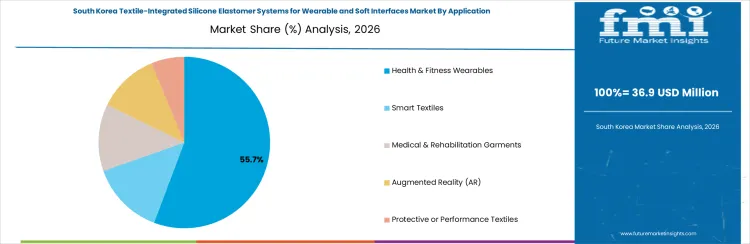
South Korea’s textile-integrated silicone elastomer systems for wearable and soft interfaces market is growing at 7.3%, driven by the country’s strong focus on technological advancements in wearable devices and flexible electronics. South Korea is making significant strides in developing soft interfaces for wearables, including smart clothing, health monitoring systems, and fitness devices. The demand for high-performance, flexible, and durable materials is rising as consumers seek more comfortable and user-friendly wearables.
South Korea’s tech-savvy population and the country’s increasing emphasis on healthcare innovations are key factors driving market growth. South Korea’s automotive industry is exploring wearable technologies for driver and passenger health monitoring, further boosting demand for textile-integrated silicone elastomer systems. As South Korea continues to innovate in wearable and textile technologies, its market for these elastomer systems is expected to grow steadily.
What Are the Competitive Strategies in the Textile-Integrated Silicone Elastomer Systems for Wearable and Soft Interfaces Market?
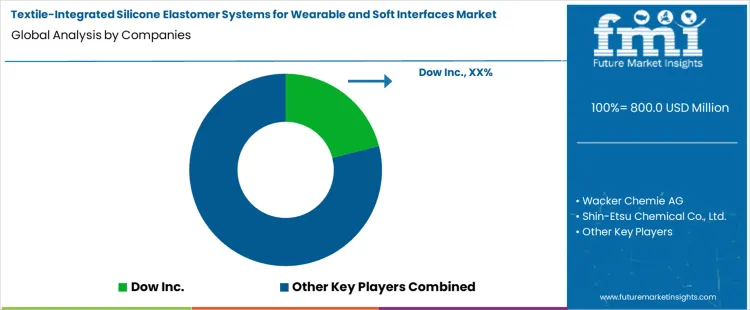
Competition in the textile-integrated silicone elastomer systems for wearable and soft interfaces market is shaped by material flexibility, comfort performance, skin compatibility, durability, and ease of integration into textile manufacturing processes. Dow Inc. positions its silicone elastomer systems with a focus on soft feel, stretchability, and robust adhesion to fabric substrates, and its product materials emphasize consistent comfort and reliable performance in wearable applications such as smart garments, fitness bands, and soft sensors.
Wacker Chemie AG competes with a broad portfolio of high-performance silicone elastomers engineered for flexible, breathable, and lightweight interfaces. Its brochures highlight excellent mechanical resilience and compatibility with diverse textile types, helping manufacturers design wearables that withstand repeated movement and environmental exposures. Shin-Etsu Chemical Co., Ltd. differentiates through specialty silicone formulations that offer controlled tack, tunable softness, and reliable integration with woven and knit fabrics, supported by product collateral that stresses process adaptability and comfort retention.
Momentive Performance Materials brings advanced silicone systems tailored for ergonomic fit and durability, and its documentation underscores precise curing behavior and textile bonding that support seamless integration into soft interfaces. Elkem ASA competes with innovative silicone elastomer grades that combine mechanical strength and stretch performance, marketed for use in wearable tech, medical textiles, and comfort-focused applications. Specialty Silicone Products, Inc. focuses on customized elastomer solutions designed to meet specific performance targets, with product materials highlighting batch consistency and skin friendly formulations.
Key Players in Textile-Integrated Silicone Elastomer Systems for Wearable and Soft Interfaces Market
- Dow Inc.
- Wacker Chemie AG
- Shin‑Etsu Chemical Co., Ltd.
- Momentive Performance Materials
- Elkem ASA
- Specialty Silicone Products, Inc.
Scope of Report
| Items | Values |
|---|---|
| Quantitative Unit (2026) | USD Million |
| Elastomer Type | Liquid Silicone Rubber (LSR), Room-Temperature Vulcanized (RTV), High-Temperature Vulcanized (HTV), Silicone Composites & Hybrids |
| Application | Health & Fitness Wearables, Smart Textiles, Medical & Rehabilitation Garments, Augmented Reality (AR), Protective or Performance Textiles |
| Regions Covered | Asia Pacific, Europe, North America, Latin America, Middle East & Africa |
| Countries Covered | USA, China, Japan, South Korea, India, Australia & New Zealand, ASEAN, Germany, UK, France, Italy, Spain, Nordic, BENELUX, Brazil, Chile, Mexico, Saudi Arabia, Other GCC Countries, Turkey, South Africa, Other African Union |
| Key Companies Profiled | Dow Inc., Wacker Chemie AG, Shin-Etsu Chemical Co., Ltd., Momentive Performance Materials, Elkem ASA, Specialty Silicone Products, Inc. |
| Additional Attributes | Dollar sales segmented by elastomer type, application, and region. Regional CAGR and growth outlook with an emphasis on wearables, medical garments, and smart textiles integrated with silicone elastomers. |
Textile-Integrated Silicone Elastomer Systems for Wearable and Soft Interfaces Market by Key Segments
Elastomer Type:
- Liquid Silicone Rubber (LSR)
- Room‑Temperature Vulcanized (RTV)
- High‑Temperature Vulcanized (HTV)
- Silicone Composites & Hybrids
Application:
- Health & Fitness Wearables
- Smart Textiles
- Medical & Rehabilitation Garments
- Augmented Reality (AR)
- Protective or Performance Textiles
Region:
- Asia Pacific
- China
- Japan
- South Korea
- India
- Australia & New Zealand
- ASEAN
- Rest of Asia Pacific
- Europe
- Germany
- United Kingdom
- France
- Italy
- Spain
- Nordic
- BENELUX
- Rest of Europe
- North America
- United States
- Canada
- Mexico
- Latin America
- Brazil
- Chile
- Rest of Latin America
- Middle East & Africa
- Kingdom of Saudi Arabia
- Other GCC Countries
- Turkey
- South Africa
- Other African Union
- Rest of Middle East & Africa
Frequently Asked Questions
How big is the textile-integrated silicone elastomer systems for wearable and soft interfaces market in 2026?
The global textile-integrated silicone elastomer systems for wearable and soft interfaces market is estimated to be valued at USD 800.0 million in 2026.
What will be the size of textile-integrated silicone elastomer systems for wearable and soft interfaces market in 2036?
The market size for the textile-integrated silicone elastomer systems for wearable and soft interfaces market is projected to reach USD 1,727.1 million by 2036.
How much will be the textile-integrated silicone elastomer systems for wearable and soft interfaces market growth between 2026 and 2036?
The textile-integrated silicone elastomer systems for wearable and soft interfaces market is expected to grow at a 8.0% CAGR between 2026 and 2036.
What are the key elastomer types in the textile-integrated silicone elastomer systems for wearable and soft interfaces market?
The key elastomer types in textile-integrated silicone elastomer systems for wearable and soft interfaces market are liquid silicone rubber (LSR), room-temperature vulcanized (RTV), high‑temperature vulcanized (HTV) and silicone composites & hybrids.
Which application segment will contribute significant share in the textile-integrated silicone elastomer systems for wearable and soft interfaces market in 2026?
In terms of application, health & fitness wearables segment to command 55.0% share in the textile-integrated silicone elastomer systems for wearable and soft interfaces market in 2026.
Preview the report firsthand - request a free sample
Get SampleGet the brochure for pricing and purchase details.
Get PDFTable of Content
- Executive Summary
- Global Market Outlook
- Demand-side Trends
- Supply-side Trends
- Technology Roadmap Analysis
- Analysis and Recommendations
- Market Overview
- Market Coverage / Taxonomy
- Market Definition / Scope / Limitations
- Market Background
- Market Dynamics
- Drivers
- Restraints
- Opportunity
- Trends
- Scenario Forecast
- Demand in Optimistic Scenario
- Demand in Likely Scenario
- Demand in Conservative Scenario
- Opportunity Map Analysis
- Product Life Cycle Analysis
- Supply Chain Analysis
- Investment Feasibility Matrix
- Value Chain Analysis
- PESTLE and Porter’s Analysis
- Regulatory Landscape
- Regional Parent Market Outlook
- Production and Consumption Statistics
- Import and Export Statistics
- Market Dynamics
- Global Market Analysis 2021 to 2025 and Forecast, 2026 to 2036
- Historical Market Size Value (USD Million) Analysis, 2021 to 2025
- Current and Future Market Size Value (USD Million) Projections, 2026 to 2036
- Y-o-Y Growth Trend Analysis
- Absolute $ Opportunity Analysis
- Global Market Pricing Analysis 2021 to 2025 and Forecast 2026 to 2036
- Global Market Analysis 2021 to 2025 and Forecast 2026 to 2036, By Elastomer Type
- Introduction / Key Findings
- Historical Market Size Value (USD Million) Analysis By Elastomer Type , 2021 to 2025
- Current and Future Market Size Value (USD Million) Analysis and Forecast By Elastomer Type , 2026 to 2036
- Liquid Silicone Rubber (LSR)
- Room‑Temperature Vulcanized (RTV)
- High‑Temperature Vulcanized (HTV)
- Silicone Composites & Hybrids
- Liquid Silicone Rubber (LSR)
- Y-o-Y Growth Trend Analysis By Elastomer Type , 2021 to 2025
- Absolute $ Opportunity Analysis By Elastomer Type , 2026 to 2036
- Global Market Analysis 2021 to 2025 and Forecast 2026 to 2036, By Application
- Introduction / Key Findings
- Historical Market Size Value (USD Million) Analysis By Application, 2021 to 2025
- Current and Future Market Size Value (USD Million) Analysis and Forecast By Application, 2026 to 2036
- Health & Fitness Wearables
- Smart Textiles
- Medical & Rehabilitation Garments
- Augmented Reality (AR)
- Protective or Performance Textiles
- Health & Fitness Wearables
- Y-o-Y Growth Trend Analysis By Application, 2021 to 2025
- Absolute $ Opportunity Analysis By Application, 2026 to 2036
- Global Market Analysis 2021 to 2025 and Forecast 2026 to 2036, By Region
- Introduction
- Historical Market Size Value (USD Million) Analysis By Region, 2021 to 2025
- Current Market Size Value (USD Million) Analysis and Forecast By Region, 2026 to 2036
- North America
- Latin America
- Western Europe
- Eastern Europe
- East Asia
- South Asia and Pacific
- Middle East & Africa
- Market Attractiveness Analysis By Region
- North America Market Analysis 2021 to 2025 and Forecast 2026 to 2036, By Country
- Historical Market Size Value (USD Million) Trend Analysis By Market Taxonomy, 2021 to 2025
- Market Size Value (USD Million) Forecast By Market Taxonomy, 2026 to 2036
- By Country
- USA
- Canada
- Mexico
- By Elastomer Type
- By Application
- By Country
- Market Attractiveness Analysis
- By Country
- By Elastomer Type
- By Application
- Key Takeaways
- Latin America Market Analysis 2021 to 2025 and Forecast 2026 to 2036, By Country
- Historical Market Size Value (USD Million) Trend Analysis By Market Taxonomy, 2021 to 2025
- Market Size Value (USD Million) Forecast By Market Taxonomy, 2026 to 2036
- By Country
- Brazil
- Chile
- Rest of Latin America
- By Elastomer Type
- By Application
- By Country
- Market Attractiveness Analysis
- By Country
- By Elastomer Type
- By Application
- Key Takeaways
- Western Europe Market Analysis 2021 to 2025 and Forecast 2026 to 2036, By Country
- Historical Market Size Value (USD Million) Trend Analysis By Market Taxonomy, 2021 to 2025
- Market Size Value (USD Million) Forecast By Market Taxonomy, 2026 to 2036
- By Country
- Germany
- UK
- Italy
- Spain
- France
- Nordic
- BENELUX
- Rest of Western Europe
- By Elastomer Type
- By Application
- By Country
- Market Attractiveness Analysis
- By Country
- By Elastomer Type
- By Application
- Key Takeaways
- Eastern Europe Market Analysis 2021 to 2025 and Forecast 2026 to 2036, By Country
- Historical Market Size Value (USD Million) Trend Analysis By Market Taxonomy, 2021 to 2025
- Market Size Value (USD Million) Forecast By Market Taxonomy, 2026 to 2036
- By Country
- Russia
- Poland
- Hungary
- Balkan & Baltic
- Rest of Eastern Europe
- By Elastomer Type
- By Application
- By Country
- Market Attractiveness Analysis
- By Country
- By Elastomer Type
- By Application
- Key Takeaways
- East Asia Market Analysis 2021 to 2025 and Forecast 2026 to 2036, By Country
- Historical Market Size Value (USD Million) Trend Analysis By Market Taxonomy, 2021 to 2025
- Market Size Value (USD Million) Forecast By Market Taxonomy, 2026 to 2036
- By Country
- China
- Japan
- South Korea
- By Elastomer Type
- By Application
- By Country
- Market Attractiveness Analysis
- By Country
- By Elastomer Type
- By Application
- Key Takeaways
- South Asia and Pacific Market Analysis 2021 to 2025 and Forecast 2026 to 2036, By Country
- Historical Market Size Value (USD Million) Trend Analysis By Market Taxonomy, 2021 to 2025
- Market Size Value (USD Million) Forecast By Market Taxonomy, 2026 to 2036
- By Country
- India
- ASEAN
- Australia & New Zealand
- Rest of South Asia and Pacific
- By Elastomer Type
- By Application
- By Country
- Market Attractiveness Analysis
- By Country
- By Elastomer Type
- By Application
- Key Takeaways
- Middle East & Africa Market Analysis 2021 to 2025 and Forecast 2026 to 2036, By Country
- Historical Market Size Value (USD Million) Trend Analysis By Market Taxonomy, 2021 to 2025
- Market Size Value (USD Million) Forecast By Market Taxonomy, 2026 to 2036
- By Country
- Kingdom of Saudi Arabia
- Other GCC Countries
- Turkiye
- South Africa
- Other African Union
- Rest of Middle East & Africa
- By Elastomer Type
- By Application
- By Country
- Market Attractiveness Analysis
- By Country
- By Elastomer Type
- By Application
- Key Takeaways
- Key Countries Market Analysis
- USA
- Pricing Analysis
- Market Share Analysis, 2025
- By Elastomer Type
- By Application
- Canada
- Pricing Analysis
- Market Share Analysis, 2025
- By Elastomer Type
- By Application
- Mexico
- Pricing Analysis
- Market Share Analysis, 2025
- By Elastomer Type
- By Application
- Brazil
- Pricing Analysis
- Market Share Analysis, 2025
- By Elastomer Type
- By Application
- Chile
- Pricing Analysis
- Market Share Analysis, 2025
- By Elastomer Type
- By Application
- Germany
- Pricing Analysis
- Market Share Analysis, 2025
- By Elastomer Type
- By Application
- UK
- Pricing Analysis
- Market Share Analysis, 2025
- By Elastomer Type
- By Application
- Italy
- Pricing Analysis
- Market Share Analysis, 2025
- By Elastomer Type
- By Application
- Spain
- Pricing Analysis
- Market Share Analysis, 2025
- By Elastomer Type
- By Application
- France
- Pricing Analysis
- Market Share Analysis, 2025
- By Elastomer Type
- By Application
- India
- Pricing Analysis
- Market Share Analysis, 2025
- By Elastomer Type
- By Application
- ASEAN
- Pricing Analysis
- Market Share Analysis, 2025
- By Elastomer Type
- By Application
- Australia & New Zealand
- Pricing Analysis
- Market Share Analysis, 2025
- By Elastomer Type
- By Application
- China
- Pricing Analysis
- Market Share Analysis, 2025
- By Elastomer Type
- By Application
- Japan
- Pricing Analysis
- Market Share Analysis, 2025
- By Elastomer Type
- By Application
- South Korea
- Pricing Analysis
- Market Share Analysis, 2025
- By Elastomer Type
- By Application
- Russia
- Pricing Analysis
- Market Share Analysis, 2025
- By Elastomer Type
- By Application
- Poland
- Pricing Analysis
- Market Share Analysis, 2025
- By Elastomer Type
- By Application
- Hungary
- Pricing Analysis
- Market Share Analysis, 2025
- By Elastomer Type
- By Application
- Kingdom of Saudi Arabia
- Pricing Analysis
- Market Share Analysis, 2025
- By Elastomer Type
- By Application
- Turkiye
- Pricing Analysis
- Market Share Analysis, 2025
- By Elastomer Type
- By Application
- South Africa
- Pricing Analysis
- Market Share Analysis, 2025
- By Elastomer Type
- By Application
- USA
- Market Structure Analysis
- Competition Dashboard
- Competition Benchmarking
- Market Share Analysis of Top Players
- By Regional
- By Elastomer Type
- By Application
- Competition Analysis
- Competition Deep Dive
- Dow Inc.
- Overview
- Product Portfolio
- Profitability by Market Segments (Product/Age /Sales Channel/Region)
- Sales Footprint
- Strategy Overview
- Marketing Strategy
- Product Strategy
- Channel Strategy
- Wacker Chemie AG
- Shin‑Etsu Chemical Co., Ltd.
- Momentive Performance Materials
- Elkem ASA
- Specialty Silicone Products, Inc.
- Dow Inc.
- Competition Deep Dive
- Assumptions & Acronyms Used
- Research Methodology


