

- Industry Size (2026)
- USD 1185.0 Mn
- Forecast (2036)
- USD 2375.0 Mn
- CAGR (2026 to 2036)
- 7.2%
Texture Recovery Hydrocolloids Market Forecast and Outlook 2026 to 2036
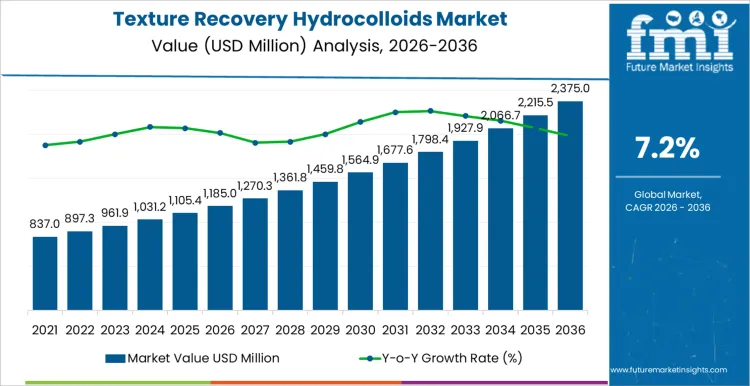
The texture recovery hydrocolloids market is projected to be valued at USD 1,185.0 million in 2026, and reach USD 2,375.0 million by 2036, at a 7.2% CAGR over the forecast period. Value expansion reflects structural dependence on hydrocolloid systems that restore viscosity, gel strength, and cohesion after exposure to heat, shear, freezing, or prolonged storage. Processing intensity in ready meals, frozen foods, sauces, and dairy alternatives disrupts native starch and protein networks, creating irreversible texture loss without recovery agents.
Texture recovery hydrocolloids address this structural degradation by rebuilding water binding and network integrity post-processing. Their use is embedded in manufacturing workflows where consistency at point of consumption matters more than initial mix viscosity, particularly in products subjected to reheating or temperature fluctuation across distribution.
Plant-based meat analogues, protein-fortified beverages, and reduced-sugar sauces rely on recovery functionality to offset weakened structural frameworks caused by ingredient substitution. Selection decisions prioritize resilience under repeated stress cycles rather than maximum thickening power, shaping demand toward hydrocolloids with predictable recovery behavior. Cost control further constrains usage to systems that deliver recovery at low inclusion rates without clouding, phase separation, or flavor interference. Regulatory acceptance and labeling tolerance influence formulation choices across regions, reinforcing preference for widely approved hydrocolloid classes. Texture recovery hydrocolloids remain positioned as risk-mitigation ingredients within high-stress processing environments rather than general-purpose texturizers.
Quick Stats for Texture Recovery Hydrocolloids Market
- Texture Recovery Hydrocolloids Market Value (2026): USD 1,185.0 million
- Texture Recovery Hydrocolloids Market Forecast Value (2036): USD 2,375.0 million
- Texture Recovery Hydrocolloids Market Forecast CAGR 2026 to 2036: 7.2%
- Leading Hydrocolloid Type by Demand Share: Modified starch
- Fastest-Growing Countries: India, China, Brazil, USA, UK
- Top Players in Global Demand: Ingredion, Cargill, Tate & Lyle, ADM, CP Kelco
Texture Recovery Hydrocolloids Market Key Takeaways
| Metric | Value |
|---|---|
| Market Value (2026) | USD 1,185.0 million |
| Market Forecast Value (2036) | USD 2,375.0 million |
| Forecast CAGR 2026 to 2036 | 7.2% |
Why is the Demand for Texture Recovery Hydrocolloids Growing?
Demand for texture recovery hydrocolloids is rising as food manufacturers address challenges linked to processing stresses that alter product structure and mouthfeel. High shear mixing, heat treatment, freezing, and mechanical handling can disrupt gel networks and weaken texture in products such as sauces, dressings, meat analogues, and dairy alternatives. Texture recovery hydrocolloids are incorporated to rebuild viscosity and structural cohesion after processing events that would otherwise leave products thin, syneresed, or lacking body. Manufacturers in the plant based protein segment rely on these hydrocolloids to restore chewiness and juiciness that may be lost when replacing traditional animal proteins. Beverage formulators include recovery agents in flavored drinks that encounter temperature variation during distribution to maintain desirable consistency and prevent separation.
Procurement activity in bakery and confectionery also supports growth because products subjected to freezing and thaw cycles, such as frozen desserts and filled pastries, depend on hydrocolloids that reestablish texture at service temperature. Ingredient scientists design systems that interact with starches, proteins, and emulsifiers to achieve targeted texture benchmarks under varied pH and ionic conditions typical of industrial formulations. Sensory and rheological testing guides selection of specific hydrocolloids tailored to product category and processing conditions, enabling developers to meet consumer expectations for texture quality across diverse applications.
How Is the Texture Recovery Hydrocolloids Industry Segmented by Hydrocolloid Type, Functional Role, and Application?
Demand for texture recovery hydrocolloids is driven by reformulation pressure, thermal processing stress, and freeze-thaw instability across packaged foods. Manufacturers require consistent texture retention after heating, freezing, mixing, and storage. Usage intensity varies by processing severity, moisture migration risk, and shelf-life targets. Ingredient selection prioritizes functional recovery, processing tolerance, and compatibility with existing formulations. Segmentation explains how hydrocolloid chemistry, functional purpose, and food category influence adoption across frozen, processed, and dairy-based product systems.
Which Hydrocolloid Type Holds the Largest Share in Texture Recovery Solutions?
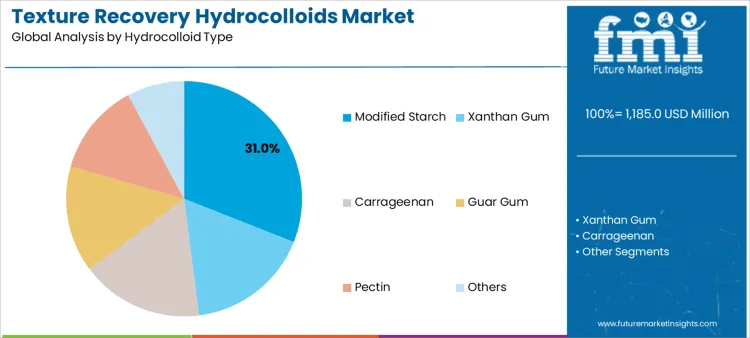
Modified starch holds 31.0%, reflecting widespread use for rebuilding structure after thermal processing and freezing stress. These systems provide bulk, viscosity recovery, and process tolerance across high-volume formulations. Xanthan gum accounts for 24.0%, supporting shear stability and consistent viscosity during aggressive mixing and pumping operations. Carrageenan represents 17.0%, applied for gel strength and protein interaction in dairy-based matrices. Guar gum at 12.0% contributes water binding and softness recovery. Pectin holds 9.0%, focused on fruit-based and acidic systems. Other hydrocolloids account for 7.0%. Type segmentation shows preference for starch systems supported by cost efficiency and broad functionality.
Key Points
- Modified starch leads due to processing resilience.
- Xanthan gum supports shear-stable viscosity recovery.
- Carrageenan and pectin serve matrix-specific needs.
How Does Functional Role Segmentation Shape Demand for Texture Recovery Hydrocolloids?
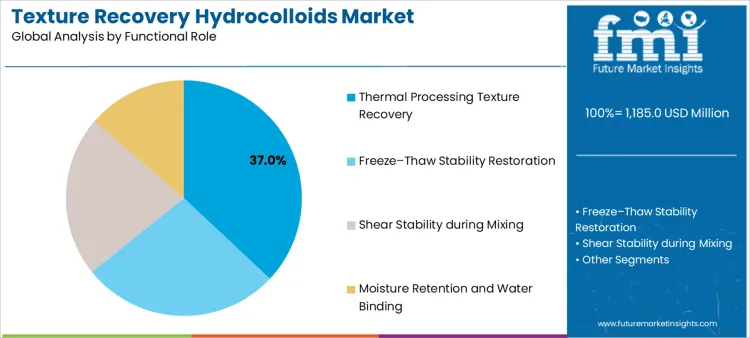
Thermal processing texture recovery represents 37.0%, driven by heat-induced breakdown during retorting, baking, and cooking. Freeze-thaw stability restoration accounts for 29.0%, reflecting need to prevent syneresis and texture collapse in frozen products. Shear stability during mixing holds 20.0%, supporting texture retention through industrial agitation and filling operations. Moisture retention and water binding represent 14.0%, applied to limit dehydration and structural weakening during storage. Functional segmentation highlights stronger demand where multiple stress factors compromise texture integrity throughout production and distribution cycles.
Key Points
- Heat processing drives primary texture recovery demand.
- Freeze-thaw stability supports frozen product quality.
- Shear resistance preserves structure during mixing.
Which Application Areas Drive Utilization of Texture Recovery Hydrocolloids?
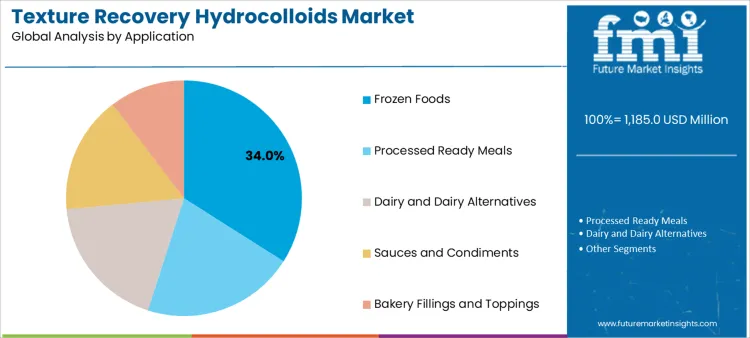
Frozen foods account for 34.0%, reflecting repeated freeze-thaw exposure and high texture sensitivity. Processed ready meals represent 28.0%, requiring stability through reheating and extended shelf life. Dairy and dairy alternatives at 19.0% depend on hydrocolloids for body restoration and phase stability. Sauces and condiments account for 13.0%, focusing on viscosity recovery after heat and shear. Bakery fillings and toppings represent 6.0%, applied to prevent breakdown during baking and storage. Application segmentation shows concentration where processing stress and consumer texture expectations intersect.
Key Points
- Frozen foods generate the highest recovery demand.
- Ready meals require stability after reheating.
- Dairy systems focus on body and phase control.
What are the Key Dynamics in the Texture Recovery Hydrocolloids Market?
Demand in the texture recovery hydrocolloids market is influenced by food manufacturers’ need to restore texture lost during processing or reformulation, especially in reduced-fat, reduced-sugar, and clean-label products. Activity centers on applications such as sauces, prepared meals, dairy alternatives, and meat analogs where mouthfeel, gel strength, and bite are critical to consumer perception. Value is defined by a hydrocolloid’s ability to rebuild structure after thermal processing, freeze-thaw cycles, or mechanical shear. Ingredient selection, supplier consistency, and suitability for targeted processing conditions shape procurement choices in formulations requiring specific textural outcomes.
How do processing induced textural changes in specific food categories shape adoption?
Demand for texture recovery hydrocolloids intensifies where processing steps diminish structural integrity. In sauces and gravies, shear from high-speed mixing and elevated heat can break down viscosity, creating thin or unstable products; hydrocolloids that rebuild network formation under these conditions support product quality.
Prepared meals subjected to freezing and reheating require agents that prevent water separation and maintain bite, influencing selection of high-performance gums or starch derivatives. Dairy alternatives such as almond or oat yogurts exhibit grainy or runny texture when traditional fat and protein networks are reduced; tailored hydrocolloid systems deliver creaminess and gel strength that align with consumer expectations. Meat analog products undergoing extrusion benefit from hydrocolloids that support fibrous texture and moisture retention, helping simulate succulence without animal fats.
How do functional performance limits and regulatory frameworks influence market scalability?
Market scalability is affected by functional performance boundaries inherent to hydrocolloid systems and the regulatory environments governing their use. Some texture recovery agents lose efficacy under extreme pH or prolonged heat, requiring formulators to adjust doses or combine multiple agents to achieve target texture, which adds complexity to development. Regional differences in classification, permitted use levels, and labeling for specific hydrocolloid types guide where manufacturers apply these ingredients across global product portfolios.
Cost considerations arise when tailored systems with multiple components are necessary to balance gel strength, clarity, and stability across processing regimes, affecting price points in competitive categories. Sensory evaluation requirements, including texture profiling with trained panels, extend development timelines for products that rely on specific mouthfeel attributes to secure repeat purchases.
How Is Demand for the Texture Recovery Hydrocolloids Market Evolving Globally?
Global demand for texture recovery hydrocolloids is increasing as food manufacturers reformulate products with reduced sugar, fat, and protein while protecting sensory structure. Growth reflects rising reliance on hydrocolloids to rebuild viscosity, gel strength, and mouth-coating properties lost during reformulation. Demand expansion remains closely linked to beverages, dairy alternatives, bakery fillings, sauces, and functional nutrition products. India records 8.6% CAGR, China records 8.3% CAGR, Brazil records 7.9% CAGR, USA records 6.8% CAGR, and UK records 6.5% CAGR. Adoption intensity is driven by reformulation depth and processing complexity rather than packaged food volume expansion.
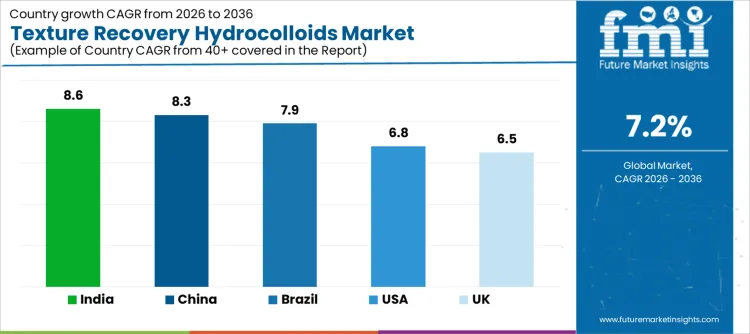
| Country | CAGR (%) |
|---|---|
| India | 8.6% |
| China | 8.3% |
| Brazil | 7.9% |
| USA | 6.8% |
| UK | 6.5% |
What is driving growth of texture recovery hydrocolloids demand in India?
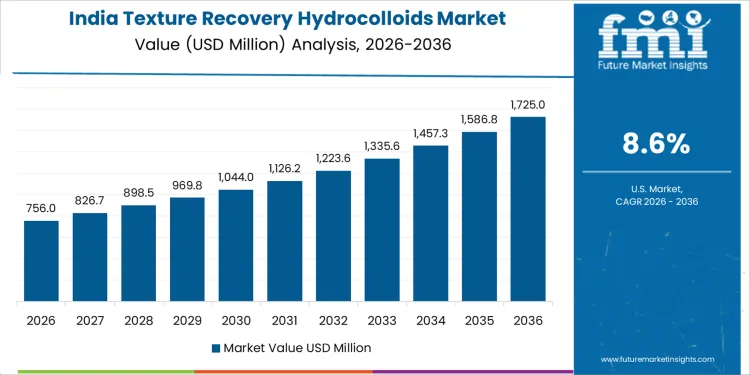
Demand for texture recovery hydrocolloids in India is expanding as packaged food and beverage manufacturers reformulate products with lower sugar and fat levels. Growth at 8.6% CAGR reflects strong usage in dairy beverages, flavored milk, syrups, and fortified drinks where viscosity loss affects consumer acceptance. High-temperature processing and extended shelf life requirements increase reliance on stable hydrocolloid systems. Cost sensitivity favors solutions delivering thickness and mouthfeel at low inclusion rates. Domestic formulation teams prioritize hydrocolloids compatible with large-scale thermal processing. Demand remains concentrated within urban-focused health beverages and mass-market fortified foods.
- Sugar and fat reduction driven texture loss
- Expansion of fortified beverage formulations
- Preference for heat-stable hydrocolloids
- Cost-efficient viscosity restoration
Why is China seeing expansion in texture recovery hydrocolloids adoption?
Texture recovery hydrocolloids demand in China is rising as industrial food processors reformulate products aligned with nutrition and sugar intake guidance. Growth at 8.3% CAGR reflects strong application in ready-to-drink beverages, yogurt drinks, and nutritional powders. Reduced sugar and protein fortification create thinning challenges requiring precise texture rebuilding. High-volume manufacturing environments require consistent viscosity across large batches. Domestic ingredient suppliers scale pectin, gum, and cellulose systems for industrial use. Demand concentration remains within centralized processing operations supplying modern retail and foodservice channels.
- High-volume beverage reformulation
- Texture rebuilding in protein-fortified products
- Industrial consistency requirements
- Expansion of functional dairy drinks
What factors are shaping texture recovery hydrocolloids sales in Brazil?
Sales of texture recovery hydrocolloids in Brazil are increasing as beverage and food manufacturers respond to nutrition labeling and sugar disclosure rules. Growth at 7.9% CAGR reflects reformulation across carbonated drinks, juices, and dairy-based beverages. Reduced sugar formulations weaken body and mouthfeel, increasing reliance on hydrocolloid systems. Tropical flavor matrices amplify texture perception challenges under reformulation. Local producers focus on restoring thickness and smoothness to protect mass-market acceptance. Demand remains strongest in beverages and dessert-style dairy products serving price-sensitive consumers.
- Nutrition labeling driven reformulation
- Beverage-focused application demand
- Texture restoration in reduced sugar systems
- Emphasis on mass-market sensory acceptance
How is the USA supporting growth of texture recovery hydrocolloids demand?
Texture recovery hydrocolloids market demand in the USA is advancing as manufacturers execute large-scale reformulation programs. Growth at 6.8% CAGR reflects adoption across protein beverages, plant-based dairy alternatives, sauces, and reduced sugar snacks. Sugar and fat removal weakens viscosity and lubrication, increasing dependence on hydrocolloid solutions. Ingredient strategies prioritize clean label positioning and processing reliability. Large brands specify systems that preserve established sensory profiles across reformulated SKUs. Demand is driven by texture risk mitigation rather than category expansion.
- Growth of plant-based and protein beverages
- Sugar and fat reduction reformulation
- Clean label texture systems
- Focus on sensory profile stability
What is driving expansion of texture recovery hydrocolloids demand in the UK?
Demand for texture recovery hydrocolloids in the UK is rising as sugar taxation and public health frameworks reshape formulation strategies. Growth at 6.5% CAGR reflects reformulation across beverages, dairy alternatives, bakery fillings, and sauces. Texture degradation from sugar reduction increases reliance on hydrocolloids that rebuild body and flow behavior. Retail nutritional standards accelerate adoption across private label and branded products. Ingredient selection emphasizes regulatory approval and label simplicity. Demand remains tied to compliance-driven reformulation cycles rather than changes in food consumption volumes.
- Sugar levy driven reformulation
- Expansion of dairy alternative products
- Retail texture quality requirements
- Clean label formulation priorities
What is the competitive landscape of demand for the texture recovery hydrocolloids market globally?
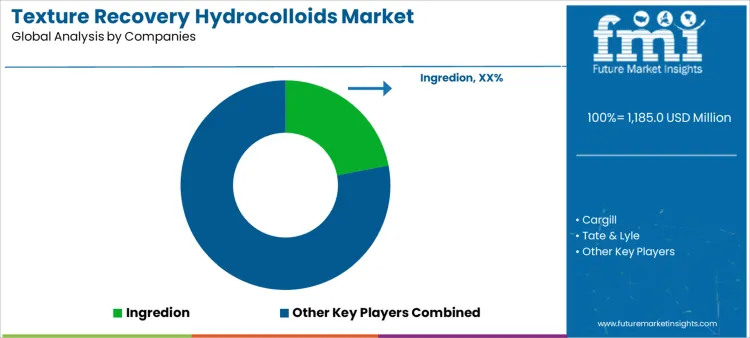
Demand for texture recovery hydrocolloids is driven by reformulation activity, reduced sugar and fat targets, and processing stability requirements. Food formulators assess viscosity rebuilding capability, water binding efficiency, shear and heat tolerance, and performance consistency across beverages, dairy, bakery, and plant-based products. Buyer assessment includes clean label positioning, interaction with proteins and sweeteners, dosage efficiency, and batch-to-batch reliability. Procurement behavior reflects extended product development cycles, pilot-scale validation, and preference for suppliers offering strong application and sensory support. Trend in the texture recovery hydrocolloids market reflects rising focus on restoring mouthfeel and structure lost during nutritional optimization.
Ingredion leads competitive positioning through broad hydrocolloid systems integrated with starches and texturizers for formulation flexibility. Cargill competes by supplying hydrocolloids aligned with texture stabilization and process robustness across packaged food applications. Tate and Lyle supports demand with carbohydrate-based solutions designed to recover body and structure in reduced formulation systems. ADM maintains relevance through formulation expertise and scalable ingredient supply supporting global manufacturers. CP Kelco participates with specialty hydrocolloids emphasizing high functionality and consistency in challenging processing environments. Competitive differentiation centers on texture recovery effectiveness, formulation adaptability, regulatory acceptance, and depth of technical collaboration.
Key Players in the Texture Recovery Hydrocolloids Market
- Ingredion
- Cargill
- Tate & Lyle
- ADM
- CP Kelco
- Others
Scope of the Report
| Items | Values |
|---|---|
| Quantitative Units | USD million |
| Hydrocolloid Type | Modified Starch; Xanthan Gum; Carrageenan; Guar Gum; Pectin; Others |
| Functional Role | Thermal Processing Texture Recovery; Freeze-Thaw Stability Restoration; Shear Stability during Mixing; Moisture Retention and Water Binding |
| Application | Frozen Foods; Processed Ready Meals; Dairy and Dairy Alternatives; Sauces and Condiments; Bakery Fillings and Toppings |
| Regions Covered | Asia Pacific, Europe, North America, Latin America, Middle East & Africa |
| Countries Covered | India, China, Brazil, USA, UK, and 40+ countries |
| Key Companies Profiled | Ingredion; Cargill; Tate & Lyle; ADM; CP Kelco; Others |
| Additional Attributes | Dollar sales by hydrocolloid type, functional role, and application; effectiveness in restoring texture after thermal processing and freeze-thaw cycles; performance differences among starches, gums, and pectin systems under shear and temperature stress; water-binding capacity influencing mouthfeel and product stability; suitability for frozen, dairy, and sauce formulations; procurement dynamics shaped by large-scale food processing requirements and long-term ingredient supply agreements. |
Texture Recovery Hydrocolloids Market by Segment
Hydrocolloid Type:
- Modified Starch
- Xanthan Gum
- Carrageenan
- Guar Gum
- Pectin
- Others
Functional Role:
- Thermal Processing Texture Recovery
- Freeze-Thaw Stability Restoration
- Shear Stability during Mixing
- Moisture Retention and Water Binding
Application:
- Frozen Foods
- Processed Ready Meals
- Dairy and Dairy Alternatives
- Sauces and Condiments
- Bakery Fillings and Toppings
Region:
- Asia Pacific
- China
- Japan
- South Korea
- India
- Australia & New Zealand
- ASEAN
- Rest of Asia Pacific
- Europe
- Germany
- United Kingdom
- France
- Italy
- Spain
- Nordic
- BENELUX
- Rest of Europe
- North America
- United States
- Canada
- Mexico
- Latin America
- Brazil
- Chile
- Rest of Latin America
- Middle East & Africa
- Kingdom of Saudi Arabia
- Other GCC Countries
- Turkey
- South Africa
- Other African Union
- Rest of Middle East & Africa
Bibliography
- Codex Alimentarius Commission. (2023). General standard for food additives: Provisions applicable to hydrocolloids, thickeners, and stabilizing agents used for texture recovery. FAO/WHO.
- European Food Safety Authority. (2023). Re-evaluation of hydrocolloids used as texture modifiers under thermal and freeze-thaw processing conditions. EFSA Journal.
- Food and Agriculture Organization of the United Nations. (2023). Hydrocolloids in food systems: Functional roles in texture recovery, water binding, and stability. FAO.
- International Organization for Standardization. (2023). ISO 11036: Sensory analysis - Methodology for texture profile and mouthfeel evaluation. ISO.
- World Health Organization. (2023). Reformulation of processed foods: Texture, stability, and sensory considerations under sugar and fat reduction strategies. World Health Organization.
Frequently Asked Questions
How big is the texture recovery hydrocolloids market in 2026?
The global texture recovery hydrocolloids market is estimated to be valued at USD 1,185.0 million in 2026.
What will be the size of texture recovery hydrocolloids market in 2036?
The market size for the texture recovery hydrocolloids market is projected to reach USD 2,375.0 million by 2036.
How much will be the texture recovery hydrocolloids market growth between 2026 and 2036?
The texture recovery hydrocolloids market is expected to grow at a 7.2% CAGR between 2026 and 2036.
What are the key product types in the texture recovery hydrocolloids market?
The key product types in texture recovery hydrocolloids market are modified starch, xanthan gum, carrageenan, guar gum, pectin and others.
Which functional role segment to contribute significant share in the texture recovery hydrocolloids market in 2026?
In terms of functional role, thermal processing texture recovery segment to command 37.0% share in the texture recovery hydrocolloids market in 2026.
Preview the report firsthand - request a free sample
Get SampleGet the brochure for pricing and purchase details.
Get PDFTable of Content
- Executive Summary
- Global Market Outlook
- Demand-side Trends
- Supply-side Trends
- Technology Roadmap Analysis
- Analysis and Recommendations
- Market Overview
- Market Coverage / Taxonomy
- Market Definition / Scope / Limitations
- Market Background
- Market Dynamics
- Drivers
- Restraints
- Opportunity
- Trends
- Scenario Forecast
- Demand in Optimistic Scenario
- Demand in Likely Scenario
- Demand in Conservative Scenario
- Opportunity Map Analysis
- Product Life Cycle Analysis
- Supply Chain Analysis
- Investment Feasibility Matrix
- Value Chain Analysis
- PESTLE and Porter’s Analysis
- Regulatory Landscape
- Regional Parent Market Outlook
- Production and Consumption Statistics
- Import and Export Statistics
- Market Dynamics
- Global Market Analysis 2021 to 2025 and Forecast, 2026 to 2036
- Historical Market Size Value (USD Million) Analysis, 2021 to 2025
- Current and Future Market Size Value (USD Million) Projections, 2026 to 2036
- Y-o-Y Growth Trend Analysis
- Absolute $ Opportunity Analysis
- Global Market Pricing Analysis 2021 to 2025 and Forecast 2026 to 2036
- Global Market Analysis 2021 to 2025 and Forecast 2026 to 2036, By Hydrocolloid Type
- Introduction / Key Findings
- Historical Market Size Value (USD Million) Analysis By Hydrocolloid Type , 2021 to 2025
- Current and Future Market Size Value (USD Million) Analysis and Forecast By Hydrocolloid Type , 2026 to 2036
- Modified Starch
- Xanthan Gum
- Carrageenan
- Guar Gum
- Pectin
- Others
- Modified Starch
- Y-o-Y Growth Trend Analysis By Hydrocolloid Type , 2021 to 2025
- Absolute $ Opportunity Analysis By Hydrocolloid Type , 2026 to 2036
- Global Market Analysis 2021 to 2025 and Forecast 2026 to 2036, By Functional Role
- Introduction / Key Findings
- Historical Market Size Value (USD Million) Analysis By Functional Role, 2021 to 2025
- Current and Future Market Size Value (USD Million) Analysis and Forecast By Functional Role, 2026 to 2036
- Thermal Processing Texture Recovery
- Freeze–Thaw Stability Restoration
- Shear Stability during Mixing
- Moisture Retention and Water Binding
- Thermal Processing Texture Recovery
- Y-o-Y Growth Trend Analysis By Functional Role, 2021 to 2025
- Absolute $ Opportunity Analysis By Functional Role, 2026 to 2036
- Global Market Analysis 2021 to 2025 and Forecast 2026 to 2036, By Application
- Introduction / Key Findings
- Historical Market Size Value (USD Million) Analysis By Application, 2021 to 2025
- Current and Future Market Size Value (USD Million) Analysis and Forecast By Application, 2026 to 2036
- Frozen Foods
- Processed Ready Meals
- Dairy and Dairy Alternatives
- Sauces and Condiments
- Bakery Fillings and Toppings
- Frozen Foods
- Y-o-Y Growth Trend Analysis By Application, 2021 to 2025
- Absolute $ Opportunity Analysis By Application, 2026 to 2036
- Global Market Analysis 2021 to 2025 and Forecast 2026 to 2036, By Region
- Introduction
- Historical Market Size Value (USD Million) Analysis By Region, 2021 to 2025
- Current Market Size Value (USD Million) Analysis and Forecast By Region, 2026 to 2036
- North America
- Latin America
- Western Europe
- Eastern Europe
- East Asia
- South Asia and Pacific
- Middle East & Africa
- Market Attractiveness Analysis By Region
- North America Market Analysis 2021 to 2025 and Forecast 2026 to 2036, By Country
- Historical Market Size Value (USD Million) Trend Analysis By Market Taxonomy, 2021 to 2025
- Market Size Value (USD Million) Forecast By Market Taxonomy, 2026 to 2036
- By Country
- USA
- Canada
- Mexico
- By Hydrocolloid Type
- By Functional Role
- By Application
- By Country
- Market Attractiveness Analysis
- By Country
- By Hydrocolloid Type
- By Functional Role
- By Application
- Key Takeaways
- Latin America Market Analysis 2021 to 2025 and Forecast 2026 to 2036, By Country
- Historical Market Size Value (USD Million) Trend Analysis By Market Taxonomy, 2021 to 2025
- Market Size Value (USD Million) Forecast By Market Taxonomy, 2026 to 2036
- By Country
- Brazil
- Chile
- Rest of Latin America
- By Hydrocolloid Type
- By Functional Role
- By Application
- By Country
- Market Attractiveness Analysis
- By Country
- By Hydrocolloid Type
- By Functional Role
- By Application
- Key Takeaways
- Western Europe Market Analysis 2021 to 2025 and Forecast 2026 to 2036, By Country
- Historical Market Size Value (USD Million) Trend Analysis By Market Taxonomy, 2021 to 2025
- Market Size Value (USD Million) Forecast By Market Taxonomy, 2026 to 2036
- By Country
- Germany
- UK
- Italy
- Spain
- France
- Nordic
- BENELUX
- Rest of Western Europe
- By Hydrocolloid Type
- By Functional Role
- By Application
- By Country
- Market Attractiveness Analysis
- By Country
- By Hydrocolloid Type
- By Functional Role
- By Application
- Key Takeaways
- Eastern Europe Market Analysis 2021 to 2025 and Forecast 2026 to 2036, By Country
- Historical Market Size Value (USD Million) Trend Analysis By Market Taxonomy, 2021 to 2025
- Market Size Value (USD Million) Forecast By Market Taxonomy, 2026 to 2036
- By Country
- Russia
- Poland
- Hungary
- Balkan & Baltic
- Rest of Eastern Europe
- By Hydrocolloid Type
- By Functional Role
- By Application
- By Country
- Market Attractiveness Analysis
- By Country
- By Hydrocolloid Type
- By Functional Role
- By Application
- Key Takeaways
- East Asia Market Analysis 2021 to 2025 and Forecast 2026 to 2036, By Country
- Historical Market Size Value (USD Million) Trend Analysis By Market Taxonomy, 2021 to 2025
- Market Size Value (USD Million) Forecast By Market Taxonomy, 2026 to 2036
- By Country
- China
- Japan
- South Korea
- By Hydrocolloid Type
- By Functional Role
- By Application
- By Country
- Market Attractiveness Analysis
- By Country
- By Hydrocolloid Type
- By Functional Role
- By Application
- Key Takeaways
- South Asia and Pacific Market Analysis 2021 to 2025 and Forecast 2026 to 2036, By Country
- Historical Market Size Value (USD Million) Trend Analysis By Market Taxonomy, 2021 to 2025
- Market Size Value (USD Million) Forecast By Market Taxonomy, 2026 to 2036
- By Country
- India
- ASEAN
- Australia & New Zealand
- Rest of South Asia and Pacific
- By Hydrocolloid Type
- By Functional Role
- By Application
- By Country
- Market Attractiveness Analysis
- By Country
- By Hydrocolloid Type
- By Functional Role
- By Application
- Key Takeaways
- Middle East & Africa Market Analysis 2021 to 2025 and Forecast 2026 to 2036, By Country
- Historical Market Size Value (USD Million) Trend Analysis By Market Taxonomy, 2021 to 2025
- Market Size Value (USD Million) Forecast By Market Taxonomy, 2026 to 2036
- By Country
- Kingdom of Saudi Arabia
- Other GCC Countries
- Turkiye
- South Africa
- Other African Union
- Rest of Middle East & Africa
- By Hydrocolloid Type
- By Functional Role
- By Application
- By Country
- Market Attractiveness Analysis
- By Country
- By Hydrocolloid Type
- By Functional Role
- By Application
- Key Takeaways
- Key Countries Market Analysis
- USA
- Pricing Analysis
- Market Share Analysis, 2025
- By Hydrocolloid Type
- By Functional Role
- By Application
- Canada
- Pricing Analysis
- Market Share Analysis, 2025
- By Hydrocolloid Type
- By Functional Role
- By Application
- Mexico
- Pricing Analysis
- Market Share Analysis, 2025
- By Hydrocolloid Type
- By Functional Role
- By Application
- Brazil
- Pricing Analysis
- Market Share Analysis, 2025
- By Hydrocolloid Type
- By Functional Role
- By Application
- Chile
- Pricing Analysis
- Market Share Analysis, 2025
- By Hydrocolloid Type
- By Functional Role
- By Application
- Germany
- Pricing Analysis
- Market Share Analysis, 2025
- By Hydrocolloid Type
- By Functional Role
- By Application
- UK
- Pricing Analysis
- Market Share Analysis, 2025
- By Hydrocolloid Type
- By Functional Role
- By Application
- Italy
- Pricing Analysis
- Market Share Analysis, 2025
- By Hydrocolloid Type
- By Functional Role
- By Application
- Spain
- Pricing Analysis
- Market Share Analysis, 2025
- By Hydrocolloid Type
- By Functional Role
- By Application
- France
- Pricing Analysis
- Market Share Analysis, 2025
- By Hydrocolloid Type
- By Functional Role
- By Application
- India
- Pricing Analysis
- Market Share Analysis, 2025
- By Hydrocolloid Type
- By Functional Role
- By Application
- ASEAN
- Pricing Analysis
- Market Share Analysis, 2025
- By Hydrocolloid Type
- By Functional Role
- By Application
- Australia & New Zealand
- Pricing Analysis
- Market Share Analysis, 2025
- By Hydrocolloid Type
- By Functional Role
- By Application
- China
- Pricing Analysis
- Market Share Analysis, 2025
- By Hydrocolloid Type
- By Functional Role
- By Application
- Japan
- Pricing Analysis
- Market Share Analysis, 2025
- By Hydrocolloid Type
- By Functional Role
- By Application
- South Korea
- Pricing Analysis
- Market Share Analysis, 2025
- By Hydrocolloid Type
- By Functional Role
- By Application
- Russia
- Pricing Analysis
- Market Share Analysis, 2025
- By Hydrocolloid Type
- By Functional Role
- By Application
- Poland
- Pricing Analysis
- Market Share Analysis, 2025
- By Hydrocolloid Type
- By Functional Role
- By Application
- Hungary
- Pricing Analysis
- Market Share Analysis, 2025
- By Hydrocolloid Type
- By Functional Role
- By Application
- Kingdom of Saudi Arabia
- Pricing Analysis
- Market Share Analysis, 2025
- By Hydrocolloid Type
- By Functional Role
- By Application
- Turkiye
- Pricing Analysis
- Market Share Analysis, 2025
- By Hydrocolloid Type
- By Functional Role
- By Application
- South Africa
- Pricing Analysis
- Market Share Analysis, 2025
- By Hydrocolloid Type
- By Functional Role
- By Application
- USA
- Market Structure Analysis
- Competition Dashboard
- Competition Benchmarking
- Market Share Analysis of Top Players
- By Regional
- By Hydrocolloid Type
- By Functional Role
- By Application
- Competition Analysis
- Competition Deep Dive
- Ingredion
- Overview
- Product Portfolio
- Profitability by Market Segments (Product/Age /Sales Channel/Region)
- Sales Footprint
- Strategy Overview
- Marketing Strategy
- Product Strategy
- Channel Strategy
- Cargill
- Tate & Lyle
- ADM
- CP Kelco
- Others
- Ingredion
- Competition Deep Dive
- Assumptions & Acronyms Used
- Research Methodology


