

- Industry Size (2026)
- USD 1180.0 Mn
- Forecast (2036)
- USD 2215.0 Mn
- CAGR (2026 to 2036)
- 6.50%
Turf Aeration Machine Market Forecast and Outlook 2026 to 2036
The turf aeration machine market is valued at USD 1,180.0 million in 2026 and is projected to reach USD 2215 million by 2036, expanding at a CAGR of 6.5% over the forecast period. Between 2026 and 2036, market performance is shaped less by unit volumes and more by equipment uptime, fleet standardization, and replacement cycles within professional turf operations. Cost structures are anchored in drivetrain reliability, tine durability, and chassis robustness, which favors manufacturers that can justify premium pricing through lower lifetime maintenance and predictable performance.
Pricing power is strongest among brands embedded in golf course and stadium fleets, where compatibility with existing tractors, service contracts, and dealer support reduces switching incentives. Entry barriers persist due to the need for agronomic credibility, proven performance under diverse soil conditions, and aftersales coverage across dispersed sites. Fragmentation remains in municipal and contractor segments where budget sensitivity is higher, but margin concentration sits with high-capacity core and deep-tine machines sold into golf courses and elite sports venues that prioritize turf quality over upfront cost.
Quick Stats for Turf Aeration Machine Market
- Turf Aeration Machine Market Value (2026): USD 1,180.0 Million
- Turf Aeration Machine Market Forecast Value (2036): USD 2215.0 Million
- Turf Aeration Machine Market Forecast CAGR 2026 to 2036: 6.50%
- Leading Aeration Type in Turf Aeration Machine Market: Core Aerators
- Leading End Use in Turf Aeration Machine Market: Golf Courses
- Key Growth Regions in Turf Aeration Machine Market: Asia Pacific, Middle East & Africa, Latin America
- Top Key Players in Turf Aeration Machine Market: Toro, John Deere, Kubota, Husqvarna, Redexim, Ryan (Schiller Grounds Care), Billy Goat, Amazone, SISIS, Regional Brands
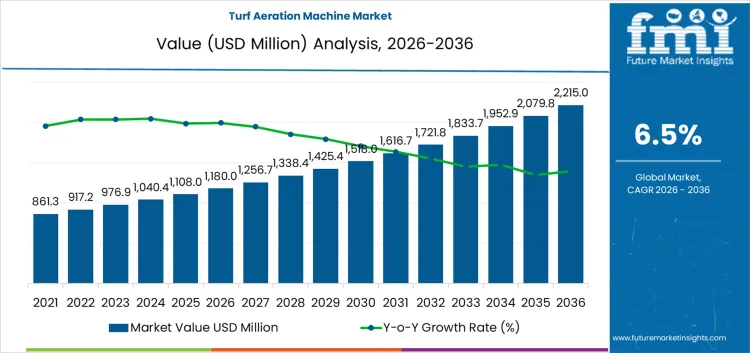
Turf Aeration Machine Market Key Takeaways
| Metric | Value |
|---|---|
| Industry Value (2026) | USD 1,180.0 Million |
| Forecast Value (2036) | USD 2215.0 Million |
| Forecast CAGR 2026 to 2036 | 6.50% |
How Is the Global Turf Aeration Machine Market Advancing?
The global turf aeration machine market is advancing steadily, driven by increasing focus on turf quality maintenance across sports fields, golf courses, parks, and landscaped areas. Turf aeration machines are widely used to relieve soil compaction, improve air and water penetration, and support healthy root development, which is essential for maintaining durable and visually consistent turf surfaces.
A key driver supporting market growth is the rising demand for professional turf management in sports and recreational facilities. High-traffic surfaces such as football pitches, golf greens, and municipal parks require regular aeration to maintain turf resilience and reduce surface wear. Facility managers are increasingly investing in mechanical and automated aeration equipment to improve maintenance efficiency and turf performance.
Technological advancements are further strengthening market adoption. Improvements in machine durability, tine design, and depth control are enhancing aeration effectiveness while reducing operating time and labor requirements. In addition, the introduction of tow-behind and self-propelled aeration machines is improving accessibility for both large-scale and smaller turf areas. As investments in sports infrastructure and green space maintenance continue to grow globally, the turf aeration machine market is expected to experience consistent growth over the forecast period.
What Is the Segment-Wise Overview of the Turf Aeration Machine Market?
The turf aeration machine market is driven by demand for effective soil compaction management and high-quality turf maintenance. Core aerators lead with a 44% share, reflecting their proven ability to improve soil structure, enhance root-zone airflow, and support healthy turf growth across intensively used surfaces. These machines are widely adopted as a standard maintenance tool. On the end-use side, golf courses account for 42% of demand, as consistent turf performance and playability are critical to course quality and reputation. Together, these segments highlight a market focused on proven aeration techniques and professional turf management applications.
Why Do Core Aerators Lead the Turf Aeration Machine Market?
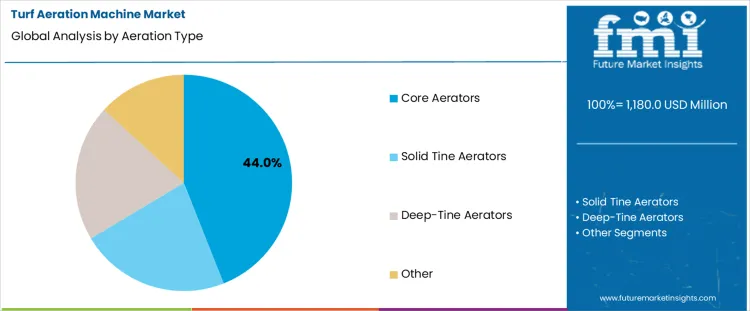
Core aerators account for 44% of the turf aeration machine market due to their effectiveness in relieving soil compaction and improving root-zone health. These machines remove small soil plugs from the turf surface, allowing better air, water, and nutrient penetration into the root system. Core aeration is widely regarded as the most effective method for managing thatch buildup and restoring soil structure, particularly on intensively used turf. Grounds managers prefer core aerators because they deliver visible, measurable improvements in turf resilience and recovery. The method is suitable for a wide range of turf conditions and grass types, making it a standard maintenance practice. As turf quality expectations rise across sports and recreational facilities, core aerators remain the preferred aeration technology.
Why Do Golf Courses Dominate End-Use Demand in the Turf Aeration Machine Market?
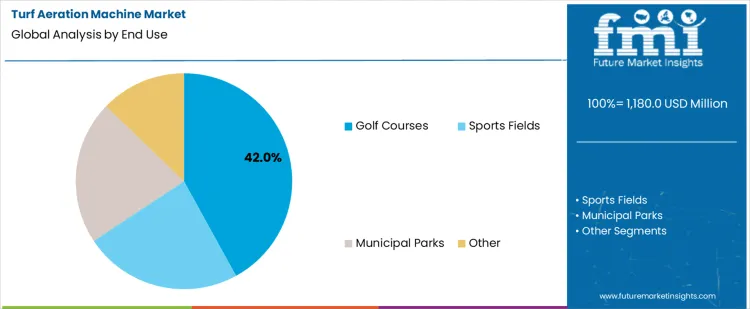
Golf courses represent 42% of total end-use demand, making them the largest application segment in the turf aeration machine market. Golf courses require consistently high turf quality across greens, fairways, and tees, all of which experience frequent foot and equipment traffic. Regular aeration is essential to maintain smooth playing surfaces, manage compaction, and promote healthy root development. Course superintendents rely on specialized aeration schedules to meet performance standards while minimizing disruption to play. Investment in professional-grade aeration equipment is therefore a routine operational requirement. The global emphasis on premium course conditions and year-round playability continues to sustain strong demand from golf courses, positioning them as the primary end users of turf aeration machines.
What Are the Key Dynamics for the Turf Aeration Machine Market?
Turf aeration machines mechanically perforate the soil to improve air exchange, water infiltration, and nutrient absorption, addressing soil compaction that negatively affects grass growth. Key market dynamics include growing awareness among groundskeepers and facility managers about the importance of soil health for durable, high-quality turf surfaces, rising demand for automated and efficient aeration solutions, and adoption of precision ground care equipment to optimize maintenance practices. Technological advancements such as self-propelled units, adjustable tine systems, and compatibility with GPS or IoT-enabled fleet management tools are enhancing operational flexibility and appeal among professional users.
Why Is the Turf Aeration Machine Market Growing?
The turf aeration machine market is growing as sports facilities and landscape management services prioritize consistency and playability of turf surfaces that influence user experience and safety. Increasing construction and renovation of sports infrastructures, including soccer, baseball, and golf venues, boost the need for regular aeration to support turf resilience under heavy use. Product innovations that improve operator comfort, reduce downtime, and enhance maintenance precision further support market expansion. Expansion of commercial landscaping services and urban green space development projects increase demand for professional turf care equipment, positioning aeration machines as essential tools for effective turf maintenance.
How Are the Key Drivers Shaping the Turf Aeration Machine Market?
Key drivers shaping the turf aeration machine market include the rising focus on turf quality optimization to improve the durability and aesthetic appeal of grass surfaces in athletic, recreational, and commercial environments. Facilities increasingly adopt mechanized aeration solutions to support routine maintenance schedules, reduce soil compaction, and improve root development for healthier turf. Technological enhancements such as variable aeration depth control, GPS tracking for precision operations, and integration with asset management platforms improve productivity and performance. Growth in groundskeeping services, including professional landscape contractors, supports equipment demand as larger portfolios of sites require scalable maintenance solutions.
What Is the Growth Outlook for the Turf Aeration Machine Market by Country?
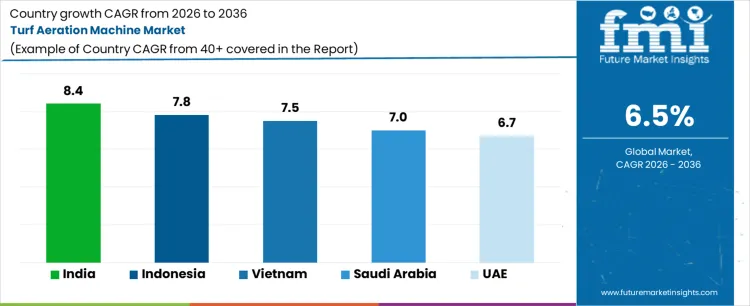
| Country | CAGR (%) |
|---|---|
| India | 8.4% |
| Indonesia | 7.8% |
| Vietnam | 7.5% |
| Saudi Arabia | 7.0% |
| UAE | 6.7% |
The turf aeration machine market is expanding steadily as sports and recreational facilities prioritize turf health and durability. India leads with an 8.4% CAGR, driven by rapid sports infrastructure development and modernization initiatives. Indonesia (7.8%) and Vietnam (7.5%) follow, supported by football facility expansion and climate-driven turf maintenance needs. Saudi Arabia (7.0%) benefits from large-scale sports and landscaping investments, while the UAE (6.7%) shows stable growth driven by premium facility standards and replacement demand. As turf quality expectations continue to rise, demand for turf aeration machines is expected to remain strong across these regions.
What Is Driving the Growth of the Turf Aeration Machine Market in India?
The turf aeration machine market in India is growing at a CAGR of 8.4%, driven by rapid expansion of sports infrastructure and increasing focus on professional turf maintenance. Growth of cricket grounds, football stadiums, golf courses, and sports academies is creating sustained demand for aeration equipment to improve soil health and turf durability. High foot traffic and frequent matches increase soil compaction, making regular aeration essential for maintaining playability. Municipal bodies and private facility operators are also investing in mechanized turf maintenance to reduce manual labor and improve consistency. In addition, rising adoption of scheduled turf care programs by clubs and institutions is supporting equipment sales. Availability of compact and tractor-mounted aeration machines suitable for different ground sizes further supports adoption. As India continues to upgrade sports and recreational facilities, demand for turf aeration machines is expected to grow steadily.
How Is the Turf Aeration Machine Market Expanding in Indonesia?
The turf aeration machine market in Indonesia is expanding at a CAGR of 7.8%, supported by increasing investment in football and multi-purpose sports facilities. Indonesia’s tropical climate leads to rapid turf growth and soil compaction, increasing the need for regular aeration to maintain healthy grass roots. Development of regional stadiums, training centers, and school sports grounds is driving demand for durable and easy-to-operate aeration equipment. Sports authorities and facility managers are increasingly focusing on improving pitch quality to meet regional competition standards. Growth of recreational parks and landscaped public spaces also contributes to broader market demand. Government-backed sports infrastructure projects and preparation for international events further support adoption. As Indonesia continues to strengthen turf management practices, demand for turf aeration machines is expected to rise consistently.
What Is Supporting Growth of the Turf Aeration Machine Market in Vietnam?
The turf aeration machine market in Vietnam is growing at a CAGR of 7.5%, driven by rising development of football grounds and urban recreational facilities. Increasing participation in organized sports and youth training programs is encouraging investment in turf quality and maintenance equipment. Seasonal rainfall patterns and compacted soils make aeration critical for drainage and root oxygenation. Facility operators are adopting mechanized aeration machines to improve efficiency and reduce maintenance downtime. Government initiatives to develop community sports infrastructure and renovate older stadiums are also supporting market growth. Growing use of turf aeration in golf courses and landscaped commercial spaces is expanding application scope. As Vietnam continues to modernize sports and recreation facilities, demand for turf aeration machines is expected to grow steadily.
How Is the Turf Aeration Machine Market Developing in Saudi Arabia?
The turf aeration machine market in Saudi Arabia is expanding at a CAGR of 7.0%, supported by large-scale investment in sports, landscaping, and recreational infrastructure. Maintaining natural grass quality in arid conditions requires effective soil management, making aeration an essential practice. Football stadiums, training academies, and recreational parks are adopting advanced aeration machines to improve water penetration and root development. Government-led initiatives to promote sports participation and host international events are further driving demand for professional turf maintenance equipment. High standards for pitch aesthetics and durability are influencing procurement of robust and high-capacity machines. In addition, expansion of landscaped urban areas and premium resorts contributes to demand. As Saudi Arabia continues to develop sports and leisure infrastructure, adoption of turf aeration machines is expected to increase steadily.
How Is the Turf Aeration Machine Market Expanding in the UAE?
The turf aeration machine market in the UAE is growing at a CAGR of 6.7%, driven by strong emphasis on premium landscaping and sports facility maintenance. Golf courses, football grounds, and recreational parks require frequent aeration to manage compacted soils and improve irrigation efficiency in sandy environments. Facility operators are investing in high-quality aeration machines to maintain turf performance under heavy usage and challenging climatic conditions. Growth of sports academies, resorts, and community recreation spaces is further supporting demand. Integration of aeration practices with advanced irrigation and turf management programs enhances system value. Although the market is relatively mature, replacement demand and upgrades to more efficient machines continue to drive growth. As the UAE maintains high standards for turf quality, demand for turf aeration machines is expected to grow at a stable pace.
How Are Companies Competing in the Turf Aeration Machine Market?
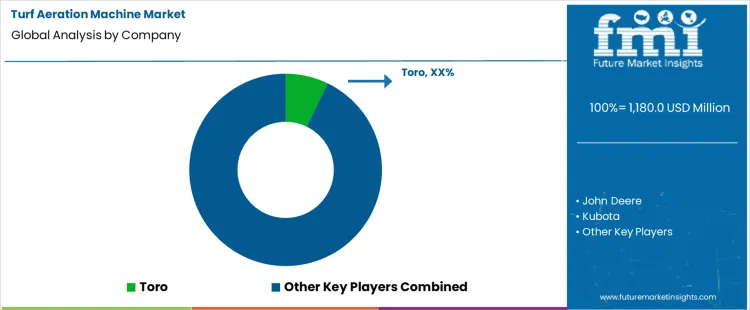
Competition in the turf aeration machine market is driven by aeration effectiveness, machine durability, ease of operation, and the ability to address soil compaction across professional sports turf, golf courses, and municipal green spaces. Turf managers rely on aeration equipment to improve oxygen transfer, water infiltration, and root development, making consistency and precision critical. Companies compete on tine design, aeration depth control, productivity, and machine stability across varying soil conditions. Differentiation increasingly centers on reducing surface disruption, improving operator efficiency, and offering versatile machines that can handle multiple turf maintenance tasks.
Toro, John Deere, Kubota, and Husqvarna lead competition through broad turf equipment portfolios, strong dealer networks, and reliable powertrain integration. Toro and John Deere differentiate with purpose-built aerators designed for professional turf applications, emphasizing durability, ease of adjustment, and compatibility with existing turf maintenance fleets. Kubota leverages robust engine technology and mechanical reliability, while Husqvarna competes through compact, maneuverable designs suitable for diverse turf environments. These players benefit from brand trust and the ability to bundle aeration machines with complementary turf care equipment.
Redexim, Ryan (Schiller Grounds Care), Amazone, SISIS, Billy Goat, and regional brands compete through specialization, innovation, and targeted performance niches. Redexim differentiates with deep-tine and verti-drain technology for severe compaction relief. Ryan and SISIS focus on precision aeration and overseeding integration, while Amazone and Billy Goat compete with multi-function and mid-scale solutions. Regional brands emphasize cost competitiveness and localized support. Across the market, competitive advantage is defined by aeration consistency, machine longevity, operator productivity, and the ability to deliver healthier, resilient turf with minimal disruption.
Turf Aeration Machine Market
- Toro
- John Deere
- Kubota
- Husqvarna
- Redexim
- Ryan (Schiller Grounds Care)
- Billy Goat
- Amazone
- SISIS
- Regional Brands
Scope of Report
| Attributes | Description |
|---|---|
| Quantitative Unit (2026) | USD Million |
| Aeration Type | Core Aerators, Solid Tine Aerators, Deep-Tine Aerators, Other |
| End Use | Golf Courses, Sports Fields, Municipal Parks, Other |
| Regions Covered | Asia Pacific, Europe, North America, Latin America, Middle East & Africa |
| Countries Covered | China, Japan, South Korea, India, Australia & New Zealand, ASEAN, Rest of Asia Pacific, Germany, United Kingdom, France, Italy, Spain, Nordic, BENELUX, Rest of Europe, United States, Canada, Mexico, Brazil, Chile, Rest of Latin America, Kingdom of Saudi Arabia, Other GCC Countries, Turkey, South Africa, Other African Union, Rest of Middle East & Africa |
| Key Companies Profiled | Toro, John Deere, Kubota, Husqvarna, Redexim, Ryan (Schiller Grounds Care), Billy Goat, Amazone, SISIS, Regional Brands |
| Additional Attributes | Dollar sales by aeration type and end use; regional market size and forecast analysis; growth outlook across major regions; adoption trends for turf aeration machinery; assessment of soil compaction management needs, equipment utilization intensity, and demand patterns across golf courses, sports fields, and municipal green spaces. |
Turf Aeration Machine Market
Aeration Type:
- Core Aerators
- Solid Tine Aerators
- Deep-Tine Aerators
- Other
End Use:
- Golf Courses
- Sports Fields
- Municipal Parks
- Other
Region:
- Asia Pacific
- China
- Japan
- South Korea
- India
- Australia & New Zealand
- ASEAN
- Rest of Asia Pacific
- Europe
- Germany
- United Kingdom
- France
- Italy
- Spain
- Nordic
- BENELUX
- Rest of Europe
- North America
- United States
- Canada
- Mexico
- Latin America
- Brazil
- Chile
- Rest of Latin America
- Middle East & Africa
- Kingdom of Saudi Arabia
- Other GCC Countries
- Turkey
- South Africa
- Other African Union
- Rest of Middle East & Africa
Bibliography
- Toro. (2025, August 1). ProCore® 648s: Aerator [Product sell sheet]. The Toro Company.
- Deere & Company. (2024). John Deere Golf: Product guide [Product guide]. John Deere.
- Redexim. (2023, November 15). Verti-Drain® 1513: Product brochure [Brochure]. Redexim.
- Schiller Grounds Care, Inc. (2024). Ryan® aerators: Product literature [Product brochure]. Schiller Grounds Care.
- Billy Goat Industries, Inc. (2024). Aerators: Product brochure [Product brochure]. Billy Goat.
- Husqvarna AB. (2024, September 13). AR19 aerator: Product support and documentation [Product support page]. Husqvarna.
Frequently Asked Questions
How big is the turf aeration machine market in 2026?
The global turf aeration machine market is estimated to be valued at USD 1,180.0 million in 2026.
What will be the size of turf aeration machine market in 2036?
The market size for the turf aeration machine market is projected to reach USD 2,215.0 million by 2036.
How much will be the turf aeration machine market growth between 2026 and 2036?
The turf aeration machine market is expected to grow at a 6.5% CAGR between 2026 and 2036.
What are the key product types in the turf aeration machine market?
The key product types in turf aeration machine market are core aerators, solid tine aerators, deep-tine aerators and other.
Which end use segment to contribute significant share in the turf aeration machine market in 2026?
In terms of end use, golf courses segment to command 42.0% share in the turf aeration machine market in 2026.
Preview the report firsthand - request a free sample
Get SampleGet the brochure for pricing and purchase details.
Get PDFTable of Content
- Executive Summary
- Global Market Outlook
- Demand-side Trends
- Supply-side Trends
- Technology Roadmap Analysis
- Analysis and Recommendations
- Market Overview
- Market Coverage / Taxonomy
- Market Definition / Scope / Limitations
- Market Background
- Market Dynamics
- Drivers
- Restraints
- Opportunity
- Trends
- Scenario Forecast
- Demand in Optimistic Scenario
- Demand in Likely Scenario
- Demand in Conservative Scenario
- Opportunity Map Analysis
- Product Life Cycle Analysis
- Supply Chain Analysis
- Investment Feasibility Matrix
- Value Chain Analysis
- PESTLE and Porter’s Analysis
- Regulatory Landscape
- Regional Parent Market Outlook
- Production and Consumption Statistics
- Import and Export Statistics
- Market Dynamics
- Global Market Analysis 2021 to 2025 and Forecast, 2026 to 2036
- Historical Market Size Value (USD Million) Analysis, 2021 to 2025
- Current and Future Market Size Value (USD Million) Projections, 2026 to 2036
- Y-o-Y Growth Trend Analysis
- Absolute $ Opportunity Analysis
- Global Market Pricing Analysis 2021 to 2025 and Forecast 2026 to 2036
- Global Market Analysis 2021 to 2025 and Forecast 2026 to 2036, By Aeration Type
- Introduction / Key Findings
- Historical Market Size Value (USD Million) Analysis By Aeration Type , 2021 to 2025
- Current and Future Market Size Value (USD Million) Analysis and Forecast By Aeration Type , 2026 to 2036
- Core Aerators
- Solid Tine Aerators
- Deep-Tine Aerators
- Other
- Core Aerators
- Y-o-Y Growth Trend Analysis By Aeration Type , 2021 to 2025
- Absolute $ Opportunity Analysis By Aeration Type , 2026 to 2036
- Global Market Analysis 2021 to 2025 and Forecast 2026 to 2036, By End Use
- Introduction / Key Findings
- Historical Market Size Value (USD Million) Analysis By End Use, 2021 to 2025
- Current and Future Market Size Value (USD Million) Analysis and Forecast By End Use, 2026 to 2036
- Golf Courses
- Sports Fields
- Municipal Parks
- Other
- Golf Courses
- Y-o-Y Growth Trend Analysis By End Use, 2021 to 2025
- Absolute $ Opportunity Analysis By End Use, 2026 to 2036
- Global Market Analysis 2021 to 2025 and Forecast 2026 to 2036, By Region
- Introduction
- Historical Market Size Value (USD Million) Analysis By Region, 2021 to 2025
- Current Market Size Value (USD Million) Analysis and Forecast By Region, 2026 to 2036
- North America
- Latin America
- Western Europe
- Eastern Europe
- East Asia
- South Asia and Pacific
- Middle East & Africa
- Market Attractiveness Analysis By Region
- North America Market Analysis 2021 to 2025 and Forecast 2026 to 2036, By Country
- Historical Market Size Value (USD Million) Trend Analysis By Market Taxonomy, 2021 to 2025
- Market Size Value (USD Million) Forecast By Market Taxonomy, 2026 to 2036
- By Country
- USA
- Canada
- Mexico
- By Aeration Type
- By End Use
- By Country
- Market Attractiveness Analysis
- By Country
- By Aeration Type
- By End Use
- Key Takeaways
- Latin America Market Analysis 2021 to 2025 and Forecast 2026 to 2036, By Country
- Historical Market Size Value (USD Million) Trend Analysis By Market Taxonomy, 2021 to 2025
- Market Size Value (USD Million) Forecast By Market Taxonomy, 2026 to 2036
- By Country
- Brazil
- Chile
- Rest of Latin America
- By Aeration Type
- By End Use
- By Country
- Market Attractiveness Analysis
- By Country
- By Aeration Type
- By End Use
- Key Takeaways
- Western Europe Market Analysis 2021 to 2025 and Forecast 2026 to 2036, By Country
- Historical Market Size Value (USD Million) Trend Analysis By Market Taxonomy, 2021 to 2025
- Market Size Value (USD Million) Forecast By Market Taxonomy, 2026 to 2036
- By Country
- Germany
- UK
- Italy
- Spain
- France
- Nordic
- BENELUX
- Rest of Western Europe
- By Aeration Type
- By End Use
- By Country
- Market Attractiveness Analysis
- By Country
- By Aeration Type
- By End Use
- Key Takeaways
- Eastern Europe Market Analysis 2021 to 2025 and Forecast 2026 to 2036, By Country
- Historical Market Size Value (USD Million) Trend Analysis By Market Taxonomy, 2021 to 2025
- Market Size Value (USD Million) Forecast By Market Taxonomy, 2026 to 2036
- By Country
- Russia
- Poland
- Hungary
- Balkan & Baltic
- Rest of Eastern Europe
- By Aeration Type
- By End Use
- By Country
- Market Attractiveness Analysis
- By Country
- By Aeration Type
- By End Use
- Key Takeaways
- East Asia Market Analysis 2021 to 2025 and Forecast 2026 to 2036, By Country
- Historical Market Size Value (USD Million) Trend Analysis By Market Taxonomy, 2021 to 2025
- Market Size Value (USD Million) Forecast By Market Taxonomy, 2026 to 2036
- By Country
- China
- Japan
- South Korea
- By Aeration Type
- By End Use
- By Country
- Market Attractiveness Analysis
- By Country
- By Aeration Type
- By End Use
- Key Takeaways
- South Asia and Pacific Market Analysis 2021 to 2025 and Forecast 2026 to 2036, By Country
- Historical Market Size Value (USD Million) Trend Analysis By Market Taxonomy, 2021 to 2025
- Market Size Value (USD Million) Forecast By Market Taxonomy, 2026 to 2036
- By Country
- India
- ASEAN
- Australia & New Zealand
- Rest of South Asia and Pacific
- By Aeration Type
- By End Use
- By Country
- Market Attractiveness Analysis
- By Country
- By Aeration Type
- By End Use
- Key Takeaways
- Middle East & Africa Market Analysis 2021 to 2025 and Forecast 2026 to 2036, By Country
- Historical Market Size Value (USD Million) Trend Analysis By Market Taxonomy, 2021 to 2025
- Market Size Value (USD Million) Forecast By Market Taxonomy, 2026 to 2036
- By Country
- Kingdom of Saudi Arabia
- Other GCC Countries
- Turkiye
- South Africa
- Other African Union
- Rest of Middle East & Africa
- By Aeration Type
- By End Use
- By Country
- Market Attractiveness Analysis
- By Country
- By Aeration Type
- By End Use
- Key Takeaways
- Key Countries Market Analysis
- USA
- Pricing Analysis
- Market Share Analysis, 2025
- By Aeration Type
- By End Use
- Canada
- Pricing Analysis
- Market Share Analysis, 2025
- By Aeration Type
- By End Use
- Mexico
- Pricing Analysis
- Market Share Analysis, 2025
- By Aeration Type
- By End Use
- Brazil
- Pricing Analysis
- Market Share Analysis, 2025
- By Aeration Type
- By End Use
- Chile
- Pricing Analysis
- Market Share Analysis, 2025
- By Aeration Type
- By End Use
- Germany
- Pricing Analysis
- Market Share Analysis, 2025
- By Aeration Type
- By End Use
- UK
- Pricing Analysis
- Market Share Analysis, 2025
- By Aeration Type
- By End Use
- Italy
- Pricing Analysis
- Market Share Analysis, 2025
- By Aeration Type
- By End Use
- Spain
- Pricing Analysis
- Market Share Analysis, 2025
- By Aeration Type
- By End Use
- France
- Pricing Analysis
- Market Share Analysis, 2025
- By Aeration Type
- By End Use
- India
- Pricing Analysis
- Market Share Analysis, 2025
- By Aeration Type
- By End Use
- ASEAN
- Pricing Analysis
- Market Share Analysis, 2025
- By Aeration Type
- By End Use
- Australia & New Zealand
- Pricing Analysis
- Market Share Analysis, 2025
- By Aeration Type
- By End Use
- China
- Pricing Analysis
- Market Share Analysis, 2025
- By Aeration Type
- By End Use
- Japan
- Pricing Analysis
- Market Share Analysis, 2025
- By Aeration Type
- By End Use
- South Korea
- Pricing Analysis
- Market Share Analysis, 2025
- By Aeration Type
- By End Use
- Russia
- Pricing Analysis
- Market Share Analysis, 2025
- By Aeration Type
- By End Use
- Poland
- Pricing Analysis
- Market Share Analysis, 2025
- By Aeration Type
- By End Use
- Hungary
- Pricing Analysis
- Market Share Analysis, 2025
- By Aeration Type
- By End Use
- Kingdom of Saudi Arabia
- Pricing Analysis
- Market Share Analysis, 2025
- By Aeration Type
- By End Use
- Turkiye
- Pricing Analysis
- Market Share Analysis, 2025
- By Aeration Type
- By End Use
- South Africa
- Pricing Analysis
- Market Share Analysis, 2025
- By Aeration Type
- By End Use
- USA
- Market Structure Analysis
- Competition Dashboard
- Competition Benchmarking
- Market Share Analysis of Top Players
- By Regional
- By Aeration Type
- By End Use
- Competition Analysis
- Competition Deep Dive
- Toro
- Overview
- Product Portfolio
- Profitability by Market Segments (Product/Age /Sales Channel/Region)
- Sales Footprint
- Strategy Overview
- Marketing Strategy
- Product Strategy
- Channel Strategy
- John Deere
- Kubota
- Husqvarna
- Redexim
- Ryan (Schiller Grounds Care)
- Billy Goat
- Amazone
- SISIS
- Regional Brands
- Toro
- Competition Deep Dive
- Assumptions & Acronyms Used
- Research Methodology


