

- Industry Size (2026)
- USD 399.2 Mn
- Forecast (2036)
- USD 693.8 Mn
- CAGR (2026 to 2036)
- 5.7%
Demand for Endometriosis Treatment in United Kingdom Forecast and Outlook 2026 to 2036
The endometriosis treatment market in the United Kingdom is projected to grow from USD 399.2 million in 2026 to USD 693.8 million by 2036, at a CAGR of 5.7%. Demand quality in this market is marked by a consistent need for both medical and surgical interventions, driven by the chronic nature of endometriosis and the ongoing requirement for symptom management. Stability in demand is supported by the growing awareness of the condition and an increasing diagnosis rate, which ensures a steady patient base. Repeat usage is a characteristic feature, as patients require ongoing treatment to manage symptoms and prevent recurrence. Buyer commitment remains high, as healthcare providers prioritize long-term solutions and treatments with proven efficacy. Given the complex and varied nature of endometriosis, treatment regimens often need to be tailored, which requires consistent engagement between patients and healthcare professionals. Companies that can offer personalized, effective treatment options will likely secure lasting loyalty from healthcare providers and patients alike.
Quick Stats for the Demand for Endometriosis Treatment in United Kingdom:
- Endometriosis Treatment in United Kingdom Value (2026): USD 399.2 million
- Endometriosis Treatment in United Kingdom Forecast Value (2036): USD 693.8 million
- Endometriosis Treatment in United Kingdom Forecast CAGR (2026 to 2036): 5.7%
- Endometriosis Treatment in United Kingdom Leading Segment: Hormonal Therapy (70% share)
- Key Growth Regions of Endometriosis Treatment in United Kingdom: England
- Top Players of Endometriosis Treatment in United Kingdom: AbbVie Inc., Bayer AG, AstraZeneca, Pfizer Inc., Teva Pharmaceutical Industries Ltd.
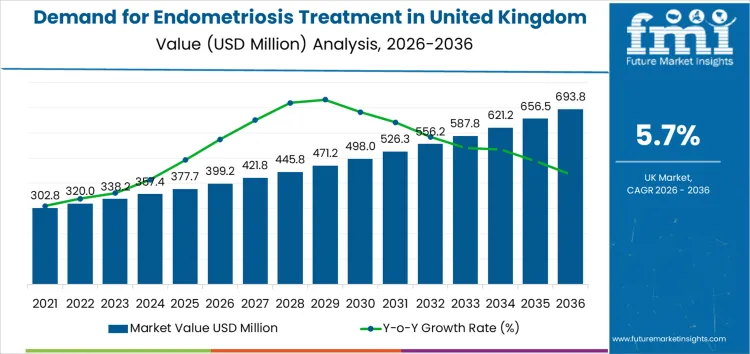
What is the Growth Forecast for Endometriosis Treatment in United Kingdom through 2036?
Demand for endometriosis treatment in the United Kingdom is expected to expand steadily throughout the forecast period, reflecting the condition’s rising clinical visibility and stronger prioritization in women’s healthcare. As awareness improves among patients, general practitioners, and specialists, diagnosis rates are increasing, which is translating into a larger treated population and more consistent demand for both medical management and procedural interventions. The growth trajectory remains stable, supported by ongoing unmet need and a growing willingness to seek early care for chronic pelvic pain and fertility-related concerns.
Long-term growth comparison indicates a clear pattern of sustained expansion rather than short-term spikes. In the early phase of the forecast period, demand is driven largely by improved screening, better referral pathways, and wider use of established hormonal and pain-management therapies. In the later phase, momentum strengthens further as treatment approaches become more patient-specific, with increased uptake of minimally invasive therapies, refined surgical techniques, and more targeted management strategies. Overall, the UK endometriosis treatment landscape is moving toward more structured care delivery and earlier intervention, supporting consistent and durable demand growth over time.
Key Takeaways for Demand for Endometriosis Treatment in United Kingdom
| Metric | Value |
|---|---|
| Industry Sales Value (2026) | USD 399.2 million |
| Industry Forecast Value (2036) | USD 693.8 million |
| Industry Forecast CAGR (2026 to 2036) | 5.7% |
Why is Demand for Endometriosis Treatment in United Kingdom Growing?
Demand for endometriosis treatment in the United Kingdom has strengthened as both clinical need and awareness of the condition have expanded. Endometriosis affects an estimated 1.5 million women of reproductive age in the UK, making it one of the most common gynecological conditions encountered in practice. Diagnosis frequently requires clinical and surgical evaluation, and the average time to diagnosis in the UK remains prolonged, at nearly nine years from first symptom presentation, which has increased pressure on treatment pathways and specialist services. This extended diagnostic journey has driven many patients to seek effective management earlier and repeatedly, reinforcing use of broader therapeutic options including hormonal therapies, pain management regimens, and surgical intervention where appropriate.
In addition, NHS approval of new oral treatment options that can be taken at home reflects a response by the healthcare system to address gaps in symptom control and reduce reliance on injectable or hospital based therapies, which in turn supports uptake of pharmacological care options. These dynamics reflect both demand rooted in unmet patient need and an expanding treatment landscape that encourages clinicians to adopt a wider range of solutions within the UK healthcare framework.
For companies, manufacturers, and suppliers operating in or entering the UK healthcare market, demand for endometriosis treatment is expected to evolve rather than stagnate. The broader global market for endometriosis treatment was estimated at nearly USD 2 billion in 2025 and is projected to grow at double digit rates well into the next decade, driven by increasing disease recognition, awareness activities, and clinical innovation in therapeutic classes such as hormone modulators and targeted therapies. Within the UK context, product selection, access strategies, and engagement with clinical guideline committees will influence uptake and positioning.
Manufacturers that can demonstrate clear evidence of clinical benefit, quality of life improvements, and integration with NHS commissioning priorities will be better placed to participate in formularies and reimbursement discussions. Suppliers with capabilities in patient support programs, real world evidence generation, and educational outreach to clinicians and patients may find differentiated value propositions in a market where demand is shaped by both clinical necessity and systemic pressures to improve care pathways.
What Are the Key Segments in the Demand for Endometriosis Treatment in the United Kingdom?
Demand for endometriosis treatment in the United Kingdom is driven by drug type and treatment type. Oral contraceptives lead the drug type segment with 41.2%, while hormonal therapy dominates the treatment type segment with 70%. Other drug types, such as progestins, NSAIDs, GnRH analogues, and LNR-IUDs, as well as various treatment approaches like pain management, also contribute significantly to the industry. These trends reflect the growing demand for effective and targeted therapies to manage the symptoms and progression of endometriosis.
What Is the Drug Type Segment of Demand for Endometriosis Treatment in the United Kingdom?
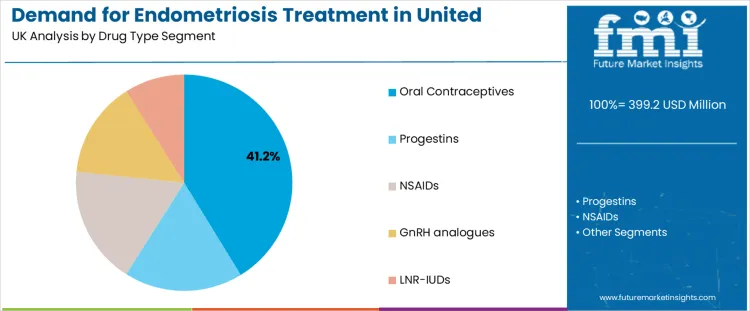
The drug type segment for endometriosis treatment in the United Kingdom is led by oral contraceptives, which account for 41.2% of the industry share. Oral contraceptives are commonly prescribed to manage endometriosis symptoms, as they help regulate menstrual cycles, reduce menstrual flow, and limit the growth of endometrial tissue. This makes them an effective first-line treatment option for many women diagnosed with endometriosis. The use of oral contraceptives is particularly popular due to their affordability, ease of use, and dual benefits of contraception and symptom management. Progestins follow as another significant drug type.
Progestins, which are synthetic forms of the hormone progesterone, are used to suppress the growth of endometrial tissue and prevent menstruation, which can help reduce pain and other symptoms. Progestins are commonly used in combination with other treatments or as standalone therapy for women with more severe endometriosis. Nonsteroidal anti-inflammatory drugs (NSAIDs), though a smaller segment in the drug type category, are widely used for pain relief, particularly for managing the acute pain associated with endometriosis. NSAIDs help reduce inflammation and pain during flare-ups, offering symptomatic relief but not addressing the underlying condition. GnRH analogues, which suppress ovarian function and induce a temporary menopause-like state, are also an option for managing more severe symptoms of endometriosis.
Although less commonly prescribed than oral contraceptives or progestins, GnRH analogues are often used in cases where other treatments have not been effective. LNR-IUDs (Levonorgestrel-releasing intrauterine devices) represent a smaller portion of the industry but are increasingly used as a long-term treatment option for women with endometriosis. These devices release a low dose of progestin directly to the uterus, helping reduce bleeding and alleviate pain. Overall, the drug type market for endometriosis treatment is diverse, with various options available depending on the severity of the condition and the patient's needs.
What Is the Treatment Type Segment of Demand for Endometriosis Treatment in the United Kingdom?
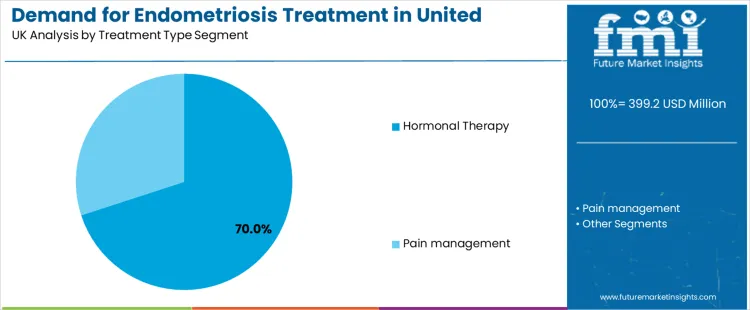
The treatment type segment for endometriosis in the United Kingdom is predominantly led by hormonal therapy, which accounts for 70% of the industry share. Hormonal therapy is the most common treatment for endometriosis as it aims to regulate hormonal fluctuations that cause endometrial tissue growth and inflammation. Hormonal treatments, including oral contraceptives, progestins, GnRH analogues, and LNR-IUDs, are effective in reducing symptoms such as pain, heavy bleeding, and infertility. These therapies help suppress the growth of endometrial tissue, thereby preventing its spread and managing the pain associated with the condition.
Pain management, while a smaller segment, remains an essential aspect of treatment for many women with endometriosis. Nonsteroidal anti-inflammatory drugs (NSAIDs) are often used for immediate pain relief, especially during flare-ups. Pain management strategies may also include physical therapy, lifestyle changes, or prescription pain medications for more severe cases. Although hormonal therapy is the most common treatment approach, pain management plays a critical role in ensuring that women with endometriosis can effectively cope with the chronic pain associated with the condition. As awareness of endometriosis increases and treatment options become more targeted, the demand for both hormonal therapies and pain management strategies is expected to continue to grow.
What are the Key Dynamics in the Demand for Endometriosis Treatment in the United Kingdom?
Demand for endometriosis treatment in the United Kingdom is rising as awareness increases among patients and healthcare professionals and diagnostic rates improve. Endometriosis, a chronic gynecological condition characterized by the growth of uterine like tissue outside the uterus, affects a significant portion of the female population of reproductive age. Demand encompasses surgical interventions, hormonal therapies, pain management, and multidisciplinary care pathways that include physiotherapy and specialist nursing. Providers, manufacturers, and suppliers must navigate clinical commissioning guidance, NHS prioritization frameworks, and patient access programs to align services and products with clinical need and capacity constraints.
What are the Key Drivers for Endometriosis Treatment Demand in the United Kingdom?
Several factors are driving demand for endometriosis treatment in the United Kingdom. Enhanced clinical awareness and updated medical education have reduced historical under diagnosis, leading more patients to seek evaluation and care. National and regional health policy initiatives that prioritize women’s health and reduce diagnostic delays support earlier intervention and follow up treatment. Expansion of specialist endometriosis centers and multidisciplinary teams improves access to evidence based care, strengthening referral pathways from primary care. Rising patient advocacy and digital health platforms that disseminate symptom recognition tools and care options also elevate demand. Pharmaceutical interest in new or repurposed hormonal and non hormonal therapies contributes to broader treatment uptake.
What are the Restraints on Endometriosis Treatment Demand in the United Kingdom?
Despite increased attention, demand for endometriosis treatment in the United Kingdom faces several restraints. Long waiting times for diagnostic procedures such as laparoscopic evaluation persist in some NHS trusts, delaying definitive treatment and reducing throughput for surgical services. Variability in access to specialized care across regions results in inequities that influence patient choices and supplier engagement. Budgetary pressures and prioritization of acute services can limit capacity for elective surgical interventions and supportive care programs. Complex reimbursement pathways for newer therapeutics, and variable inclusion in local formularies or prescribing guidance, may constrain uptake of innovative treatment options.
What are the Key Trends in Endometriosis Treatment Demand in the United Kingdom?
Key trends shaping demand for endometriosis treatment in the United Kingdom include growth in personalized care pathways that integrate multidisciplinary approaches, combining surgical, pharmacological, and supportive therapies. Clinical interest in non surgical treatment options-including long acting hormonal agents, targeted immunomodulators, and pain management protocols-supports diversified treatment portfolios. Suppliers are focusing on robust evidence generation around outcomes, cost effectiveness, and quality of life improvements to support product adoption and clinician confidence. There is also increased collaboration between healthcare providers and specialist centers to establish standardized care pathways that reduce variation in treatment delivery. Digital diagnostic tools and patient engagement platforms are emerging as complementary services that support earlier identification, monitoring, and treatment adherence.
What is the Country-Wise Demand for Endometriosis Treatment in the United Kingdom?
The demand for endometriosis treatment in the United Kingdom reflects regional differences, with England leading the industry. The demand is primarily driven by an increasing awareness of the disease, improvements in diagnostic techniques, and a growing focus on women's health. England, with its larger population and healthcare infrastructure, represents the largest market for endometriosis treatment, particularly in terms of access to specialists and advanced treatment options. Scotland, Wales, and Northern Ireland follow with significant demand, driven by the rising recognition of endometriosis as a critical health issue and the need for effective management solutions. As healthcare providers focus more on early diagnosis and personalized treatment plans, the demand for effective endometriosis treatments is expected to grow steadily across all regions, with England maintaining the largest share of the industry.
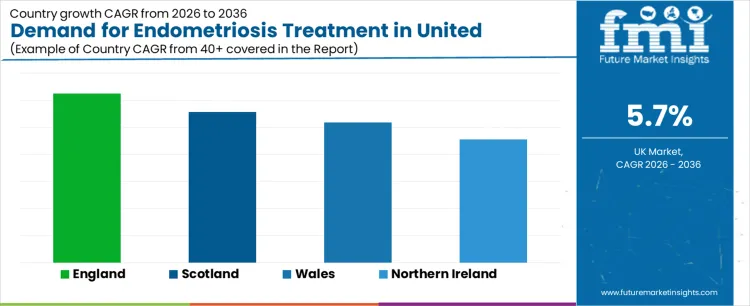
| Country | CAGR (2026 to 2036) |
|---|---|
| England | 6.3% |
| Scotland | 5.6% |
| Wales | 5.2% |
| Northern Ireland | 4.5% |
What is Driving the Demand for Endometriosis Treatment in England?
The demand for endometriosis treatment in England is projected to grow at a CAGR of 6.3% from 2026 to 2036. England’s large healthcare infrastructure and growing awareness of women’s health issues are key drivers of this demand. With the rise in the number of women being diagnosed with endometriosis, coupled with advancements in medical research and treatment options, demand for effective therapies is increasing. In addition to traditional treatment methods such as pain management and surgery, newer approaches like hormonal therapies, immunotherapies, and minimally invasive procedures are gaining traction. The focus on early diagnosis and patient-centered care, combined with government initiatives to raise awareness, is further driving the industry. England’s commitment to improving healthcare access and treatment options for endometriosis ensures continued demand for these treatments, particularly in urban centers with specialized care providers.
How is the Demand for Endometriosis Treatment Performing in Scotland?
In Scotland, the demand for endometriosis treatment is expected to grow at a CAGR of 5.6% from 2026 to 2036. The rising awareness of endometriosis among both the public and healthcare providers is contributing to the increasing adoption of treatment solutions. Scotland’s healthcare system is increasingly focused on providing specialized care for women with endometriosis, which is helping to drive demand for treatment options. The growing emphasis on women’s health and the focus on reducing the diagnostic delay for endometriosis patients are key factors contributing to this growth. Additionally, as more women in Scotland seek treatment for their symptoms, demand for both medical and surgical solutions is increasing. The availability of multidisciplinary care teams and access to fertility preservation services in Scotland are helping to further boost the industry for endometriosis treatments.
What Are the Growth Drivers for Endometriosis Treatment in Wales?
The demand for endometriosis treatment in Wales is projected to grow at a CAGR of 5.2% through 2036. The increasing recognition of endometriosis as a serious medical condition is driving demand for effective treatment options in Wales. With more women being diagnosed and seeking care, the industry for both conventional and alternative therapies is expanding. Wales’ healthcare system is making strides in providing specialized services for endometriosis patients, including access to pain management, surgery, and fertility treatments. The push for improved diagnostic methods and greater awareness of the impact of endometriosis on women’s quality of life is contributing to the industry’s growth. Additionally, the increasing use of telemedicine and patient advocacy efforts are helping to raise awareness and improve care, further driving the demand for endometriosis treatments in Wales.
What is the Outlook for Endometriosis Treatment Demand in Northern Ireland?
Northern Ireland’s demand for endometriosis treatment is expected to grow at a CAGR of 4.5% from 2026 to 2036. While Northern Ireland represents the smallest market for endometriosis treatment in the UK, the demand is steadily increasing, driven by growing awareness and advancements in treatment options. As more women seek medical attention for endometriosis, there is a growing need for improved diagnostic services and access to comprehensive treatment options. Northern Ireland’s healthcare system is increasingly focused on providing better care for women with chronic conditions like endometriosis, which is contributing to this growth. The rise of patient support networks and the availability of specialized care centers in Northern Ireland are also helping to improve treatment access. As healthcare providers continue to prioritize women’s health and early diagnosis, the demand for effective endometriosis treatments is expected to increase in the coming years.
What is the Competitive Landscape for Demand for Endometriosis Treatment in the United Kingdom?
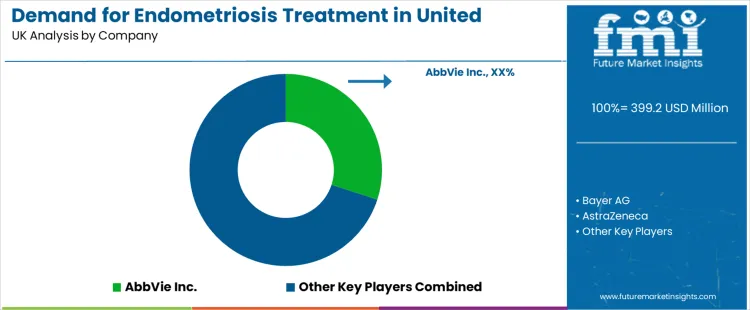
Demand for endometriosis treatment in the United Kingdom is guided by clinical pathways, specialist referral patterns, and evolving standards of care within gynecological services. Healthcare buyers and formulary committees evaluate therapies on documented efficacy, documented safety profiles, and documented outcomes in target populations. AbbVie Inc. is positioned as a leading supplier with clinical dossiers that describe hormone modulation options, documented pain relief data, and documented impact on lesion progression. These documents are reviewed by hospital formulary boards and clinical leads when aligning treatment protocols with service capacity and patient management goals. Procurement evaluations also consider documented real world evidence and documented cost effectiveness assessments under NHS commissioning frameworks.
Bayer AG competes with documented treatment options that include hormonal agents with specification documents outlining documented symptom relief rates and documented tolerability data. Buyers in the United Kingdom examine these materials to gauge how products perform across differing patient subgroups. AstraZeneca offers documented options with clinical literature listing documented impact on inflammatory pathways and documented quality of life endpoints, which inform positioning in specialist care pathways. Pfizer Inc. supplies treatments accompanied by technical documentation that lists documented dosing regimens, documented comparative data versus standard care, and documented safety surveillance outcomes.
Teva Pharmaceutical Industries Ltd. participates with documented formulations and supporting data that include documented adherence figures and documented side effect profiles. Demand assessment in the United Kingdom incorporates documented treatment guidelines from clinical bodies, documented NHS utilisation data, and documented service outcomes. Health technology assessment teams and procurement professionals compare documented efficacy metrics, documented safety information, and documented support services as part of contract negotiations and budget planning. Competitive activity reflects emphasis on measurable clinical performance, documented regulatory compliance, and documented support commitments that assist healthcare commissioners and clinical managers in selecting appropriate therapeutic options for patients with endometriosis.
Key Players of the Demand for Endometriosis Treatment in United Kingdom
- AbbVie Inc.
- Bayer AG
- AstraZeneca
- Pfizer Inc.
- Teva Pharmaceutical Industries Ltd.
Scope of the Report
| Items | Values |
|---|---|
| Quantitative Units (2026) | USD Million |
| Drug Type Segment | Oral Contraceptives, Progestins, NSAIDs, GnRH Analogues, LNR-IUDs |
| Treatment Type Segment | Hormonal Therapy, Pain Management |
| Distribution Segment | Retail Pharmacies, E-Commerce, Hospital Pharmacies, Drug Stores |
| Companies | AbbVie Inc., Bayer AG, AstraZeneca, Pfizer Inc., Teva Pharmaceutical Industries Ltd. |
| Regions Covered | United Kingdom |
| Countries Covered | England, Scotland, Wales, Northern Ireland |
| Additional Attributes | Dollar by sales by drug type segment, treatment type segment, distribution segment, and region. Includes market trends towards personalized treatments, cost-effectiveness, and the role of endometriosis treatments in improving patient outcomes. |
Key Segments of Demand for Endometriosis Treatment in United Kingdom
Drug Type Segment
- Oral Contraceptives
- Progestins
- NSAIDs
- GnRH analogues
- LNR-IUDs
Treatment Type Segment
- Hormonal Therapy
- Pain management
Distribution Segment
- Retail pharmacies
- E-Commerce
- Hospital pharmacies
- Drug stores
Countries
- England
- Scotland
- Wales
- Northern Ireland
Bibliography
- National Institute for Health and Care Excellence (NICE). (2024). Endometriosis: Diagnosis and management (NG73).
- Department of Health and Social Care. (2024). Women’s Health Strategy for England: Improving diagnosis, treatment, and outcomes.
- National Health Service England. (2024). Endometriosis services: Referral pathways, access to specialist centres, and treatment activity reports.
Frequently Asked Questions
How big is the demand for endometriosis treatment in united kingdom in 2026?
The demand for endometriosis treatment in united kingdom is estimated to be valued at USD 399.2 million in 2026.
What will be the size of endometriosis treatment in united kingdom in 2036?
The market size for the endometriosis treatment in united kingdom is projected to reach USD 693.8 million by 2036.
How much will be the demand for endometriosis treatment in united kingdom growth between 2026 and 2036?
The demand for endometriosis treatment in united kingdom is expected to grow at a 5.7% CAGR between 2026 and 2036.
What are the key product types in the endometriosis treatment in united kingdom?
The key product types in endometriosis treatment in united kingdom are oral contraceptives, progestins, nsaids, gnrh analogues and lnr-iuds.
Which treatment type segment segment is expected to contribute significant share in the endometriosis treatment in united kingdom in 2026?
In terms of treatment type segment, hormonal therapy segment is expected to command 70.0% share in the endometriosis treatment in united kingdom in 2026.
Preview the report firsthand - request a free sample
Get SampleGet the brochure for pricing and purchase details.
Get PDFTable of Content
- Executive Summary
- UK Market Outlook
- Demand-side Trends
- Supply-side Trends
- Technology Roadmap Analysis
- Analysis and Recommendations
- Market Overview
- Market Coverage / Taxonomy
- Market Definition / Scope / Limitations
- Market Background
- Market Dynamics
- Drivers
- Restraints
- Opportunity
- Trends
- Scenario Forecast
- Demand in Optimistic Scenario
- Demand in Likely Scenario
- Demand in Conservative Scenario
- Opportunity Map Analysis
- Product Life Cycle Analysis
- Supply Chain Analysis
- Investment Feasibility Matrix
- Value Chain Analysis
- PESTLE and Porter’s Analysis
- Regulatory Landscape
- Regional Parent Market Outlook
- Production and Consumption Statistics
- Import and Export Statistics
- Market Dynamics
- UK Market Analysis 2021 to 2025 and Forecast, 2026 to 2036
- Historical Market Size Value (USD Million) Analysis, 2021 to 2025
- Current and Future Market Size Value (USD Million) Projections, 2026 to 2036
- Y-o-Y Growth Trend Analysis
- Absolute $ Opportunity Analysis
- UK Market Pricing Analysis 2021 to 2025 and Forecast 2026 to 2036
- UK Market Analysis 2021 to 2025 and Forecast 2026 to 2036, By Drug Type Segment
- Introduction / Key Findings
- Historical Market Size Value (USD Million) Analysis By Drug Type Segment , 2021 to 2025
- Current and Future Market Size Value (USD Million) Analysis and Forecast By Drug Type Segment , 2026 to 2036
- Oral Contraceptives
- Progestins
- NSAIDs
- GnRH analogues
- LNR-IUDs
- Oral Contraceptives
- Y-o-Y Growth Trend Analysis By Drug Type Segment , 2021 to 2025
- Absolute $ Opportunity Analysis By Drug Type Segment , 2026 to 2036
- UK Market Analysis 2021 to 2025 and Forecast 2026 to 2036, By Treatment Type Segment
- Introduction / Key Findings
- Historical Market Size Value (USD Million) Analysis By Treatment Type Segment, 2021 to 2025
- Current and Future Market Size Value (USD Million) Analysis and Forecast By Treatment Type Segment, 2026 to 2036
- Hormonal Therapy
- Pain management
- Hormonal Therapy
- Y-o-Y Growth Trend Analysis By Treatment Type Segment, 2021 to 2025
- Absolute $ Opportunity Analysis By Treatment Type Segment, 2026 to 2036
- UK Market Analysis 2021 to 2025 and Forecast 2026 to 2036, By Distribution Segment
- Introduction / Key Findings
- Historical Market Size Value (USD Million) Analysis By Distribution Segment, 2021 to 2025
- Current and Future Market Size Value (USD Million) Analysis and Forecast By Distribution Segment, 2026 to 2036
- Retail pharmacies
- E-Commerce
- Hospital pharmacies
- Drug stores
- Retail pharmacies
- Y-o-Y Growth Trend Analysis By Distribution Segment, 2021 to 2025
- Absolute $ Opportunity Analysis By Distribution Segment, 2026 to 2036
- Market Structure Analysis
- Competition Dashboard
- Competition Benchmarking
- Market Share Analysis of Top Players
- By Regional
- By Drug Type Segment
- By Treatment Type Segment
- By Distribution Segment
- Competition Analysis
- Competition Deep Dive
- AbbVie Inc.
- Overview
- Product Portfolio
- Profitability by Market Segments (Product/Age /Sales Channel/Region)
- Sales Footprint
- Strategy Overview
- Marketing Strategy
- Product Strategy
- Channel Strategy
- Bayer AG
- AstraZeneca
- Pfizer Inc.
- Teva Pharmaceutical Industries Ltd.
- AbbVie Inc.
- Competition Deep Dive
- Assumptions & Acronyms Used
- Research Methodology


