

- CAGR (2025 to 2035)
- 5.2%
USA Adipic Acid Market Size and Forecast Outlook (2025 to 2035)
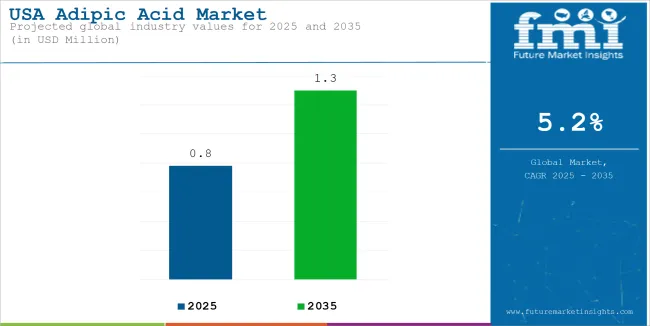
The adipic acid market in the United States will undergo positive growth throughout the forecast period, as the market size is projected to be around USD 1.3 billion by the end of 2035. The compound will show moderate growth by this end at a CAGR of 5.2% between 2025 and 2035.
Major users such as automotive, textiles, packaging, and food and beverages drive the demand for adipic acid. It is associated with the growth of the market, where the significance of sustainability and green chemistry solutions, coupled with improvements in production technologies, are key factors. Increasingly, industries in the USA use adipic acid in their production to ensure consumer demands for sustainable products are met in accordance with increasingly strict environmental regulations.
| Attributes | Description |
|---|---|
| Projected Value (2035F) | USD 1.3 billion |
| Projected Value (2025F) | USD 0.8 billion |
| Value-based CAGR (2025 to 2035) | 5.2% |
The USA has been very prominent in pursuing sustainable initiatives, not only with regard to a national focus but also on federal efforts to hit the target of net-zero carbon emissions by 2050. Moving towards greener production processes and biobased substitutes for industrial chemicals is well relevant to adipic acid.
In the automobile sector, it produces major commodities such as nylon and polyurethane, necessary for light car components and efficient energy design. Furthermore, the rising interest of sustainable packaging solutions in the food and beverage industries is expected to continue demanding adipic acid for plasticizer applications and other eco-friendly use.
Emerging Trends Shaping the USA Adipic Acid Market Landscape
Green Chemistry and Bio-Based Adipic Acid
The USA market for adipic acid is seeing a growing trend toward bio-based and renewable sources with increasing environmental sustainability concerns. Bio-based adipic acid, derived from renewable feedstocks such as plant-based sugars, is gaining acceptance because of its lower carbon footprint than the traditional fossil fuel-based production methods. This shift is also in line with the USA government's efforts toward sustainability and regulations that encourage the use of greener chemicals.
The bio-based adipic acid market is growing rapidly, especially in automotive and textiles, as these sectors need more sustainable material sources. Use of bio-based adipic acid in these industries assists companies in meeting their sustainability targets and contributes to the broader environmental goals of the USA As bio-based chemicals production becomes more economical and scalable, this segment will gain a lot in the USA market.
Innovations in Nylon and Polyurethane Manufacturing
Adipic acid is an important feedstock in the manufacture of nylon 66, widely applied in automotive components, textiles, and industrial uses. The USA automotive industry, focused significantly on fuel efficiency improvements and reduction in weight of vehicles, is increasingly demanding more high-performance materials such as nylon 66. Such demand directly influences the need for adipic acid, a raw material which is an indispensable input in the production of nylon 66.
Adipic acid is also used in the production of polyurethanes, which are gaining popularity in energy-efficient applications, such as in the automotive and construction industries. With the emphasis on sustainable building practices and the implementation of green building standards, the demand for polyurethane-based insulation materials, typically derived from adipic acid, is on the rise. This is likely to be a trend going forward as both residential and commercial construction projects are now more focused on energy efficiency and sustainability.
Sustainability in Food Packaging and Additives
The USA food and beverage industry, increasingly, is in the process of transforming towards more ecologically friendly packaging materials. In this, adipic acid, specifically in the form of adipate esters, as plasticizers for packaging materials, is critical in facilitating this change. As the world becomes more sensitive to plastic waste and the needs for circular models, adipic acid is becoming a critical raw material in developing biodegradable and recyclable plastics.
The main applications of adipic acid besides its packaging uses include an additive in food processing. Adipic acid here is used as a preservative and acidity regulator. Demand for the application as a food additive will therefore continue to be relatively stable because the current shift towards natural, less processed foods from consumers is also affecting the approach by companies regarding the food safety regulations and ingredients.
USA Adipic Acid Market by Application, End Use Industry, and Production Process
By Application
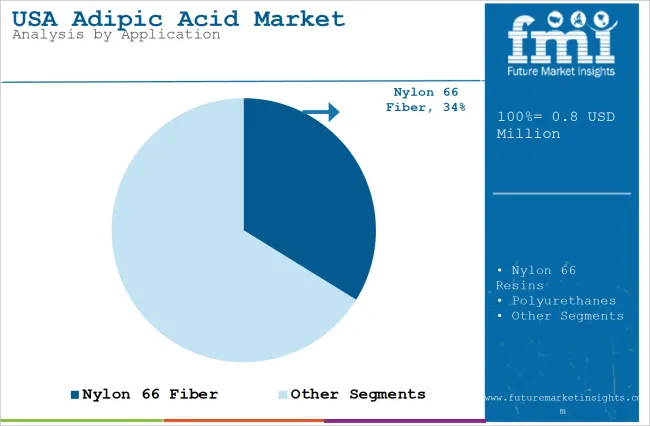
- Nylon 66 Fiber: The dominant application for adipic acid in the USA market, as it is essential in the production of nylon fibers for automotive interiors, textiles, and carpets.
- Nylon 66 Resins: Used in high-strength, durable, and heat-resistant applications within the automotive and industrial sectors.
- Polyurethanes: The growing demand for energy-efficient construction and automotive insulation continues to drive the demand for polyurethanes derived from adipic acid.
- Plasticizers: Used to enhance the flexibility and performance of plastics in packaging and construction materials.
- Food and Beverage Additives: Adipic acid is used as a food additive in flavoring, preservation, and acid regulation.
- Adipate Esters: These esters are used in the production of lubricants, plasticizers, and solvents.
- Others: Includes applications in coatings, adhesives, and other specialty chemicals.
By End-Use Industry
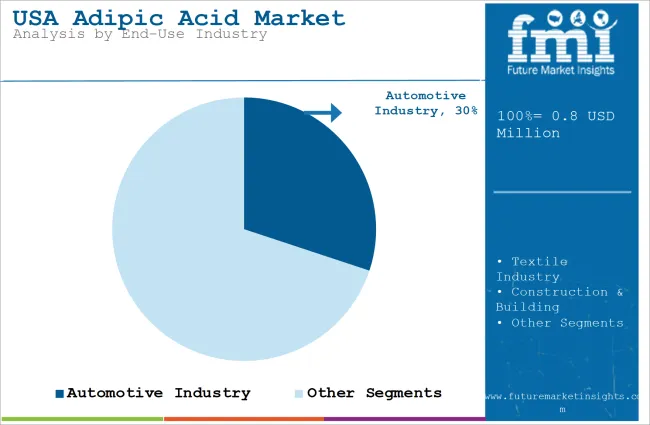
- Automotive Industry: The largest consumer of adipic acid, primarily for the production of high-performance materials such as nylon 66 and polyurethane.
- Textile Industry: Significant use of adipic acid in nylon fiber production for clothing, carpets, and industrial fabrics.
- Construction & Building: Increasing use of adipic acid in polyurethane insulation and adhesives for energy-efficient buildings.
- Consumer Goods & Packaging: The growing trend towards sustainable packaging is pushing up demand for adipic acid in the plasticizers and adipate esters used in packaging materials.
- Food and Beverage Industry: Continued use of adipic acid as a food additive, especially in processed foods and beverages.
- Others: Includes medical, electronics, and other industrial applications.
Growth and Adoption Trends Across Key End Use Sectors in the USA Adipic Acid Industry
| Segment | Nylon 66 Fiber |
|---|---|
| CAGR (2025 to 2035) | 4.6% |
| Key Trends | Increasing demand for lightweight and durable materials in automotive and textile sectors. |
| Segment | Polyurethanes |
|---|---|
| CAGR (2025 to 2035) | 5.0% |
| Key Trends | Growth driven by the need for energy-efficient insulation in construction and automotive industries. |
| Segment | Food and Beverage Additives |
|---|---|
| CAGR (2025 to 2035) | 4.2% |
| Key Trends | Focus on sustainability, cleaner ingredients, and greener packaging solutions. |
| Segment | Plasticizers |
|---|---|
| CAGR (2025 to 2035) | 4.7% |
| Key Trends | Demand growth due to the shift towards recyclable and bio-based plastics. |
Market Structure and Concentration Analysis for USA Adipic Acid
The USA adipic acid market is moderately consolidated, with several key global and domestic players vying for market share. Leading companies have been focusing on research and development, as well as sustainability, to meet the growing demand for greener and bio-based adipic acid solutions.
Leading Players: Major global players such as BASF SE, DuPont, and Covestro dominate the USA adipic acid market. These companies focus on technological innovation and sustainable solutions, investing in R&D to produce bio-based adipic acid and enhance its applications in various sectors.
Domestic Manufacturers: Domestic companies, including Eastman Chemical Company and LyondellBasell, are key players in the USA market. These manufacturers provide adipic acid for multiple industries, including automotive, textiles, and food, and are focusing on expanding their production of sustainable, bio-based adipic acid solutions.
Emerging Innovators: The USA is seeing an increase in bio-based adipic acid production initiatives, with companies exploring new feedstocks such as renewable biomass and waste materials. This trend is helping to meet the rising demand for sustainable solutions in the production of adipic acid.
Recent Developments and Strategic Updates in the USA Adipic Acid Industry
| Date | Key Development |
|---|---|
| January 2025 | DuPont launched a new bio-based adipic acid product aimed at the automotive sector. |
| March 2025 | Covestro expanded its adipic acid production capacity for sustainable applications. |
| October 2025 | Eastman Chemical acquired a new process for producing adipic acid from renewable resources. |
Long-term Outlook and Demand Forecast for USA Adipic Acid Through 2035
The USA adipic acid market is expected to continue growing in the coming years, fueled by the expansion of key industries such as automotive, textiles, and food. The market's future growth will be shaped by factors such as:
- Sustainability and Green Manufacturing: The ongoing focus on reducing carbon footprints and adopting bio-based chemicals will drive further demand for sustainable adipic acid.
- Automotive and Textile Industry Growth: The increasing demand for lightweight materials and sustainable textiles will continue to support adipic acid consumption in these sectors.
- Growth in Food Packaging: As eco-friendly packaging solutions gain traction, the use of adipic acid in plasticizers and additives is expected to rise.
- Technological Innovations in Bio-Based Production: Continued advancements in sustainable production methods will open up new opportunities for adipic acid applications across various industries.
Segmentation of the USA Adipic Acid Market by Grade, Form, Application, and Industry Vertical
By Application:
- Nylon 66 Fiber
- Nylon 66 Resins
- Polyurethanes
- Plasticizers
- Food and Beverage Additives
- Adipate Esters
- Others
By End-Use Industry:
- Automotive Industry
- Textile Industry
- Construction & Building
- Consumer Goods & Packaging
- Food and Beverage Industry
- Others
Frequently Asked Questions
What is the projected size of the USA Adipic Acid Market by 2035?
The market is expected to reach USD 1.3 billion, growing at a CAGR of 5.2%.
Which application dominates the USA adipic acid market?
Nylon 66 fiber remains the largest application, primarily in the automotive and textile industries.
What are the major trends shaping the USA adipic acid market?
Key trends include the adoption of bio-based adipic acid, the growth of sustainable packaging, and innovations in nylon and polyurethane manufacturing.
Who are the key players in the USA adipic acid market?
Major players include BASF SE, DuPont, Covestro, Eastman Chemical Company, and LyondellBasell.
Preview the report firsthand - request a free sample
Get SampleGet the brochure for pricing and purchase details.
Get PDFTable of Content
- Introduction
- Market Outlook
- Key Trends
- Segment Analysis
- Industry-Wide Growth and Trends
- Market Concentration
- Industry Updates
- Future Outlook
- Frequently Asked Questions (FAQs)


