

- Industry Size (2026)
- USD 0.7 Bn
- Forecast (2036)
- USD 1.3 Bn
- CAGR (2026 to 2036)
- 5.9%
Demand for Beer Bottling Kit in USA Forecast and Outlook 2026 to 2036
The demand for beer bottling kits in the USA is projected to grow from USD 0.7 billion in 2026 to USD 1.3 billion in 2036, reflecting a 5.90% CAGR. The acceleration and deceleration pattern reveals a gradual but steady growth trajectory. In the initial years, from 2026 to 2027, the demand increases slightly from USD 0.6 billion to USD 0.7 billion, showing a consistent but moderate rise. This pattern of stable growth continues through 2029, where the demand remains steady at USD 0.7 billion.
Quick Stats of the Demand for Beer Bottling Kit in USA
- Demand for Beer Bottling Kit in USA Value (2026): USD 0.7 billion
- Demand for Beer Bottling Kit in USA Forecast Value (2036): USD 1.3 billion
- Demand for Beer Bottling Kit in USA Forecast CAGR (2026-2036): 5.9%
- Demand for Beer Bottling Kit in USA Leading Equipment: Rinser
- Demand for Beer Bottling Kit in USA Key Growth Regions: West USA, South USA, Northeast USA, Midwest USA
- Demand for Beer Bottling Kit in USA Top Players: Krones Group, GEA Group, Alfa Laval International AB, Paul Mueller Company, New Belgium Brewing Company
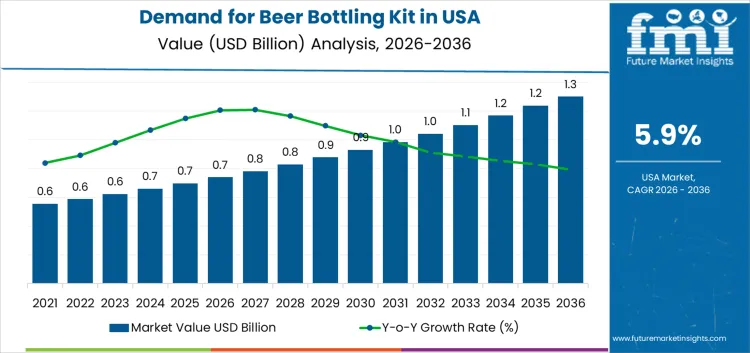
From 2030 onward, there is a noticeable acceleration in demand, as it rises to USD 1.0 billion in 2031 and maintains this upward pace through 2033, reaching USD 1.2 billion by 2034. This acceleration is driven by the increasing popularity of craft beer and the expansion of smaller breweries, as they focus on packaging and distributing their products more efficiently. The pattern of steady, moderate growth shifts to a more accelerated rise as technological advancements and innovations in bottling systems contribute to enhanced production capabilities. As demand for craft and packaged beer increases, the beer bottling kit sector is expected to continue growing, with the most significant growth occurring toward the latter part of the forecast period.
Demand for Beer Bottling Kit in USA Key Takeaways
| Metric | Value |
|---|---|
| Demand for Beer Bottling Kit in USA Value (2026) | USD 0.7 billion |
| Demand for Beer Bottling Kit in USA Forecast Value (2036) | USD 1.3 billion |
| Demand for Beer Bottling Kit in USA Forecast CAGR (2026-2036) | 5.9% |
Why is the Demand for Beer Bottling Kit in USA Growing?
The demand for beer bottling kits in the USA is growing due to the rising number of homebrewers and small-scale breweries looking for efficient and cost-effective solutions to bottle their beer. Beer bottling kits, which include essential equipment such as bottles, caps, and bottle fillers, make it easier for homebrewers and small breweries to package their beer for distribution or personal consumption. As the craft beer movement continues to thrive, more individuals are venturing into homebrewing, contributing to the growth of demand for bottling kits. The trend toward personalized, small-batch beer production and local distribution is also fueling the need for packaging solutions that offer flexibility and ease of use.
Key drivers for this growth include the expanding interest in homebrewing as a hobby, with more consumers experimenting with brewing their own beer. This has led to a rise in demand for affordable, high-quality bottling kits that simplify the bottling process. The growth of microbreweries and craft beer taprooms, many of which bottle their beer for local sales or events, is pushing demand for beer bottling equipment. The increasing consumer preference for fresh, locally produced beer has also contributed to the expansion of small-scale beer production and the need for reliable bottling solutions.
Technological advancements in bottling systems, including innovations that reduce the risk of contamination and improve packaging efficiency, are making these kits more appealing to small-scale brewers and homebrewers. Despite challenges such as the upfront cost of bottling equipment and the labor-intensive nature of the bottling process, the growing trend of craft beer and the popularity of homebrewing are expected to continue driving steady growth in the demand for beer bottling kits in the USA through 2036.
What is the Segment-Wise Analysis of Demand for Beer Bottling Kit in USA?
Demand for beer bottling kits in the USA is segmented by equipment type, application, mode of operation, and region. By equipment type, rinsers lead with 45% of the demand, followed by cappers and fillers. In terms of application, commercial breweries account for 70% of the demand, with home-based breweries making up the remainder. Regarding mode of operation, both automatic and manual systems are used, with automatic systems gaining popularity for large-scale operations. Regionally, demand is distributed across West USA, South USA, Northeast USA, and Midwest USA.
How Does Rinser Lead the Demand for Beer Bottling Kit in USA?

Rinsers account for 45% of the demand for beer bottling kits in the USA, driven by their essential role in cleaning bottles before filling. Rinsers ensure that bottles are thoroughly cleaned and sanitized, preventing contamination and ensuring the quality and safety of the beer. The increasing emphasis on hygiene, product quality, and safety regulations in the brewing industry further boosts the demand for rinsing equipment. Rinsers are particularly critical in commercial breweries where high-volume bottling is common. The demand for efficient, fast, and reliable rinsing systems, which can accommodate different bottle sizes and shapes, contributes to the growing preference for automated rinser systems. As the commercial brewery sector continues to expand and adopt more efficient production technologies, rinsers remain a core component of beer bottling kits, cementing their dominant position in the industry.
How Does Commercial Brewery Application Lead the Demand for Beer Bottling Kit in USA?
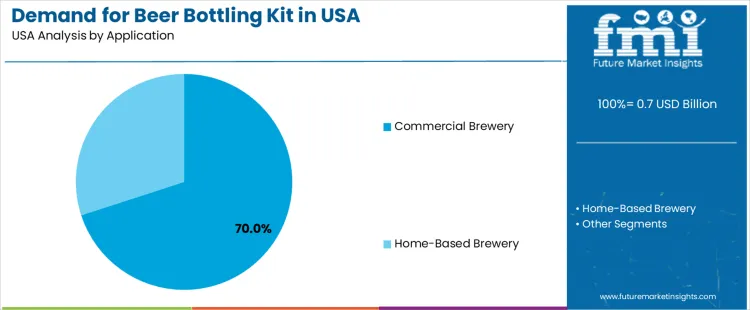
Commercial breweries account for 70% of the demand for beer bottling kits in the USA, driven by the need for efficient, high-volume bottling solutions. In large-scale brewing operations, bottling equipment must meet high-demand production schedules, ensuring that beer is packaged efficiently while maintaining product integrity. Rinsers, cappers, and fillers are essential components in commercial breweries, helping to maintain cleanliness, prevent contamination, and ensure proper sealing. The rising demand for craft beer and the continuous growth of the commercial brewing sector fuel the need for advanced bottling systems. Automated systems are increasingly favored for their speed and consistency in high-volume operations, reducing labor costs and improving operational efficiency. As commercial breweries expand and strive for greater production capacity and quality control, the demand for reliable and high-performance beer bottling kits is expected to grow, maintaining its dominant role in the industry.
What are the Key Trends, Drivers and Restraints in Demand for Beer Bottling Kit in USA?
Demand for beer bottling kits in the USA is growing as home brewers and craft breweries expand operations and seek ways to bottle beer for storage, sharing, or small‑scale distribution. Bottling kits help producers package beer consistently with less waste. The rise of craft beer culture and DIY brewing communities encourages more people to experiment and share products. Restraints include cost of quality equipment and the learning curve for proper bottling without oxidation or contamination.
Why is Demand for Beer Bottling Kit Growing in USA?
Demand for beer bottling kits is increasing because hobbyists and small breweries want flexible ways to package beer without investing in large commercial equipment. As the craft beer movement continues, brewers seek bottling solutions that maintain beer quality while supporting small‑batch packaging. Home brewing clubs, community events, and DIY beer culture promote seasonal or unique recipes that are ideal for bottling. Retail and online availability of kits and accessories makes it easier for brewers to start bottling with minimal upfront investment, driving growth in both hobby and small commercial industries.
How are Technological and Industry Innovations Driving Beer Bottling Kit Demand in USA?
Technological improvements have made beer bottling kits more user‑friendly, reliable, and efficient. Ergonomic bottle fillers, adjustable flow controllers, and anti‑splash valves help reduce oxidation and improve pour consistency. Innovations in capping tools and sanitization accessories ensure cleaner processes and stronger seals. Modular kits allow brewers to scale up as production grows, while lightweight, portable designs make bottling accessible for small spaces. Online tutorials, community support and clearer instructions also help new brewers use kits effectively, reducing errors and product loss. These developments make bottling kits more attractive across hobbyist and small brewery segments.
What are the Key Challenges and Risks That Could Limit Beer Bottling Kit Demand in USA?
Some brewers prefer to use keg systems for draft serving, reducing the need for bottled beer. The upfront cost of quality kits, caps, bottles, and cleaning supplies may deter beginners or cost‑conscious brewers. Bottling requires proper sanitization, timing, and handling; lack of expertise can lead to oxidation, off flavors, or contamination, discouraging some users. Legal and regulatory requirements for commercial bottling and labeling may restrict expansion of hobby bottling into small retail segments, limiting demand to home and small‑batch brewers.
What is the Regional Demand Outlook for Beer Bottling Kit in USA?
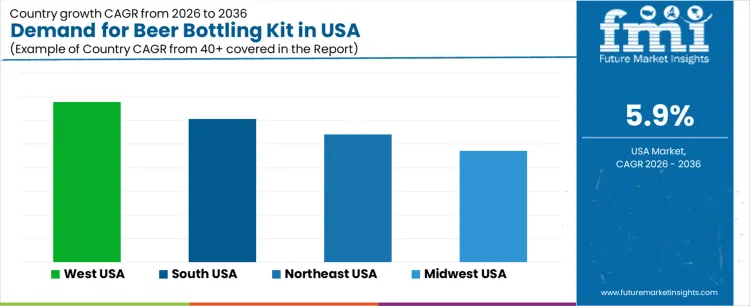
| Region | CAGR (%) |
|---|---|
| West USA | 6.8% |
| South USA | 6.1% |
| Northeast USA | 5.4% |
| Midwest USA | 4.7% |
Demand for beer bottling kits in the USA is growing steadily, with West USA leading at a 6.8% CAGR, driven by a thriving craft beer culture and a focus on sustainable bottling solutions. South USA follows with a 6.1% CAGR, supported by the expanding craft beer industry and home brewing trend. Northeast USA shows a 5.4% CAGR, fueled by the region’s rich beer culture and consumer demand for locally brewed and bottled beer. Midwest USA experiences a 4.7% CAGR, with steady growth driven by established breweries and a focus on quality beer packaging.
How is Demand for Beer Bottling Kit Growing in West USA?
West USA leads the demand for beer bottling kits, growing at a 6.8% CAGR. The region’s strong craft beer culture, particularly in states like California, Oregon, and Colorado, is a major driver of this growth. With the increasing number of microbreweries and home brewing enthusiasts, the need for efficient and reliable bottling kits has surged. These kits are essential for packaging beer at various scales, from home brewers to small-scale commercial producers. The region’s focus on sustainability also contributes to the rise in demand for eco-friendly and reusable bottling equipment. West USA's entrepreneurial spirit and innovative approach to brewing encourage brewers to experiment with diverse beer styles, further increasing the need for bottling kits. As craft beer continues to thrive in the West and consumers demand more locally brewed and bottled beer, the industry for beer bottling kits is expected to remain strong, especially for both home brewers and small commercial operations.
Why is Demand for Beer Bottling Kit Rising in South USA?
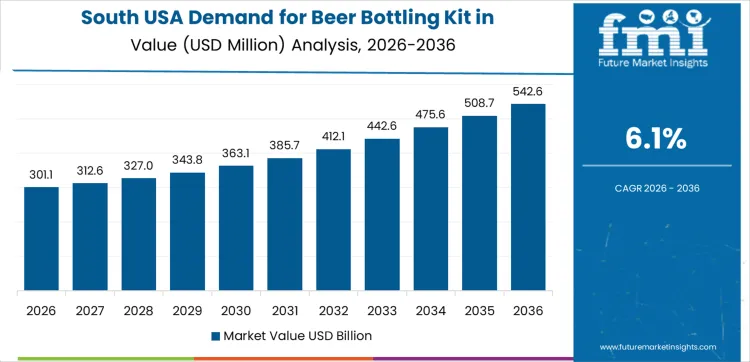
South USA is experiencing steady demand for beer bottling kits, with a 6.1% CAGR. The region’s rapidly growing craft beer industry, particularly in states like Texas, Florida, and Georgia, is driving this increase. The rise of local breweries and the growing interest in home brewing are key factors contributing to the higher demand for bottling kits. These kits are essential for ensuring that beer is properly packaged and preserved for distribution and consumption. The South’s warm climate also plays a role, as many breweries and home brewers need reliable bottling solutions to protect beer quality. As craft beer continues to gain popularity and more breweries open across the region, demand for bottling kits will remain strong. As the South’s brewing culture becomes more prominent, there is also an increasing shift toward sustainable and cost-effective bottling practices, further driving the demand for efficient beer bottling solutions.
How is Demand for Beer Bottling Kit Expanding in Northeast USA?
Northeast USA is seeing steady demand for beer bottling kits, with a 5.4% CAGR. The region’s long-standing beer culture, particularly in states like New York, Massachusetts, and Pennsylvania, continues to drive demand for bottling kits as the craft beer scene expands. With a large number of microbreweries and home brewers, the need for reliable bottling equipment to ensure beer quality and packaging efficiency is growing. The Northeast’s focus on artisanal and local production also supports the demand for small-scale bottling kits for craft brewers. The region’s consumer preference for fresh, locally brewed beer, along with the rise in home brewing activities, is further fueling the industry for bottling kits. As breweries in the Northeast focus on sustainability and reducing waste, the demand for eco-friendly and reusable bottling equipment is expected to continue growing. With strong consumer interest in high-quality, craft beer, the industry for bottling kits in Northeast USA will continue to expand steadily.
Why is Demand for Beer Bottling Kit Growing in Midwest USA?
Midwest USA is experiencing moderate demand for beer bottling kits, with a 4.7% CAGR. The region’s well-established brewing culture, including craft breweries in states like Michigan, Wisconsin, and Illinois, is contributing to the steady growth in demand for bottling kits. As the craft beer industry continues to grow in the Midwest, both commercial brewers and home brewers require reliable bottling solutions to package their beers efficiently and maintain quality. The Midwest’s strong agricultural presence also supports the use of local ingredients, making locally bottled beer increasingly popular. With the demand for craft beer continuing to rise, especially in larger cities like Chicago and Detroit, the need for beer bottling kits will remain strong. The Midwest’s focus on quality and innovation in beer production, combined with a growing desire for sustainability, is further driving the demand for reusable and eco-friendly bottling solutions. As the region’s brewing industry expands, demand for bottling kits will continue to grow.
What is the Competitive Landscape of Beer Bottling Kit Demand in USA?

Demand for beer bottling kits in the USA is growing as the craft beer industry expands and more breweries, both small and large, require efficient solutions for packaging and distribution. Beer bottling kits play a critical role in ensuring the beer is properly filled, sealed, and labeled for sale. These systems help preserve the beer’s flavor and carbonation, while also meeting regulatory standards for packaging. With the rise of both craft breweries and larger production facilities looking to meet consumer demand, the need for reliable and effective bottling solutions continues to increase
Leading companies in this space focuses on providing advanced bottling systems that cater to breweries of all sizes. Their systems are known for their high efficiency, versatility, and scalability, allowing breweries to meet production targets while maintaining beer quality. By offering automated solutions with features like precise filling technology and integrated labeling, this company supports breweries in improving productivity and reducing waste.
Other competitors in the industry offer specialized beer bottling kits designed to meet the needs of specific types of breweries. Some companies provide entry-level systems ideal for smaller operations or craft brewers, while others offer high-capacity equipment suited for large-scale production. These companies often differentiate themselves by offering customizable solutions that allow breweries to choose specific features such as labeling, filling speed, or compatibility with different bottle types.
Key Players in USA Beer Bottling Demand
- Krones Group
- GEA Group
- Alfa Laval International AB
- Paul Mueller Company
Scope of Report
| Items | Values |
|---|---|
| Quantitative Units (2026) | USD billion |
| Key Segments | Rinser, Capper, Filler |
| Application | Commercial Brewery, Home-Based Brewery |
| Mode of Operation | Automatic, Manual |
| Region | West USA, South USA, Northeast USA, Midwest USA |
| Key Players Profiled | Krones Group, GEA Group, Alfa Laval International AB, Paul Mueller Company, New Belgium Brewing Company |
| Additional Attributes | Dollar sales by equipment, application, and mode of operation; regional CAGR and growth trends in beer bottling kits in the USA |
USA Beer Bottling Demand by Key Segments
Equipment
- Rinser
- Capper
- Filler]
Application
- Commercial Brewery
- Home-Based Brewery
Mode of Operation
- Automatic
- Manual
Region
- West USA
- South USA
- Northeast USA
- Midwest USA
Frequently Asked Questions
How big is the demand for beer bottling kit in USA in 2026?
The demand for beer bottling kit in USA is estimated to be valued at USD 0.7 billion in 2026.
What will be the size of beer bottling kit in USA in 2036?
The market size for the beer bottling kit in USA is projected to reach USD 1.3 billion by 2036.
How much will be the demand for beer bottling kit in USA growth between 2026 and 2036?
The demand for beer bottling kit in USA is expected to grow at a 5.9% CAGR between 2026 and 2036.
What are the key product types in the beer bottling kit in USA?
The key product types in beer bottling kit in USA are rinser, capper and filler.
Which application segment is expected to contribute significant share in the beer bottling kit in USA in 2026?
In terms of application, commercial brewery segment is expected to command 70.0% share in the beer bottling kit in USA in 2026.
Preview the report firsthand - request a free sample
Get SampleGet the brochure for pricing and purchase details.
Get PDFTable of Content
- Executive Summary
- USA Market Outlook
- Demand-side Trends
- Supply-side Trends
- Technology Roadmap Analysis
- Analysis and Recommendations
- Market Overview
- Market Coverage / Taxonomy
- Market Definition / Scope / Limitations
- Market Background
- Market Dynamics
- Drivers
- Restraints
- Opportunity
- Trends
- Scenario Forecast
- Demand in Optimistic Scenario
- Demand in Likely Scenario
- Demand in Conservative Scenario
- Opportunity Map Analysis
- Product Life Cycle Analysis
- Supply Chain Analysis
- Investment Feasibility Matrix
- Value Chain Analysis
- PESTLE and Porter’s Analysis
- Regulatory Landscape
- Regional Parent Market Outlook
- Production and Consumption Statistics
- Import and Export Statistics
- Market Dynamics
- USA Market Analysis 2020 to 2024 and Forecast, 2025 to 2035
- Historical Market Size Value (USD Million) Analysis, 2020 to 2024
- Current and Future Market Size Value (USD Million) Projections, 2025 to 2035
- Y-o-Y Growth Trend Analysis
- Absolute $ Opportunity Analysis
- USA Market Pricing Analysis 2020 to 2024 and Forecast 2025 to 2035
- USA Market Analysis 2020 to 2024 and Forecast 2025 to 2035, By Equipment
- Introduction / Key Findings
- Historical Market Size Value (USD Million) Analysis By Equipment , 2020 to 2024
- Current and Future Market Size Value (USD Million) Analysis and Forecast By Equipment , 2025 to 2035
- Rinser
- Capper
- Filler
- Y-o-Y Growth Trend Analysis By Equipment , 2020 to 2024
- Absolute $ Opportunity Analysis By Equipment , 2025 to 2035
- USA Market Analysis 2020 to 2024 and Forecast 2025 to 2035, By Application
- Introduction / Key Findings
- Historical Market Size Value (USD Million) Analysis By Application, 2020 to 2024
- Current and Future Market Size Value (USD Million) Analysis and Forecast By Application, 2025 to 2035
- Commercial Brewery
- Home-Based Brewery
- Y-o-Y Growth Trend Analysis By Application, 2020 to 2024
- Absolute $ Opportunity Analysis By Application, 2025 to 2035
- USA Market Analysis 2020 to 2024 and Forecast 2025 to 2035, By Mode of Operation
- Introduction / Key Findings
- Historical Market Size Value (USD Million) Analysis By Mode of Operation, 2020 to 2024
- Current and Future Market Size Value (USD Million) Analysis and Forecast By Mode of Operation, 2025 to 2035
- Automatic
- Manual
- Y-o-Y Growth Trend Analysis By Mode of Operation, 2020 to 2024
- Absolute $ Opportunity Analysis By Mode of Operation, 2025 to 2035
- Market Structure Analysis
- Competition Dashboard
- Competition Benchmarking
- Market Share Analysis of Top Players
- By Regional
- By Equipment
- By Application
- By Mode of Operation
- Competition Analysis
- Competition Deep Dive
- Krones Group
- Overview
- Product Portfolio
- Profitability by Market Segments (Product/Age /Sales Channel/Region)
- Sales Footprint
- Strategy Overview
- Marketing Strategy
- Product Strategy
- Channel Strategy
- GEA Group
- Alfa Laval International AB
- Paul Mueller Company
- New Belgium Brewing Company
- Krones Group
- Competition Deep Dive
- Assumptions & Acronyms Used
- Research Methodology


