

- Industry Size (2026)
- USD 62.7 Mn
- Forecast (2036)
- USD 130.4 Mn
- CAGR (2026 to 2036)
- 7.6%
Demand for Duck Boots in USA 2026 to 2036
The USA duck boots demand is valued at USD 62.7 million in 2026 and is projected to reach USD 130.4 million by 2036, reflecting a CAGR of 7.6%. Growth is driven by increased interest in weather-resistant footwear suitable for rain, snow, and outdoor activities. Seasonal retail demand and rising adoption of rugged lifestyle apparel strengthen market expansion across both functional and fashion-oriented consumers.
Rubber leads the material segment because it provides strong waterproofing, slip resistance, and durability in wet and cold environments. Manufacturers enhance comfort with insulated linings, improved traction soles, and ergonomic designs. Hybrid constructions combining rubber lowers with leather uppers remain popular due to balanced protection and aesthetics.
The West, South, and Northeast regions show strong demand because of varied climate conditions and established outdoor recreation culture. Key players include Rockport, Milwaukee Boots, Frye, Clarks, and Unmarked. Their strategies focus on updated silhouettes, improved sole technology, and expanded distribution through outdoor retailers and e-commerce channels to meet both utility and style-driven consumer preferences.
Quick Stats for USA Duck Boots Demand
- USA Duck Boots Sales Value (2026): USD 62.7 million
- USA Duck Boots Forecast Value (2036): USD 130.4 million
- USA Duck Boots Forecast CAGR (2026-2036): 7.6%
- Leading Material Segment in USA Duck Boots Demand: Rubber
- Key Growth Regions in USA Duck Boots Demand: West USA, South USA, Northeast USA
- Top Players in USA Duck Boots Demand: Rockport, Milwaukee Boots, Frye, Clarks, Unmarked
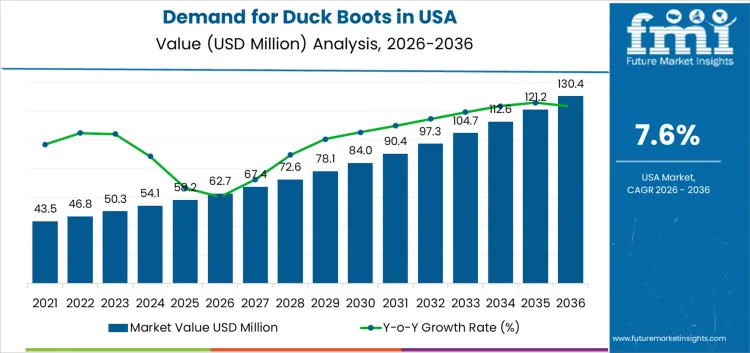
What is the Growth Forecast for Duck Boots Industry in USA through 2036?
The growth rate volatility index for duck boots in the United States reflects variation shaped by seasonal weather patterns, fashion adoption cycles, and inventory management strategies. Volatility remains prominent because demand concentrates in colder and wetter months when insulated and water-resistant footwear becomes essential for outdoor activity. These seasonal peaks elevate the index, producing short high-growth intervals followed by predictable declines as conditions normalize. Retailers adjust order volumes in response to winter severity forecasts, adding variability when expectations diverge from actual weather outcomes.
Fashion-driven shifts introduce additional volatility because style trends influence short-term purchasing intensity. Collaborations, color updates, and material variations create intermittent surges that raise index movement for limited periods. Off-season demand softens substantially, creating troughs that widen the gap between peak and baseline growth. Supply chain planning also contributes to volatility because manufacturers balance production against uncertain winter demand. Delays or surplus inventory can amplify fluctuations across consecutive quarters. E-commerce promotions create brief uplift periods that do not align consistently with seasonal cycles, adding further irregularity. The pattern shows moderate to high volatility shaped by weather dependence, trend responsiveness, and procurement timing across domestic footwear channels.
USA Duck Boots Key Takeaways
| Metric | Value |
|---|---|
| USA Duck Boots Sales Value (2026) | USD 62.7 million |
| USA Duck Boots Forecast Value (2036) | USD 130.4 million |
| USA Duck Boots Forecast CAGR (2026-2036) | 7.6% |
Why is the Demand for Duck Boots in USA Growing?
Demand for duck boots in the United States grows due to expanding use across outdoor activities, changing weather patterns, and interest in durable footwear suited for mixed conditions. Consumers rely on waterproof lower shells and traction oriented soles during rain, slush, and light snow, which increases year round use in regions with variable precipitation. Growth in hiking, camping, and rural recreation strengthens adoption among individuals seeking footwear that resists moisture while maintaining flexibility for extended wear. Urban buyers select duck boots for commuting during transitional seasons marked by wet surfaces and temperature swings.
Retailers report sustained demand due to styles that combine practical protection with everyday wearability. Work environments involving agriculture, landscaping, and light construction maintain steady purchasing because the boots support stable footing on wet or uneven ground. E commerce distribution increases access to insulated and non-insulated variants that meet regional climate needs. Manufacturers introduce lightweight uppers and improved liners that enhance comfort while retaining traditional waterproof performance. Rising interest in long lasting footwear supports continued engagement with designs known for durability across repeated outdoor use.
Which Material and Sales Channel Segments Lead Demand for Duck Boots in USA?
Demand for duck boots in the USA is shaped by weather-protection needs, outdoor activity patterns, and preferences for durable multi-season footwear. Buyers evaluate water resistance, insulation capability, and upper-sole integration that supports use in wet or variable conditions. Distribution reflects brand presence, retail availability, and the balance between in-store fit assessment and online purchasing convenience.
By Material, Rubber Accounts for the Largest Share of Demand
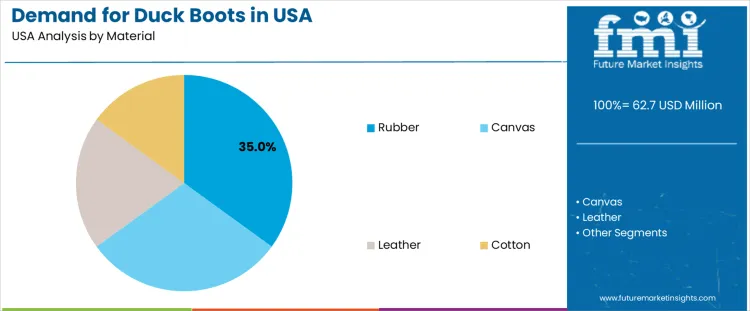
Rubber holds 35.0%, making it the leading material segment in USA duck boot demand. Rubber provides high water resistance, structural durability, and reliable traction across rain, snow, and mud conditions. Canvas holds 30.0%, supporting lightweight construction and breathability for transitional-weather use. Leather holds 20.0%, valued for durability, insulation compatibility, and higher-end styling suited for outdoor and casual settings. Cotton holds 15.0%, used in lighter designs emphasizing comfort and airflow. Material distribution reflects performance expectations, seasonal variability, and cost-to-durability considerations among consumers.
Key Points:
- Rubber supports waterproofing and traction requirements.
- Canvas enables lightweight and breathable construction.
- Leather provides durability for outdoor and casual use.
- Material choice aligns with climate exposure and comfort needs.
By Sales Channel, Specialty Stores Represent the Largest Segment
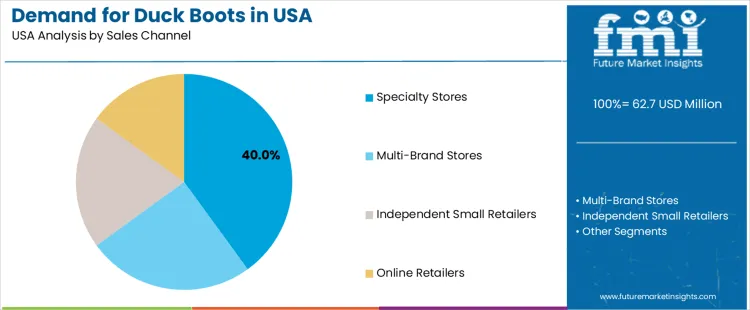
Specialty stores hold 40.0%, making them the leading sales channel in USA duck boot demand. These stores offer curated outdoor footwear selections, fitting assistance, and brand-specific assortments that guide consumer choice. Multi-brand stores hold 25.0%, providing broader access to varied price tiers and seasonal inventory. Independent small retailers hold 20.0%, supporting localized purchasing and region-specific footwear needs. Online retailers hold 15.0%, reflecting convenience-driven purchasing for known fits or repeat buyers. Sales channel distribution reflects the importance of in-person evaluation, regional climate demand, and product fit accuracy.
Key Points:
- Specialty stores lead due to expert fitting and curated selection.
- Multi-brand outlets broaden access across price tiers.
- Small retailers serve localized demand patterns.
- Online channels support convenience-driven repeat purchases.
What are the Key Dynamics in the Duck Boots Industry?
Weather protection needs, outdoor activity patterns, and seasonal apparel demand are driving adoption.
Demand increases as US consumers purchase duck boots for traction and water resistance in regions experiencing frequent rain and snow. Households in the Northeast and Upper Midwest rely on insulated designs that provide stability on wet and icy surfaces. Outdoor recreation activities such as hiking, camping, and field work support interest in durable rubber-lower and leather-upper constructions. Retailers report steady sales during autumn and winter as households prepare for variable weather. Workwear users select duck boots for environments requiring slip resistance and easy cleaning. E-commerce channels broaden visibility of style variations that retain functional characteristics while matching regional climate needs.
Price sensitivity, style alternatives, and seasonal dependency restrain broader utilization.
Consumers evaluate the cost of duck boots relative to multipurpose winter boots that offer insulation with lighter designs. Several buyers prefer athletic-inspired waterproof footwear, which reduces year-round demand for traditional silhouettes. Warmer regions display limited utilization due to minimal exposure to snow or persistent wet conditions. Retailers manage inventory risk created by short peak seasons, which affects availability across smaller markets. Heavy constructions may deter users seeking lightweight options for daily commuting. Material care requirements influence purchase decisions among individuals preferring low-maintenance footwear. Price fluctuations in leather and rubber inputs affect retailer planning.
Hybrid materials, comfort upgrades, and lifestyle integration shape current trends.
US brands develop duck boots with synthetic uppers, improved insulation layers, and cushioned midsoles to enhance comfort across extended wear. Lightweight rubber compounds support flexibility while maintaining waterproof performance. Lifestyle collections introduce colour variations and streamlined profiles that broaden appeal beyond outdoor use. Retailers increase interest in slip-resistant outsoles suited to urban environments with variable pavement conditions. Consumers adopt lined and fleece-based interiors during colder months. Direct-to-consumer platforms expand custom-fit options. Sustainability programs encourage use of recycled rubber components and responsibly sourced leather across premium product lines.
Analysis of the Demand for Duck Boots in the USA by Region
Demand for duck boots in the USA is rising due to increasing preference for weather-resistant footwear, higher outdoor activity participation, and stable utilization across seasonal apparel categories. West USA records a CAGR of 8.7% supported by diverse outdoor environments and strong adoption of functional footwear. South USA shows a 7.8% CAGR driven by variable weather conditions and expanding retail distribution. Northeast USA posts a 7.0% CAGR due to frequent wet and cold seasons that sustain year-round interest. Midwest USA holds a 6.1% CAGR supported by consistent seasonal demand and routine use across outdoor-oriented lifestyles.

| Region | CAGR (2026-2036) |
|---|---|
| West USA | 8.7% |
| South USA | 7.8% |
| Northeast USA | 7.0% |
| Midwest USA | 6.1% |
How is the West USA driving demand for Duck Boots?
West USA drives demand due to its varied terrain, active outdoor culture, and climate patterns that support regular use of weather-resistant footwear. The region’s CAGR of 8.7% reflects strong purchasing behavior linked to hiking, camping, and general outdoor mobility. Urban consumers adopt duck boots for durability during wet and transitional seasons. Retail channels maintain broad availability supported by continuous interest in functional footwear. Outdoor-recreation industries across the region contribute to stable sales volumes. Demand remains steady due to diverse climate exposure ranging from coastal rain to mountainous snow.
- High outdoor-activity participation
- Continuous use across varied climate conditions
- Strong retail presence supporting year-round sales
- Durable footwear preferred for wet and transitional seasons
How is the South USA driving demand for Duck Boots?
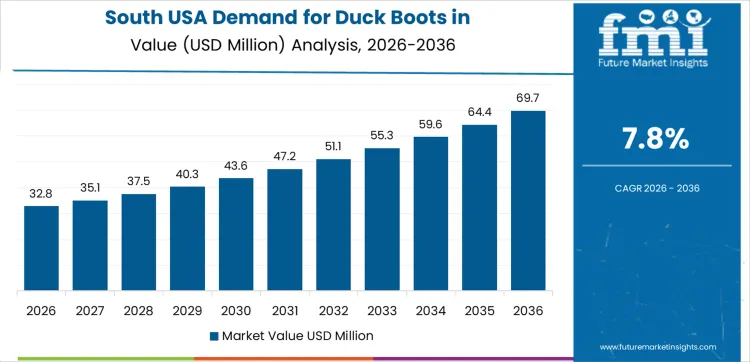
South USA supports rising demand due to variable weather, including heavy rain periods, and expanding retail access to functional footwear. The region’s CAGR of 7.8% reflects sustained use of duck boots for everyday protection during wet conditions. Outdoor leisure activities across suburban and rural areas support stable purchasing patterns. Retailers distribute a wide range of styles suited to mild winters and rainy seasons. Consumers adopt duck boots for durability and comfort on mixed terrain. Increased interest in versatile footwear enhances regional demand across both urban and non-urban communities.
- Use driven by variable rain-heavy climate patterns
- Broad retail availability across suburban and urban markets
- Consistent preference for durable, weather-ready footwear
- Steady adoption for outdoor leisure activities
How is the Northeast USA driving demand for Duck Boots?
Northeast USA drives demand due to its long wet seasons, snow exposure, and strong consumer reliance on functional cold-weather footwear. The region’s CAGR of 7.0% reflects consistent use of duck boots to manage slush, rain, and transitional winter conditions. Dense urban populations maintain predictable seasonal purchasing patterns. Retailers stock a wide selection due to steady demand across fall and winter months. Regular commuter foot traffic supports continuous use of weather-resistant shoes. Outdoor recreation and rural activity further reinforce ongoing adoption.
- Long wet and cold-weather periods requiring durable footwear
- Stable retail turnover during fall and winter seasons
- High commuter reliance on weather-resistant boots
- Continued use across urban and rural outdoor activities
How is the Midwest USA driving demand for Duck Boots?
Midwest USA maintains steady demand due to its pronounced seasonal climate, including heavy snow, rain, and freeze-thaw cycles. The region’s CAGR of 6.1% reflects predictable reliance on duck boots for general outdoor mobility during wet and cold months. Consumers favor insulated, waterproof designs that support traction and stability. Rural and suburban areas exhibit consistent usage due to varied terrain. Retailers maintain reliable inventory due to repeated seasonal demand. Outdoor work and recreational activities reinforce continued interest in durable footwear that withstands shifting weather patterns.
- Strong seasonal need for waterproof and insulated boots
- Reliable rural and suburban adoption
- Steady retail demand during wet and cold seasons
- Broad usage across outdoor work and recreation
What is the competitive landscape of the demand for duck boots in the USA?
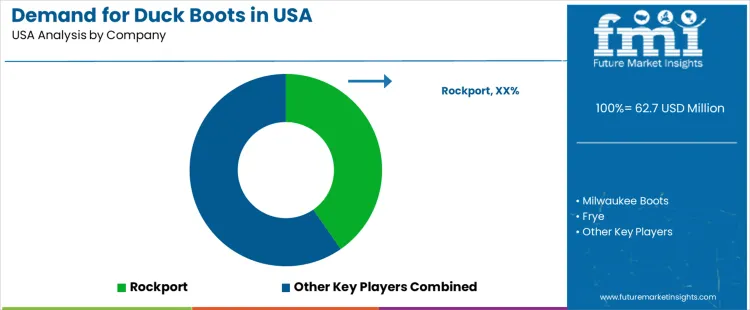
Demand for duck boots in the USA is shaped by requirements for water resistance, traction, upper durability, and comfort suited for varied outdoor environments. Buyers evaluate rubber shell integrity, stitching quality, insulation levels, and outsole performance across wet and cold conditions. Procurement teams consider material consistency, size availability, and reliability of distribution channels supporting both seasonal and year-round demand. Adoption patterns reflect interest in versatile footwear that balances functional protection with everyday wear suitability across rural, suburban, and urban settings.
Rockport holds a leading position supported by established product lines that emphasize weather-resistant construction and wide availability through national retail networks. Milwaukee Boots participates with work-oriented footwear designed for users who require reinforced protection during outdoor activities. Frye maintains visibility through leather-focused designs that appeal to consumers seeking durability and traditional craftsmanship. Clarks contributes comfort-driven silhouettes featuring waterproof membranes and traction-enhanced soles. Unmarked supplies niche footwear through specialty retailers targeting buyers drawn to minimalist and heritage-inspired styles. Competitive positioning in the United States is shaped by material performance, construction reliability, brand recognition, and multi-channel distribution supporting diverse outdoor and casual footwear requirements.
Key Players in USA Duck Boots Demand
- Rockport
- Milwaukee Boots
- Frye
- Clarks
- Unmarked
Scope of the Report
| Items | Values |
|---|---|
| Quantitative Units | USD million |
| Material | Rubber, Canvas, Leather, Cotton |
| Sales Channel | Specialty Stores, Multi-Brand Stores, Independent Small Retailers, Online Retailers |
| End User | Women, Men, Kids |
| Key Companies Profiled | Rockport, Milwaukee Boots, Frye, Clarks, Unmarked |
| Additional Attributes | Dollar sales by material type, end-user category, and sales channel; adoption patterns across women’s, men’s, and kids’ waterproof footwear; influence of seasonal demand cycles in the USA; product performance trends in insulated versus non-insulated rubber-bottom boots; competitive landscape of legacy footwear brands and emerging outdoor-lifestyle labels; impact of online retail growth and multi-brand distribution networks; usage trends driven by outdoor recreation, workwear, and casual fashion segments. |
USA Duck Boots Demand by Segments
Material:
- Rubber
- Canvas
- Leather
- Cotton
Sales Channel:
- Specialty Stores
- Multi-Brand Stores
- Independent Small Retailers
- Online Retailers
End User:
- Women
- Men
- Kids
Region:
- West USA
- South USA
- Northeast USA
- Midwest USA
Frequently Asked Questions
How big is the demand for duck boots in USA in 2026?
The demand for duck boots in USA is estimated to be valued at USD 62.7 million in 2026.
What will be the size of duck boots in USA in 2036?
The market size for the duck boots in USA is projected to reach USD 130.4 million by 2036.
How much will be the demand for duck boots in USA growth between 2026 and 2036?
The demand for duck boots in USA is expected to grow at a 7.6% CAGR between 2026 and 2036.
What are the key product types in the duck boots in USA?
The key product types in duck boots in USA are rubber, canvas, leather and cotton.
Which sales channel segment is expected to contribute significant share in the duck boots in USA in 2026?
In terms of sales channel, specialty stores segment is expected to command 40.0% share in the duck boots in USA in 2026.
Preview the report firsthand - request a free sample
Get SampleGet the brochure for pricing and purchase details.
Get PDFTable of Content
- Executive Summary
- USA Market Outlook
- Demand-side Trends
- Supply-side Trends
- Technology Roadmap Analysis
- Analysis and Recommendations
- Market Overview
- Market Coverage / Taxonomy
- Market Definition / Scope / Limitations
- Market Background
- Market Dynamics
- Drivers
- Restraints
- Opportunity
- Trends
- Scenario Forecast
- Demand in Optimistic Scenario
- Demand in Likely Scenario
- Demand in Conservative Scenario
- Opportunity Map Analysis
- Product Life Cycle Analysis
- Supply Chain Analysis
- Investment Feasibility Matrix
- Value Chain Analysis
- PESTLE and Porter’s Analysis
- Regulatory Landscape
- Regional Parent Market Outlook
- Production and Consumption Statistics
- Import and Export Statistics
- Market Dynamics
- USA Market Analysis 2020 to 2024 and Forecast, 2025 to 2035
- Historical Market Size Value (USD Million) Analysis, 2020 to 2024
- Current and Future Market Size Value (USD Million) Projections, 2025 to 2035
- Y-o-Y Growth Trend Analysis
- Absolute $ Opportunity Analysis
- USA Market Pricing Analysis 2020 to 2024 and Forecast 2025 to 2035
- USA Market Analysis 2020 to 2024 and Forecast 2025 to 2035, By Material
- Introduction / Key Findings
- Historical Market Size Value (USD Million) Analysis By Material , 2020 to 2024
- Current and Future Market Size Value (USD Million) Analysis and Forecast By Material , 2025 to 2035
- Rubber
- Canvas
- Leather
- Cotton
- Y-o-Y Growth Trend Analysis By Material , 2020 to 2024
- Absolute $ Opportunity Analysis By Material , 2025 to 2035
- USA Market Analysis 2020 to 2024 and Forecast 2025 to 2035, By Sales Channel
- Introduction / Key Findings
- Historical Market Size Value (USD Million) Analysis By Sales Channel, 2020 to 2024
- Current and Future Market Size Value (USD Million) Analysis and Forecast By Sales Channel, 2025 to 2035
- Specialty Stores
- Multi-Brand Stores
- Independent Small Retailers
- Online Retailers
- Y-o-Y Growth Trend Analysis By Sales Channel, 2020 to 2024
- Absolute $ Opportunity Analysis By Sales Channel, 2025 to 2035
- USA Market Analysis 2020 to 2024 and Forecast 2025 to 2035, By End User
- Introduction / Key Findings
- Historical Market Size Value (USD Million) Analysis By End User, 2020 to 2024
- Current and Future Market Size Value (USD Million) Analysis and Forecast By End User, 2025 to 2035
- Women
- Men
- Kids
- Y-o-Y Growth Trend Analysis By End User, 2020 to 2024
- Absolute $ Opportunity Analysis By End User, 2025 to 2035
- Market Structure Analysis
- Competition Dashboard
- Competition Benchmarking
- Market Share Analysis of Top Players
- By Regional
- By Material
- By Sales Channel
- By End User
- Competition Analysis
- Competition Deep Dive
- Rockport
- Overview
- Product Portfolio
- Profitability by Market Segments (Product/Age /Sales Channel/Region)
- Sales Footprint
- Strategy Overview
- Marketing Strategy
- Product Strategy
- Channel Strategy
- Milwaukee Boots
- Frye
- Clarks
- Unmarked
- Rockport
- Competition Deep Dive
- Assumptions & Acronyms Used
- Research Methodology


