

- Industry Size (2026):
- USD 3.4 Bn
- Forecast (2036)
- USD 6.3 Bn
- CAGR (2026 to 2036)
- 6.2%
Demand for Egg Protein in USA 2026 to 2036
The USA egg protein demand is valued at USD 3.4 billion in 2026 and is expected to reach USD 6.3 billion by 2036, reflecting a CAGR of 6.2%. Growth is supported by consistent utilization of egg-derived proteins in functional food formulations, nutritional products, and processed foods requiring strong emulsification and foaming properties. Increased adoption of protein-enriched baked goods and snacks further contributes to demand.
Bakery and confectionery lead the end-use segment because egg proteins provide essential structure, aeration, and moisture retention in cakes, pastries, and confectionery items. Manufacturers depend on consistent-quality protein concentrates and isolates that perform reliably across large-scale production lines. Advances in drying and filtration technologies enhance solubility and flavor neutrality.
The West, South, and Northeast regions show strong demand due to concentrated food manufacturing activity and rising interest in fortified baked products. Key suppliers include Cargill Inc., Rose Acre Farms, Bouwhuis Enthoven, IGRECA, and Church & Dwight Co. Inc. Their strategies focus on higher-purity protein grades, improved functional performance, and ingredient solutions tailored for bakery, sports nutrition, and ready-to-eat applications.
Quick Stats for USA Egg Protein Demand
- USA Egg Protein Sales Value (2026): USD 3.4 billion
- USA Egg Protein Forecast Value (2036): USD 6.3 billion
- USA Egg Protein Forecast CAGR (2026–2036): 6.2%
- Leading End-Use Segment in USA Egg Protein Demand: Bakery & Confectionery
- Key Growth Regions in USA Egg Protein Demand: West USA, South USA, Northeast USA
- Top Players in USA Egg Protein Demand: Cargill Inc., Rose Acre Farms, Bouwhuis Enthoven, IGRECA, Church & Dwight Co. Inc.
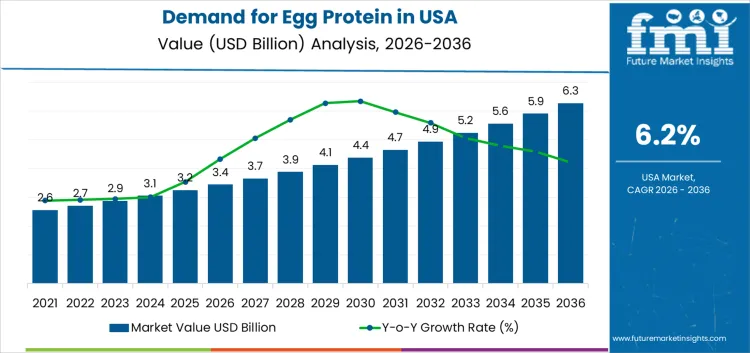
What is the Growth Forecast for Egg Protein Industry in USA through 2036?
Peak-to-Trough analysis for egg protein demand in the United States shows recurrent fluctuations shaped by food processing cycles, nutrition trends, and agricultural supply conditions. Peak periods emerge when protein-enriched product lines expand across sports nutrition, ready-to-drink beverages, and fortified bakery items. These peaks strengthen when manufacturers scale production in response to higher consumer interest in concentrated protein sources. Additional peak activity appears when liquid and shell egg supplies tighten due to flock management shifts, creating temporary redirection toward powdered and isolated egg proteins that offer stable storage and standardized functionality.
Trough periods develop when protein formulation cycles shift toward alternative sources, reducing short-term reliance on egg protein inputs. Trough depth increases when cost differentials favor plant-based isolates during commodity price fluctuations. Inventory realignment after periods of elevated production introduces further softening as processors draw down stock rather than place new orders. Secondary peaks arise during seasonal production runs for high-protein baked goods and meal replacements, creating short bursts of elevated procurement. Minor troughs follow these cycles as output normalizes and purchasing slows. The overall peak-to-trough pattern reflects operational planning, substitution dynamics, and agricultural variability across domestic food and nutrition manufacturing environments.
USA Egg Protein Key Takeaways
| Metric | Value |
|---|---|
| USA Egg Protein Sales Value (2026) | USD 3.4 billion |
| USA Egg Protein Forecast Value (2036) | USD 6.3 billion |
| USA Egg Protein Forecast CAGR (2026-2036) | 6.2% |
Why is the Demand for Egg Protein in USA Growing?
Demand for egg protein in the United States grows due to rising interest in high quality dietary proteins across sports nutrition, clinical nutrition, and packaged food formulations. Egg protein offers a complete amino acid profile, which supports its use in powders, ready to drink beverages, and meal replacements. Fitness oriented consumers adopt egg based products due to neutral flavor, digestibility, and compatibility with low carbohydrate diets. Clinical programs incorporate egg protein in supplements designed for elderly individuals, postoperative patients, and individuals with elevated protein requirements.
Food manufacturers use egg protein to enhance texture, aeration, and binding in baked goods, snacks, and confectionery products. Growth in clean label trends increases preference for minimally processed protein sources with recognizable ingredients. Supply chain stability and long shelf life of dried egg protein support procurement strategies across industrial users. Demand increases in pet nutrition due to interest in high biological value proteins for premium formulations. Research into functional protein fractions strengthens adoption in specialized applications requiring controlled foaming or gelling performance. Expanded distribution through e commerce platforms broadens access for small manufacturers and household buyers.
Which End Use and Function Segments Lead Demand for Egg Protein in USA?
Demand for egg protein in the USA is shaped by functional performance needs, clean-label ingredient preferences, and high-protein product development across food and nutrition categories. Manufacturers value egg protein for its stability, solubility, and broad applicability in processed foods, beverages, and supplements. Distribution reflects formulation requirements, nutritional positioning, and the demand for reliable protein sources in commercial product lines.
By End Use, Bakery & Confectionery Accounts for the Largest Share of Demand
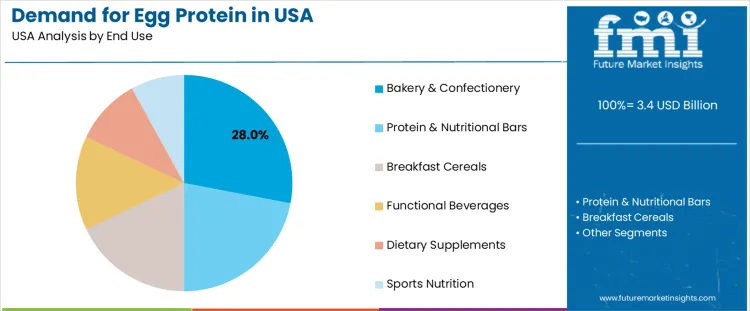
Bakery and confectionery hold 28.0%, making them the leading end-use segment in USA egg protein demand. Egg proteins support aeration, texture development, structural strength, and browning control, which are essential in cakes, pastries, cookies, and confectionery coatings. Protein and nutritional bars hold 22.0%, relying on egg protein for clean-label fortification and heat-stable binding. Breakfast cereals hold 18.0%, using egg protein for nutritional enhancement and texture control. Functional beverages hold 14.0%, representing applications requiring high solubility and neutral flavor. Dietary supplements hold 10.0%, while sports nutrition holds 8.0%, reflecting targeted use in protein formulations. Distribution aligns with functional versatility and nutritional positioning.
Key Points:
- Bakery uses rely on texture, aeration, and structure.
- Nutrition bars benefit from binding and protein density.
- Cereals and beverages use egg protein for fortification.
- End-use patterns reflect functional breadth and nutritional demand.
By Function, Thickening Represents the Largest Segment
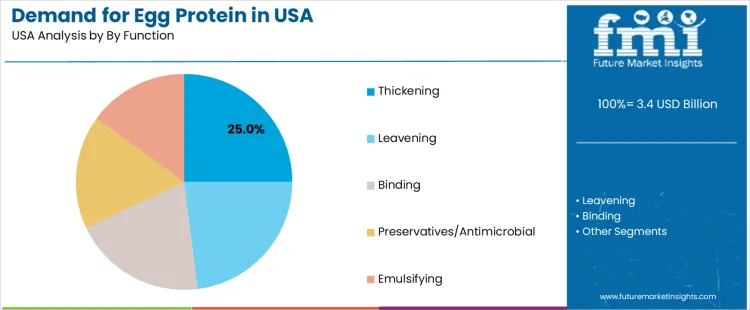
Thickening holds 25.0%, making it the leading functional segment in USA egg protein demand. This function supports viscosity control in bakery mixes, sauces, desserts, and ready meals. Leavening holds 23.0%, driven by egg protein’s foaming capability used to create volume in baked goods. Binding holds 20.0%, supporting structural cohesion in bars, cereals, and snack products. Preservative and antimicrobial functions hold 17.0%, reflecting egg protein’s role in extending shelf stability through lysozyme activity. Emulsifying holds 15.0%, supporting uniform fat–water dispersion in dressings, beverages, and confectionery systems. Functional distribution reflects diverse formulation needs across processed foods and nutrition products.
Key Points:
- Thickening supports viscosity control across food applications.
- Leavening drives volume formation in baked products.
- Binding enhances structure in bars and cereals.
- Function choice aligns with product texture and stability needs.
What are the Key Dynamics in the Egg Protein Industry?
Nutritional demand, food manufacturing requirements, and sports nutrition growth are driving consumption.
Demand increases as US food manufacturers use egg protein for bakery items, ready-to-eat meals, and confectionery products that require stable foaming, binding, and emulsification. Sports nutrition brands incorporate egg white protein into powders and bars positioned for consumers seeking complete amino acid profiles. Institutional kitchens favour egg protein ingredients for menu consistency and longer shelf life relative to fresh eggs. Prepared food producers adopt spray-dried formats that integrate efficiently into automated mixing systems. Retail interest in high-protein snacks supports expanded use of egg-derived ingredients. Regional processors maintain steady procurement to stabilize production during seasonal variations in shell egg supply.
Price fluctuations, allergen concerns, and formulation constraints restrain broader utilization.
Procurement teams monitor cost variation linked to shifts in domestic egg supply, which influences planning for large-volume food production. Consumer-facing brands evaluate allergen labelling requirements that restrict use in products targeted toward sensitive populations. Several manufacturers encounter formulation challenges when balancing egg protein with plant-based ingredients due to texture or colour differences. Storage conditions for dried or liquid protein ingredients require controlled environments that increase operational overhead. Smaller bakeries limit adoption when reconstitution steps complicate production flow. Payers for institutional food programs consider cost-per-serving differences that affect long-term contracts.
Ingredient innovation, clean-label preferences, and functional upgrades shape current trends.
US processors develop refined egg protein isolates with improved solubility, reduced flavour impact, and higher protein density. Food manufacturers evaluate clean-label egg protein options that align with simplified ingredient lists. Sports nutrition firms introduce blends combining egg protein with dairy or plant proteins to optimize texture and digestion rates. Ready-meal producers adopt heat-stable egg protein formats that maintain structure through extended cooking processes. Shelf-stable snack producers explore whipped and aerated applications enabled by consistent foaming characteristics. Automation in food manufacturing increases interest in powders engineered for precise dosing. Sustainability programs influence evaluation of traceable sourcing across egg protein supply chains.
Analysis of the Demand for Egg Protein in the USA by Region
Demand for egg protein in the USA is rising due to increased interest in high-quality protein sources, expanded usage in sports nutrition, and strong integration of egg-derived ingredients across bakery, confectionery, and functional food segments. West USA records a CAGR of 7.1% supported by strong health-oriented consumer behavior and diverse food-product innovation. South USA shows a 6.4% CAGR driven by expanding supplement consumption and wider use in processed foods. Northeast USA posts a 5.7% CAGR due to dense food-manufacturing activity and stable institutional demand. Midwest USA holds a 4.9% CAGR supported by manufacturing clusters and steady use in bakery and nutritional applications.
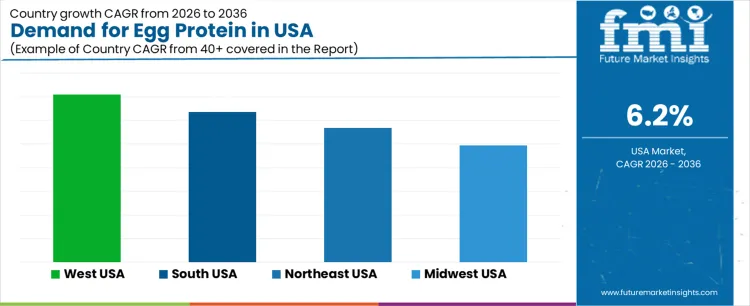
| Region | CAGR (2026-2036) |
|---|---|
| West USA | 7.1% |
| South USA | 6.4% |
| Northeast USA | 5.7% |
| Midwest USA | 4.9% |
How is the West USA driving demand for Egg Protein?
West USA drives demand due to strong interest in fitness nutrition, higher adoption of functional foods, and the region’s active product-development landscape. The region’s CAGR of 7.1% reflects steady use of egg protein in sports formulations, high-protein snacks, and meal replacements. Food producers integrate egg white powders and concentrates to support clean-label positioning and predictable texture outcomes. Consumer interest in low-carbohydrate and high-protein diets sustains consistent procurement by supplement brands. Bakeries and specialty food manufacturers adopt egg protein for foaming, binding, and structural properties required in high-performance formulations. Retail channels support strong circulation of protein-enhanced products.
- Strong use in sports and functional nutrition
- Continuous innovation among regional food developers
- High adoption of protein-forward dietary patterns
- Broad application across bakery and specialty foods
How is the South USA driving demand for Egg Protein?
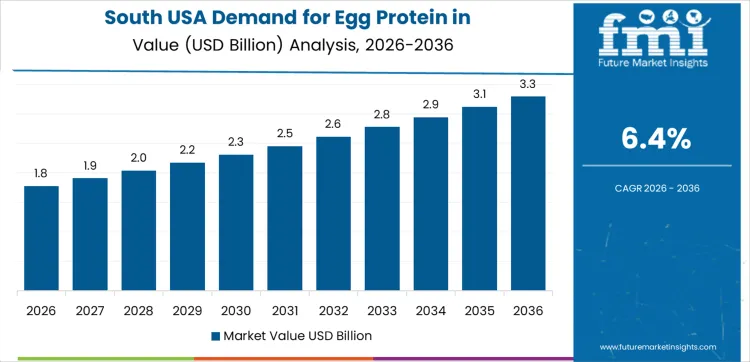
South USA supports rising demand due to expanding supplement usage, strong retail movement, and broad integration of egg proteins in processed foods. The region’s CAGR of 6.4% reflects growing consumption of protein powders, fortified snacks, and ready-to-drink nourishment. Bakeries and food processors utilize egg proteins for aeration and stability across product lines. Regional consumers show increased interest in high-protein diets linked to weight management and active lifestyles. Large-scale distributors support steady circulation of powdered and concentrated egg ingredients across manufacturing hubs. Institutional buyers use egg proteins to standardize nutritional profiles in meal programs.
- Growing supplement and fortified-food consumption
- Routine use in bakery and processed-food production
- Strong distribution networks supporting ingredient supply
- Rising interest in high-protein dietary solutions
How is the Northeast USA driving demand for Egg Protein?
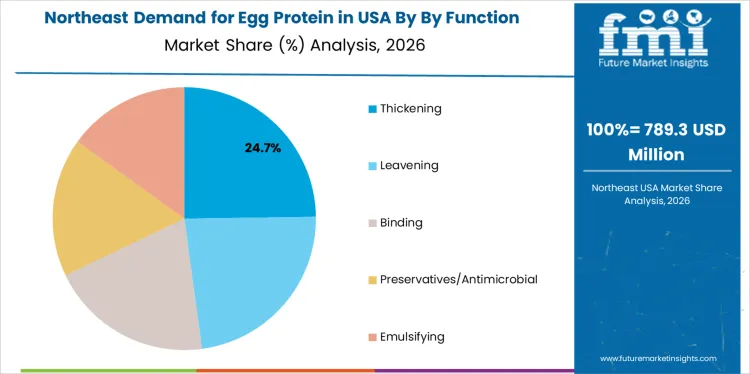
Northeast USA drives demand due to its dense food-processing sector, institutional purchasing, and strong presence of health-focused consumers. The region’s CAGR of 5.7% reflects steady integration of egg protein in ready-to-eat meals, baked goods, and specialized nutrition products. Commercial facilities use egg proteins for emulsification, structure, and volume consistency in large-scale production. Hospitals, universities, and long-term care centers maintain predictable demand for protein-enriched ingredients. Retail demand remains stable due to interest in clean-label, high-protein packaged foods that use egg-based protein sources.
- Strong food-processing and bakery presence
- Institutional demand for protein-enriched ingredients
- Stable retail consumption of high-protein packaged foods
- Regular use in formulations requiring structural consistency
How is the Midwest USA driving demand for Egg Protein?
Midwest USA maintains stable demand due to its broad manufacturing base and strong production of baked goods, snacks, and nutritional products. The region’s CAGR of 4.9% reflects consistent use of egg proteins in formulations requiring binding, aeration, and texture management. Manufacturers rely on egg white powders and concentrates for batch consistency and functional performance. Regional bakeries integrate egg proteins to maintain structural quality in high-volume output. Consumer interest in protein-rich packaged goods supports steady retail demand. Institutional food programs rely on egg proteins to achieve standardized nutrition profiles.
- Broad manufacturing activity across food categories
- Routine use of egg proteins for texture and structural control
- Stable demand across retail channels
- Institutional programs supporting consistent procurement
What is the competitive landscape of the demand for egg protein in the USA?
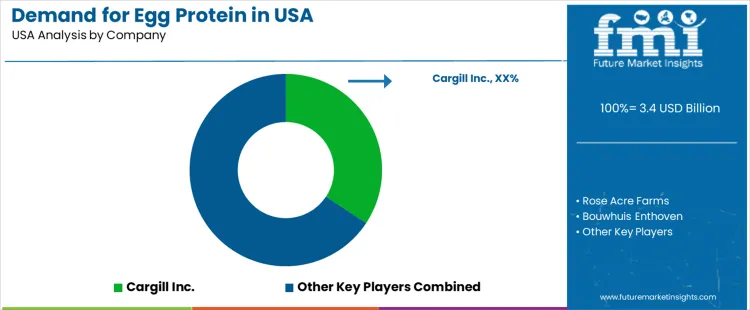
Demand for egg protein in the USA is shaped by requirements for high-quality amino acid profiles, thermal stability, and functional performance across sports nutrition, bakery, confectionery, and prepared food applications. Buyers evaluate solubility, flavor neutrality, foaming capacity, and gel strength depending on formulation needs. Procurement teams consider traceability, pasteurization standards, microbiological controls, and consistency across large production batches. Adoption patterns reflect interest in clean-label protein sources, shelf-stable ingredients, and reliable alternatives to dairy-based proteins.
Cargill Inc. holds a leading position, supported by extensive ingredient manufacturing capabilities, integrated supply networks, and long standing relationships with food and nutrition companies requiring standardized egg protein concentrates and isolates. Rose Acre Farms contributes through vertically integrated egg production and processing supplying whole egg, yolk, and albumen proteins.
Bouwhuis Enthoven maintains visibility with spray-dried and functional egg proteins used in bakery and confectionery systems requiring controlled aeration and emulsification. IGRECA contributes through export-oriented production offering albumen and yolk derivatives for U.S. ingredient distributors. Church & Dwight Co. Inc. supports demand through specialized egg-derived components incorporated into nutritional and functional food products. Competitive positioning in the USA reflects processing technology, quality assurance, functional performance, and distribution capability supporting high-volume industrial applications.
Key Players in USA Egg Protein Demand
- Cargill Inc.
- Rose Acre Farms
- Bouwhuis Enthoven
- IGRECA
- Church & Dwight Co. Inc.
Scope of the Report
| Items | Values |
|---|---|
| Quantitative Units | USD billion |
| End Use | Bakery & Confectionery, Protein & Nutritional Bars, Breakfast Cereals, Functional Beverages, Dietary Supplements, Sports Nutrition |
| Function | Thickening, Leavening, Binding, Preservatives/Antimicrobial, Emulsifying |
| Regions Covered | West USA, South USA, Northeast USA, Midwest USA |
| Key Companies Profiled | Cargill Inc., Rose Acre Farms, Bouwhuis Enthoven, IGRECA, Church & Dwight Co. Inc. |
| Additional Attributes | Dollar sales by end-use segment and functional category; regional demand distribution across West, South, Northeast, and Midwest USA; competitive positioning of leading egg protein manufacturers; trends in high-protein product development for sports nutrition and functional foods; growth in clean-label, minimally processed protein ingredients; applications in ready-to-drink beverages, nutrition bars, and fortified cereals; regulatory and formulation considerations for functional and antimicrobial properties. |
USA Egg Protein Demand by Segments
End Use:
- Bakery & Confectionery
- Protein & Nutritional Bars
- Breakfast Cereals
- Functional Beverages
- Dietary Supplements
- Sports Nutrition
By Function:
- Thickening
- Leavening
- Binding
- Preservatives/Antimicrobial
- Emulsifying
Region:
- West USA
- South USA
- Northeast USA
- Midwest USA
Frequently Asked Questions
How big is the demand for egg protein in USA in 2026?
The demand for egg protein in USA is estimated to be valued at USD 3.4 billion in 2026.
What will be the size of egg protein in USA in 2036?
The market size for the egg protein in USA is projected to reach USD 6.3 billion by 2036.
How much will be the demand for egg protein in USA growth between 2026 and 2036?
The demand for egg protein in USA is expected to grow at a 6.2% CAGR between 2026 and 2036.
What are the key product types in the egg protein in USA?
The key product types in egg protein in USA are bakery & confectionery, protein & nutritional bars, breakfast cereals, functional beverages, dietary supplements and sports nutrition.
Which by function segment is expected to contribute significant share in the egg protein in USA in 2026?
In terms of by function, thickening segment is expected to command 25.0% share in the egg protein in USA in 2026.
Preview the report firsthand - request a free sample
Get SampleGet the brochure for pricing and purchase details.
Get PDFTable of Content
- Executive Summary
- USA Market Outlook
- Demand-side Trends
- Supply-side Trends
- Technology Roadmap Analysis
- Analysis and Recommendations
- Market Overview
- Market Coverage / Taxonomy
- Market Definition / Scope / Limitations
- Market Background
- Market Dynamics
- Drivers
- Restraints
- Opportunity
- Trends
- Scenario Forecast
- Demand in Optimistic Scenario
- Demand in Likely Scenario
- Demand in Conservative Scenario
- Opportunity Map Analysis
- Product Life Cycle Analysis
- Supply Chain Analysis
- Investment Feasibility Matrix
- Value Chain Analysis
- PESTLE and Porter’s Analysis
- Regulatory Landscape
- Regional Parent Market Outlook
- Production and Consumption Statistics
- Import and Export Statistics
- Market Dynamics
- USA Market Analysis 2021 to 2026 and Forecast, 2026 to 2036
- Historical Market Size Value (USD Billion) Analysis, 2021 to 2026
- Current and Future Market Size Value (USD Billion) Projections, 2026 to 2036
- Y-o-Y Growth Trend Analysis
- Absolute $ Opportunity Analysis
- USA Market Pricing Analysis 2021 to 2026 and Forecast 2026 to 2036
- USA Market Analysis 2021 to 2026 and Forecast 2026 to 2036, By End Use
- Introduction / Key Findings
- Historical Market Size Value (USD Billion) Analysis By End Use , 2021 to 2026
- Current and Future Market Size Value (USD Billion) Analysis and Forecast By End Use , 2026 to 2036
- Bakery & Confectionery
- Protein & Nutritional Bars
- Breakfast Cereals
- Functional Beverages
- Dietary Supplements
- Sports Nutrition
- Y-o-Y Growth Trend Analysis By End Use , 2021 to 2026
- Absolute $ Opportunity Analysis By End Use , 2026 to 2036
- USA Market Analysis 2021 to 2026 and Forecast 2026 to 2036, By By Function
- Introduction / Key Findings
- Historical Market Size Value (USD Billion) Analysis By By Function, 2021 to 2026
- Current and Future Market Size Value (USD Billion) Analysis and Forecast By By Function, 2026 to 2036
- Thickening
- Leavening
- Binding
- Preservatives/Antimicrobial
- Emulsifying
- Y-o-Y Growth Trend Analysis By By Function, 2021 to 2026
- Absolute $ Opportunity Analysis By By Function, 2026 to 2036
- Market Structure Analysis
- Competition Dashboard
- Competition Benchmarking
- Market Share Analysis of Top Players
- By Regional
- By End Use
- By By Function
- Competition Analysis
- Competition Deep Dive
- Cargill Inc.
- Overview
- Product Portfolio
- Profitability by Market Segments (Product/Age /Sales Channel/Region)
- Sales Footprint
- Strategy Overview
- Marketing Strategy
- Product Strategy
- Channel Strategy
- Rose Acre Farms
- Bouwhuis Enthoven
- IGRECA
- Church & Dwight Co. Inc.
- Cargill Inc.
- Competition Deep Dive
- Assumptions & Acronyms Used
- Research Methodology


