

- Industry Size (2025)
- USD 0.5 Bn
- Forecast (2035)
- USD 1.0 Bn
- CAGR (2025 to 2035)
- 7.3%
Demand for Feminine Wipes in USA Forecast and Outlook 2025 to 2035
Demand for feminine wipes in the USA is expected to grow from USD 0.5 billion in 2025 to USD 1.0 billion by 2035, reflecting a compound annual growth rate (CAGR) of 7.3%. This growth is driven by the increasing awareness of personal hygiene and the rising demand for convenient, on-the-go hygiene solutions. Feminine wipes are commonly used for maintaining cleanliness, freshness, and comfort, and their appeal is growing among consumers seeking convenient, disposable, and portable personal care products. As consumer preferences shift toward more convenient and eco-friendly personal hygiene products, feminine wipes are becoming increasingly popular.
The market is also supported by the expanding product offerings, including wipes formulated with natural ingredients, biodegradable materials, and eco-friendly packaging. These innovations are catering to the growing demand for clean-label and sustainable products in the personal care industry. Additionally, as awareness of feminine hygiene continues to increase, the demand for feminine wipes is expected to rise, contributing to market growth.
Quick Stats of the Demand for Feminine Wipes in USA
- Demand for Feminine Wipes in USA Value (2025): USD 0.5 billion
- Demand for Feminine Wipes in USA Forecast Value (2035): USD 1.0 billion
- Demand for Feminine Wipes in USA Forecast CAGR (2025-2035): 7.3%
- Demand for Feminine Wipes in USA Leading Type: Regular (70%)
- Demand for Feminine Wipes in USA Key Growth Regions: West USA, South USA, Northeast USA, Midwest USA
- Demand for Feminine Wipes in USA Key Players: Kimberly-Clark, Procter & Gamble, Hengan International, Bodywise, Edgewell Personal Care
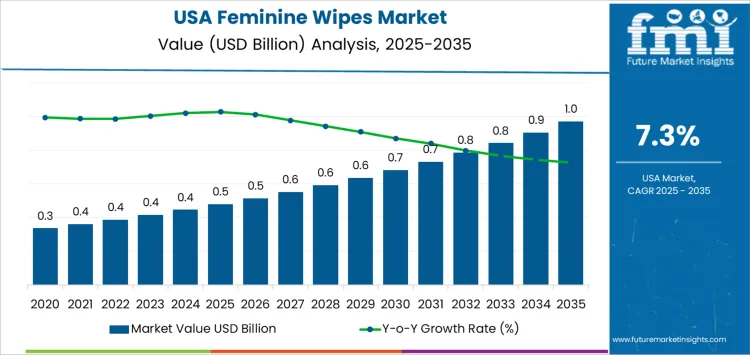
What is the Growth Forecast for the Feminine Wipes Market through 2035?
The growth rate volatility index for the feminine wipes market in the USA reveals moderate fluctuations throughout the forecast period. Starting at USD 0.5 billion in 2025, the market increases gradually to USD 0.5 billion in 2026 and USD 0.6 billion in 2027, reflecting early-stage growth driven by rising consumer awareness of feminine hygiene and the need for convenient personal care products.
The growth rate remains steady in the early years, with the market reaching USD 0.6 billion in 2028 and USD 0.6 billion in 2029. However, from 2029 onward, the growth rate starts to accelerate, reflecting increased adoption and a broader range of product offerings. By 2030, the market value reaches USD 0.7 billion, followed by USD 0.7 billion in 2031 and USD 0.8 billion in 2032. The volatility index indicates slight growth fluctuations, especially as the market reaches higher adoption rates and more competitors enter the market.
By 2035, the market is expected to reach USD 1.0 billion, reflecting stable growth and the maturation of the market. The growth rate volatility index suggests moderate fluctuations in the pace of growth, influenced by shifts in consumer demand, product innovations, and market competition.
USA Feminine Wipes Industry Key Takeaways
| Metric | Value |
|---|---|
| Industry Sales Value (2025) | USD 0.5 billion |
| Industry Forecast Value (2035) | USD 1 billion |
| Industry Forecast CAGR (2025-2035) | 7.3% |
Why is the Demand for Feminine Wipes Growing in the USA?
Demand for feminine wipes in the USA is rising as many women increasingly value convenience, hygiene, and personal comfort in their daily routines. Feminine wipes offer a quick, portable way to stay fresh - useful during menstruation, after workouts, when traveling, or when access to a shower isn't available. Many consumers prefer wipes because they are ready-to-use, disposable, and easy to carry, which suits busy lifestyles and on-the-go habits. As awareness of intimate hygiene grows, wipes become a preferred addition to traditional menstrual products and daily hygiene routines.
At the same time, product innovation and changing consumer preferences are fueling growth in the US feminine wipes market. Manufacturers are introducing pH-balanced, sensitive-skin friendly, and natural-ingredient formulations that appeal to health-conscious consumers. Demand for discreet, travel-friendly packaging and subscription-based reorder options are also popular, especially among younger demographics and working women. As the broader market for feminine hygiene expands, and as social acceptance and comfort with intimate-care products increase, the demand for feminine wipes is likely to remain strong and grow further.
What Are the Key Segments in Feminine Wipes Market in the USA?
The feminine wipes market in the USA is segmented by type and application. Regular wipes dominate the market, holding 70% of the share, while personal hygiene is the leading application, accounting for 60%. The increasing awareness of feminine hygiene and the growing demand for convenient, on-the-go solutions are driving the market for feminine wipes in the USA, particularly among women seeking discreet and effective hygiene products.
Which Type Drives Feminine Wipes Demand in the USA?
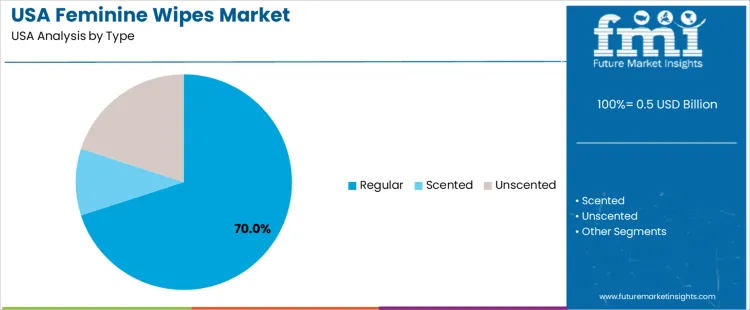
Regular feminine wipes lead the market, representing 70% of the total demand in the USA. These wipes are favored due to their practicality, versatility, and effectiveness in daily feminine hygiene. Regular wipes are designed to provide quick and easy cleanliness, making them a popular choice for women seeking convenience. They are widely used for personal hygiene routines and during travel, offering a portable and hygienic solution for on-the-go needs. While scented and unscented wipes also contribute to the market, regular wipes remain the most popular due to their broad appeal and effectiveness in maintaining cleanliness without the added fragrances or potential allergens that scented versions may contain. The demand for regular wipes is expected to continue growing, driven by their simplicity and ease of use.
Which Application Drives Feminine Wipes Demand in the USA?
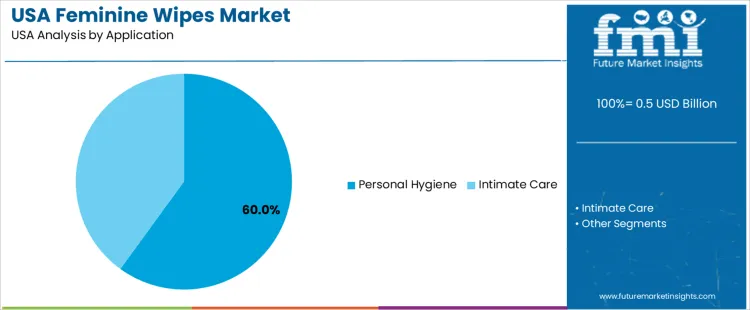
Personal hygiene is the dominant application for feminine wipes, holding 60% of the market share. Feminine wipes are widely used for maintaining cleanliness and freshness throughout the day, particularly in situations where traditional cleaning methods are not convenient, such as during menstruation, after exercise, or while traveling. These wipes are an essential part of daily hygiene routines for many women, providing a quick and discreet way to maintain personal cleanliness. While intimate care also represents a significant portion of the market, personal hygiene remains the largest driver of feminine wipe consumption. The growing focus on health, hygiene, and convenience continues to support the demand for feminine wipes, with consumers seeking products that offer both effectiveness and ease of use.
What is the Demand for Feminine Wipes in USA?
The demand for feminine wipes in the USA is growing as more consumers seek convenient, hygienic, and discreet personal care products. Feminine wipes are increasingly popular for maintaining personal hygiene, especially among women with busy lifestyles who require quick and easy solutions for freshening up. The market is expanding across various age groups, particularly among young adults and middle-aged women, as the awareness of feminine hygiene and its connection to overall health rises. With an increasing focus on self-care and convenience, the feminine wipes market in the USA is expected to see continued growth in the coming years.
What are the Drivers of Demand for Feminine Wipes in USA?
Several factors are driving the demand for feminine wipes in the USA. First, the growing awareness of feminine hygiene and its role in preventing infections and maintaining overall health is encouraging more women to use these products regularly. Second, the increasing preference for convenient, on-the-go hygiene solutions is making feminine wipes a popular choice for women with busy lifestyles, particularly those who travel frequently or have demanding work schedules.
Third, the rising trend towards natural and eco-friendly products is leading to the development of organic and biodegradable feminine wipes, which are appealing to environmentally conscious consumers. Additionally, marketing and promotional efforts by brands that emphasize the benefits of feminine wipes, such as freshness and comfort, are further driving demand.
What are the Restraints on Demand for Feminine Wipes in USA?
Despite the growing popularity, there are some restraints on the demand for feminine wipes in the USA. One major restraint is the concern over the ingredients used in some products, such as chemicals and artificial fragrances, which may cause irritation or allergic reactions in sensitive individuals. This concern has led to a growing demand for wipes made from natural, hypoallergenic ingredients, but it may also limit the adoption of certain brands.
Another challenge is the environmental impact of disposable wipes, as many traditional feminine wipes are not biodegradable and contribute to waste. Although eco-friendly alternatives are gaining popularity, the higher price point of such products may deter some consumers. Finally, the availability of alternatives, such as feminine hygiene sprays or washes, could limit the market potential for wipes, as consumers may choose other options depending on personal preferences.
What are the Key Trends Influencing Demand for Feminine Wipes in USA?
Several key trends are shaping the demand for feminine wipes in the USA. One significant trend is the increasing shift towards natural, organic, and eco-friendly products. Consumers are becoming more conscious of the ingredients in personal care products and are seeking out wipes that are free from harsh chemicals, fragrances, and synthetic materials. Another trend is the growing demand for multifunctional products, such as wipes that offer additional benefits like pH balance, antibacterial properties, or moisturizing effects.
Additionally, the rise in e-commerce has made it easier for consumers to access a wider range of feminine wipes, increasing the market reach for various brands. There is also an increased focus on sustainability, with more brands offering biodegradable and compostable options, aligning with the growing consumer interest in reducing environmental impact. Lastly, the normalization of feminine hygiene products in mainstream advertising and media is reducing stigma and encouraging more women to purchase and use these products regularly.
What is the Regional Demand Outlook for the Feminine Wipes Market in the USA?
The Feminine Wipes market in the USA is expected to experience steady growth, with the West USA leading the way at a projected CAGR of 8.4%. South USA follows closely with a growth rate of 7.5%, while the Northeast USA is expected to grow at 6.7%. The Midwest USA shows more moderate growth with a CAGR of 5.9%. Feminine wipes, which are used for personal hygiene and cleanliness, are gaining popularity due to their convenience, increased awareness of personal care, and rising demand for on-the-go hygiene solutions. As consumer preferences continue to evolve towards convenient, single-use hygiene products, the demand for feminine wipes is expected to rise across the United States.
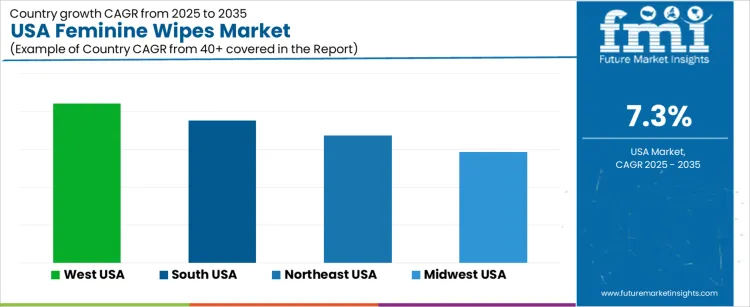
| Region | CAGR (2025-2035) |
|---|---|
| West USA | 8.4% |
| South USA | 7.5% |
| Northeast USA | 6.7% |
| Midwest USA | 5.9% |
What is Driving the Growth of Feminine Wipes in the West USA?
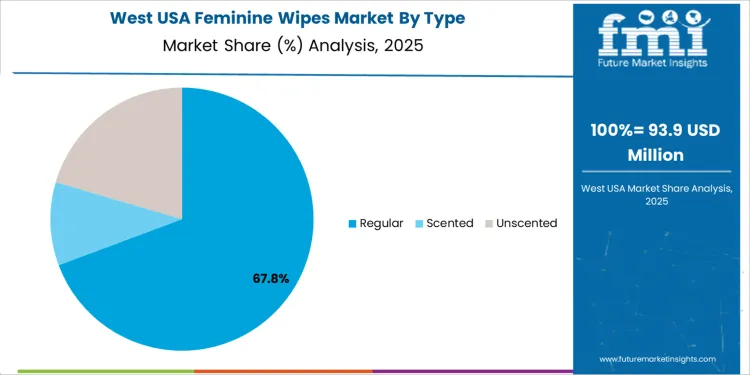
The West USA is projected to experience the highest growth in the Feminine Wipes market, with a projected CAGR of 8.4%. The region’s health-conscious and convenience-oriented population is a significant driver of this growth. States like California, Oregon, and Washington are leading the way in adopting feminine hygiene products due to the increasing focus on personal wellness and on-the-go convenience. The rising demand for eco-friendly, hypoallergenic, and natural feminine hygiene products is particularly relevant in the West, where consumers are increasingly concerned with sustainability and ingredient transparency.
Furthermore, the West USA’s diverse population and strong presence of retail outlets and online platforms make it a key region for the expansion of feminine wipes. As the region continues to emphasize hygiene, self-care, and environmental responsibility, feminine wipes are becoming a staple product for many consumers.
Why is the Feminine Wipes Market Expanding in South USA?
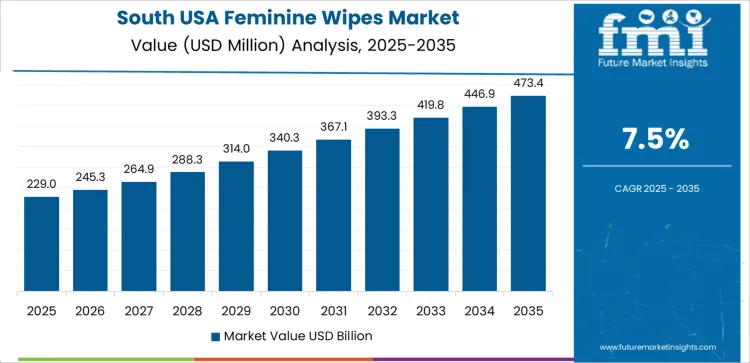
In South USA, the demand for feminine wipes is projected to grow at a CAGR of 7.5%. The region’s growing focus on personal hygiene, coupled with a rising preference for convenient, single-use hygiene products, is contributing to the increasing adoption of feminine wipes. States like Texas, Florida, and Georgia, with large populations and a strong retail presence, are seeing higher consumption of feminine hygiene products.
Additionally, the growing awareness about the importance of maintaining personal hygiene is encouraging consumers in the South to opt for feminine wipes as a quick and easy solution. The convenience factor, particularly for active women and those with busy lifestyles, further supports the demand for feminine wipes. As the South USA embraces personal care and hygiene, the market for feminine wipes is expected to expand steadily.
How is the Feminine Wipes Market Growing in Northeast USA?
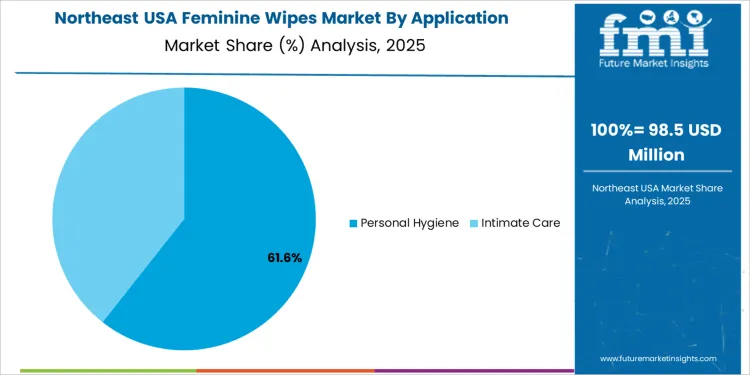
In Northeast USA, the Feminine Wipes market is projected to grow at a CAGR of 6.7%. The region’s urban centers, including New York, Boston, and Philadelphia, are driving the adoption of feminine hygiene products due to the fast-paced lifestyle and the need for convenient personal care solutions. As consumers become more aware of the benefits of feminine hygiene products and their role in maintaining overall health and cleanliness, the demand for feminine wipes is increasing. Furthermore, the growing preference for organic and natural products in the Northeast, where consumers are often focused on ingredient transparency and sustainability, is helping to fuel the adoption of feminine wipes. The availability of these products in major retail chains and online stores is also contributing to their increased use in the Northeast.
What is Contributing to the Growth of Feminine Wipes in Midwest USA?
In Midwest USA, the Feminine Wipes market is expected to grow at a more moderate rate of 5.9%. The region’s increasing focus on personal hygiene, along with the growing awareness of feminine hygiene products, is driving the demand for feminine wipes. States like Illinois, Michigan, and Ohio, with large urban populations, are seeing an increase in consumer interest in convenient, on-the-go hygiene products.
The Midwest’s moderate growth rate reflects a more gradual shift toward adopting feminine hygiene solutions compared to other regions, but as the awareness of hygiene products continues to rise and more consumers seek convenience, feminine wipes are becoming more popular. Additionally, the expanding availability of these products in both retail stores and through online platforms is making them more accessible, further supporting their adoption in the Midwest.
What is the Competitive Landscape for the Feminine Wipes Market in the USA?
Demand for feminine wipes in the USA has grown steadily as consumers increasingly prioritize personal hygiene, convenience, and on-the-go sanitation. Feminine wipes offer a quick, portable solution for intimate hygiene, making them popular among women for menstrual care, bathroom hygiene, and daily freshness. Rising awareness around feminine health, growing acceptance of disposable hygiene products, and busy lifestyles that favour convenience over traditional soap and water support demand. The growing trend toward self-care and personal wellness has also expanded interest in gentle, skin-friendly, and pH-balanced wipes designed specifically for intimate hygiene. Demand spans retail pharmacies, supermarkets, convenience stores, and online channels, reflecting widespread consumer acceptance.
On the supply side, several major personal-care companies compete for market share. According to your data, Kimberly-Clark leads among listed firms with about 24% share. Other key players include Procter & Gamble, Hengan International, Bodywise, and Edgewell Personal Care. These companies differentiate through product attributes such as softness, gentle but effective cleansing, hypoallergenic or fragrance-free formulas, packaging convenience, availability of different formats (single-use wipes, packs), and brand trust.
Some brands focus on premium, skin-sensitive formulations targeting users seeking comfort and care during menstruation or intimate use. Others compete on affordability, accessibility, and distribution breadth. Firms that combine product quality, strong brand recognition, wide retail/or online presence and adaptability to evolving hygiene preferences are best positioned to capture growth in the USA feminine wipes market.
Key Players of the Feminine Wipes Industry in USA
- Kimberly-Clark
- Procter & Gamble
- Hengan International
- Bodywise
- Edgewell Personal Care
Scope of the Report
| Items | Details |
|---|---|
| Quantitative Units | USD Billion |
| Regions Covered | USA |
| Type | Regular, Scented, Unscented |
| Application | Personal Hygiene, Intimate Care |
| Distribution Channel | Online, Offline |
| Key Companies Profiled | Kimberly-Clark, Procter & Gamble, Hengan International, Bodywise, Edgewell Personal Care |
| Additional Attributes | Dollar sales by type and application show strong demand for scented and unscented wipes, with rising popularity in personal hygiene and intimate care. Online sales are growing rapidly, though offline (retail) still holds a significant share of the market. The trend towards organic and sensitive-skin formulations is expected to drive growth in the coming years. |
Key Segments in the Demand for Feminine Wipes in USA
Type
- Regular
- Scented
- Unscented
Application
- Personal Hygiene
- Intimate Care
Distribution Channel
- Online
- Offline
Region
- Northeast USA
- West USA
- Midwest USA
- South USA
Frequently Asked Questions
How big is the demand for feminine wipes in USA in 2025?
The demand for feminine wipes in USA is estimated to be valued at USD 0.5 billion in 2025.
What will be the size of feminine wipes in USA in 2035?
The market size for the feminine wipes in USA is projected to reach USD 1.0 billion by 2035.
How much will be the demand for feminine wipes in USA growth between 2025 and 2035?
The demand for feminine wipes in USA is expected to grow at a 7.3% CAGR between 2025 and 2035.
What are the key product types in the feminine wipes in USA?
The key product types in feminine wipes in USA are regular, scented and unscented.
Which application segment is expected to contribute significant share in the feminine wipes in USA in 2025?
In terms of application, personal hygiene segment is expected to command 60.0% share in the feminine wipes in USA in 2025.
Preview the report firsthand - request a free sample
Get SampleGet the brochure for pricing and purchase details.
Get PDFTable of Content
- Executive Summary
- USA Market Outlook
- Demand-side Trends
- Supply-side Trends
- Technology Roadmap Analysis
- Analysis and Recommendations
- Market Overview
- Market Coverage / Taxonomy
- Market Definition / Scope / Limitations
- Market Background
- Market Dynamics
- Drivers
- Restraints
- Opportunity
- Trends
- Scenario Forecast
- Demand in Optimistic Scenario
- Demand in Likely Scenario
- Demand in Conservative Scenario
- Opportunity Map Analysis
- Product Life Cycle Analysis
- Supply Chain Analysis
- Investment Feasibility Matrix
- Value Chain Analysis
- PESTLE and Porter’s Analysis
- Regulatory Landscape
- Regional Parent Market Outlook
- Production and Consumption Statistics
- Import and Export Statistics
- Market Dynamics
- USA Market Analysis 2020 to 2024 and Forecast, 2025 to 2035
- Historical Market Size Value (USD Million) Analysis, 2020 to 2024
- Current and Future Market Size Value (USD Million) Projections, 2025 to 2035
- Y-o-Y Growth Trend Analysis
- Absolute $ Opportunity Analysis
- USA Market Pricing Analysis 2020 to 2024 and Forecast 2025 to 2035
- USA Market Analysis 2020 to 2024 and Forecast 2025 to 2035, By Type
- Introduction / Key Findings
- Historical Market Size Value (USD Million) Analysis By Type , 2020 to 2024
- Current and Future Market Size Value (USD Million) Analysis and Forecast By Type , 2025 to 2035
- Regular
- Scented
- Unscented
- Y-o-Y Growth Trend Analysis By Type , 2020 to 2024
- Absolute $ Opportunity Analysis By Type , 2025 to 2035
- USA Market Analysis 2020 to 2024 and Forecast 2025 to 2035, By Application
- Introduction / Key Findings
- Historical Market Size Value (USD Million) Analysis By Application, 2020 to 2024
- Current and Future Market Size Value (USD Million) Analysis and Forecast By Application, 2025 to 2035
- Personal Hygiene
- Intimate Care
- Y-o-Y Growth Trend Analysis By Application, 2020 to 2024
- Absolute $ Opportunity Analysis By Application, 2025 to 2035
- USA Market Analysis 2020 to 2024 and Forecast 2025 to 2035, By Distribution Channel
- Introduction / Key Findings
- Historical Market Size Value (USD Million) Analysis By Distribution Channel, 2020 to 2024
- Current and Future Market Size Value (USD Million) Analysis and Forecast By Distribution Channel, 2025 to 2035
- Online
- Offline
- Y-o-Y Growth Trend Analysis By Distribution Channel, 2020 to 2024
- Absolute $ Opportunity Analysis By Distribution Channel, 2025 to 2035
- Market Structure Analysis
- Competition Dashboard
- Competition Benchmarking
- Market Share Analysis of Top Players
- By Regional
- By Type
- By Application
- By Distribution Channel
- Competition Analysis
- Competition Deep Dive
- Kimberly-Clark
- Overview
- Product Portfolio
- Profitability by Market Segments (Product/Age /Sales Channel/Region)
- Sales Footprint
- Strategy Overview
- Marketing Strategy
- Product Strategy
- Channel Strategy
- Procter & Gamble
- Hengan International
- Bodywise
- Edgewell Personal Care
- Kimberly-Clark
- Competition Deep Dive
- Assumptions & Acronyms Used
- Research Methodology


