

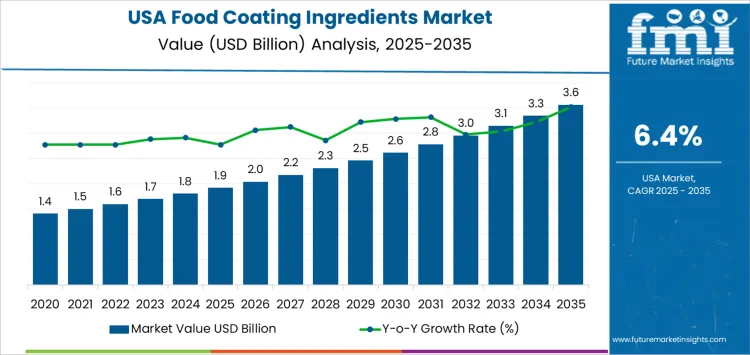
- Industry Size (2025)
- USD 1.9 Bn
- Forecast (2035)
- USD 3.6 Bn
- CAGR (2025 to 2035)
- 6.4%
Demand for Food Coating Ingredients in USA Forecast and Outlook 2025 to 2035
The demand for food coating ingredients in the USA is experiencing notable growth, driven by key trends across various segments. The dry form of food coating ingredients leads the industry, accounting for 64% of the demand. This form is preferred for its versatility, particularly in bakery products, snacks, and meat coatings, providing a crisp texture and enhancing flavor. The bakery sector, which represents 40.2% of the demand, is the largest application, with coatings helping to improve texture, appearance, and flavor in products like bread, cakes, and pastries. Other significant applications include meat and seafood products, confectionery, and snacks, all benefiting from the enhanced sensory experience provided by coatings. As consumer preferences evolve, the demand for healthier coatings, including organic, gluten-free, and clean-label ingredients, is on the rise. This shift aligns with the growing focus on healthier, more natural options in the food sector.
Quick Stats of the Demand for Food Coating Ingredients in USA
- Demand for Food Coating Ingredients in USA Value (2025): USD 1.9 billion
- Demand for Food Coating Ingredients in USA Forecast Value (2035): USD 3.6 billion
- Demand for Food Coating Ingredients in USA Forecast CAGR (2025-2035): 6.4%
- Demand for Food Coating Ingredients in USA Leading Form: Liquid
- Demand for Food Coating Ingredients in USA Key Growth Regions: West USA, South USA, Northeast USA, Midwest USA
- Demand for Food Coating Ingredients in USA Top Players: Cargill Inc., Associated British Foods PLC, Archer Daniels Midland Company, Agrana Beteiligungs AG, Cooperative AVEBE U.A.
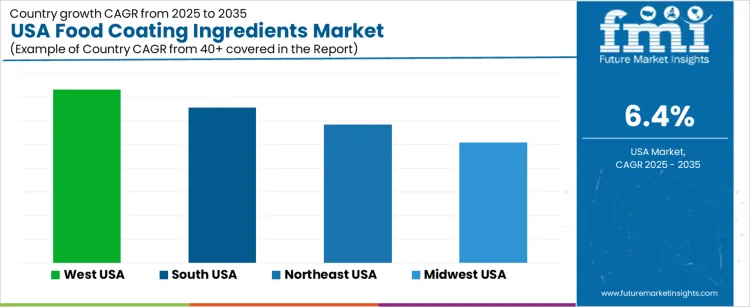
Technological innovations are driving growth in the food coating ingredients industry, as manufacturers develop coatings that offer improved adhesion, crispiness, and stability during storage. The trend towards healthier coatings, such as plant-based, low-fat, and low-sugar formulations, is gaining momentum, responding to consumer demand for more functional ingredients. Advancements in coating technologies allow for better texture and shelf life, contributing to the growing adoption of food coatings in processed foods. Regionally, West USA leads the demand with a 7.3% CAGR, driven by a dynamic food processing industry and health-conscious consumers seeking innovative and convenient food solutions. South USA follows closely with a 6.6% CAGR, supported by the region's expanding food processing sector and increasing interest in healthy, crispy foods. As these trends continue, food coating ingredients will remain crucial in enhancing the texture, flavor, and appeal of a wide range of food products across the USA.
Demand for Food Coating Ingredients in USA Key Takeaways
| Metric | Value |
|---|---|
| Demand for Food Coating Ingredients in USA Value (2025) | USD 1.9 billion |
| Demand for Food Coating Ingredients in USA Forecast Value (2035) | USD 3.6 billion |
| Demand for Food Coating Ingredients in USA Forecast CAGR (2025-2035) | 6.4% |
Why is the Demand for Food Coating Ingredients in USA Growing?
The demand for food coating ingredients in the USA is growing due to the rising consumer preference for processed and ready-to-eat foods that offer improved texture, appearance, and flavor. Food coatings enhance the sensory experience of products, such as fried foods, snacks, and bakery items, making them more appealing. These ingredients serve functional purposes such as providing a crispy or crunchy texture, extending shelf life, and enhancing flavor, contributing to their growing adoption in both the food processing and home cooking sectors. The increasing demand for convenience foods and the trend of ready-to-eat meals is driving this growth.
Key drivers include advancements in food technology that enable the creation of healthier, cleaner-label coating ingredients. Consumers are now more conscious of the ingredients in their food, prompting manufacturers to develop coatings with minimal additives and preservatives. The demand for coatings that align with dietary preferences, such as gluten-free, organic, and low-fat options, is further boosting the industry. Innovations in coating techniques and ingredients, including the use of plant-based alternatives and functional additives, are expanding the variety of food coating solutions available.
Despite these advancements, challenges related to the rising cost of raw materials and the need for regulatory compliance in food safety standards may pose barriers to the widespread adoption of food coating ingredients. The ongoing focus on creating healthier and more diverse coating options is expected to fuel industry growth through 2035.
What is the Segment-Wise Analysis of Demand for Food Coating Ingredients in USA?
Demand for food coating ingredients in the USA is segmented by form and application. By form, dry food coating ingredients lead with 64% of the demand, followed by liquid and surface browner forms. In terms of application, bakery products account for 40.2% of the demand, with meat and seafood products, confectionery products, cereals, and snacks making up the remaining share. Regionally, demand is divided into West USA, South USA, Northeast USA, and Midwest USA.
How Does Dry Form Lead the Demand for Food Coating Ingredients in USA?
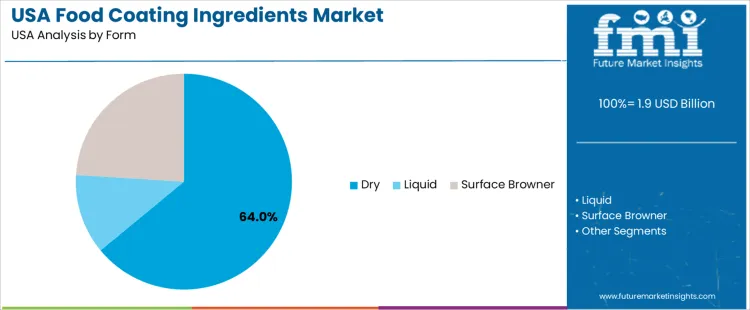
Dry food coating ingredients lead the demand in the USA, accounting for 64% of the industry share. This form is highly favored due to its versatility and ease of use, especially in the production of baked goods, snacks, and meat products. Dry coatings provide a crisp texture and enhance the overall flavor profile of food items. These coatings also offer advantages like a longer shelf life, ease of storage, and uniform application, making them ideal for large-scale production. Furthermore, dry food coatings require fewer preservatives, aligning with the growing consumer demand for cleaner labels and more natural ingredients. The ability of dry coatings to maintain the quality of food during storage and transportation also contributes to their industry dominance. As consumer preferences shift toward high-quality, convenient, and ready-to-eat food options, the demand for dry food coating ingredients continues to rise, solidifying their position as an industry leader.
Why Does Bakery Products Lead the Demand for Food Coating Ingredients in USA?
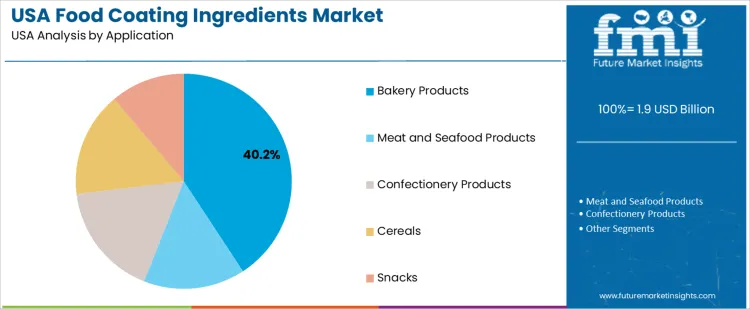
Bakery products account for 40.2% of the demand for food coating ingredients in the USA, driven by their widespread use in bread, cakes, pastries, and other baked goods. Coatings in these products enhance texture, flavor, and visual appeal, providing a golden, crisp finish that consumers enjoy. As convenience and quality become increasingly important to consumers, the demand for coated bakery products continues to rise. These coatings help improve the overall sensory experience, making them a preferred choice for ready-to-eat baked goods. The growing trend toward indulgent yet convenient food options further fuels the demand for food coatings in bakery products. As consumer preferences evolve, the bakery sector remains a key driver for food coating ingredients, and this trend is expected to continue as manufacturers aim to meet the growing demand for high-quality, visually appealing, and convenient food products.
What are the Key Trends, Drivers, and Restraints in Demand for Food Coating Ingredients in USA?
The demand for food coating ingredients in the USA is growing due to their critical role in improving food texture, appearance, and shelf life. These ingredients are widely used in products like snacks, baked goods, meat, and confectionery. The rising demand for processed and convenience foods, combined with consumer preference for enhanced flavors and textures, is driving growth in the food coating industry. The focus on clean-label products and natural ingredients is pushing the development of healthier, non-GMO, and organic food coatings. Innovations in coating technologies, such as better adhesion and crispiness, have further expanded applications. The industry faces challenges such as fluctuating raw material prices and increasing competition from alternative food preservation methods.
Why is Demand for Food Coating Ingredients Growing in USA?
Demand for food coating ingredients in the USA is primarily growing due to the increasing consumer preference for processed, ready-to-eat foods, which require coating ingredients for improved texture, flavor, and visual appeal. These ingredients enhance the sensory experience of foods, making them more attractive to consumers. The rise of the snacking trend, especially for convenient and portable products like chips and frozen foods, has further fueled demand for coating ingredients. The growing trend for clean-label products and the rising consumer interest in natural and organic ingredients are driving innovation in food coatings. As consumers continue to demand healthier options, the food industry is responding by developing coatings that offer improved nutritional profiles, such as reduced fats, sugars, and allergens. As food manufacturers focus on meeting these demands, the industry for food coating ingredients is expected to continue expanding.
How are Technological and Product Innovations Driving Food Coating Ingredient Demand in USA?
Technological advancements and innovations in food coating ingredients have significantly contributed to the growing demand in the USA. Modern coating technologies allow for improved adhesion, crispiness, and texture, which enhance the consumer experience. Advances in the use of natural and clean-label ingredients have also played a key role, as food manufacturers look to cater to the growing health-conscious consumer base. New product developments, such as coatings that provide longer shelf life and improved stability during storage, have expanded applications in the packaged food sector. Innovations in plant-based coatings and gluten-free options are also meeting the demand for dietary-specific products. Advancements in production efficiency, including automated coating processes and improvements in food safety, have streamlined the manufacturing of food coatings, making them more accessible to food producers.
What are the Key Challenges and Risks That Could Limit Food Coating Ingredient Demand in USA?
One of the main issues is the volatility in raw material prices, especially for natural and organic ingredients, which can lead to fluctuations in production costs. These price changes could impact manufacturers’ profitability and, in turn, affect consumer prices. Increasing concerns about the nutritional content of processed foods, particularly in segments focused on low-fat and low-sugar diets, may limit the growth of food coatings that contain high levels of fats, sugars, or artificial additives. Consumer preference for minimally processed and whole foods poses another challenge, as food coatings are often associated with processed foods. Competition from alternative preservation methods, such as vacuum sealing and refrigeration, may reduce the need for coating ingredients in some food segments. These factors could hinder the overall growth of the industry in the USA.
What is the Regional Demand Outlook for Food Coating Ingredients in USA?
| Region | CAGR (%) |
|---|---|
| West USA | 7.3% |
| South USA | 6.6% |
| Northeast USA | 5.9% |
| Midwest USA | 5.1% |
Demand for food coating ingredients varies across different regions of the USA. The West USA region leads with a 7.3% CAGR, driven by a high concentration of food processing and manufacturing companies, as well as a growing trend for convenience foods in this area. South USA follows closely with a 6.6% CAGR, supported by a booming food and beverage sector and an increasing demand for coated snacks and processed foods. The Northeast USA region experiences moderate growth at a 5.9% CAGR, fueled by an expanding food processing industry and rising consumer demand for health-conscious food options. Midwest USA shows a 5.1% CAGR, with growth supported by strong agricultural production and an increasing interest in coated ready-to-eat meals and snacks.
How is Demand for Food Coating Ingredients Growing in West USA?
West USA leads the demand for food coating ingredients, with a 7.3% CAGR. The region’s dynamic food industry, driven by innovation and consumer demand for healthier options, is contributing to the growth. There is a significant push for coatings that improve flavor, texture, and nutritional content, particularly in plant-based foods and alternative proteins. With a focus on clean-label products, consumers are increasingly seeking food coatings that offer reduced fat, lower calories, and additional health benefits. Urban areas like Los Angeles and San Francisco are seeing the most significant growth, driven by their large, health-conscious populations and thriving food manufacturing sectors. The rise of convenience foods and ready-to-eat meals, which often require innovative coatings to enhance their appeal, further fuels the demand for these ingredients.
Why is Demand for Food Coating Ingredients Rising in South USA?
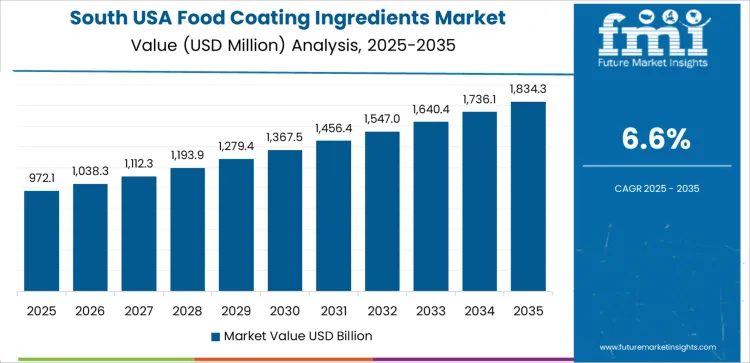
South USA is experiencing robust demand for food coating ingredients, with a 6.6% CAGR. The region’s expanding food processing sector, particularly in states like Texas and Florida, is a major driver of growth. As food manufacturers look to create innovative products with enhanced textures and flavors, the need for quality food coatings has risen. Southern cuisine, known for its deep-fried and crispy foods, continues to fuel demand for coatings in items like chicken, seafood, and snack foods. As health-consciousness grows among consumers, there is an increasing preference for coatings made with clean-label ingredients, low in fat and free from artificial additives. The trend toward healthier fried foods, along with the rising popularity of baked and air-fried alternatives, further accelerates this demand. As the region embraces more diverse food cultures and flavors, there is a growing interest in coatings that can support various ethnic and regional culinary styles, driving further adoption in the South.
How is Demand for Food Coating Ingredients Expanding in Northeast USA?
Northeast USA is seeing steady demand for food coating ingredients, with a 5.9% CAGR. The region’s food industry is heavily influenced by urban lifestyles, with high consumption of convenience foods and snacks driving the use of food coatings. In cities like New York and Boston, the demand for innovative, premium coatings that enhance the flavor, texture, and visual appeal of food products is on the rise. As consumers become more health-conscious, there is a growing preference for natural, clean-label food coatings free from artificial additives and preservatives. With a large portion of the population focused on balanced nutrition, food coatings that offer functional benefits like added fiber or reduced sugar are gaining traction. The region’s food manufacturers are responding by introducing coatings that support these health trends, expanding their product offerings to meet evolving consumer expectations.
Why is Demand for Food Coating Ingredients Growing in Midwest USA?
Midwest USA is experiencing moderate demand for food coating ingredients, with a 5.1% CAGR. The region has a strong food manufacturing sector, particularly for snacks, baked goods, and processed meats, which drives the need for food coatings. As consumer preferences evolve toward healthier, clean-label options, there is a growing demand for coatings made with natural ingredients, free from additives and artificial substances. Midwest manufacturers are incorporating these ingredients into products to enhance texture, appearance, and flavor. Coatings that promote crispness and improve the visual appeal of fried or baked goods are increasingly sought after. As demand for higher-quality, healthier processed foods continues to rise, the use of innovative coatings is expected to grow. The Midwest’s strong tradition of hearty, flavorful foods is also contributing to the popularity of coatings, particularly in items like fried chicken and snacks.
What is the Competitive Landscape of Food Coating Ingredients Demand in USA?
Demand for food coating ingredients in the USA is growing, driven by the increasing preference for convenience foods, snacks, and ready-to-eat meals. Food coating ingredients are used in a variety of applications, including breading, battering, and glazing, offering enhanced flavor, texture, and visual appeal. As consumers demand higher-quality, more natural products with cleaner labels, manufacturers are introducing new, innovative coating ingredients that align with health trends and improve the overall consumer experience.
Cargill Inc. leads the USA food coating ingredients industry with a 20.0% share, offering a wide range of high-quality products for the food industry. The company’s strategy is centered around providing versatile, customizable solutions that cater to the needs of food manufacturers. By focusing on innovation, sustainability, and meeting evolving consumer demands for cleaner ingredients, Cargill stays ahead of the competition. Associated British Foods PLC, Archer Daniels Midland Company, Agrana Beteiligungs AG, and Cooperative AVEBE U.A. also play significant roles in the industry, each offering a variety of coating solutions that meet the demands of different food categories.
Associated British Foods PLC and Archer Daniels Midland Company focus on leveraging their global presence and extensive product portfolios to capture industry share. Their strength lies in their ability to provide cost-effective, high-performance solutions that support large-scale food production. Agrana Beteiligungs AG and Cooperative AVEBE U.A. focus on specialized, innovative food coating ingredients, with an emphasis on clean-label formulations and plant-based solutions. As competition intensifies, companies are increasingly differentiating their offerings through quality, customization, and a deeper focus on meeting consumer demand for healthier, more natural ingredients in food coatings.
Key Players in USA Food Coating Ingredients Demand
- Cargill Inc.
- Associated British Foods PLC
- Archer Daniels Midland Company
- Agrana Beteiligungs AG
- Cooperative AVEBE U.A.
Scope of Report
| Items | Values |
|---|---|
| Quantitative Units (2025) | USD billion |
| Ingredient | Chocolate, Oil, Bread, Flour, Batter, Syrup, Spices, Salts, Seasoning |
| Form | Liquid, Dry, Surface Browner |
| Application | Meat and Seafood Products, Bakery Products, Confectionery Products, Cereals, Snacks |
| Sales Channel | B2B, B2C |
| Regions Covered | West USA, South USA, Northeast USA, Midwest USA |
| Countries Covered | USA |
| Key Companies Profiled | Cargill Inc., Associated British Foods PLC, Archer Daniels Midland Company, Agrana Beteiligungs AG, Cooperative AVEBE U.A. |
| Additional Attributes | Dollar sales by ingredient type and application; regional CAGR and growth trends; increasing demand for batter and spice-based coatings; rise in bakery and snack coatings. |
USA Food Coating Ingredients Demand by Key Segments
Ingredient
- Chocolate
- Oil
- Bread
- Flour
- Batter
- Syrup
- Spices
- Salts
- Seasoning
Form
- Liquid
- Dry
- Surface Browner
Application
- Meat and Seafood Products
- Bakery Products
- Confectionery Products
- Cereals
- Snacks
Region
- West USA
- South USA
- Northeast USA
- Midwest USA
Frequently Asked Questions
How big is the demand for food coating ingredients in USA in 2025?
The demand for food coating ingredients in USA is estimated to be valued at USD 1.9 billion in 2025.
What will be the size of food coating ingredients in USA in 2035?
The market size for the food coating ingredients in USA is projected to reach USD 3.6 billion by 2035.
How much will be the demand for food coating ingredients in USA growth between 2025 and 2035?
The demand for food coating ingredients in USA is expected to grow at a 6.4% CAGR between 2025 and 2035.
What are the key product types in the food coating ingredients in USA?
The key product types in food coating ingredients in USA are chocolate, oil, bread, flour, batter, syrup, spices, salts and seasoning.
Which form segment is expected to contribute significant share in the food coating ingredients in USA in 2025?
In terms of form, dry segment is expected to command 64.0% share in the food coating ingredients in USA in 2025.
Preview the report firsthand - request a free sample
Get SampleGet the brochure for pricing and purchase details.
Get PDFTable of Content
- Executive Summary
- USA Market Outlook
- Demand-side Trends
- Supply-side Trends
- Technology Roadmap Analysis
- Analysis and Recommendations
- Market Overview
- Market Coverage / Taxonomy
- Market Definition / Scope / Limitations
- Market Background
- Market Dynamics
- Drivers
- Restraints
- Opportunity
- Trends
- Scenario Forecast
- Demand in Optimistic Scenario
- Demand in Likely Scenario
- Demand in Conservative Scenario
- Opportunity Map Analysis
- Product Life Cycle Analysis
- Supply Chain Analysis
- Investment Feasibility Matrix
- Value Chain Analysis
- PESTLE and Porter’s Analysis
- Regulatory Landscape
- Regional Parent Market Outlook
- Production and Consumption Statistics
- Import and Export Statistics
- Market Dynamics
- USA Market Analysis 2020 to 2024 and Forecast, 2025 to 2035
- Historical Market Size Value (USD Million) Analysis, 2020 to 2024
- Current and Future Market Size Value (USD Million) Projections, 2025 to 2035
- Y-o-Y Growth Trend Analysis
- Absolute $ Opportunity Analysis
- USA Market Pricing Analysis 2020 to 2024 and Forecast 2025 to 2035
- USA Market Analysis 2020 to 2024 and Forecast 2025 to 2035, By Ingredient
- Introduction / Key Findings
- Historical Market Size Value (USD Million) Analysis By Ingredient , 2020 to 2024
- Current and Future Market Size Value (USD Million) Analysis and Forecast By Ingredient , 2025 to 2035
- Chocolate
- Oil
- Bread
- Flour
- Batter
- Syrup
- Spices
- Salts
- Seasoning
- Y-o-Y Growth Trend Analysis By Ingredient , 2020 to 2024
- Absolute $ Opportunity Analysis By Ingredient , 2025 to 2035
- USA Market Analysis 2020 to 2024 and Forecast 2025 to 2035, By Form
- Introduction / Key Findings
- Historical Market Size Value (USD Million) Analysis By Form, 2020 to 2024
- Current and Future Market Size Value (USD Million) Analysis and Forecast By Form, 2025 to 2035
- Dry
- Liquid
- Surface Browner
- Y-o-Y Growth Trend Analysis By Form, 2020 to 2024
- Absolute $ Opportunity Analysis By Form, 2025 to 2035
- USA Market Analysis 2020 to 2024 and Forecast 2025 to 2035, By Application
- Introduction / Key Findings
- Historical Market Size Value (USD Million) Analysis By Application, 2020 to 2024
- Current and Future Market Size Value (USD Million) Analysis and Forecast By Application, 2025 to 2035
- Bakery Products
- Meat and Seafood Products
- Confectionery Products
- Cereals
- Snacks
- Y-o-Y Growth Trend Analysis By Application, 2020 to 2024
- Absolute $ Opportunity Analysis By Application, 2025 to 2035
- Market Structure Analysis
- Competition Dashboard
- Competition Benchmarking
- Market Share Analysis of Top Players
- By Regional
- By Ingredient
- By Form
- By Application
- Competition Analysis
- Competition Deep Dive
- Associated British Foods PLC
- Overview
- Product Portfolio
- Profitability by Market Segments (Product/Age /Sales Channel/Region)
- Sales Footprint
- Strategy Overview
- Marketing Strategy
- Product Strategy
- Channel Strategy
- Archer Daniels Midland Company
- Agrana Beteiligungs AG
- Cooperative AVEBE U.A.
- Associated British Foods PLC
- Competition Deep Dive
- Assumptions & Acronyms Used
- Research Methodology


