

- Industry Size (2025)
- USD 62.8 Mn
- Forecast (2035)
- USD 98.9 Mn
- CAGR (2025 to 2035)
- 4.7%
Demand for Tennis Equipment in the USA Forecast and Outlook 2025 to 2035
The demand for tennis equipment in the USA is projected to grow from USD 62.8 million in 2025 to USD 98.9 million by 2035, reflecting a CAGR of 4.7%. As tennis continues to be a popular sport in the USA, the increasing focus on fitness and leisure activities, along with rising participation rates in both recreational and competitive tennis, is driving the demand for tennis-related gear. Technological innovations in tennis equipment, such as lighter rackets, improved string technology, and more durable footwear, are contributing to the growing interest in upgrading equipment.
The growth of tennis equipment demand is also supported by a rising trend in sports tourism, with events like the US Open bringing additional visibility to the sport. The increased interest in playing tennis as a form of physical activity has also led to greater demand for quality gear across different skill levels. The growing popularity of youth and community tennis programs, which encourage early participation, has expanded the consumer base for tennis equipment. As more individuals of all ages and skill levels engage in tennis, the industry for related products such as rackets, apparel, footwear, and accessories continues to thrive.
Quick Stats of the Demand for Tennis Equipment in USA
- Demand for Tennis Equipment in USA Value (2025): USD 62.8 million
- Demand for Tennis Equipment in USA Forecast Value (2035): USD 98.9 million
- Demand for Tennis Equipment in USA Forecast CAGR (2025-2035): 4.7%
- Demand for Tennis Equipment in USA Leading Product Type: Rackets
- Demand for Tennis Equipment in USA Key Growth Regions: West USA, South USA, Northeast USA, Midwest USA
- Demand for Tennis Equipment in USA Top Players: Wilson Sporting Goods Co., Babolat Vibration, Head Sports GmbH, Prince Global Sports LLC, Yonex Co., Ltd.
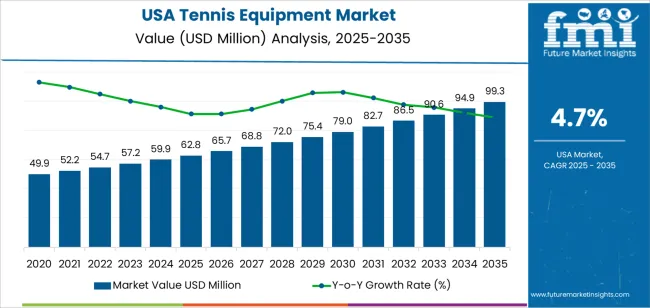
What is the Growth Forecast for the Demand for Tennis Equipment in USA through 2035?
From 2025 to 2030, the industry is expected to grow from USD 62.8 million to USD 82.5 million, contributing an additional USD 19.7 million in value. This early phase will experience strong growth driven by increasing health and fitness awareness, with a focus on sports that combine physical activity with social interaction. As tennis is widely considered a sport for all ages, the expansion of recreational and youth tennis programs will play a significant role in accelerating growth.
From 2030 to 2035, the industry is expected to continue its steady rise from USD 82.5 million to USD 98.9 million, contributing an additional USD 16.4 million in value. While the growth rate may moderate as the industry matures, the demand for high-performance equipment and innovation in gear design will sustain steady expansion. The industry will continue to benefit from the popularity of tennis events and the increasing professionalization of the sport at the grassroots level, further driving demand for advanced and durable tennis equipment. Despite the slowing of growth in this phase, tennis equipment will remain an essential part of the broader sports and fitness industry.
Demand for Tennis Equipment in USA Key Takeaways
| Metric | Value |
|---|---|
| Demand for Tennis Equipment in USA Value (2025) | USD 62.8 million |
| Demand for Tennis Equipment in USA Forecast Value (2035) | USD 98.9 million |
| Demand for Tennis Equipment in USA Forecast CAGR (2025 to 2035) | 4.7% |
Why is the Demand for Tennis Equipment in USA Growing?
The demand for tennis equipment in the USA is growing due to the increasing participation in recreational and competitive tennis, driven by rising health and fitness awareness. Tennis remains one of the most popular individual sports, and as more people engage in physical activities to improve their overall well-being, the demand for quality tennis equipment such as rackets, shoes, balls, and apparel is expanding. The rise in grassroots and youth participation, as well as the continued popularity of professional tennis, is further propelling the industry.
A key driver behind this growth is the growing interest in outdoor and individual sports, as people increasingly seek ways to stay active while social distancing or in less crowded environments. Tennis is an accessible sport that can be enjoyed by players of all ages, which contributes to its popularity. The increasing focus on fitness and wellness is fueling demand for tennis equipment, as enthusiasts invest in high-performance gear to enhance their experience and improve their skills.
Technological advancements in tennis equipment, including innovations in racket design and material improvements for better control and comfort, are also contributing to the growth of the industry. As the sport continues to evolve, manufacturers are offering more specialized equipment to meet the needs of both professional players and casual participants. With the growing focus on health, fitness, and sports participation, the demand for tennis equipment in the USA is expected to continue growing steadily through 2035.
What is the Segment-Wise Analysis of Demand for Tennis Equipment in USA?
Demand for tennis equipment in the USA is segmented by product type and sales channel. By product type, demand is divided into rackets, apparel, tennis balls, strings, and others, with rackets holding the largest share at 32%. The demand is also segmented by sales channel, including specialty sports & fitness stores, online retailers, supermarket & hypermarkets, electronics & sports stores, and direct sales, with specialty sports & fitness stores leading the demand at 28%. Regionally, demand is divided into regions such as West USA, South USA, Northeast USA, and Midwest USA.
Why Do Rackets Lead the Demand for Tennis Equipment?
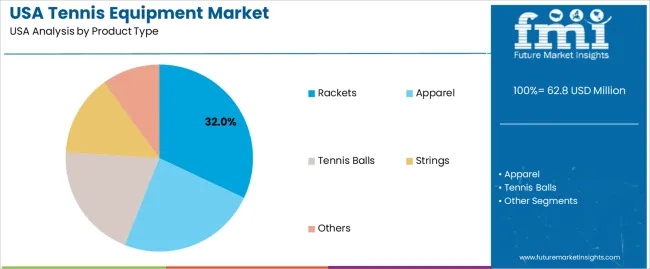
Rackets account for 32% of the demand for tennis equipment in the USA, making them the leading segment in this category. As the most critical piece of equipment for tennis players, rackets are essential for both performance and comfort. The continuous advancement in materials and technology, such as the use of graphite, carbon fiber, and titanium, has made rackets lighter, more durable, and optimized for power and control. Innovations in design, such as adjustable handles and string tensions, also contribute to their appeal. Rackets cater to players of all skill levels, from beginners to professionals, with different specifications tailored to various playing styles. The growing popularity of tennis, driven by both professional tournaments and recreational play, ensures that rackets will continue to be in high demand. This demand is further fueled by increased awareness of the role that the right racket plays in a player’s performance and overall experience.
Why Do Specialty Sports & Fitness Stores Lead the Sales Channel Demand for Tennis Equipment?
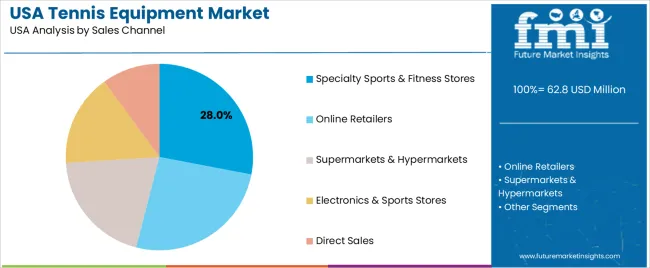
Specialty sports & fitness stores account for 28% of the demand for tennis equipment in the USA. These stores offer a comprehensive range of tennis products, including rackets, apparel, balls, and accessories, often providing expert advice and personalized service. Customers are drawn to these stores for the knowledgeable staff who can help with equipment selection, ensuring they get the right products suited to their needs. In addition to offering hands-on experience with products like rackets, these stores often carry high-end brands and exclusive items not readily available in other retail outlets. The ability to try out equipment before purchasing, especially for more specialized items like rackets, is a major draw for customers. This specialized service, combined with the focused attention on tennis and other sports products, makes specialty sports & fitness stores the dominant sales channel for tennis equipment.
What are the Key Trends, Drivers, and Restraints in Demand for Tennis Equipment in USA?
Demand for tennis equipment in the USA is growing, driven by increased participation in recreational sports, a rising interest in health and fitness, and the popularity of tennis as a social and competitive activity. Key drivers include the demand for advanced racquets, shoes, and apparel designed to improve performance, comfort, and safety. The boom in fitness trends, with tennis seen as an effective cardiovascular workout, is contributing to higher participation levels. Furthermore, innovations in materials and technology have resulted in lighter, stronger racquets with better control and power. However, growth faces challenges from the cost of high-end equipment, market saturation, and competition from other recreational sports.
Why is Demand for Tennis Equipment Growing in USA?
The increasing popularity of tennis in the USA, especially among youth and recreational players, is driving demand for tennis equipment. As players seek to improve their game, advanced racquets, shoes, and accessories are in high demand, with technology-enhanced features like vibration dampening and improved grip designs. The desire for premium, performance-enhancing gear is fueling growth, alongside a rising focus on health and fitness, where tennis is recognized for its cardiovascular benefits. Tennis enthusiasts and professionals alike seek the latest equipment for better performance, contributing to the rise in demand for upgraded gear.
How are Technological & Industry Innovations Driving Tennis Equipment Demand in USA?
Technological innovations in tennis equipment are driving demand in the USA. Advances in racquet materials, such as carbon fiber and graphene, have led to lighter, stronger, and more responsive designs. These innovations allow for better performance and greater customization based on a player’s skill level and playing style. Improvements in footwear technology, such as enhanced cushioning, durability, and traction, support player comfort and injury prevention. Smart tennis equipment with sensors for performance tracking is also growing in popularity, appealing to tech-savvy players looking to analyze and improve their game. These innovations enhance both performance and experience, further driving demand for advanced tennis products.
What are the Key Challenges and Risks That Could Limit Tennis Equipment Demand in USA?
Despite growing interest, several challenges could limit the demand for tennis equipment in the USA. High prices for premium products may deter casual players from investing in advanced gear, limiting the market to more affluent consumers. Market saturation in established regions and intense competition from other sports and activities also pose risks to continued growth. The economic uncertainty and shifting consumer spending priorities could affect discretionary purchases like tennis equipment. While technological advancements are improving product offerings, the challenge of keeping up with rapidly changing preferences and ensuring performance benefits remain consistent across various skill levels is another barrier.
What is the Regional Demand Outlook for Tennis Equipment in USA?
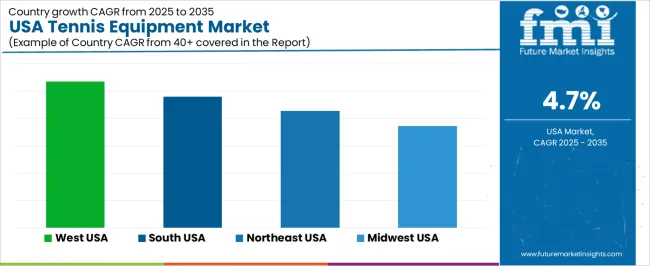
| Region | CAGR (%) |
|---|---|
| West USA | 5.4% |
| South USA | 4.8% |
| Northeast USA | 4.3% |
| Midwest USA | 3.7% |
Demand for tennis equipment in the USA is growing steadily, with West USA leading at a 5.4% CAGR, driven by the region’s strong tennis culture and year-round participation in both recreational and competitive tennis. South USA follows with a 4.8% CAGR, supported by its warm climate and widespread outdoor spaces that make tennis a popular sport for all ages. Northeast USA shows a 4.3% CAGR, driven by its established sports culture, tennis clubs, and college programs, while Midwest USA experiences a 3.7% CAGR, with steady demand from indoor facilities, youth programs, and local leagues. As more people prioritize fitness and wellness, tennis equipment demand remains strong across all regions, fueled by increased participation, technological innovations in gear, and growing interest in both casual and competitive tennis.
How is Demand for Tennis Equipment Growing in West USA?
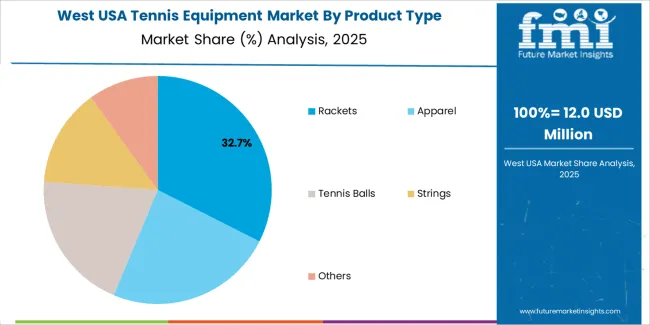
West USA leads the demand for tennis equipment, growing at a 5.4% CAGR. The region’s strong tennis culture, particularly in states like California, Arizona, and Nevada, is a major driver of this growth. West USA is home to numerous tennis clubs, public courts, and high-level competitive events, making it a hub for tennis enthusiasts. The region's active lifestyle and the popularity of tennis as a recreational sport further contribute to the growing demand for tennis rackets, balls, footwear, and apparel. As more people prioritize health and fitness, tennis equipment remains a popular investment. The rise of technology-driven products, such as smart rackets and performance-enhancing gear, is driving innovation and further expanding the industry. With continued participation in both casual and competitive tennis, West USA remains the leading region for tennis equipment sales in the USA.
Why is Demand for Tennis Equipment Rising in South USA?
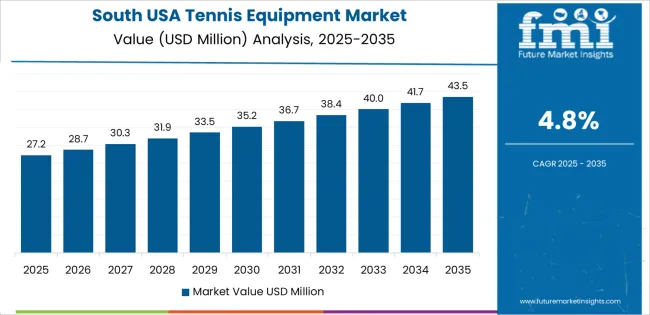
South USA is experiencing steady demand for tennis equipment, with a 4.8% CAGR. The region’s warm climate and abundant outdoor spaces make tennis an ideal sport for year-round participation, fueling demand for tennis rackets, balls, shoes, and apparel. Popular states like Florida and Texas have a strong tennis presence, with numerous tennis clubs, leagues, and high-profile tournaments contributing to the sport's growth. The increasing focus on health and wellness in the South also supports the rise in recreational and competitive tennis participation. As the popularity of youth tennis programs and adult leagues continues to grow, demand for tennis equipment remains robust. The region's active participation in regional and national tournaments drives interest in high-performance tennis gear. As South USA continues to embrace tennis as both a recreational and competitive sport, the demand for quality equipment is expected to rise steadily.
How is Demand for Tennis Equipment Expanding in Northeast USA?
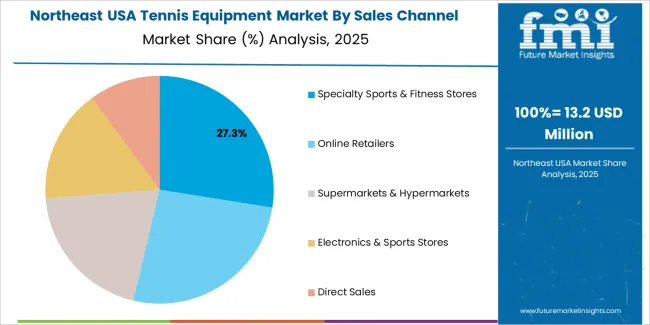
Northeast USA shows moderate growth in demand for tennis equipment, with a 4.3% CAGR. The region’s established sports culture, particularly in urban areas like New York, New Jersey, and Boston, plays a significant role in driving demand. Tennis is a popular recreational sport, and the Northeast’s numerous tennis clubs, college programs, and high-level events continue to fuel equipment sales. The region’s colder climate means tennis is often a seasonal sport, but indoor facilities and courts help maintain consistent interest. Furthermore, the increasing focus on fitness and healthy lifestyles in the region contributes to a growing interest in tennis as a sport. As new generations of players take up the sport and participate in junior leagues, the demand for tennis equipment continues to rise. The Northeast’s combination of recreational and competitive tennis programs supports steady demand for high-quality tennis gear.
Why is Tennis Equipment Demand Growing in Midwest USA?
Midwest USA is seeing steady demand for tennis equipment, with a 3.7% CAGR. While the region’s colder climate limits outdoor play to certain seasons, indoor tennis facilities and sports clubs help maintain a steady demand for tennis equipment. The Midwest is home to numerous youth tennis programs, high school competitions, and college teams, all of which contribute to the continued interest in tennis. The region’s growing emphasis on fitness and healthy lifestyles is also driving the popularity of tennis as a recreational sport. Many households in the Midwest invest in tennis equipment for family use, including rackets, balls, and apparel. While demand growth in Midwest USA is more moderate compared to other regions, steady participation in tennis leagues, community programs, and local tournaments ensures that demand for tennis equipment remains consistent. As more people embrace tennis as a lifetime sport, the industry for tennis gear will continue to expand.
What is the Competitive Landscape of Tennis Equipment Demand in USA?
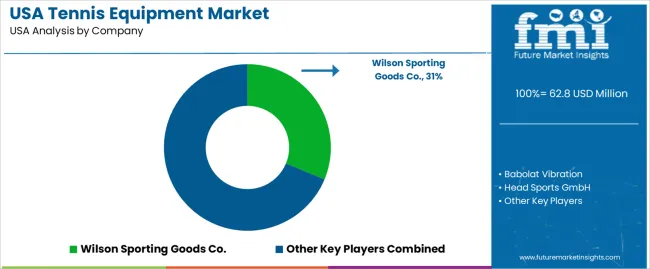
The demand for tennis equipment in the USA is steadily growing, driven by the increasing popularity of tennis as both a recreational and competitive sport. Tennis equipment, including rackets, balls, strings, and accessories, is essential for players of all skill levels, from casual enthusiasts to professional athletes. With the rise in fitness trends and the increasing number of tennis enthusiasts, especially among younger demographics, the industry for high-quality, durable, and performance-enhancing tennis gear continues to expand.
Leading companies in the tennis equipment industry in the USA include Wilson Sporting Goods Co., Babolat Vibration, Head Sports GmbH, Prince Global Sports LLC, and Yonex Co., Ltd.. Wilson Sporting Goods Co. holds the largest industry share of 31.3%, offering a wide range of tennis products, including rackets, strings, and accessories, that cater to players at all levels. Babolat Vibration specializes in providing high-performance tennis rackets and strings, particularly favored by professional players. Head Sports GmbH offers innovative rackets, balls, and accessories that are designed for performance and comfort. Prince Global Sports LLC provides a variety of tennis equipment, with a focus on performance-oriented gear for competitive players. Yonex Co., Ltd. is known for its technologically advanced tennis rackets and gear, particularly in the professional circuit.
The demand for lightweight, durable, and high-performance equipment is a key differentiator in this competitive landscape. Strong sponsorship deals with professional athletes and endorsement from high-profile tennis tournaments help companies maintain their position in the industry. With an increasing focus on customization, personalization of equipment and offering tailored solutions for various skill levels are becoming essential strategies for gaining a competitive edge.
Key Players in USA Tennis Equipment Demand
- Wilson Sporting Goods Co.
- Babolat Vibration
- Head Sports GmbH
- Prince Global Sports LLC
- Yonex Co., Ltd.
Scope of Report
| Items | Values |
|---|---|
| Quantitative Units (2025) | USD million |
| Product Type | Rackets, Apparel, Tennis Balls, Strings, Others |
| Sales Channel | Specialty Sports & Fitness Stores, Online Retailers, Supermarkets & Hypermarkets, Electronics & Sports Stores, Direct Sales |
| Region | West USA, South USA, Northeast USA, Midwest USA |
| Countries Covered | USA |
| Key Companies Profiled | Wilson Sporting Goods Co., Babolat Vibration, Head Sports GmbH, Prince Global Sports LLC, Yonex Co., Ltd. |
| Additional Attributes | Dollar sales by product type and sales channel; regional CAGR and adoption trends; demand trends in tennis equipment; growth in sports & fitness and online retail sectors; technology adoption for sports equipment; vendor offerings including tennis rackets, apparel, and accessories; regulatory influences and industry standards |
USA Tennis Equipment Demand by Key Segments
Product Type:
- Rackets
- Apparel
- Tennis Balls
- Strings
- Others
Sales Channel:
- Specialty Sports & Fitness Stores
- Online Retailers
- Supermarkets & Hypermarkets
- Electronics & Sports Stores
- Direct Sales
Region:
- West USA
- South USA
- Northeast USA
- Midwest USA
Bibliography
- United States Tennis Association. (2023). Equipment standards, participation programs, and usage guidance for tennis equipment in the United States. USTA Technical and Program Publications.
- International Tennis Federation. (2023). Rules of tennis and specifications for rackets, balls, and court equipment. ITF Technical Rules and Equipment Standards.
- ASTM International. (2024). Standard specifications and test methods for sports equipment including rackets, strings, and protective gear. ASTM Standards Publications.
- USA Consumer Product Safety Commission. (2023). Safety requirements and compliance guidance for consumer sports equipment sold in the United States. CPSC Regulatory Publications.
Frequently Asked Questions
How big is the demand for tennis equipment in USA in 2025?
The demand for tennis equipment in USA is estimated to be valued at USD 62.8 million in 2025.
What will be the size of tennis equipment in USA in 2035?
The market size for the tennis equipment in USA is projected to reach USD 99.3 million by 2035.
How much will be the demand for tennis equipment in USA growth between 2025 and 2035?
The demand for tennis equipment in USA is expected to grow at a 4.7% CAGR between 2025 and 2035.
What are the key product types in the tennis equipment in USA?
The key product types in tennis equipment in USA are rackets, apparel, tennis balls, strings and others.
Which sales channel segment is expected to contribute significant share in the tennis equipment in USA in 2025?
In terms of sales channel, specialty sports & fitness stores segment is expected to command 28.0% share in the tennis equipment in USA in 2025.
Preview the report firsthand - request a free sample
Get SampleGet the brochure for pricing and purchase details.
Get PDFTable of Content
- Executive Summary
- USA Market Outlook
- Demand-side Trends
- Supply-side Trends
- Technology Roadmap Analysis
- Analysis and Recommendations
- Market Overview
- Market Coverage / Taxonomy
- Market Definition / Scope / Limitations
- Market Background
- Market Dynamics
- Drivers
- Restraints
- Opportunity
- Trends
- Scenario Forecast
- Demand in Optimistic Scenario
- Demand in Likely Scenario
- Demand in Conservative Scenario
- Opportunity Map Analysis
- Product Life Cycle Analysis
- Supply Chain Analysis
- Investment Feasibility Matrix
- Value Chain Analysis
- PESTLE and Porter’s Analysis
- Regulatory Landscape
- Regional Parent Market Outlook
- Production and Consumption Statistics
- Import and Export Statistics
- Market Dynamics
- USA Market Analysis 2020 to 2024 and Forecast, 2025 to 2035
- Historical Market Size Value (USD Million) Analysis, 2020 to 2024
- Current and Future Market Size Value (USD Million) Projections, 2025 to 2035
- Y-o-Y Growth Trend Analysis
- Absolute $ Opportunity Analysis
- USA Market Pricing Analysis 2020 to 2024 and Forecast 2025 to 2035
- USA Market Analysis 2020 to 2024 and Forecast 2025 to 2035, By Product Type
- Introduction / Key Findings
- Historical Market Size Value (USD Million) Analysis By Product Type , 2020 to 2024
- Current and Future Market Size Value (USD Million) Analysis and Forecast By Product Type , 2025 to 2035
- Rackets
- Apparel
- Tennis Balls
- Strings
- Others
- Y-o-Y Growth Trend Analysis By Product Type , 2020 to 2024
- Absolute $ Opportunity Analysis By Product Type , 2025 to 2035
- USA Market Analysis 2020 to 2024 and Forecast 2025 to 2035, By Sales Channel
- Introduction / Key Findings
- Historical Market Size Value (USD Million) Analysis By Sales Channel, 2020 to 2024
- Current and Future Market Size Value (USD Million) Analysis and Forecast By Sales Channel, 2025 to 2035
- Specialty Sports & Fitness Stores
- Online Retailers
- Supermarkets & Hypermarkets
- Electronics & Sports Stores
- Direct Sales
- Y-o-Y Growth Trend Analysis By Sales Channel, 2020 to 2024
- Absolute $ Opportunity Analysis By Sales Channel, 2025 to 2035
- Market Structure Analysis
- Competition Dashboard
- Competition Benchmarking
- Market Share Analysis of Top Players
- By Regional
- By Product Type
- By Sales Channel
- Competition Analysis
- Competition Deep Dive
- Wilson Sporting Goods Co.
- Overview
- Product Portfolio
- Profitability by Market Segments (Product/Age /Sales Channel/Region)
- Sales Footprint
- Strategy Overview
- Marketing Strategy
- Product Strategy
- Channel Strategy
- Babolat Vibration
- Head Sports GmbH
- Prince Global Sports LLC
- Yonex Co., Ltd.
- Wilson Sporting Goods Co.
- Competition Deep Dive
- Assumptions & Acronyms Used
- Research Methodology


