

- Industry Size (2025)
- USD 4.2 Bn
- Forecast (2035)
- USD 6.8 Bn
- CAGR (2025 to 2035)
- 4.8%
Demand for Thermoformed Tubs in USA 2025 to 2035
The demand for thermoformed tubs in the USA is valued at USD 4.2 billion in 2025 and is forecasted to reach USD 6.8 billion by 2035, reflecting a CAGR of 4.8%. Demand is influenced by continued uptake of packaged foods, including dairy, bakery, chilled meals, and frozen categories that rely on lightweight, durable tubs with strong barrier properties. Increased retail focus on portion-controlled packaging and stackable formats supports higher throughput across supermarkets and food-service supply chains. Regulatory emphasis on recyclability and reduced material usage also drives product development in line with circular-economy objectives.
Plastic tubs account for the largest share, reflecting broad compatibility with thermoforming processes, cost efficiency, and established food-grade compliance. Polypropylene and PET remain preferred due to heat resistance, clarity, and suitability for recycling systems. Manufacturers are adopting improved lid-sealing, tamper-evident features, and multilayer structures to extend shelf life for ready-to-eat and perishable food items.
Quick Stats for USA Thermoformed Tubs Demand
- USA Thermoformed Tubs Sales Value (2025): USD 4.2 billion
- USA Thermoformed Tubs Forecast Value (2035): USD 6.8 billion
- USA Thermoformed Tubs Forecast CAGR (2025 to 2035): 4.8%
- Leading Category in USA Thermoformed Tubs Demand: Plastic
- Key Growth Regions in USA Thermoformed Tubs Demand: West USA, South USA, Northeast USA
- Top Players in USA Thermoformed Tubs Demand: Berry Global Inc., Amcor Plc, Pactiv Evergreen Inc., Sonoco Products Company, Sealed Air Corporation
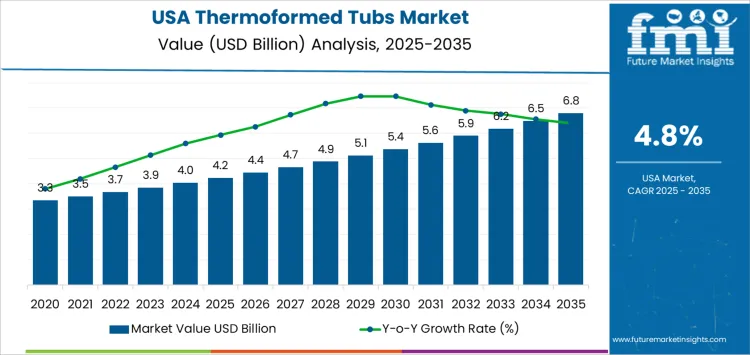
What is the Growth Forecast for Thermoformed Tubs Industry in USA through 2035?
The West, South, and Northeast regions record the highest consumption due to concentrated food production hubs, strong private-label penetration, and wider adoption of refrigerated packaged meals. Leading suppliers include Berry Global Inc., Amcor Plc, Pactiv Evergreen Inc., Sonoco Products Company, and Sealed Air Corporation. Their product strategies emphasize lightweighting, higher post-consumer recycled material content, and automation-ready designs for high-speed filling lines.
Growth rate volatility for demand for thermoformed tubs in the United States remains limited because the category is tied to steady consumption in food packaging and household goods. Ready meals, dairy products, and frozen foods maintain recurring procurement cycles that help smooth out year-to-year fluctuations. Large converters secure ongoing contracts with food manufacturers, creating predictable baseline volume. This reduces exposure to abrupt downturns even when packaging preferences shift.
Short-term variations can occur when resin prices move sharply or when sustainability regulations influence raw material selection. Substitution from alternative packaging such as molded fiber or rigid plastics introduces minor shifts rather than rapid disruptions. Seasonal production peaks in certain food applications can temporarily lift orders but do not materially change long-term stability.
Growth remains influenced by design improvements, lightweight formats, and recycling-compatible materials, which create moderate periodic uplift. The overall volatility index indicates narrow movement around a consistent upward trend. Underlying food distribution dynamics sustain demand while innovation produces modest peaks. There is no indication of sharp troughs due to the essential role thermoformed tubs hold in large-scale packaged food supply.
USA Thermoformed Tubs Key Takeaways
| Metric | Value |
|---|---|
| USA Thermoformed Tubs Sales Value (2025) | USD 4.2 billion |
| USA Thermoformed Tubs Forecast Value (2035) | USD 6.8 billion |
| USA Thermoformed Tubs Forecast CAGR (2025-2035) | 4.8% |
Why is the Demand for Thermoformed Tubs in the USA Growing?
Demand for thermoformed tubs in the USA is growing because food producers and consumer goods manufacturers require lightweight packaging that supports product protection and clear visibility on shelves. Thermoformed tubs are widely used for dairy products, dips, spreads and prepared meals that remain strong categories in supermarkets and convenience outlets. They offer cost efficiency in molding and allow customized shapes for branding and portion control in single serve and family size formats.
Growth in takeaway meals and home snacking increases usage of tubs that maintain sealing integrity during transport and storage. Retailers prefer packaging that supports stacking efficiency to save space in chilled display areas. Recyclable materials such as polypropylene remain important in meeting corporate sustainability targets, and thermoformed designs allow weight reduction without sacrificing strength.
Personal care and household product manufacturers also select tubs for moisture sensitive items that require sturdy protective containers. Constraints include price pressure from rising resin costs and competition from flexible pouches that reduce plastic usage. Regulations and consumer expectations on recyclability require continuous material improvements. Packaging decisions may shift when brands evaluate shelf life requirements or prefer premium rigid alternatives in certain categories.
Which Materials and Sales Channels Lead Demand for Thermoformed Tubs in the USA?
Demand for thermoformed tubs in the United States is driven by durable, lightweight food packaging and the expansion of ready-to-eat and dairy products. Brands emphasize cost-efficient forming, strong stacking performance, and recycling compatibility. Growth also reflects safety compliance and tamper-resistant design requirements across retail food categories.
By Material, Plastic Dominates Consumption
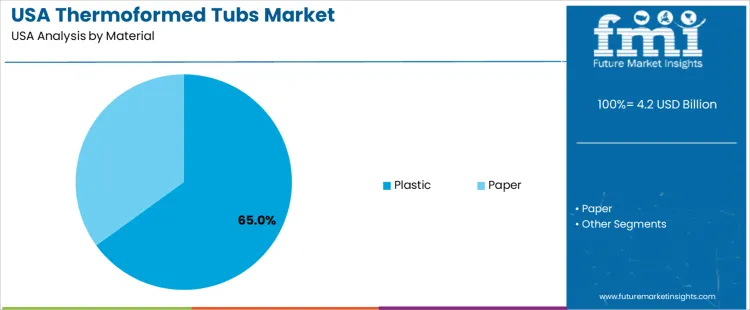
Plastic accounts for 65.0%, supported by robust forming flexibility, high impact resistance, and suitability for heat-sealing and printing applications. It remains essential for yogurt, spreads, dips, and frozen snacks where extended shelf stability is critical. Paper holds the remaining demand, serving eco-conscious users and short shelf-life products where biodegradability and premium texture provide differentiation advantages. Plastic’s prevalence reflects packaging mandates that prioritize barrier protection, lightweight logistics, and compatibility with automated filling lines. Shifting USA recycling standards continue pushing toward recyclable resins, post-consumer content, and reduced material usage across fast-moving packaged goods.
Key Points:
- Plastic leads due to barrier properties and cost-effective forming
- Paper satisfies sustainability-focused brands and consumers
- Demand tracks retail packaged food expansion
By Sales Channel, Retail Holds the Largest Share
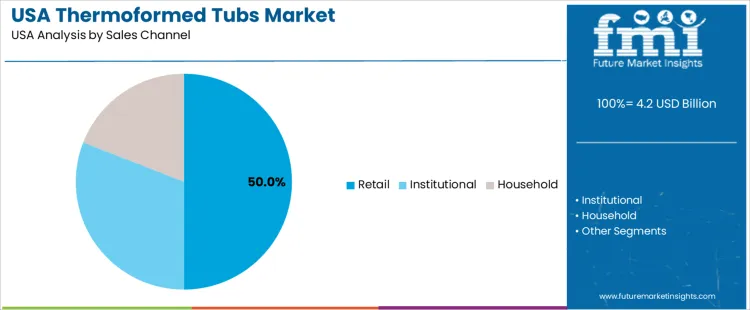
Retail distribution accounts for 50.0%, reflecting widespread supermarket and convenience store packaging needs. These outlets prioritize tamper-evidence, merchandising visibility, and storage efficiency. Institutional purchasers support foodservice packaging, including catering, cafeterias, and large-batch meal programs requiring portion-controlled tub formats. Household demand reflects small-volume purchases for condiment refills and leftovers, with usage tied to meal prep and reusable container preferences. Retail-driven adoption correlates with consumer packaged goods consumption frequency and innovation in resealable and microwave-safe tub formats across USA retail networks.
Key Points:
- Retail channels dominate due to strong grocery and convenience sales
- Institutional buyers focus on bulk supply and service efficiency
- Household demand tied to meal prep and reuse functionality
What are the Drivers, Restraints, and Key Trends of the Demand for Thermoformed Tubs in the USA?
Growth of convenience foods, increased demand for durable refrigerated packaging and expansion of take-home meal solutions are driving demand.
In the United States, thermoformed tubs are widely used for salads, dips, yogurt, frozen desserts and deli items distributed through supermarkets and club stores. Ready-to-eat and ready-to-cook meal growth supports packaging formats that withstand transportation, stacking and consumer handling. Manufacturers adopt thermoforming to maintain product visibility and protect texture in chilled foods favored for weekly meal planning. Foodservice suppliers use tubs to package sauces and prepared dishes for off-premise dining, reinforcing demand from restaurant and catering logistics. Private label programs offered by large retailers rely on thermoformed tubs for scalable production and brand differentiation across multiple food categories.
Price sensitivity in mass-market segments, recycling-process challenges for multilayer plastics and competition from flexible packaging restrain demand.
Cost fluctuations in resin supply influence pricing for tubs in high-volume categories. Multilayer structures designed for barrier protection can be difficult to sort and recycle, which creates sustainability concerns for retailers pursuing packaging goals. Flexible pouches and film-sealed trays compete for shelf space in products where reduced plastic weight is prioritized. Smaller brands may avoid tub formats when limited storage space and shelf presentation favor compact packaging. These economic and environmental considerations contribute to measured adoption shifts among manufacturers.
Shift toward polypropylene monomaterial structures, increased microwave and freezer compatibility and rising demand in club-store multipacks define key trends.
Packaging producers develop recyclable monomaterial tubs that align with retail circular-economy targets. Microwave-ready tubs gain traction for single-serve meals and reheatable sides in busy households. Freezer-safe tubs are used in frozen dips, ice cream alternatives and meal-prep products that align with home-stockpiling habits. Club stores and bulk-packaging programs drive larger tub sizes designed for family meals and party platters. Digital printing and lightweight lid systems improve on-shelf branding and user convenience. These developments indicate sustained, functionality-driven demand for thermoformed tubs across the United States packaged-food and foodservice supply ecosystem.
Analysis of the Demand for Thermoformed Tubs in the USA by Region
Demand for thermoformed tubs in the United States reflects growing usage in dairy packaging, frozen meals, spreads, dips, and convenience food formats designed for retail refrigeration. Brands rely on cost-efficient packaging that supports barrier performance, shelf visibility, and portion control. Manufacturers adopt lightweight PP and PET tubs aligned with recyclability goals. Growth also links to food-service container uptake driven by takeout expansion. West USA leads at 5.6% CAGR, followed by South USA at 5.0%, Northeast USA at 4.5%, and Midwest USA at 3.9%, with adoption shaped by processing plant distribution, sustainability rules, and retail consumption behaviors.
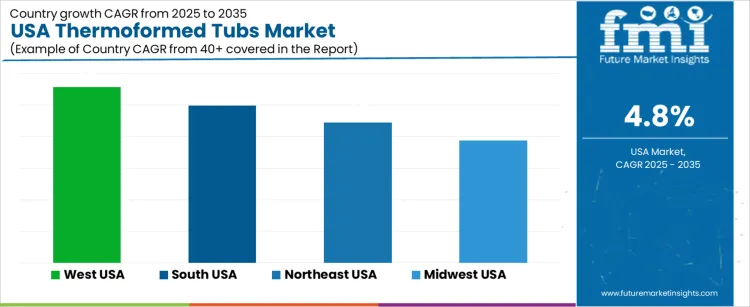
| Region | CAGR (2025-2035) |
|---|---|
| West USA | 5.6% |
| South USA | 5.0% |
| Northeast USA | 4.5% |
| Midwest USA | 3.9% |
How is the West USA driving demand for thermoformed tubs?
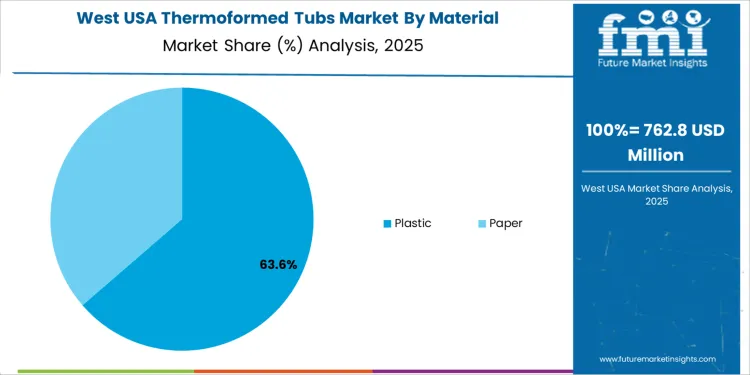
West USA records a 5.6% CAGR driven by large-scale dairy and plant-based food manufacturing across California and Washington. Retail consumption of yogurt, dips, and functional spreads accelerates packaging needs focused on clear labeling and aesthetic presentation. Processing facilities integrate high-speed thermoforming lines supporting SKU flexibility across multiple tub sizes. Sustainability policies push producers to use mono-material formats compatible with local recycling infrastructure. Meal distribution for outdoor recreation and travel increases demand for lightweight sealed tubs offering durability in transport. Procurement teams prioritize packaging that balances performance and recyclability without disrupting existing filling equipment.
- Plant-based products expanding lightweight tub usage
- Retail-ready packaging driving print-quality investment
- Recycling standards influencing material selection
- High-speed lines requiring dimensional consistency
How is the South USA shaping product procurement?
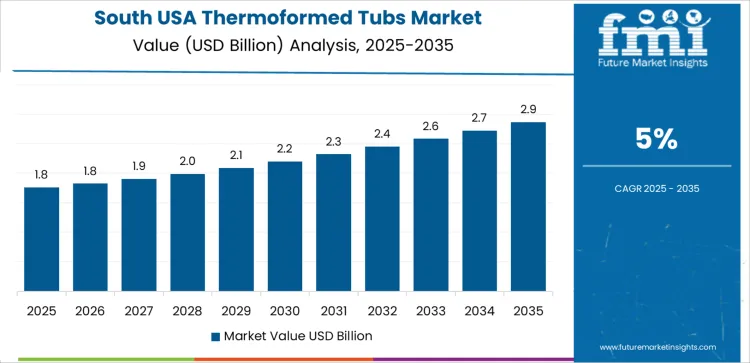
South USA posts 5.0% CAGR, supported by refrigerated foods and dips produced in Texas, Georgia, and Florida for nationwide retail networks. Warm climates sustain strong demand for portable single-serve tubs used in picnics, school lunches, and outdoor activities. Food-service suppliers rely on durable container formats for dips, condiments, and spreads packaged for QSR and catering channels. Resin access via Gulf Coast polymer hubs stabilizes input supply for converters. Packaging procurement emphasizes lid-seal reliability for safe transport across extended delivery routes.
- Outdoor consumption trends supporting single-serve growth
- Food-service expansion raising bulk-tub requirements
- Resin infrastructure strengthening supply stability
- Seal-integrity concerns guiding packaging choice
How is the Northeast USA shaping material needs?
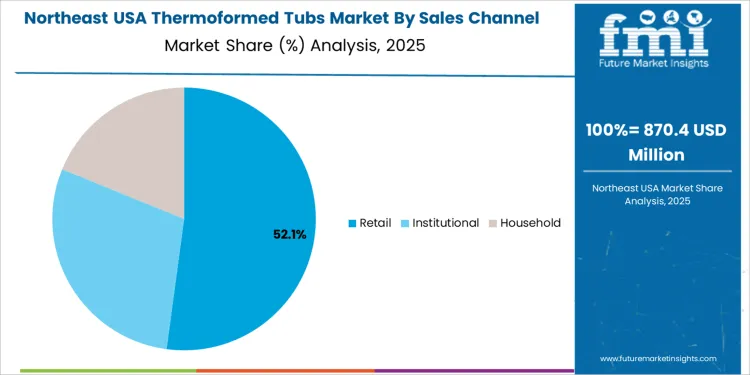
Northeast USA expands at 4.5% CAGR, driven by high-density consumer industries across New York, New Jersey, and Massachusetts. Regional preferences for premium specialty dairy such as Greek yogurt and cream desserts push adoption of tubs with superior shelf appeal. Small-batch manufacturers favor customizable packaging to support seasonal flavor rotation. Cold-chain constraints prioritize tubs that maintain structural strength through multiple handling points. Buyers evaluate solutions enabling high-quality printing and tamper-evident systems for urban retail compliance.
- Premium dairy and specialty foods influencing design standards
- SKU variation requiring flexible packaging formats
- Cold-chain handling reinforcing durability requirements
- Label and security features shaping procurement
How is the Midwest USA contributing to volume stability?
Midwest USA shows 3.9% CAGR, benefiting from strong dairy processing capacity in Wisconsin, Illinois, and Ohio. Cottage cheese, spreads, and family-size yogurt tubs drive stable baseline volumes. Cost-sensitive procurement strategies favor traditional PP tubs with proven performance in high-volume filling operations. Retail distribution through national grocers ensures continuous flow of packaged refrigerated goods. Manufacturers evaluate modifications only when compatible with established sealing and stacking systems.
- Dairy supply strength sustaining essential packaging use
- High-volume filling facilities driving price-optimized selection
- Nationwide logistics supporting steady distribution
- Procurement prioritizing equipment compatibility
What does the competitive landscape for thermoformed tub demand in the United States look like?
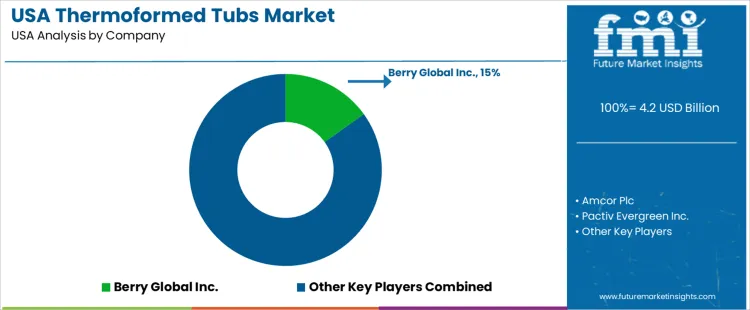
Thermoformed tubs in the United States are used for dairy products, prepared meals, spreads, deli foods, and frozen packaging. Consumer brands and grocery suppliers require containers that support high-volume filling lines, tamper-evident sealing, and shelf-life stability. Food safety compliance and recyclability remain central to procurement decisions. Brand owners also evaluate print quality and barrier-film options that protect freshness while providing clean labeling surfaces for retail visibility.
Berry Global Inc. holds an estimated 15.1% share. Its USA manufacturing footprint, in-house tooling, and broad food-packaging catalog help support large consumer-goods customers that require standardized quality across multiple distribution hubs. Pactiv Evergreen Inc. supplies tubs for national food processors and private-label programs handled through supermarkets and club retailers.
Integration with major filling and sealing formats supports operational continuity. Sonoco Products Company focuses on rigid packaging for refrigerated and shelf-stable goods, serving branded food producers with customized materials adapted to flavor-retention and thermal-resistance needs. Amcor participates through thermoformed packaging used in convenience foods and dairy items, emphasizing lightweight structures and compatibility with sustainability targets.
Sealed Air Corporation engages where barrier performance and leak-protection are critical for extended cold-chain distribution. Competitive positioning in the United States depends on recycling compatibility, coating and barrier technology, dependable output for major food processors, and the ability to maintain stable supply under variable commodity conditions.
Key Players in USA Thermoformed Tubs Demand
- Berry Global Inc.
- Amcor Plc
- Pactiv Evergreen Inc.
- Sonoco Products Company
- Sealed Air Corporation
Scope of the Report
| Items | Values |
|---|---|
| Quantitative Units | USD billion |
| Material | Plastic, Paper |
| Sales Channel | Retail, Institutional, Household |
| Regions Covered | West USA, South USA, Northeast USA, Midwest USA |
| Key Companies Profiled | Berry Global Inc., Amcor Plc, Pactiv Evergreen Inc., Sonoco Products Company, Sealed Air Corporation |
| Additional Attributes | Dollar sales by material and sales channel; regional demand variations for retail and institutional consumption; adoption in packaged foods including dairy, frozen meals, and ready-to-eat categories; recyclability requirements and regulatory push for paper-based thermoformed solutions; competition in lightweighting, sealing performance, and barrier properties; growth supported by convenience packaging and portion-controlled formats in the United States. |
USA Thermoformed Tubs Demand by Segments
Material:
- Plastic
- Paper
Sales Channel:
- Retail
- Institutional
- Household
Region:
- West USA
- South USA
- Northeast USA
- Midwest USA
Frequently Asked Questions
How big is the demand for thermoformed tubs in USA in 2025?
The demand for thermoformed tubs in USA is estimated to be valued at USD 4.2 billion in 2025.
What will be the size of thermoformed tubs in USA in 2035?
The market size for the thermoformed tubs in USA is projected to reach USD 6.8 billion by 2035.
How much will be the demand for thermoformed tubs in USA growth between 2025 and 2035?
The demand for thermoformed tubs in USA is expected to grow at a 4.8% CAGR between 2025 and 2035.
What are the key product types in the thermoformed tubs in USA?
The key product types in thermoformed tubs in USA are plastic and paper.
Which sales channel segment is expected to contribute significant share in the thermoformed tubs in USA in 2025?
In terms of sales channel, retail segment is expected to command 50.0% share in the thermoformed tubs in USA in 2025.
Preview the report firsthand - request a free sample
Get SampleGet the brochure for pricing and purchase details.
Get PDFTable of Content
- Executive Summary
- USA Market Outlook
- Demand-side Trends
- Supply-side Trends
- Technology Roadmap Analysis
- Analysis and Recommendations
- Market Overview
- Market Coverage / Taxonomy
- Market Definition / Scope / Limitations
- Market Background
- Market Dynamics
- Drivers
- Restraints
- Opportunity
- Trends
- Scenario Forecast
- Demand in Optimistic Scenario
- Demand in Likely Scenario
- Demand in Conservative Scenario
- Opportunity Map Analysis
- Product Life Cycle Analysis
- Supply Chain Analysis
- Investment Feasibility Matrix
- Value Chain Analysis
- PESTLE and Porter’s Analysis
- Regulatory Landscape
- Regional Parent Market Outlook
- Production and Consumption Statistics
- Import and Export Statistics
- Market Dynamics
- USA Market Analysis 2020 to 2024 and Forecast, 2025 to 2035
- Historical Market Size Value (USD Million) Analysis, 2020 to 2024
- Current and Future Market Size Value (USD Million) Projections, 2025 to 2035
- Y-o-Y Growth Trend Analysis
- Absolute $ Opportunity Analysis
- USA Market Pricing Analysis 2020 to 2024 and Forecast 2025 to 2035
- USA Market Analysis 2020 to 2024 and Forecast 2025 to 2035, By Material
- Introduction / Key Findings
- Historical Market Size Value (USD Million) Analysis By Material , 2020 to 2024
- Current and Future Market Size Value (USD Million) Analysis and Forecast By Material , 2025 to 2035
- Plastic
- Paper
- Y-o-Y Growth Trend Analysis By Material , 2020 to 2024
- Absolute $ Opportunity Analysis By Material , 2025 to 2035
- USA Market Analysis 2020 to 2024 and Forecast 2025 to 2035, By Sales Channel
- Introduction / Key Findings
- Historical Market Size Value (USD Million) Analysis By Sales Channel, 2020 to 2024
- Current and Future Market Size Value (USD Million) Analysis and Forecast By Sales Channel, 2025 to 2035
- Retail
- Institutional
- Household
- Y-o-Y Growth Trend Analysis By Sales Channel, 2020 to 2024
- Absolute $ Opportunity Analysis By Sales Channel, 2025 to 2035
- Market Structure Analysis
- Competition Dashboard
- Competition Benchmarking
- Market Share Analysis of Top Players
- By Regional
- By Material
- By Sales Channel
- Competition Analysis
- Competition Deep Dive
- Berry Global Inc.
- Overview
- Product Portfolio
- Profitability by Market Segments (Product/Age /Sales Channel/Region)
- Sales Footprint
- Strategy Overview
- Marketing Strategy
- Product Strategy
- Channel Strategy
- Amcor Plc
- Pactiv Evergreen Inc.
- Sonoco Products Company
- Sealed Air Corporation
- Berry Global Inc.
- Competition Deep Dive
- Assumptions & Acronyms Used
- Research Methodology


