

- Industry Size (2025)
- USD 10.5 Bn
- Forecast (2035)
- USD 20.2 Bn
- CAGR (2025 to 2035)
- 6.7%
Demand for Ventilated Bulk Bags in USA 2025 to 2035
The demand for ventilated bulk bags in the USA is valued at USD 10.5 billion in 2025 and is projected to reach USD 20.2 billion by 2035, reflecting a CAGR of 6.7%. Growth is influenced by increased movement of agricultural produce, wood products, and bulk commodities requiring airflow during storage and transport. Ventilated designs help prevent moisture build-up, reduce spoilage rates, and maintain product quality across long-haul logistics channels. Adoption is also supported by improved warehouse handling efficiencies and a continued shift toward flexible intermediate bulk containers in industrial supply chains.
Polypropylene (PP) ventilated bulk bags lead due to their durability, lightweight structure, and resistance to tearing during forklift and crane handling. Designs featuring breathable mesh panels, UV-stabilized fabrics, and customized lifting loops are increasingly preferred for potatoes, onions, firewood, and other fresh bulk goods. Strength optimization and cost-efficient recyclability remain key purchasing priorities for producers and distributors.
Demand is strongest in the West, South, and Northeast regions, where agricultural output, port-based distribution centres, and timber-processing facilities are concentrated. Major suppliers include Global-Pak Inc., JumboSack Corporation, LC Packaging, Star Industries, and Bagwell Supply. Their offerings support high-volume bulk handling applications in food crops and industrial material flows, with an emphasis on ventilation performance, load safety, and compliance with transport standards.
Quick Stats for USA Ventilated Bulk Bags Demand
- USA Ventilated Bulk Bags Sales Value (2025): USD 10.5 billion
- USA Ventilated Bulk Bags Forecast Value (2035): USD 20.2 billion
- USA Ventilated Bulk Bags Forecast CAGR (2025–2035): 6.7%
- Leading Category in USA Ventilated Bulk Bags Demand: Polypropylene (PP)
- Key Growth Regions in USA Ventilated Bulk Bags Demand: West USA, South USA, Northeast USA
- Top Players in USA Ventilated Bulk Bags Demand: Global-Pak Inc., JumboSack Corporation, LC Packaging, Star Industries, Bagwell Supply
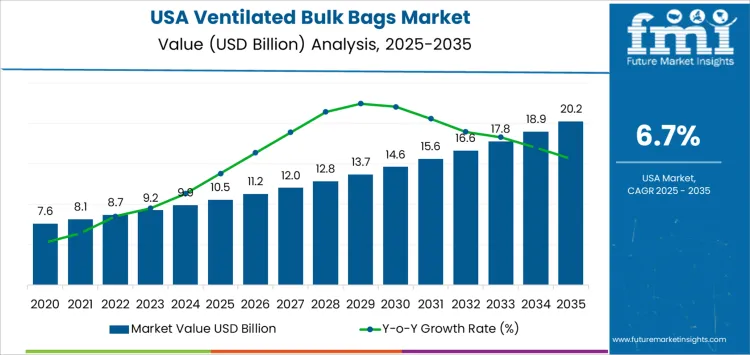
What is the Growth Forecast for Ventilated Bulk Bags Industry in USA through 2035?
Growth rate volatility for demand for ventilated bulk bags in the United States remains relatively low, supported by stable use in agriculture and food distribution. Produce handling, seed storage, and wood-based industries rely on ventilated structures to maintain airflow and reduce spoilage, which creates dependable purchasing across seasonal cycles. Long-term supply agreements with bulk handlers help minimize abrupt changes in annual demand.
Some variability can occur when harvest yields shift or when import and export flows adjust due to pricing or weather disruptions. These influences create near-term peaks or dips without altering the broader upward direction. Industrial diversification into materials such as charcoal and recyclables also adds incremental stability by spreading demand across sectors with different economic rhythms.
Innovation in breathable fabrics and compliance with food safety standards can momentarily increase procurement as operators upgrade existing inventory. However, functionality-driven replacement dominates growth, which limits volatility. The overall index indicates a consistent upward path with narrow fluctuations, reflecting the essential storage function performed by ventilated bulk bags and their alignment with predictable logistics cycles.
USA Ventilated Bulk Bags Key Takeaways
| Metric | Value |
|---|---|
| USA Ventilated Bulk Bags Sales Value (2025) | USD 10.5 billion |
| USA Ventilated Bulk Bags Forecast Value (2035) | USD 20.2 billion |
| USA Ventilated Bulk Bags Forecast CAGR (2025-2035) | 6.7% |
Why is the Demand for Ventilated Bulk Bags in the USA Growing?
Demand for ventilated bulk bags in the USA is increasing because agricultural producers, processors and distributors require breathable packaging for products that release moisture during storage. Ventilated bulk bags support airflow around items such as potatoes, onions, nuts and firewood, helping prevent mold growth and product degradation during long haul transport or warehouse holding. Farmers and cooperatives adopt these bags to maintain product quality after harvest while reducing reliance on rigid containers that occupy more space.
E commerce and home improvement retailers strengthen demand for packaged firewood and garden supplies that benefit from ventilation while stacked on shelves. Ventilated bulk bags are also used in landscaping and construction for materials that must dry before use. The bags are compatible with forklifts and pallet systems common in US logistics operations, which supports quick loading and unloading. Reusability and stackability offer cost efficiency for frequent movements within supply chains. Constraints include price differences versus standard woven bulk bags and the need for correct handling to avoid tearing during mechanical lifting. Some small growers continue using bins or sacks when dealing with shorter storage periods or limited transportation distances. Seasonal production cycles can also influence demand timing.
Which Materials and Capacity Ranges Lead Demand for Ventilated Bulk Bags in the USA?
Demand for ventilated bulk bags in the United States is influenced by strong agricultural, food processing, and industrial storage needs. These bags enable airflow to prevent moisture buildup, making them preferred for potatoes, onions, nuts, firewood, and similar goods. USA buyers prioritize durability, UV protection for outdoor storage, and compatibility with forklift handling systems. Adoption increases with demand for cost-efficient bulk transport and warehouse optimization across regional supply chains.
By Material Type, Polypropylene (PP) Holds the Largest Share
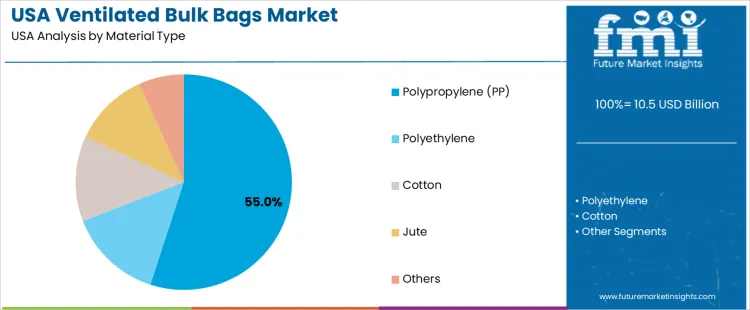
Polypropylene (PP) accounts for 55.0%, driven by its high tensile strength, long-term durability, and strong ventilation compatibility when woven into breathable structures. It supports heavy agricultural loads and displays resilience to tearing during transport. PE, cotton, jute, and other fibers remain unspecified by share, serving specialized uses such as composting and environmentally aligned workflows. While cotton and jute improve biodegradability profiles, lower cost efficiency and handling strength limit their share. Ventilation consistency is an important influencer in the USA, especially for long-haul shipment cycles moving produce across states. PP also supports customization in loop design, print, coating, and liner inclusion for dust-sensitive products. Material choices reflect trade-offs among strength, sustainability, moisture control, and freight economics.
Key Points:
- PP dominates due to strength, breathability, and load-bearing performance
- Natural fibers contribute to sustainability but remain niche
- Material decisions depend on airflow, product safety, and transportation stress
By Capacity Range, Bags <200 kg Lead Demand
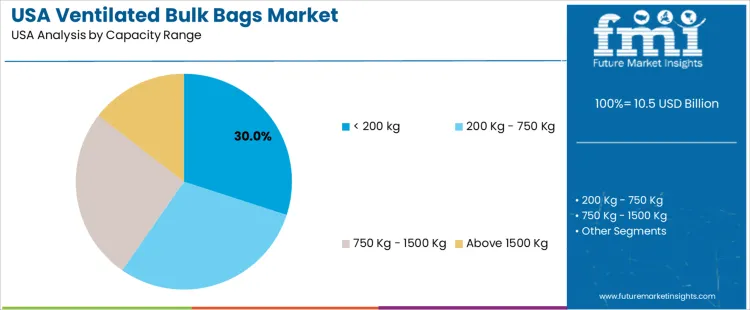
Bags with capacities <200 kg represent 30.0%, primarily used in small-batch agricultural distribution and specialty retail packaging where easier manual handling is required. These are widely utilized by small growers, food processors, and firewood suppliers operating shorter supply chains. Higher-capacity ranges serve warehousing and export logistics but are referenced without specific shares. USA organizations selecting larger formats focus on automation compatibility and pallet optimization. Growth across lower-capacity bags aligns with increased farm-to-store programs and operational flexibility, especially in seasonal supply cycles. Capacity selection depends on storage life, moisture exposure, and downstream forklift accessibility.
Key Points:
- <200 kg bags support small-load handling and regional produce supply
- Larger formats serve mechanized, palletized logistics
- Capacity decisions tied to weight safety and ventilation requirements
What are the Drivers, Restraints, and Key Trends of the Demand for Ventilated Bulk Bags in the USA?
Growth of fresh produce storage requirements, increased transportation of horticultural goods and rising interest in airflow-supported shelf life extension are driving demand.
In the United States, ventilated bulk bags are used by growers and food distributors handling potatoes, onions and other crops that continue to breathe after harvest. Ventilation openings allow air circulation that reduces moisture buildup during warehouse storage and long-haul trucking. Agricultural processors in states such as Idaho, Washington and California adopt ventilated bags to maintain product quality while reducing shrinkage losses. Landscaping suppliers and firewood distributors rely on these bags for drying and preventing mold during outdoor storage. Domestic bag manufacturers benefit from seasonal demand peaks linked to harvest cycles, supporting recurring procurement in horticulture and farm supply channels.
Cost sensitivity in seasonal operations, limited reusability when handled roughly and availability of lower-cost alternatives restrain demand.
Bulk bags require durable fabric to maintain structure around airflow panels, creating higher unit cost compared with basic woven polypropylene bags. Reuse potential can decrease when bags undergo heavy forklift handling or exposure to rough terrain at farms. Some distributors continue using bins, crates or low-vent alternatives when airflow demands are lower or product turnover is fast. These budget and durability factors contribute to selective conversion across varied crop segments.
Shift toward reinforced ventilation panels, increased adoption in automated handling and rising alignment with food safety traceability define key trends.
Manufacturers offer stronger mesh-panel constructions that tolerate stacking and mechanical handling in modern packhouses. Compatibility with palletizers and conveyor systems improves loading efficiency for produce hubs supplying national grocery chains. Labeling and barcoding features support traceability programs linked to food safety rules and retailer quality audits. Ventilated bulk bags are also entering compost and wood pellet distribution where airflow prevents moisture damage in outdoor storage. These developments indicate steady, application-specific demand for ventilated bulk bags across the United States agriculture and bulk-material logistics sectors.
Analysis of the Demand for Ventilated Bulk Bags in the USA by Region
Demand for ventilated bulk bags in the United States is accelerating as producers of agricultural commodities, firewood, and fresh produce rely on breathable packaging to preserve quality during storage and transport. The bags support airflow to reduce moisture buildup and mold contamination, improving shelf integrity especially for vegetables, nuts, and roots. Industrial distribution networks requiring dust-free and efficient handling of materials also influence procurement. West USA leads with 7.8% CAGR, followed by South USA at 6.9%, Northeast USA at 6.2%, and Midwest USA at 5.4%. Adoption is driven by crop diversification, export requirements, and operational upgrades in warehouse and logistics systems.
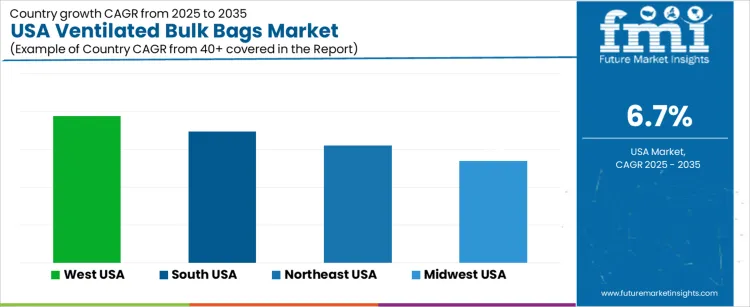
| Region | CAGR (2025-2035) |
|---|---|
| West USA | 7.8% |
| South USA | 6.9% |
| Northeast USA | 6.2% |
| Midwest USA | 5.4% |
How is the West USA driving demand for ventilated bulk bags?
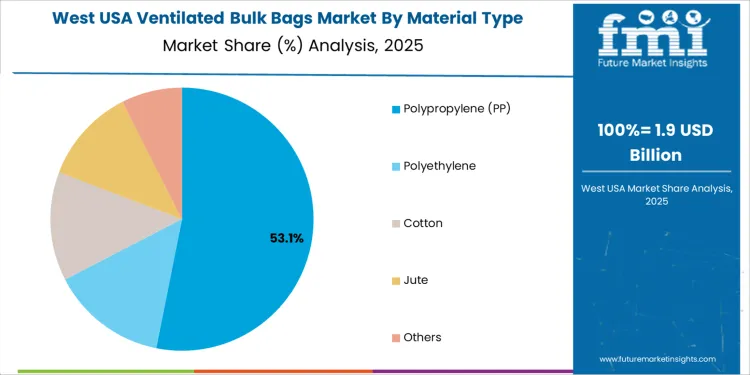
West USA expands at 7.8% CAGR, influenced by post-harvest handling needs in major produce-growing states such as California and Washington. High-value crops like onions, potatoes, and citrus require breathable containment during long-distance transport and regional storage cycles. Export-driven operations use ventilated bags to maintain quality for overseas markets through Pacific trade routes. Warehouses depend on fork-lift compatible bulk-bag systems that reduce manual handling and enhance safety metrics for seasonal surges. Sustainability objectives boost interest in reusable ventilated formats that reduce reliance on single-use alternatives. Procurement teams focus on UV resistance, mesh strength, and compatibility with automated filling stations.
- Produce exports requiring airflow-enabled protection
- Fork-lift handling improving logistics efficiency
- UV-stable and durable materials guiding selection
- Reusability supporting sustainability commitments
How is the South USA shaping demand growth?
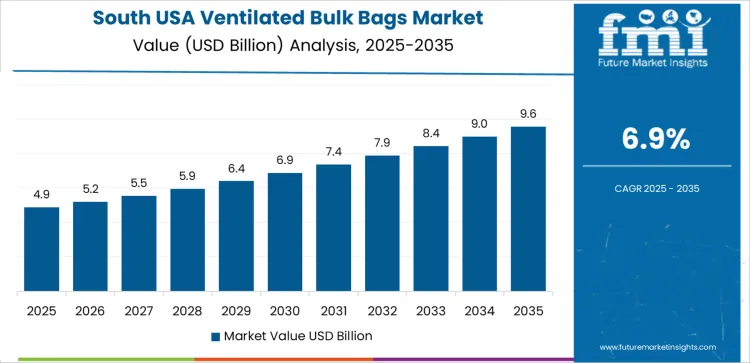
South USA achieves 6.9% CAGR, supported by robust agricultural activity in Texas, Florida, and Georgia. Crop segments such as peanuts, sweet potatoes, and onions use ventilated bulk bags to maintain respiration balance and prevent heat accumulation during storage. Warm-humid climates increase susceptibility to fungal decay, prompting higher usage of ventilated packaging compared to traditional woven sacks. Regional cooperatives and distribution hubs deploy bulk bags to streamline shipment from farms to packing houses and processors. Buyers prioritize tear-resistant fabrics and stable pallet stacking for interregional transport.
- Crop-specific airflow needs reinforcing bag usage
- Warm climate conditions increasing demand for ventilation
- Cooperative logistics simplifying storage operations
- Strength and stacking stability driving procurement
How is the Northeast USA influencing utilization patterns?
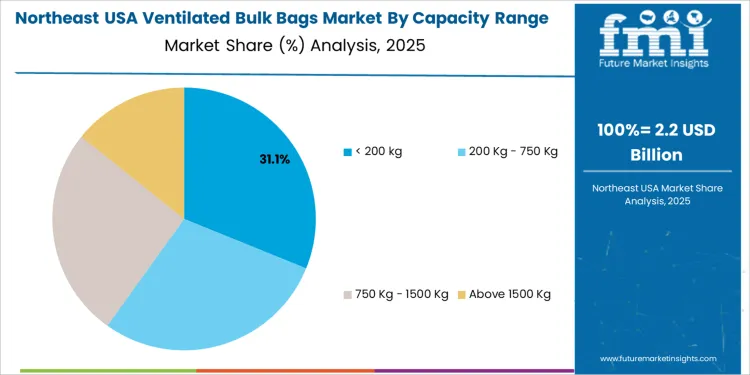
Northeast USA posts 6.2% CAGR, driven by seasonal produce streams including apples, potatoes, and root vegetables destined for dense population centers. Ventilated bags help maintain freshness during short-haul distribution and cold-room storage. Regional processors adopt palletized bulk-bag workflows to support higher throughput during harvest peaks. Sustainability expectations in northeastern retail markets encourage packaging options with recyclability and reuse potential. Warehouses require consistent dimensional tolerances to fit racking and conveyor layouts.
- Cold-room storage benefiting from breathable packaging
- Dense retail demand sustaining fresh-produce logistics
- Recyclability and reuse influencing selection
- Throughput-focused handling driving standardized sizing
How is the Midwest USA contributing to steady demand?
Midwest USA grows at 5.4% CAGR, influenced by agricultural production in states like Wisconsin, Michigan, Iowa, and Ohio. Ventilated bulk bags support storage stability for onions, corn, potatoes, and bulk seeds transported to food manufacturers. Distribution networks connecting farming zones to national retail systems reinforce dependability on pallet-ready bags that reduce spillage and labor requirements. Buyers focus on cost efficiency, choosing designs with optimized mesh-to-panel ratios for durable performance at competitive pricing. Adoption follows incremental facility upgrades rather than rapid capacity shifts.
- Broad agricultural base sustaining stable procurement
- Spillage reduction improving cost efficiency
- Retail distribution corridors reinforcing usage
- Cost-managed upgrades supporting gradual growth
What does the competitive landscape for ventilated bulk-bag demand in the United States look like?
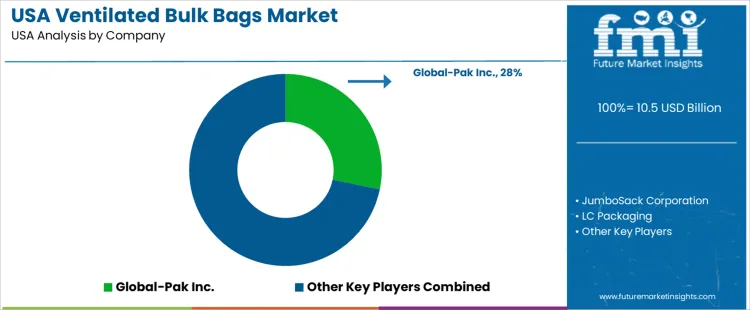
Ventilated bulk bags in the United States are used in agriculture, food distribution, wood processing, and industrial goods that require airflow during storage and transport. Producers and distributors handle onions, potatoes, nuts, firewood, and certain polymers. Buyers evaluate fabric strength, airflow distribution, pallet compatibility, and clean handling performance through automated loading systems. Domestic users rely on suppliers that meet stringent food-contact rules and maintain consistent stitching quality to prevent product loss. Lead-time reliability influences source selection due to seasonal harvest cycles and warehouse-capacity planning. Global-Pak Inc. holds an estimated 28.2% share. The company supports major agricultural growers and regional produce distributors with custom-ventilated structures designed for forklift handling and breathable storage.
Established USA warehousing supports rapid order fulfillment. JumboSack Corporation serves industrial and agricultural sectors with a range of sizes tailored to pallet dimensions and ventilation layouts. LC Packaging participates through import and distribution networks that supply breathable woven solutions for produce and kiln-dried wood. Star Industries concentrates on durable handling formats for firewood and construction materials, emphasizing reinforced seams for repeated mechanical loading. Bagwell Supply supports small and mid-sized users with flexible minimum-order volumes and common configurations used in regional produce hubs. Competitive positioning in the United States depends on fabric airflow consistency, load-bearing strength, food-safety certification, and nationwide stocking capability that aligns with seasonal and continuous-flow shipping needs.
Key Players in USA Ventilated Bulk Bags Demand
- Global-Pak Inc.
- JumboSack Corporation
- LC Packaging
- Star Industries
- Bagwell Supply
Scope of the Report
| Items | Values |
|---|---|
| Quantitative Units | USD billion |
| Material Type | Polypropylene (PP), Polyethylene, Cotton, Jute, Others |
| Capacity Range | < 200 kg, 200 kg – 750 kg, 750 kg – 1500 kg, Above 1500 kg |
| Regions Covered | West USA, South USA, Northeast USA, Midwest USA |
| Key Companies Profiled | Global-Pak Inc., JumboSack Corporation, LC Packaging, Star Industries, Bagwell Supply |
| Additional Attributes | Dollar sales by material type and capacity segment; demand growth tied to agricultural product handling including potatoes, onions, and firewood; ventilation-driven protection against mold, condensation, and product spoilage; adoption concentrated among produce growers and industrial users requiring breathable transport packaging; regional differences influenced by logistics hubs and food distribution networks; compliance with FDA/USDA food safety standards and evolving sustainability requirements for bulk packaging. |
USA Ventilated Bulk Bags Demand by Segments
Material Type:
- Polypropylene (PP)
- Polyethylene
- Cotton
- Jute
- Others
Capacity Range:
- < 200 kg
- 200 Kg - 750 Kg
- 750 Kg - 1500 Kg
- Above 1500 Kg
Region:
- West USA
- South USA
- Northeast USA
- Midwest USA
Frequently Asked Questions
How big is the demand for ventilated bulk bags in USA in 2025?
The demand for ventilated bulk bags in USA is estimated to be valued at USD 10.5 billion in 2025.
What will be the size of ventilated bulk bags in USA in 2035?
The market size for the ventilated bulk bags in USA is projected to reach USD 20.2 billion by 2035.
How much will be the demand for ventilated bulk bags in USA growth between 2025 and 2035?
The demand for ventilated bulk bags in USA is expected to grow at a 6.7% CAGR between 2025 and 2035.
What are the key product types in the ventilated bulk bags in USA?
The key product types in ventilated bulk bags in USA are polypropylene (pp), polyethylene, cotton, jute and others.
Which capacity range segment is expected to contribute significant share in the ventilated bulk bags in USA in 2025?
In terms of capacity range, < 200 kg segment is expected to command 30.0% share in the ventilated bulk bags in USA in 2025.
Preview the report firsthand - request a free sample
Get SampleGet the brochure for pricing and purchase details.
Get PDFTable of Content
- Executive Summary
- USA Market Outlook
- Demand-side Trends
- Supply-side Trends
- Technology Roadmap Analysis
- Analysis and Recommendations
- Market Overview
- Market Coverage / Taxonomy
- Market Definition / Scope / Limitations
- Market Background
- Market Dynamics
- Drivers
- Restraints
- Opportunity
- Trends
- Scenario Forecast
- Demand in Optimistic Scenario
- Demand in Likely Scenario
- Demand in Conservative Scenario
- Opportunity Map Analysis
- Product Life Cycle Analysis
- Supply Chain Analysis
- Investment Feasibility Matrix
- Value Chain Analysis
- PESTLE and Porter’s Analysis
- Regulatory Landscape
- Regional Parent Market Outlook
- Production and Consumption Statistics
- Import and Export Statistics
- Market Dynamics
- USA Market Analysis 2020 to 2024 and Forecast, 2025 to 2035
- Historical Market Size Value (USD Million) Analysis, 2020 to 2024
- Current and Future Market Size Value (USD Million) Projections, 2025 to 2035
- Y-o-Y Growth Trend Analysis
- Absolute $ Opportunity Analysis
- USA Market Pricing Analysis 2020 to 2024 and Forecast 2025 to 2035
- USA Market Analysis 2020 to 2024 and Forecast 2025 to 2035, By Material Type
- Introduction / Key Findings
- Historical Market Size Value (USD Million) Analysis By Material Type , 2020 to 2024
- Current and Future Market Size Value (USD Million) Analysis and Forecast By Material Type , 2025 to 2035
- Polypropylene (PP)
- Polyethylene
- Cotton
- Jute
- Others
- Y-o-Y Growth Trend Analysis By Material Type , 2020 to 2024
- Absolute $ Opportunity Analysis By Material Type , 2025 to 2035
- USA Market Analysis 2020 to 2024 and Forecast 2025 to 2035, By Capacity Range
- Introduction / Key Findings
- Historical Market Size Value (USD Million) Analysis By Capacity Range, 2020 to 2024
- Current and Future Market Size Value (USD Million) Analysis and Forecast By Capacity Range, 2025 to 2035
- < 200 kg
- 200 Kg - 750 Kg
- 750 Kg - 1500 Kg
- Above 1500 Kg
- Y-o-Y Growth Trend Analysis By Capacity Range, 2020 to 2024
- Absolute $ Opportunity Analysis By Capacity Range, 2025 to 2035
- Market Structure Analysis
- Competition Dashboard
- Competition Benchmarking
- Market Share Analysis of Top Players
- By Regional
- By Material Type
- By Capacity Range
- Competition Analysis
- Competition Deep Dive
- Global-Pak Inc.
- Overview
- Product Portfolio
- Profitability by Market Segments (Product/Age /Sales Channel/Region)
- Sales Footprint
- Strategy Overview
- Marketing Strategy
- Product Strategy
- Channel Strategy
- JumboSack Corporation
- LC Packaging
- Star Industries
- Bagwell Supply
- Global-Pak Inc.
- Competition Deep Dive
- Assumptions & Acronyms Used
- Research Methodology


