

- Industry Size (2025)
- USD 38.78 Mn
- Forecast (2035)
- USD 54.18 Mn
- CAGR (2025 - 2035)
- 3.4%
Vein Finder Market Size, Market Forecast and Outlook By FMI
Vein finder market is expected to expand from USD 38.78 million in 2025 to USD 54.18 million by 2035. The market is anticipated to register a 3.4% CAGR during the forecast period. Portable devices are likely to lead with a 55.3% share, while hospitals are projected to account for 42.5% of end-user demand in 2025.
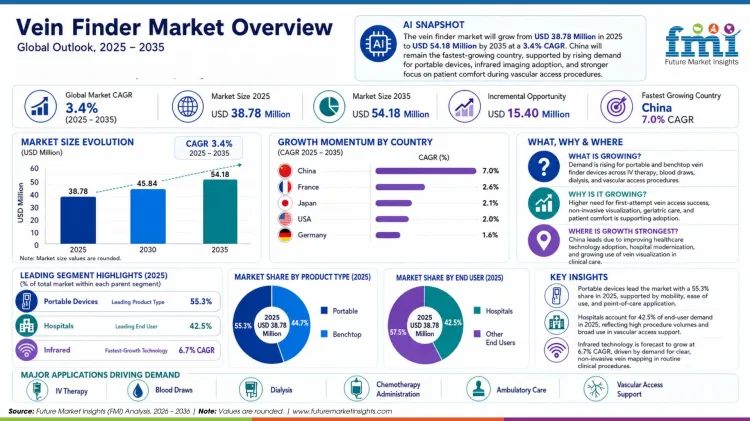
Key Takeaways, Market Size, and Forecast
| Metric | Value |
|---|---|
| Market Size (2025) | USD 38.78 Million |
| Market Size (2035) | USD 54.18 Million |
| Fastest-Growing Segment | Demand |
| Demand CAGR | 3.4% |
| Leading Product Type (2025) | Portable Devices |
| Portable Devices Share (2025) | 55.3% |
| Fastest-Growing Segment | Infrared Technology |
| Infrared Technology CAGR | 6.7% |
| Leading End-User (2025) | Hospitals |
| Hospitals Share (2025) | 42.5% |
| Fastest-Growing Country | China |
| China CAGR | 7.0% |
Summary of the Vein Finder Market
- Demand and Growth Drivers
- Demand is rising as clinicians seek faster vein access during blood draws and IV procedures.
- Growth is linked to higher use of non-invasive tools in patient care.
- Geriatric care and chronic disease treatment create recurring need for vein visualization.
- Patient comfort remains a key factor in device selection across care environments.
- Product and Segment View
- Portable devices hold strong appeal due to mobility and point-of-care use.
- Infrared systems gain preference as clinicians look for clear vein mapping.
- Hospitals remain the primary user base due to high procedure volumes.
- Clinics and ambulatory centers create added demand for compact devices.
- Geography and Competitive Outlook
- China shows stronger momentum as healthcare technology adoption improves.
- United States demand is steady due to advanced hospital infrastructure.
- Japan benefits from geriatric care needs and early medical technology adoption.
- AccuVein, Christie Medical, and Venoscope focus on better imaging accuracy.
- Analyst Opinion
- Sabyasachi Ghosh, Associate Vice President at FMI, opines, “Vein finder adoption is moving toward portable and infrared-based devices that improve first-attempt success during vascular access. Manufacturers that combine clear visualization, simple handling, and clinician training will be better placed to capture demand across hospitals and outpatient care.”
- Vein Finder Market Value Analysis
- The vein finder market is moving from optional procedural assistance into routine vascular access support.
- Demand is likely to rise as hospitals aim to reduce repeat needle attempts.
- Adoption is expected to gain support from portable devices used across point-of-care environments.
- Spending is anticipated to be backed by chronic care needs and safer IV access practices.
Vein finders are crucial in medical procedures, particularly in intravenous (IV) therapy, blood draws, and dialysis, where precision is paramount. As healthcare systems strive for improved patient care, the adoption of vein finding technology is increasing, especially in regions with a high incidence of chronic diseases and an aging population requiring frequent medical procedures.
Technological advancements in vein finder devices are a major factor propelling the market forward. The development of infrared-based devices, ultrasound, and near-infrared spectroscopy technologies has enhanced the precision and effectiveness of vein finders, making them more reliable and user-friendly.
Additionally, these devices are being integrated with artificial intelligence (AI) and machine learning to improve their ability to detect veins in patients with difficult-to-locate veins. These innovations are expected to improve the speed and accuracy of vein localization, reducing the risk of complications during procedures and enhancing overall patient satisfaction.
Government regulations and healthcare policies are further supporting market growth, as many countries are increasingly focusing on improving healthcare quality and patient safety. These regulations encourage the use of advanced medical technologies, including vein finders, to enhance care standards.
As healthcare providers continue to prioritize efficiency, accuracy, and patient comfort, the adoption of vein finder devices is expected to increase, contributing to the steady growth of the market. The growing focus on reducing medical errors and improving procedural outcomes also positions vein finding technologies as a critical tool in modern healthcare systems.
Top Companies Integrating Smart Technology with Vein Finders
Leading companies in the vein finder market are incorporating advanced smart technologies such as artificial intelligence, infrared imaging, augmented reality, and IoT connectivity to improve vein visualization accuracy, speed up procedures, and enhance patient comfort. These innovations enable healthcare providers to perform vein access with greater precision, reducing complications and improving overall clinical outcomes.
- Christie Medical Holdings
Christie Medical offers VeinViewer technology that uses near-infrared light and augmented reality to project real-time vein images onto the skin, aiding clinicians in quick and accurate vein location. - NIRVision Medical
NIRVision integrates AI-powered image processing in its vein finder devices, improving detection in challenging patients such as those with dark skin tones or difficult vein access. - Venoscope (Hansen Medical)
Venoscope devices combine smart optics and real-time imaging enhancements to provide clear visualization of veins, enhancing vascular access procedures. - Accuvein
Accuvein’s smart vein finders use patented infrared technology with cloud-enabled data management for improved vein mapping and procedural documentation. - InfuSystem Holdings
InfuSystem incorporates IoT-enabled vein finder solutions that allow remote monitoring and device analytics to optimize device performance and maintenance. - Regulatory Scenario for Vein Finders
Vein finders, classified as medical devices, must comply with stringent regulatory standards to ensure safety, efficacy, and reliability. These regulations vary by region but commonly focus on device performance, patient safety, electromagnetic compatibility, and quality management systems. Compliance facilitates market access and builds trust among healthcare providers and patients. - U.S. FDA Regulations
Vein finders are regulated by the U.S. Food and Drug Administration (FDA) under the Medical Device Regulation framework, typically classified as Class II devices requiring 510(k) clearance. The FDA evaluates device safety, electromagnetic compatibility, and clinical performance before approval. - European Union MDR Compliance
In the European Union, vein finders must comply with the Medical Device Regulation (MDR 2017/745), which mandates rigorous clinical evaluation, quality management (ISO 13485), and CE marking before entering the market. The MDR emphasizes post-market surveillance and risk management. - Other Regional Regulations
Countries like Canada, Japan, and Australia have their respective medical device regulatory authorities (Health Canada, PMDA, TGA) enforcing similar safety and quality requirements. International standards such as IEC 60601 (medical electrical equipment safety) and ISO 14971 (risk management) are commonly applied across markets.
Analyzing Vein Finder Market by Top Investment Segments
The market is segmented based on product type, technology, end user, and region. By product type, the market is divided into portable and benchtop devices. In terms of technology, the market is categorized into infrared, ultrasound, and transillumination.
Based on end user, the market is classified into hospitals, clinics, ambulatory surgical centers, diagnostic centers and path labs, and blood banks. Regionally, the market is segmented into North America, Latin America, East Asia, South Asia & Pacific, Western Europe, Eastern Europe, and Middle East & Africa.
By Product Type, Portable to Capture 55.3% Market Share in 2025
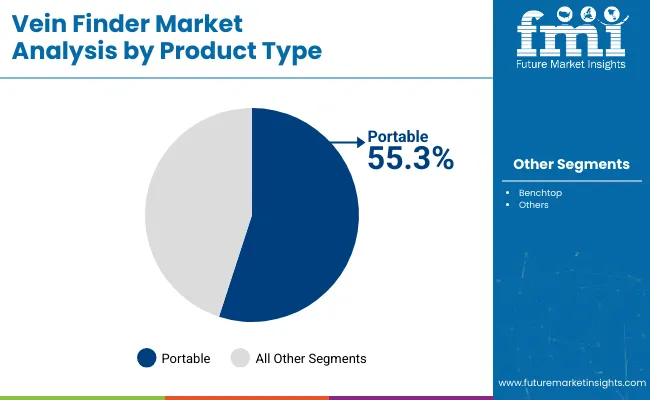
| Product Type Segment | Market Share (2025) |
|---|---|
| Portable | 55.3% |
The portable product type is expected to capture 55.3% of the market share in 2025. Portable devices are highly favored due to their mobility, versatility, and adaptability across various healthcare settings. Their compact nature allows them to be easily transported and used in point-of-care diagnostics, emergency medical situations, and remote healthcare environments, making them essential in modern healthcare.
With the rise in demand for home healthcare services and at-home diagnostics, the portable segment is expected to experience significant growth. These devices offer convenience for both patients and healthcare providers, allowing medical tests and monitoring to take place outside of traditional clinical settings.
The affordability and ease of use also contribute to the increasing adoption of portable devices, especially in ambulatory surgical centers, clinics, and blood banks. As the healthcare industry continues to emphasize cost-effective, flexible, and patient-centric solutions, portable devices are anticipated to remain a dominant product type in the market. The trend toward home-based healthcare services and the need for point-of-care diagnostics are expected to drive further growth in this segment throughout the forecast period.
By Technology, Infrared to Witness a CAGR of 6.7% from 2025 to 2035
| Technology Segment | CAGR (2025 to 2035) |
|---|---|
| Infrared | 6.7% |
Infrared technology is projected to experience a CAGR of 6.7% from 2025 to 2035, driven by its wide-ranging applications in medical diagnostics. Infrared technology is most commonly used for non-invasive temperature measurement, thermography, and blood circulation monitoring, offering healthcare providers a reliable, quick, and accurate diagnostic tool.
The increasing demand for non-invasive and patient-friendly medical technologies is supporting the adoption of infrared technology, particularly in thermometers and imaging devices. Its ability to provide fast results with minimal discomfort has made infrared technology an essential component in both clinical and home healthcare environments.
Infrared devices are used extensively in hospitals, clinics, and diagnostic centers due to their precision and ease of integration into existing healthcare workflows. The growing demand for wearable health monitors and the rise in remote patient monitoring are also contributing to the growth of infrared technology in medical diagnostics.
As healthcare providers continue to focus on improving the quality and speed of diagnosis while reducing costs, infrared technology’s non-invasive nature and rapid diagnostics will drive its significant growth in the coming years, particularly in temperature screening and monitoring applications.
By End User, Hospitals to Dominate with a Market Share of 42.5% in 2025
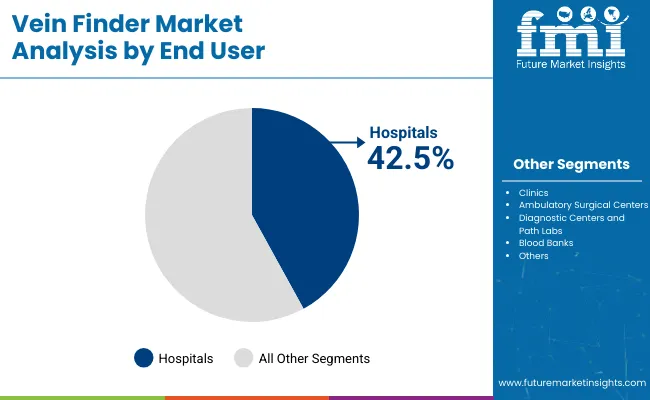
| End User Segment | Market Share (2025) |
|---|---|
| Hospitals | 42.5% |
Hospitals are expected to dominate the end-user segment, capturing 42.5% of the market share in 2025. As the largest consumers of medical diagnostic equipment, hospitals rely on a wide array of diagnostic tools for patient care, emergency services, and various medical procedures.
The growing need for advanced diagnostic solutions in hospitals is driven by the rising number of patients, the increasing complexity of treatments, and the growing demand for more accurate and timely diagnoses. Technologies such as infrared, ultrasound, and transillumination are integral to many hospital departments, including emergency rooms, intensive care units, and outpatient care facilities, providing healthcare professionals with the tools to detect diseases, monitor patient conditions, and guide treatment decisions.
Additionally, hospitals are increasingly adopting portable and user-friendly diagnostic devices that improve patient access to care, especially in critical and emergency situations. With ongoing investments in healthcare infrastructure, digital health technologies, and the expansion of hospital networks, the hospital sector is expected to remain the dominant end-user segment for diagnostic equipment.
The need for accurate, reliable, and non-invasive diagnostic solutions will continue to drive the growth of hospitals as a key market segment throughout the forecast period.
Vein Finder Market Overview
Vein finders are becoming essential devices in the healthcare industry. These advanced devices are intended to improve patient care by assisting physicians in venipuncture. Growing adoption of these vein finder devices in a variety of healthcare settings is expected to boost market growth.
Vein finders are becoming critical in several tasks, including starting intravenous lines, locating veins for injections, and drawing blood. Increasing adoption of vein finders in these procedures is expected to boost growth of the vein finder market.
Growing number of surgical procedures globally necessitates accurate venous access for blood sampling, intravenous injections, and other medical procedures. This will continue to propel demand for vein finders.
Rising emphasis on improving patient safety and comfort is expected to fuel sales of vein finders during the forecast period. These vein detection devices help ensure successful first attempts at venipuncture while reducing the number of needle sticks.
Portable vein finders are witnessing higher demand globally due to their small size and easy maneuverability. They are easy for physicians to work with in various clinical settings. Portable vein finders are also ideal for delivering at-home care to the patient.
An increasing shift towards the integration of advanced technologies such as augmented reality and near-infrared spectroscopy in vein finder devices enhances their accuracy and depth of vein detection. This, in turn, is affecting the vein locator market constructively.
Top vein finder manufacturers are constantly looking to develop advanced solutions to boost their sales. This technological evolution is driven by the pursuit of more effective and user-friendly solutions for healthcare professionals.
There has also been a growing emphasis on patient-centric features in vein finder development. Manufacturers are incorporating features that enhance patient comfort during venipuncture, contributing to a positive healthcare experience.
The ongoing trends collectively reflect the market's commitment to technological innovation, adaptability to diverse healthcare settings, and a patient-centered approach to advancing vein finder technologies. As a result, a healthy CAGR has been predicted for the target industry.
Historical Performance Vs. Vein Finder Market Future Demand Outlook
Global sales of vein finders increased at a CAGR of 4.8% from 2020 to 2024. In the assessment period, the global vein finder industry is poised to grow at a CAGR of 3.4%.
Chronic diseases such as diabetes, cardiovascular disorders, and renal diseases have become increasingly prevalent on a global scale. This surge in chronic illnesses is increasing the demand for medical procedures that require accurate and efficient vein visualization. This makes vein finders an indispensable tool in contemporary healthcare settings.
Rising geriatric population globally is expected to propel vein finder demand during the forecast period. Due to aging, older people often suffer from conditions like poor venous access, creating need for vein finder devices.
According to the Journal of Frontiers in Public Health, the population of people above 50 years old in the United States is expected to rise by 61.11%, increasing from 137.25 million in 2020 to 221.13 million in 2050. Among this population group, the number of people having at least one chronic disease is estimated to increase to 142.66 million in 2050. This will positively impact vein finder sales.
Amid rising geriatric population and rising prevalence of chronic diseases, healthcare providers face an increasing need for tools that enhance the success rates of medical interventions. Modern vein finders address this need by offering healthcare professionals a reliable means to visualize veins.
Key Opportunities in the Vein Finder Market
Vein finders are increasingly used for intravenous nutritional support, intravenous fluid administration, and intravenous drug administration. Similarly, they find application in intravenous chemotherapy administration and parenteral nutrition, thereby driving their demand.
Due to their increasing application in IV procedures, demand for vein finders is expected to grow rapidly during the forecast period. Vein finders are also used in vascular procedures, dialysis, and cosmetic procedures, contributing to their higher sales.
Increasing usage of vein finders in procedures such as cosmetic makeovers is expected to support market growth over the forecast period. Vein finders help in locating veins before, during, and after cosmetic and vascular procedures. They also help to prevent severe bruising and vein damage during cosmetic procedures.
Vein finders have traditionally been used in healthcare settings for purposes such as IV access, blood draws, and other medical procedures. However, in recent years, there has been an increasing trend toward the use of vein finders in the cosmetic industry as well. This will likely create growth opportunities for vein finder manufacturers.
Factors Limiting Vein Finder Market Growth
Despite the significant opportunity for vein finder industry, the high cost of vein finders acts as a restraint for the market, particularly in lower economic regions. Advanced vein finder devices, especially benchtop ones, are expensive, which negatively impacts their sales.
Lack of knowledge and experience in operating a vein finder can lead to complicated intravenous (IV) procedures that are uncomfortable for the patient. In addition, improper use of the vein finder may cause unnecessary bruising, damage to the vein, or other complications.
Patients who have had negative experiences with IV procedures, such as repeated needle sticks or multiple IV insertion attempts, may be reluctant to undergo the procedure again. Consequently, medical professionals may be less inclined to use a vein finder if they are unsure whether they can use it effectively.
If medical professionals are not properly trained in using a vein finder, they may not recognize the device's value or be aware of its benefits. This may result in low demand for vein finders, as medical professionals are more likely to use traditional, more familiar methods of locating veins, such as palpation or visualization.
Country-wise Insights
The table below shows the predicted growth rates of the top nations. China, France, and Japan are anticipated to record high CAGRs of 7.0%, 2.6%, and 2.1%, respectively from 2025 to 2035.
Market Growth Outlook by Key Countries
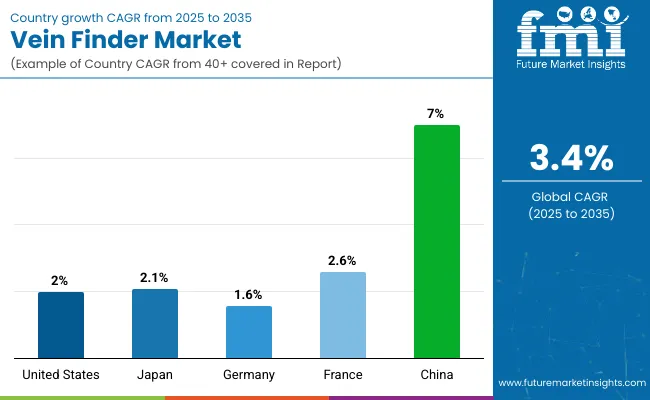
| Countries | Value CAGR |
|---|---|
| United States | 2% |
| Japan | 2.1% |
| Germany | 1.6% |
| France | 2.6% |
| China | 7% |
United States Remains a Key Market for Vein Finders Globally
As per the latest analysis, the United States accounted for a dominant global market share of 34.2% in 2024. Over the forecast period, the United States vein finder market is expected to exhibit a CAGR of 2.0%.
The United States has a well-established healthcare infrastructure, which contributes to the growing demand for vein finders. Advanced healthcare facilities and a strong emphasis on medical innovation contribute to the widespread integration of vein finder technologies within the nation.
Growing prevalence of chronic diseases, such as diabetes and cardiovascular conditions, in the United States is creating a substantial demand for precise vein visualization in various procedures. This will likely foster growth of the vein finder industry from 2025 to 2035.
Substantial investment has been made in state-of-the-art medical technologies, including vein finders, in the United States. The nation's regulatory environment is conducive to the approval and adoption of innovative healthcare devices, further solidifying its position as a dominating region in the vein finder industry.
Increasing Geriatric Population Propelling Vein Find Demand in Japan
Japan remains a lucrative market for vein finder manufacturers across East Asia. As per the latest report, demand for vein finders in Japan is anticipated to increase at a CAGR of 2.1% throughout the forecast period.
The geriatric population in Japan has significantly increased, which has led to the adoption of vein finders. The increasing prevalence of chronic diseases necessitates precise venipuncture, further augmenting the market.
The above factors coupled with strong regulatory framework are expected to boost Japan vein finder market during the forecast period. Similarly, a culture of early adoption of healthcare innovations will likely support market expansion.
Competitive Landscape
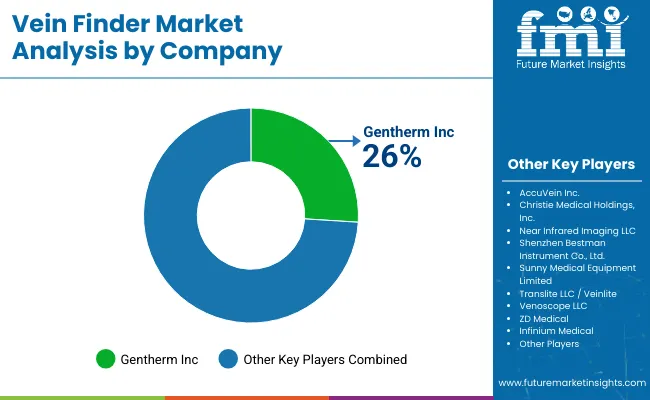
Leading manufacturers of vein finders are constantly developing innovative products to meet the evolving end user requirements. They are focusing on enhancing vein visualization through advancements in near-infrared (NIR) and exploring novel techniques like electrical impedance or ultrasound.
For instance, players like Christie Medical Holdings, Shenzhen Bestman Instrument, and AccuVein are developing new vein finders that use improved visualization technologies. Similarly, companies are employing strategies like partnerships, mergers, acquisitions, distribution agreements, and collaborations to gain a competitive edge in the market.
Key Coverage in Global Vein Finder Market Research Report
- Adjacent Study on Global Varicose Vein Treatment Market, Peripheral Intravenous Catheters Market, Vein Illuminator Market, Palm Vein Scanner market, and Near-infrared Vein Finder Market
- Detailed Portable Vein Finder Market Overview
- Future Growth Prospects of Global Portable Vein Finder Market
- Key Players in the Vein Detection Technology Market
- Regional Analysis of Vein Visualization Device Industry
- Scope of Blood Vessel Imaging Device Market in India and other Emerging Nations
- Market Dynamics of Vein Detection Technology
- Emerging Trends in Vein Imaging Devices
- Recent Developments in Vein Imaging Device Market
- Drivers for Vein Detection System Market
- Top Segments in Vein Mapping Technology Market
Key Players in the Vein Finder Market
- AccuVein Inc.
- Christie Medical Holdings, Inc.
- Near Infrared Imaging LLC
- Shenzhen Bestman Instrument Co., Ltd.
- Gentherm Medical
- Sunny Medical Equipment Limited
- Translite LLC / Veinlite
- Venoscope LLC
- ZD Medical
- Infinium Medical
- NextVein
- International Biomedical
- Shenzhen Vivolight Medical Device & Technology Co., Ltd.
- BLZ Technology Inc.
- iiSM Inc.
Key Segmentation
By Product Type:
- Portable
- Benchtop
By Technology:
- Infrared
- Ultrasound
- Transillumination
By End-user:
- Hospitals
- Clinics
- Ambulatory Surgical Centers
- Diagnostic Centers and Path Labs
- Blood Banks
By Region:
- North America
- Latin America
- East Asia
- South Asia & Pacific
- Western Europe
- Eastern Europe
- Middle East & Africa
Frequently Asked Questions
What is the projected size of the vein finder market by 2035?
The market is expected to grow from USD 38.78 million in 2025 to USD 54.18 million by 2035, at a CAGR of 3.4%.
Which product type segment is expected to dominate the vein finder market?
The portable product type is projected to capture 55.3% of the market share in 2025 due to its mobility and adaptability in various healthcare settings.
Which technology segment is anticipated to experience the highest growth?
Infrared technology is expected to witness a CAGR of 6.7% from 2025 to 2035, driven by its wide applications in medical diagnostics.
Which end-user segment is forecasted to hold the largest market share in 2025?
Hospitals are expected to dominate the end-user segment, capturing 42.5% of the market share due to their extensive use of diagnostic equipment.
Which region is predicted to have the fastest-growing vein finder market?
China is expected to experience the highest growth, with a CAGR of 7.0% from 2025 to 2035, driven by the increasing demand for healthcare technologies.
Preview the report firsthand - request a free sample
Get SampleGet the brochure for pricing and purchase details.
Get PDFTable of Content
- 1. Executive Summary
- 2. Market Overview
- 3. Key Market Trends
- 4. Value-Added Insights
- 5. Market Background
- 6. Global Market Demand (in Volume Units) Analysis 2020 to 2024 and Forecast, 2025 to 2035
- 7. Global Market - Pricing Analysis
- 8. Global Market Demand (in Value or Size in USD million) Analysis 2020 to 2024 and Forecast, 2025 to 2035
- 9. Global Market Analysis 2020 to 2024 and Forecast 2025 to 2035, By Product Type
- 9.1. Portable
- 9.2. Benchtop
- 10. Global Market Analysis 2020 to 2024 and Forecast 2025 to 2035, By Technology
- 10.1. Infrared
- 10.2. Ultrasound
- 10.3. Transillumination
- 11. Global Market Analysis 2020 to 2024 and Forecast 2025 to 2035, By End User
- 11.1. Hospitals
- 11.2. Clinics
- 11.3. Ambulatory Surgical Centers
- 11.4. Diagnostic Centers and Path Labs
- 11.5. Blood Banks
- 12. Global Market Analysis 2020 to 2024 and Forecast 2025 to 2035, By Region
- 12.1. North America
- 12.2. Latin America
- 12.3. East Asia
- 12.4. South Asia & Pacific
- 12.5. Western Europe
- 12.6. Eastern Europe
- 12.7. Middle East & Africa
- 13. North America Market Analysis 2020 to 2024 and Forecast 2025 to 2035
- 14. Latin America Market Analysis 2020 to 2024 and Forecast 2025 to 2035
- 15. East Asia Market Analysis 2020 to 2024 and Forecast 2025 to 2035
- 16. South Asia & Pacific Market Analysis 2020 to 2024 and Forecast 2025 to 2035
- 17. Western Europe Market Analysis 2020 to 2024 and Forecast 2025 to 2035
- 18. Eastern Europe Market Analysis 2020 to 2024 and Forecast 2025 to 2035
- 19. Middle East & Africa Market Analysis 2020 to 2024 and Forecast 2025 to 2035
- 20. Market Structure Analysis
- 21. Competition Analysis
- 21.1. AccuVein Inc.
- 21.2. Christie Medical Holdings, Inc.
- 21.3. Near Infrared Imaging LLC
- 21.4. Shenzhen Bestman Instrument Co., Ltd.
- 21.5. Gentherm Medical
- 21.6. Sunny Medical Equipment Limited
- 21.7. Translite LLC / Veinlite
- 21.8. Venoscope LLC
- 21.9. ZD Medical
- 21.10. Infinium Medical
- 21.11. NextVein
- 21.12. International Biomedical
- 21.13. Shenzhen Vivolight Medical Device & Technology Co., Ltd.
- 21.14. BLZ Technology Inc.
- 21.15. iiSM Inc.
- 22. Assumptions and Acronyms Used
- 23. Research Methodology


