

- Industry Size (2026)
- USD 3.1 Bn
- Forecast (2036)
- USD 8.1 Bn
- CAGR (2026 to 2036)
- 10.10%
Wind Blade Bio-Resin Composites Market Forecast and Outlook 2026 to 2036
The global wind blade bio-resin composites market is valued at USD 3.1 billion in 2026 and is projected to reach USD 8.1 billion by 2036, growing at a CAGR of 10.10%. Application concentration plays a crucial role in shaping the growth dynamics, with onshore wind turbines holding the largest share of 56%. This concentration provides stability to the market, as the widespread adoption of bio-resin composites in large-scale wind power projects ensures consistent demand.
End-use dependency on renewable energy sources, particularly wind power, further drives the market’s growth, supported by the increasing focus on renewability and carbon reduction. As the industry moves toward eco-friendlier materials, the shift toward bio-resin composites in wind turbine blades reduces environmental impact while maintaining structural integrity. The combination of these factors, application concentration, end-use demand, and volume stability, ensures the continued success and expansion of the market, particularly as nations push for eco-friendlier energy solutions.
Quick Stats for Wind Blade Bio-Resin Composites Market
- Wind Blade Bio-Resin Composites Market Value (2026): USD 3.1 Billion
- Wind Blade Bio-Resin Composites Market Forecast Value (2036): USD 8.1 Billion
- Wind Blade Bio-Resin Composites Market Forecast CAGR 2026 to 2036: 10.10%
- Leading Fiber Type in Wind Blade Bio-Resin Composites Market: Glass Fiber Reinforced
- Key Growth Regions in Wind Blade Bio-Resin Composites Market: North America, Asia Pacific
- Top Key Players in Wind Blade Bio-Resin Composites Market: Nexa3D (Bio‑Resin Solutions), Ashland Global Specialty Chemicals, Hexion Inc., Evonik Industries, Solvay SA
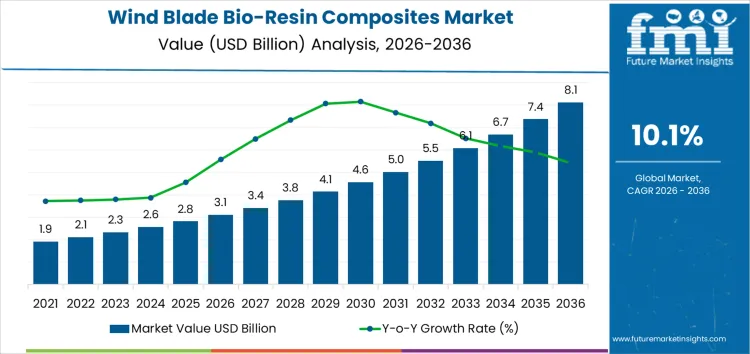
Wind Blade Bio-Resin Composites Market Key Takeaways
| Metric | Value |
|---|---|
| Industry Value (2026) | USD 3.1 Billion |
| Forecast Value (2036) | USD 8.1 Billion |
| Forecast CAGR 2026 to 2036 | 10.10% |
How Is the Global Wind Blade Bio-Resin Composites Market Advancing?
The global wind blade bio-resin composites market is experiencing strong growth, driven by the increasing demand for eco-friendly materials in the renewable energy sector. Bio-resin composites, made from renewable plant-based resins, are gaining popularity as an eco-friendly alternative to traditional petroleum-based resins in the production of wind turbine blades. These composites offer several advantages, including lower environmental impact, improved renewability, and enhanced performance in wind energy applications.
A major driver for the market is the growing global emphasis on renewable energy and the transition to greener energy sources. Wind energy, in particular, is a key player in reducing carbon emissions, and as the demand for wind power increases, so does the need for advanced, environmentally friendly materials for wind turbine blades. The adoption of bio-resin composites in wind blade manufacturing helps reduce the carbon footprint of wind turbines, contributing to the industry’s efforts to meet renewability targets and improve the overall environmental performance of wind energy infrastructure.
Technological advancements in bio-resin formulations and composite materials are also fueling market growth. Researchers are developing bio-resins that offer improved strength, durability, and performance characteristics, making them suitable for use in large-scale wind turbine blades. The growing focus on extending the lifecycle of wind turbine blades and reducing waste is driving the adoption of these advanced materials. As the wind energy sector continues to grow, the market for wind blade bio-resin composites is expected to expand significantly, offering an eco-friendlier solution to meet the rising demand for clean energy worldwide.
What Is the Segment-Wise Analysis for the Wind Blade Bio-Resin Composites Market?
The wind blade bio-resin composites market is segmented by fiber type and application. Glass fiber reinforced composites lead the fiber type segment with a 45% share, followed by natural fiber reinforced, carbon fiber reinforced, and hybrid reinforcements. Glass fiber composites are widely used in wind blade manufacturing due to their excellent strength-to-weight ratio, durability, and cost-effectiveness. In terms of application, onshore wind turbines hold the largest share at 56%, followed by offshore wind turbines, small/micro wind systems, and other applications.
Why Do Glass Fiber Reinforced Composites Lead the Wind Blade Bio-Resin Composites Market?
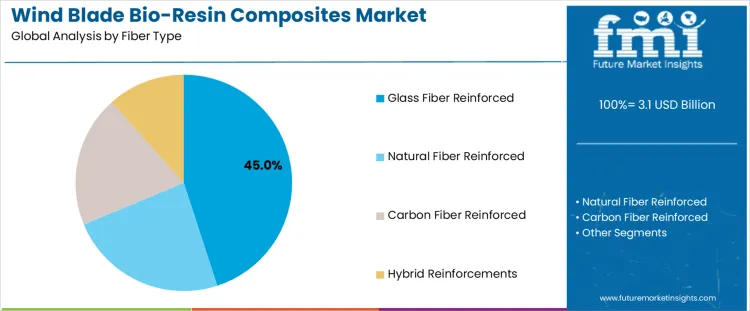
Glass fiber reinforced composites lead the wind blade bio-resin composites market with a 45% share due to their excellent mechanical properties, lightweight nature, and cost-effectiveness. Glass fiber offers a high strength-to-weight ratio, making it ideal for large, high-performance wind turbines. Its durability, ease of processing, and lower cost compared to alternatives like carbon fiber make it a preferred choice for wind blade production. As the demand for cost-effective and eco-friendly wind energy solutions grows, glass fiber reinforced composites continue to dominate the market. Their ability to withstand harsh environmental conditions and contribute to the overall efficiency of wind energy systems ensures their widespread adoption in wind blade manufacturing, particularly for onshore turbines.
How Does the Onshore Wind Turbine Segment Contribute to the Wind Blade Bio-Resin Composites Market?
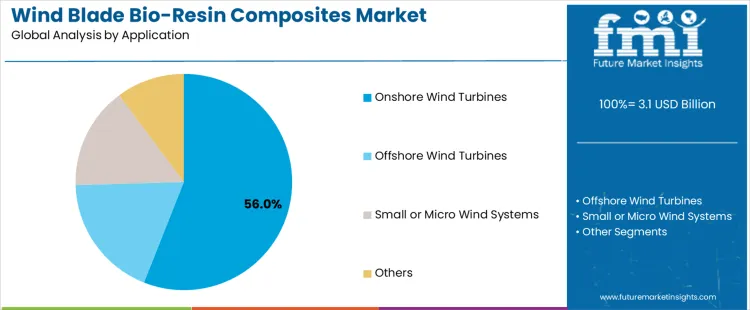
Onshore wind turbines account for 56% of the application segment in the wind blade bio-resin composites market. Onshore wind turbines are the most common type of wind turbines, particularly in regions with high wind energy potential. The increasing demand for renewable energy and the need for efficient power generation are driving the adoption of bio-resin composites for onshore wind blades. These composites provide the necessary strength, durability, and environmental renewability required for large-scale wind energy projects. As the global focus on green energy intensifies, onshore wind turbines remain the largest contributor to the growth of the bio-resin composites market for wind blade production.
What Are the Key Dynamics for the Wind Blade Bio-Resin Composites Market?
The wind blade bio-resin composites market is driven by the growing demand for eco-friendly energy solutions and the push for greener, eco-friendlier materials in the wind energy sector. Bio-resin composites, made from renewable resources like plant-based resins and fibers, are being increasingly used in wind turbine blades to replace traditional petroleum-based materials. These composites offer advantages in terms of environmental impact, such as reduced carbon emissions and improved recyclability. The rising global focus on renewable energy and carbon neutrality is accelerating the adoption of bio-resin composites in wind blade manufacturing.
Why Is the Wind Blade Bio-Resin Composites Market Growing?
The market for wind blade bio-resin composites is growing due to the increasing global emphasis on renewability and the reduction of carbon footprints. As governments and industries aim to meet climate goals, there is a rising demand for renewable energy sources such as wind power. Bio-resin composites in wind blades offer the advantage of being more environmentally friendly, with lower carbon emissions during production and end-of-life disposal. Bio-resins provide superior mechanical properties and durability, making them suitable for large-scale, high-performance wind turbine blades. This demand for eco-friendly and efficient materials is driving market growth.
How Are the Key Drivers Shaping the Wind Blade Bio-Resin Composites Market?
Key drivers for the wind blade bio-resin composites market include increasing governmental regulations and incentives for renewable energy and eco-friendly materials. The demand for wind energy is expanding, prompting manufacturers to seek eco-friendlier and durable materials for turbine blades. Bio-resins, with their renewable and recyclable properties, are becoming a preferred option due to their reduced environmental impact. Technological advancements in bio-resin production processes, along with the continuous improvement in their performance characteristics, are also shaping the market. Manufacturers are increasingly adopting bio-resin composites to align with renewability goals and reduce the environmental impact of wind turbine manufacturing.
What is the Growth Outlook for the Wind Blade Bio-Resin Composites Market by Country?
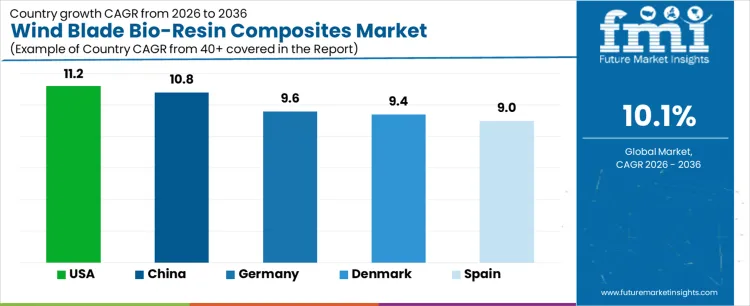
| Country | CAGR (%) |
|---|---|
| USA | 11.2% |
| China | 10.8% |
| Germany | 9.6% |
| Denmark | 9.4% |
| Spain | 9.0% |
The wind blade bio-resin composites market is expanding across key regions, with the USA leading at 11.2%, driven by strong renewable energy targets and a focus on renewability. China follows at 10.8%, supported by large-scale wind energy projects and government incentives for clean energy. Germany grows at 9.6%, fueled by its leadership in wind power and commitment to eco-friendly materials. Denmark’s market expands at 9.4%, backed by its dominance in the wind turbine sector and strong focus on reducing environmental impact. Spain grows at 9.0%, driven by increasing investments in wind energy and a commitment to meeting renewability goals.
What is Driving the Growth of the Wind Blade Bio-Resin Composites Market in the USA?
The wind blade bio-resin composites market in the USA is growing at 11.2%, driven by the increasing adoption of renewable energy, particularly wind power, and a strong push for renewability in the energy sector. As the USA works to meet ambitious clean energy targets and reduce its carbon footprint, there is rising demand for eco-friendly and eco-friendly materials in wind turbine production. Bio-resin composites, which offer a renewable and biodegradable alternative to traditional materials, are increasingly being used to manufacture lighter, more efficient wind blades. The USA’s focus on innovation, technological advancements in wind energy, and government incentives for clean energy projects contribute to the market’s growth, as wind energy plays a pivotal role in the country’s renewable energy strategy.
How is the Wind Blade Bio-Resin Composites Market Expanding in China?
China’s wind blade bio-resin composites market is growing at 10.8%, supported by the country’s rapid expansion of renewable energy capacity, particularly in wind energy. As China becomes a global leader in wind power generation, the demand for wind blades made from eco-friendly materials, such as bio-resins, is increasing. The government’s commitment to clean energy and eco-friendly development, coupled with the growing focus on reducing environmental impact, is fueling the demand for bio-resin composites. China’s substantial wind energy projects and investments in renewable energy infrastructure are also contributing to the growth of the market. As the country aims to reduce carbon emissions and promote green technologies, bio-resin composites are expected to become a key material in wind blade production.
How is the Wind Blade Bio-Resin Composites Market Expanding in Germany?
Germany’s wind blade bio-resin composites market is growing at 9.6%, driven by the country’s leadership in renewable energy adoption and its commitment to eco-friendly development. As a major player in the European wind energy sector, Germany is focusing on reducing its environmental impact and increasing the efficiency of its wind turbines by using bio-resins in the production of wind blades. Germany’s robust regulatory framework, which encourages the use of eco-friendly materials and supports wind energy projects, further accelerates the adoption of bio-resin composites. The country’s innovation in renewable energy technologies and its push toward carbon neutrality is contributing to the growing demand for bio-resins in wind blade manufacturing.
What is Driving the Growth of the Wind Blade Bio-Resin Composites Market in Denmark?
Denmark’s wind blade bio-resin composites market is growing at 9.4%, supported by the country’s strong wind energy industry and commitment to renewability. Denmark is a global leader in wind turbine technology, with several major wind turbine manufacturers based in the country. The growing focus on renewability and reducing the carbon footprint of wind turbines is driving the demand for bio-resin composites, which are more environmentally friendly than traditional resin materials. Denmark’s government incentives for renewable energy projects, along with its ambitious clean energy goals, are contributing to the market’s expansion. As Denmark continues to lead the global transition to renewable energy, the demand for bio-resin composites in wind blade production is expected to grow.
How is the Wind Blade Bio-Resin Composites Market Expanding in Spain?
Spain’s wind blade bio-resin composites market is growing at 9.0%, fueled by the country’s expanding renewable energy sector and focus on environmental renewability. As Spain increases its investments in wind energy, there is growing demand for eco-friendlier materials, such as bio-resins, in the manufacturing of wind blades. The Spanish government’s support for green energy projects and its goal of reducing carbon emissions are driving the adoption of eco-friendly composites. Spain’s growing expertise in wind energy technology and its commitment to meeting European Union renewability targets contribute to the market’s growth. As Spain continues to increase its wind power generation capacity, the demand for bio-resin composites is expected to rise steadily.
How Are Companies Competing in the Wind Blade Bio Resin Composites Market?
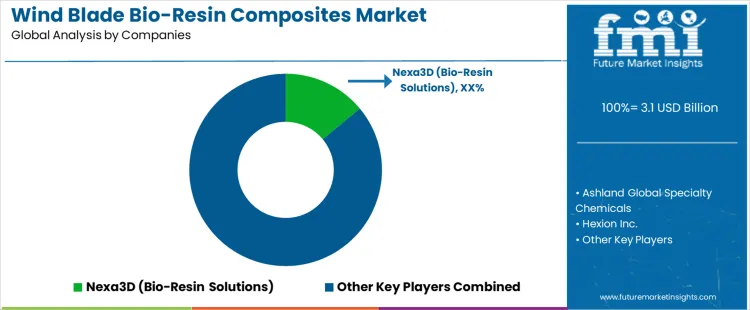
Competition in the Wind Blade Bio Resin Composites Market is driven by bio based material performance, structural strength, scalability, resin processability, and cost effectiveness for large scale blade manufacturing. Nexa3D (Bio Resin Solutions) positions its bio resin offerings with a focus on fast curing and high mechanical performance, and its product materials emphasize optimized chemistry for large format additive and composite processes that help blade manufacturers maintain integrity and reduce cycle times. Ashland Global Specialty Chemicals competes by offering bio enhanced resin systems designed to deliver consistent fiber wet out and long term durability, with brochures highlighting improved fatigue resistance and integration support for industrial laminating lines.
Major resin producers such as Hexion Inc. and Evonik Industries differentiate by developing bio derived epoxy and thermoset systems tailored for demanding structural demands of wind blades; their collateral underscores high glass transition temperatures and robust mechanical strength that align with turbine longevity requirements. Solvay SA adds value with advanced bio resin composites engineered for performance and processability, with documentation stressing tailored formulations that enable scalable production without sacrificing structural reliability.
Others in the market compete by offering specialized bio resin formulations and niche composite additives that support specific performance targets such as enhanced toughness, UV resistance, or accelerated cure. Across all vendors, product materials are crafted to underscore bio content performance parity with conventional resins, structural reliability, ease of processing, and application fit as key differentiators that help wind turbine manufacturers adopt bio resin composites without compromising on blade strength, durability, or production efficiency.
Key Players in Wind Blade Bio-Resin Composites Market
- Nexa3D (Bio‑Resin Solutions)
- Ashland Global Specialty Chemicals
- Hexion Inc.
- Evonik Industries
- Solvay SA
- Others
Scope of Report
| Attributes | Description |
|---|---|
| Quantitative Unit (2026) | USD Billion |
| Fiber Type | Glass Fiber Reinforced, Natural Fiber Reinforced, Carbon Fiber Reinforced, Hybrid Reinforcements |
| Application | Onshore Wind Turbines, Offshore Wind Turbines, Small or Micro Wind Systems |
| Regions Covered | Asia Pacific, Europe, North America, Latin America, Middle East & Africa |
| Countries Covered | China, Japan, South Korea, India, Australia & New Zealand, ASEAN, Germany, United Kingdom, France, Italy, Spain, Nordic, BENELUX, United States, Canada, Mexico, Brazil, Chile, Turkey, South Africa, Other GCC Countries |
| Key Companies Profiled | Nexa3D (Bio-Resin Solutions), Ashland Global Specialty Chemicals, Hexion Inc., Evonik Industries, Solvay SA, Others |
| Additional Attributes | Dollar sales by fiber type and application; regional CAGR and growth outlook for the wind blade bio-resin composites market. |
Wind Blade Bio-Resin Composites Market by Key Segments
Fiber Type
- Glass Fiber Reinforced
- Natural Fiber Reinforced
- Carbon Fiber Reinforced
- Hybrid Reinforcements
Application
- Onshore Wind Turbines
- Offshore Wind Turbines
- Small or Micro Wind Systems
Region
- Asia Pacific
- China
- Japan
- South Korea
- India
- Australia & New Zealand
- ASEAN
- Rest of Asia Pacific
- Europe
- Germany
- United Kingdom
- France
- Italy
- Spain
- Nordic
- BENELUX
- Rest of Europe
- North America
- United States
- Canada
- Mexico
- Latin America
- Brazil
- Chile
- Rest of Latin America
- Middle East & Africa
- Kingdom of Saudi Arabia
- Other GCC Countries
- Turkey
- South Africa
- Other African Union
- Rest of Middle East & Africa
Bibliography
- International Energy Agency (2024). Advanced Materials and Sustainability Pathways for Wind Turbine Manufacturing. International Energy Agency – Wind Technology Collaboration Programme.
- International Renewable Energy Agency (2024). Sustainable Materials and Circularity in Wind Energy Systems. IRENA Innovation and Technology Centre.
- National Renewable Energy Laboratory (2025). Bio‑Based Resin Systems for Next‑Generation Wind Turbine Blades. U.S. Department of Energy – NREL.
- European Commission Joint Research Centre (2024). Life‑Cycle Assessment of Bio‑Resin Composite Materials in Wind Turbine Blades. Publications Office of the European Union.
- Fraunhofer Institute for Wind Energy Systems (2025). Structural Performance and Sustainability of Bio‑Resin Composites in Wind Turbine Blades. Fraunhofer IWES Research Publications.
Frequently Asked Questions
How big is the wind blade bio-resin composites market in 2026?
The global wind blade bio-resin composites market is estimated to be valued at USD 3.1 billion in 2026.
What will be the size of wind blade bio-resin composites market in 2036?
The market size for the wind blade bio-resin composites market is projected to reach USD 8.1 billion by 2036.
How much will be the wind blade bio-resin composites market growth between 2026 and 2036?
The wind blade bio-resin composites market is expected to grow at a 10.1% CAGR between 2026 and 2036.
What are the key product types in the wind blade bio-resin composites market?
The key product types in wind blade bio-resin composites market are glass fiber reinforced, natural fiber reinforced, carbon fiber reinforced and hybrid reinforcements.
Which application segment to contribute significant share in the wind blade bio-resin composites market in 2026?
In terms of application, onshore wind turbines segment to command 56.0% share in the wind blade bio-resin composites market in 2026.
Preview the report firsthand - request a free sample
Get SampleGet the brochure for pricing and purchase details.
Get PDFTable of Content
- Executive Summary
- Global Market Outlook
- Demand-side Trends
- Supply-side Trends
- Technology Roadmap Analysis
- Analysis and Recommendations
- Market Overview
- Market Coverage / Taxonomy
- Market Definition / Scope / Limitations
- Market Background
- Market Dynamics
- Drivers
- Restraints
- Opportunity
- Trends
- Scenario Forecast
- Demand in Optimistic Scenario
- Demand in Likely Scenario
- Demand in Conservative Scenario
- Opportunity Map Analysis
- Product Life Cycle Analysis
- Supply Chain Analysis
- Investment Feasibility Matrix
- Value Chain Analysis
- PESTLE and Porter’s Analysis
- Regulatory Landscape
- Regional Parent Market Outlook
- Production and Consumption Statistics
- Import and Export Statistics
- Market Dynamics
- Global Market Analysis 2021 to 2025 and Forecast, 2026 to 2036
- Historical Market Size Value (USD Million) Analysis, 2021 to 2025
- Current and Future Market Size Value (USD Million) Projections, 2026 to 2036
- Y-o-Y Growth Trend Analysis
- Absolute $ Opportunity Analysis
- Global Market Pricing Analysis 2021 to 2025 and Forecast 2026 to 2036
- Global Market Analysis 2021 to 2025 and Forecast 2026 to 2036, By Fiber Type
- Introduction / Key Findings
- Historical Market Size Value (USD Million) Analysis By Fiber Type , 2021 to 2025
- Current and Future Market Size Value (USD Million) Analysis and Forecast By Fiber Type , 2026 to 2036
- Glass Fiber Reinforced
- Natural Fiber Reinforced
- Carbon Fiber Reinforced
- Hybrid Reinforcements
- Glass Fiber Reinforced
- Y-o-Y Growth Trend Analysis By Fiber Type , 2021 to 2025
- Absolute $ Opportunity Analysis By Fiber Type , 2026 to 2036
- Global Market Analysis 2021 to 2025 and Forecast 2026 to 2036, By Application
- Introduction / Key Findings
- Historical Market Size Value (USD Million) Analysis By Application, 2021 to 2025
- Current and Future Market Size Value (USD Million) Analysis and Forecast By Application, 2026 to 2036
- Onshore Wind Turbines
- Offshore Wind Turbines
- Small or Micro Wind Systems
- Others
- Onshore Wind Turbines
- Y-o-Y Growth Trend Analysis By Application, 2021 to 2025
- Absolute $ Opportunity Analysis By Application, 2026 to 2036
- Global Market Analysis 2021 to 2025 and Forecast 2026 to 2036, By Region
- Introduction
- Historical Market Size Value (USD Million) Analysis By Region, 2021 to 2025
- Current Market Size Value (USD Million) Analysis and Forecast By Region, 2026 to 2036
- North America
- Latin America
- Western Europe
- Eastern Europe
- East Asia
- South Asia and Pacific
- Middle East & Africa
- Market Attractiveness Analysis By Region
- North America Market Analysis 2021 to 2025 and Forecast 2026 to 2036, By Country
- Historical Market Size Value (USD Million) Trend Analysis By Market Taxonomy, 2021 to 2025
- Market Size Value (USD Million) Forecast By Market Taxonomy, 2026 to 2036
- By Country
- USA
- Canada
- Mexico
- By Fiber Type
- By Application
- By Country
- Market Attractiveness Analysis
- By Country
- By Fiber Type
- By Application
- Key Takeaways
- Latin America Market Analysis 2021 to 2025 and Forecast 2026 to 2036, By Country
- Historical Market Size Value (USD Million) Trend Analysis By Market Taxonomy, 2021 to 2025
- Market Size Value (USD Million) Forecast By Market Taxonomy, 2026 to 2036
- By Country
- Brazil
- Chile
- Rest of Latin America
- By Fiber Type
- By Application
- By Country
- Market Attractiveness Analysis
- By Country
- By Fiber Type
- By Application
- Key Takeaways
- Western Europe Market Analysis 2021 to 2025 and Forecast 2026 to 2036, By Country
- Historical Market Size Value (USD Million) Trend Analysis By Market Taxonomy, 2021 to 2025
- Market Size Value (USD Million) Forecast By Market Taxonomy, 2026 to 2036
- By Country
- Germany
- UK
- Italy
- Spain
- France
- Nordic
- BENELUX
- Rest of Western Europe
- By Fiber Type
- By Application
- By Country
- Market Attractiveness Analysis
- By Country
- By Fiber Type
- By Application
- Key Takeaways
- Eastern Europe Market Analysis 2021 to 2025 and Forecast 2026 to 2036, By Country
- Historical Market Size Value (USD Million) Trend Analysis By Market Taxonomy, 2021 to 2025
- Market Size Value (USD Million) Forecast By Market Taxonomy, 2026 to 2036
- By Country
- Russia
- Poland
- Hungary
- Balkan & Baltic
- Rest of Eastern Europe
- By Fiber Type
- By Application
- By Country
- Market Attractiveness Analysis
- By Country
- By Fiber Type
- By Application
- Key Takeaways
- East Asia Market Analysis 2021 to 2025 and Forecast 2026 to 2036, By Country
- Historical Market Size Value (USD Million) Trend Analysis By Market Taxonomy, 2021 to 2025
- Market Size Value (USD Million) Forecast By Market Taxonomy, 2026 to 2036
- By Country
- China
- Japan
- South Korea
- By Fiber Type
- By Application
- By Country
- Market Attractiveness Analysis
- By Country
- By Fiber Type
- By Application
- Key Takeaways
- South Asia and Pacific Market Analysis 2021 to 2025 and Forecast 2026 to 2036, By Country
- Historical Market Size Value (USD Million) Trend Analysis By Market Taxonomy, 2021 to 2025
- Market Size Value (USD Million) Forecast By Market Taxonomy, 2026 to 2036
- By Country
- India
- ASEAN
- Australia & New Zealand
- Rest of South Asia and Pacific
- By Fiber Type
- By Application
- By Country
- Market Attractiveness Analysis
- By Country
- By Fiber Type
- By Application
- Key Takeaways
- Middle East & Africa Market Analysis 2021 to 2025 and Forecast 2026 to 2036, By Country
- Historical Market Size Value (USD Million) Trend Analysis By Market Taxonomy, 2021 to 2025
- Market Size Value (USD Million) Forecast By Market Taxonomy, 2026 to 2036
- By Country
- Kingdom of Saudi Arabia
- Other GCC Countries
- Turkiye
- South Africa
- Other African Union
- Rest of Middle East & Africa
- By Fiber Type
- By Application
- By Country
- Market Attractiveness Analysis
- By Country
- By Fiber Type
- By Application
- Key Takeaways
- Key Countries Market Analysis
- USA
- Pricing Analysis
- Market Share Analysis, 2025
- By Fiber Type
- By Application
- Canada
- Pricing Analysis
- Market Share Analysis, 2025
- By Fiber Type
- By Application
- Mexico
- Pricing Analysis
- Market Share Analysis, 2025
- By Fiber Type
- By Application
- Brazil
- Pricing Analysis
- Market Share Analysis, 2025
- By Fiber Type
- By Application
- Chile
- Pricing Analysis
- Market Share Analysis, 2025
- By Fiber Type
- By Application
- Germany
- Pricing Analysis
- Market Share Analysis, 2025
- By Fiber Type
- By Application
- UK
- Pricing Analysis
- Market Share Analysis, 2025
- By Fiber Type
- By Application
- Italy
- Pricing Analysis
- Market Share Analysis, 2025
- By Fiber Type
- By Application
- Spain
- Pricing Analysis
- Market Share Analysis, 2025
- By Fiber Type
- By Application
- France
- Pricing Analysis
- Market Share Analysis, 2025
- By Fiber Type
- By Application
- India
- Pricing Analysis
- Market Share Analysis, 2025
- By Fiber Type
- By Application
- ASEAN
- Pricing Analysis
- Market Share Analysis, 2025
- By Fiber Type
- By Application
- Australia & New Zealand
- Pricing Analysis
- Market Share Analysis, 2025
- By Fiber Type
- By Application
- China
- Pricing Analysis
- Market Share Analysis, 2025
- By Fiber Type
- By Application
- Japan
- Pricing Analysis
- Market Share Analysis, 2025
- By Fiber Type
- By Application
- South Korea
- Pricing Analysis
- Market Share Analysis, 2025
- By Fiber Type
- By Application
- Russia
- Pricing Analysis
- Market Share Analysis, 2025
- By Fiber Type
- By Application
- Poland
- Pricing Analysis
- Market Share Analysis, 2025
- By Fiber Type
- By Application
- Hungary
- Pricing Analysis
- Market Share Analysis, 2025
- By Fiber Type
- By Application
- Kingdom of Saudi Arabia
- Pricing Analysis
- Market Share Analysis, 2025
- By Fiber Type
- By Application
- Turkiye
- Pricing Analysis
- Market Share Analysis, 2025
- By Fiber Type
- By Application
- South Africa
- Pricing Analysis
- Market Share Analysis, 2025
- By Fiber Type
- By Application
- USA
- Market Structure Analysis
- Competition Dashboard
- Competition Benchmarking
- Market Share Analysis of Top Players
- By Regional
- By Fiber Type
- By Application
- Competition Analysis
- Competition Deep Dive
- Nexa3D (Bio‑Resin Solutions)
- Overview
- Product Portfolio
- Profitability by Market Segments (Product/Age /Sales Channel/Region)
- Sales Footprint
- Strategy Overview
- Marketing Strategy
- Product Strategy
- Channel Strategy
- Ashland Global Specialty Chemicals
- Hexion Inc.
- Evonik Industries
- Solvay SA
- Others
- Nexa3D (Bio‑Resin Solutions)
- Competition Deep Dive
- Assumptions & Acronyms Used
- Research Methodology


