

- Industry Size (2026)
- USD 175 Mn
- Forecast (2036)
- USD 714.2 Mn
- CAGR (2026 to 2036)
- 15.1%
Zero-Waste Food Tray Microalgae PHA Market Forecast and Outlook 2026 to 2036
The zero-waste food tray microalgae PHA market is expected to reach USD 714.2 million by 2036, growing at a CAGR of 15.1% from its 2026 size of USD 175 million. As the market expands, procurement priorities will evolve, with a heightened focus on sustainability and material innovation. Buyers will increasingly prioritize vendors offering consistent quality, but risk aversion may drive a preference for established suppliers. Vendor lock-in could influence purchasing decisions, as companies may become reliant on long-term contracts for continuity and cost predictability. Switching costs, both financial and operational, will further shape procurement strategies, as buyers assess the trade-offs between flexibility and stability. Vendors with strong technological capabilities and supply chain reliability are likely to hold a competitive advantage, reducing perceived risks. Ultimately, outcomes will be influenced by the ability to align procurement decisions with both cost-effectiveness and long-term sustainability goals.
Quick Stats for the Zero-Waste Food Tray Microalgae PHA Market
- Zero-Waste Food Tray Microalgae PHA Market Value (2026): USD 175 million
- Zero-Waste Food Tray Microalgae PHA Market Forecast Value (2036): USD 714.2 million
- Zero-Waste Food Tray Microalgae PHA Market Global Forecast CAGR 2026 to 2036: 15.1%
- Zero-Waste Food Tray Microalgae PHA Market Leading Segment: Food Trays & Plates (62%)
- Key Growth Regions in Zero-Waste Food Tray Microalgae PHA Market: China
- Top Players in Zero-Waste Food Tray Microalgae PHA Market: Danimer Scientific, RWDC Industries, Telles (PHA Group), Bio-ON, SK-bioland / PHABIO
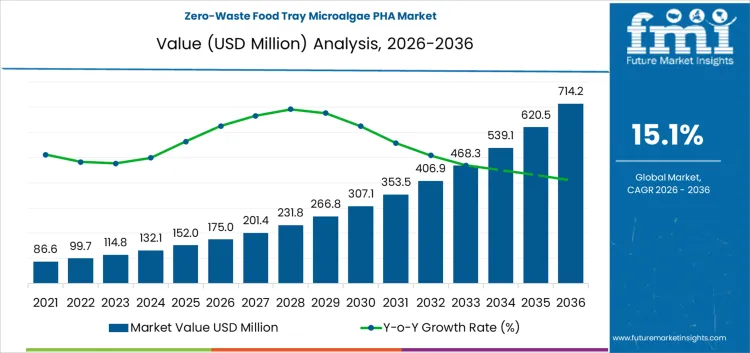
What is the Growth Forecast for the Zero-Waste Food Tray Microalgae PHA Market through 2036?
The zero-waste food tray microalgae PHA market is forecasted to grow rapidly over the next decade, driven by growing consumer preference for sustainable and biodegradable packaging. With the increasing need for eco-friendly alternatives to traditional plastic, microalgae-based PHA is becoming an important material in the food packaging industry. The market's projected growth will be supported by technological advancements in microalgae PHA production and improvements in cost efficiency, allowing for wider adoption of this material in food tray manufacturing.
The market is expected to grow at a CAGR of 15.1%, reaching USD 714.2 million by 2036. The steady increase in market value reflects the expanding recognition of PHA as a key component in zero-waste packaging solutions. As the food industry embraces sustainable practices, the demand for PHA-based trays will continue to rise, creating a significant market opportunity. By 2036, the market will be characterized by innovation in both material science and production methods, further driving the adoption of zero-waste food trays.
Zero-Waste Food Tray Microalgae PHA Market Key Takeaways
| Metric | Value |
|---|---|
| Industry Sales Value (2026) | USD 175 million |
| Industry Forecast Value (2036) | USD 714.2 million |
| Industry Forecast CAGR 2026 to 2036 | 15.1% |
What Is Driving the Zero-Waste Food Tray Microalgae PHA Market?
Historically, the zero-waste food tray microalgae PHA market emerged from growing scrutiny of conventional plastics and early biodegradable polymers that failed to deliver reliable performance. Traditional petroleum-based trays dominated foodservice and retail due to low cost, moisture resistance, and established processing infrastructure. Early bioplastics such as PLA gained some traction, yet faced limitations in oil and heat resistance critical for prepared meals and hot foods.
Microalgae-derived polyhydroxyalkanoates (PHA) entered the market as research institutions and material developers pursued alternatives with inherent biodegradability and reduced carbon footprints. Initial adoption was concentrated in pilot projects and specialty food brands willing to experiment with emerging material streams. Food manufacturers and converters focused on niche applications such as dry snacks, chilled produce, and promotional packaging where regulatory compliance and presentation mattered more than extreme thermal performance. This phase established baseline data on film properties, processing behavior, and compostability in industrial and home environments, informing further development and early value chain collaboration.
Future demand for zero-waste food tray microalgae PHA is expected to be shaped by expanded regulatory measures against single-use plastics, increased corporate commitments to reduce plastic waste, and improvements in PHA performance and cost competitiveness. Food service chains and quick-serve restaurants are anticipated to explore microalgae PHA trays for hot and cold meals as formulations enhance moisture and heat resistance. Growth drivers will include integration into existing processing lines, expanded industrial composting infrastructure, and procurement policies that prioritize circularity.
As converters refine production techniques for microalgae PHA resins, cost barriers may diminish, enabling broader adoption across institutional foodservice, retail prepared meals, and convenience segments. Challenges persist, including performance under demanding conditions, price sensitivity relative to petroleum alternatives, and the need for robust end-of-life management systems. Long-term expansion of the market will depend on consistent regulatory frameworks, validated performance in diverse food applications, and alignment between waste management infrastructure and compostable material streams.
What are the Key Segments in the Zero-Waste Food Tray Microalgae PHA Market?
The Zero-Waste Food Tray Microalgae PHA market is segmented into polymer sources and applications. Polymer sources include microalgae-derived PHA, fermentation-derived PHA, and blended or composite PHAs, with microalgae-derived PHA dominating the market. Application-wise, food trays & plates lead the market, followed by cups & containers, cutlery & service ware, and other related uses. Microalgae-derived PHA accounts for a substantial share due to its eco-friendly nature and biodegradability, positioning it as a sustainable alternative in the packaging industry. The rise in demand for zero-waste solutions is driven by increasing consumer awareness, stringent environmental regulations, and a shift towards sustainable packaging. Key regions like North America, Europe, and Asia Pacific are seeing significant market growth, influenced by eco-conscious consumer behavior and innovations in bioplastic technology.
What is Driving Growth in the Microalgae-Derived PHA Segment?
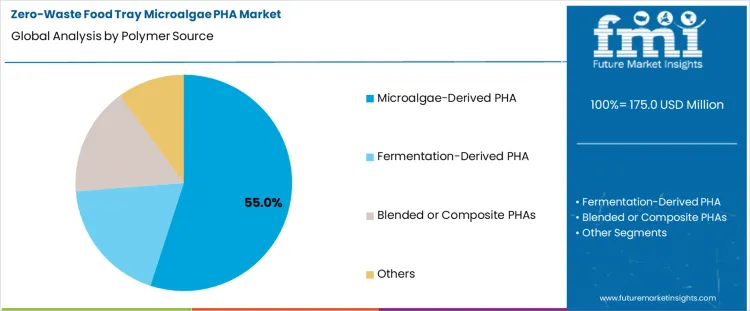
Microalgae-derived PHA represents the largest polymer source segment, holding a 55% share of the market. This material is gaining traction due to its renewable nature, superior biodegradability, and minimal environmental impact compared to conventional plastics. The growth of microalgae-derived PHA is driven by the rising demand for sustainable food packaging solutions, as more consumers and businesses embrace zero-waste practices. The ability of microalgae to produce PHA efficiently, combined with its reduced carbon footprint, makes it an ideal choice for applications in the food packaging sector.
The demand for food trays & plates, which represents 62% of the application segment, is a major driver for this material, as companies seek to replace traditional plastic with biodegradable alternatives. In regions like Europe and North America, where there are stringent regulations and consumer-driven sustainability initiatives, microalgae-derived PHA is seeing significant adoption. Additionally, advancements in production techniques, such as enhanced algae cultivation methods, have made microalgae-derived PHA more cost-effective, further boosting its adoption in the market.
What is Driving the Growth in Food Trays & Plates in the Zero-Waste Food Tray Microalgae PHA Market?
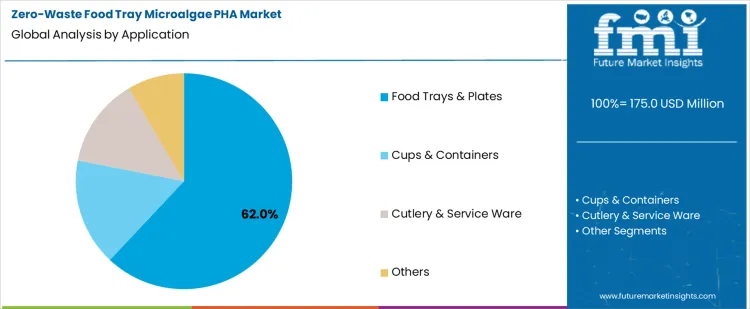
Food trays & plates dominate the application segment, accounting for 62% of the market share. This growth is attributed to increasing consumer demand for sustainable and eco-friendly food packaging solutions. Food trays and plates made from microalgae-derived PHA offer an attractive alternative to single-use plastics, which are under increasing scrutiny due to their environmental impact. The demand for zero-waste and compostable packaging has driven the adoption of these products across various foodservice sectors, including fast food, restaurants, and take-out services.
This segment is particularly prominent in regions with strong environmental policies, such as Europe and North America, where the move toward reducing plastic waste is gaining momentum. As governments and organizations continue to impose stricter regulations on plastic use, the shift toward bioplastics in food trays & plates is expected to intensify. Additionally, innovations in material properties, such as improved strength, durability, and heat resistance, have expanded the use of microalgae-based PHA in food packaging, further contributing to its growth.
What are the Key Dynamics in the Zero-Waste Food Tray Microalgae PHA Market?
The zero-waste food tray microalgae PHA market is positioned at the intersection of advanced biopolymer science and sustainable packaging demand. Polyhydroxyalkanoates (PHAs) are biodegradable, bio-based polymers produced through microbial fermentation that can fully mineralize in soil and compost environments, offering an alternative to conventional plastics in disposable food packaging. Microalgae serve as an emergent feedstock for bioplastics due to rapid growth rates, minimal resource requirements, and reduced competition with food agriculture, which enhances the environmental profile of PHA production. Market growth is influenced by broader trends in compostable packaging, regulatory restrictions on single-use plastics, and research aimed at lowering production costs and improving material performance in food tray applications.
What are the Key Drivers of Growth in the Zero-Waste Food Tray Microalgae PHA Market?
Regulatory measures that restrict single-use petroleum-derived plastics and mandate compostable alternatives are significant drivers for microalgae-derived PHA food trays. Packaging buyers in foodservice and retail sectors increasingly seek certified compostable materials that reduce waste and align with waste management infrastructure capable of industrial composting. Microalgae as a feedstock appeals because it requires less arable land, can leverage wastewater or non-arable sites, and supports circular feedstock strategies that lower carbon footprints relative to traditional biopolymer sources. Advances in fermentation technology and strain selection are improving PHA yield and material properties, boosting suitability for food applications where strength, barrier properties, and food safety compliance are essential. Growth in global demand for eco-sensitive packaging and expanding institutional procurement policies further support adoption of microalgae PHA trays.
What are the Key Restraints in the Zero-Waste Food Tray Microalgae PHA Market?
High production costs remain a core restraint for microalgae PHA-based food trays. Biopolymer synthesis via fermentation is more expensive than conventional plastic manufacturing, driven by feedstock costs, energy inputs, and complex downstream processing. Limited industrial composting infrastructure in some regions undermines real-world compostability outcomes for products that are otherwise certified compostable, reducing purchaser confidence and slowing uptake. Mechanical properties such as melt strength, brittleness, and barrier performance traditionally lag those of fossil-based plastics, prompting additional material engineering and cost. Feedstock supply chain challenges, including consistent microalgae biomass yield and quality, add operational complexity. These factors collectively constrain price competitiveness and broad market penetration despite environmental benefits.
What are the Key Trends in the Zero-Waste Food Tray Microalgae PHA Market?
Material innovation is a defining trend as producers refine microalgae cultivation and PHA extraction processes to reduce cost and improve polymer performance. There is increasing research emphasis on optimizing photobioreactor systems, genetic strain improvement, and mixotrophic cultivation to elevate microalgae biomass productivity and PHA content. Composite approaches that blend microalgae-PHA with other biodegradable polymers or natural fibers are evolving to enhance tray strength and food barrier characteristics without sacrificing compostability. Institutional adoption of closed-loop waste management and certified compostable packaging procurement policies is encouraging broader use of zero-waste trays in foodservice, events, and institutional catering. Geographic differences in regulatory environments and composting infrastructure are also shaping market segmentation, with stronger early adoption in regions that enforce strict packaging waste reduction mandates.
What is the Country-Wise Analysis of the Zero-Waste Food Tray Microalgae PHA Market?
The zero-waste food tray microalgae PHA market is gaining traction in key regions such as the USA, China, Germany, Japan, and India, driven by the rising demand for sustainable food packaging solutions. This market’s growth is fueled by the increasing need to reduce plastic waste and the growing awareness of environmental issues.
In the USA, there is a strong push towards eco-friendly alternatives to traditional packaging, supported by regulatory policies and a shift in consumer preferences towards sustainable products. In China, the market is growing rapidly, driven by government initiatives promoting biodegradable packaging and increased consumer demand for sustainable materials.
Germany’s market is also expanding, supported by stringent environmental regulations and a proactive approach to sustainability. Japan’s adoption of microalgae PHA in food trays is progressing steadily, influenced by waste management policies and the country’s commitment to reducing plastic waste. In India, the market is expected to grow rapidly due to the increasing focus on eco-friendly packaging and government initiatives supporting sustainability in the food industry.
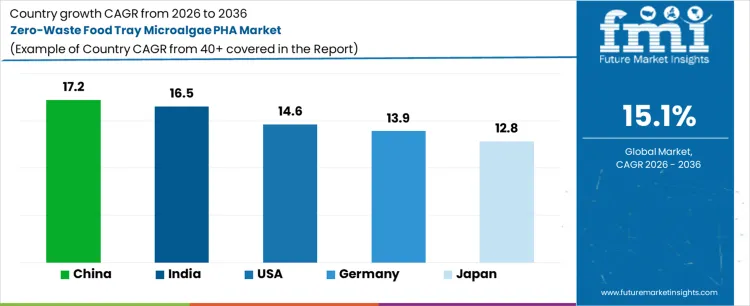
| Country | CAGR 2026 to 2036 |
|---|---|
| USA | 14.6% |
| China | 17.2% |
| Germany | 13.9% |
| Japan | 12.8% |
| India | 16.5% |
What is Driving the Growth of the Zero-Waste Food Tray Microalgae PHA Market in the USA?
The zero-waste food tray microalgae PHA market in the USA is experiencing substantial growth, with a compound annual growth rate (CAGR) of 14.6%. This growth is attributed to heightened environmental awareness and strong regulatory support for sustainable packaging. The USA's government has introduced various policies encouraging the use of biodegradable and compostable materials to address plastic waste concerns. As consumer demand for eco-friendly products rises, businesses are increasingly turning to alternatives like microalgae-based PHA. The food industry is embracing these materials due to their biodegradability and their ability to meet regulatory standards for sustainability. This trend is expected to continue as more companies innovate in the food packaging space, focusing on sustainable and zero-waste solutions.
How is the Zero-Waste Food Tray Microalgae PHA Market Evolving in China?
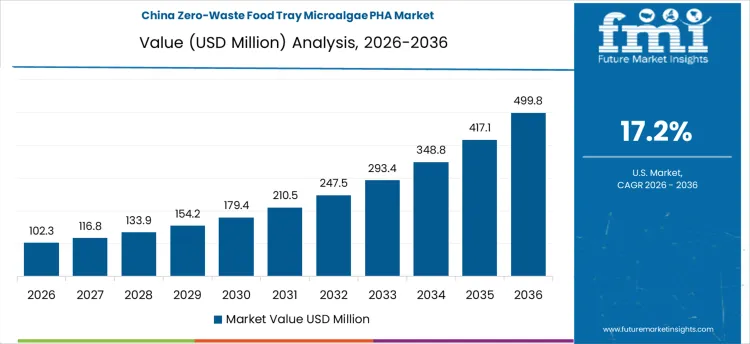
The zero-waste food tray microalgae PHA market in China is growing rapidly, with a CAGR of 17.2%. China’s market is largely driven by the government’s ambitious environmental policies, which include regulations targeting plastic waste reduction and a strong push for green packaging. China has recognized the environmental and economic potential of biodegradable alternatives like microalgae PHA, which has spurred innovation in the food packaging industry. The rising consumer preference for sustainable and eco-friendly products further boosts market growth. As China continues to expand its efforts to combat plastic pollution, the demand for zero-waste food trays made from microalgae-based PHA is expected to increase, supporting long-term market expansion.
What Factors are Influencing the Zero-Waste Food Tray Microalgae PHA Market in Germany?
Germany’s zero-waste food tray microalgae PHA market is growing at a rate of 13.9% CAGR, supported by the country's strong environmental regulations and commitment to sustainability. As one of the leading countries in the European Union in terms of eco-friendly initiatives, Germany’s food packaging sector is increasingly shifting towards biodegradable materials to meet stringent environmental standards. The German government has implemented policies that favor sustainable packaging solutions, encouraging companies to adopt alternatives like microalgae PHA. Additionally, consumer demand for sustainable and biodegradable products is growing, making Germany a key player in the global market for zero-waste food trays.
How is the Zero-Waste Food Tray Microalgae PHA Market Performing in Japan?
Japan’s zero-waste food tray microalgae PHA market is witnessing steady growth, with a CAGR of 12.8%. Japan’s commitment to reducing plastic waste and promoting sustainability is driving the adoption of biodegradable alternatives in packaging. The country has introduced various regulations aimed at reducing plastic consumption, particularly in the food packaging sector. Although adoption is at a slower pace compared to some other markets, Japan is steadily embracing microalgae PHA as a viable solution for sustainable food trays. As the food industry continues to prioritize waste reduction and eco-friendly practices, Japan’s market for zero-waste food trays made from microalgae-based PHA is expected to grow.
What is Driving the Growth of the Zero-Waste Food Tray Microalgae PHA Market in India?
In India, the zero-waste food tray microalgae PHA market is expected to grow at a CAGR of 16.5%, driven by increasing environmental awareness and a strong push from the government to reduce plastic waste. India has made significant strides in environmental policies aimed at limiting single-use plastics, particularly in the food packaging industry. The government is encouraging the adoption of biodegradable alternatives, such as microalgae PHA, to replace traditional plastic food trays. Additionally, as the food sector grows in India, there is a rising demand for sustainable packaging solutions. With continued government support and consumer demand for eco-friendly products, the market for zero-waste food trays in India is set to expand rapidly.
What is the Competitive Landscape for the Zero-Waste Food Tray Microalgae PHA Market?
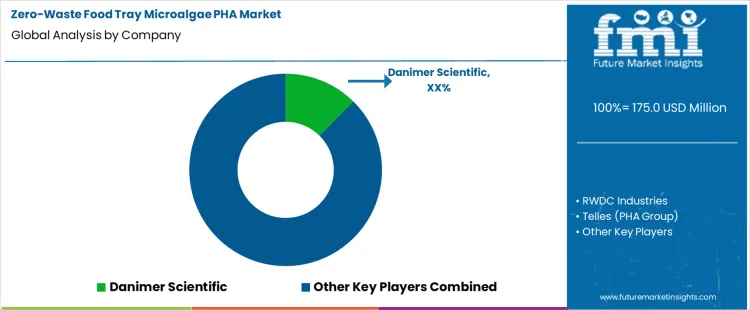
The zero-waste food tray microalgae PHA market is characterized by significant innovation and competition, with several companies leading the way in developing sustainable solutions. Danimer Scientific, a key player in the market, has taken a leading role with its advanced bioplastic technologies, focusing on the production of biodegradable food packaging using microalgae-based polyhydroxyalkanoates (PHA). This company’s strategy revolves around scaling its production capabilities while maintaining environmental standards.
RWDC Industries and Telles (PHA Group) are also prominent in this space, offering sustainable alternatives to conventional plastic packaging through their respective microalgae-derived PHA products. These companies focus on providing zero-waste solutions that align with the growing global demand for eco-friendly packaging options in the food industry. Other players such as Bio-ON and SK-bioland/PHABIO are adopting similar strategies, targeting the zero-waste market by developing biodegradable, compostable materials derived from renewable resources.
To remain competitive, firms in the zero-waste food tray microalgae PHA market are focusing on sustainability, cost reduction, and market penetration. Companies invest heavily in research and development to optimize production processes, making them more scalable and cost-efficient. This is particularly important as microalgae-derived PHA remains a premium product compared to traditional plastics. Strategic partnerships and collaborations are common, allowing firms to share resources and expand their reach.
Bio-ON, for instance, focuses on advancing the commercialization of its PHA technology, while SK-bioland collaborates with various stakeholders to ensure widespread adoption in the food packaging industry. These strategies, combined with a focus on regulatory compliance and consumer demand for sustainable solutions, are expected to drive long-term growth in the market. The focus on zero-waste solutions further positions these companies as leaders in the push toward environmentally conscious food packaging.
Key Players of the Zero-Waste Food Tray Microalgae PHA Market
- Danimer Scientific
- RWDC Industries
- Telles (PHA Group)
- Bio-ON
- SK-bioland / PHABIO
- Others
Scope of the Report
| Items | Values |
|---|---|
| Quantitative Units (2026) | USD Million |
| Polymer Source | Microalgae-Derived PHA, Fermentation-Derived PHA, Blended or Composite PHAs, Others |
| Application | Food Trays & Plates, Cups & Containers, Cutlery & Service Ware, Others |
| Technology | Extrusion, Thermoforming, Injection Molding, Others |
| Companies | Danimer Scientific, RWDC Industries, Telles (PHA Group), Bio-ON, SK-bioland / PHABIO, Others |
| Regions Covered | North America, Latin America, Western Europe, Eastern Europe, South Asia and Pacific, East Asia, Middle East & Africa |
| Countries Covered | United States, Canada, Mexico, Brazil, Argentina, Germany, France, United Kingdom, Italy, Spain, Netherlands, China, India, Japan, South Korea, ANZ, GCC Countries, South Africa |
| Additional Attributes | Dollar sales by polymer source, application, technology, and region. Includes market trends towards sustainable and zero-waste solutions, regulatory compliance, biodegradability, cost-effectiveness, and the competitive positioning of key companies in the microalgae-derived PHA sector. |
Zero-Waste Food Tray Microalgae PHA Market Segmentation
By Polymer Source:
- Microalgae-Derived PHA
- Fermentation-Derived PHA
- Blended or Composite PHAs
- Others
By Application:
- Food Trays & Plates
- Cups & Containers
- Cutlery & Service Ware
- Others
By Technology:
- Extrusion
- Thermoforming
- Injection Molding
- Others
By Region:
- Asia Pacific
- China
- Japan
- India
- Australia & New Zealand
- ASEAN
- Rest of Asia Pacific
- Europe
- Germany
- United Kingdom
- France
- Italy
- Spain
- Nordic
- BENELUX
- Rest of Europe
- North America
- United States
- Canada
- Mexico
- Latin America
- Brazil
- Argentina
- Rest of Latin America
- Middle East & Africa
- Kingdom of Saudi Arabia
- Other GCC Countries
- South Africa
- Rest of Middle East & Africa
Bibliography
- United Nations Environment Programme. (2023). Turning off the Tap: How the world can end plastic pollution and create a circular economy. United Nations Environment Programme.
- Council of the European Union. (2024). Packaging and packaging waste: Council and Parliament reach provisional agreement. Council of the European Union (Press release).
- United Nations Environment Programme. (2023). Plastics science: A compilation of scientific evidence and key messages for policy. United Nations Environment Programme.
- International Organization for Standardization. (2024). ISO standards for tackling plastic pollution. International Organization for Standardization (statement document).
- Baro, E., et al. (2025). Recent advances in polyhydroxyalkanoate production from wastes and by-products. Frontiers in Microbiology.
Frequently Asked Questions
How big is the zero-waste food tray microalgae pha market in 2026?
The global zero-waste food tray microalgae pha market is estimated to be valued at USD 175.0 million in 2026.
What will be the size of zero-waste food tray microalgae pha market in 2036?
The market size for the zero-waste food tray microalgae pha market is projected to reach USD 714.2 million by 2036.
How much will be the zero-waste food tray microalgae pha market growth between 2026 and 2036?
The zero-waste food tray microalgae pha market is expected to grow at a 15.1% CAGR between 2026 and 2036.
What are the key product types in the zero-waste food tray microalgae pha market?
The key product types in zero-waste food tray microalgae pha market are microalgae-derived pha, fermentation-derived pha, blended or composite phas and others.
Which application segment to contribute significant share in the zero-waste food tray microalgae pha market in 2026?
In terms of application, food trays & plates segment to command 62.0% share in the zero-waste food tray microalgae pha market in 2026.
Preview the report firsthand - request a free sample
Get SampleGet the brochure for pricing and purchase details.
Get PDFTable of Content
- Executive Summary
- Global Market Outlook
- Demand-side Trends
- Supply-side Trends
- Technology Roadmap Analysis
- Analysis and Recommendations
- Market Overview
- Market Coverage / Taxonomy
- Market Definition / Scope / Limitations
- Market Background
- Market Dynamics
- Drivers
- Restraints
- Opportunity
- Trends
- Scenario Forecast
- Demand in Optimistic Scenario
- Demand in Likely Scenario
- Demand in Conservative Scenario
- Opportunity Map Analysis
- Product Life Cycle Analysis
- Supply Chain Analysis
- Investment Feasibility Matrix
- Value Chain Analysis
- PESTLE and Porter’s Analysis
- Regulatory Landscape
- Regional Parent Market Outlook
- Production and Consumption Statistics
- Import and Export Statistics
- Market Dynamics
- Global Market Analysis 2021 to 2025 and Forecast, 2026 to 2036
- Historical Market Size Value (USD Million) Analysis, 2021 to 2025
- Current and Future Market Size Value (USD Million) Projections, 2026 to 2036
- Y-o-Y Growth Trend Analysis
- Absolute $ Opportunity Analysis
- Global Market Pricing Analysis 2021 to 2025 and Forecast 2026 to 2036
- Global Market Analysis 2021 to 2025 and Forecast 2026 to 2036, By Polymer Source
- Introduction / Key Findings
- Historical Market Size Value (USD Million) Analysis By Polymer Source , 2021 to 2025
- Current and Future Market Size Value (USD Million) Analysis and Forecast By Polymer Source , 2026 to 2036
- Microalgae-Derived PHA
- Fermentation-Derived PHA
- Blended or Composite PHAs
- Others
- Microalgae-Derived PHA
- Y-o-Y Growth Trend Analysis By Polymer Source , 2021 to 2025
- Absolute $ Opportunity Analysis By Polymer Source , 2026 to 2036
- Global Market Analysis 2021 to 2025 and Forecast 2026 to 2036, By Application
- Introduction / Key Findings
- Historical Market Size Value (USD Million) Analysis By Application, 2021 to 2025
- Current and Future Market Size Value (USD Million) Analysis and Forecast By Application, 2026 to 2036
- Food Trays & Plates
- Cups & Containers
- Cutlery & Service Ware
- Others
- Food Trays & Plates
- Y-o-Y Growth Trend Analysis By Application, 2021 to 2025
- Absolute $ Opportunity Analysis By Application, 2026 to 2036
- Global Market Analysis 2021 to 2025 and Forecast 2026 to 2036, By Technology
- Introduction / Key Findings
- Historical Market Size Value (USD Million) Analysis By Technology, 2021 to 2025
- Current and Future Market Size Value (USD Million) Analysis and Forecast By Technology, 2026 to 2036
- Extrusion
- Thermoforming
- Injection Molding
- Others
- Extrusion
- Y-o-Y Growth Trend Analysis By Technology, 2021 to 2025
- Absolute $ Opportunity Analysis By Technology, 2026 to 2036
- Global Market Analysis 2021 to 2025 and Forecast 2026 to 2036, By Region
- Introduction
- Historical Market Size Value (USD Million) Analysis By Region, 2021 to 2025
- Current Market Size Value (USD Million) Analysis and Forecast By Region, 2026 to 2036
- North America
- Latin America
- Western Europe
- Eastern Europe
- East Asia
- South Asia and Pacific
- Middle East & Africa
- Market Attractiveness Analysis By Region
- North America Market Analysis 2021 to 2025 and Forecast 2026 to 2036, By Country
- Historical Market Size Value (USD Million) Trend Analysis By Market Taxonomy, 2021 to 2025
- Market Size Value (USD Million) Forecast By Market Taxonomy, 2026 to 2036
- By Country
- USA
- Canada
- Mexico
- By Polymer Source
- By Application
- By Technology
- By Country
- Market Attractiveness Analysis
- By Country
- By Polymer Source
- By Application
- By Technology
- Key Takeaways
- Latin America Market Analysis 2021 to 2025 and Forecast 2026 to 2036, By Country
- Historical Market Size Value (USD Million) Trend Analysis By Market Taxonomy, 2021 to 2025
- Market Size Value (USD Million) Forecast By Market Taxonomy, 2026 to 2036
- By Country
- Brazil
- Chile
- Rest of Latin America
- By Polymer Source
- By Application
- By Technology
- By Country
- Market Attractiveness Analysis
- By Country
- By Polymer Source
- By Application
- By Technology
- Key Takeaways
- Western Europe Market Analysis 2021 to 2025 and Forecast 2026 to 2036, By Country
- Historical Market Size Value (USD Million) Trend Analysis By Market Taxonomy, 2021 to 2025
- Market Size Value (USD Million) Forecast By Market Taxonomy, 2026 to 2036
- By Country
- Germany
- UK
- Italy
- Spain
- France
- Nordic
- BENELUX
- Rest of Western Europe
- By Polymer Source
- By Application
- By Technology
- By Country
- Market Attractiveness Analysis
- By Country
- By Polymer Source
- By Application
- By Technology
- Key Takeaways
- Eastern Europe Market Analysis 2021 to 2025 and Forecast 2026 to 2036, By Country
- Historical Market Size Value (USD Million) Trend Analysis By Market Taxonomy, 2021 to 2025
- Market Size Value (USD Million) Forecast By Market Taxonomy, 2026 to 2036
- By Country
- Russia
- Poland
- Hungary
- Balkan & Baltic
- Rest of Eastern Europe
- By Polymer Source
- By Application
- By Technology
- By Country
- Market Attractiveness Analysis
- By Country
- By Polymer Source
- By Application
- By Technology
- Key Takeaways
- East Asia Market Analysis 2021 to 2025 and Forecast 2026 to 2036, By Country
- Historical Market Size Value (USD Million) Trend Analysis By Market Taxonomy, 2021 to 2025
- Market Size Value (USD Million) Forecast By Market Taxonomy, 2026 to 2036
- By Country
- China
- Japan
- South Korea
- By Polymer Source
- By Application
- By Technology
- By Country
- Market Attractiveness Analysis
- By Country
- By Polymer Source
- By Application
- By Technology
- Key Takeaways
- South Asia and Pacific Market Analysis 2021 to 2025 and Forecast 2026 to 2036, By Country
- Historical Market Size Value (USD Million) Trend Analysis By Market Taxonomy, 2021 to 2025
- Market Size Value (USD Million) Forecast By Market Taxonomy, 2026 to 2036
- By Country
- India
- ASEAN
- Australia & New Zealand
- Rest of South Asia and Pacific
- By Polymer Source
- By Application
- By Technology
- By Country
- Market Attractiveness Analysis
- By Country
- By Polymer Source
- By Application
- By Technology
- Key Takeaways
- Middle East & Africa Market Analysis 2021 to 2025 and Forecast 2026 to 2036, By Country
- Historical Market Size Value (USD Million) Trend Analysis By Market Taxonomy, 2021 to 2025
- Market Size Value (USD Million) Forecast By Market Taxonomy, 2026 to 2036
- By Country
- Kingdom of Saudi Arabia
- Other GCC Countries
- Turkiye
- South Africa
- Other African Union
- Rest of Middle East & Africa
- By Polymer Source
- By Application
- By Technology
- By Country
- Market Attractiveness Analysis
- By Country
- By Polymer Source
- By Application
- By Technology
- Key Takeaways
- Key Countries Market Analysis
- USA
- Pricing Analysis
- Market Share Analysis, 2025
- By Polymer Source
- By Application
- By Technology
- Canada
- Pricing Analysis
- Market Share Analysis, 2025
- By Polymer Source
- By Application
- By Technology
- Mexico
- Pricing Analysis
- Market Share Analysis, 2025
- By Polymer Source
- By Application
- By Technology
- Brazil
- Pricing Analysis
- Market Share Analysis, 2025
- By Polymer Source
- By Application
- By Technology
- Chile
- Pricing Analysis
- Market Share Analysis, 2025
- By Polymer Source
- By Application
- By Technology
- Germany
- Pricing Analysis
- Market Share Analysis, 2025
- By Polymer Source
- By Application
- By Technology
- UK
- Pricing Analysis
- Market Share Analysis, 2025
- By Polymer Source
- By Application
- By Technology
- Italy
- Pricing Analysis
- Market Share Analysis, 2025
- By Polymer Source
- By Application
- By Technology
- Spain
- Pricing Analysis
- Market Share Analysis, 2025
- By Polymer Source
- By Application
- By Technology
- France
- Pricing Analysis
- Market Share Analysis, 2025
- By Polymer Source
- By Application
- By Technology
- India
- Pricing Analysis
- Market Share Analysis, 2025
- By Polymer Source
- By Application
- By Technology
- ASEAN
- Pricing Analysis
- Market Share Analysis, 2025
- By Polymer Source
- By Application
- By Technology
- Australia & New Zealand
- Pricing Analysis
- Market Share Analysis, 2025
- By Polymer Source
- By Application
- By Technology
- China
- Pricing Analysis
- Market Share Analysis, 2025
- By Polymer Source
- By Application
- By Technology
- Japan
- Pricing Analysis
- Market Share Analysis, 2025
- By Polymer Source
- By Application
- By Technology
- South Korea
- Pricing Analysis
- Market Share Analysis, 2025
- By Polymer Source
- By Application
- By Technology
- Russia
- Pricing Analysis
- Market Share Analysis, 2025
- By Polymer Source
- By Application
- By Technology
- Poland
- Pricing Analysis
- Market Share Analysis, 2025
- By Polymer Source
- By Application
- By Technology
- Hungary
- Pricing Analysis
- Market Share Analysis, 2025
- By Polymer Source
- By Application
- By Technology
- Kingdom of Saudi Arabia
- Pricing Analysis
- Market Share Analysis, 2025
- By Polymer Source
- By Application
- By Technology
- Turkiye
- Pricing Analysis
- Market Share Analysis, 2025
- By Polymer Source
- By Application
- By Technology
- South Africa
- Pricing Analysis
- Market Share Analysis, 2025
- By Polymer Source
- By Application
- By Technology
- USA
- Market Structure Analysis
- Competition Dashboard
- Competition Benchmarking
- Market Share Analysis of Top Players
- By Regional
- By Polymer Source
- By Application
- By Technology
- Competition Analysis
- Competition Deep Dive
- Danimer Scientific
- Overview
- Product Portfolio
- Profitability by Market Segments (Product/Age /Sales Channel/Region)
- Sales Footprint
- Strategy Overview
- Marketing Strategy
- Product Strategy
- Channel Strategy
- RWDC Industries
- Telles (PHA Group)
- Bio-ON
- SK-bioland / PHABIO
- Others
- Danimer Scientific
- Competition Deep Dive
- Assumptions & Acronyms Used
- Research Methodology


