


- Clean-label claims can support premium pricing in postbiotic pet food, but only when gut health, immunity, digestibility, and scientific proof are already strong.
- Pet parents are willing to pay more for natural, organic, grain-free, allergen-free, veterinarian-backed, and microbiome-focused postbiotic pet food, but verified public FMI data does not show one universal clean-label premium.
- The strongest premium opportunity sits in dry food, dog food, breed-specific diets, senior pet nutrition, digestive health formulas, veterinary-grade products, and functional treats.
- Clean label is more valuable in postbiotic pet food when it reduces buyer risk: digestive sensitivity concerns, artificial ingredient concerns, probiotic stability doubts, immune health worries, and trust gaps in functional pet nutrition.
- The biggest risk is treating clean label as a front-label claim only. In postbiotic pet food, buyers pay for clean ingredients only when the product also proves functional benefit, safety, stability, and pet acceptance.
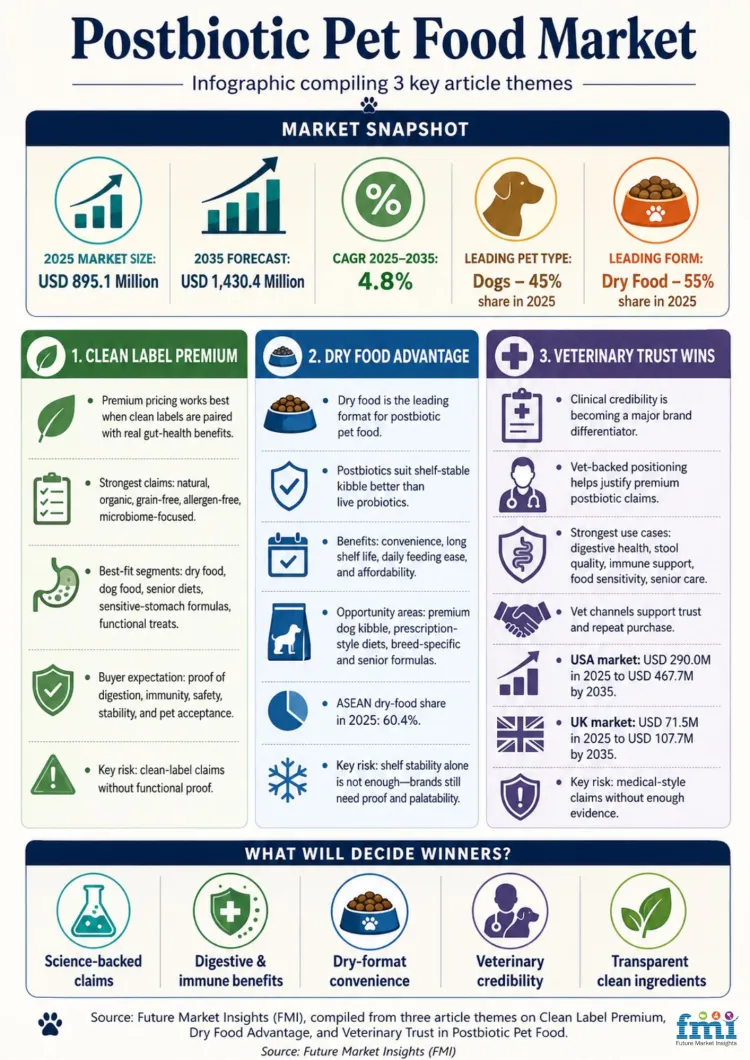
The clean-label premium in postbiotic pet food is becoming more important because pet parents are no longer buying pet food only as basic nutrition. They are comparing ingredient decks, health claims, digestive benefits, immunity support, veterinary credibility, and brand transparency before accepting a higher price. According to FMI, the global postbiotic pet food market is expected to increase from USD 895.1 million in 2025 to USD 1,430.4 million by 2035, growing at a CAGR of 4.8%. This growth is being supported by rising awareness of pet gut health, pet humanization, and the expansion of functional pet nutrition options.
The premium opportunity exists because postbiotics sit at the intersection of two strong buyer expectations: cleaner pet food and science-backed health support. Pet parents want fewer artificial additives, safer ingredients, better digestive tolerance, and clearer label communication. At the same time, they want functional proof that the food can support gut health, immune response, nutrient absorption, stool quality, metabolism, and overall wellness. FMI notes that the postbiotic pet food market is being shaped by humanization of pet diets, clean-label and science-backed products, and premium or veterinary-grade formulas where functional health claims influence purchase decisions.
However, the clean-label premium is not automatic. A postbiotic pet food brand cannot charge more simply because it uses words such as natural, organic, grain-free, allergen-free, or clean label. These claims must be supported by product performance. In this market, the pet parent’s real question is not only “Is this clean?” but also “Will this improve my pet’s digestion, immunity, comfort, and long-term health?” Clean label helps create trust, but postbiotics create the reason to pay more. The strongest products combine both.
Dry food is one of the clearest premium platforms for clean-label postbiotic pet food. FMI identifies dry food as the leading form segment, holding 55% value share in 2025. Dry food is preferred because postbiotics are more suitable for shelf-stable formats than live probiotics, which may require stricter temperature and viability control. Postbiotics can be used in dry extruded kibble, freeze-dried meals, and dehydrated formulas without the same refrigeration burden. This gives brands room to position clean-label dry food as both convenient and functional.
Dog food is another major premium zone. FMI identifies dogs as the leading pet-type segment with 45% value share in 2025. This matters because dog owners are often highly engaged buyers of digestive health, skin and coat, immunity, stool quality, breed-specific, and life-stage nutrition products. FMI also notes that demand for functional foods is rising among dog owners who are looking to address bloating, diarrhea, food sensitivities, digestive imbalance, and immune-related issues.
The clean-label premium is likely to be strongest where the product solves a clear pet health concern. Senior dogs, puppies, sensitive-stomach pets, pets with food intolerances, and pets needing immune support are stronger candidates for premium postbiotic formulas than general everyday pet food. Buyers are more willing to pay extra when the product reduces worry. A clean-label postbiotic product that promises digestive comfort, better stool quality, immune support, and simple ingredients can justify a higher price more easily than a standard kibble with only a vague “natural” claim.
Veterinary credibility also strengthens the premium. FMI states that manufacturers are building veterinarian partnerships, developing premium functional diets, and using clinical validation to increase credibility in the postbiotic pet food market. This is important because postbiotics are still a technical concept for many pet parents. A buyer may understand “natural” quickly, but may need more confidence to understand why postbiotics are useful. Veterinary endorsement, feeding trials, clear dosage communication, and ingredient documentation can turn a clean-label claim into a premium health proposition.
The clean-label premium is also connected to stability. Live probiotics can face formulation and shelf-life challenges because their value often depends on viability. Postbiotics are not live microorganisms, which makes them easier to communicate as stable, safe, and suitable for processed pet food formats. FMI highlights that postbiotics can be added to heat-killed formulations and are being developed through heat-resistant formulations and functional ingredient combinations. This supports a cleaner and more reliable story for brands that want to sell premium dry food, treats, powders, and veterinary-style diets.
Premium clean-label positioning is also expanding through organic and natural pet food brands. FMI’s UK postbiotic pet food report notes that local companies are tapping into clean pet food through natural and organic ingredients, while larger companies are building loyalty through proprietary postbiotic blends. This shows how the premium battle is splitting into two routes: large brands compete through science, scale, and proprietary formulations, while niche brands compete through natural sourcing, clean labels, and DTC trust.
Still, price resistance remains a real barrier. FMI identifies lack of awareness in emerging regions and price opposition in mass-market segments as challenges for postbiotic pet food growth. This means clean-label postbiotic brands must be careful not to overprice products without explaining the functional benefit. Mass-market buyers may compare the product against standard dry food, while premium buyers may compare it against veterinary diets, supplements, and functional treats. The value story must be clear for both groups.
The strongest clean-label claims in postbiotic pet food are likely to be those linked directly to pet health outcomes. Natural, organic, grain-free, allergen-free, limited-ingredient, no artificial additives, veterinarian-backed, microbiome-focused, breed-specific, and senior-support claims are more powerful when they are connected to digestion, immunity, stool quality, nutrient absorption, skin health, and overall wellness. Clean label alone attracts attention, but health-linked clean label supports conversion.
For brands, the winning strategy is to avoid treating postbiotics as a hidden ingredient. The ingredient must be explained in simple language. Pet parents need to understand that postbiotics are stable functional compounds associated with digestive and immune support, not just another additive. The brand should explain why the ingredient is used, how it survives processing, what pet need it supports, and why the formula is cleaner or safer than conventional alternatives.
The clean-label premium will be highest for brands that build trust across the full product story. This includes ingredient origin, absence of artificial additives, postbiotic stability, veterinary support, feeding guidance, transparent claims, pet-specific formulation, and visible digestive health benefits. In postbiotic pet food, clean label is not the finish line. It is the permission to charge more only when the product also delivers functional nutrition.
The practical conclusion is clear: pet parents may pay more for clean-label postbiotic pet food, but the premium is conditional. The premium grows when the product is dry-format friendly, dog-focused, digestive-health led, veterinary supported, and backed by transparent science. It weakens when the product relies only on broad natural claims, lacks proof, or fails to explain why postbiotics matter. In this market, the brands that win will not be those that simply say “clean.” They will be the brands that make clean label, gut health, immunity, stability, and trust work together.

