


Key Takeaways
- Consumer electronics pricing is dominated by brand premium and ecosystem lock-in rather than pure hardware costs, with premium brands capturing substantial gross margins while Chinese manufacturers operate on razor-thin margins despite using similar component stacks.
- Semiconductor and component costs represent only a fraction of final retail price for flagship devices, yet supply chain disruptions have forced even premium brands to absorb cost increases or risk losing market position.
- Manufacturing has shifted from pure labor arbitrage to a complex mix of automation, quality control, and proximity to component suppliers, making Vietnam and India increasingly attractive despite higher labor costs than traditional Chinese bases.
- The real margin capture happens in three layers: brand differentiation at the retail level, ecosystem services that create switching costs, and supply chain orchestration that locks in component pricing advantages.
- Chinese brands like Xiaomi and OnePlus have proven that hardware parity is achievable at much lower price points, forcing established players to defend value through software, services, and brand positioning rather than technical superiority alone.
Why do flagship smartphones cost more than their component bills suggest?
The consumer electronics supply chain spans multiple tiers, from original equipment manufacturers and major brands down to basic raw materials suppliers, with each layer capturing value through different mechanisms. For flagship devices, the visible hardware represents only the foundation of the cost structure.
Premium brands have historically operated on opaque pricing models, but customers now demand greater transparency and alignment between cost and perceived value, especially in price-sensitive segments like consumer electronics. The markup between component cost and retail price reflects several hidden value layers that pure hardware analysis misses.
Research and development costs are amortized across product lines, with advanced processor designs requiring massive upfront investments in engineering teams and specialized software tools. Design complexity influences R&D costs significantly, with advanced technologies and smaller nanometer processes demanding substantial investments in engineering capabilities and intellectual property licensing.
Brand positioning and marketing represent another substantial cost bucket. Premium manufacturers invest heavily in retail partnerships, advertising campaigns, and ecosystem development that creates perceived differentiation far beyond the underlying hardware specifications.
The uncomfortable reality is that component parity has become achievable across price tiers. Chinese manufacturers source similar displays, processors, and cameras as premium brands, yet sell finished products at dramatically lower prices by accepting thinner margins and focusing on hardware rather than ecosystem development.
Where do supply chain disruptions actually hit electronics pricing?
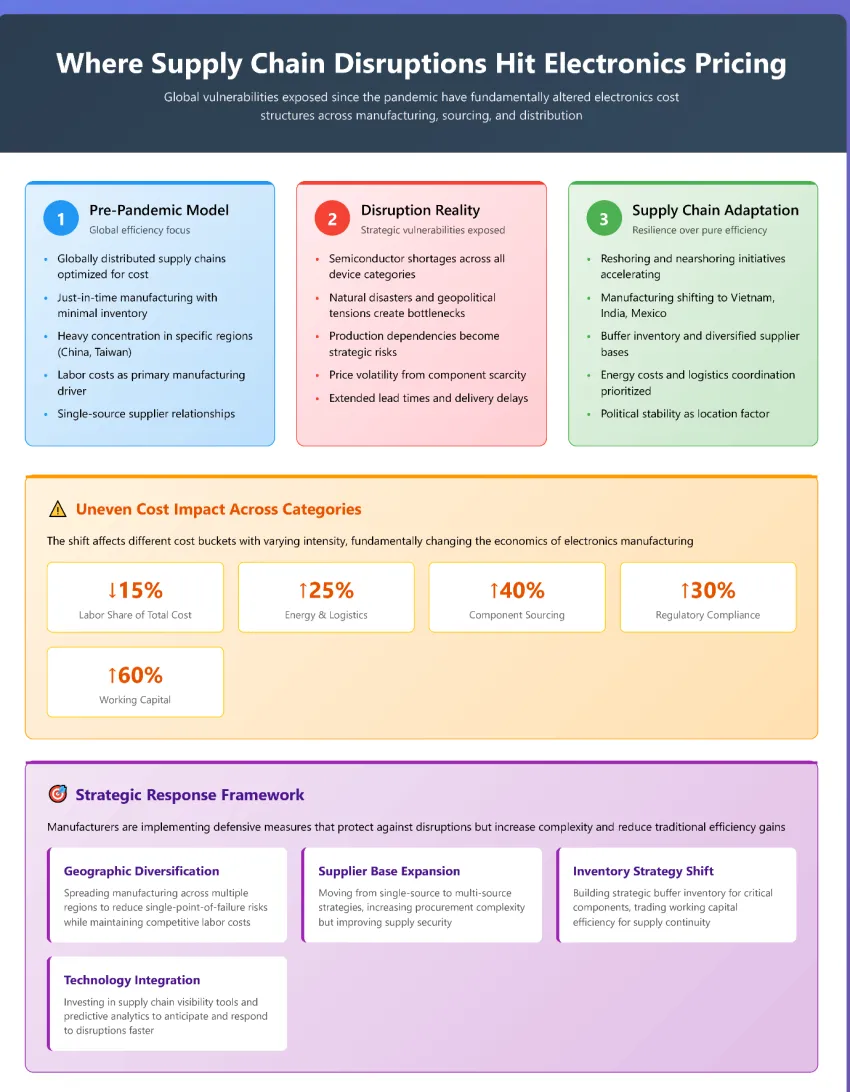
Global supply chain vulnerabilities exposed since the pandemic have fundamentally altered electronics cost structures. The semiconductor shortage created pricing pressure that rippled through every device category, from smartphones to laptops to gaming consoles.
Electronics manufacturers discovered that their globally distributed supply chains, once efficient and cost-effective, had become strategic vulnerabilities. Production dependencies concentrated in specific regions created bottlenecks when natural disasters, geopolitical tensions, or health crises disrupted operations.
Reshoring and nearshoring initiatives have gained momentum as companies prioritize supply chain resilience over pure cost optimization. Manufacturing has gradually shifted toward markets like Vietnam and India, where labor costs remain competitive but proximity to key suppliers and political stability offer better risk profiles than traditional bases.
The shift affects different cost buckets unevenly. Labor costs remain important but represent a smaller share of total cost than they did in earlier manufacturing cycles. Energy costs, regulatory compliance, and logistics coordination have become more significant drivers of total cost structure.
Component sourcing has become more complex and expensive as manufacturers build buffer inventory and diversify supplier bases. These defensive measures protect against disruptions but increase working capital requirements and reduce the efficiency gains that made global electronics affordable.
How are Chinese brands disrupting traditional pricing models?
Chinese electronics manufacturers have proven that premium device features can be delivered at mainstream price points through fundamentally different business models. Rather than building ecosystem lock-in and service revenue, these companies focus on hardware optimization and supply chain efficiency.
Direct sales models eliminate traditional retail markups and distributor margins that established brands factor into their pricing. Online-first distribution strategies reduce physical retail costs and allow for more aggressive pricing while maintaining acceptable margins.
Manufacturing scale and vertical integration give Chinese brands cost advantages that pure contract manufacturing cannot replicate. Some manufacturers control significant portions of their component supply chains, from displays to batteries to camera modules, capturing margins that would otherwise flow to suppliers.
The speed of product iteration in Chinese markets forces constant cost optimization. Rather than maintaining high prices throughout long product cycles, Chinese brands rapidly introduce updated models at lower price points, pressuring established players to justify their premium positioning.
Software and services represent different value propositions in Chinese devices. Instead of premium ecosystem services, Chinese brands often include extensive customization options and features that appeal to price-conscious consumers willing to trade brand prestige for functionality.

Sources
- Altium. Electronics Supply Chain Management: Best Practices for Cost and Risk Optimization.
- Boise State University College of Business and Economics. The USA Consumer Electronics Supply Chain Challenges, Transformations and Sustainable Initiatives.
- EY Global. Case study: How supply chain helps an electronics company's customers.
- Flevy. Consumer Electronics Industry Value Chain: Deep Dive.
- Kaizoft. Semiconductor pricing - Chip cost drivers and trends.
- MacroFab. Supply Chain Management for Electronics Manufacturing.
- Simon-Kucher. Part 1: Why Pricing is at the Forefront of the Semiconductor Industry.
- Simcona. 2025 Electronic Supply Chain Predictions: From Availability to AI.
- USA Bureau of Labor Statistics. Producer Price Index by Industry: Semiconductor and Other Electronic Component Manufacturing.
- Wafer World. Everything You Need to Know About Pricing Semiconductors.

