


- Private label is a realistic threat in dehydrated onions because flakes, powders, granules, minced onions, and chopped formats are easy to package into retail spice and pantry formats.
- Retailers can compete strongly where dehydrated onions are treated as basic shelf-stable aromatics rather than premium culinary ingredients.
- Powder leads form demand because it is widely used in spice blends, seasonings, sauces, soups, snacks, and retail pantry packs.
- White onion dominance supports standardization because it delivers broad flavor utility across light-colored applications and dry mixes.
- Premium brands are safer when they defend quality through flavor strength, low moisture, clean labels, origin clarity, food safety, and better packaging.
- The biggest misconception is that private label matters only in consumer snacks. In dehydrated onions, store brands can pressure retail spice packs and even influence B2B specifications.
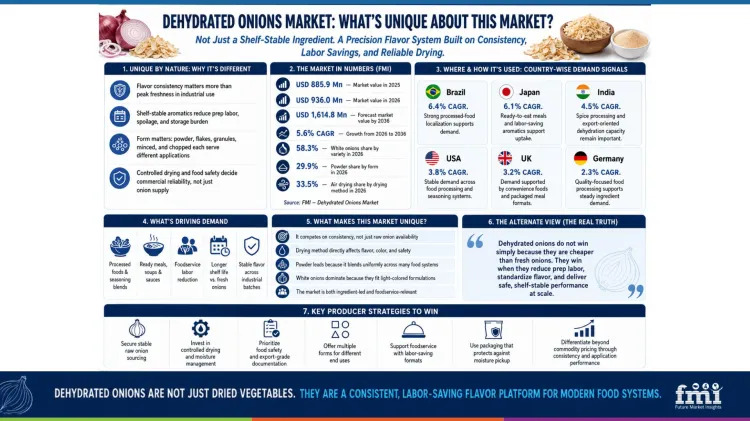
The dehydrated onions face the greatest risk of private label pressure since the commodity is relatively comprehensible to consumers. Onions powder, onion flakes, minced onions, chopped onions, and onion granules are pantry items. It would be quite difficult to differentiate between the store brand and the national brand of spices unless the branded player clearly communicates the quality of the product.
FMI’s Dehydrated Onions Market preview identifies powder as the leading form with 29.9% share in 2026. This is important because powder is one of the easiest forms for retailers to private-label. It fits jars, refill pouches, sachets, bulk packs, seasoning blends, and value formats. It also blends easily into private-label soups, snacks, sauces, and ready meals.
The Seasonings and Spices Market is directly relevant because dehydrated onion formats often sit within spice and seasoning aisles. Retailers already use private label in spices, herbs, rubs, and blends. Onion powder and flakes can therefore be added to store-brand spice portfolios with limited shopper education.
The private-label threat is greater if the product is considered to be a commodity. The consumer shopping for onion powder to cook at home will focus on the size and price of the pack rather than on the type of onion or how the onion is dried. If the retailer’s brand smells good, flows well, and cooks well, it may earn repeat business.
The white variety will have a share of 58.3% in 2026. This helps increase private label scalability since the white variety is an all-purpose ingredient. It is useful in preparing light sauces, soups, snacks seasoning, dressings, spices, and cooking in general. This ingredient is preferred by retailers due to its versatility.
The Dehydrated Vegetables Market supports this view because onions lead product demand with 40.0% share in 2026. FMI also notes that food manufacturers hold 55.0% end-use demand in dehydrated vegetables. This means private-label pressure is not limited to retail spice jars. Store brands can also influence ingredient demand through private-label ready meals, soups, noodles, snacks, and sauces.
The Ready-to-Cook Food Market is useful because dehydrated onions are often used in convenience food bases. Retailer-branded ready-to-cook foods can use onion powder or flakes to stabilize flavor. If retailers control both the finished product brand and the ingredient specification, they can pressure suppliers on cost, consistency, and documentation.
EU demand shows how B2B-led private-label pressure can emerge. FMI’s Demand for Dehydrated Onions in EU preview states that food processing leads end use with 67.7% share in 2026, B2B leads distribution with 80% share, and conventional products lead nature with 88% share. This indicates that large-volume standardized supply is central to the market. Retailer and manufacturer specifications can therefore shape ingredient procurement even when consumers never see the supplier name.
Private label can also compete in terms of its packaging. Such elements as resealable pouches, refillable containers, bigger and cheaper jars, seasonings in shaker containers, club stores packages, and combinations of seasonings in packets can add convenience to the store brands. In case branded goods stay in expensive little jars, the brand premium is reduced.
The Food Packaging Market is relevant because dehydrated onions need moisture protection. Poor packaging can cause clumping, flavor loss, and reduced shelf life. A private-label product with better resealability and moisture barrier can outperform a branded product even at a lower price.
Premium brands can protect themselves, but they have to make quality tangible. They can promote low moisture content, aroma, drying conditions, place of origin, food safety certifications, non-GMO labeling, organic products, single-origin branding, or chef-grade performance. They can also provide unique variations in the form of crispy fried onions, premium flakes, toasted onion, or special cuts.
The Organic Spices Market is relevant for premium defense because organic and specialty spice claims can help brands avoid direct commodity comparison. However, private label can also enter organic segments once supply becomes reliable. Certification helps, but it is not a permanent shield.
The mistake to be avoided is that private label dehydration of onions is merely a matter of small retail. The truth is that private label could push both consumer spice packs and manufacturing ingredient specifications. Private label could force retailers and processors to standardize onions and negotiate hard with multiple suppliers meeting basic requirements.
Bottom line: Private label can commoditize dehydrated onions where products are undifferentiated and price-comparable. Branded players and suppliers must defend through flavor strength, moisture control, food safety, origin clarity, packaging quality, and application-specific performance.
FMI Related Links
- Dehydrated Onions Market: Primary link for form share, variety share, drying method, and market value
- Dehydrated Vegetables Market: Use when discussing onion’s role within dehydrated vegetable demand
- Demand for Dehydrated Onions in EU: Use when discussing EU food processing, B2B demand, and conventional supply
- Food Packaging Market: Use when discussing moisture-barrier packaging and retail formats
- Organic Spices Market: Use when discussing premium and organic spice differentiation

