


Key Takeaways
- Functional foods in the GCC sit at the intersection of high noncommunicable disease burden and high disposable income, so demand is structurally real, but still constrained by price sensitivity and trust in claims.
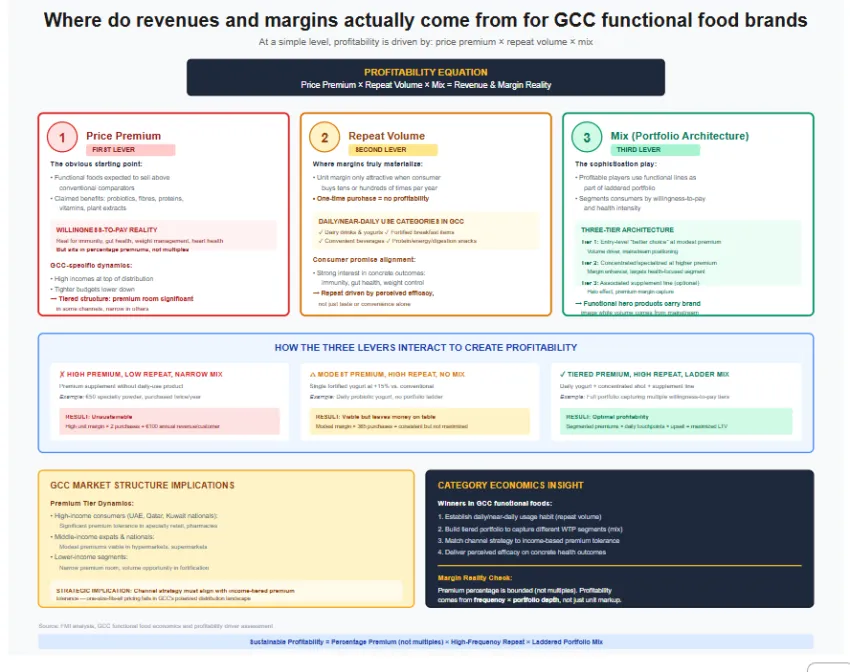
- On the revenue side, profitability depends on securing a price premium that survives retailer bargaining power and promotional pressure, while riding repeat consumption in categories like dairy, beverages and convenient snacks.
- On the cost side, brands pay for imported base ingredients, imported bioactives, cold chain and tighter quality control, plus the regulatory and scientific work needed to back health claims; in a region that imports up to 80-90 percent of its food, this input structure is non trivial.
- Margins are strongest where three things line up: a clear medical or lifestyle problem such as obesity or gut health, a credible mechanism supported by evidence, and a channel context where consumers expect to pay more, such as pharmacies and premium modern trade.
- The red pill is that most functional food launches in the GCC do not fail because consumers are uninterested, but because the economics are mis-specified: ingredient and trade spend swallow the premium, positioning drifts into a tiny niche, or products sit on the wrong side of tightening health regulation.
How does the GCC context shape demand for functional foods
From an economics perspective, functional foods in the GCC are a response to three structural facts. First, the region carries a very high burden of obesity, diabetes and cardiovascular risk. Reviews of Gulf health data repeatedly show some of the highest obesity and diabetes prevalences globally, with noncommunicable diseases accounting for roughly half or more of deaths and several percent of GDP in lost output. That makes weight management, glycaemic control, heart health and metabolic risk central to household health decisions.
Second, diet quality has shifted with rapid urbanisation and income growth. Studies on food consumption and nutrition transition in Saudi Arabia, Qatar and other Gulf states document a move toward energy dense, processed foods and away from traditional staples, with obesity rising in parallel. Functional foods are positioned as a way to bend this curve without forcing consumers to abandon convenience and taste.
Third, governments are pushing on the unhealthy side of the ledger. Sugar sweetened beverage taxes, recommended actions on lowering sugar intake and broader healthy diet policies are all active in the region, particularly in Saudi Arabia and the United Arab Emirates. That nudges producers toward lower sugar and added benefit formulations and creates regulatory and reputational space for fortified and functional options.
What distinguishes high margin from low margin functional food plays in the GCC
When you look at the economics as a whole, profitable functional food positions in the GCC tend to share a few characteristics.
First, they are anchored in problems that are clearly visible in Gulf epidemiology and policy: obesity, diabetes, cardiovascular risk, gut discomfort and immunity. Products that connect directly to these issues, and that can be credibly explained to regulators and consumers, have a better chance of sustaining a premium and gaining support from health care professionals and employers.
Second, they right size the functional promise to the price gap. A yoghurt drink positioned around digestive comfort with a modest premium and high repeat use is more economically robust than an ultra fortified product priced into a micro niche. Brands that load in too many expensive actives relative to what the consumer is willing to pay end up donating the margin to the supply chain.
Third, they choose their channels carefully. In the GCC, pharmacies, specialist health shops and premium supermarkets in affluent urban areas can support higher price points because consumers are already in a health seeking mindset. Mass hypermarkets serving price sensitive families are better suited to entry level functional propositions where the premium over conventional is visible but not dramatic.
Fourth, they manage regulatory and reputational risk rather than skating on the edge. Given the growing focus on sugar taxes and healthy diet policies in the region, products that rely on aggressive claims with weak backing face tightening constraints. Aligning with policy themes such as reduced sugar, improved diet quality and risk reduction makes it easier to defend margins over time.
Finally, they treat functional foods as part of a broader risk managed portfolio. Because the region is heavily exposed to import price swings and geopolitical supply disruptions, brands that lock themselves into narrow ingredient dependencies or single source supply can see their economics swing violently. Those that design for some flexibility in ingredient sourcing and are disciplined on trade spend have a better chance of preserving profitability across cycles.
How FMI can help
Sources
- Al-Jawaldeh, A., et al. (2021). Implementation of WHO recommended policies and interventions on healthy diet in the Eastern Mediterranean Region. Eastern Mediterranean Health Journal.
- Abbass, M. M. S., et al. (2024). Situation analysis of sugar sweetened beverages taxation in Eastern Mediterranean Region. Eastern Mediterranean Health Journal.
- United Nations Development Programme. (2023). Strengthening taxes on unhealthy products in the Gulf States. UNDP policy brief.
- AlAbdulKader, A. M. (2020). Obesity and cardiovascular risk in the Arab Gulf States. Current Cardiovascular Risk Reports.
- Khalil, A. B., et al. (2018). Diabesity in the Arabian Gulf: Challenges and opportunities. Oman Medical Journal.
- Al-Julifi, M. Z., et al. (2021). Prevalence and reasons of increased type 2 diabetes in Gulf Cooperation Council countries. Journal of Diabetes Research.
- Al-Jawaldeh, A., et al. (2020). Nutrition policies in Gulf Cooperation Council countries. F1000Research.
- World Economic Forum. (2025). The GCC is increasing food security through innovation. World Economic Forum briefing.
- Marmore MENA Intelligence. (2015). GCC food security roadblocks and the road ahead. Marmore sector report.
- Hossain, M. S., et al. (2025). Fortified and functional foods: Trends, innovations and regulatory challenges. Current Opinion in Food Science.
- El Gindi, S., et al. (2024). Functional foods: Middle Eastern and Asian studies. Journal of Food and Nutrition Research.
- Alqurashi, R. M., et al. (2025). Food consumption patterns in different regions of the Kingdom of Saudi Arabia. Journal of Saudi Society for Food and Nutrition.

