


By Sudip Saha, Co-founder, Future Market Insights
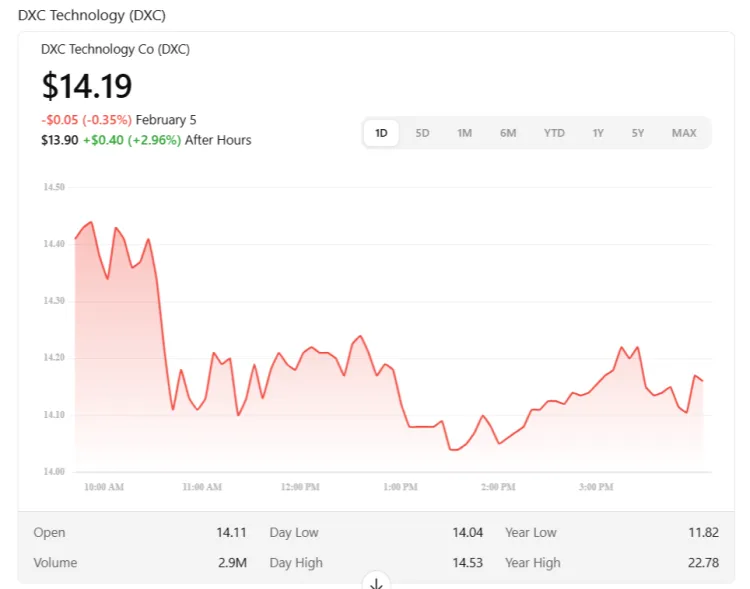
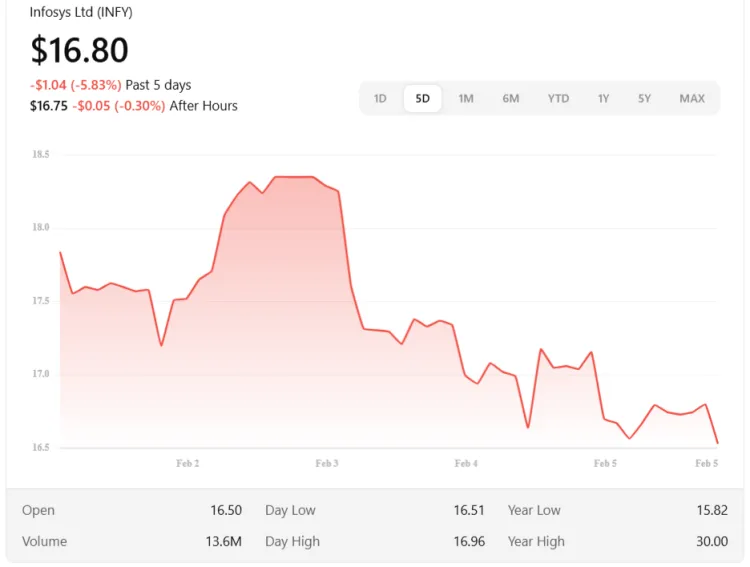
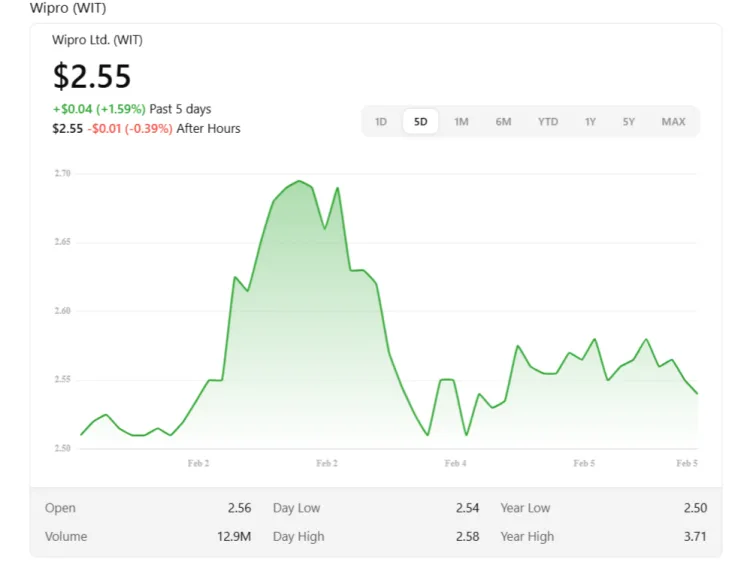
On February 3, when Anthropic announced Claude Cowork and its suite of autonomous business agents, within hours, nearly $300 billion in market value vanished from technology stocks worldwide. Yet the selloff, dramatic as it was, may have been driven more by narrative convenience than operational reality. Markets prefer clean stories, and AI announcements provide one: fewer engineers needed, lower billing rates, compressed margins. The actual mechanics of enterprise software delivery tell a different story entirely.
The Market's Mistake: Confusing Code Generation with Software Delivery
The bottleneck in software development has never been typing code. It has been translating messy business reality into systems that work correctly, safely, and compliantly in production environments with real users, real data, and real exceptions. A model can generate syntactically correct functions, but it cannot navigate the socio-technical complexity that defines enterprise projects.
Software delivery is fundamentally a problem of incomplete information and shifting context. Requirements arrive fragmentary and contradictory. Stakeholders disagree about priorities. Definitions of correctness change once users interact with the product. Mid-sprint pivots are routine. These are not edge cases. They are the central challenge of building systems that solve actual business problems.
What investors missed in their rush to judgment is that accountability cannot be automated. In production environments, accountability means understanding downstream business impact, operational risk, regulatory constraints, audit trails, security posture, and change management protocols. A model has no concept of these dimensions. It cannot assess whether a technically elegant solution will create compliance problems six months later or whether a database schema change will break dependencies in systems three teams removed from the original project. These judgments require domain expertise, institutional knowledge, and the kind of systems thinking that comes from years of watching things fail in instructive ways.
The data challenge alone should temper expectations about wholesale automation. Most enterprise information exists not in clean databases but scattered across emails, PDFs, scanned invoices, support tickets, call transcripts, and legacy systems with inconsistent schemas. Making this usable is not a matter of clever prompting. It requires data lineage tracking, governance frameworks, observability infrastructure, human validation loops, and integration work specific to each client's environment. AI can accelerate portions of this work, but it does not eliminate the need for people who understand both the technical systems and the business context they serve.
Role Shift, Not Role Elimination
The more plausible outcome is not employment collapse but role evolution and higher individual leverage. Teams will accomplish more with the same headcount, but the composition of work will change substantially. Less time will go into boilerplate implementation. More time will go into problem framing, architecture decisions, integration strategy, testing design, security hardening, performance engineering, and production reliability.
This shift favors strong engineers and strong analysts. They become more valuable, not less, because they can supervise faster execution while maintaining correctness. The junior developer who primarily wrote CRUD operations may face displacement. The senior architect who understands how components interact across organizational boundaries becomes essential. AI compresses the execution phase but expands the need for judgment in the design and validation phases.
From a services perspective, what changes is not the viability of IT consulting but the pricing narrative. Firms that continue selling effort, hours billed, bodies deployed, will face downward pressure. Clients will reasonably ask why they should pay for time when AI can compress cycle length. But firms that sell business outcomes with clear acceptance criteria and own delivery risk can treat AI as a margin lever rather than a threat. The technology allows them to deliver faster while maintaining quality, improving profitability without reducing value to clients.
The firms most at risk are those defending pure hours-based models without differentiated capability or domain depth. Commoditized coding services will struggle. Specialized expertise in regulated industries, complex integrations, or high-stakes production environments will command premiums. The market will bifurcate between those who compete on cost and those who compete on capability.
Enterprise Reality Moves Slower Than Market Panic
The stock reaction was loud, but enterprise adoption will be gradual and uneven. Regulated environments will move cautiously. Financial services firms will not hand compliance decisions to AI agents without extensive validation. Healthcare organizations will not automate patient data systems without meeting stringent security and privacy requirements. Government contractors will face procurement rules that favor established vendors with proven track records.
Even in less regulated sectors, production deployment requires confidence that comes only from extended testing. Early demonstrations of AI capabilities often occur in controlled settings with clean data and well-defined problems. Real environments are messier. Systems have accumulated technical debt. Documentation is incomplete or outdated. Edge cases proliferate. The gap between laboratory performance and production reliability has trapped many technologies, including earlier generations of AI.
Organizations also face internal resistance that has nothing to do with technical capability. Existing systems represent enormous sunk investments. Changing them creates political risk for managers who championed current approaches. Teams develop workflows around familiar tools. Switching costs include not just licensing fees but retraining, process redesign, and the productivity loss during transition periods.
The winners in this environment will be teams that use AI to compress cycle time while improving quality, not those treating AI as a replacement fantasy. They will deploy the technology where it offers clear advantages, generating test cases, identifying security vulnerabilities, documenting code, prototyping interfaces, while keeping humans responsible for critical decisions about architecture, risk, and business alignment.
The Structural Question Remains
None of this means the market's concerns were entirely misplaced.
The technology sector does face a period of uncomfortable adjustment. The business models that worked for the past two decades may not work for the next two. Companies built on assumptions of human-operated software will need to rethink their value propositions. Pricing structures based on seat counts will require revision. Services firms will need to articulate why clients should pay for their expertise rather than use AI directly.
But the adjustment will likely be measured in years rather than quarters, and it will favor adaptation over replacement. The organizations that thrive will be those that understand AI as a tool for leverage rather than substitution. They will invest in capabilities that complement the technology, judgment, domain expertise, systems integration, risk management rather than competing with it on tasks it handles well.
The selloff revealed how much of the technology sector's valuation rested on assumptions about friction, switching costs, and the continued necessity of large human workforces. Those assumptions are being tested. But the replacement assumptions that AI can independently manage the full complexity of enterprise software delivery deserve equal scrutiny.
The reality will almost certainly land somewhere between the old certainties and the new fears, in a space where both human expertise and machine capability prove essential to getting real work done.