

- Industry Size (2026)
- USD 3.7 Bn
- Forecast (2036)
- USD 9.4 Bn
- CAGR (2026 to 2036)
- 9.8%
AI-Driven Robotic Cleaning and Sanitation Systems Demand Forecast and Outlook 2026 to 2036
The demand for AI-driven robotic cleaning and sanitation systems is estimated to reach USD 3.7 billion in 2026 and expand to USD 9.4 billion by 2036, growing at a CAGR of 9.8%. Enterprise spending on AI-driven robotic cleaning and sanitation systems is typically allocated across several critical areas to ensure the systems deliver optimal performance, efficiency, and reliability. A significant portion of the budget is directed toward the robotic hardware and actuators, which include the physical robots, their mobility systems, and cleaning mechanisms. These components must be robust and versatile enough to handle a wide range of surfaces and environments.
AI and machine learning software also receive substantial investment, as these algorithms enable the robot to navigate complex spaces, identify contamination, and optimize cleaning paths, improving overall cleaning performance. Advanced sensor technologies, including LIDAR, cameras, and proximity sensors, are essential for mapping the environment, detecting dirt, avoiding obstacles, and ensuring precision in cleaning. Additionally, spending is allocated toward autonomous navigation systems like SLAM (Simultaneous Localization and Mapping), which allow robots to create detailed floor plans and determine the most efficient routes. Battery and charging infrastructure is another key area of investment, ensuring that robots can operate autonomously for extended periods. Enterprises also allocate funds for maintenance and support, including software updates, troubleshooting, and recalibrating systems to maintain optimal performance.
Quick Stats for AI-Driven Robotic Cleaning and Sanitation Systems Demand
- Demand for AI-Driven Robotic Cleaning and Sanitation Systems Value (2026): USD 3.7 billion
- Demand for AI-Driven Robotic Cleaning and Sanitation Systems Forecast Value (2036): USD 9.4 billion
- Demand for AI-Driven Robotic Cleaning and Sanitation Systems Forecast CAGR 2026 to 2036: 9.8%
- Leading Technology Type by Demand Share: Autonomous navigation systems
- Fastest-Growing Applications: Healthcare facilities, commercial offices, food processing
- Top Players in Global Demand: iRobot Corporation, Ecovacs Robotics, Brain Corp, Nilfisk Group, Tennant Company
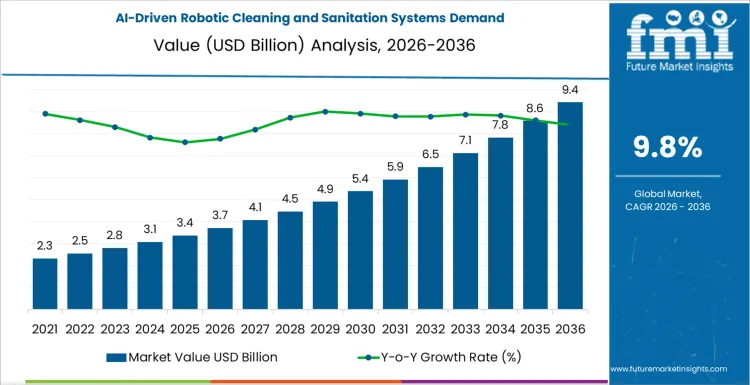
Demand for AI-Driven Robotic Cleaning and Sanitation Systems Key Takeaways
| Metric | Value |
|---|---|
| Demand Value (2026) | USD 3.7 billion |
| Demand Forecast Value (2036) | USD 9.4 billion |
| Forecast CAGR 2026 to 2036 | 9.8% |
What Enterprise Spending Patterns Are Expected Over The Next Years For AI-Driven Robotic Cleaning and Sanitation Systems?
Over the next one to two years, enterprise spending on AI-driven robotic cleaning and sanitation systems is expected to focus on pilot deployments and targeted facility applications where labor costs and hygiene requirements justify autonomous cleaning investments. Facilities will typically fund initial robot deployments in high-traffic areas such as lobbies, corridors, and restrooms, then expand to additional zones once cleaning performance and operational reliability meet facility management standards. Procurement will bundle hardware with software licensing, training programs, and maintenance services, since these systems require customization for specific facility layouts and cleaning protocols.
Operating budgets will increase alongside capital purchases as buyers add fleet management software, consumable supplies, regular maintenance contracts, and performance monitoring to ensure cleaning quality remains consistent. Compliance and documentation spending will rise in parallel, driven by health regulations requiring cleaning verification, pathogen detection records, and chemical usage tracking, so audit trail systems, cleaning validation protocols, and reporting capabilities become part of the purchase. Standards development work referenced by ISSA, ASTM, and CDC guidelines will continue influencing buying behavior, pushing enterprises to invest in systems that provide documented cleaning effectiveness and regulatory compliance. Near term spending will favor proven robotic platforms that can be deployed incrementally, validated against existing cleaning standards, and scaled across similar facility types with predictable performance outcomes.
How Will the Demand for AI-Driven Robotic Cleaning and Sanitation Systems Structure?
AI-driven robotic cleaning and sanitation systems serve a critical function in maintaining facility hygiene, reducing labor costs, and ensuring consistent cleaning standards across diverse environments. Adoption is influenced by cleaning accuracy requirements, operational complexity, facility integration challenges, and regulatory compliance standards. Segmentation by technology type, cleaning function, and application reveals how facility managers select specific robotic cleaning architectures to meet hygiene targets, coverage specifications, and cost reduction requirements across different commercial and institutional environments.
Which Technology Type Holds the Largest Share in AI-Driven Robotic Cleaning and Sanitation Systems?
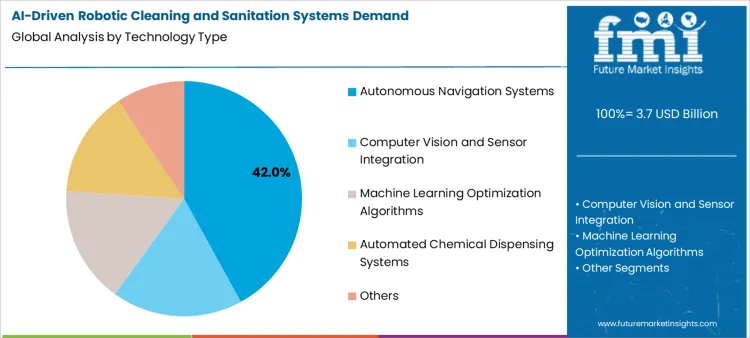
Autonomous navigation systems account for 42.0%, driven by their ability to map complex environments and navigate around obstacles while maintaining comprehensive area coverage. Computer vision and sensor integration hold 28.0%, supporting real-time detection of dirt, spills, and contamination levels during cleaning operations. Machine learning optimization algorithms represent 18.0%, favored for their capability to adapt cleaning patterns based on usage data and contamination trends. Automated chemical dispensing systems contribute 8.0%, used where precise sanitization protocols require controlled application of cleaning agents. Other cleaning technologies account for 4.0%.
Key Points
- Autonomous navigation dominates commercial cleaning applications
- Computer vision enables targeted cleaning based on contamination detection
- Machine learning optimizes cleaning routes and chemical usage efficiency
How Do Cleaning Functions Influence Technology Selection?
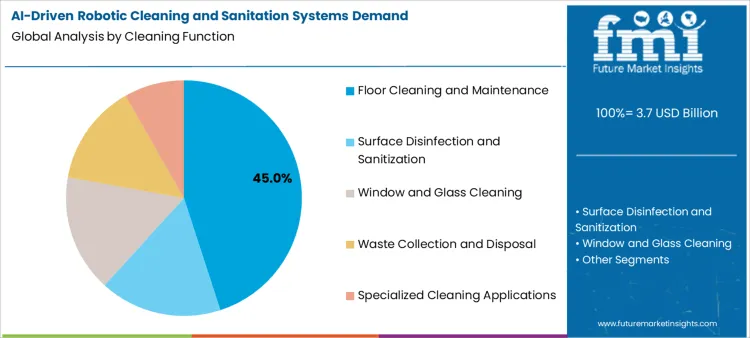
Floor cleaning and maintenance represent 45.0%, reflecting primary focus on large surface areas requiring regular automated cleaning in commercial facilities. Surface disinfection and sanitization account for 25.0%, essential for healthcare, food service, and high-touch environments requiring pathogen reduction. Window and glass cleaning hold 15.0%, supporting automated cleaning of vertical surfaces in office buildings and retail facilities. Waste collection and disposal represent 10.0%, addressing automated trash removal and recycling sorting in commercial spaces. Specialized cleaning applications account for 5.0%, covering unique requirements such as carpet cleaning and industrial surface preparation.
Key Points
- Floor cleaning remains the foundation of robotic cleaning systems
- Disinfection capabilities directly impact adoption in health-sensitive environments
- Surface cleaning automation reduces labor costs in high-maintenance facilities
Which Applications Are Driving Demand for These Systems?
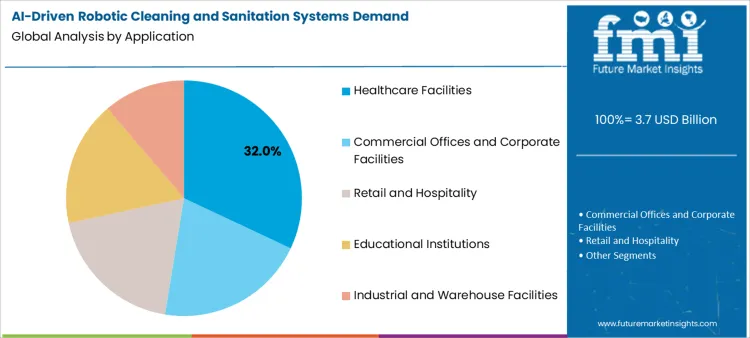
Healthcare facilities lead with 32.0%, requiring continuous cleaning and disinfection to maintain infection control standards and patient safety protocols. Commercial offices and corporate facilities account for 26.0%, using robotic systems for cost-effective maintenance of large floor areas and common spaces. Retail and hospitality establishments represent 20.0%, relying on automated cleaning for consistent appearance and customer experience in high-traffic areas. Educational institutions hold 12.0%, focused on maintaining hygiene standards in classrooms, cafeterias, and dormitories with limited maintenance staff. Industrial and warehouse facilities account for 10.0%, where robotic cleaning addresses large floor areas and specialized contamination control requirements.
Key Points
- Healthcare applications emphasize infection control and regulatory compliance
- Commercial facilities prioritize cost reduction and consistent cleaning quality
- Public spaces focus on appearance maintenance and operational efficiency
What application-specific adoption patterns are being observed for AI-Driven Robotic Cleaning and Sanitation Systems?
AI-driven robotic cleaning and sanitation systems are seeing application-specific adoption patterns driven by the unique needs of different industries, such as commercial cleaning, healthcare, manufacturing, and hospitality. In commercial cleaning, the adoption is focused on large public spaces like airports, shopping malls, and office buildings, where robots are deployed for regular floor cleaning and maintenance. These systems are valued for their ability to cover large areas autonomously, reduce labor costs, and ensure consistent cleaning standards without human intervention.
The healthcare sector is increasingly adopting these robots in hospitals and healthcare facilities, where sanitation is critical to preventing the spread of infections. Robots are used for cleaning patient rooms, hallways, and surgical theaters, ensuring high standards of cleanliness while minimizing human exposure to potentially harmful contaminants. In manufacturing environments, particularly in food processing or pharmaceutical industries, robots are being used for sterilization and disinfection in areas where strict hygiene standards must be maintained.
How Is Demand for AI-Driven Robotic Cleaning and Sanitation Systems Evolving Globally?
Global demand for AI-driven robotic cleaning and sanitation systems is expanding as facility managers seek to reduce labor costs while improving cleaning consistency and hygiene compliance. Growth reflects rising adoption of autonomous navigation, computer vision technologies, and automated chemical dispensing systems across healthcare, commercial, and institutional sectors. Technology selection focuses on navigation algorithms, cleaning mechanisms, and monitoring systems that operate reliably in diverse facility environments with minimal human supervision. USA. records 9.2% CAGR, China records 11.8% CAGR, Germany records 8.7% CAGR, Japan records 8.9% CAGR, and South Korea records 10.5% CAGR. Adoption remains driven by labor cost reduction and hygiene improvement rather than technology advancement alone.
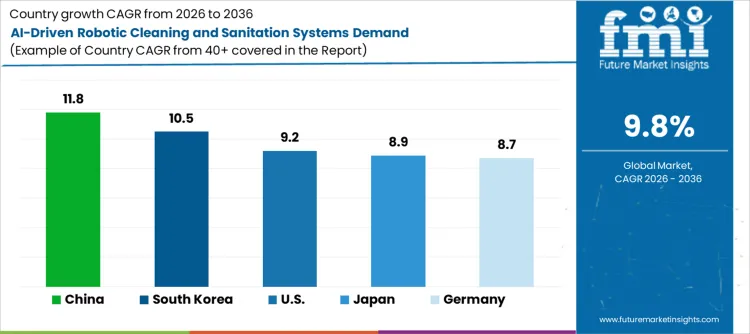
| Country | CAGR (%) |
|---|---|
| China | 11.8% |
| South Korea | 10.5% |
| USA. | 9.2% |
| Japan | 8.9% |
| Germany | 8.7% |
What is Driving Growth of AI-Driven Robotic Cleaning and Sanitation Systems Demand In China?
Demand for AI-driven robotic cleaning and sanitation systems in China is set to expand as facility managers scale adoption of autonomous cleaning technologies across commercial, healthcare, and manufacturing sectors. Growth at 11.8% CAGR reflects rising deployment in shopping centers, office buildings, and industrial facilities. Cleaning efficiency under continuous operation conditions remains critical for meeting hygiene standards and labor cost reduction targets. Cost efficiency drives selection of robotic systems delivering labor savings and cleaning consistency at competitive price points. Domestic technology companies prioritize systems compatible with existing facility infrastructure and local service networks. Demand concentrates within tier-one cities, commercial real estate developments, and manufacturing facilities targeting operational cost reduction.
- Expansion of commercial real estate automation initiatives
- Need for labor cost reduction in facility management
- Cost-competitive autonomous cleaning solutions
- Growth of smart building technology deployment
Why is South Korea Seeing Expansion in AI-Driven Robotic Cleaning and Sanitation Systems Adoption?
AI-driven robotic cleaning and sanitation systems demand in South Korea is positioned to grow as advanced facility management sectors integrate autonomous cleaning technologies. Growth at 10.5% CAGR reflects strong activity in office buildings, healthcare facilities, and retail establishments. Complex cleaning requirements demand continuous monitoring and automated response capabilities for hygiene maintenance and contamination prevention. Technology leadership drives adoption of advanced navigation algorithms and sensor-based cleaning systems. Leading facility management companies invest in robotic cleaning systems for competitive advantage and operational efficiency. Demand remains centered on high-standard commercial applications serving technology and healthcare sectors.
- Advancement in smart building management systems
- Investment in healthcare facility automation
- Leadership in robotic cleaning technology development
- Focus on high-standard commercial applications
What Factors are Shaping AI-Driven Robotic Cleaning and Sanitation Systems Sales in the USA.?
Demand for AI-driven robotic cleaning and sanitation systems in the USA. is poised to strengthen as facility managers integrate autonomous cleaning across healthcare, education, and commercial sectors due to AI-driven predictive maintenance. Growth at 9.2% CAGR reflects rising adoption in hospitals, schools, and office complexes. Health regulations and liability considerations drive selection of validated cleaning systems with proven disinfection capabilities. Advanced research institutions and technology companies lead development of next-generation autonomous cleaning algorithms. Large facility management companies prioritize robotic systems supporting both operational efficiency and regulatory compliance requirements. Demand remains strongest within industries facing cleaning staff shortages and health-critical operating environments.
- Growth in healthcare facility automation
- Expansion of educational institution cleaning programs
- Health regulations driving technology selection
- Investment in advanced cleaning capabilities
How is Germany supporting growth of AI-driven robotic cleaning and sanitation systems demand?
AI-driven robotic cleaning and sanitation systems demand in Germany is anticipated to grow as facility managers integrate autonomous cleaning capabilities across healthcare, commercial, and industrial sectors. Growth at 8.7% CAGR reflects strong adoption in hospitals, office buildings, and manufacturing facilities. Industry 4.0 initiatives drive integration of cleaning systems with existing facility management platforms and building automation systems. Engineering standards influence selection of high-reliability cleaning technologies and monitoring mechanisms. Established facility service companies invest in robotic cleaning capabilities for operational optimization and competitive positioning. Demand is driven by efficiency requirements and regulatory compliance rather than labor cost reduction alone.
- Implementation of Industry 4.0 facility integration
- Integration with existing building management systems
- Focus on healthcare and commercial applications
- Investment in autonomous cleaning technologies
What are the Opportunities for AI-Driven Robotic Cleaning and Sanitation Systems in Japan?
Demand for AI-driven robotic cleaning and sanitation systems in Japan is positioned to rise as facility management and service sectors adopt autonomous cleaning technologies. Growth at 8.9% CAGR reflects integration in office buildings, healthcare facilities, and retail establishments. Quality standards drive adoption of cleaning systems ensuring consistent hygiene outcomes and facility appearance. Established service industry provides foundation for advanced robotic cleaning system deployment. Facility management companies prioritize systems supporting both operational efficiency and service quality in aging workforce conditions. Demand remains focused on applications requiring high precision and long-term reliability rather than rapid deployment.
- Advanced facility management industry foundation
- Integration in commercial and healthcare facilities
- Focus on quality assurance applications
- Emphasis on precision and long-term reliability
Which Companies are Active in AI-Driven Robotic Cleaning and Sanitation Systems Space?
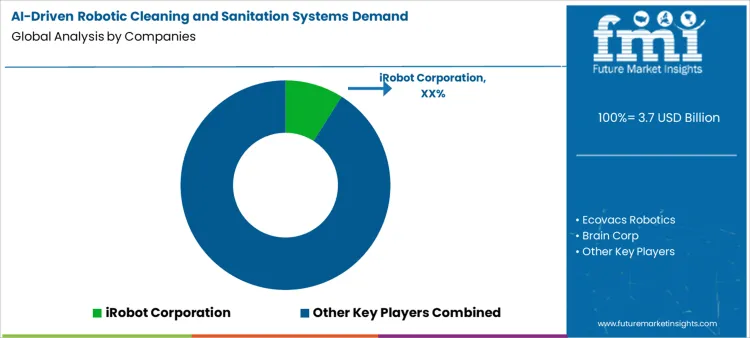
Key companies and organizations active in the ecosystem for AI-driven robotic cleaning and sanitation systems include major cleaning equipment manufacturers like Tennant Company, Nilfisk Group, and Karcher, which offer integrated robotic platforms with autonomous navigation capabilities. Technology providers such as Brain Corp, SoftBank Robotics, and Gaussian Robotics provide AI algorithms and robotic platforms supporting autonomous cleaning operations. Consumer robotics companies like iRobot Corporation, Ecovacs Robotics, and Roborock have expanded into commercial applications with industrial-grade cleaning systems.
System integrators, both large facility service providers and specialized robotics consultancies, focus on implementing robotic cleaning systems within existing facility operations. Standards organizations like ISSA and ASTM guide performance requirements and safety protocols for autonomous cleaning systems. Research institutions and industry consortia play key roles in advancing cleaning algorithm development and establishing best practices for robotic cleaning in commercial environments.
Key Players in AI-Driven Robotic Cleaning and Sanitation Systems Demand
- iRobot Corporation
- Ecovacs Robotics
- Brain Corp
- Nilfisk Group
- Tennant Company
Scope of the Report
| Items | Values |
|---|---|
| Quantitative Units | USD billion |
| Technology Type | Autonomous Navigation Systems; Computer Vision and Sensor Integration; Machine Learning Optimization Algorithms; Automated Chemical Dispensing Systems; Others |
| Cleaning Function | Floor Cleaning and Maintenance; Surface Disinfection and Sanitization; Window and Glass Cleaning; Waste Collection and Disposal; Specialized Cleaning Applications |
| Application | Healthcare Facilities; Commercial Offices and Corporate Facilities; Retail and Hospitality; Educational Institutions; Industrial and Warehouse Facilities |
| Regions Covered | Asia Pacific, Europe, North America, Latin America, Middle East & Africa |
| Countries Covered | China, South Korea, USA., Germany, Japan, and 40+ countries |
| Key Companies Profiled | iRobot Corporation; Ecovacs Robotics; Brain Corp; Nilfisk Group; Tennant Company; Others |
| Additional Attributes | Dollar sales by technology type, cleaning function, and application; performance in cleaning effectiveness and pathogen reduction across healthcare, commercial, and institutional facilities; navigation accuracy, cleaning consistency, and safety compliance under autonomous operation conditions; impact on labor costs, facility hygiene, and operational efficiency during unmanned cleaning cycles; compatibility with existing facility management systems and building automation platforms; procurement dynamics driven by regulatory compliance requirements, validation protocols, and long-term service partnerships. |
AI-Driven Robotic Cleaning and Sanitation Systems Demand by Segment
Technology Type:
- Autonomous Navigation Systems
- Computer Vision and Sensor Integration
- Machine Learning Optimization Algorithms
- Automated Chemical Dispensing Systems
- Others
Cleaning Function:
- Floor Cleaning and Maintenance
- Surface Disinfection and Sanitization
- Window and Glass Cleaning
- Waste Collection and Disposal
- Specialized Cleaning Applications
Application:
- Healthcare Facilities
- Commercial Offices and Corporate Facilities
- Retail and Hospitality
- Educational Institutions
- Industrial and Warehouse Facilities
Region:
- Asia Pacific
- China
- Japan
- South Korea
- India
- Australia & New Zealand
- ASEAN
- Rest of Asia Pacific
- Europe
- Germany
- United Kingdom
- France
- Italy
- Spain
- Nordic
- BENELUX
- Rest of Europe
- North America
- USA.
- Canada
- Mexico
- Latin America
- Brazil
- Chile
- Rest of Latin America
- Middle East & Africa
- Kingdom of Saudi Arabia
- Other GCC Countries
- Turkey
- South Africa
- Other African Union
- Rest of Middle East & Africa
Bibliography
- International Organization for Standardization. (2024). ISO 14298: Robotic cleaning systems for commercial facilities (autonomous operation guidelines). ISO.
- Institute of Electrical and Electronics Engineers. (2023). IEEE Standards for Autonomous Mobile Robots: Cleaning Applications (IEEE 1873-2023). IEEE.
- ISSA - The Worldwide Cleaning Industry Association. (2024). ISSA Cleaning Industry Management Standard for Robotic Systems (updated edition). ISSA.
- Chen, L., & Martinez, R. (2024). Artificial intelligence approaches to autonomous navigation in robotic cleaning systems. IEEE Transactions on Robotics and Automation, 18(3), 234-251.
- Thompson, S., Park, J., & Davis, M. (2023). Computer vision applications for contamination detection in commercial cleaning robotics. Journal of Field Robotics, 41, 156-172.
Frequently Asked Questions
How big is the ai-driven robotic cleaning and sanitation systems demand in 2026?
The global ai-driven robotic cleaning and sanitation systems demand is estimated to be valued at USD 3.7 billion in 2026.
What will be the size of ai-driven robotic cleaning and sanitation systems demand in 2036?
The market size for the ai-driven robotic cleaning and sanitation systems demand is projected to reach USD 9.4 billion by 2036.
How much will be the ai-driven robotic cleaning and sanitation systems demand growth between 2026 and 2036?
The ai-driven robotic cleaning and sanitation systems demand is expected to grow at a 9.8% CAGR between 2026 and 2036.
What are the key product types in the ai-driven robotic cleaning and sanitation systems demand?
The key product types in ai-driven robotic cleaning and sanitation systems demand are autonomous navigation systems, computer vision and sensor integration, machine learning optimization algorithms, automated chemical dispensing systems and others.
Which cleaning function segment to contribute significant share in the ai-driven robotic cleaning and sanitation systems demand in 2026?
In terms of cleaning function, floor cleaning and maintenance segment to command 45.0% share in the ai-driven robotic cleaning and sanitation systems demand in 2026.
Preview the report firsthand - request a free sample
Get SampleGet the brochure for pricing and purchase details.
Get PDFTable of Content
- Executive Summary
- Global Market Outlook
- Demand-side Trends
- Supply-side Trends
- Technology Roadmap Analysis
- Analysis and Recommendations
- Market Overview
- Market Coverage / Taxonomy
- Market Definition / Scope / Limitations
- Market Background
- Market Dynamics
- Drivers
- Restraints
- Opportunity
- Trends
- Scenario Forecast
- Demand in Optimistic Scenario
- Demand in Likely Scenario
- Demand in Conservative Scenario
- Opportunity Map Analysis
- Product Life Cycle Analysis
- Supply Chain Analysis
- Investment Feasibility Matrix
- Value Chain Analysis
- PESTLE and Porter’s Analysis
- Regulatory Landscape
- Regional Parent Market Outlook
- Production and Consumption Statistics
- Import and Export Statistics
- Market Dynamics
- Global Market Analysis 2021 to 2025 and Forecast, 2026 to 2036
- Historical Market Size Value (USD Million) Analysis, 2021 to 2025
- Current and Future Market Size Value (USD Million) Projections, 2026 to 2036
- Y-o-Y Growth Trend Analysis
- Absolute $ Opportunity Analysis
- Global Market Pricing Analysis 2021 to 2025 and Forecast 2026 to 2036
- Global Market Analysis 2021 to 2025 and Forecast 2026 to 2036, By Technology Type
- Introduction / Key Findings
- Historical Market Size Value (USD Million) Analysis By Technology Type, 2021 to 2025
- Current and Future Market Size Value (USD Million) Analysis and Forecast By Technology Type, 2026 to 2036
- Autonomous Navigation Systems
- Computer Vision and Sensor Integration
- Machine Learning Optimization Algorithms
- Automated Chemical Dispensing Systems
- Others
- Autonomous Navigation Systems
- Y-o-Y Growth Trend Analysis By Technology Type, 2021 to 2025
- Absolute $ Opportunity Analysis By Technology Type, 2026 to 2036
- Global Market Analysis 2021 to 2025 and Forecast 2026 to 2036, By Cleaning Function
- Introduction / Key Findings
- Historical Market Size Value (USD Million) Analysis By Cleaning Function, 2021 to 2025
- Current and Future Market Size Value (USD Million) Analysis and Forecast By Cleaning Function, 2026 to 2036
- Floor Cleaning and Maintenance
- Surface Disinfection and Sanitization
- Window and Glass Cleaning
- Waste Collection and Disposal
- Specialized Cleaning Applications
- Floor Cleaning and Maintenance
- Y-o-Y Growth Trend Analysis By Cleaning Function, 2021 to 2025
- Absolute $ Opportunity Analysis By Cleaning Function, 2026 to 2036
- Global Market Analysis 2021 to 2025 and Forecast 2026 to 2036, By Application
- Introduction / Key Findings
- Historical Market Size Value (USD Million) Analysis By Application, 2021 to 2025
- Current and Future Market Size Value (USD Million) Analysis and Forecast By Application, 2026 to 2036
- Healthcare Facilities
- Commercial Offices and Corporate Facilities
- Retail and Hospitality
- Educational Institutions
- Industrial and Warehouse Facilities
- Healthcare Facilities
- Y-o-Y Growth Trend Analysis By Application, 2021 to 2025
- Absolute $ Opportunity Analysis By Application, 2026 to 2036
- Global Market Analysis 2021 to 2025 and Forecast 2026 to 2036, By Region
- Introduction
- Historical Market Size Value (USD Million) Analysis By Region, 2021 to 2025
- Current Market Size Value (USD Million) Analysis and Forecast By Region, 2026 to 2036
- North America
- Latin America
- Western Europe
- Eastern Europe
- East Asia
- South Asia and Pacific
- Middle East & Africa
- Market Attractiveness Analysis By Region
- North America Market Analysis 2021 to 2025 and Forecast 2026 to 2036, By Country
- Historical Market Size Value (USD Million) Trend Analysis By Market Taxonomy, 2021 to 2025
- Market Size Value (USD Million) Forecast By Market Taxonomy, 2026 to 2036
- By Country
- USA
- Canada
- Mexico
- By Technology Type
- By Cleaning Function
- By Application
- By Country
- Market Attractiveness Analysis
- By Country
- By Technology Type
- By Cleaning Function
- By Application
- Key Takeaways
- Latin America Market Analysis 2021 to 2025 and Forecast 2026 to 2036, By Country
- Historical Market Size Value (USD Million) Trend Analysis By Market Taxonomy, 2021 to 2025
- Market Size Value (USD Million) Forecast By Market Taxonomy, 2026 to 2036
- By Country
- Brazil
- Chile
- Rest of Latin America
- By Technology Type
- By Cleaning Function
- By Application
- By Country
- Market Attractiveness Analysis
- By Country
- By Technology Type
- By Cleaning Function
- By Application
- Key Takeaways
- Western Europe Market Analysis 2021 to 2025 and Forecast 2026 to 2036, By Country
- Historical Market Size Value (USD Million) Trend Analysis By Market Taxonomy, 2021 to 2025
- Market Size Value (USD Million) Forecast By Market Taxonomy, 2026 to 2036
- By Country
- Germany
- UK
- Italy
- Spain
- France
- Nordic
- BENELUX
- Rest of Western Europe
- By Technology Type
- By Cleaning Function
- By Application
- By Country
- Market Attractiveness Analysis
- By Country
- By Technology Type
- By Cleaning Function
- By Application
- Key Takeaways
- Eastern Europe Market Analysis 2021 to 2025 and Forecast 2026 to 2036, By Country
- Historical Market Size Value (USD Million) Trend Analysis By Market Taxonomy, 2021 to 2025
- Market Size Value (USD Million) Forecast By Market Taxonomy, 2026 to 2036
- By Country
- Russia
- Poland
- Hungary
- Balkan & Baltic
- Rest of Eastern Europe
- By Technology Type
- By Cleaning Function
- By Application
- By Country
- Market Attractiveness Analysis
- By Country
- By Technology Type
- By Cleaning Function
- By Application
- Key Takeaways
- East Asia Market Analysis 2021 to 2025 and Forecast 2026 to 2036, By Country
- Historical Market Size Value (USD Million) Trend Analysis By Market Taxonomy, 2021 to 2025
- Market Size Value (USD Million) Forecast By Market Taxonomy, 2026 to 2036
- By Country
- China
- Japan
- South Korea
- By Technology Type
- By Cleaning Function
- By Application
- By Country
- Market Attractiveness Analysis
- By Country
- By Technology Type
- By Cleaning Function
- By Application
- Key Takeaways
- South Asia and Pacific Market Analysis 2021 to 2025 and Forecast 2026 to 2036, By Country
- Historical Market Size Value (USD Million) Trend Analysis By Market Taxonomy, 2021 to 2025
- Market Size Value (USD Million) Forecast By Market Taxonomy, 2026 to 2036
- By Country
- India
- ASEAN
- Australia & New Zealand
- Rest of South Asia and Pacific
- By Technology Type
- By Cleaning Function
- By Application
- By Country
- Market Attractiveness Analysis
- By Country
- By Technology Type
- By Cleaning Function
- By Application
- Key Takeaways
- Middle East & Africa Market Analysis 2021 to 2025 and Forecast 2026 to 2036, By Country
- Historical Market Size Value (USD Million) Trend Analysis By Market Taxonomy, 2021 to 2025
- Market Size Value (USD Million) Forecast By Market Taxonomy, 2026 to 2036
- By Country
- Kingdom of Saudi Arabia
- Other GCC Countries
- Turkiye
- South Africa
- Other African Union
- Rest of Middle East & Africa
- By Technology Type
- By Cleaning Function
- By Application
- By Country
- Market Attractiveness Analysis
- By Country
- By Technology Type
- By Cleaning Function
- By Application
- Key Takeaways
- Key Countries Market Analysis
- USA
- Pricing Analysis
- Market Share Analysis, 2025
- By Technology Type
- By Cleaning Function
- By Application
- Canada
- Pricing Analysis
- Market Share Analysis, 2025
- By Technology Type
- By Cleaning Function
- By Application
- Mexico
- Pricing Analysis
- Market Share Analysis, 2025
- By Technology Type
- By Cleaning Function
- By Application
- Brazil
- Pricing Analysis
- Market Share Analysis, 2025
- By Technology Type
- By Cleaning Function
- By Application
- Chile
- Pricing Analysis
- Market Share Analysis, 2025
- By Technology Type
- By Cleaning Function
- By Application
- Germany
- Pricing Analysis
- Market Share Analysis, 2025
- By Technology Type
- By Cleaning Function
- By Application
- UK
- Pricing Analysis
- Market Share Analysis, 2025
- By Technology Type
- By Cleaning Function
- By Application
- Italy
- Pricing Analysis
- Market Share Analysis, 2025
- By Technology Type
- By Cleaning Function
- By Application
- Spain
- Pricing Analysis
- Market Share Analysis, 2025
- By Technology Type
- By Cleaning Function
- By Application
- France
- Pricing Analysis
- Market Share Analysis, 2025
- By Technology Type
- By Cleaning Function
- By Application
- India
- Pricing Analysis
- Market Share Analysis, 2025
- By Technology Type
- By Cleaning Function
- By Application
- ASEAN
- Pricing Analysis
- Market Share Analysis, 2025
- By Technology Type
- By Cleaning Function
- By Application
- Australia & New Zealand
- Pricing Analysis
- Market Share Analysis, 2025
- By Technology Type
- By Cleaning Function
- By Application
- China
- Pricing Analysis
- Market Share Analysis, 2025
- By Technology Type
- By Cleaning Function
- By Application
- Japan
- Pricing Analysis
- Market Share Analysis, 2025
- By Technology Type
- By Cleaning Function
- By Application
- South Korea
- Pricing Analysis
- Market Share Analysis, 2025
- By Technology Type
- By Cleaning Function
- By Application
- Russia
- Pricing Analysis
- Market Share Analysis, 2025
- By Technology Type
- By Cleaning Function
- By Application
- Poland
- Pricing Analysis
- Market Share Analysis, 2025
- By Technology Type
- By Cleaning Function
- By Application
- Hungary
- Pricing Analysis
- Market Share Analysis, 2025
- By Technology Type
- By Cleaning Function
- By Application
- Kingdom of Saudi Arabia
- Pricing Analysis
- Market Share Analysis, 2025
- By Technology Type
- By Cleaning Function
- By Application
- Turkiye
- Pricing Analysis
- Market Share Analysis, 2025
- By Technology Type
- By Cleaning Function
- By Application
- South Africa
- Pricing Analysis
- Market Share Analysis, 2025
- By Technology Type
- By Cleaning Function
- By Application
- USA
- Market Structure Analysis
- Competition Dashboard
- Competition Benchmarking
- Market Share Analysis of Top Players
- By Regional
- By Technology Type
- By Cleaning Function
- By Application
- Competition Analysis
- Competition Deep Dive
- iRobot Corporation
- Overview
- Product Portfolio
- Profitability by Market Segments (Product/Age /Sales Channel/Region)
- Sales Footprint
- Strategy Overview
- Marketing Strategy
- Product Strategy
- Channel Strategy
- Ecovacs Robotics
- Brain Corp
- Nilfisk Group
- Tennant Companies
- iRobot Corporation
- Competition Deep Dive
- Assumptions & Acronyms Used
- Research Methodology


