

- Industry Size (2026)
- USD 147.8 Mn
- Forecast (2036)
- USD 533.7 Mn
- CAGR (2026 to 2036)
- 13.7%
Anaerobic-Digester Digestate Upgrading Additive Market Forecast and Outlook 2026 to 2036
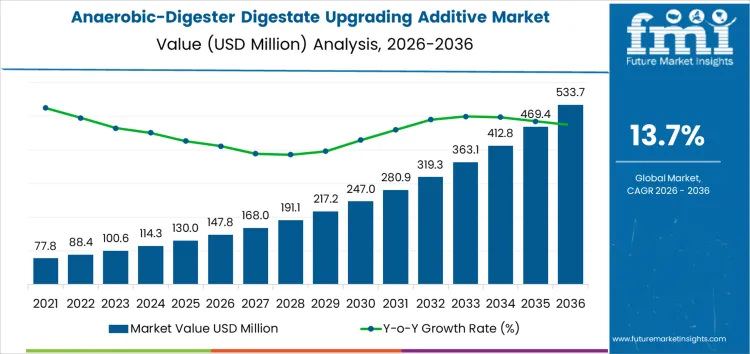
The anaerobic-digester digestate upgrading additive market is projected to grow from USD 147.8 million in 2026 to USD 533.7 million by 2036, with a compound annual growth rate (CAGR) of 13.7%. The industry's performance will be driven by production concentration, as a few key suppliers dominate the manufacturing of digestate upgrading additives. These suppliers will need to maintain tight control over regional production capabilities to ensure consistency and meet growing demand. Regional manufacturing control will influence the market's ability to meet fluctuations in demand, with supply reliability becoming increasingly critical. Companies will need to navigate potential supply chain disruptions, especially as the reliance on specific raw materials increases. Constraints on production capacity, especially in emerging markets, will limit growth unless manufacturers can scale efficiently. The dependencies on regulatory approvals and product certification processes will further shape adoption. Suppliers able to ensure consistent supply and navigate these operational complexities will capture the most value in this expanding market.
Quick Stats of the Anaerobic-Digester Digestate Upgrading Additive Market
- Anaerobic-Digester Digestate Upgrading Additive Market Value (2026): USD 147.8 million
- Anaerobic-Digester Digestate Upgrading Additive Market Forecast Value (2036): USD 533.7 million
- Anaerobic-Digester Digestate Upgrading Additive Market Global Forecast CAGR (2026-2036): 13.7%
- Anaerobic-Digester Digestate Upgrading Additive Market Leading Segment: Channel (Direct) 60%
- Key Growth Regions in Anaerobic-Digester Digestate Upgrading Additive Market: India
- Top Players in Anaerobic-Digester Digestate Upgrading Additive Market: BASF, Veolia, Suez, Nutrien, Yara International, Kemira
What is the Growth Forecast for the Anaerobic-Digester Digestate Upgrading Additive Market through 2036?
The absolute dollar opportunity for the anaerobic-digester digestate upgrading additive market reflects the total increase in market value over the forecast period. Starting at USD 147.8 million in 2026, the market is expected to grow to USD 533.7 million by 2036, representing an increase of USD 385.9 million over the 10-year period. This significant dollar opportunity highlights the expanding role of digestate upgrading additives in enhancing the value of digestate byproducts, particularly as industries and municipalities seek more sustainable and efficient ways to manage organic waste.
The largest portion of this opportunity will likely materialize between 2026 and 2031, when the market will grow from USD 147.8 million to USD 280.9 million, adding approximately USD 133 million to the market value. The second phase, from 2031 to 2036, will see further expansion, with the market growing from USD 280.9 million to USD 533.7 million, adding another USD 253 million. This growth is driven by increased adoption of anaerobic digestion technology, improvements in digestate upgrading additives, and the global shift towards more sustainable waste management practices.
Anaerobic-Digester Digestate Upgrading Additive Market Key Takeaways
| Metric | Value |
|---|---|
| Industry Sales Value (2026) | USD 147.8 million |
| Industry Forecast Value (2036) | USD 533.7 million |
| Industry Forecast CAGR (2026-2036) | 13.7% |
What Is Driving the Demand for Anaerobic-Digester Digestate Upgrading Additives?
Historical demand for additives in anaerobic digestion has been shaped by the widespread use of anaerobic digesters to convert organic wastes into biogas and a nutrient rich by product known as digestate. Anaerobic digestion is a biological process in which microorganisms break down organic matter without oxygen, producing biogas primarily composed of methane and carbon dioxide and leaving digestate that contains plant nutrients and organic matter. Additives historically have been used to enhance the efficiency and stability of the digestion process by improving microbial activity, accelerating hydrolysis, and mitigating inhibitory compounds that can suppress performance. Additives such as trace metals, carbon based conductive materials, and biological substances including enzymes and specific microbes have been applied to support syntrophic interactions and maintain optimal conditions for methane production. This context established early interest in material systems that can improve both biogas yields and digestate properties, responding to operational challenges such as low biodegradation rates and process instability during digestion. Improved digestate quality has been associated with safer and more effective use as a soil amendment or fertilizer.
Future demand for anaerobic digester digestate upgrading additives is expected to be influenced by growth in renewable energy and circular economy practices that integrate nutrient recovery with waste management. Additives that enhance anaerobic digestion can support higher biogas production and more stable operation, factors that influence the economic viability of digesters in agriculture, wastewater treatment, and industrial organic waste sectors. Growth factors include increasing deployment of biogas systems worldwide, efforts to reduce greenhouse gas emissions by diverting organic waste from landfills, and rising interest in converting digestate into value added products such as organic fertilizers with improved agronomic properties. The need to overcome digestate quality issues such as variability in nutrient composition or potential phytotoxic effects will continue to drive interest in conditioning agents, biological enhancers, and chemical additives that stabilize digestate for safe soil application. Technical considerations such as feedstock variability and ensuring additives are compatible with diverse digester designs and operating conditions may influence adoption rates, while regulatory frameworks emphasizing sustainable waste to energy practices could support broader use of upgrading additives.
What are the Leading Segments in the Global Anaerobic-Digester Digestate Upgrading Additive Market?
The global anaerobic-digester digestate upgrading additive market is segmented by application and channel. Among applications, standard leads the market, capturing 50% of the share, followed by premium, industrial, and other applications. Standard additives are the most commonly used due to their effectiveness in improving the quality of digestate for agricultural and environmental applications. On the channel side, direct sales dominate the market, holding 60% of the share, followed by retail, online, and distributor channels. Direct sales are favored due to the specialized nature of the product and the need for tailored solutions in the upgrading of anaerobic-digester digestates.
What Drives the Growth of Standard Applications in the Anaerobic-Digester Digestate Upgrading Additive Market?
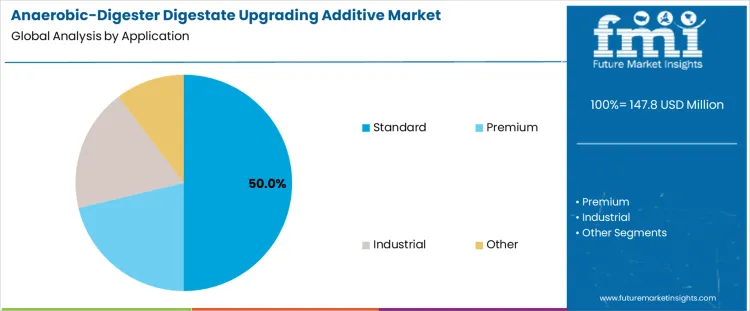
Standard applications are the leading segment in the anaerobic-digester digestate upgrading additive market, holding 50% of the share. The demand for standard additives is driven by their cost-effectiveness and suitability for large-scale, routine agricultural and industrial digestate applications. Standard additives improve the nutrient content and usability of digestate, making it more effective as a soil amendment or fertilizer. As the adoption of anaerobic digestion technologies increases globally, standard additives are widely used due to their proven performance in enhancing the digestate quality, supporting agricultural productivity, and ensuring environmental compliance. Additionally, standard additives are favored by both smaller and large-scale operations due to their affordability and widespread availability.
What is Driving the Demand for Direct Sales in the Anaerobic-Digester Digestate Upgrading Additive Market?
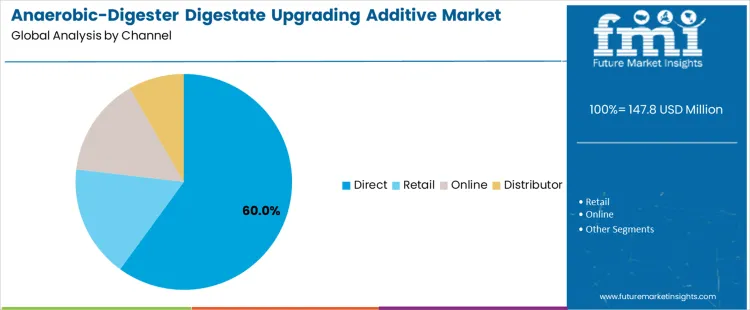
Direct sales are the leading channel in the anaerobic-digester digestate upgrading additive market, capturing 60% of the share. This demand is driven by the need for specialized solutions tailored to the unique requirements of anaerobic-digestion systems. Direct sales allow manufacturers to provide personalized advice, customized product offerings, and direct support to end-users, particularly in the agricultural and industrial sectors. The complexity of digestate upgrading and the technical nature of the additives make direct interactions essential for ensuring optimal application and performance. Furthermore, direct sales facilitate stronger customer relationships and long-term partnerships, which are crucial in markets with specific regulatory requirements and technical demands. As the market for digestate upgrading additives continues to expand, direct sales channels will remain the dominant route for reaching specialized customers.
What are the Key Dynamics in the Anaerobic-Digester Digestate Upgrading Additive Market?
The anaerobic-digester digestate upgrading additive market is influenced by growing interest in enhancing nutrient recovery and improving digestate quality for agricultural use. Additives are used to stabilize organic matter, reduce odor, and adjust nutrient balance in digestate produced from biogas and wastewater treatment. Regulations on land application of biosolids and organic fertilizers shape product development and adoption by waste management and agricultural sectors.
End users evaluate additives based on effectiveness, cost, and compatibility with existing anaerobic digestion systems. Technology developments, supply chain factors, and environmental compliance measures are central to market activity.
What are the Main Factors Driving Growth in the Market?
Regulatory emphasis on sustainable waste management and nutrient recycling is a driver of market growth. Governments are setting standards for organic waste processing and soil amendment quality, encouraging use of digestate upgrading additives that support compliance.
The agricultural sector is seeking inputs that enhance soil health while reducing reliance on synthetic fertilizers, increasing interest in upgraded digestate. Advances in additive formulations that improve phosphorus stabilization and nitrogen retention are expanding use cases. Rising investment in biogas facilities for renewable energy production also supports demand for digestate improvement solutions.
What Challenges Are Restraining Market Expansion?
Cost considerations can restrain adoption of digestate upgrading additives, particularly for smaller anaerobic digestion operators with limited budgets. Variability in feedstock composition affects additive performance, creating uncertainty for formulators and end users. Technical limitations in achieving consistent improvements in nutrient profiles and reduction of contaminants can slow uptake of certain products. Complex regulatory frameworks for biosolids and soil amendments differ across regions, adding compliance challenges for manufacturers and users. Infrastructure gaps in storage, handling, and application of upgraded digestate further constrain market growth.
What Emerging Trends Are Shaping the Future of the Market?
Innovation in additive chemistry is a key trend, with research focusing on biological and mineral-based compounds that enhance nutrient stabilization and reduce greenhouse gas emissions from stored digestate. Integration of sensor and monitoring technologies in anaerobic digestion plants is enabling data-driven optimization of additive dosing. Partnerships between additive suppliers, waste processors, and agricultural cooperatives are increasing as stakeholders seek coordinated solutions. Interest in circular economy practices is encouraging reuse of organic byproducts and adoption of digestate upgrades that support soil carbon sequestration and sustainable land management.
What is the Country-Wise Analysis of the Anaerobic-Digester Digestate Upgrading Additive Market?
The anaerobic-digester digestate upgrading additive market is experiencing significant growth due to the increasing focus on sustainable waste management and renewable energy solutions. Anaerobic digestion is widely used for organic waste treatment, and the digestate produced from this process can be further upgraded using specialized additives to enhance its value and usability, especially as fertilizer.
Developed markets such as Germany, the Netherlands, and the USA are seeing strong demand for these upgrading additives, driven by the growing need to manage organic waste sustainably and produce high-quality fertilizers. Emerging markets like India are also witnessing steady growth, as the country seeks to improve its waste management infrastructure and adopt more sustainable agricultural practices. As the global emphasis on circular economy principles and waste-to-energy technologies increases, the market for anaerobic-digester digestate upgrading additives is expected to continue expanding in both developed and emerging markets.
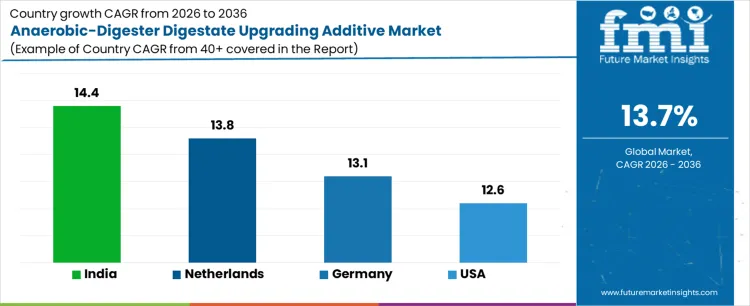
| Country | CAGR (2026-2036) |
|---|---|
| Germany | 13.1% |
| Netherlands | 13.8% |
| USA | 12.6% |
| India | 14.4% |
What is the Growth Outlook for the Anaerobic-Digester Digestate Upgrading Additive Market in Germany?
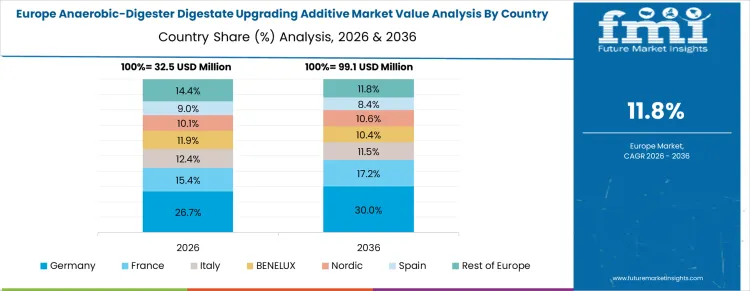
The anaerobic-digester digestate upgrading additive market in Germany is projected to grow steadily, with a projected CAGR of 13.1% from 2026 to 2036. Germany is one of the leading countries in the adoption of renewable energy and waste management technologies, and its commitment to sustainability is driving the demand for products that can enhance the efficiency and output of anaerobic digestion systems. The country is actively investing in circular economy practices, including the conversion of organic waste into valuable products like high-quality fertilizers.
As part of this initiative, the demand for anaerobic-digester digestate upgrading additives is expected to grow as more facilities adopt these additives to improve the quality of digestate and make it more suitable for agricultural use. With strong support from government policies promoting renewable energy and sustainable farming practices, Germany's market for digestate upgrading additives is expected to continue its upward trajectory.
What is the Market Outlook for the Anaerobic-Digester Digestate Upgrading Additive Market in the Netherlands?
The Netherlands is projected to experience robust growth in the anaerobic-digester digestate upgrading additive market, with a projected CAGR of 13.8% from 2026 to 2036. The Netherlands is a global leader in waste-to-energy technologies and sustainable agriculture, making it a key market for anaerobic digestion and the upgrading of digestate. The country has implemented strong policies to promote sustainable farming practices and reduce waste, and anaerobic digestion is a critical part of its circular economy strategy.
The demand for digestate upgrading additives is growing as Dutch farmers and waste management facilities seek to improve the quality of digestate, turning it into high-value organic fertilizer that is both efficient and environmentally friendly. With continued innovation in waste management and renewable energy technologies, the Netherlands is expected to see significant market growth in this sector.
What is the Growth Forecast for the Anaerobic-Digester Digestate Upgrading Additive Market in the USA?
The anaerobic-digester digestate upgrading additive market in the USA is expected to grow steadily, with a projected CAGR of 12.6% from 2026 to 2036. The USA is increasingly focusing on sustainable agricultural practices and waste management solutions as part of its environmental and energy policies. Anaerobic digestion is an essential component of the country’s strategy to manage organic waste and produce renewable energy, and digestate upgrading additives play a crucial role in improving the quality of digestate for use as fertilizer.
The USA is home to a growing number of anaerobic digestion plants, particularly in the agricultural sector, and the demand for digestate upgrading additives is expected to rise as more facilities adopt these technologies to enhance the value of their waste outputs. As the push for sustainable farming practices continues, the U.S. market for these additives is projected to experience steady growth over the coming decade.
What is the Market Outlook for the Anaerobic-Digester Digestate Upgrading Additive Market in India?
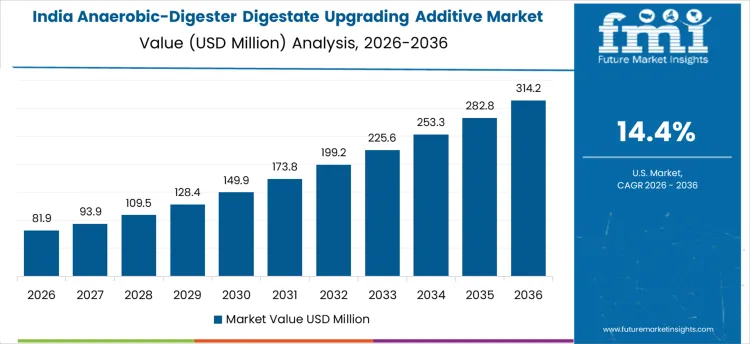
India is projected to experience the highest growth in the anaerobic-digester digestate upgrading additive market, with a projected CAGR of 14.4% from 2026 to 2036. India, with its rapidly growing population and agricultural sector, is increasingly focusing on sustainable waste management and waste-to-energy technologies. The country is also looking for innovative solutions to improve soil health and reduce dependence on chemical fertilizers. Anaerobic digestion, which converts organic waste into valuable products like biogas and digestate, is becoming a key part of India's circular economy initiatives. The demand for digestate upgrading additives is rising as India seeks to improve the quality of its digestate, turning it into high-quality organic fertilizers that are more suitable for use in agriculture. The combination of a growing focus on waste-to-energy technologies and the need for sustainable farming solutions positions India as a high-growth market for these upgrading additives over the next decade.
What is the Competitive Landscape for the Anaerobic-Digester Digestate Upgrading Additive Market?
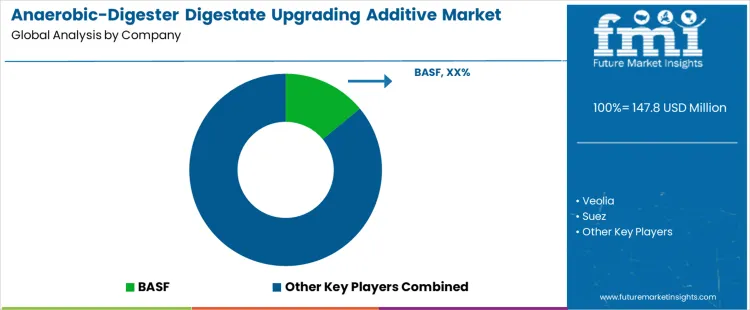
The anaerobic-digester digestate upgrading additive market is growing as industries focus on improving the quality of digestate produced from anaerobic digestion processes, particularly in waste-to-energy and agricultural applications. BASF leads the market with its innovative digestate upgrading additives, offering solutions that enhance the nutrient quality, stability, and safety of the digestate, making it more suitable for agricultural use and reducing environmental impact. Their commitment to product performance, sustainability, and regulatory compliance has positioned them as a dominant player in this market.
Veolia, Suez, and Nutrien are significant competitors, each providing specialized additives designed to improve the quality and value of digestate. Veolia offers advanced technologies and additives that optimize waste treatment processes, while Suez focuses on providing sustainable solutions for waste-to-energy applications. Nutrien delivers nutrient-rich solutions for digestate that support agricultural productivity.
Yara International and Kemira further contribute to the competitive landscape by offering digestate upgrading additives that enhance the fertilizing properties of the material. Yara International specializes in providing additive solutions that improve the nutrient release and availability from digestate, while Kemira focuses on sustainable chemical solutions for improving digestate quality in waste-to-resource applications. These companies compete by focusing on product innovation, sustainability, and the ability to meet the growing demand for efficient and eco-friendly solutions in digestate treatment. As environmental regulations and sustainability efforts intensify, the market for anaerobic-digester digestate upgrading additives is expected to grow, fostering further innovation and competition.
Key Players of the Anaerobic-Digester Digestate Upgrading Additive Market
- BASF
- Veolia
- Suez
- Nutrien
- Yara International
- Kemira
Scope of the Report
| Items | Values |
|---|---|
| Quantitative Units (2026) | USD Million |
| Application | Standard, Premium, Industrial, Other |
| Form | Liquid, Solid, Gas, Gel |
| Channel | Direct, Retail, Online, Distributor |
| Companies | BASF, Veolia, Suez, Nutrien, Yara International, Kemira |
| Regions Covered | North America, Latin America, Western Europe, Eastern Europe, South Asia & Pacific, East Asia, Middle East & Africa |
| Countries Covered | United States, Canada, Mexico, Brazil, Argentina, Germany, France, United Kingdom, Italy, Spain, Netherlands, China, India, Japan, South Korea, ANZ, GCC Countries, South Africa |
| Additional Attributes | Dollar by sales by application, form, channel, and region. Includes analysis of market trends in anaerobic digester digestate upgrading additives, performance impacts on biogas yields and nutrient profiles, cost and implementation factors, regulatory and environmental considerations affecting additive use, adoption patterns across industrial and agricultural sectors, market share and competitive positioning of key companies, innovation in additive technologies, and evaluation of impact on process efficiency, stability, and end product quality. |
Anaerobic-Digester Digestate Upgrading Additive Market Segmentation
Application:
- Standard
- Premium
- Industrial
- Other
Form:
- Liquid
- Solid
- Gas
- Gel
Channel:
- Direct
- Retail
- Online
- Distributor
Region:
- Asia Pacific
- China
- Japan
- South Korea
- India
- Australia & New Zealand
- ASEAN
- Rest of Asia Pacific
- Europe
- Germany
- United Kingdom
- France
- Italy
- Spain
- Nordic
- BENELUX
- Rest of Europe
- North America
- United States
- Canada
- Mexico
- Latin America
- Brazil
- Chile
- Rest of Latin America
- Middle East & Africa
- Kingdom of Saudi Arabia
- Other GCC Countries
- Turkey
- South Africa
- Other African Union
- Rest of Middle East & Africa
Frequently Asked Questions
How big is the anaerobic-digester digestate upgrading additive market in 2026?
The global anaerobic-digester digestate upgrading additive market is estimated to be valued at USD 147.8 million in 2026.
What will be the size of anaerobic-digester digestate upgrading additive market in 2036?
The market size for the anaerobic-digester digestate upgrading additive market is projected to reach USD 533.7 million by 2036.
How much will be the anaerobic-digester digestate upgrading additive market growth between 2026 and 2036?
The anaerobic-digester digestate upgrading additive market is expected to grow at a 13.7% CAGR between 2026 and 2036.
What are the key application types in the anaerobic-digester digestate upgrading additive market?
The key application types in anaerobic-digester digestate upgrading additive market are standard, premium, industrial and other.
Which channel segment to contribute significant share in the anaerobic-digester digestate upgrading additive market in 2026?
In terms of channel, direct sales segment to command 60% share in the anaerobic-digester digestate upgrading additive market in 2026.
Preview the report firsthand - request a free sample
Get SampleGet the brochure for pricing and purchase details.
Get PDFTable of Content
- Executive Summary
- Global Market Outlook
- Demand-side Trends
- Supply-side Trends
- Technology Roadmap Analysis
- Analysis and Recommendations
- Market Overview
- Market Coverage / Taxonomy
- Market Definition / Scope / Limitations
- Market Background
- Market Dynamics
- Drivers
- Restraints
- Opportunity
- Trends
- Scenario Forecast
- Demand in Optimistic Scenario
- Demand in Likely Scenario
- Demand in Conservative Scenario
- Opportunity Map Analysis
- Product Life Cycle Analysis
- Supply Chain Analysis
- Investment Feasibility Matrix
- Value Chain Analysis
- PESTLE and Porter’s Analysis
- Regulatory Landscape
- Regional Parent Market Outlook
- Production and Consumption Statistics
- Import and Export Statistics
- Market Dynamics
- Global Market Analysis 2021 to 2025 and Forecast, 2026 to 2036
- Historical Market Size Value (USD Million) Analysis, 2021 to 2025
- Current and Future Market Size Value (USD Million) Projections, 2026 to 2036
- Y-o-Y Growth Trend Analysis
- Absolute $ Opportunity Analysis
- Global Market Pricing Analysis 2021 to 2025 and Forecast 2026 to 2036
- Global Market Analysis 2021 to 2025 and Forecast 2026 to 2036, By Application
- Introduction / Key Findings
- Historical Market Size Value (USD Million) Analysis By Application , 2021 to 2025
- Current and Future Market Size Value (USD Million) Analysis and Forecast By Application , 2026 to 2036
- Standard
- Premium
- Industrial
- Other
- Standard
- Y-o-Y Growth Trend Analysis By Application , 2021 to 2025
- Absolute $ Opportunity Analysis By Application , 2026 to 2036
- Global Market Analysis 2021 to 2025 and Forecast 2026 to 2036, By Form
- Introduction / Key Findings
- Historical Market Size Value (USD Million) Analysis By Form, 2021 to 2025
- Current and Future Market Size Value (USD Million) Analysis and Forecast By Form, 2026 to 2036
- Liquid
- Solid
- Gas
- Gel
- Liquid
- Y-o-Y Growth Trend Analysis By Form, 2021 to 2025
- Absolute $ Opportunity Analysis By Form, 2026 to 2036
- Global Market Analysis 2021 to 2025 and Forecast 2026 to 2036, By Channel
- Introduction / Key Findings
- Historical Market Size Value (USD Million) Analysis By Channel, 2021 to 2025
- Current and Future Market Size Value (USD Million) Analysis and Forecast By Channel, 2026 to 2036
- Direct
- Retail
- Online
- Distributor
- Direct
- Y-o-Y Growth Trend Analysis By Channel, 2021 to 2025
- Absolute $ Opportunity Analysis By Channel, 2026 to 2036
- Global Market Analysis 2021 to 2025 and Forecast 2026 to 2036, By Region
- Introduction
- Historical Market Size Value (USD Million) Analysis By Region, 2021 to 2025
- Current Market Size Value (USD Million) Analysis and Forecast By Region, 2026 to 2036
- North America
- Latin America
- Western Europe
- Eastern Europe
- East Asia
- South Asia and Pacific
- Middle East & Africa
- Market Attractiveness Analysis By Region
- North America Market Analysis 2021 to 2025 and Forecast 2026 to 2036, By Country
- Historical Market Size Value (USD Million) Trend Analysis By Market Taxonomy, 2021 to 2025
- Market Size Value (USD Million) Forecast By Market Taxonomy, 2026 to 2036
- By Country
- USA
- Canada
- Mexico
- By Application
- By Form
- By Channel
- By Country
- Market Attractiveness Analysis
- By Country
- By Application
- By Form
- By Channel
- Key Takeaways
- Latin America Market Analysis 2021 to 2025 and Forecast 2026 to 2036, By Country
- Historical Market Size Value (USD Million) Trend Analysis By Market Taxonomy, 2021 to 2025
- Market Size Value (USD Million) Forecast By Market Taxonomy, 2026 to 2036
- By Country
- Brazil
- Chile
- Rest of Latin America
- By Application
- By Form
- By Channel
- By Country
- Market Attractiveness Analysis
- By Country
- By Application
- By Form
- By Channel
- Key Takeaways
- Western Europe Market Analysis 2021 to 2025 and Forecast 2026 to 2036, By Country
- Historical Market Size Value (USD Million) Trend Analysis By Market Taxonomy, 2021 to 2025
- Market Size Value (USD Million) Forecast By Market Taxonomy, 2026 to 2036
- By Country
- Germany
- UK
- Italy
- Spain
- France
- Nordic
- BENELUX
- Rest of Western Europe
- By Application
- By Form
- By Channel
- By Country
- Market Attractiveness Analysis
- By Country
- By Application
- By Form
- By Channel
- Key Takeaways
- Eastern Europe Market Analysis 2021 to 2025 and Forecast 2026 to 2036, By Country
- Historical Market Size Value (USD Million) Trend Analysis By Market Taxonomy, 2021 to 2025
- Market Size Value (USD Million) Forecast By Market Taxonomy, 2026 to 2036
- By Country
- Russia
- Poland
- Hungary
- Balkan & Baltic
- Rest of Eastern Europe
- By Application
- By Form
- By Channel
- By Country
- Market Attractiveness Analysis
- By Country
- By Application
- By Form
- By Channel
- Key Takeaways
- East Asia Market Analysis 2021 to 2025 and Forecast 2026 to 2036, By Country
- Historical Market Size Value (USD Million) Trend Analysis By Market Taxonomy, 2021 to 2025
- Market Size Value (USD Million) Forecast By Market Taxonomy, 2026 to 2036
- By Country
- China
- Japan
- South Korea
- By Application
- By Form
- By Channel
- By Country
- Market Attractiveness Analysis
- By Country
- By Application
- By Form
- By Channel
- Key Takeaways
- South Asia and Pacific Market Analysis 2021 to 2025 and Forecast 2026 to 2036, By Country
- Historical Market Size Value (USD Million) Trend Analysis By Market Taxonomy, 2021 to 2025
- Market Size Value (USD Million) Forecast By Market Taxonomy, 2026 to 2036
- By Country
- India
- ASEAN
- Australia & New Zealand
- Rest of South Asia and Pacific
- By Application
- By Form
- By Channel
- By Country
- Market Attractiveness Analysis
- By Country
- By Application
- By Form
- By Channel
- Key Takeaways
- Middle East & Africa Market Analysis 2021 to 2025 and Forecast 2026 to 2036, By Country
- Historical Market Size Value (USD Million) Trend Analysis By Market Taxonomy, 2021 to 2025
- Market Size Value (USD Million) Forecast By Market Taxonomy, 2026 to 2036
- By Country
- Kingdom of Saudi Arabia
- Other GCC Countries
- Turkiye
- South Africa
- Other African Union
- Rest of Middle East & Africa
- By Application
- By Form
- By Channel
- By Country
- Market Attractiveness Analysis
- By Country
- By Application
- By Form
- By Channel
- Key Takeaways
- Key Countries Market Analysis
- USA
- Pricing Analysis
- Market Share Analysis, 2025
- By Application
- By Form
- By Channel
- Canada
- Pricing Analysis
- Market Share Analysis, 2025
- By Application
- By Form
- By Channel
- Mexico
- Pricing Analysis
- Market Share Analysis, 2025
- By Application
- By Form
- By Channel
- Brazil
- Pricing Analysis
- Market Share Analysis, 2025
- By Application
- By Form
- By Channel
- Chile
- Pricing Analysis
- Market Share Analysis, 2025
- By Application
- By Form
- By Channel
- Germany
- Pricing Analysis
- Market Share Analysis, 2025
- By Application
- By Form
- By Channel
- UK
- Pricing Analysis
- Market Share Analysis, 2025
- By Application
- By Form
- By Channel
- Italy
- Pricing Analysis
- Market Share Analysis, 2025
- By Application
- By Form
- By Channel
- Spain
- Pricing Analysis
- Market Share Analysis, 2025
- By Application
- By Form
- By Channel
- France
- Pricing Analysis
- Market Share Analysis, 2025
- By Application
- By Form
- By Channel
- India
- Pricing Analysis
- Market Share Analysis, 2025
- By Application
- By Form
- By Channel
- ASEAN
- Pricing Analysis
- Market Share Analysis, 2025
- By Application
- By Form
- By Channel
- Australia & New Zealand
- Pricing Analysis
- Market Share Analysis, 2025
- By Application
- By Form
- By Channel
- China
- Pricing Analysis
- Market Share Analysis, 2025
- By Application
- By Form
- By Channel
- Japan
- Pricing Analysis
- Market Share Analysis, 2025
- By Application
- By Form
- By Channel
- South Korea
- Pricing Analysis
- Market Share Analysis, 2025
- By Application
- By Form
- By Channel
- Russia
- Pricing Analysis
- Market Share Analysis, 2025
- By Application
- By Form
- By Channel
- Poland
- Pricing Analysis
- Market Share Analysis, 2025
- By Application
- By Form
- By Channel
- Hungary
- Pricing Analysis
- Market Share Analysis, 2025
- By Application
- By Form
- By Channel
- Kingdom of Saudi Arabia
- Pricing Analysis
- Market Share Analysis, 2025
- By Application
- By Form
- By Channel
- Turkiye
- Pricing Analysis
- Market Share Analysis, 2025
- By Application
- By Form
- By Channel
- South Africa
- Pricing Analysis
- Market Share Analysis, 2025
- By Application
- By Form
- By Channel
- USA
- Market Structure Analysis
- Competition Dashboard
- Competition Benchmarking
- Market Share Analysis of Top Players
- By Regional
- By Application
- By Form
- By Channel
- Competition Analysis
- Competition Deep Dive
- BASF
- Overview
- Product Portfolio
- Profitability by Market Segments (Product/Age /Sales Channel/Region)
- Sales Footprint
- Strategy Overview
- Marketing Strategy
- Product Strategy
- Channel Strategy
- Veolia
- Suez
- Nutrien
- Yara International
- Kemira
- BASF
- Competition Deep Dive
- Assumptions & Acronyms Used
- Research Methodology


