

- Industry Size (2026)
- USD 2.4 Bn
- Forecast (2036)
- USD 5.3 Bn
- CAGR (2026 to 2036)
- 8.2%
Bio-Based Nonionic Surfactants Market Forecast and Outlook 2026 to 2036
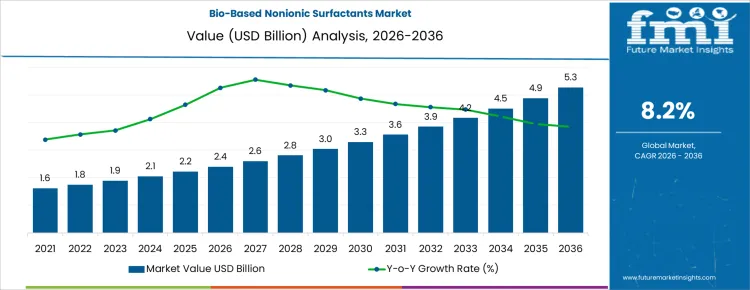
The bio-based nonionic surfactants market is expected to grow from USD 2.4 billion in 2026 to USD 5.3 billion by 2036, reflecting a compound annual growth rate (CAGR) of 8.2%. These surfactants, derived from renewable and sustainable raw materials, are increasingly preferred in a variety of industries such as personal care, home care, and industrial applications. With rising environmental concerns and a shift toward more sustainable and eco-friendly product, the demand for bio-based nonionic surfactants is expected to grow. These surfactants offer superior performance in cleaning, emulsifying, and foaming, while being milder on the skin and less harmful to aquatic ecosystems compared to traditional petroleum-based surfactants.
The market growth is further supported by stricter environmental regulations and consumer demand for green chemistry solutions. As industries seek alternatives to synthetic chemicals, bio-based nonionic surfactants are gaining traction due to their biodegradability and sustainable production methods. The growing preference for natural and organic personal care products and the increasing adoption of eco-friendly cleaning products in household and industrial applications are expected to further propel market expansion.
Quick Stats of the Bio-Based Nonionic Surfactants Market
- Bio-Based Nonionic Surfactants Market Value (2026): USD 2.4 billion
- Bio-Based Nonionic Surfactants Market Forecast Value (2036): USD 5.3 billion
- Bio-Based Nonionic Surfactants Market Global Forecast CAGR (2026 to 2035): 8.2%
- Bio-Based Nonionic Surfactants Market Leading Segment: Form (Liquid) 46%
- Key Growth Regions in Bio-Based Nonionic Surfactants Market: China
- Top Players in Bio-Based Nonionic Surfactants Market: BASF, Croda, Evonik, Clariant, Solvay, Kao Corporation, Stepan, Nouryon, Dow, Sasol
What is the Growth Forecast for the Bio-Based Nonionic Surfactants Market through 2036?
The acceleration and deceleration pattern for the bio-based nonionic surfactants market shows steady growth with a noticeable acceleration in the middle of the forecast period. Starting at USD 2.4 billion in 2026, the market grows to USD 2.6 billion in 2027 and USD 2.8 billion in 2028, reflecting steady early-stage adoption as industries and consumers gradually transition toward more sustainable surfactant solutions. These early years highlight a moderate increase driven by growing awareness and the initial phase of product integration in multiple sectors.
From 2028 to 2030, the market continues to expand, reaching USD 3.1 billion in 2029 and USD 3.3 billion in 2030. During this period, the acceleration begins, as the demand for bio-based nonionic surfactants increases due to their environmental benefits and enhanced performance. Between 2030 and 2035, the market grows more strongly, reaching USD 3.6 billion in 2031, USD 3.9 billion in 2032, and USD 4.2 billion in 2033. By 2035, the market is projected to reach USD 4.5 billion, with the final value of USD 5.3 billion expected in 2036, reflecting the ongoing acceleration in adoption and the expanding range of applications as industries and consumers prioritize sustainability.
Bio-Based Nonionic Surfactants Market Key Takeaways
| Metric | Value |
|---|---|
| Industry Sales Value (2026) | USD 2.4 billion |
| Industry Forecast Value (2036) | USD 5.3 billion |
| Industry Forecast CAGR (2026 to 2036) | 8.2% |
What Is Driving the Demand for the Bio-Based Nonionic Surfactants Market Globally?
The global demand for - nonionic surfactants is driven by increasing emphasis on sustainability, regulatory pressure on petrochemical derived ingredients, and growing consumer awareness of environmental and health impacts of chemical products. Nonionic surfactants are widely used as emulsifiers, detergents, wetting agents, and dispersants across personal care, household cleaning, industrial, agricultural, and institutional applications. Traditional nonionic surfactants are often derived from petroleum feedstocks, which are associated with carbon intensity and concerns about biodegradability and aquatic toxicity.
In contrast, - nonionic surfactants are formulated from renewable raw materials such as plant oils, sugars, and fatty alcohols, offering improved biodegradation profiles and lower lifecycle greenhouse gas emissions. This aligns with regulatory frameworks in many regions that encourage or mandate increased use of renewable, biodegradable, and low toxicity materials.
Personal care and home care brands, in particular, emphasise - surfactants to deliver effective cleaning and formulation performance while meeting eco certification standards, clean label preferences, and corporate sustainability commitments. Growing middle class populations in Asia Pacific, Latin America, and the Middle East are also expanding demand for personal and household products that incorporate greener ingredient portfolios, reinforcing market momentum.
Future demand for - nonionic surfactants is expected to grow as industries pursue deeper integration of circular economy principles and respond to tightening environmental and chemical safety regulations. Advances in green chemistry, bioprocessing, and feedstock diversification will enhance production efficiency and cost competitiveness of bio derived surfactants relative to conventional petrochemical alternatives. Innovation in formulation science will enable these surfactants to meet or exceed performance expectations in challenging applications such as industrial cleaners, mining operations, agrochemical emulsions, and technical formulations, broadening their adoption beyond traditional personal and home care segments.
Supply chain investments in sustainable biomass sourcing, certification schemes for traceability, and improved logistics for renewable inputs will support wider scale up and global deployment. Consumer preference for products with transparent sustainability claims, coupled with pressure from retailers and procurement policies that prioritise lower environmental impact, will reinforce uptake. As water quality concerns, carbon reduction targets, and extended producer responsibility programmes continue to shape regulatory landscapes across Europe, North America, and Asia, the market for - nonionic surfactants is positioned for sustained expansion, driven by both performance demands and environmental imperatives.
What are the Leading Segments in the Global Bio-Based Nonionic Surfactants Market?
The global bio-based nonionic surfactants market is segmented by feedstock source and form. Among the feedstock sources, coconut/palm-based suractants dominate the market, followed by sugar-based, tallow/animal-based, and mixed/certified sustainable blends. Coconut and palm-based surfactants are widely used due to their abundant availability and strong performance in a variety of applications.
In terms of form, liquid surfactants lead the market, with paste, powder/flakes, and blends/systems occupying smaller shares. The growth of this market is driven by the increasing demand for eco-friendly, sustainable alternatives to traditional petrochemical-based surfactants, with bio-based ingredients offering improved performance and environmental benefits.
What Drives the Growth of Coconut/Palm-Based Surfactants in the Bio-Based Nonionic Surfactants Market?
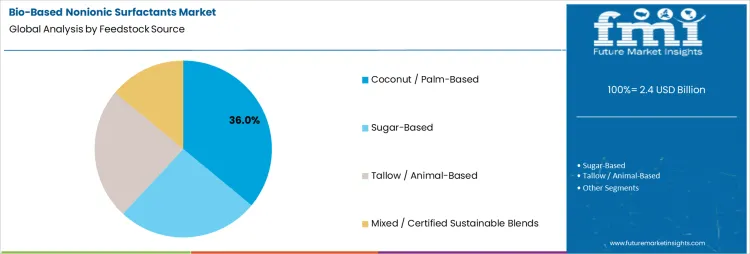
Coconut and palm-based surfactants are the dominant feedstock source in the bio-based nonionic surfactants market, accounting for the largest share. These surfactants are highly valued for their excellent cleaning, foaming, and emulsifying properties, making them ideal for use in a wide range of applications, including personal care, household cleaning products, and industrial formulations. The growth of this segment is largely driven by the widespread availability and cost-effectiveness of coconut and palm oil, which are used to produce nonionic surfactants. Furthermore, the renewable nature of these feedstocks aligns with the increasing consumer demand for sustainable, bio-based products.
As consumers and manufacturers alike seek environmentally friendly alternatives to petrochemical-based ingredients, coconut and palm-based surfactants are gaining popularity for their biodegradability and lower environmental impact. Additionally, advancements in the production process of bio-based surfactants, which focus on reducing the environmental footprint and improving yield, are expected to further boost the growth of this segment. The widespread use of coconut and palm oil-derived surfactants in personal care products, detergents, and industrial applications ensures their continued dominance in the bio-based nonionic surfactants market.
What is Driving the Demand for Liquid Surfactants in the Bio-Based Nonionic Surfactants Market?
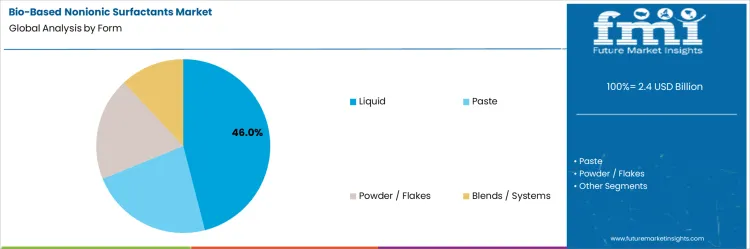
Liquid surfactants are the leading form in the bio-based nonionic surfactants market, driven by their versatility, ease of use, and compatibility with a variety of applications. Liquid forms of bio-based surfactants are widely utilized in personal care products, household cleaning agents, and industrial applications due to their ability to dissolve easily in water and provide efficient cleaning, foaming, and emulsifying properties. The preference for liquid surfactants is also influenced by consumer demand for ready-to-use products that can be easily incorporated into formulations.
In the personal care sector, liquid surfactants are crucial in products like shampoos, body washes, and facial cleansers, where they provide the desired sensory experience and cleaning action. Additionally, the liquid form allows for more precise formulation and application, making it a preferred choice for manufacturers. As the market for sustainable, bio-based ingredients grows, the demand for liquid bio-based nonionic surfactants is expected to increase, particularly as consumers continue to prioritize eco-friendly products with fewer synthetic chemicals. Innovations in liquid surfactant formulations, aimed at improving performance while reducing environmental impact, are further supporting the demand for liquid bio-based surfactants. Consequently, the liquid form is expected to remain a dominant segment in the bio-based nonionic surfactants market.
What are the Key Dynamics of the Global Bio Based Nonionic Surfactants Market?
The global bio-based nonionic surfactants market is expanding as formulators shift toward sustainable, plant derived alternatives to traditional petrochemical surfactants. These surface active agents, often sourced from sugars, fatty alcohols and natural esters, are widely used in detergents, personal care, industrial cleaning and agrochemical formulations. Growth reflects rising consumer demand for greener products, corporate environmental commitments and stricter chemical regulations in key regions. Adoption spans developed and emerging markets where performance, biodegradability and reduced environmental impact are influencing ingredient selection across diverse end uses.
What are the Key Drivers for the Global Bio-Based Nonionic Surfactants Market?
Rising preference for environmentally responsible ingredients in personal care and household products is a major driver supporting growth of bio-based nonionic surfactants. Brands are reformulating to align with sustainability goals and meet regulatory requirements that restrict harmful chemicals. Advances in biotechnology and renewable feedstock supply chains improve availability and cost competitiveness of bio derived surfactants. Growth of green cleaning and eco certified product segments encourages use of surfactants with strong biodegradability and low aquatic toxicity. Investment by formulators in natural and mild chemistry helps appeal to health conscious consumers and supports broader market adoption.
What are the Restraints for the Global Bio-Based Nonionic Surfactants Market?
One restraint is variability in feedstock supply and pricing for renewable raw materials, which can affect cost stability and production planning for some manufacturers. Bio-based surfactants may require extensive reformulation work to match performance properties of established petrochemical derivatives in specific applications. Technical challenges in achieving consistent quality and performance across different end use demands can influence uptake in performance critical industrial sectors. Regulatory landscapes differ by region, and varying definitions of “bio-based” or “natural” can complicate product claims. Cost sensitivities in value oriented market segments may limit adoption where price remains a primary purchasing criterion.
What is the Key Trends in the Global Bio-Based Nonionic Surfactants Market?
A key trend is development of advanced bio-based chemistries that balance sustainability with enhanced functional performance, such as improved detergency, foaming and mildness. Ingredient suppliers are expanding portfolios to include modular nonionic surfactants tailored for specific end uses, including high efficiency detergents, skin friendly personal care, and industrial cleaners. Collaboration between raw material producers, formulators and certification bodies is increasing to standardize green labels and support transparency in sourcing and biodegradability. Adoption of circular economy principles and integration of life cycle assessment metrics in product development are shaping strategic choices. Growth in emerging markets with expanding consumer goods sectors further supports broader market activity.
What is the Country-Wise Analysis of the Bio-Based Nonionic Surfactants Market?
The bio-based nonionic surfactants market is projected to experience steady growth, driven by increasing demand for sustainable and eco-friendly ingredients in various industries such as personal care, detergents, and industrial applications. These surfactants, derived from renewable resources, offer an environmentally friendly alternative to traditional petrochemical-based surfactants.
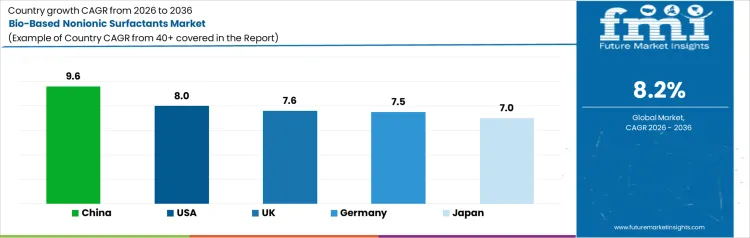
As consumer awareness of sustainability increases, industries are shifting toward greener formulations. High-growth regions like China are seeing significant demand driven by an expanding industrial base and a growing focus on sustainability. Developed markets such as the USA, UK, and Germany are also experiencing steady growth, supported by regulatory initiatives and consumer demand for sustainable products.
| Country | CAGR (2026 to 2036) |
|---|---|
| China | 9.6% |
| United States | 8% |
| United Kingdom | 7.6% |
| Germany | 7.5% |
| Japan | 7% |
What is the Growth Outlook for the Bio-Based Nonionic Surfactants Market in China?
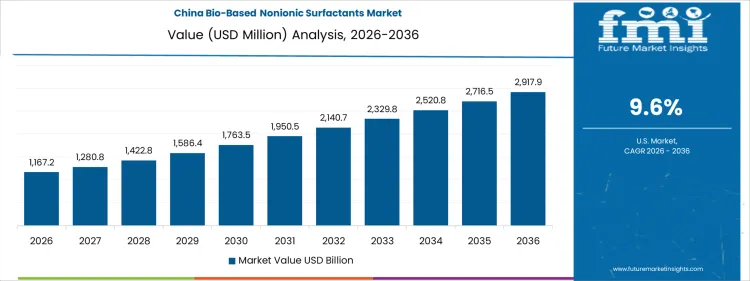
The bio-based nonionic surfactants market in China is expected to grow at the highest rate, with a projected CAGR of 9.6%. China’s rapidly expanding industrial base and increasing demand for eco-friendly solutions in personal care, detergents, and cleaning products are driving the adoption of bio-based surfactants. The growing focus on sustainable development and the government’s push for greener technologies are further fueling market growth. As Chinese consumers become more environmentally conscious, there is increasing demand for products that are both effective and sustainable. With China’s large manufacturing sector and rising consumer interest in green products, the market for bio-based nonionic surfactants is set to experience significant growth.
What is the Market Outlook for the Bio-Based Nonionic Surfactants Market in the United States?
The bio-based nonionic surfactants market in the United States is projected to grow steadily, with a projected CAGR of 8%. As the demand for sustainable and eco-friendly ingredients rises, USA manufacturers are increasingly adopting bio-based surfactants in products such as personal care items, household cleaners, and industrial applications. The market is supported by strong consumer demand for greener alternatives and stricter environmental regulations. With an increasing focus on ingredient transparency and sustainability, USA companies are shifting toward renewable, plant-based materials for surfactants. The growth of the green chemistry movement and consumer preference for environmentally responsible products are expected to continue driving market growth in the USA
What is the Growth Forecast for the Bio-Based Nonionic Surfactants Market in the United Kingdom?
The bio-based nonionic surfactants market in the United Kingdom is expected to grow at a moderate pace, with a projected CAGR of 7.6%. The UK’s personal care and detergent industries, which are increasingly focusing on sustainable and natural ingredients, are driving the demand for bio-based surfactants. The UK government’s push for sustainability and reducing carbon footprints in manufacturing is further fueling the adoption of bio-based materials. As consumer awareness around sustainability continues to rise, there is a growing demand for products that use renewable resources, and the UK is embracing eco-friendly alternatives in many sectors. The steady growth of the market is expected to continue as more industries and consumers prioritize sustainability.
What is the Market Outlook for the Bio-Based Nonionic Surfactants Market in Germany?
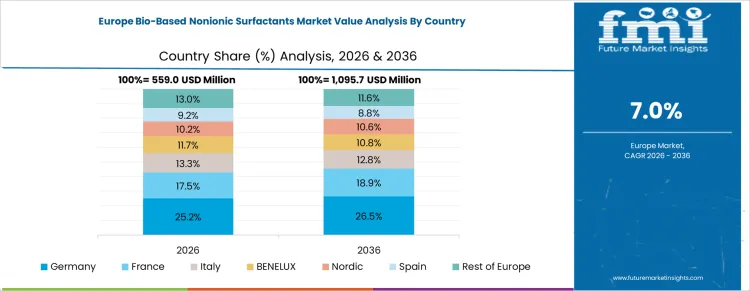
The bio-based nonionic surfactants market in Germany is projected to grow at a steady pace, with a projected CAGR of 7.5%. Germany, known for its focus on sustainability and environmental responsibility, is increasingly adopting bio-based surfactants in personal care, home care, and industrial applications. The growing demand for eco-friendly and non-toxic formulations is driving the use of renewable surfactants derived from natural sources. Germany’s strong regulatory framework, which encourages the use of environmentally safe ingredients, is supporting the adoption of bio-based alternatives. As consumer preferences for sustainable products continue to evolve, the demand for bio-based nonionic surfactants in Germany is expected to grow steadily.
What are the Growth Prospects for the Bio-Based Nonionic Surfactants Market in Japan?
The bio-based nonionic surfactants market in Japan is expected to grow at a moderate pace, with a projected CAGR of 7%. Japan’s well-established personal care and industrial sectors are increasingly focused on sustainability and innovation. Japanese consumers, known for their demand for high-quality and eco-friendly products, are driving the market for bio-based surfactants in personal care, cosmetics, and detergents. The country’s commitment to reducing its environmental footprint and promoting green technologies is contributing to the rise in demand for bio-based alternatives. With a growing preference for safe, natural ingredients, Japan’s market for bio-based nonionic surfactants is expected to grow steadily in the coming years.
What is the Competitive Landscape for the Bio-Based Nonionic Surfactants Market?
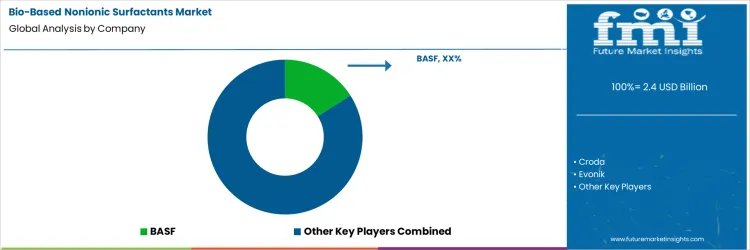
The bio-based nonionic surfactants market is expanding rapidly, driven by the increasing demand for sustainable and environmentally friendly ingredients in various applications, including personal care, household products, and industrial processes. BASF leads the market with its innovative bio-based nonionic surfactants, offering high-performance solutions derived from renewable resources. Their commitment to sustainability, coupled with extensive research and development, has positioned them as a key player in the market. Croda, Evonik, and Clariant are major competitors, providing sustainable and effective bio-based surfactants. Croda focuses on developing bio-based surfactants with superior performance for personal care and household products, while Evonik and Clariant offer high-quality, renewable surfactants designed to meet the growing demand for eco-friendly solutions.
Solvay, Kao Corporation, Stepan, Nouryon, Dow, and Sasol contribute to the competitive landscape by offering a diverse range of bio-based nonionic surfactants for various applications. Solvay provides sustainable surfactants that deliver effective cleaning and foaming properties, while Kao Corporation focuses on bio-based solutions that enhance product performance. Stepan and Nouryon offer surfactants with excellent stability and low environmental impact. Dow and Sasol also develop high-performance bio-based surfactants, targeting both personal care and industrial sectors. These companies compete by focusing on product innovation, sustainability, and the ability to offer high-performance surfactants derived from renewable resources to meet the needs of the growing bio-based market.
Key Players of the Bio-Based Nonionic Surfactants Market
- BASF
- Croda
- Evonik
- Clariant
- Solvay
- Kao Corporation
- Stepan
- Nouryon
- Dow
- Sasol
Scope of the Report
| Items | Values |
|---|---|
| Quantitative Units (2026) | USD Billion |
| Chemistry | Alkyl Polyglucosides (APG), Bio-Based Fatty Alcohol Ethoxylates, Sorbitan Esters / Polysorbates, Sucrose & Other Sugar Esters |
| End Use | Home Care Cleaners, Personal Care, Industrial & Institutional Cleaning, Other Uses |
| Feedstock Source | Coconut / Palm-Based, Sugar-Based, Tallow / Animal-Based, Mixed / Certified Sustainable Blends |
| Form | Liquid, Paste, Powder / Flakes, Blends / Systems |
| Companies | BASF, Croda, Evonik, Clariant, Solvay, Kao Corporation, Stepan, Nouryon, Dow, Sasol |
| Regions Covered | North America, Latin America, Western Europe, Eastern Europe, South Asia and Pacific, East Asia, Middle East & Africa |
| Countries Covered | United States, Canada, Mexico, Brazil, Argentina, Germany, France, United Kingdom, Italy, Spain, Netherlands, China, India, Japan, South Korea, ANZ, GCC Countries, South Africa |
| Additional Attributes | Dollar by sales by chemistry, end use, feedstock source, form, and region. Includes market trends in bio-based nonionic surfactants, focusing on alkyl polyglucosides (APG), fatty alcohol ethoxylates, sorbitan esters, and sucrose esters. Highlights the role of sustainable feedstocks like coconut/palm, sugar-based, and tallow/animal-based in various applications like home care, personal care, and industrial cleaning. Focus on cost-effectiveness, sustainability, regulatory compliance, and market share of key companies in the bio-based surfactants market. |
Bio-Based Nonionic Surfactants Market Segmentation
By Chemistry:
- Alkyl Polyglucosides (APG)
- Bio-Based Fatty Alcohol Ethoxylates
- Sorbitan Esters / Polysorbates
- Sucrose & Other Sugar Esters
By End Use:
- Home Care Cleaners
- Personal Care
- Industrial & Institutional Cleaning
- Other Uses
By Feedstock Source:
- Coconut / Palm-Based
- Sugar-Based
- Tallow / Animal-Based
- Mixed / Certified Sustainable Blends
By Form:
- Liquid
- Paste
- Powder / Flakes
- Blends / Systems
By Region:
- Asia Pacific
- China
- Japan
- South Korea
- India
- Australia & New Zealand
- ASEAN
- Rest of Asia Pacific
- Europe
- Germany
- United Kingdom
- France
- Italy
- Spain
- Nordic
- BENELUX
- Rest of Europe
- North America
- United States
- Canada
- Mexico
- Latin America
- Brazil
- Chile
- Rest of Latin America
- Middle East & Africa
- Kingdom of Saudi Arabia
- Other GCC Countries
- Turkey
- South Africa
- Other African Union
- Rest of Middle East & Africa
Frequently Asked Questions
How big is the bio-based nonionic surfactants market in 2026?
The global bio-based nonionic surfactants market is estimated to be valued at USD 2.4 billion in 2026.
What will be the size of bio-based nonionic surfactants market in 2036?
The market size for the bio-based nonionic surfactants market is projected to reach USD 5.3 billion by 2036.
How much will be the bio-based nonionic surfactants market growth between 2026 and 2036?
The bio-based nonionic surfactants market is expected to grow at a 8.2% CAGR between 2026 and 2036.
What are the key product types in the bio-based nonionic surfactants market?
The key product types in bio-based nonionic surfactants market are alkyl polyglucosides (apg), bio-based fatty alcohol ethoxylates, sorbitan esters / polysorbates and sucrose & other sugar esters.
Which end use segment to contribute significant share in the bio-based nonionic surfactants market in 2026?
In terms of end use, home care cleaners segment to command 38.0% share in the bio-based nonionic surfactants market in 2026.
Preview the report firsthand - request a free sample
Get SampleGet the brochure for pricing and purchase details.
Get PDFTable of Content
- Executive Summary
- Global Market Outlook
- Demand-side Trends
- Supply-side Trends
- Technology Roadmap Analysis
- Analysis and Recommendations
- Market Overview
- Market Coverage / Taxonomy
- Market Definition / Scope / Limitations
- Market Background
- Market Dynamics
- Drivers
- Restraints
- Opportunity
- Trends
- Scenario Forecast
- Demand in Optimistic Scenario
- Demand in Likely Scenario
- Demand in Conservative Scenario
- Opportunity Map Analysis
- Product Life Cycle Analysis
- Supply Chain Analysis
- Investment Feasibility Matrix
- Value Chain Analysis
- PESTLE and Porter’s Analysis
- Regulatory Landscape
- Regional Parent Market Outlook
- Production and Consumption Statistics
- Import and Export Statistics
- Market Dynamics
- Global Market Analysis 2021 to 2025 and Forecast, 2026 to 2036
- Historical Market Size Value (USD Million) Analysis, 2021 to 2025
- Current and Future Market Size Value (USD Million) Projections, 2026 to 2036
- Y-o-Y Growth Trend Analysis
- Absolute $ Opportunity Analysis
- Global Market Pricing Analysis 2021 to 2025 and Forecast 2026 to 2036
- Global Market Analysis 2021 to 2025 and Forecast 2026 to 2036, By Chemistry
- Introduction / Key Findings
- Historical Market Size Value (USD Million) Analysis By Chemistry , 2021 to 2025
- Current and Future Market Size Value (USD Million) Analysis and Forecast By Chemistry , 2026 to 2036
- Alkyl Polyglucosides (APG)
- Bio-Based Fatty Alcohol Ethoxylates
- Sorbitan Esters / Polysorbates
- Sucrose & Other Sugar Esters
- Y-o-Y Growth Trend Analysis By Chemistry , 2021 to 2025
- Absolute $ Opportunity Analysis By Chemistry , 2026 to 2036
- Global Market Analysis 2021 to 2025 and Forecast 2026 to 2036, By End Use
- Introduction / Key Findings
- Historical Market Size Value (USD Million) Analysis By End Use, 2021 to 2025
- Current and Future Market Size Value (USD Million) Analysis and Forecast By End Use, 2026 to 2036
- Home Care Cleaners
- Personal Care
- Industrial & Institutional Cleaning
- Other Uses
- Y-o-Y Growth Trend Analysis By End Use, 2021 to 2025
- Absolute $ Opportunity Analysis By End Use, 2026 to 2036
- Global Market Analysis 2021 to 2025 and Forecast 2026 to 2036, By Feedstock Source
- Introduction / Key Findings
- Historical Market Size Value (USD Million) Analysis By Feedstock Source, 2021 to 2025
- Current and Future Market Size Value (USD Million) Analysis and Forecast By Feedstock Source, 2026 to 2036
- Coconut / Palm-Based
- Sugar-Based
- Tallow / Animal-Based
- Mixed / Certified Sustainable Blends
- Y-o-Y Growth Trend Analysis By Feedstock Source, 2021 to 2025
- Absolute $ Opportunity Analysis By Feedstock Source, 2026 to 2036
- Global Market Analysis 2021 to 2025 and Forecast 2026 to 2036, By Form
- Introduction / Key Findings
- Historical Market Size Value (USD Million) Analysis By Form, 2021 to 2025
- Current and Future Market Size Value (USD Million) Analysis and Forecast By Form, 2026 to 2036
- Liquid
- Paste
- Powder / Flakes
- Blends / Systems
- Y-o-Y Growth Trend Analysis By Form, 2021 to 2025
- Absolute $ Opportunity Analysis By Form, 2026 to 2036
- Global Market Analysis 2021 to 2025 and Forecast 2026 to 2036, By Region
- Introduction
- Historical Market Size Value (USD Million) Analysis By Region, 2021 to 2025
- Current Market Size Value (USD Million) Analysis and Forecast By Region, 2026 to 2036
- North America
- Latin America
- Western Europe
- Eastern Europe
- East Asia
- South Asia and Pacific
- Middle East & Africa
- Market Attractiveness Analysis By Region
- North America Market Analysis 2021 to 2025 and Forecast 2026 to 2036, By Country
- Historical Market Size Value (USD Million) Trend Analysis By Market Taxonomy, 2021 to 2025
- Market Size Value (USD Million) Forecast By Market Taxonomy, 2026 to 2036
- By Country
- USA
- Canada
- Mexico
- By Chemistry
- By End Use
- By Feedstock Source
- By Form
- By Country
- Market Attractiveness Analysis
- By Country
- By Chemistry
- By End Use
- By Feedstock Source
- By Form
- Key Takeaways
- Latin America Market Analysis 2021 to 2025 and Forecast 2026 to 2036, By Country
- Historical Market Size Value (USD Million) Trend Analysis By Market Taxonomy, 2021 to 2025
- Market Size Value (USD Million) Forecast By Market Taxonomy, 2026 to 2036
- By Country
- Brazil
- Chile
- Rest of Latin America
- By Chemistry
- By End Use
- By Feedstock Source
- By Form
- By Country
- Market Attractiveness Analysis
- By Country
- By Chemistry
- By End Use
- By Feedstock Source
- By Form
- Key Takeaways
- Western Europe Market Analysis 2021 to 2025 and Forecast 2026 to 2036, By Country
- Historical Market Size Value (USD Million) Trend Analysis By Market Taxonomy, 2021 to 2025
- Market Size Value (USD Million) Forecast By Market Taxonomy, 2026 to 2036
- By Country
- Germany
- UK
- Italy
- Spain
- France
- Nordic
- BENELUX
- Rest of Western Europe
- By Chemistry
- By End Use
- By Feedstock Source
- By Form
- By Country
- Market Attractiveness Analysis
- By Country
- By Chemistry
- By End Use
- By Feedstock Source
- By Form
- Key Takeaways
- Eastern Europe Market Analysis 2021 to 2025 and Forecast 2026 to 2036, By Country
- Historical Market Size Value (USD Million) Trend Analysis By Market Taxonomy, 2021 to 2025
- Market Size Value (USD Million) Forecast By Market Taxonomy, 2026 to 2036
- By Country
- Russia
- Poland
- Hungary
- Balkan & Baltic
- Rest of Eastern Europe
- By Chemistry
- By End Use
- By Feedstock Source
- By Form
- By Country
- Market Attractiveness Analysis
- By Country
- By Chemistry
- By End Use
- By Feedstock Source
- By Form
- Key Takeaways
- East Asia Market Analysis 2021 to 2025 and Forecast 2026 to 2036, By Country
- Historical Market Size Value (USD Million) Trend Analysis By Market Taxonomy, 2021 to 2025
- Market Size Value (USD Million) Forecast By Market Taxonomy, 2026 to 2036
- By Country
- China
- Japan
- South Korea
- By Chemistry
- By End Use
- By Feedstock Source
- By Form
- By Country
- Market Attractiveness Analysis
- By Country
- By Chemistry
- By End Use
- By Feedstock Source
- By Form
- Key Takeaways
- South Asia and Pacific Market Analysis 2021 to 2025 and Forecast 2026 to 2036, By Country
- Historical Market Size Value (USD Million) Trend Analysis By Market Taxonomy, 2021 to 2025
- Market Size Value (USD Million) Forecast By Market Taxonomy, 2026 to 2036
- By Country
- India
- ASEAN
- Australia & New Zealand
- Rest of South Asia and Pacific
- By Chemistry
- By End Use
- By Feedstock Source
- By Form
- By Country
- Market Attractiveness Analysis
- By Country
- By Chemistry
- By End Use
- By Feedstock Source
- By Form
- Key Takeaways
- Middle East & Africa Market Analysis 2021 to 2025 and Forecast 2026 to 2036, By Country
- Historical Market Size Value (USD Million) Trend Analysis By Market Taxonomy, 2021 to 2025
- Market Size Value (USD Million) Forecast By Market Taxonomy, 2026 to 2036
- By Country
- Kingdom of Saudi Arabia
- Other GCC Countries
- Turkiye
- South Africa
- Other African Union
- Rest of Middle East & Africa
- By Chemistry
- By End Use
- By Feedstock Source
- By Form
- By Country
- Market Attractiveness Analysis
- By Country
- By Chemistry
- By End Use
- By Feedstock Source
- By Form
- Key Takeaways
- Key Countries Market Analysis
- USA
- Pricing Analysis
- Market Share Analysis, 2025
- By Chemistry
- By End Use
- By Feedstock Source
- By Form
- Canada
- Pricing Analysis
- Market Share Analysis, 2025
- By Chemistry
- By End Use
- By Feedstock Source
- By Form
- Mexico
- Pricing Analysis
- Market Share Analysis, 2025
- By Chemistry
- By End Use
- By Feedstock Source
- By Form
- Brazil
- Pricing Analysis
- Market Share Analysis, 2025
- By Chemistry
- By End Use
- By Feedstock Source
- By Form
- Chile
- Pricing Analysis
- Market Share Analysis, 2025
- By Chemistry
- By End Use
- By Feedstock Source
- By Form
- Germany
- Pricing Analysis
- Market Share Analysis, 2025
- By Chemistry
- By End Use
- By Feedstock Source
- By Form
- UK
- Pricing Analysis
- Market Share Analysis, 2025
- By Chemistry
- By End Use
- By Feedstock Source
- By Form
- Italy
- Pricing Analysis
- Market Share Analysis, 2025
- By Chemistry
- By End Use
- By Feedstock Source
- By Form
- Spain
- Pricing Analysis
- Market Share Analysis, 2025
- By Chemistry
- By End Use
- By Feedstock Source
- By Form
- France
- Pricing Analysis
- Market Share Analysis, 2025
- By Chemistry
- By End Use
- By Feedstock Source
- By Form
- India
- Pricing Analysis
- Market Share Analysis, 2025
- By Chemistry
- By End Use
- By Feedstock Source
- By Form
- ASEAN
- Pricing Analysis
- Market Share Analysis, 2025
- By Chemistry
- By End Use
- By Feedstock Source
- By Form
- Australia & New Zealand
- Pricing Analysis
- Market Share Analysis, 2025
- By Chemistry
- By End Use
- By Feedstock Source
- By Form
- China
- Pricing Analysis
- Market Share Analysis, 2025
- By Chemistry
- By End Use
- By Feedstock Source
- By Form
- Japan
- Pricing Analysis
- Market Share Analysis, 2025
- By Chemistry
- By End Use
- By Feedstock Source
- By Form
- South Korea
- Pricing Analysis
- Market Share Analysis, 2025
- By Chemistry
- By End Use
- By Feedstock Source
- By Form
- Russia
- Pricing Analysis
- Market Share Analysis, 2025
- By Chemistry
- By End Use
- By Feedstock Source
- By Form
- Poland
- Pricing Analysis
- Market Share Analysis, 2025
- By Chemistry
- By End Use
- By Feedstock Source
- By Form
- Hungary
- Pricing Analysis
- Market Share Analysis, 2025
- By Chemistry
- By End Use
- By Feedstock Source
- By Form
- Kingdom of Saudi Arabia
- Pricing Analysis
- Market Share Analysis, 2025
- By Chemistry
- By End Use
- By Feedstock Source
- By Form
- Turkiye
- Pricing Analysis
- Market Share Analysis, 2025
- By Chemistry
- By End Use
- By Feedstock Source
- By Form
- South Africa
- Pricing Analysis
- Market Share Analysis, 2025
- By Chemistry
- By End Use
- By Feedstock Source
- By Form
- USA
- Market Structure Analysis
- Competition Dashboard
- Competition Benchmarking
- Market Share Analysis of Top Players
- By Regional
- By Chemistry
- By End Use
- By Feedstock Source
- By Form
- Competition Analysis
- Competition Deep Dive
- BASF
- Overview
- Product Portfolio
- Profitability by Market Segments (Product/Age /Sales Channel/Region)
- Sales Footprint
- Strategy Overview
- Marketing Strategy
- Product Strategy
- Channel Strategy
- Croda
- Evonik
- Clariant
- Solvay
- Kao Corporation
- Stepan
- Nouryon
- Dow
- Sasol
- BASF
- Competition Deep Dive
- Assumptions & Acronyms Used
- Research Methodology


