

- Industry Size (2026)
- USD 3.4 Bn
- Forecast (2036)
- USD 7.8 Bn
- CAGR (2026 to 2036)
- 8.60%
Bio-PE Film Ethylene Derivatives Market Forecast and Outlook 2026 to 2036
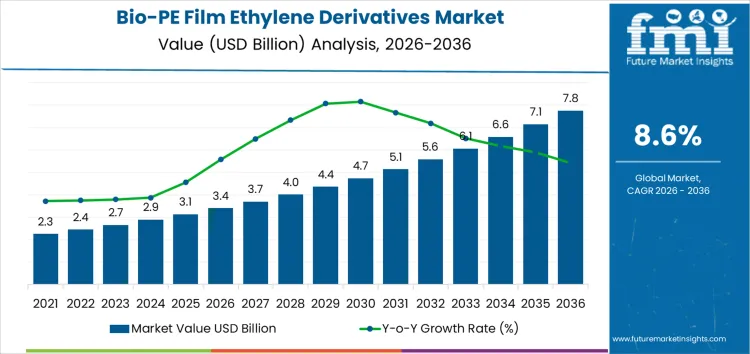
The global bio-PE film ethylene derivatives market is valued at USD 3.4 billion in 2026 and is projected to reach USD 7.8 billion by 2036, growing at a CAGR of 8.60%. The demand for renewability and eco-friendly alternatives to traditional polyethylene increasingly influences procurement priorities in the Bio-PE film ethylene derivatives market. Buyer risk aversion plays a significant role in shaping decisions, with a focus on established suppliers that can guarantee the performance and environmental compliance of bio-based films.
Vendor lock-in can be a concern, as companies tend to remain with suppliers offering proven, cost-efficient solutions. Switching costs are a factor, particularly when long-term supplier relationships are in place, making it challenging to transition to new vendors. In the context of evolving regulations and consumer preferences, companies must remain flexible in their procurement strategies, balancing risk mitigation with the need for innovation in eco-friendly packaging materials.
Quick Stats for Bio-PE Film Ethylene Derivatives Market
- Bio-PE Film Ethylene Derivatives Market Value (2026): USD 3.4 Billion
- Bio-PE Film Ethylene Derivatives Market Forecast Value (2036): USD 7.8 Billion
- Bio-PE Film Ethylene Derivatives Market Forecast CAGR 2026 to 2036: 8.60%
- Leading Derivative Type in Bio-PE Film Ethylene Derivatives Market: Bio-PE (Biorenewable Polyethylene)
- Key Growth Regions in Bio-PE Film Ethylene Derivatives Market: Asia Pacific, North America
- Top Key Players in Bio-PE Film Ethylene Derivatives Market: Braskem, SABIC (Bio-PE Business), Dow Inc., LyondellBasell, TotalEnergies Corbion
Bio-PE Film Ethylene Derivatives Market Key Takeaways
| Metric | Value |
|---|---|
| Industry Value (2026) | USD 3.4 Billion |
| Forecast Value (2036) | USD 7.8 Billion |
| Forecast CAGR 2026 to 2036 | 8.60% |
How is the Global Bio-PE Film Ethylene Derivatives Market Advancing?
The global bio-PE film ethylene derivatives market is witnessing substantial growth, driven by the increasing demand for eco-friendly and eco-friendly packaging solutions. Bio-based polyethylene (Bio-PE) is derived from renewable sources like sugarcane, making it an attractive alternative to traditional polyethylene made from fossil fuels. As consumer preferences shift toward more environmentally responsible products and packaging, bio-PE, especially in the form of films, is becoming a key material in packaging for industries such as food and beverage, consumer goods, and pharmaceuticals.
A significant driver of this market is the growing regulatory and consumer pressure to reduce plastic waste and carbon footprints. Governments around the world are introducing stricter regulations on plastic packaging, encouraging the adoption of biodegradable and recyclable materials. Bio-PE films, being fully recyclable and derived from renewable resources, offer a eco-friendly alternative to conventional polyethylene films, providing companies with a viable solution to meet these regulatory requirements and consumer demands. The food and beverage industry, in particular, is increasingly adopting bio-PE films for packaging to align with renewability goals and reduce environmental impact.
Technological advancements in bio-PE production and film extrusion are further fueling the market’s growth. Innovations in the development of more efficient production processes, cost-effective production methods, and the expansion of bio-PE’s application range are helping to make bio-PE films more competitive with traditional plastic films. The expanding use of bio-PE in agricultural films and other specialty applications is driving further market growth. As global demand for eco-friendly materials increases and technological innovations continue, the bio-PE film ethylene derivatives market is expected to see continued expansion over the next decade.
What Is the Segment-Wise Analysis for the Bio-PE Film Ethylene Derivatives Market?
The bio-PE film ethylene derivatives market is segmented by derivative type and end-use industry. Bio-PE (Biorenewable Polyethylene) leads the derivative type segment with a 54% share, followed by bio-ethylene vinyl acetate (EVA), bio-linear low-density PE (LLDPE), bio-high-density PE (HDPE), and other derivatives. Bio-PE, being made from renewable sources, is widely used due to its renewability and performance characteristics. In terms of end-use industries, packaging & retail films lead the market with a 38% share, followed by agriculture & horticulture, consumer goods, construction & industrial, and other industries.
Why Does Bio-PE Lead the Bio-PE Film Ethylene Derivatives Market?
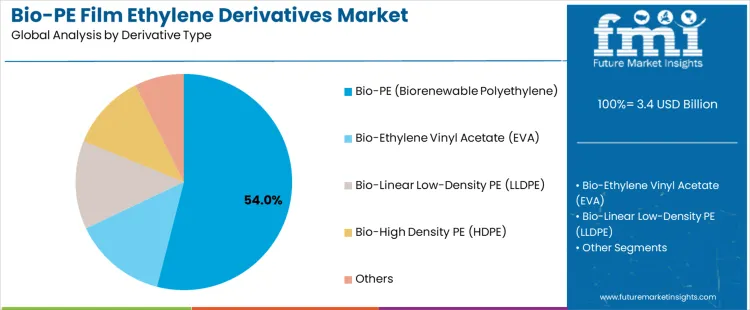
Bio-PE (Biorenewable Polyethylene) leads the bio-PE film ethylene derivatives market with a 54% share due to its widespread adoption in the production of environmentally friendly packaging materials. Bio-PE is derived from renewable resources, such as sugarcane, making it a eco-friendly alternative to conventional polyethylene. It offers similar properties in terms of strength, flexibility, and durability, making it highly suitable for packaging applications. As the demand for eco-friendly packaging solutions grows across various industries, including food and beverage and retail, bio-PE’s position as the leading derivative type in the market is strengthened. Its ability to reduce carbon footprints and reliance on fossil fuels makes it the preferred choice in the bio-based polyethylene derivatives market.
How Does the Packaging & Retail Films Industry Contribute to the Bio-PE Film Ethylene Derivatives Market?
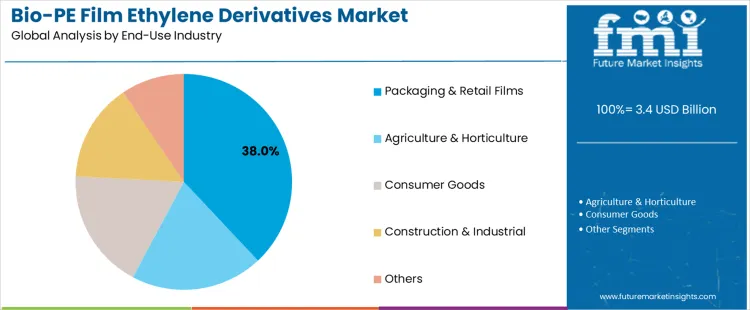
The packaging & retail films industry accounts for 38% of the end-use segment in the bio-PE film ethylene derivatives market. This industry has been a major adopter of bio-based polyethylene due to its renewability benefits and performance characteristics that align with the growing demand for eco-friendly packaging solutions. Bio-PE is widely used in the production of flexible packaging films, such as those for food, beverages, and consumer goods, helping reduce environmental impact while maintaining product integrity. As consumers and brands increasingly prioritize eco-friendly packaging, the packaging & retail films industry continues to drive growth in the bio-PE derivatives market, ensuring that bio-PE remains a dominant player in the market.
What Are the Key Dynamics for the Bio-PE Film Ethylene Derivatives Market?
The Bio-PE film ethylene derivatives market is driven by the growing demand for eco-friendly and eco-friendly packaging solutions, particularly in the food and beverage, retail, and consumer goods industries. Bio-PE (Bio-based Polyethylene) is derived from renewable resources such as sugarcane and is used in the production of films and packaging materials. With increasing environmental concerns and the push for reduced plastic waste, businesses are adopting Bio-PE as a more eco-friendly alternative to conventional polyethylene.
How Are the Key Drivers Shaping the Bio-PE Film Ethylene Derivatives Market?
Key drivers of the bio-PE film ethylene derivatives market include the increasing consumer preference for eco-friendly, biodegradable, and recyclable packaging materials. The rising environmental awareness and government regulations aimed at reducing plastic waste are pushing manufacturers to adopt bio-based plastics. Bio-PE, being made from renewable resources, is seen as a more eco-friendly solution compared to petroleum-based polyethylene. The growing demand for eco-friendly packaging in the food and beverage industry is further fueling market growth. Advancements in the production processes of Bio-PE films, offering improved performance and cost-efficiency, are contributing to their adoption.
What Are the Restraints Impacting the Bio-PE Film Ethylene Derivatives Market?
The bio-PE film ethylene derivatives market faces several challenges, including higher production costs compared to conventional polyethylene. The cost of raw materials, such as sugarcane, and the complexity of the production process make Bio-PE more expensive, which can limit its widespread adoption, particularly in price-sensitive markets. The scalability of bio-based polyethylene production is still a challenge. Bio-PE films also face competition from other eco-friendly alternatives, such as biodegradable plastics and compostable materials, which may offer additional environmental benefits. The infrastructure for recycling Bio-PE films is also less developed compared to traditional polyethylene.
What is the Growth Outlook for the Bio-PE Film Ethylene Derivatives Market by Country?
| Country | CAGR (%) |
|---|---|
| China | 10.1% |
| India | 9.8% |
| USA | 9.4% |
| Germany | 8.5% |
| Brazil | 8.2% |
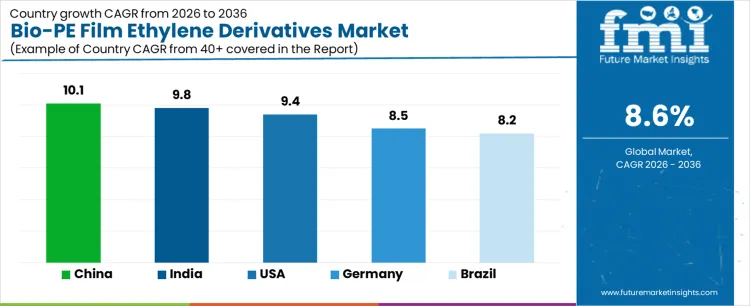
The bio-PE film ethylene derivatives market is expanding rapidly across key regions. China leads at 10.1%, driven by industrial demand for eco-friendly packaging and strong government support for green technologies. India follows at 9.8%, fueled by rising awareness of plastic waste and government incentives for eco-friendly solutions. The USA grows at 9.4%, supported by stringent regulations and increasing consumer demand for environmentally eco-friendly products. Germany expands at 8.5%, backed by its leadership in renewability and innovation in packaging. Brazil grows at 8.2%, driven by consumer demand for eco-friendly packaging and government initiatives promoting green materials.
What is Driving the Growth of the Bio-PE Film Ethylene Derivatives Market in China?
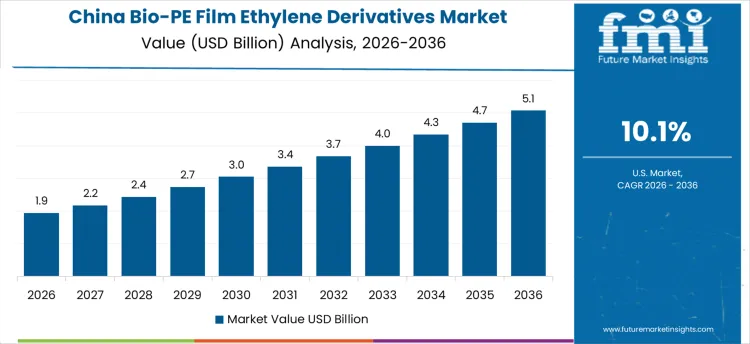
China’s bio-PE film ethylene derivatives market is growing at 10.1%, driven by the rapid adoption of eco-friendly packaging solutions in various industries, including food, beverage, and consumer goods. The growing emphasis on environmental renewability and reducing plastic waste is fueling the demand for bio-based polyethylene (Bio-PE) films, which are an eco-friendly alternative to traditional polyethylene. China’s large manufacturing base, coupled with government initiatives to reduce carbon emissions and promote green technologies, is further supporting the market. The rise in consumer demand for environmentally conscious products, along with China’s investments in bio-based polymer technology, ensures the continued growth of the bio-PE film ethylene derivatives market.
How is the Bio-PE Film Ethylene Derivatives Market Expanding in India?
India’s bio-PE film ethylene derivatives market is growing at 9.8%, supported by the increasing demand for eco-friendly packaging solutions across industries such as food, healthcare, and retail. With a growing focus on reducing plastic waste, India is turning to bio-based polyethylene films that offer a eco-friendlier alternative to traditional plastics. The rise in consumer awareness about environmental issues, along with government initiatives promoting eco-friendly practices, is further driving the market. As industries in India modernize and adopt green technologies, the demand for Bio-PE films, which help in reducing carbon footprints, is expected to rise steadily. The growing e-commerce and retail sectors will contribute to continued market growth.
How is the Bio-PE Film Ethylene Derivatives Market Expanding in the USA?
The bio-PE film ethylene derivatives market in the USA is growing at 9.4%, driven by increasing demand for eco-friendly and eco-friendly packaging solutions. With rising consumer awareness of environmental issues and the negative impact of plastic waste, the demand for Bio-PE films, made from renewable resources, has gained momentum. The USA’s strong regulatory framework, aimed at reducing plastic waste and promoting eco-friendly practices, supports the adoption of Bio-PE films across various industries, including food packaging and retail. The growing shift toward green and biodegradable materials in packaging is further fueling the market. As businesses and consumers prioritize environmental renewability, the demand for bio-based polyethylene films will continue to grow in the USA.
What is Driving the Growth of the Bio-PE Film Ethylene Derivatives Market in Germany?
Germany’s bio-PE film ethylene derivatives market is growing at 8.5%, driven by the country’s commitment to renewability, circular economy principles, and regulatory measures to reduce plastic waste. Germany is a leader in the adoption of green technologies, and the demand for Bio-PE films is rising as industries seek to meet strict environmental standards in packaging. The country’s well-established recycling infrastructure, along with consumer preferences for eco-friendly products, is pushing the demand for bio-based polyethylene films. Furthermore, Germany’s focus on innovation in material science and green polymers contributes to the growth of the Bio-PE film market. With a continued push for eco-friendly packaging solutions, the market is poised for steady growth.
How is the Bio-PE Film Ethylene Derivatives Market Expanding in Brazil?
Brazil’s bio-PE film ethylene derivatives market is growing at 8.2%, supported by the increasing demand for environmentally eco-friendly packaging solutions across sectors such as food and beverage, retail, and healthcare. As Brazil faces rising pressure to reduce plastic waste, the adoption of Bio-PE films, which are made from renewable resources, is becoming more popular. Brazil’s focus on environmental renewability, coupled with consumer demand for eco-friendly products, is driving the market’s expansion. Government policies promoting the use of biodegradable and recyclable materials, along with the growth of the retail and e-commerce sectors, are further contributing to the demand for Bio-PE films. As industries continue to focus on reducing environmental impact, the market for bio-based polyethylene films in Brazil is expected to continue expanding.
How Are Companies Competing in the Bio-PE Film Ethylene Derivatives Market?
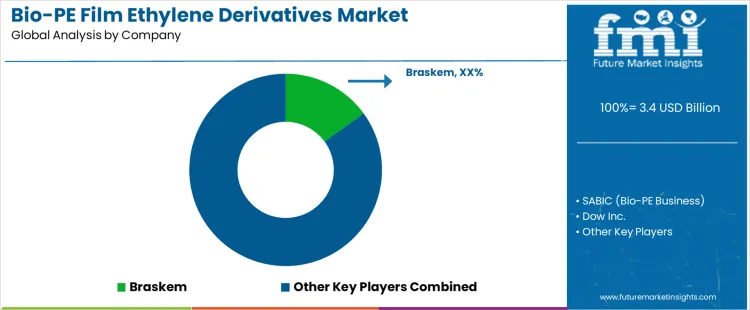
Competition in the bio-PE film ethylene derivatives market centers on bio-based content performance, film mechanical properties, processing compatibility, cost competitiveness, and renewability credentials that appeal to brands seeking alternatives to conventional polyethylene. Braskem positions its Bio-PE offerings with a strong emphasis on renewable feedstock integration and broad polymer performance, and its product materials highlight equivalent strength, flexibility, and processability to fossil-based PE in packaging and film applications. SABIC (Bio-PE Business) competes with high-quality bio-based ethylene derivatives that deliver consistent melt flow and mechanical stability, with brochures stressing drop-in compatibility with existing film extrusion and blow molding processes.
Major petrochemical players such as Dow Inc. and LyondellBasell differentiate by leveraging global production scale and advanced catalyst systems to support bio-PE grades with tailored performance characteristics, marketed for enhanced clarity, seal strength, and recyclability in flexible films. Their documentation underscores technical support and seamless adoption into established manufacturing lines. TotalEnergies Corbion brings a bio-based polymer platform that emphasizes renewable carbon content and performance parity, with product collateral focusing on consistency and support for brand owner virgin-grade transitions.
Others in the market compete by offering niche or regional Bio-PE derivatives and targeted formulation support for specific film property requirements. Across all vendors, product literature underscores bio-feedstock content, performance equivalence with conventional PE, processing ease, and broad application fit as key differentiators that help converters and brand owners meet market demand for bio-based film solutions without compromising functionality.
Key Players in Bio-PE Film Ethylene Derivatives Market
- Braskem
- SABIC (Bio‑PE Business)
- Dow Inc.
- LyondellBasell
- TotalEnergies Corbion
- Others
Scope of Report
| Attributes | Description |
|---|---|
| Quantitative Unit (2026) | USD Billion |
| Film Type | Agricultural & Mulch Films, Packaging Films, Industrial Films, Consumer Goods Films, Other |
| Derivative Type | Bio-PE (Biorenewable Polyethylene), Bio-Ethylene Vinyl Acetate (EVA), Bio-Linear Low-Density PE (LLDPE), Bio-High Density PE (HDPE), Other |
| End-Use Industry | Packaging & Retail Films, Agriculture & Horticulture, Consumer Goods, Construction & Industrial, Other |
| Regions Covered | Asia Pacific, Europe, North America, Latin America, Middle East & Africa |
| Countries Covered | China, Japan, South Korea, India, Australia & New Zealand, ASEAN, Germany, United Kingdom, France, Italy, Spain, Nordic, BENELUX, United States, Canada, Mexico, Brazil, Chile, Turkey, South Africa, Other GCC Countries |
| Key Companies Profiled | Braskem, SABIC (Bio-PE Business), Dow Inc., LyondellBasell, TotalEnergies Corbion, Others |
| Additional Attributes | Dollar sales by film type, derivative type, and end-use industry; regional CAGR and growth outlook for bio-PE film ethylene derivatives market. |
Bio-PE Film Ethylene Derivatives by Key Segments
Film Type
- Agricultural & Mulch Films
- Packaging Films
- Industrial Films
- Consumer Goods Films
- Others
Derivative Type
- Bio‑PE (Biorenewable Polyethylene)
- Bio‑Ethylene Vinyl Acetate (EVA)
- Bio‑Linear Low‑Density PE (LLDPE)
- Bio‑High Density PE (HDPE)
- Others
End‑Use Industry
- Packaging & Retail Films
- Agriculture & Horticulture
- Consumer Goods
- Construction & Industrial
- Others
Region:
- Asia Pacific
- China
- Japan
- South Korea
- India
- Australia & New Zealand
- ASEAN
- Rest of Asia Pacific
- Europe
- Germany
- United Kingdom
- France
- Italy
- Spain
- Nordic
- BENELUX
- Rest of Europe
- North America
- United States
- Canada
- Mexico
- Latin America
- Brazil
- Chile
- Rest of Latin America
- Middle East & Africa
- Kingdom of Saudi Arabia
- Other GCC Countries
- Turkey
- South Africa
- Other African Union
- Rest of Middle East & Africa
Bibliography
- Organisation for Economic Co‑operation and Development (OECD). (2023). Bio‑based plastics and polymers: Environmental performance, policy frameworks, and market readiness. OECD Publishing.
- European Commission – Joint Research Centre (JRC). (2024). Sustainability assessment of bio‑based polyethylene and ethylene derivatives used in packaging films. Publications Office of the European Union.
- United Nations Environment Programme (UNEP). (2024). Life‑cycle assessment of bio‑based plastic films and circular economy implications. UNEP Publications.
- Food and Agriculture Organization of the United Nations (FAO). (2023). Bio‑based polymers from agricultural feedstocks: Applications in packaging and film materials. FAO Technical Paper.
- European Bioplastics Association & Institute for Bioplastics and Biocomposites (IfBB). (2024). Technical properties and recyclability of bio‑PE films in packaging applications. Independent Research Publication.
Frequently Asked Questions
How big is the bio-pe film ethylene derivatives market in 2026?
The global bio-pe film ethylene derivatives market is estimated to be valued at USD 3.4 billion in 2026.
What will be the size of bio-pe film ethylene derivatives market in 2036?
The market size for the bio-pe film ethylene derivatives market is projected to reach USD 7.8 billion by 2036.
How much will be the bio-pe film ethylene derivatives market growth between 2026 and 2036?
The bio-pe film ethylene derivatives market is expected to grow at a 8.6% CAGR between 2026 and 2036.
What are the key product types in the bio-pe film ethylene derivatives market?
The key product types in bio-pe film ethylene derivatives market are agricultural & mulch films, packaging films, industrial films, consumer goods films and others.
Which derivative type segment to contribute significant share in the bio-pe film ethylene derivatives market in 2026?
In terms of derivative type, bio‑pe (biorenewable polyethylene) segment to command 54.0% share in the bio-pe film ethylene derivatives market in 2026.
Preview the report firsthand - request a free sample
Get SampleGet the brochure for pricing and purchase details.
Get PDFTable of Content
- Executive Summary
- Global Market Outlook
- Demand-side Trends
- Supply-side Trends
- Technology Roadmap Analysis
- Analysis and Recommendations
- Market Overview
- Market Coverage / Taxonomy
- Market Definition / Scope / Limitations
- Market Background
- Market Dynamics
- Drivers
- Restraints
- Opportunity
- Trends
- Scenario Forecast
- Demand in Optimistic Scenario
- Demand in Likely Scenario
- Demand in Conservative Scenario
- Opportunity Map Analysis
- Product Life Cycle Analysis
- Supply Chain Analysis
- Investment Feasibility Matrix
- Value Chain Analysis
- PESTLE and Porter’s Analysis
- Regulatory Landscape
- Regional Parent Market Outlook
- Production and Consumption Statistics
- Import and Export Statistics
- Market Dynamics
- Global Market Analysis 2021 to 2025 and Forecast, 2026 to 2036
- Historical Market Size Value (USD Million) Analysis, 2021 to 2025
- Current and Future Market Size Value (USD Million) Projections, 2026 to 2036
- Y-o-Y Growth Trend Analysis
- Absolute $ Opportunity Analysis
- Global Market Pricing Analysis 2021 to 2025 and Forecast 2026 to 2036
- Global Market Analysis 2021 to 2025 and Forecast 2026 to 2036, By Film Type
- Introduction / Key Findings
- Historical Market Size Value (USD Million) Analysis By Film Type , 2021 to 2025
- Current and Future Market Size Value (USD Million) Analysis and Forecast By Film Type , 2026 to 2036
- Agricultural & Mulch Films
- Packaging Films
- Industrial Films
- Consumer Goods Films
- Others
- Agricultural & Mulch Films
- Y-o-Y Growth Trend Analysis By Film Type , 2021 to 2025
- Absolute $ Opportunity Analysis By Film Type , 2026 to 2036
- Global Market Analysis 2021 to 2025 and Forecast 2026 to 2036, By Derivative Type
- Introduction / Key Findings
- Historical Market Size Value (USD Million) Analysis By Derivative Type, 2021 to 2025
- Current and Future Market Size Value (USD Million) Analysis and Forecast By Derivative Type, 2026 to 2036
- Bio‑PE (Biorenewable Polyethylene)
- Bio‑Ethylene Vinyl Acetate (EVA)
- Bio‑Linear Low‑Density PE (LLDPE)
- Bio‑High Density PE (HDPE)
- Others
- Bio‑PE (Biorenewable Polyethylene)
- Y-o-Y Growth Trend Analysis By Derivative Type, 2021 to 2025
- Absolute $ Opportunity Analysis By Derivative Type, 2026 to 2036
- Global Market Analysis 2021 to 2025 and Forecast 2026 to 2036, By End‑Use Industry
- Introduction / Key Findings
- Historical Market Size Value (USD Million) Analysis By End‑Use Industry, 2021 to 2025
- Current and Future Market Size Value (USD Million) Analysis and Forecast By End‑Use Industry, 2026 to 2036
- Packaging & Retail Films
- Agriculture & Horticulture
- Consumer Goods
- Construction & Industrial
- Others
- Packaging & Retail Films
- Y-o-Y Growth Trend Analysis By End‑Use Industry, 2021 to 2025
- Absolute $ Opportunity Analysis By End‑Use Industry, 2026 to 2036
- Global Market Analysis 2021 to 2025 and Forecast 2026 to 2036, By Region
- Introduction
- Historical Market Size Value (USD Million) Analysis By Region, 2021 to 2025
- Current Market Size Value (USD Million) Analysis and Forecast By Region, 2026 to 2036
- North America
- Latin America
- Western Europe
- Eastern Europe
- East Asia
- South Asia and Pacific
- Middle East & Africa
- Market Attractiveness Analysis By Region
- North America Market Analysis 2021 to 2025 and Forecast 2026 to 2036, By Country
- Historical Market Size Value (USD Million) Trend Analysis By Market Taxonomy, 2021 to 2025
- Market Size Value (USD Million) Forecast By Market Taxonomy, 2026 to 2036
- By Country
- USA
- Canada
- Mexico
- By Film Type
- By Derivative Type
- By End‑Use Industry
- By Country
- Market Attractiveness Analysis
- By Country
- By Film Type
- By Derivative Type
- By End‑Use Industry
- Key Takeaways
- Latin America Market Analysis 2021 to 2025 and Forecast 2026 to 2036, By Country
- Historical Market Size Value (USD Million) Trend Analysis By Market Taxonomy, 2021 to 2025
- Market Size Value (USD Million) Forecast By Market Taxonomy, 2026 to 2036
- By Country
- Brazil
- Chile
- Rest of Latin America
- By Film Type
- By Derivative Type
- By End‑Use Industry
- By Country
- Market Attractiveness Analysis
- By Country
- By Film Type
- By Derivative Type
- By End‑Use Industry
- Key Takeaways
- Western Europe Market Analysis 2021 to 2025 and Forecast 2026 to 2036, By Country
- Historical Market Size Value (USD Million) Trend Analysis By Market Taxonomy, 2021 to 2025
- Market Size Value (USD Million) Forecast By Market Taxonomy, 2026 to 2036
- By Country
- Germany
- UK
- Italy
- Spain
- France
- Nordic
- BENELUX
- Rest of Western Europe
- By Film Type
- By Derivative Type
- By End‑Use Industry
- By Country
- Market Attractiveness Analysis
- By Country
- By Film Type
- By Derivative Type
- By End‑Use Industry
- Key Takeaways
- Eastern Europe Market Analysis 2021 to 2025 and Forecast 2026 to 2036, By Country
- Historical Market Size Value (USD Million) Trend Analysis By Market Taxonomy, 2021 to 2025
- Market Size Value (USD Million) Forecast By Market Taxonomy, 2026 to 2036
- By Country
- Russia
- Poland
- Hungary
- Balkan & Baltic
- Rest of Eastern Europe
- By Film Type
- By Derivative Type
- By End‑Use Industry
- By Country
- Market Attractiveness Analysis
- By Country
- By Film Type
- By Derivative Type
- By End‑Use Industry
- Key Takeaways
- East Asia Market Analysis 2021 to 2025 and Forecast 2026 to 2036, By Country
- Historical Market Size Value (USD Million) Trend Analysis By Market Taxonomy, 2021 to 2025
- Market Size Value (USD Million) Forecast By Market Taxonomy, 2026 to 2036
- By Country
- China
- Japan
- South Korea
- By Film Type
- By Derivative Type
- By End‑Use Industry
- By Country
- Market Attractiveness Analysis
- By Country
- By Film Type
- By Derivative Type
- By End‑Use Industry
- Key Takeaways
- South Asia and Pacific Market Analysis 2021 to 2025 and Forecast 2026 to 2036, By Country
- Historical Market Size Value (USD Million) Trend Analysis By Market Taxonomy, 2021 to 2025
- Market Size Value (USD Million) Forecast By Market Taxonomy, 2026 to 2036
- By Country
- India
- ASEAN
- Australia & New Zealand
- Rest of South Asia and Pacific
- By Film Type
- By Derivative Type
- By End‑Use Industry
- By Country
- Market Attractiveness Analysis
- By Country
- By Film Type
- By Derivative Type
- By End‑Use Industry
- Key Takeaways
- Middle East & Africa Market Analysis 2021 to 2025 and Forecast 2026 to 2036, By Country
- Historical Market Size Value (USD Million) Trend Analysis By Market Taxonomy, 2021 to 2025
- Market Size Value (USD Million) Forecast By Market Taxonomy, 2026 to 2036
- By Country
- Kingdom of Saudi Arabia
- Other GCC Countries
- Turkiye
- South Africa
- Other African Union
- Rest of Middle East & Africa
- By Film Type
- By Derivative Type
- By End‑Use Industry
- By Country
- Market Attractiveness Analysis
- By Country
- By Film Type
- By Derivative Type
- By End‑Use Industry
- Key Takeaways
- Key Countries Market Analysis
- USA
- Pricing Analysis
- Market Share Analysis, 2025
- By Film Type
- By Derivative Type
- By End‑Use Industry
- Canada
- Pricing Analysis
- Market Share Analysis, 2025
- By Film Type
- By Derivative Type
- By End‑Use Industry
- Mexico
- Pricing Analysis
- Market Share Analysis, 2025
- By Film Type
- By Derivative Type
- By End‑Use Industry
- Brazil
- Pricing Analysis
- Market Share Analysis, 2025
- By Film Type
- By Derivative Type
- By End‑Use Industry
- Chile
- Pricing Analysis
- Market Share Analysis, 2025
- By Film Type
- By Derivative Type
- By End‑Use Industry
- Germany
- Pricing Analysis
- Market Share Analysis, 2025
- By Film Type
- By Derivative Type
- By End‑Use Industry
- UK
- Pricing Analysis
- Market Share Analysis, 2025
- By Film Type
- By Derivative Type
- By End‑Use Industry
- Italy
- Pricing Analysis
- Market Share Analysis, 2025
- By Film Type
- By Derivative Type
- By End‑Use Industry
- Spain
- Pricing Analysis
- Market Share Analysis, 2025
- By Film Type
- By Derivative Type
- By End‑Use Industry
- France
- Pricing Analysis
- Market Share Analysis, 2025
- By Film Type
- By Derivative Type
- By End‑Use Industry
- India
- Pricing Analysis
- Market Share Analysis, 2025
- By Film Type
- By Derivative Type
- By End‑Use Industry
- ASEAN
- Pricing Analysis
- Market Share Analysis, 2025
- By Film Type
- By Derivative Type
- By End‑Use Industry
- Australia & New Zealand
- Pricing Analysis
- Market Share Analysis, 2025
- By Film Type
- By Derivative Type
- By End‑Use Industry
- China
- Pricing Analysis
- Market Share Analysis, 2025
- By Film Type
- By Derivative Type
- By End‑Use Industry
- Japan
- Pricing Analysis
- Market Share Analysis, 2025
- By Film Type
- By Derivative Type
- By End‑Use Industry
- South Korea
- Pricing Analysis
- Market Share Analysis, 2025
- By Film Type
- By Derivative Type
- By End‑Use Industry
- Russia
- Pricing Analysis
- Market Share Analysis, 2025
- By Film Type
- By Derivative Type
- By End‑Use Industry
- Poland
- Pricing Analysis
- Market Share Analysis, 2025
- By Film Type
- By Derivative Type
- By End‑Use Industry
- Hungary
- Pricing Analysis
- Market Share Analysis, 2025
- By Film Type
- By Derivative Type
- By End‑Use Industry
- Kingdom of Saudi Arabia
- Pricing Analysis
- Market Share Analysis, 2025
- By Film Type
- By Derivative Type
- By End‑Use Industry
- Turkiye
- Pricing Analysis
- Market Share Analysis, 2025
- By Film Type
- By Derivative Type
- By End‑Use Industry
- South Africa
- Pricing Analysis
- Market Share Analysis, 2025
- By Film Type
- By Derivative Type
- By End‑Use Industry
- USA
- Market Structure Analysis
- Competition Dashboard
- Competition Benchmarking
- Market Share Analysis of Top Players
- By Regional
- By Film Type
- By Derivative Type
- By End‑Use Industry
- Competition Analysis
- Competition Deep Dive
- Braskem
- Overview
- Product Portfolio
- Profitability by Market Segments (Product/Age /Sales Channel/Region)
- Sales Footprint
- Strategy Overview
- Marketing Strategy
- Product Strategy
- Channel Strategy
- SABIC (Bio‑PE Business)
- Dow Inc.
- LyondellBasell
- TotalEnergies Corbion
- Others
- Braskem
- Competition Deep Dive
- Assumptions & Acronyms Used
- Research Methodology


