

- Industry Size (2026)
- USD 1.8 Bn
- Forecast (2036)
- USD 3.4 Bn
- CAGR (2026 to 2036)
- 6.5%
Canine Endocrine Testing Market Forecast and Outlook 2026 to 2036
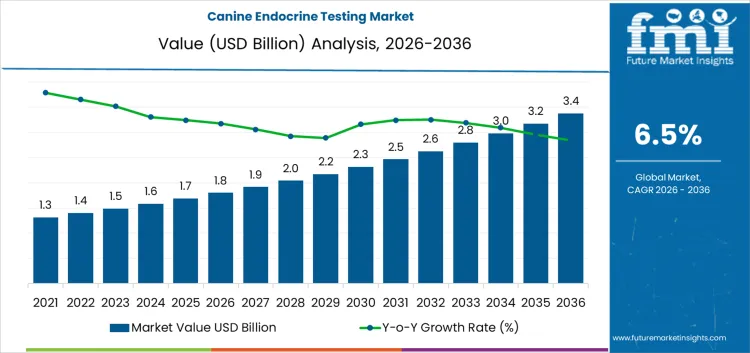
The canine endocrine testing market is projected to reach from USD 1.8 billion in 2026 to USD 3.4 billion by 2036, at a CAGR of 6.5%. Application concentration plays a critical role in shaping the market, with thyroid function tests accounting for a dominant share of 34%. This focus on specific diagnostic needs emphasizes the importance of accurate, early detection of endocrine disorders like hypothyroidism. End-use dependency, particularly on veterinary clinics and diagnostic laboratories, ensures consistent demand but also influences market dynamics, as these facilities represent the primary source of service provision.
Volume stability is maintained through ongoing need for testing in common conditions such as diabetes and hyperadrenocorticism, which continuously drive demand. However, regional disparities in veterinary healthcare infrastructure may create fluctuations in demand, particularly in underserved areas. As awareness and diagnostic capabilities expand, the market is likely to experience steady growth, driven by these focused applications and stable volume requirements.
Quick Stats for Canine Endocrine Testing Market
- Canine Endocrine Testing Market Value (2026): USD 1.8 Billion
- Canine Endocrine Testing Market Forecast Value (2036): USD 3.4 Billion
- Canine Endocrine Testing Market Forecast CAGR 2026 to 2036: 6.5%
- Leading Test Type in Canine Endocrine Testing Market: Thyroid Function Tests
- Leading Application in Canine Endocrine Testing Market: Hypothyroidism
- Key Growth Regions in Canine Endocrine Testing Market: North America, Asia Pacific, Europe
- Top Key Players in Canine Endocrine Testing Market: IDEXX Laboratories, Zoetis, Heska, Antech Diagnostics, Randox
Canine Endocrine Testing Market Key Takeaways
| Metric | Value |
|---|---|
| Canine Endocrine Testing Market Value (2026) | USD 1.8 Billion |
| Canine Endocrine Testing Market Forecast Value (2036) | USD 3.4 Billion |
| Canine Endocrine Testing Market Forecast CAGR 2026 to 2036 | 6.5% |
Why Is the Canine Endocrine Testing Market Growing?
The canine endocrine testing market is growing due to an increasing recognition of the importance of diagnosing and managing endocrine disorders in dogs. Conditions such as hypothyroidism, Cushing's disease, and diabetes are common in pets, and early detection is critical to effective management. As pet owners become more aware of the health risks associated with untreated endocrine disorders, demand for diagnostic testing services continues to rise, driving market growth.
Advancements in veterinary diagnostic technology are contributing to growth in the canine endocrine testing market. More accurate, non-invasive testing methods, including blood tests, urine tests, and imaging technologies, are enabling faster and more reliable diagnosis of endocrine disorders. These innovations allow veterinarians to provide timely and precise treatments, improving the quality of life for affected pets and increasing pet owners' trust in veterinary care.
Rising pet healthcare expenditures and a growing emphasis on preventative care are further supporting the canine endocrine testing market. Pet owners are increasingly willing to invest in regular health screenings to ensure their pets’ well-being and detect potential issues early. As awareness of the importance of endocrine health in pets grows, the demand for specialized testing services is expected to continue to rise, sustaining steady market expansion over the forecast period.
What Does The Segment Overview Indicate About The Canine Endocrine Testing Market?
The canine endocrine testing market is segmented by test type and application, reflecting the diverse needs for diagnosing and managing endocrine disorders in dogs. Thyroid function tests lead the test segment with 34% share, as they are essential for diagnosing hypothyroidism, a common endocrine disorder in dogs. Adrenal function tests, diabetes monitoring assays, and reproductive hormone tests serve niche applications in diagnosing conditions like hyperadrenocorticism and diabetes mellitus. On the application side, hypothyroidism dominates with 38% share, as it is one of the most prevalent endocrine disorders in dogs. Other applications include diabetes mellitus, hyperadrenocorticism, and reproductive health conditions, each requiring specialized diagnostic tests.
Why Do Thyroid Function Tests Hold The Leading Test Share In The Canine Endocrine Testing Market?
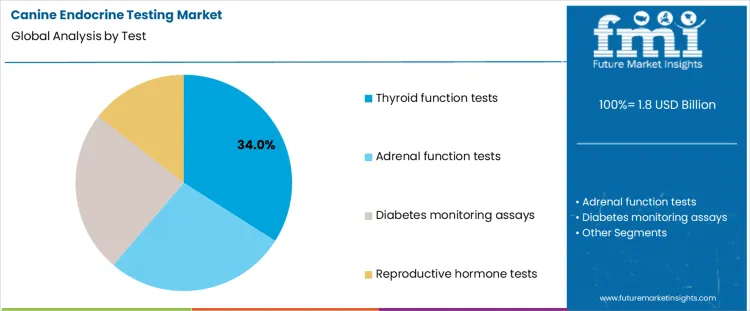
Thyroid function tests hold the largest 34% share in the canine endocrine testing market due to their critical role in diagnosing hypothyroidism, a common condition in dogs that leads to various clinical symptoms like lethargy, weight gain, and skin changes. Thyroid dysfunction is widely recognized in veterinary medicine, and routine screening is often recommended for older dogs or those showing signs of metabolic abnormalities. These tests, such as T4, TSH, and free T4 measurements, are essential for diagnosing thyroid disorders and determining appropriate treatment, including thyroid hormone replacement therapy. The high prevalence of hypothyroidism and the reliability of thyroid tests continue to reinforce their dominance in the market.
How Does Hypothyroidism Drive Application Demand In The Canine Endocrine Testing Market?
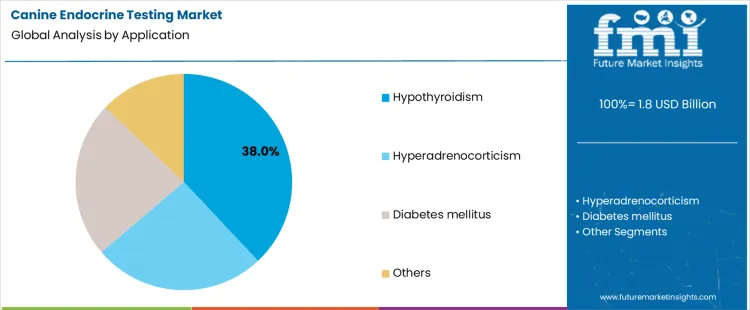
Hypothyroidism is the leading application in the canine endocrine testing market, accounting for 38% share, due to its high incidence in dogs. This condition occurs when the thyroid gland fails to produce enough thyroid hormones, affecting metabolism and overall health. Symptoms such as lethargy, obesity, and skin issues often prompt testing, making thyroid function tests critical in the diagnosis. With a growing understanding of canine endocrine health and the benefits of early detection, demand for thyroid testing is expected to remain strong. The focus on managing hypothyroidism through hormone replacement therapy and regular monitoring drives continued growth in this segment.
What Are the Key Dynamics of the Canine Endocrine Testing Market?
The canine endocrine testing market is driven by increasing awareness of hormonal disorders in dogs, such as hypothyroidism, Cushing’s disease, and diabetes mellitus, and the demand for accurate diagnostic tools to inform treatment decisions. Growth in pet ownership, rising expenditure on preventive and specialized veterinary care, and expanded veterinary practice capabilities are supporting adoption of endocrine assays. Diagnostic platforms that integrate immunoassays, chemiluminescence, and point-of-care (POC) devices enhance testing accessibility. For manufacturers and suppliers, a focus on assay sensitivity, turnaround time, and integration with practice management systems are key factors influencing purchasing decisions and clinical outcomes in this market.
How Are Technological and Analytical Trends Reshaping the Canine Endocrine Testing Market?
Technological and analytical trends are reshaping the canine endocrine testing market toward greater automation, multiplex testing, and digital integration. Advanced immunoassay platforms and chemiluminescent analyzers improve detection limits for hormones such as cortisol, thyroid hormones, and insulin, enabling more precise diagnostic insights. Point-of-care endocrine testing systems reduce turnaround times and support in-clinic decision-making. Digital connectivity with practice management software and cloud data platforms enhances record-keeping and outcome tracking. For suppliers, investing in assay standardization and scalable platform designs that support both general practice and specialty veterinary clinics enhances competitive positioning and long-term recurring revenue streams.
Why Do Regulatory, Cost, and Adoption Barriers Restrain The Canine Endocrine Testing Market?
Regulatory, cost, and adoption barriers restrain growth in the canine endocrine testing market. Strict requirements for veterinary diagnostic validation and compliance increase development timelines and expense for new assays and platforms. High costs of advanced diagnostic equipment and proprietary consumables limit adoption by lower-volume veterinary practices. Clinician familiarity and trust in assay performance influence uptake, with some practices slower to transition from traditional laboratory referral testing to in-clinic systems. Reimbursement constraints and variable pricing structures across regions also impact purchasing decisions. These factors collectively temper market penetration, particularly in cost-sensitive and resource-limited settings.
What Is the Country-Wise Growth Outlook for the Canine Endocrine Testing Market?
The canine endocrine testing market is growing steadily, supported by rising awareness of pet health, increased pet ownership, and advancements in veterinary diagnostics. India leads with a CAGR of 9.4%, driven by a growing pet care market, increasing health awareness, and expanding access to veterinary services. China follows with a CAGR of 9.2%, fueled by the rapid growth of the pet care industry and improving healthcare infrastructure. Brazil shows an 8.8% CAGR, supported by rising demand for advanced diagnostic testing and increasing awareness of canine endocrine disorders. The USA records a CAGR of 7.6%, driven by a well-established veterinary care market and rising pet health concerns. France shows a CAGR of 7.5%, benefiting from strong pet care services and an increasing focus on preventative health measures for pets.
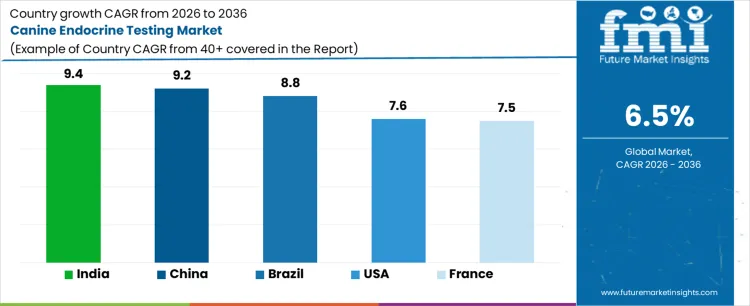
| Country | CAGR |
|---|---|
| India | 9.4% |
| China | 9.2% |
| Brazil | 8.8% |
| USA | 7.6% |
| France | 7.5% |
Why Is India Leading in the Canine Endocrine Testing Market?
Demand for canine endocrine testing in India is growing at a CAGR of 9.4%, driven by an increasing pet population, growing pet care awareness, and expanding access to veterinary services. As India’s middle class continues to grow, pet ownership has surged, leading to a greater demand for veterinary care, including endocrine testing to diagnose hormonal imbalances and diseases. India’s evolving veterinary healthcare sector, coupled with an increase in pet health awareness, is encouraging the adoption of diagnostic testing for conditions like hypothyroidism, diabetes, and Cushing’s disease. The rise of pet insurance and government initiatives to improve animal welfare are contributing to the growth of the market. The expanding presence of international veterinary diagnostics brands, along with advancements in testing technologies, is making endocrine tests more accessible to Indian pet owners. With more pet owners becoming aware of the benefits of early disease detection and management, India is positioned as the fastest-growing market for canine endocrine testing.
What Is Contributing to the Growth of the Canine Endocrine Testing Market in China?
Sales for canine endocrine testing in China are increasing at a CAGR of 9.2%, supported by the rapid growth of the pet care industry, improving veterinary services, and rising awareness of pet health. China’s pet population continues to expand, and pet owners are becoming more focused on ensuring their pets live long, healthy lives, increasing the demand for diagnostic testing, including endocrine tests. As urbanization increases, pet owners are also seeking advanced medical technologies for their pets, leading to the growth of the endocrine testing market. The rising incidence of chronic conditions such as diabetes and hypothyroidism in pets, along with the government’s focus on animal health, is driving the need for these diagnostic services. The expanding veterinary care infrastructure and the rise of e-commerce platforms offering pet health products are also contributing to market growth. As awareness about canine health improves and more testing solutions become available, China is expected to continue its strong growth in the canine endocrine testing market.
What Is Supporting Growth in the Canine Endocrine Testing Market in Brazil?
Demand for canine endocrine testing in Brazil is growing at a CAGR of 8.8%, driven by the increasing awareness of pet health, expanding veterinary care services, and rising adoption of advanced diagnostic tools. Brazil’s growing pet population, along with an increasing focus on pet wellness and preventative healthcare, is fueling demand for endocrine testing in dogs. As the country’s middle class continues to expand, pet owners are spending more on their pets’ healthcare, including routine diagnostic tests to monitor and manage chronic conditions like hypothyroidism and Cushing’s disease. Veterinary care facilities in Brazil are becoming more advanced, with many offering specialized tests for diagnosing hormonal imbalances. The growth of pet insurance and the increasing availability of online pet health services are also contributing to the market’s growth. As more Brazilian pet owners seek high-quality, affordable veterinary services and diagnostic tests, Brazil is becoming a significant player in the canine endocrine testing market.
Why Is the USA a Key Market for Canine Endocrine Testing?
Sales for canine endocrine testing in the USA are growing at a CAGR of 7.6%, driven by an established and sophisticated veterinary healthcare market, rising pet health awareness, and the growing adoption of advanced diagnostic tests. The USA has a large and diverse pet-owning population, and as awareness about pet health continues to rise, more pet owners are seeking veterinary care for early disease detection and management. Endocrine testing has become an essential part of diagnosing and monitoring conditions like hypothyroidism, diabetes, and Cushing’s disease. The increasing prevalence of these conditions in pets is further driving the demand for reliable diagnostic solutions. The USA’s robust healthcare system, along with a well-developed veterinary diagnostics market, ensures easy access to canine endocrine testing. Technological advancements in diagnostic tools and the growing focus on preventative care are driving the adoption of endocrine testing. With increasing focus on pet wellness, the USA remains a key market for canine endocrine testing.
What Is Driving Growth in France’s Canine Endocrine Testing Market?
Demand for canine endocrine testing in France is rising at a CAGR of 7.5%, supported by France’s well-established veterinary care system, increasing pet health awareness, and a growing focus on preventative healthcare for pets. France has a strong pet-owning population that is becoming increasingly aware of the importance of regular health check-ups for pets, including diagnostic testing for hormonal imbalances. As pet owners seek early diagnosis and treatment for conditions like hypothyroidism and diabetes, the demand for endocrine testing is rising. The French government’s initiatives to improve animal health and welfare, combined with a growing number of specialized veterinary clinics, are helping to increase access to advanced diagnostic tests. The rise of pet insurance and the increasing availability of diagnostic services via veterinary practices and online platforms are further contributing to market growth. As pet health continues to be a priority, France is expected to see continued growth in the canine endocrine testing market.
What Is the Competitive Landscape for the Canine Heartworm Treatment Market?
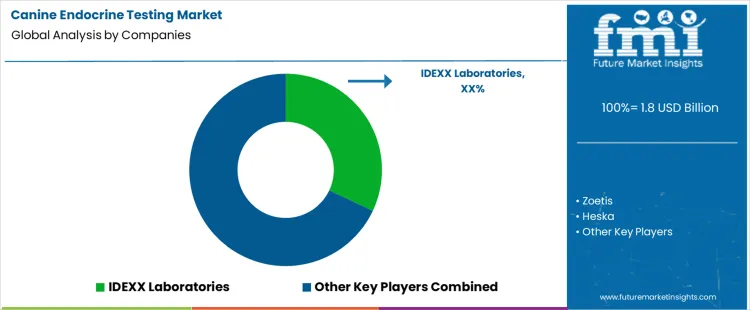
Competition in the Canine Heartworm Treatment Market is shaped by brand strength, veterinary trust, product efficacy, and regional reach. Zoetis holds a commanding position with its Heartgard Plus collateral emphasizing broad-spectrum prevention and ease of administration. Educational brochures underscore dosing guidance and compliance benefits. Elanco’s Interceptor and Sentinel materials highlight dual action against heartworm and other parasites. Technical sheets include safety profiles and dosing charts. Boehringer Ingelheim’s Trifexis literature stresses combination therapy and palatability. Virbac’s brochures for ProHeart injectables center on long-acting protection and veterinarian administration protocols. Ceva’s product collateral, such as Vectra 3D and Immiticide, details topical repellents and adulticide protocols. Others in the market leverage niche positioning with region-specific product sheets and targeted therapy guides.
Strategic differentiation is reflected in product brochures tailored for veterinarians and pet owners. Zoetis emphasizes clinical evidence and widespread adoption. Its literature is structured with clear diagrams and outcomes data. Elanco focuses on portfolio versatility, with modular brochure layouts that compare products by lifecycle coverage. Boehringer Ingelheim underscores palatability and combination protection in visual layouts. Virbac’s ProHeart collateral is procedure oriented, with visual step-by-step administration guidance. Ceva’s brochures position topical and injectable solutions side by side with parasite coverage charts. Smaller players produce concise, cost-focused brochures with direct comparisons and dosing matrices.
Market presence is amplified through multichannel distribution of product brochures. Digital catalogs, QR-linked datasheets, and clinic display materials are common. All competitors stress safety profiles, dosing schedules, and compliance support in their literature. Competitive differences are evident in feature callouts and clinical indication tables. Regional adaptations reflect prevalence patterns and regulatory frameworks. Brochure language and imagery align with practice workflows and pet owner education needs, driving differentiated positioning across the market landscape.
Key Players in Canine Endocrine Testing Market
- IDEXX Laboratories
- Zoetis
- Heska
- Antech Diagnostics
- Randox
- Others
Scope of Report
| Attributes | Description |
|---|---|
| Quantitative Unit | USD Billion |
| Tests | Thyroid function tests, Adrenal function tests, Diabetes monitoring assays, Reproductive hormone tests |
| Applications | Hypothyroidism, Hyperadrenocorticism, Diabetes mellitus |
| Regions Covered | Asia Pacific, Europe, North America, Latin America, Middle East & Africa |
| Countries Covered | China, Japan, South Korea, India, Australia & New Zealand, ASEAN, Rest of Asia Pacific, Germany, United Kingdom, France, Italy, Spain, Nordic, BENELUX, Rest of Europe, United States, Canada, Mexico, Brazil, Chile, Rest of Latin America, Kingdom of Saudi Arabia, Other GCC Countries, Turkey, South Africa, Other African Union, Rest of Middle East & Africa |
| Key Companies Profiled | IDEXX Laboratories, Zoetis, Heska, Antech Diagnostics, Randox |
| Additional Attributes | Market revenue by test type and application; adoption trends across conditions like hypothyroidism, hyperadrenocorticism, and diabetes; projected market size and CAGR for 2026-2036; advancements in testing technology; competitive landscape with strategy and portfolio analysis of leading players; emerging diagnostic innovations in canine endocrine testing. |
Canine Endocrine Testing Market by Key Segments
Test
- Thyroid function tests
- Adrenal function tests
- Diabetes monitoring assays
- Reproductive hormone tests
Application
- Hypothyroidism
- Hyperadrenocorticism
- Diabetes mellitus
- Others
Region:
- Asia Pacific
- China
- Japan
- South Korea
- India
- Australia & New Zealand
- ASEAN
- Rest of Asia Pacific
- Europe
- Germany
- United Kingdom
- France
- Italy
- Spain
- Nordic
- BENELUX
- Rest of Europe
- North America
- United States
- Canada
- Mexico
- Latin America
- Brazil
- Chile
- Rest of Latin America
- Middle East & Africa
- Kingdom of Saudi Arabia
- Other GCC Countries
- Turkey
- South Africa
- Other African Union
- Rest of Middle East & Africa
Bibliography
- Galac, S., & Fracassi, F. (Eds.). (2024). Canine endocrinology (1st ed.). Edra Publishing US LLC. - A foundational veterinary textbook covering clinical signs, endocrine diagnostic methodology, and laboratory testing in dogs.
- Niessen, S. J., & International Society of Veterinary Endocrinology. (2025). Agreeing Language in Veterinary Endocrinology (ALIVE): Consensus definitions and diagnostic criteria for canine endocrine disorders. Veterinary Medicine Consensus Initiative. - Provides expert-driven consensus on endocrine disease definitions and diagnostic criteria.
- Larrán, B., et al. (2024). Trace element status in canine endocrine diseases: Relationships with biochemical parameters. Veterinary Clinical Pathology. - Investigates biochemical and diagnostic data relevant to canine endocrinopathies.
Frequently Asked Questions
How big is the canine endocrine testing market in 2026?
The global canine endocrine testing market is estimated to be valued at USD 1.8 billion in 2026.
What will be the size of canine endocrine testing market in 2036?
The market size for the canine endocrine testing market is projected to reach USD 3.4 billion by 2036.
How much will be the canine endocrine testing market growth between 2026 and 2036?
The canine endocrine testing market is expected to grow at a 6.5% CAGR between 2026 and 2036.
What are the key product types in the canine endocrine testing market?
The key product types in canine endocrine testing market are thyroid function tests, adrenal function tests, diabetes monitoring assays and reproductive hormone tests.
Which application segment to contribute significant share in the canine endocrine testing market in 2026?
In terms of application, hypothyroidism segment to command 38.0% share in the canine endocrine testing market in 2026.
Preview the report firsthand - request a free sample
Get SampleGet the brochure for pricing and purchase details.
Get PDFTable of Content
- Executive Summary
- Global Market Outlook
- Demand-side Trends
- Supply-side Trends
- Technology Roadmap Analysis
- Analysis and Recommendations
- Market Overview
- Market Coverage / Taxonomy
- Market Definition / Scope / Limitations
- Market Background
- Market Dynamics
- Drivers
- Restraints
- Opportunity
- Trends
- Scenario Forecast
- Demand in Optimistic Scenario
- Demand in Likely Scenario
- Demand in Conservative Scenario
- Opportunity Map Analysis
- Product Life Cycle Analysis
- Supply Chain Analysis
- Investment Feasibility Matrix
- Value Chain Analysis
- PESTLE and Porter’s Analysis
- Regulatory Landscape
- Regional Parent Market Outlook
- Production and Consumption Statistics
- Import and Export Statistics
- Market Dynamics
- Global Market Analysis 2021 to 2025 and Forecast, 2026 to 2036
- Historical Market Size Value (USD Million) Analysis, 2021 to 2025
- Current and Future Market Size Value (USD Million) Projections, 2026 to 2036
- Y-o-Y Growth Trend Analysis
- Absolute $ Opportunity Analysis
- Global Market Pricing Analysis 2021 to 2025 and Forecast 2026 to 2036
- Global Market Analysis 2021 to 2025 and Forecast 2026 to 2036, By Test
- Introduction / Key Findings
- Historical Market Size Value (USD Million) Analysis By Test, 2021 to 2025
- Current and Future Market Size Value (USD Million) Analysis and Forecast By Test, 2026 to 2036
- Thyroid function tests
- Adrenal function tests
- Diabetes monitoring assays
- Reproductive hormone tests
- Thyroid function tests
- Y-o-Y Growth Trend Analysis By Test, 2021 to 2025
- Absolute $ Opportunity Analysis By Test, 2026 to 2036
- Global Market Analysis 2021 to 2025 and Forecast 2026 to 2036, By Application
- Introduction / Key Findings
- Historical Market Size Value (USD Million) Analysis By Application, 2021 to 2025
- Current and Future Market Size Value (USD Million) Analysis and Forecast By Application, 2026 to 2036
- Hypothyroidism
- Hyperadrenocorticism
- Diabetes mellitus
- Others
- Hypothyroidism
- Y-o-Y Growth Trend Analysis By Application, 2021 to 2025
- Absolute $ Opportunity Analysis By Application, 2026 to 2036
- Global Market Analysis 2021 to 2025 and Forecast 2026 to 2036, By Region
- Introduction
- Historical Market Size Value (USD Million) Analysis By Region, 2021 to 2025
- Current Market Size Value (USD Million) Analysis and Forecast By Region, 2026 to 2036
- North America
- Latin America
- Western Europe
- Eastern Europe
- East Asia
- South Asia and Pacific
- Middle East & Africa
- Market Attractiveness Analysis By Region
- North America Market Analysis 2021 to 2025 and Forecast 2026 to 2036, By Country
- Historical Market Size Value (USD Million) Trend Analysis By Market Taxonomy, 2021 to 2025
- Market Size Value (USD Million) Forecast By Market Taxonomy, 2026 to 2036
- By Country
- USA
- Canada
- Mexico
- By Test
- By Application
- By Country
- Market Attractiveness Analysis
- By Country
- By Test
- By Application
- Key Takeaways
- Latin America Market Analysis 2021 to 2025 and Forecast 2026 to 2036, By Country
- Historical Market Size Value (USD Million) Trend Analysis By Market Taxonomy, 2021 to 2025
- Market Size Value (USD Million) Forecast By Market Taxonomy, 2026 to 2036
- By Country
- Brazil
- Chile
- Rest of Latin America
- By Test
- By Application
- By Country
- Market Attractiveness Analysis
- By Country
- By Test
- By Application
- Key Takeaways
- Western Europe Market Analysis 2021 to 2025 and Forecast 2026 to 2036, By Country
- Historical Market Size Value (USD Million) Trend Analysis By Market Taxonomy, 2021 to 2025
- Market Size Value (USD Million) Forecast By Market Taxonomy, 2026 to 2036
- By Country
- Germany
- UK
- Italy
- Spain
- France
- Nordic
- BENELUX
- Rest of Western Europe
- By Test
- By Application
- By Country
- Market Attractiveness Analysis
- By Country
- By Test
- By Application
- Key Takeaways
- Eastern Europe Market Analysis 2021 to 2025 and Forecast 2026 to 2036, By Country
- Historical Market Size Value (USD Million) Trend Analysis By Market Taxonomy, 2021 to 2025
- Market Size Value (USD Million) Forecast By Market Taxonomy, 2026 to 2036
- By Country
- Russia
- Poland
- Hungary
- Balkan & Baltic
- Rest of Eastern Europe
- By Test
- By Application
- By Country
- Market Attractiveness Analysis
- By Country
- By Test
- By Application
- Key Takeaways
- East Asia Market Analysis 2021 to 2025 and Forecast 2026 to 2036, By Country
- Historical Market Size Value (USD Million) Trend Analysis By Market Taxonomy, 2021 to 2025
- Market Size Value (USD Million) Forecast By Market Taxonomy, 2026 to 2036
- By Country
- China
- Japan
- South Korea
- By Test
- By Application
- By Country
- Market Attractiveness Analysis
- By Country
- By Test
- By Application
- Key Takeaways
- South Asia and Pacific Market Analysis 2021 to 2025 and Forecast 2026 to 2036, By Country
- Historical Market Size Value (USD Million) Trend Analysis By Market Taxonomy, 2021 to 2025
- Market Size Value (USD Million) Forecast By Market Taxonomy, 2026 to 2036
- By Country
- India
- ASEAN
- Australia & New Zealand
- Rest of South Asia and Pacific
- By Test
- By Application
- By Country
- Market Attractiveness Analysis
- By Country
- By Test
- By Application
- Key Takeaways
- Middle East & Africa Market Analysis 2021 to 2025 and Forecast 2026 to 2036, By Country
- Historical Market Size Value (USD Million) Trend Analysis By Market Taxonomy, 2021 to 2025
- Market Size Value (USD Million) Forecast By Market Taxonomy, 2026 to 2036
- By Country
- Kingdom of Saudi Arabia
- Other GCC Countries
- Turkiye
- South Africa
- Other African Union
- Rest of Middle East & Africa
- By Test
- By Application
- By Country
- Market Attractiveness Analysis
- By Country
- By Test
- By Application
- Key Takeaways
- Key Countries Market Analysis
- USA
- Pricing Analysis
- Market Share Analysis, 2025
- By Test
- By Application
- Canada
- Pricing Analysis
- Market Share Analysis, 2025
- By Test
- By Application
- Mexico
- Pricing Analysis
- Market Share Analysis, 2025
- By Test
- By Application
- Brazil
- Pricing Analysis
- Market Share Analysis, 2025
- By Test
- By Application
- Chile
- Pricing Analysis
- Market Share Analysis, 2025
- By Test
- By Application
- Germany
- Pricing Analysis
- Market Share Analysis, 2025
- By Test
- By Application
- UK
- Pricing Analysis
- Market Share Analysis, 2025
- By Test
- By Application
- Italy
- Pricing Analysis
- Market Share Analysis, 2025
- By Test
- By Application
- Spain
- Pricing Analysis
- Market Share Analysis, 2025
- By Test
- By Application
- France
- Pricing Analysis
- Market Share Analysis, 2025
- By Test
- By Application
- India
- Pricing Analysis
- Market Share Analysis, 2025
- By Test
- By Application
- ASEAN
- Pricing Analysis
- Market Share Analysis, 2025
- By Test
- By Application
- Australia & New Zealand
- Pricing Analysis
- Market Share Analysis, 2025
- By Test
- By Application
- China
- Pricing Analysis
- Market Share Analysis, 2025
- By Test
- By Application
- Japan
- Pricing Analysis
- Market Share Analysis, 2025
- By Test
- By Application
- South Korea
- Pricing Analysis
- Market Share Analysis, 2025
- By Test
- By Application
- Russia
- Pricing Analysis
- Market Share Analysis, 2025
- By Test
- By Application
- Poland
- Pricing Analysis
- Market Share Analysis, 2025
- By Test
- By Application
- Hungary
- Pricing Analysis
- Market Share Analysis, 2025
- By Test
- By Application
- Kingdom of Saudi Arabia
- Pricing Analysis
- Market Share Analysis, 2025
- By Test
- By Application
- Turkiye
- Pricing Analysis
- Market Share Analysis, 2025
- By Test
- By Application
- South Africa
- Pricing Analysis
- Market Share Analysis, 2025
- By Test
- By Application
- USA
- Market Structure Analysis
- Competition Dashboard
- Competition Benchmarking
- Market Share Analysis of Top Players
- By Regional
- By Test
- By Application
- Competition Analysis
- Competition Deep Dive
- IDEXX Laboratories
- Overview
- Product Portfolio
- Profitability by Market Segments (Product/Age /Sales Channel/Region)
- Sales Footprint
- Strategy Overview
- Marketing Strategy
- Product Strategy
- Channel Strategy
- Zoetis
- Heska
- Antech Diagnostics
- Randox
- Others
- IDEXX Laboratories
- Competition Deep Dive
- Assumptions & Acronyms Used
- Research Methodology


