

- Industry Size (2026)
- USD 820 Mn
- Forecast (2036)
- USD 1959.1 Mn
- CAGR (2026 to 2036)
- 9.1%
Circular Cold-Chain Packaging Systems for Fresh & Frozen Food Market Forecast and Outlook 2026 to 2036
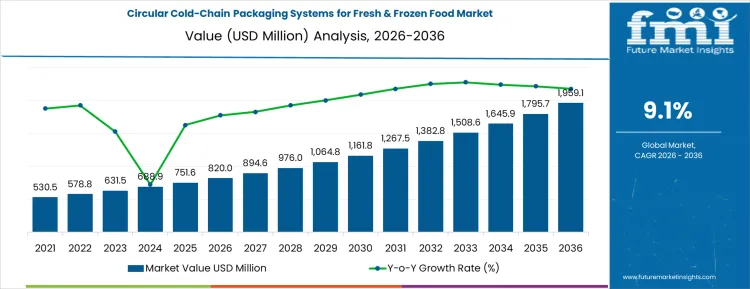
The circular cold-chain packaging systems for fresh and frozen food market is expected to grow from USD 820 million in 2026 to USD 1,959.1 million by 2036, reflecting a compound annual growth rate (CAGR) of 9.1%. Circular cold-chain packaging plays a crucial role in maintaining the quality and safety of perishable goods during transportation, especially in the food industry. With growing concerns about food waste, sustainability, and the environmental impact of packaging, there is a significant push towards circular packaging solutions that can be reused, recycled, or repurposed. The demand for these systems is driven by the increasing preference for environmentally friendly packaging, coupled with the need for efficient and secure packaging to preserve the freshness and integrity of frozen and chilled food products.
The market growth is further fueled by the increasing global demand for fresh and frozen food products, particularly in emerging markets, where e-commerce and modern retail channels are expanding. As consumers and retailers alike demand more sustainable and cost-effective packaging solutions, manufacturers are turning to circular cold-chain packaging systems that comply with sustainability goals and improve the overall efficiency of the cold chain. This growth is also supported by advancements in insulation technologies and packaging materials designed to optimize temperature control and extend shelf life.
Quick Stats of the Circular Cold-Chain Packaging Systems for Fresh & Frozen Food Market
- Circular Cold-Chain Packaging Systems for Fresh & Frozen Food Market Value (2026): USD 820 million
- Circular Cold-Chain Packaging Systems for Fresh & Frozen Food Market Forecast Value (2036): USD 1,959.1 million
- Circular Cold-Chain Packaging Systems for Fresh & Frozen Food Market Global Forecast CAGR (2026-2036): 9.1%
- Circular Cold-Chain Packaging Systems for Fresh & Frozen Food Market Leading Segment: Material (EPP, HDPE, insulation foams) 50%
- Key Growth Regions in Circular Cold-Chain Packaging Systems for Fresh & Frozen Food Market: China
- Top Players in Circular Cold-Chain Packaging Systems for Fresh & Frozen Food Market: IFCO, Schoeller Allibert, SF Express Packaging, ColdStar Packaging, Cryopak, ORBIS, Euro Pool System
What is the Growth Forecast for the Circular Cold-Chain Packaging Systems for Fresh & Frozen Food Market through 2036?
The inflection point mapping for the circular cold-chain packaging systems market highlights a period of steady growth followed by increased acceleration as the market matures. Starting at USD 820 million in 2026, the market grows to USD 894.7 million in 2027 and USD 976 million in 2028. These early-stage increases reflect the gradual adoption of circular cold-chain packaging systems as companies in the fresh and frozen food sector integrate more sustainable practices into their operations.
From 2028 to 2030, the market continues to expand, reaching USD 1,065.4 million in 2029 and USD 1,164.8 million in 2030. During this period, there is a noticeable acceleration as the adoption of circular cold-chain packaging systems grows, driven by technological advancements in packaging and increased pressure from regulatory bodies and consumers for sustainable packaging. Between 2030 and 2035, the market sees continued expansion, reaching USD 1,275.9 million in 2031, USD 1,400.7 million in 2032, and USD 1,541.7 million in 2033.
By 2035, the market is projected to reach USD 1,701.6 million, with the final value of USD 1,959.1 million expected by 2036. The inflection point mapping analysis indicates that the market will experience a period of rapid acceleration as the demand for circular packaging solutions becomes more widespread, driven by both sustainability goals and the ongoing evolution of the global cold-chain logistics infrastructure.
Circular Cold-Chain Packaging Systems for Fresh & Frozen Food Market Key Takeaways
| Metric | Value |
|---|---|
| Industry Sales Value (2026) | USD 820 million |
| Industry Forecast Value (2036) | USD 1,959.1 million |
| Industry Forecast CAGR (2026-2036) | 9.1% |
What Is Driving the Demand for Circular Cold-Chain Packaging Systems for Fresh & Frozen Food Globally?
The demand for circular cold chain packaging systems for fresh and frozen food is driven by increasing emphasis on sustainability, regulatory pressure to reduce packaging waste, and rising consumer expectations for environmentally responsible products. Traditional cold chain packaging often relies on single use insulated containers, foams, and multilayer films that are difficult to recycle or recover, contributing to landfill waste and inefficiencies in resource use. Retailers, food producers, and logistics providers are responding by adopting circular packaging systems designed for reuse, recycling, or return within supply networks. Circular cold chain solutions integrate durable, reusable insulation, returnable pallets and crates, and recyclable or compostable secondary packaging that maintains required temperature control for perishable goods.
These systems help reduce waste and lower total cost of ownership over repeated cycles by minimising single use materials. Regulatory initiatives in regions such as California and the European Union that target packaging waste and encourage extended producer responsibility (EPR) have accelerated interest in circular logic for food logistics, where carbon footprint and end of life management increasingly factor into procurement decisions. Consumer awareness about food loss and packaging impact further reinforces the shift toward systems that combine temperature performance with sustainability credentials, making circular designs more attractive to brands seeking to differentiate their offerings.
Future demand for circular cold chain packaging systems is expected to grow as supply chains become more focused on resilience and environmental performance. Advancements in materials science, such as recyclable insulative polymers, robust returnable containers, and smart temperature tracking labels, will improve system reliability and adoption. Investments in reverse logistics capabilities - including collection, washing, refurbishment, and redeployment of packaging assets - will support broader deployment at scale.
Growth of e commerce food delivery, direct to consumer meal kits, and temperature sensitive pharmaceuticals shares similar cold chain requirements, expanding the addressable market for circular solutions. Sustainability reporting frameworks, corporate net zero targets, and procurement policies that favour recyclable and reusable packaging will continue to shape purchasing behavior among retailers and food brands. As cost, convenience, and environmental metrics align more strongly with circular models, adoption of reusable and recyclable cold chain systems is expected to expand steadily across regions, meeting both performance and sustainability goals in fresh and frozen food logistics.
What is the Segment Analysis for the Circular Cold-Chain Packaging Systems for Fresh & Frozen Food Market?
The circular cold-chain packaging systems for fresh and frozen food market is driven by key segments based on packaging formats and materials. Reusable insulated boxes and totes lead the packaging formats, holding 45% of the market share, followed by returnable crates and insulated shippers. In materials, EPP, HDPE, and insulation foams dominate, comprising 50% of the market. These packaging solutions are essential for ensuring product freshness, minimizing waste, and enhancing supply chain efficiency. The market is growing due to increasing demand for sustainable, reusable packaging and the need to meet environmental goals in the food industry.
What is Driving Growth in the Reusable Insulated Boxes & Totes Segment of the Circular Cold-Chain Packaging Market?
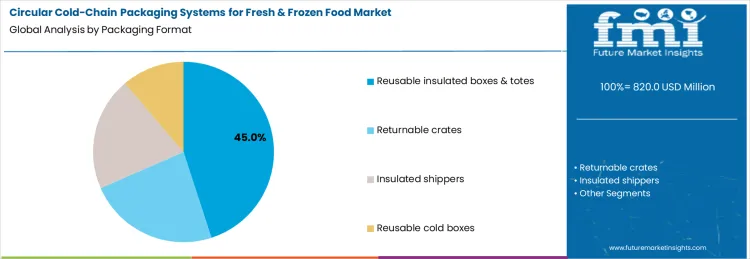
Reusable insulated boxes and totes are the leading packaging format in the circular cold-chain packaging systems for fresh and frozen food market, accounting for 45% of the market share. This growth is driven by the increasing demand for efficient and sustainable solutions in the food supply chain. Reusable insulated boxes and totes are designed to maintain the ideal temperature for perishable items, reducing food spoilage and waste. These packaging formats offer significant cost savings over single-use alternatives, as they can be reused multiple times, making them a popular choice for businesses aiming to reduce long-term packaging expenses.
Additionally, they align with the growing trend of sustainability, as companies seek to minimize environmental impact by using durable, reusable materials. The ability to store and transport fresh and frozen food with minimal temperature fluctuation is crucial in maintaining product quality, which drives the adoption of reusable insulated boxes and totes. With increasing consumer and regulatory pressure for eco-friendly packaging solutions, this segment is expected to maintain its strong position in the market.
What is Contributing to the Growth of EPP, HDPE, and Insulation Foams in the Material Segment?
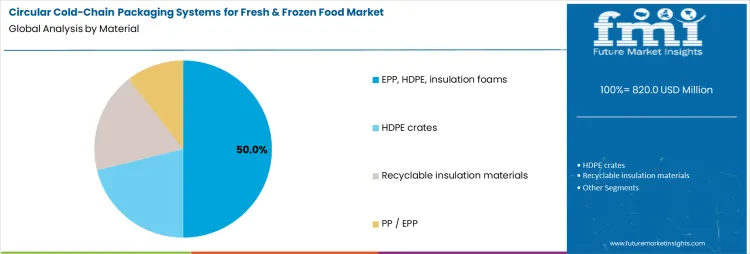
EPP, HDPE, and insulation foams dominate the material segment in the circular cold-chain packaging systems for fresh and frozen food market, comprising 50% of the market share. These materials are highly preferred due to their excellent insulation properties, durability, and ability to maintain consistent temperatures over extended periods. EPP (expanded polypropylene) is particularly valued for its lightweight nature and resistance to impact, making it ideal for reusable packaging solutions. HDPE (high-density polyethylene) is also commonly used due to its strength, recyclability, and resistance to temperature extremes, which are critical for cold-chain logistics.
Insulation foams, often integrated into packaging systems, enhance thermal efficiency by minimizing heat transfer, ensuring that frozen and fresh foods remain at the correct temperature during transit. These materials align with the industry's shift toward circular packaging, as they are reusable and recyclable, helping companies meet sustainability targets. The continued focus on reducing packaging waste and improving supply chain efficiency, along with advancements in material technologies, is expected to drive the growth of EPP, HDPE, and insulation foams in the cold-chain packaging market.
What are the Key Dynamics of the Global Circular Cold Chain Packaging Systems for Fresh & Frozen Food Market?
The global circular cold chain packaging systems for fresh and frozen food market is expanding as food producers, retailers and logistics providers adopt sustainable packaging that supports temperature control and reuse. These systems include insulated reusable containers, refrigerants, returnable pallets and tracking solutions that preserve food quality while reducing waste. Growth is supported by demand for extended shelf life, stringent food safety norms, and corporate commitments to circular materials. Adoption spans grocery chains, meal kit services and cold storage networks where efficient, sustainable cold chain packaging improves operational performance and lowers environmental impact.
What are the Key Drivers for the Global Circular Cold Chain Packaging Systems for Fresh & Frozen Food Market?
Rising demand for fresh and frozen foods is a key driver, increasing shipments that require reliable temperature controlled packaging. Retailers and foodservice operators seek solutions that reduce spoilage and support product integrity from production to consumption. Sustainability commitments by brands and corporate buyers encourage use of reusable and returnable cold chain packaging that cuts single use waste. Investments in refrigerated logistics infrastructure and tracking technologies help manage return flows and maintain temperature accuracy. Consumer preference for environmentally responsible products and regulatory focus on waste reduction further push adoption of circular cold chain packaging systems across global food supply chains.
What are the Restraints for the Global Circular Cold Chain Packaging Systems for Fresh & Frozen Food Market?
One restraint is the higher initial investment required for reusable and circular cold chain packaging compared with conventional single use alternatives. Businesses must allocate capital for durable containers, reverse logistics and cleaning facilities, which can be challenging for smaller operators. Cold chain systems require careful coordination to ensure timely returns and avoid asset loss, adding operational complexity. Variability in infrastructure, especially in emerging markets, limits the effectiveness of reuse programs. Maintaining consistent temperature control during reuse cycles and cleaning adds process steps that require training and quality management. Inconsistent policies on shared packaging standards can slow harmonised adoption in some regions.
What is the Key Trends in the Global Circular Cold Chain Packaging Systems for Fresh & Frozen Food Market?
A key trend is integration of real time temperature monitoring and tracking technology that enhances food safety and asset management throughout cold chain networks. Providers are equipping reusable packaging with sensors and IoT connectivity to ensure adherence to temperature thresholds and improve return logistics. Partnerships between retailers, food manufacturers and third party logistics firms are increasing to build shared circular systems that improve capacity utilisation. Development of standardised reusable container formats supports interoperability across supply chains. Attention to lifecycle assessment and sustainability reporting encourages adoption as companies quantify environmental benefits tied to reduced waste and lower carbon footprint in fresh and frozen food distribution.
What is the Country-Wise Analysis of the Circular Cold-Chain Packaging Systems for Fresh & Frozen Food Market?
The circular cold-chain packaging systems for fresh and frozen food market is expected to see strong growth across key regions, driven by the rising demand for sustainable and efficient packaging solutions in the food industry. Circular cold-chain packaging focuses on reducing waste through recyclable and reusable materials while ensuring the safe transportation and storage of perishable goods. With increasing consumer demand for environmentally friendly packaging and stricter regulatory standards, businesses are shifting toward circular systems to meet sustainability goals. High-growth markets like China and India are expected to see significant demand due to rapid industrialization, expanding urbanization, and a growing middle class. In developed markets such as the USA and Germany, growth is fueled by regulatory compliance, technological advancements, and a greater emphasis on reducing environmental impact.
| Country | CAGR (2026-2036) |
|---|---|
| USA | 8% |
| Germany | 7.2% |
| China | 10.5% |
| India | 12% |
| Brazil | 8% |
What is the Growth Outlook for the Circular Cold-Chain Packaging Systems for Fresh & Frozen Food Market in the USA?
The market for circular cold-chain packaging systems for fresh and frozen food in the United States is expected to grow at a moderate pace, with a projected CAGR of 8%. The USA food industry, particularly in the fresh and frozen food sectors, is adopting more sustainable and environmentally friendly packaging solutions to meet consumer demand and comply with increasingly stringent regulations. Circular packaging systems, which focus on recyclability and reusability, are gaining traction as the USA moves toward reducing food waste and improving sustainability. Technological advancements in packaging materials, combined with greater awareness of environmental impact, are driving the adoption of circular cold-chain packaging systems in the USA The market growth is expected to continue as businesses strive to meet sustainability goals and reduce their carbon footprint.
What is the Market Outlook for the Circular Cold-Chain Packaging Systems for Fresh & Frozen Food Market in Germany?
The circular cold-chain packaging systems for fresh and frozen food market in Germany is projected to grow at a steady rate, with a projected CAGR of 7.2%. Germany is known for its commitment to sustainability, and the food industry is increasingly focused on adopting packaging solutions that are both eco-friendly and efficient. With the European Union’s emphasis on reducing packaging waste and improving recycling rates, businesses in Germany are increasingly adopting circular cold-chain packaging to comply with regulations and meet consumer demand for sustainable products. As the food industry in Germany continues to grow and prioritize environmental responsibility, the demand for circular cold-chain packaging systems is expected to rise steadily, ensuring greater waste reduction and product safety during transportation and storage.
What is the Growth Forecast for the Circular Cold-Chain Packaging Systems for Fresh & Frozen Food Market in China?
The circular cold-chain packaging systems for fresh and frozen food market in China is expected to grow rapidly, with a projected CAGR of 10.5%. China’s expanding food and beverage industry, coupled with increasing demand for sustainable packaging solutions, is driving the adoption of circular cold-chain packaging systems. The country’s focus on improving food safety and reducing environmental impact is contributing to the growing demand for recyclable and reusable packaging materials. Additionally, China’s rapid industrialization and increasing consumer focus on sustainability are pushing manufacturers to adopt eco-friendlier practices. As China continues to implement stricter environmental regulations, the market for circular cold-chain packaging systems is expected to grow rapidly to meet these demands.
What is the Market Outlook for the Circular Cold-Chain Packaging Systems for Fresh & Frozen Food Market in India?
The circular cold-chain packaging systems for fresh and frozen food market in India is projected to grow at the highest rate globally, with a CAGR of 12%. India’s rapidly expanding food and beverage industry, coupled with growing awareness of sustainability and environmental issues, is driving demand for circular cold-chain packaging systems. As India’s middle class grows and consumer demand for fresh and frozen food increases, there is a growing need for packaging solutions that ensure product safety and meet sustainability goals. The Indian government’s push for reducing packaging waste and promoting circular economy practices further accelerates the adoption of circular packaging systems. With these trends in mind, the market for circular cold-chain packaging systems is set to experience substantial growth in India.
What are the Growth Prospects for the Circular Cold-Chain Packaging Systems for Fresh & Frozen Food Market in Brazil?
The circular cold-chain packaging systems for fresh and frozen food market in Brazil is expected to grow at a moderate pace, with a projected CAGR of 8%. Brazil’s growing food industry, particularly in the fresh and frozen food segments, is increasingly adopting circular packaging systems to meet consumer demand for sustainable solutions. The country’s focus on improving food safety and reducing packaging waste, combined with a growing interest in eco-friendly packaging, is driving the adoption of circular cold-chain systems. As Brazilian manufacturers and retailers increasingly prioritize sustainability and efficiency in their supply chains, the market for circular cold-chain packaging systems is expected to grow steadily, contributing to waste reduction and improved product quality during transportation and storage.
What is the Competitive Landscape for the Circular Cold-Chain Packaging Systems for Fresh & Frozen Food Market?
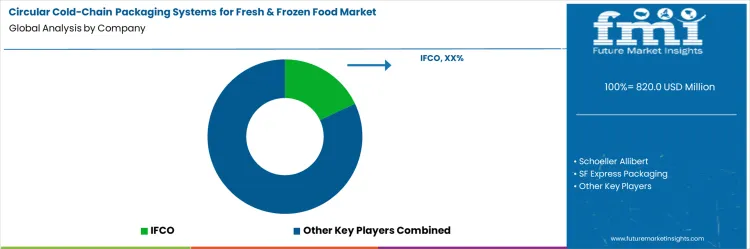
The circular cold-chain packaging systems for fresh and frozen food market is experiencing rapid growth, driven by the need for sustainable and efficient packaging solutions that maintain product integrity during transportation. IFCO leads the market with its innovative circular cold-chain packaging systems designed for the secure transport and storage of fresh and frozen food. Their focus on sustainability and their established global presence have made them a leader in reusable, temperature-controlled packaging solutions.
Schoeller Allibert, SF Express Packaging, and ColdStar Packaging are major competitors, offering advanced cold-chain packaging solutions that focus on durability and maintaining optimal conditions for food during transport. Schoeller Allibert is known for its versatile and reusable packaging, while SF Express Packaging and ColdStar Packaging focus on providing reliable, energy-efficient solutions tailored to specific customer needs.
Cryopak, ORBIS, and Euro Pool System add to the competitive landscape with their specialized offerings in cold-chain packaging. Cryopak provides advanced temperature-controlled packaging systems with a focus on maintaining the integrity of frozen food during distribution. ORBIS offers a wide range of reusable packaging solutions for temperature-sensitive products, while Euro Pool System focuses on offering efficient and sustainable solutions to meet the increasing demand for circular cold-chain packaging systems. These companies compete through product innovation, sustainability, and their ability to provide reliable and effective cold-chain packaging solutions for fresh and frozen foods.
Key Players of the Circular Cold-Chain Packaging Systems for Fresh & Frozen Food Market
- IFCO
- Schoeller Allibert
- SF Express Packaging
- ColdStar Packaging
- Cryopak
- ORBIS
- Euro Pool System
Scope of the Report
| Items | Values |
|---|---|
| Quantitative Units (2026) | USD Million |
| End-use / Application | Fresh Produce & Meat, Frozen Food & Seafood, Fresh Food E-Commerce, Dairy & Pharma Food Adjacencies, Protein Exports, High-Value Frozen Foods |
| Packaging Format / Type | Reusable Insulated Boxes & Totes, Returnable Crates, Insulated Shippers, Reusable Cold Boxes, Others |
| Material | EPP, HDPE, Insulation Foams, HDPE Crates, Recyclable Insulation Materials, PP / EPP, Others |
| Technology | Reuse Pooling + Thermal Optimisation, Wash-and-Reuse Logistics, PCM-Based Temperature Control, Low-Cost Insulation Tech |
| Companies | IFCO, Schoeller Allibert, SF Express Packaging, ColdStar Packaging, Cryopak, ORBIS, Euro Pool System |
| Regions Covered | North America, Latin America, Western Europe, Eastern Europe, South Asia and Pacific, East Asia, Middle East & Africa |
| Countries Covered | United States, Canada, Mexico, Brazil, Argentina, Germany, France, United Kingdom, Italy, Spain, Netherlands, China, India, Japan, South Korea, ANZ, GCC Countries, South Africa |
| Additional Attributes | Dollar by sales by end-use/application, packaging format/type, material, technology, and region. Includes market trends in circular cold-chain packaging systems, focusing on reusable insulated boxes, returnable crates, insulated shippers, and cold boxes. Highlights the role of thermal optimisation, wash-and-reuse logistics, and PCM-based temperature control in fresh produce, frozen food, and dairy packaging. Focus on cost-effectiveness, sustainability, regulatory compliance, and market share of key companies in the cold-chain packaging sector. |
Circular Cold-Chain Packaging Systems for Fresh & Frozen Food Market Segmentation
End-use / Application:
- Fresh produce & meat
- Frozen food & seafood
- Fresh food e-commerce
- Dairy & pharma food adjacencies
- Protein exports
- High-value frozen foods
Packaging Format / Type:
- Reusable insulated boxes & totes
- Returnable crates
- Insulated shippers
- Reusable cold boxes
- Others
Material:
- EPP, HDPE, insulation foams
- HDPE crates
- Recyclable insulation materials
- PP / EPP
- Others
Technology:
- Reuse pooling + thermal optimisation
- Wash-and-reuse logistics
- PCM-based temperature control
- Low-cost insulation tech
- Others
Region:
- Asia Pacific
- China
- Japan
- South Korea
- India
- Australia & New Zealand
- ASEAN
- Rest of Asia Pacific
- Europe
- Germany
- United Kingdom
- France
- Italy
- Spain
- Nordic
- BENELUX
- Rest of Europe
- North America
- United States
- Canada
- Mexico
- Latin America
- Brazil
- Chile
- Rest of Latin America
- Middle East & Africa
- Kingdom of Saudi Arabia
- Other GCC Countries
- Turkey
- South Africa
- Other African Union
- Rest of Middle East & Africa
Frequently Asked Questions
How big is the circular cold-chain packaging systems for fresh & frozen food market in 2026?
The global circular cold-chain packaging systems for fresh & frozen food market is estimated to be valued at USD 820.0 million in 2026.
What will be the size of circular cold-chain packaging systems for fresh & frozen food market in 2036?
The market size for the circular cold-chain packaging systems for fresh & frozen food market is projected to reach USD 1,959.1 million by 2036.
How much will be the circular cold-chain packaging systems for fresh & frozen food market growth between 2026 and 2036?
The circular cold-chain packaging systems for fresh & frozen food market is expected to grow at a 9.1% CAGR between 2026 and 2036.
What are the key product types in the circular cold-chain packaging systems for fresh & frozen food market?
The key product types in circular cold-chain packaging systems for fresh & frozen food market are fresh produce & meat, frozen food & seafood, fresh food e-commerce, dairy & pharma food adjacencies, protein exports and high-value frozen foods.
Which packaging format segment to contribute significant share in the circular cold-chain packaging systems for fresh & frozen food market in 2026?
In terms of packaging format, reusable insulated boxes & totes segment to command 45.0% share in the circular cold-chain packaging systems for fresh & frozen food market in 2026.
Preview the report firsthand - request a free sample
Get SampleGet the brochure for pricing and purchase details.
Get PDFTable of Content
- Executive Summary
- Global Market Outlook
- Demand-side Trends
- Supply-side Trends
- Technology Roadmap Analysis
- Analysis and Recommendations
- Market Overview
- Market Coverage / Taxonomy
- Market Definition / Scope / Limitations
- Market Background
- Market Dynamics
- Drivers
- Restraints
- Opportunity
- Trends
- Scenario Forecast
- Demand in Optimistic Scenario
- Demand in Likely Scenario
- Demand in Conservative Scenario
- Opportunity Map Analysis
- Product Life Cycle Analysis
- Supply Chain Analysis
- Investment Feasibility Matrix
- Value Chain Analysis
- PESTLE and Porter’s Analysis
- Regulatory Landscape
- Regional Parent Market Outlook
- Production and Consumption Statistics
- Import and Export Statistics
- Market Dynamics
- Global Market Analysis 2021 to 2025 and Forecast, 2026 to 2036
- Historical Market Size Value (USD Million) Analysis, 2021 to 2025
- Current and Future Market Size Value (USD Million) Projections, 2026 to 2036
- Y-o-Y Growth Trend Analysis
- Absolute $ Opportunity Analysis
- Global Market Pricing Analysis 2021 to 2025 and Forecast 2026 to 2036
- Global Market Analysis 2021 to 2025 and Forecast 2026 to 2036, By End-use
- Introduction / Key Findings
- Historical Market Size Value (USD Million) Analysis By End-use , 2021 to 2025
- Current and Future Market Size Value (USD Million) Analysis and Forecast By End-use , 2026 to 2036
- Fresh produce & meat
- Frozen food & seafood
- Fresh food e-commerce
- Dairy & pharma food adjacencies
- Protein exports
- High-value frozen foods
- Y-o-Y Growth Trend Analysis By End-use , 2021 to 2025
- Absolute $ Opportunity Analysis By End-use , 2026 to 2036
- Global Market Analysis 2021 to 2025 and Forecast 2026 to 2036, By Packaging Format
- Introduction / Key Findings
- Historical Market Size Value (USD Million) Analysis By Packaging Format, 2021 to 2025
- Current and Future Market Size Value (USD Million) Analysis and Forecast By Packaging Format, 2026 to 2036
- Reusable insulated boxes & totes
- Returnable crates
- Insulated shippers
- Reusable cold boxes
- Y-o-Y Growth Trend Analysis By Packaging Format, 2021 to 2025
- Absolute $ Opportunity Analysis By Packaging Format, 2026 to 2036
- Global Market Analysis 2021 to 2025 and Forecast 2026 to 2036, By Material
- Introduction / Key Findings
- Historical Market Size Value (USD Million) Analysis By Material, 2021 to 2025
- Current and Future Market Size Value (USD Million) Analysis and Forecast By Material, 2026 to 2036
- EPP, HDPE, insulation foams
- HDPE crates
- Recyclable insulation materials
- PP / EPP
- Y-o-Y Growth Trend Analysis By Material, 2021 to 2025
- Absolute $ Opportunity Analysis By Material, 2026 to 2036
- Global Market Analysis 2021 to 2025 and Forecast 2026 to 2036, By Technology
- Introduction / Key Findings
- Historical Market Size Value (USD Million) Analysis By Technology, 2021 to 2025
- Current and Future Market Size Value (USD Million) Analysis and Forecast By Technology, 2026 to 2036
- Reuse pooling + thermal optimisation
- Wash-and-reuse logistics
- PCM-based temperature control
- Low-cost insulation tech
- Y-o-Y Growth Trend Analysis By Technology, 2021 to 2025
- Absolute $ Opportunity Analysis By Technology, 2026 to 2036
- Global Market Analysis 2021 to 2025 and Forecast 2026 to 2036, By Region
- Introduction
- Historical Market Size Value (USD Million) Analysis By Region, 2021 to 2025
- Current Market Size Value (USD Million) Analysis and Forecast By Region, 2026 to 2036
- North America
- Latin America
- Western Europe
- Eastern Europe
- East Asia
- South Asia and Pacific
- Middle East & Africa
- Market Attractiveness Analysis By Region
- North America Market Analysis 2021 to 2025 and Forecast 2026 to 2036, By Country
- Historical Market Size Value (USD Million) Trend Analysis By Market Taxonomy, 2021 to 2025
- Market Size Value (USD Million) Forecast By Market Taxonomy, 2026 to 2036
- By Country
- USA
- Canada
- Mexico
- By End-use
- By Packaging Format
- By Material
- By Technology
- By Country
- Market Attractiveness Analysis
- By Country
- By End-use
- By Packaging Format
- By Material
- By Technology
- Key Takeaways
- Latin America Market Analysis 2021 to 2025 and Forecast 2026 to 2036, By Country
- Historical Market Size Value (USD Million) Trend Analysis By Market Taxonomy, 2021 to 2025
- Market Size Value (USD Million) Forecast By Market Taxonomy, 2026 to 2036
- By Country
- Brazil
- Chile
- Rest of Latin America
- By End-use
- By Packaging Format
- By Material
- By Technology
- By Country
- Market Attractiveness Analysis
- By Country
- By End-use
- By Packaging Format
- By Material
- By Technology
- Key Takeaways
- Western Europe Market Analysis 2021 to 2025 and Forecast 2026 to 2036, By Country
- Historical Market Size Value (USD Million) Trend Analysis By Market Taxonomy, 2021 to 2025
- Market Size Value (USD Million) Forecast By Market Taxonomy, 2026 to 2036
- By Country
- Germany
- UK
- Italy
- Spain
- France
- Nordic
- BENELUX
- Rest of Western Europe
- By End-use
- By Packaging Format
- By Material
- By Technology
- By Country
- Market Attractiveness Analysis
- By Country
- By End-use
- By Packaging Format
- By Material
- By Technology
- Key Takeaways
- Eastern Europe Market Analysis 2021 to 2025 and Forecast 2026 to 2036, By Country
- Historical Market Size Value (USD Million) Trend Analysis By Market Taxonomy, 2021 to 2025
- Market Size Value (USD Million) Forecast By Market Taxonomy, 2026 to 2036
- By Country
- Russia
- Poland
- Hungary
- Balkan & Baltic
- Rest of Eastern Europe
- By End-use
- By Packaging Format
- By Material
- By Technology
- By Country
- Market Attractiveness Analysis
- By Country
- By End-use
- By Packaging Format
- By Material
- By Technology
- Key Takeaways
- East Asia Market Analysis 2021 to 2025 and Forecast 2026 to 2036, By Country
- Historical Market Size Value (USD Million) Trend Analysis By Market Taxonomy, 2021 to 2025
- Market Size Value (USD Million) Forecast By Market Taxonomy, 2026 to 2036
- By Country
- China
- Japan
- South Korea
- By End-use
- By Packaging Format
- By Material
- By Technology
- By Country
- Market Attractiveness Analysis
- By Country
- By End-use
- By Packaging Format
- By Material
- By Technology
- Key Takeaways
- South Asia and Pacific Market Analysis 2021 to 2025 and Forecast 2026 to 2036, By Country
- Historical Market Size Value (USD Million) Trend Analysis By Market Taxonomy, 2021 to 2025
- Market Size Value (USD Million) Forecast By Market Taxonomy, 2026 to 2036
- By Country
- India
- ASEAN
- Australia & New Zealand
- Rest of South Asia and Pacific
- By End-use
- By Packaging Format
- By Material
- By Technology
- By Country
- Market Attractiveness Analysis
- By Country
- By End-use
- By Packaging Format
- By Material
- By Technology
- Key Takeaways
- Middle East & Africa Market Analysis 2021 to 2025 and Forecast 2026 to 2036, By Country
- Historical Market Size Value (USD Million) Trend Analysis By Market Taxonomy, 2021 to 2025
- Market Size Value (USD Million) Forecast By Market Taxonomy, 2026 to 2036
- By Country
- Kingdom of Saudi Arabia
- Other GCC Countries
- Turkiye
- South Africa
- Other African Union
- Rest of Middle East & Africa
- By End-use
- By Packaging Format
- By Material
- By Technology
- By Country
- Market Attractiveness Analysis
- By Country
- By End-use
- By Packaging Format
- By Material
- By Technology
- Key Takeaways
- Key Countries Market Analysis
- USA
- Pricing Analysis
- Market Share Analysis, 2025
- By End-use
- By Packaging Format
- By Material
- By Technology
- Canada
- Pricing Analysis
- Market Share Analysis, 2025
- By End-use
- By Packaging Format
- By Material
- By Technology
- Mexico
- Pricing Analysis
- Market Share Analysis, 2025
- By End-use
- By Packaging Format
- By Material
- By Technology
- Brazil
- Pricing Analysis
- Market Share Analysis, 2025
- By End-use
- By Packaging Format
- By Material
- By Technology
- Chile
- Pricing Analysis
- Market Share Analysis, 2025
- By End-use
- By Packaging Format
- By Material
- By Technology
- Germany
- Pricing Analysis
- Market Share Analysis, 2025
- By End-use
- By Packaging Format
- By Material
- By Technology
- UK
- Pricing Analysis
- Market Share Analysis, 2025
- By End-use
- By Packaging Format
- By Material
- By Technology
- Italy
- Pricing Analysis
- Market Share Analysis, 2025
- By End-use
- By Packaging Format
- By Material
- By Technology
- Spain
- Pricing Analysis
- Market Share Analysis, 2025
- By End-use
- By Packaging Format
- By Material
- By Technology
- France
- Pricing Analysis
- Market Share Analysis, 2025
- By End-use
- By Packaging Format
- By Material
- By Technology
- India
- Pricing Analysis
- Market Share Analysis, 2025
- By End-use
- By Packaging Format
- By Material
- By Technology
- ASEAN
- Pricing Analysis
- Market Share Analysis, 2025
- By End-use
- By Packaging Format
- By Material
- By Technology
- Australia & New Zealand
- Pricing Analysis
- Market Share Analysis, 2025
- By End-use
- By Packaging Format
- By Material
- By Technology
- China
- Pricing Analysis
- Market Share Analysis, 2025
- By End-use
- By Packaging Format
- By Material
- By Technology
- Japan
- Pricing Analysis
- Market Share Analysis, 2025
- By End-use
- By Packaging Format
- By Material
- By Technology
- South Korea
- Pricing Analysis
- Market Share Analysis, 2025
- By End-use
- By Packaging Format
- By Material
- By Technology
- Russia
- Pricing Analysis
- Market Share Analysis, 2025
- By End-use
- By Packaging Format
- By Material
- By Technology
- Poland
- Pricing Analysis
- Market Share Analysis, 2025
- By End-use
- By Packaging Format
- By Material
- By Technology
- Hungary
- Pricing Analysis
- Market Share Analysis, 2025
- By End-use
- By Packaging Format
- By Material
- By Technology
- Kingdom of Saudi Arabia
- Pricing Analysis
- Market Share Analysis, 2025
- By End-use
- By Packaging Format
- By Material
- By Technology
- Turkiye
- Pricing Analysis
- Market Share Analysis, 2025
- By End-use
- By Packaging Format
- By Material
- By Technology
- South Africa
- Pricing Analysis
- Market Share Analysis, 2025
- By End-use
- By Packaging Format
- By Material
- By Technology
- USA
- Market Structure Analysis
- Competition Dashboard
- Competition Benchmarking
- Market Share Analysis of Top Players
- By Regional
- By End-use
- By Packaging Format
- By Material
- By Technology
- Competition Analysis
- Competition Deep Dive
- IFCO
- Overview
- Product Portfolio
- Profitability by Market Segments (Product/Age /Sales Channel/Region)
- Sales Footprint
- Strategy Overview
- Marketing Strategy
- Product Strategy
- Channel Strategy
- Schoeller Allibert
- SF Express Packaging
- ColdStar Packaging
- Cryopak
- ORBIS
- Euro Pool System
- IFCO
- Competition Deep Dive
- Assumptions & Acronyms Used
- Research Methodology


