

- Industry Size (2026)
- USD 1.3 Bn
- Forecast (2036)
- USD 2.9 Bn
- CAGR (2026 to 2036)
- 8.2%
High-Circularity Rigid Packaging Based on Preferred Polymers Market Forecast and Outlook 2026 to 2036
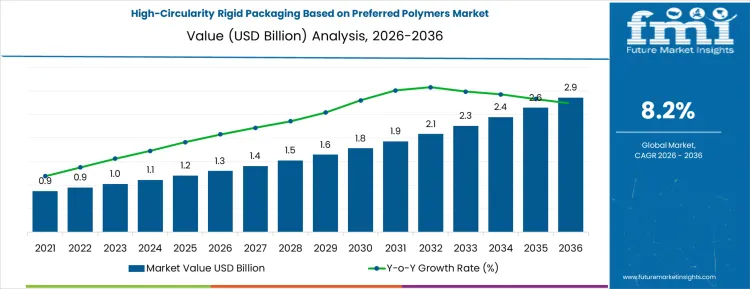
The high-circularity rigid packaging based on preferred polymers market is expected to grow from USD 1.3 billion in 2026 to USD 2.9 billion by 2036, reflecting a compound annual growth rate (CAGR) of 8.2%. High-circularity rigid packaging, which utilizes recyclable and sustainable polymers, is gaining significant traction due to its reduced environmental impact and compliance with increasing global sustainability regulations. Industries such as food & beverage, consumer goods, and pharmaceuticals are increasingly adopting these solutions to meet consumer demand for eco-friendly products and comply with circular economy goals. These polymers are designed for easier recycling, promoting resource recovery and reducing waste, further supporting the transition towards more sustainable packaging solutions.
The market's growth is driven by heightened awareness of plastic waste, stringent regulations aimed at reducing packaging waste, and a growing focus on sustainability across various industries. Advances in polymer technology and the development of materials that combine durability with recyclability are expected to accelerate the adoption of high-circularity packaging. As brands and manufacturers prioritize environmental stewardship, the demand for rigid packaging solutions based on preferred polymers is projected to increase over the next decade.
Quick Stats of the High-Circularity Rigid Packaging Based on Preferred Polymers Market
- High-Circularity Rigid Packaging Based on Preferred Polymers Market Value (2026): USD 1.3 billion
- High-Circularity Rigid Packaging Based on Preferred Polymers Market Forecast Value (2036): USD 2.9 billion
- High-Circularity Rigid Packaging Based on Preferred Polymers Market Global Forecast CAGR (2026-2036): 8.2%
- High-Circularity Rigid Packaging Based on Preferred Polymers Market Leading Segment: Material (PET, HDPE, PP – preferred polymers) 55%
- Key Growth Regions in High-Circularity Rigid Packaging Based on Preferred Polymers Market: North America and Asia Pacific
- Top Players in High-Circularity Rigid Packaging Based on Preferred Polymers Market: Amcor, ALPLA, Indorama Ventures, UFlex, Berry Global, Plastipak, RPC
What is the Growth Forecast for the High-Circularity Rigid Packaging Based on Preferred Polymers Market through 2036?
The growth contribution index for the high-circularity rigid packaging based on preferred polymers market indicates a consistent upward trajectory over the forecast period. Starting at USD 1.3 billion in 2026, the market grows to USD 1.4 billion in 2027 and USD 1.5 billion in 2028. These early-stage increases reflect the gradual adoption of high-circularity packaging materials by key industries, driven by regulatory requirements and consumer demand for sustainable products.
Between 2028 and 2030, the market continues to expand at a moderate pace, reaching USD 1.6 billion in 2029 and USD 1.7 billion in 2030. This period marks the initial acceleration phase, as technological advancements in polymer science enable more cost-effective production of high-circularity packaging materials. From 2030 to 2035, the market experiences further growth, reaching USD 1.9 billion in 2031, USD 2 billion in 2032, and USD 2.2 billion in 2033. By 2035, the market is projected to reach USD 2.6 billion, with USD 2.9 billion expected by 2036. This consistent growth is driven by expanding demand for more sustainable packaging options across industries.
High-Circularity Rigid Packaging Based on Preferred Polymers Market Key Takeaways
| Metric | Value |
|---|---|
| Industry Sales Value (2026) | USD 1.3 billion |
| Industry Forecast Value (2036) | USD 2.9 billion |
| Industry Forecast CAGR (2026-2036) | 8.2% |
What Is Driving the Demand for High Circularity Rigid Packaging Based on Preferred Polymers in the US and Globally?
The demand for high circularity rigid packaging based on preferred polymers is being driven by tightening global regulations, sustainability goals, and increasing consumer demand for environmentally friendly products. Packaging made from rigid plastics, such as bottles, jars, and containers, represents a large share of plastic waste in industries like food and beverage, personal care, and household products. Governments in North America, Europe, and Asia are implementing stringent recycling mandates, extended producer responsibility (EPR) regulations, and recycled content targets, compelling manufacturers to shift to materials compatible with established recycling streams. Preferred polymers, including polyethylene (PE), polypropylene (PP), and polyethylene terephthalate (PET), are widely accepted in these systems and offer performance characteristics such as strength, flexibility, and barrier properties, making them ideal for packaging solutions. This shift is critical for meeting regulatory compliance and reducing environmental impact, addressing the growing demand for plastic packaging that is recyclable, reusable, and made from sustainable materials.
As the push for a circular economy grows, the adoption of high circularity rigid packaging continues to expand, fueled by advancements in recycling technologies, such as improved sorting and chemical recycling processes, which enhance the recovery of high quality recycled materials. This innovation is making high circularity packaging solutions more cost effective and scalable, helping reduce reliance on virgin plastic production. Companies are increasingly incorporating these sustainable packaging solutions into their product lines to meet consumer expectations for eco friendly products while boosting their environmental, social, and governance (ESG) profiles. With rising consumer awareness of the environmental impact of plastic waste, there is a greater emphasis on packaging that supports the reduction of plastic pollution. As a result, the high circularity rigid packaging market is expected to grow steadily, driven by regulatory demands, corporate sustainability initiatives, and consumer preferences for recyclable and sustainable materials.
What is the Segment Analysis for the High-Circularity Rigid Packaging Based on Preferred Polymers Market?
The high-circularity rigid packaging based on preferred polymers market is driven by key segments focused on end-use applications and packaging formats. Food & beverages lead the market with 40% of the share, followed by personal care, household & FMCG, and dairy & beverages. Bottles, tubs, and jars dominate packaging formats, holding 45% of the market share, with other formats like cosmetic bottles and rigid containers also contributing. The market's growth is driven by increasing demand for sustainable, recyclable packaging, with preferred polymers playing a significant role in achieving circularity. Regulatory pressures and consumer demand for eco-friendly packaging further accelerate this shift.
What is Driving Growth in the Food & Beverages End-Use Segment of the High-Circularity Rigid Packaging Market?
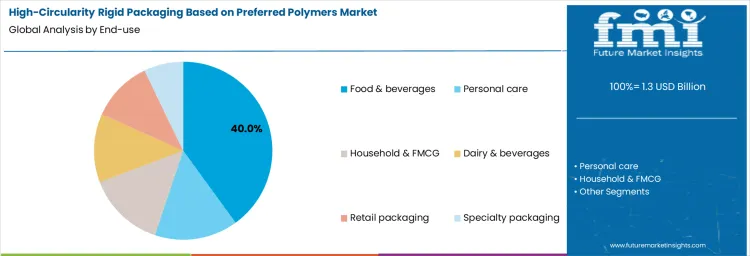
The food & beverages end-use segment is the largest application in the high-circularity rigid packaging market, accounting for 40% of the market share. This growth is driven by the rising consumer demand for sustainable packaging solutions, particularly in the food and beverage sector, where packaging plays a critical role in preserving product quality, safety, and shelf life. The increasing focus on reducing plastic waste and improving recyclability is pushing manufacturers to adopt high-circularity rigid packaging made from preferred polymers. Packaging solutions like bottles, tubs, and jars made from recyclable and reusable materials are becoming essential for food and beverage companies aiming to meet both consumer expectations and regulatory requirements regarding sustainability. Furthermore, food and beverage packaging is under heightened scrutiny due to environmental concerns, prompting the adoption of more circular packaging systems that can be recycled or repurposed after use. As eco-conscious consumer behavior continues to rise, the food & beverages sector is expected to lead the adoption of high-circularity rigid packaging, driven by the growing need for both product protection and environmental responsibility.
What is Contributing to the Growth of Bottles, Tubs, and Jars Packaging Format in the High-Circularity Rigid Packaging Market?
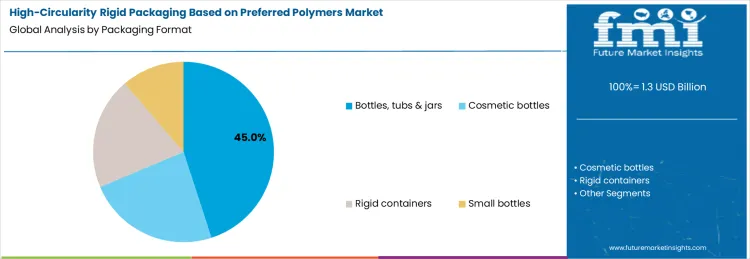
Bottles, tubs, and jars are the leading packaging formats in the high-circularity rigid packaging market, comprising 45% of the market share. The demand for these formats is primarily driven by the growing need for sustainable, durable, and eco-friendly packaging in sectors like food & beverages, personal care, and household products. Bottles, tubs, and jars made from high-circularity polymers are increasingly popular because they offer both high performance and recyclability, aligning with consumer preferences for environmentally responsible products. These packaging formats are versatile and can be used for a wide range of products, from beverages to cosmetics and household items, making them a staple in many industries. Additionally, advancements in polymer technologies are enhancing the recyclability of bottles, tubs, and jars, which is crucial as companies strive to meet regulatory requirements and sustainability targets. As companies seek to reduce their carbon footprint and adopt more circular packaging solutions, the demand for bottles, tubs, and jars is expected to continue growing, solidifying their position as a key packaging format in the market. The shift towards using preferred polymers in these formats will further drive the adoption of circular packaging solutions across various industries.
What are the Key Dynamics of the Global High Circularity Rigid Packaging Based on Preferred Polymers Market?
The global high circularity rigid packaging based on preferred polymers market is expanding as manufacturers and brands seek packaging solutions that support reuse, recyclability, and closed loop value recovery. Preferred polymers include materials that are easier to recycle, have lower environmental impact, and align with circular economy targets. Growth is driven by sustainability commitments, regulatory pressure on single use plastics, and investments in recycling infrastructure. Use spans food and beverage, personal care, household products, and industrial segments where robust, durable rigid packaging must also meet recycling and resource efficiency goals.
What are the Key Drivers for the Global High Circularity Rigid Packaging Based on Preferred Polymers Market?
One key driver is regulatory emphasis on reducing plastic waste and increasing recycled content requirements in packaging. Extended producer responsibility programs and recycled content mandates motivate brands to adopt preferred polymers that support circularity. Consumer expectations for sustainable packaging and transparent material claims also influence purchasing decisions. Investments in advanced sorting and recycling technologies make high quality recycled feedstock more accessible, encouraging use of preferred polymers. Corporate sustainability strategies and environmental, social and governance priorities push brand owners to redesign rigid packaging to reduce environmental impact while maintaining functional performance.
What are the Restraints for the Global High Circularity Rigid Packaging Based on Preferred Polymers Market?
Challenges include variability in availability and quality of recycled feedstock, which can affect performance and supply reliability for preferred polymers. High cost of advanced recycling technology and infrastructure can limit access to high circularity materials in some regions. Formulating rigid packaging that meets performance, safety and aesthetic standards while incorporating high levels of recycled content may require additional development and testing. Inconsistent recycling systems and collection rates across regions reduce effective recovery, making it harder to close material loops. Price sensitivity among some converters and brands may lead to prioritizing lower cost conventional materials over circularity focused options.
What is the Key Trends in the Global High Circularity Rigid Packaging Based on Preferred Polymers Market?
A key trend is development of multi source recycled polymer streams that combine mechanical and advanced recycling outputs to deliver consistent quality for rigid packaging. Collaboration among resin producers, recyclers and brand owners is increasing to secure supply and validate performance. Standardization of recycled content claims and certification systems supports consumer confidence and regulatory compliance. Material innovations focus on achieving high mechanical strength and barrier properties while maximizing recycled content. Investment in design for recyclability practices, including mono polymer solutions and easy to separate components, is influencing packaging development. Adoption of take back systems and closed loop initiatives further supports circular material flows.
Country-Wise Analysis of the High-Circularity Rigid Packaging Based on Preferred Polymers Market
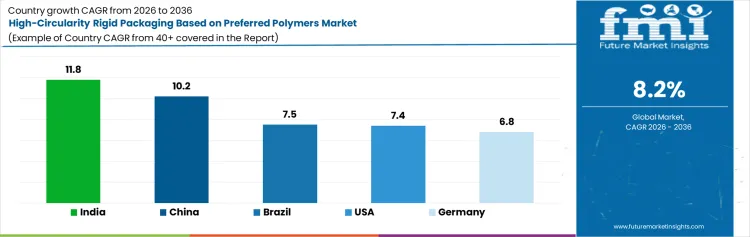
The high-circularity rigid packaging based on preferred polymers market is projected to grow steadily across key regions, driven by increasing demand for sustainable and environmentally friendly packaging solutions. High-circularity packaging refers to materials that can be recycled or reused multiple times without compromising performance, aligning with global efforts to reduce waste and improve material recovery rates. Countries like India and China are expected to see high growth due to expanding industrialization and increasing focus on sustainability. Meanwhile, developed markets like the USA and Germany are seeing steady growth driven by technological advancements and regulatory requirements for sustainable packaging.
| Country | CAGR (2026-2036) |
|---|---|
| USA | 7.4% |
| Germany | 6.8% |
| China | 10.2% |
| India | 11.8% |
| Brazil | 7.5% |
What is the Growth Outlook for the High-Circularity Rigid Packaging Based on Preferred Polymers Market in the USA?
The market for high-circularity rigid packaging based on preferred polymers in the United States is expected to grow at a moderate pace, with a projected CAGR of 7.4%. The U.S. market is influenced by increasing consumer demand for eco-friendly products and the growing need for sustainable packaging solutions across various industries, including food and beverage, pharmaceuticals, and consumer goods. Regulatory pressures, such as extended producer responsibility (EPR) laws and packaging waste reduction goals, are encouraging businesses to shift toward circular packaging solutions. Additionally, technological advancements in polymer recycling and the development of new, sustainable polymers contribute to the market's growth. As businesses and consumers increasingly prioritize sustainability, the demand for high-circularity packaging is expected to rise steadily in the U.S.
What is the Market Outlook for the High-Circularity Rigid Packaging Based on Preferred Polymers Market in Germany?
The market for high-circularity rigid packaging based on preferred polymers in Germany is projected to grow at a moderate rate, with a projected CAGR of 6.8%. Germany is a leader in sustainability efforts and circular economy principles, making it an important market for high-circularity packaging. German manufacturers, particularly in the food, beverage, and consumer goods sectors, are increasingly adopting sustainable packaging solutions to meet both consumer demand and stringent regulatory requirements. Germany’s commitment to reducing plastic waste and enhancing recycling rates is driving the adoption of circular packaging materials made from preferred polymers. With ongoing investments in recycling technologies and circular economy initiatives, Germany is expected to continue experiencing steady growth in the high-circularity rigid packaging market.
What is the Growth Forecast for the High-Circularity Rigid Packaging Based on Preferred Polymers Market in China?
The market for high-circularity rigid packaging based on preferred polymers in China is expected to grow rapidly, with a projected CAGR of 10.2%. China’s large-scale manufacturing sector, combined with growing concerns about product sustainability, particularly in the automotive, electronics, and food industries, is driving the demand for circular packaging solutions. The Chinese government’s push toward a circular economy, including regulations that encourage recycling and the reduction of plastic waste, is also contributing to the market’s growth. China’s packaging industry is increasingly adopting recyclable and reusable materials made from preferred polymers to comply with both domestic and international environmental standards. As the country continues to prioritize sustainability and environmental protection, the high-circularity rigid packaging market in China is expected to see robust growth.
What is the Market Outlook for the High-Circularity Rigid Packaging Based on Preferred Polymers Market in India?
The high-circularity rigid packaging based on preferred polymers market in India is projected to grow at the highest rate globally, with a projected CAGR of 11.8%. India’s growing middle class, expanding industrial sector, and increasing consumer focus on sustainability are key drivers behind this growth. With the increasing demand for packaged goods, particularly in the food, beverage, and pharmaceutical sectors, there is a strong push for sustainable packaging solutions that reduce the use of additives. The Indian government’s policies aimed at reducing plastic waste and promoting recycling are contributing to the adoption of circular packaging solutions. As the demand for sustainable packaging solutions increases across sectors, India is set to experience significant growth in the high-circularity packaging market.
What are the Growth Prospects for the High-Circularity Rigid Packaging Based on Preferred Polymers Market in Brazil?
The market for high-circularity rigid packaging based on preferred polymers in Brazil is expected to grow at a moderate pace, with a projected CAGR of 7.5%. Brazil’s market growth is driven by a growing emphasis on sustainability and reducing plastic waste, particularly in the food and beverage, consumer goods, and personal care industries. While Brazil’s adoption of high-circularity packaging has been slower compared to other regions, increasing awareness and the need for eco-friendlier packaging solutions are pushing the demand for sustainable alternatives. Regulatory pressures and consumer preferences for greener products are likely to drive gradual market expansion in Brazil. As businesses in Brazil focus on meeting international sustainability standards, the demand for high-circularity rigid packaging is expected to rise steadily.
What is the Competitive Landscape for the High-Circularity Rigid Packaging Based on Preferred Polymers Market?
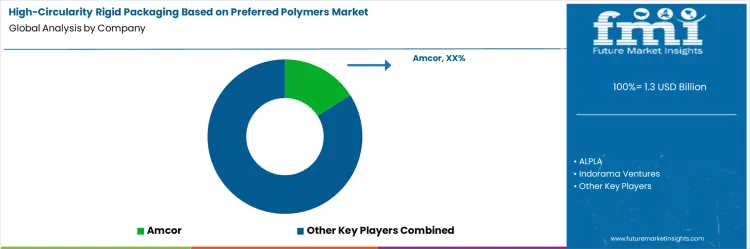
The high-circularity rigid packaging based on preferred polymers market is expanding as industries move toward sustainable packaging solutions with increased recyclability. Amcor leads the market with its innovative high-circularity packaging solutions that use preferred polymers, focusing on reducing environmental impact and improving recyclability. Their leadership in developing sustainable packaging materials positions them as a key player in the market. ALPLA, Indorama Ventures, and UFlex are major competitors, offering sustainable, circular packaging solutions that emphasize the use of preferred polymers to enhance recyclability. ALPLA specializes in creating high-quality rigid packaging with a focus on sustainability, while Indorama Ventures and UFlex are also heavily invested in producing circular packaging materials with minimal environmental impact.
Berry Global, Plastipak, and RPC further contribute to the competitive landscape, offering innovative packaging solutions designed for high recyclability and sustainability. Berry Global focuses on producing rigid packaging with improved circularity, incorporating preferred polymers for enhanced sustainability. Plastipak specializes in providing sustainable packaging solutions for various sectors, including food and beverage, while RPC works to offer high-circularity rigid packaging that meets industry sustainability goals. These companies compete by advancing product innovation, improving recyclability, and meeting the growing demand for sustainable packaging solutions that align with circular economy principles.
Key Players of the High-Circularity Rigid Packaging Based on Preferred Polymers Market
- Amcor
- ALPLA
- Indorama Ventures
- UFlex
- Berry Global
- Plastipak
- RPC
Scope of the Report
| Items | Values |
|---|---|
| Quantitative Units (2026) | USD Billion |
| End-use / Application | Food & Beverages, Personal Care, Household & FMCG, Dairy & Beverages, Retail Packaging, Specialty Packaging |
| Packaging Format / Type | Bottles, Tubs & Jars, Cosmetic Bottles, Rigid Containers, Small Bottles, Others |
| Material | PET, HDPE, PP (Preferred Polymers), rPET / rHDPE, PP / HDPE Blends, Others |
| Technology | Design-for-Recycling & Mono-Resin Optimisation, High-PCR Integration, Lightweighting & Mould Optimisation, Cost-Efficient Recycling-Ready Designs |
| Companies | Amcor, ALPLA, Indorama Ventures, UFlex, Berry Global, Plastipak, RPC |
| Regions Covered | North America, Latin America, Western Europe, Eastern Europe, South Asia and Pacific, East Asia, Middle East & Africa |
| Countries Covered | United States, Canada, Mexico, Brazil, Argentina, Germany, France, United Kingdom, Italy, Spain, Netherlands, China, India, Japan, South Korea, ANZ, GCC Countries, South Africa |
| Additional Attributes | Dollar by sales by end-use/application, packaging format/type, material, technology, and region. Includes market trends in high-circularity rigid packaging, focusing on PET, HDPE, and PP-based materials, rPET/rHDPE integration, and design-for-recycling technologies. Highlights the role of lightweighting, mould optimisation, and recycling-ready designs in food & beverages, personal care, and FMCG packaging. Focus on sustainability, regulatory compliance, cost-effectiveness, and market share of key companies in the packaging market. |
High-Circularity Rigid Packaging Based on Preferred Polymers Market Segmentation
End-use / Application
- Food & beverages
- Personal care
- Household & FMCG
- Dairy & beverages
- Retail packaging
- Specialty packaging
Packaging Format / Type
- Bottles, tubs & jars
- Cosmetic bottles
- Rigid containers
- Small bottles
- Others
Material
- PET, HDPE, PP (preferred polymers)
- rPET / rHDPE
- PP / HDPE blends
- HDPE / PP
- Others
Technology
- Design-for-recycling & mono-resin optimisation
- High-PCR integration
- Lightweighting & mould optimisation
- Cost-efficient recycling-ready designs
- Others
Region
- Asia Pacific
- China
- Japan
- South Korea
- India
- Australia & New Zealand
- ASEAN
- Rest of Asia Pacific
- Europe
- Germany
- United Kingdom
- France
- Italy
- Spain
- Nordic
- BENELUX
- Rest of Europe
- North America
- United States
- Canada
- Mexico
- Latin America
- Brazil
- Chile
- Rest of Latin America
- Middle East & Africa
- Kingdom of Saudi Arabia
- Other GCC Countries
- Turkey
- South Africa
- Other African Union
- Rest of Middle East & Africa
Frequently Asked Questions
How big is the high-circularity rigid packaging based on preferred polymers market in 2026?
The global high-circularity rigid packaging based on preferred polymers market is estimated to be valued at USD 1.3 billion in 2026.
What will be the size of high-circularity rigid packaging based on preferred polymers market in 2036?
The market size for the high-circularity rigid packaging based on preferred polymers market is projected to reach USD 2.9 billion by 2036.
How much will be the high-circularity rigid packaging based on preferred polymers market growth between 2026 and 2036?
The high-circularity rigid packaging based on preferred polymers market is expected to grow at a 8.2% CAGR between 2026 and 2036.
What are the key product types in the high-circularity rigid packaging based on preferred polymers market?
The key product types in high-circularity rigid packaging based on preferred polymers market are food & beverages, personal care, household & fmcg, dairy & beverages, retail packaging and specialty packaging.
Which packaging format segment to contribute significant share in the high-circularity rigid packaging based on preferred polymers market in 2026?
In terms of packaging format, bottles, tubs & jars segment to command 45.0% share in the high-circularity rigid packaging based on preferred polymers market in 2026.
Preview the report firsthand - request a free sample
Get SampleGet the brochure for pricing and purchase details.
Get PDFTable of Content
- Executive Summary
- Global Market Outlook
- Demand-side Trends
- Supply-side Trends
- Technology Roadmap Analysis
- Analysis and Recommendations
- Market Overview
- Market Coverage / Taxonomy
- Market Definition / Scope / Limitations
- Market Background
- Market Dynamics
- Drivers
- Restraints
- Opportunity
- Trends
- Scenario Forecast
- Demand in Optimistic Scenario
- Demand in Likely Scenario
- Demand in Conservative Scenario
- Opportunity Map Analysis
- Product Life Cycle Analysis
- Supply Chain Analysis
- Investment Feasibility Matrix
- Value Chain Analysis
- PESTLE and Porter’s Analysis
- Regulatory Landscape
- Regional Parent Market Outlook
- Production and Consumption Statistics
- Import and Export Statistics
- Market Dynamics
- Global Market Analysis 2021 to 2025 and Forecast, 2026 to 2036
- Historical Market Size Value (USD Million) Analysis, 2021 to 2025
- Current and Future Market Size Value (USD Million) Projections, 2026 to 2036
- Y-o-Y Growth Trend Analysis
- Absolute $ Opportunity Analysis
- Global Market Pricing Analysis 2021 to 2025 and Forecast 2026 to 2036
- Global Market Analysis 2021 to 2025 and Forecast 2026 to 2036, By End-use
- Introduction / Key Findings
- Historical Market Size Value (USD Million) Analysis By End-use , 2021 to 2025
- Current and Future Market Size Value (USD Million) Analysis and Forecast By End-use , 2026 to 2036
- Food & beverages
- Personal care
- Household & FMCG
- Dairy & beverages
- Retail packaging
- Specialty packaging
- Y-o-Y Growth Trend Analysis By End-use , 2021 to 2025
- Absolute $ Opportunity Analysis By End-use , 2026 to 2036
- Global Market Analysis 2021 to 2025 and Forecast 2026 to 2036, By Packaging Format
- Introduction / Key Findings
- Historical Market Size Value (USD Million) Analysis By Packaging Format, 2021 to 2025
- Current and Future Market Size Value (USD Million) Analysis and Forecast By Packaging Format, 2026 to 2036
- Bottles, tubs & jars
- Cosmetic bottles
- Rigid containers
- Small bottles
- Y-o-Y Growth Trend Analysis By Packaging Format, 2021 to 2025
- Absolute $ Opportunity Analysis By Packaging Format, 2026 to 2036
- Global Market Analysis 2021 to 2025 and Forecast 2026 to 2036, By Material
- Introduction / Key Findings
- Historical Market Size Value (USD Million) Analysis By Material, 2021 to 2025
- Current and Future Market Size Value (USD Million) Analysis and Forecast By Material, 2026 to 2036
- PET, HDPE, PP (preferred polymers)
- rPET / rHDPE
- PP / HDPE blends
- HDPE / PP
- Y-o-Y Growth Trend Analysis By Material, 2021 to 2025
- Absolute $ Opportunity Analysis By Material, 2026 to 2036
- Global Market Analysis 2021 to 2025 and Forecast 2026 to 2036, By Technology
- Introduction / Key Findings
- Historical Market Size Value (USD Million) Analysis By Technology, 2021 to 2025
- Current and Future Market Size Value (USD Million) Analysis and Forecast By Technology, 2026 to 2036
- Design-for-recycling & mono-resin optimisation
- High-PCR integration
- Lightweighting & mould optimisation
- Cost-efficient recycling-ready designs
- Y-o-Y Growth Trend Analysis By Technology, 2021 to 2025
- Absolute $ Opportunity Analysis By Technology, 2026 to 2036
- Global Market Analysis 2021 to 2025 and Forecast 2026 to 2036, By Region
- Introduction
- Historical Market Size Value (USD Million) Analysis By Region, 2021 to 2025
- Current Market Size Value (USD Million) Analysis and Forecast By Region, 2026 to 2036
- North America
- Latin America
- Western Europe
- Eastern Europe
- East Asia
- South Asia and Pacific
- Middle East & Africa
- Market Attractiveness Analysis By Region
- North America Market Analysis 2021 to 2025 and Forecast 2026 to 2036, By Country
- Historical Market Size Value (USD Million) Trend Analysis By Market Taxonomy, 2021 to 2025
- Market Size Value (USD Million) Forecast By Market Taxonomy, 2026 to 2036
- By Country
- USA
- Canada
- Mexico
- By End-use
- By Packaging Format
- By Material
- By Technology
- By Country
- Market Attractiveness Analysis
- By Country
- By End-use
- By Packaging Format
- By Material
- By Technology
- Key Takeaways
- Latin America Market Analysis 2021 to 2025 and Forecast 2026 to 2036, By Country
- Historical Market Size Value (USD Million) Trend Analysis By Market Taxonomy, 2021 to 2025
- Market Size Value (USD Million) Forecast By Market Taxonomy, 2026 to 2036
- By Country
- Brazil
- Chile
- Rest of Latin America
- By End-use
- By Packaging Format
- By Material
- By Technology
- By Country
- Market Attractiveness Analysis
- By Country
- By End-use
- By Packaging Format
- By Material
- By Technology
- Key Takeaways
- Western Europe Market Analysis 2021 to 2025 and Forecast 2026 to 2036, By Country
- Historical Market Size Value (USD Million) Trend Analysis By Market Taxonomy, 2021 to 2025
- Market Size Value (USD Million) Forecast By Market Taxonomy, 2026 to 2036
- By Country
- Germany
- UK
- Italy
- Spain
- France
- Nordic
- BENELUX
- Rest of Western Europe
- By End-use
- By Packaging Format
- By Material
- By Technology
- By Country
- Market Attractiveness Analysis
- By Country
- By End-use
- By Packaging Format
- By Material
- By Technology
- Key Takeaways
- Eastern Europe Market Analysis 2021 to 2025 and Forecast 2026 to 2036, By Country
- Historical Market Size Value (USD Million) Trend Analysis By Market Taxonomy, 2021 to 2025
- Market Size Value (USD Million) Forecast By Market Taxonomy, 2026 to 2036
- By Country
- Russia
- Poland
- Hungary
- Balkan & Baltic
- Rest of Eastern Europe
- By End-use
- By Packaging Format
- By Material
- By Technology
- By Country
- Market Attractiveness Analysis
- By Country
- By End-use
- By Packaging Format
- By Material
- By Technology
- Key Takeaways
- East Asia Market Analysis 2021 to 2025 and Forecast 2026 to 2036, By Country
- Historical Market Size Value (USD Million) Trend Analysis By Market Taxonomy, 2021 to 2025
- Market Size Value (USD Million) Forecast By Market Taxonomy, 2026 to 2036
- By Country
- China
- Japan
- South Korea
- By End-use
- By Packaging Format
- By Material
- By Technology
- By Country
- Market Attractiveness Analysis
- By Country
- By End-use
- By Packaging Format
- By Material
- By Technology
- Key Takeaways
- South Asia and Pacific Market Analysis 2021 to 2025 and Forecast 2026 to 2036, By Country
- Historical Market Size Value (USD Million) Trend Analysis By Market Taxonomy, 2021 to 2025
- Market Size Value (USD Million) Forecast By Market Taxonomy, 2026 to 2036
- By Country
- India
- ASEAN
- Australia & New Zealand
- Rest of South Asia and Pacific
- By End-use
- By Packaging Format
- By Material
- By Technology
- By Country
- Market Attractiveness Analysis
- By Country
- By End-use
- By Packaging Format
- By Material
- By Technology
- Key Takeaways
- Middle East & Africa Market Analysis 2021 to 2025 and Forecast 2026 to 2036, By Country
- Historical Market Size Value (USD Million) Trend Analysis By Market Taxonomy, 2021 to 2025
- Market Size Value (USD Million) Forecast By Market Taxonomy, 2026 to 2036
- By Country
- Kingdom of Saudi Arabia
- Other GCC Countries
- Turkiye
- South Africa
- Other African Union
- Rest of Middle East & Africa
- By End-use
- By Packaging Format
- By Material
- By Technology
- By Country
- Market Attractiveness Analysis
- By Country
- By End-use
- By Packaging Format
- By Material
- By Technology
- Key Takeaways
- Key Countries Market Analysis
- USA
- Pricing Analysis
- Market Share Analysis, 2025
- By End-use
- By Packaging Format
- By Material
- By Technology
- Canada
- Pricing Analysis
- Market Share Analysis, 2025
- By End-use
- By Packaging Format
- By Material
- By Technology
- Mexico
- Pricing Analysis
- Market Share Analysis, 2025
- By End-use
- By Packaging Format
- By Material
- By Technology
- Brazil
- Pricing Analysis
- Market Share Analysis, 2025
- By End-use
- By Packaging Format
- By Material
- By Technology
- Chile
- Pricing Analysis
- Market Share Analysis, 2025
- By End-use
- By Packaging Format
- By Material
- By Technology
- Germany
- Pricing Analysis
- Market Share Analysis, 2025
- By End-use
- By Packaging Format
- By Material
- By Technology
- UK
- Pricing Analysis
- Market Share Analysis, 2025
- By End-use
- By Packaging Format
- By Material
- By Technology
- Italy
- Pricing Analysis
- Market Share Analysis, 2025
- By End-use
- By Packaging Format
- By Material
- By Technology
- Spain
- Pricing Analysis
- Market Share Analysis, 2025
- By End-use
- By Packaging Format
- By Material
- By Technology
- France
- Pricing Analysis
- Market Share Analysis, 2025
- By End-use
- By Packaging Format
- By Material
- By Technology
- India
- Pricing Analysis
- Market Share Analysis, 2025
- By End-use
- By Packaging Format
- By Material
- By Technology
- ASEAN
- Pricing Analysis
- Market Share Analysis, 2025
- By End-use
- By Packaging Format
- By Material
- By Technology
- Australia & New Zealand
- Pricing Analysis
- Market Share Analysis, 2025
- By End-use
- By Packaging Format
- By Material
- By Technology
- China
- Pricing Analysis
- Market Share Analysis, 2025
- By End-use
- By Packaging Format
- By Material
- By Technology
- Japan
- Pricing Analysis
- Market Share Analysis, 2025
- By End-use
- By Packaging Format
- By Material
- By Technology
- South Korea
- Pricing Analysis
- Market Share Analysis, 2025
- By End-use
- By Packaging Format
- By Material
- By Technology
- Russia
- Pricing Analysis
- Market Share Analysis, 2025
- By End-use
- By Packaging Format
- By Material
- By Technology
- Poland
- Pricing Analysis
- Market Share Analysis, 2025
- By End-use
- By Packaging Format
- By Material
- By Technology
- Hungary
- Pricing Analysis
- Market Share Analysis, 2025
- By End-use
- By Packaging Format
- By Material
- By Technology
- Kingdom of Saudi Arabia
- Pricing Analysis
- Market Share Analysis, 2025
- By End-use
- By Packaging Format
- By Material
- By Technology
- Turkiye
- Pricing Analysis
- Market Share Analysis, 2025
- By End-use
- By Packaging Format
- By Material
- By Technology
- South Africa
- Pricing Analysis
- Market Share Analysis, 2025
- By End-use
- By Packaging Format
- By Material
- By Technology
- USA
- Market Structure Analysis
- Competition Dashboard
- Competition Benchmarking
- Market Share Analysis of Top Players
- By Regional
- By End-use
- By Packaging Format
- By Material
- By Technology
- Competition Analysis
- Competition Deep Dive
- Amcor
- Overview
- Product Portfolio
- Profitability by Market Segments (Product/Age /Sales Channel/Region)
- Sales Footprint
- Strategy Overview
- Marketing Strategy
- Product Strategy
- Channel Strategy
- ALPLA
- Indorama Ventures
- UFlex
- Berry Global
- Plastipak
- RPC
- Amcor
- Competition Deep Dive
- Assumptions & Acronyms Used
- Research Methodology


