

- Industry Size (2026)
- USD 1.2 Bn
- Forecast (2036)
- USD 2.4 Bn
- CAGR (2026 to 2036)
- 7.2%
Eco-Modulation Optimized Rigid Plastic Packaging Market Forecast and Outlook 2026 to 2036
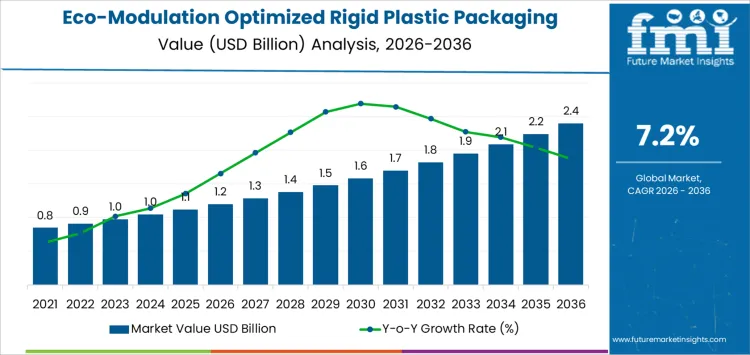
The eco-modulation optimized rigid plastic packaging market is valued at USD 1.2 billion in 2026 and is projected to reach USD 2.4 billion by 2036, reflecting a CAGR of 7.2%. Analysis of annual trends indicates minor seasonal fluctuations, with adoption rates slightly higher in quarters aligned with product launches, peak manufacturing periods, and sustainability-driven promotional campaigns. Early growth phases show moderate increments, reflecting incremental rollout across food, beverage, and personal care packaging, where eco-modulated plastic designs reduce material usage while maintaining structural integrity.
Between 2031 and 2036, the market continues to expand steadily, rising from approximately USD 2.0 billion to USD 2.4 billion. Cyclical patterns persist but with diminishing amplitude, as demand stabilizes due to widespread standardization of eco-modulation processes and broader integration into mainstream production. Growth is supported by repeat procurement, improved operational efficiency, and regulatory incentives for environmentally optimized packaging. Seasonal and cyclic variations remain predictable, primarily tied to high-volume manufacturing schedules and promotional periods, enabling manufacturers to plan capital investment and production capacity efficiently.
Quick Stats of the Eco-Modulation Optimized Rigid Plastic Packaging Market
- Eco-Modulation Optimized Rigid Plastic Packaging Market Value (2026): USD 1.2 billion
- Eco-Modulation Optimized Rigid Plastic Packaging Market Forecast Value (2036): USD 2.4 billion
- Eco-Modulation Optimized Rigid Plastic Packaging Market Forecast CAGR (2026-2036): 7.2%
- Eco-Modulation Optimized Rigid Plastic Packaging Market Leading Packaging Format: Bottles & Jars (40%)
- Eco-Modulation Optimized Rigid Plastic Packaging Market Key Growth Regions: India, China, USA, Brazil, Germany, Japan
- Eco-Modulation Optimized Rigid Plastic Packaging Market Top Players: Amcor, Plastipak, Berry Global, RPC / ALPLA, Indorama Ventures, UFlex, Braskem, Toyo Seikan
What is the Growth Forecast for the Eco-Modulation Optimized Rigid Plastic Packaging Market through 2036?
From 2026 to 2031, the eco-modulation optimized rigid plastic packaging market grows from USD 1.2 billion to approximately USD 1.7 billion, reflecting a phase of gradual adoption driven by early integration in consumer goods, food, and personal care packaging. Growth in this period is shaped by incremental conversion from conventional rigid plastics to optimized designs that reduce material use while maintaining structural integrity. Annual value additions rise steadily as manufacturers refine mold efficiency, validate mechanical performance, and align designs with sustainability and regulatory requirements, enabling controlled scaling across product lines.
Between 2031 and 2036, the market expands from roughly USD 1.7 billion to USD 2.4 billion, indicating a stronger acceleration in absolute value creation. This phase reflects broader adoption across mass-market applications, higher unit penetration per SKU, and repeat procurement by multi-site manufacturers. Growth is reinforced by portfolio-wide deployment, integration with automated filling lines, and wider geographic rollout. Earlier expansion relied on selective adoption and pilot programs, while later growth is driven by scale deployment, material efficiency gains, and structural embedding of eco-modulated designs into standard packaging specifications.
Eco Modulation Optimized Rigid Plastic Packaging Market Key Takeaways
| Metric | Value |
|---|---|
| Sales Value (2026) | USD 1.2 billion |
| Forecast Value (2036) | USD 2.4 billion |
| Forecast CAGR (2026-2036) | 7.2% |
How Is Eco Modulation Influencing Demand for Optimized Rigid Plastic Packaging?
Historical demand for eco modulation optimized rigid plastic packaging developed indirectly through cost pressures tied to waste management fees and extended producer responsibility schemes. Packaging producers initially responded by adjusting material thickness, resin selection, and unit weights to reduce fee exposure rather than redesigning entire packaging systems. Early optimization focused on lightweighting bottles, containers, and closures while maintaining structural integrity for transport and shelf handling. Growth during this phase was incremental and compliance oriented, shaped by national recycling fee structures and producer reporting requirements. Adoption remained uneven across regions, reflecting differences in regulatory maturity and enforcement. Packaging decisions prioritized cost containment and regulatory alignment over redesign depth, limiting broader transformation during early implementation stages.
Future demand for eco modulation optimized rigid plastic packaging is expected to accelerate as fee structures become more differentiated and performance based. Packaging designs will increasingly be evaluated on recyclability, resin purity, label compatibility, and collection outcomes. Manufacturers are redesigning rigid formats to align with preferred recycling streams and material recovery targets. Unlike historical optimization driven by fee avoidance, future growth reflects strategic packaging planning tied to long term cost predictability. Integration of recyclability criteria into procurement and product development processes will reshape packaging portfolios. Demand expansion will be policy led, data driven, and structured around lifecycle performance rather than incremental material reduction alone.
What Factors Are Affecting the Demand for Eco Modulation Optimized Rigid Plastic Packaging Market in Terms of End Use Application and Packaging Format and Type?
Demand for eco modulation optimized rigid plastic packaging is segmented by end use application and packaging format and type across consumer goods industries. Food and beverage applications hold about 45% of total demand, making this the leading end use segment. Personal care, household chemicals, dairy and beverages, and retail and bulk applications account for the remaining demand without disclosed share splits. These segments differ in packaging volumes, regulatory exposure, and material performance requirements. Eco modulation frameworks influence design choices across all applications. Packaging format and type determine how effectively producers align with fee structures. Together, these segments explain demand distribution based on volume intensity, compliance exposure, and operational constraints rather than discretionary material substitution decisions.
What Drives Demand by End Use Application in the Eco Modulation Optimized Rigid Plastic Packaging Market?
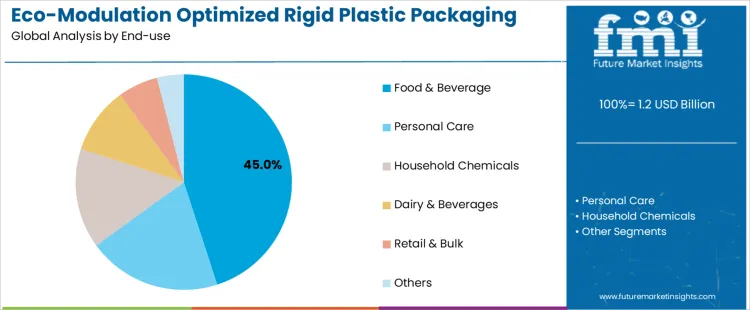
Food and beverage applications lead demand with a 45% share due to high packaging throughput and continuous regulatory oversight. Producers in this segment prioritize rigid packaging designs that reduce material weight while maintaining barrier and safety performance. Personal care applications rely on rigid formats for durability and brand presentation. Household chemicals require rigid containers to ensure safe handling and transport stability. Dairy and beverage producers use optimized rigid packaging to support cold chain compatibility and high speed filling. Retail and bulk applications depend on rigid formats for stackability and distribution efficiency. End use demand therefore reflects packaging volume concentration and regulatory cost exposure rather than product innovation cycles.
Application driven demand remains stable because rigid packaging requirements persist across consumption cycles. Food and beverage producers integrate eco modulation compliance into long term packaging strategies. Personal care brands adjust designs gradually to align with tooling cycles. Household chemical producers prioritize consistency and safety over rapid redesign. Dairy and beverage applications emphasize reliability within existing filling infrastructure. Retail and bulk packaging adopts selectively where reuse or recyclability benefits are measurable. These patterns limit short term volatility. End use segmentation highlights structural dependence on rigid plastic packaging. Demand therefore aligns with compliance management and operational continuity rather than rapid material replacement across consumer goods sectors.
How Does Packaging Format and Type Shape Demand for Eco Modulation Optimized Rigid Plastic Packaging Market?
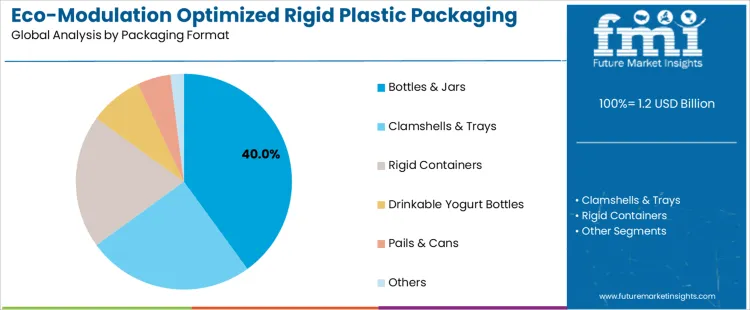
Bottles and jars account for about 40% of total demand, making them the leading packaging format. Their dominance reflects widespread use across food, beverage, and personal care categories. Clamshells and trays are used where visibility and product protection are required. Rigid containers serve household chemicals and bulk applications needing strength and seal integrity. Drinkable yogurt bottles address dairy specific consumption patterns and filling speeds. Pails and cans support retail and bulk distribution. Packaging format selection depends on recyclability performance, material intensity, and compatibility with existing packaging lines rather than format innovation.
Bottles and jars maintain leadership due to established collection systems and scope for lightweighting. Clamshells and trays face constraints linked to material composition and sorting efficiency. Rigid containers remain essential for chemical resistance and safety. Dairy bottles balance functional rigidity with material reduction. Pails and cans persist where durability offsets material use. Producers favor incremental redesign within familiar formats to avoid tooling disruption. This limits rapid shifts toward alternative packaging types. Packaging format and type therefore stabilize demand by reinforcing dominant rigid formats while enabling gradual eco modulation alignment.
How Is Eco Modulation Optimized Rigid Plastic Packaging Being Applied Across Consumer Goods and Industrial Products?
Use emerges in packaging lines where material reduction, structural integrity, and sustainability metrics are integrated into rigid plastic formats. Beverage brands adopt optimized bottles and jars to reduce polymer usage while maintaining barrier performance. Personal care and household product manufacturers apply eco modulated containers to meet corporate environmental commitments without redesigning production lines. Food processors select optimized trays and tubs to balance stackability, protection, and lightweighting. These applications reflect operational and sustainability priorities rather than decorative or promotional purposes, with adoption driven by material efficiency and functional performance.
What Operational and Material Conditions Support Adoption of Eco Modulation Optimized Rigid Plastic Packaging?
Selection aligns with facilities that manage high volume production while reducing polymer consumption. Packaging engineers favor containers designed to meet weight and thickness targets without compromising drop or stacking resistance. Filling lines require consistent container dimensions and wall uniformity to ensure reliable sealing. Logistics teams value optimized packs that reduce transport weight and shipping volume. Brands integrate eco modulated designs to comply with regulatory mandates and corporate sustainability goals. These conditions emerge from efficiency, compliance, and environmental performance priorities in structured production workflows.
Which Practical Considerations Limit Broader Adoption of Eco Modulation Optimized Rigid Plastic Packaging?
Structural limitations affect adoption for fragile or high pressure products. Tooling investment is required to implement new molds with reduced material thickness. Variations in resin flow and wall uniformity can impact sealing and labeling performance. Cost per unit may rise during initial implementation phases. Recycling and end of life handling vary by local infrastructure for lightweighted plastics. These factors lead to selective deployment where material efficiency, compliance, and functional performance justify investment and adaptation within existing production systems.
What is the Demand for Eco Modulation Optimized Rigid Plastic Packaging by Country?
| Country | CAGR (%) |
|---|---|
| USA | 6.8% |
| Germany | 6.5% |
| China | 9.8% |
| India | 11.5% |
| Brazil | 8.0% |
| Japan | 4.5% |
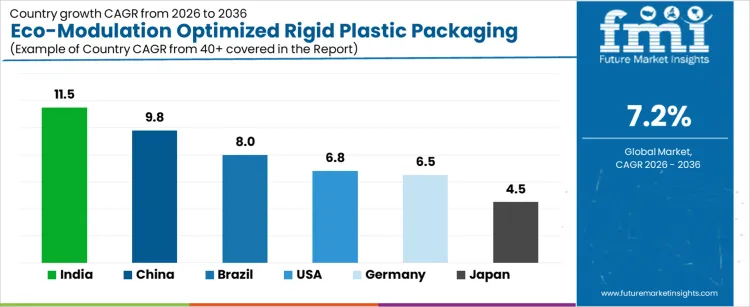
The demand for eco modulation optimized rigid plastic packaging varies across countries, driven by environmental compliance, product protection requirements, and adoption of optimized material usage. India leads with an 11.5% CAGR, supported by growing packaged food, personal care, and beverage sectors and increasing adoption of lightweight, high performance rigid packaging. China follows at 9.8%, driven by large scale manufacturing and optimization initiatives in industrial and consumer packaging. The USA grows at 6.8%, reflecting adoption across retail, food, and household product segments. Brazil records 8.0%, shaped by organized packaging and distribution expansion. Germany posts 6.5%, supported by regulatory compliance, while Japan grows at 4.5%, reflecting mature markets and stable demand.
How Is Sustainable Rigid Packaging Driving Growth in the United States?
In the United States, revenue from the Eco-Modulation Optimized Rigid Plastic Packaging Market is expanding at a CAGR of 6.80% through 2036, driven by adoption of rigid packaging solutions with eco-modulated design to reduce material usage, improve recyclability, and maintain product protection. Manufacturers are integrating optimized plastic containers for beverages, personal care products, and food items to achieve sustainability targets. Demand is concentrated in retail and industrial distribution channels. Domestic producers are supplying molded rigid packaging with material optimization and design standardization. Stable production volumes, recurring packaging needs, and regulatory compliance are sustaining predictable procurement across packaging operations nationwide.
- Beverage, personal care, and food producers are adopting eco-modulated rigid packaging to reduce material usage
- Optimized container designs improve recyclability and maintain product protection
- Domestic suppliers provide molded rigid packaging with standardized design
- Recurring packaging needs sustain predictable procurement volumes
How Do Sustainability Regulations Shape Demand in Germany?
Germany continues to record steady growth in the Eco-Modulation Optimized Rigid Plastic Packaging Market at a CAGR of 6.50% through 2036, supported by stringent sustainability regulations and material efficiency standards. Manufacturers are using eco-modulated rigid containers for beverages, food, and personal care products to comply with environmental guidelines. Demand is concentrated in retail and industrial packaging segments. Domestic producers are providing optimized rigid packaging with consistent material reduction and process efficiency. Compliance-driven procurement practices and stable industrial output are sustaining measured adoption across packaging operations nationwide.
- Sustainability regulations support adoption of eco-modulated rigid plastic packaging
- Beverages, food, and personal care products anchor demand
- Domestic producers provide optimized packaging with material reduction and efficiency
- Compliance-driven procurement sustains steady adoption levels
How Is Industrial Expansion Accelerating Adoption in China?
In China, revenue from the Eco-Modulation Optimized Rigid Plastic Packaging Market is growing at a CAGR of 9.80% through 2036, driven by expansion of industrial manufacturing and retail distribution. Manufacturers are adopting eco-modulated rigid containers for beverages, personal care, and food products to optimize material usage and improve sustainability. Demand is strong across urban retail, e-commerce, and industrial packaging channels. Domestic suppliers are scaling production of rigid packaging with eco-modulated design features. High production volumes and structured procurement practices are sustaining rapid adoption nationwide.
- Industrial and retail growth drives adoption of eco-modulated rigid plastic packaging
- Beverages, personal care, and food products are primary applications
- Domestic suppliers scale production with material optimized design
- High production volumes sustain consistent adoption
How Is Organized Manufacturing Supporting Growth in India?
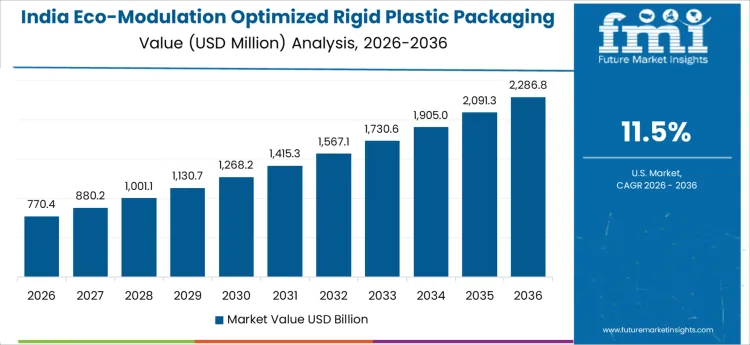
India is witnessing strong expansion in the Eco-Modulation Optimized Rigid Plastic Packaging Market at a CAGR of 11.50% through 2036, supported by growth in organized food, beverage, and personal care manufacturing. Manufacturers are integrating eco-modulated rigid packaging to reduce plastic usage, comply with environmental guidelines, and improve product sustainability. Demand is rising across urban retail, e-commerce, and institutional supply channels. Domestic suppliers are providing cost-aligned, material-optimized rigid packaging suitable for high-volume production. Expanding retail networks and organized manufacturing are sustaining robust procurement nationwide.
- Organized food, beverage, and personal care manufacturing increases demand for eco-modulated rigid packaging
- Urban retail and e-commerce channels drive high-volume adoption
- Domestic suppliers provide cost-aligned material-optimized rigid packaging
- Retail expansion and organized production sustain procurement growth
How Are Consumer Goods Shipments Supporting Adoption in Brazil?
Brazil is seeing steady growth in the Eco-Modulation Optimized Rigid Plastic Packaging Market at a CAGR of 8.00% through 2036, supported by rising distribution of packaged food, beverage, and personal care products. Manufacturers are using eco-modulated rigid containers to improve sustainability, reduce material consumption, and maintain product protection during shipment. Demand is concentrated in organized retail and regional distribution hubs. Domestic producers are expanding production and integrating material optimization features. Growth in retail and product availability is sustaining recurring procurement across packaging operations nationwide.
- Packaged food, beverage, and personal care products drive adoption of eco-modulated rigid packaging
- Material optimization improves sustainability and reduces plastic usage
- Domestic producers expand production with eco-modulated design
- Retail growth sustains recurring procurement volumes
How Does Mature Packaging Demand Influence Stability in Japan?
Japan is maintaining measured growth in the Eco-Modulation Optimized Rigid Plastic Packaging Market at a CAGR of 4.50% through 2036, supported by mature packaging markets and selective adoption of optimized rigid solutions. Brands apply eco-modulated rigid containers for beverages, personal care, and specialty food products. Demand remains focused on material efficiency, container durability, and regulatory compliance. Domestic suppliers emphasize precise molding and consistent material usage. Stable consumption patterns and replacement-driven purchasing are sustaining predictable procurement across established packaging operations nationwide.
- Mature markets favor selective adoption of eco-modulated rigid packaging
- Beverages, personal care, and specialty foods anchor baseline demand
- Domestic suppliers ensure precise molding and consistent material usage
- Replacement-driven purchasing sustains procurement continuity
Which Companies Are Shaping Competition in The Eco Modulation Optimized Rigid Plastic Packaging Market Across Consumer and Industrial Uses?
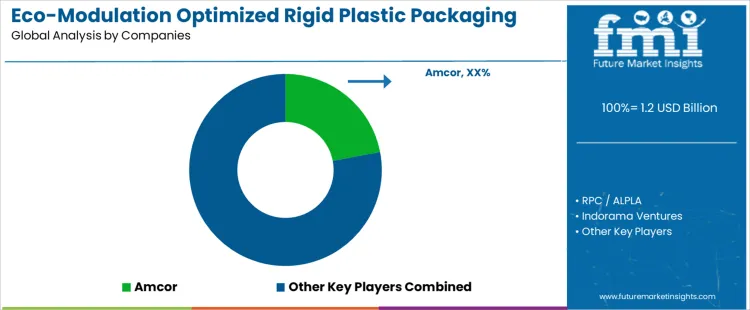
Competition in the Eco Modulation Optimized Rigid Plastic Packaging Market is defined by rigid packaging producers adapting material structures and designs to comply with differentiated fee and compliance frameworks. Amcor, Plastipak, and Berry Global influence this space through lightweighting, resin selection, and design for recyclability applied across bottles and containers used in food, beverage, and personal care. ALPLA, including legacy RPC operations, maintains a strong presence in Europe through standardized container platforms aligned with regional regulatory requirements. Indorama Ventures participates through vertically integrated resin and packaging operations, supporting optimized material use across beverage and household product segments. Competitive differentiation centers on material efficiency, consistency of supply, and the ability to align packaging formats with evolving compliance rules.
Regional and material focused players add depth to competitive dynamics. Braskem contributes through bio based and circular polymer supply aligned with rigid packaging applications rather than finished packaging alone. Toyo Seikan supports the market through container manufacturing expertise in Japan, where design precision and material reduction targets shape adoption. UFlex participates through rigid packaging initiatives and partnerships, particularly in emerging markets where compliance frameworks are developing. Local converters play an important role by adjusting designs to national fee structures and collection systems. Market entry and positioning are shaped by regulatory interpretation capability, material engineering know how, and customer alignment rather than brand visibility or production scale alone.
Key Players in the Eco Modulation Optimized Rigid Plastic Packaging Market
- Amcor
- Plastipak
- Berry Global
- RPC / ALPLA
- Indorama Ventures
- UFlex
- Braskem
- Toyo Seikan
Scope of the Report
| Items | Values |
|---|---|
| Quantitative Units (2026) | USD billion |
| End-use / Application | Food & Beverage; Personal Care; Household Chemicals; Dairy & Beverages; Retail & Bulk; Others |
| Packaging Format / Type | Bottles & Jars; Clamshells & Trays; Rigid Containers; Drinkable Yogurt Bottles; Pails & Cans; Others |
| Material | PP / PET with eco-modulation additives; High-recyclability blends; rPET / rPP content solutions; Bio-blend polymers; HDPE with reformulation |
| Technology | Lightweighting & material substitution; Injection stretch blow moulding optimisation; Co-extrusion with recycled content; Design for recycling; Structural design & wall thinning; Others |
| Region | Asia Pacific; Europe; North America; Latin America; Middle East & Africa |
| Countries Covered | China; Japan; South Korea; India; Australia & New Zealand; ASEAN; Germany; United Kingdom; France; Italy; Spain; Nordic; BENELUX; United States; Canada; Mexico; Brazil; Chile; Kingdom of Saudi Arabia; Other GCC Countries; Turkey; South Africa; Other African Union; Rest of Asia Pacific; Rest of Europe; Rest of Latin America; Rest of Middle East & Africa |
| Key Companies Profiled | Amcor; Plastipak; Berry Global; RPC / ALPLA; Indorama Ventures; UFlex; Braskem; Toyo Seikan |
| Additional Attributes | Dollar by sales across end-use applications, packaging formats, and materials; Bottles & jars lead due to volume and collection compatibility; Lightweighting, wall thinning, and material substitution enhance efficiency and recyclability; Integration with automated filling lines supports operational performance; Adoption driven by sustainability compliance, regulatory alignment, and cost reduction; Incremental redesign preferred over complete format changes to avoid tooling disruption; Demand is stable, aligned with seasonal production cycles and promotional activity; Market expansion reflects multi-site procurement, geographic penetration, and repeat purchases; Structural design, resin selection, and co-extrusion strategies optimize polymer usage while maintaining package integrity |
Eco Modulation Optimized Rigid Plastic Packaging Market Segmentation
End-use / Application:
- Food & Beverage
- Personal Care
- Household Chemicals
- Dairy & Beverages
- Retail & Bulk
- Others
Packaging Format / Type:
- Bottles & Jars
- Clamshells & Trays
- Rigid Containers
- Drinkable Yogurt Bottles
- Pails & Cans
- Others
Material:
- PP / PET with eco-modulation additives
- High-recyclability blends
- rPET / rPP content solutions
- Bio-blend polymers
- HDPE with reformulation
Technology:
- Lightweighting & material substitution
- Injection stretch blow moulding optimisation
- Co-extrusion with recycled content
- Design for recycling
- Structural design & wall thinning
- Others
Region
- Asia Pacific
- China
- Japan
- South Korea
- India
- Australia & New Zealand
- ASEAN
- Rest of Asia Pacific
- Europe
- Germany
- United Kingdom
- France
- Italy
- Spain
- Nordic
- BENELUX
- Rest of Europe
- North America
- United States
- Canada
- Mexico
- Latin America
- Brazil
- Chile
- Rest of Latin America
- Middle East & Africa
- Kingdom of Saudi Arabia
- Other GCC Countries
- Turkey
- South Africa
- Other African Union
- Rest of Middle East & Africa
Frequently Asked Questions
How big is the eco-modulation optimized rigid plastic packaging market in 2026?
The global eco-modulation optimized rigid plastic packaging market is estimated to be valued at USD 1.2 billion in 2026.
What will be the size of eco-modulation optimized rigid plastic packaging market in 2036?
The market size for the eco-modulation optimized rigid plastic packaging market is projected to reach USD 2.4 billion by 2036.
How much will be the eco-modulation optimized rigid plastic packaging market growth between 2026 and 2036?
The eco-modulation optimized rigid plastic packaging market is expected to grow at a 7.2% CAGR between 2026 and 2036.
What are the key product types in the eco-modulation optimized rigid plastic packaging market?
The key product types in eco-modulation optimized rigid plastic packaging market are food & beverage, personal care, household chemicals, dairy & beverages, retail & bulk and others.
Which packaging format segment to contribute significant share in the eco-modulation optimized rigid plastic packaging market in 2026?
In terms of packaging format, bottles & jars segment to command 40.0% share in the eco-modulation optimized rigid plastic packaging market in 2026.
Preview the report firsthand - request a free sample
Get SampleGet the brochure for pricing and purchase details.
Get PDFTable of Content
- Executive Summary
- Global Market Outlook
- Demand-side Trends
- Supply-side Trends
- Technology Roadmap Analysis
- Analysis and Recommendations
- Market Overview
- Market Coverage / Taxonomy
- Market Definition / Scope / Limitations
- Market Background
- Market Dynamics
- Drivers
- Restraints
- Opportunity
- Trends
- Scenario Forecast
- Demand in Optimistic Scenario
- Demand in Likely Scenario
- Demand in Conservative Scenario
- Opportunity Map Analysis
- Product Life Cycle Analysis
- Supply Chain Analysis
- Investment Feasibility Matrix
- Value Chain Analysis
- PESTLE and Porter’s Analysis
- Regulatory Landscape
- Regional Parent Market Outlook
- Production and Consumption Statistics
- Import and Export Statistics
- Market Dynamics
- Global Market Analysis 2021 to 2026 and Forecast, 2026 to 2036
- Historical Market Size Value (USD Million) Analysis, 2021 to 2026
- Current and Future Market Size Value (USD Million) Projections, 2026 to 2036
- Y-o-Y Growth Trend Analysis
- Absolute $ Opportunity Analysis
- Global Market Pricing Analysis 2021 to 2026 and Forecast 2026 to 2036
- Global Market Analysis 2021 to 2026 and Forecast 2026 to 2036, By End-use
- Introduction / Key Findings
- Historical Market Size Value (USD Million) Analysis By End-use , 2021 to 2026
- Current and Future Market Size Value (USD Million) Analysis and Forecast By End-use , 2026 to 2036
- Food & Beverage
- Personal Care
- Household Chemicals
- Dairy & Beverages
- Retail & Bulk
- Others
- Y-o-Y Growth Trend Analysis By End-use , 2021 to 2026
- Absolute $ Opportunity Analysis By End-use , 2026 to 2036
- Global Market Analysis 2021 to 2026 and Forecast 2026 to 2036, By Packaging Format
- Introduction / Key Findings
- Historical Market Size Value (USD Million) Analysis By Packaging Format, 2021 to 2026
- Current and Future Market Size Value (USD Million) Analysis and Forecast By Packaging Format, 2026 to 2036
- Bottles & Jars
- Clamshells & Trays
- Rigid Containers
- Drinkable Yogurt Bottles
- Pails & Cans
- Others
- Y-o-Y Growth Trend Analysis By Packaging Format, 2021 to 2026
- Absolute $ Opportunity Analysis By Packaging Format, 2026 to 2036
- Global Market Analysis 2021 to 2026 and Forecast 2026 to 2036, By Material
- Introduction / Key Findings
- Historical Market Size Value (USD Million) Analysis By Material, 2021 to 2026
- Current and Future Market Size Value (USD Million) Analysis and Forecast By Material, 2026 to 2036
- PP / PET with eco-modulation additives
- High-recyclability blends
- rPET / rPP content solutions
- Bio-blend polymers
- HDPE with reformulation
- Y-o-Y Growth Trend Analysis By Material, 2021 to 2026
- Absolute $ Opportunity Analysis By Material, 2026 to 2036
- Global Market Analysis 2021 to 2026 and Forecast 2026 to 2036, By Technology
- Introduction / Key Findings
- Historical Market Size Value (USD Million) Analysis By Technology, 2021 to 2026
- Current and Future Market Size Value (USD Million) Analysis and Forecast By Technology, 2026 to 2036
- Lightweighting & material substitution
- Injection stretch blow moulding optimisation
- Co-extrusion with recycled content
- Design for recycling
- Structural design & wall thinning
- Others
- Y-o-Y Growth Trend Analysis By Technology, 2021 to 2026
- Absolute $ Opportunity Analysis By Technology, 2026 to 2036
- Global Market Analysis 2021 to 2026 and Forecast 2026 to 2036, By Region
- Introduction
- Historical Market Size Value (USD Million) Analysis By Region, 2021 to 2026
- Current Market Size Value (USD Million) Analysis and Forecast By Region, 2026 to 2036
- North America
- Latin America
- Western Europe
- Eastern Europe
- East Asia
- South Asia and Pacific
- Middle East & Africa
- Market Attractiveness Analysis By Region
- North America Market Analysis 2021 to 2026 and Forecast 2026 to 2036, By Country
- Historical Market Size Value (USD Million) Trend Analysis By Market Taxonomy, 2021 to 2026
- Market Size Value (USD Million) Forecast By Market Taxonomy, 2026 to 2036
- By Country
- USA
- Canada
- Mexico
- By End-use
- By Packaging Format
- By Material
- By Technology
- By Country
- Market Attractiveness Analysis
- By Country
- By End-use
- By Packaging Format
- By Material
- By Technology
- Key Takeaways
- Latin America Market Analysis 2021 to 2026 and Forecast 2026 to 2036, By Country
- Historical Market Size Value (USD Million) Trend Analysis By Market Taxonomy, 2021 to 2026
- Market Size Value (USD Million) Forecast By Market Taxonomy, 2026 to 2036
- By Country
- Brazil
- Chile
- Rest of Latin America
- By End-use
- By Packaging Format
- By Material
- By Technology
- By Country
- Market Attractiveness Analysis
- By Country
- By End-use
- By Packaging Format
- By Material
- By Technology
- Key Takeaways
- Western Europe Market Analysis 2021 to 2026 and Forecast 2026 to 2036, By Country
- Historical Market Size Value (USD Million) Trend Analysis By Market Taxonomy, 2021 to 2026
- Market Size Value (USD Million) Forecast By Market Taxonomy, 2026 to 2036
- By Country
- Germany
- UK
- Italy
- Spain
- France
- Nordic
- BENELUX
- Rest of Western Europe
- By End-use
- By Packaging Format
- By Material
- By Technology
- By Country
- Market Attractiveness Analysis
- By Country
- By End-use
- By Packaging Format
- By Material
- By Technology
- Key Takeaways
- Eastern Europe Market Analysis 2021 to 2026 and Forecast 2026 to 2036, By Country
- Historical Market Size Value (USD Million) Trend Analysis By Market Taxonomy, 2021 to 2026
- Market Size Value (USD Million) Forecast By Market Taxonomy, 2026 to 2036
- By Country
- Russia
- Poland
- Hungary
- Balkan & Baltic
- Rest of Eastern Europe
- By End-use
- By Packaging Format
- By Material
- By Technology
- By Country
- Market Attractiveness Analysis
- By Country
- By End-use
- By Packaging Format
- By Material
- By Technology
- Key Takeaways
- East Asia Market Analysis 2021 to 2026 and Forecast 2026 to 2036, By Country
- Historical Market Size Value (USD Million) Trend Analysis By Market Taxonomy, 2021 to 2026
- Market Size Value (USD Million) Forecast By Market Taxonomy, 2026 to 2036
- By Country
- China
- Japan
- South Korea
- By End-use
- By Packaging Format
- By Material
- By Technology
- By Country
- Market Attractiveness Analysis
- By Country
- By End-use
- By Packaging Format
- By Material
- By Technology
- Key Takeaways
- South Asia and Pacific Market Analysis 2021 to 2026 and Forecast 2026 to 2036, By Country
- Historical Market Size Value (USD Million) Trend Analysis By Market Taxonomy, 2021 to 2026
- Market Size Value (USD Million) Forecast By Market Taxonomy, 2026 to 2036
- By Country
- India
- ASEAN
- Australia & New Zealand
- Rest of South Asia and Pacific
- By End-use
- By Packaging Format
- By Material
- By Technology
- By Country
- Market Attractiveness Analysis
- By Country
- By End-use
- By Packaging Format
- By Material
- By Technology
- Key Takeaways
- Middle East & Africa Market Analysis 2021 to 2026 and Forecast 2026 to 2036, By Country
- Historical Market Size Value (USD Million) Trend Analysis By Market Taxonomy, 2021 to 2026
- Market Size Value (USD Million) Forecast By Market Taxonomy, 2026 to 2036
- By Country
- Kingdom of Saudi Arabia
- Other GCC Countries
- Turkiye
- South Africa
- Other African Union
- Rest of Middle East & Africa
- By End-use
- By Packaging Format
- By Material
- By Technology
- By Country
- Market Attractiveness Analysis
- By Country
- By End-use
- By Packaging Format
- By Material
- By Technology
- Key Takeaways
- Key Countries Market Analysis
- USA
- Pricing Analysis
- Market Share Analysis, 2026
- By End-use
- By Packaging Format
- By Material
- By Technology
- Canada
- Pricing Analysis
- Market Share Analysis, 2026
- By End-use
- By Packaging Format
- By Material
- By Technology
- Mexico
- Pricing Analysis
- Market Share Analysis, 2026
- By End-use
- By Packaging Format
- By Material
- By Technology
- Brazil
- Pricing Analysis
- Market Share Analysis, 2026
- By End-use
- By Packaging Format
- By Material
- By Technology
- Chile
- Pricing Analysis
- Market Share Analysis, 2026
- By End-use
- By Packaging Format
- By Material
- By Technology
- Germany
- Pricing Analysis
- Market Share Analysis, 2026
- By End-use
- By Packaging Format
- By Material
- By Technology
- UK
- Pricing Analysis
- Market Share Analysis, 2026
- By End-use
- By Packaging Format
- By Material
- By Technology
- Italy
- Pricing Analysis
- Market Share Analysis, 2026
- By End-use
- By Packaging Format
- By Material
- By Technology
- Spain
- Pricing Analysis
- Market Share Analysis, 2026
- By End-use
- By Packaging Format
- By Material
- By Technology
- France
- Pricing Analysis
- Market Share Analysis, 2026
- By End-use
- By Packaging Format
- By Material
- By Technology
- India
- Pricing Analysis
- Market Share Analysis, 2026
- By End-use
- By Packaging Format
- By Material
- By Technology
- ASEAN
- Pricing Analysis
- Market Share Analysis, 2026
- By End-use
- By Packaging Format
- By Material
- By Technology
- Australia & New Zealand
- Pricing Analysis
- Market Share Analysis, 2026
- By End-use
- By Packaging Format
- By Material
- By Technology
- China
- Pricing Analysis
- Market Share Analysis, 2026
- By End-use
- By Packaging Format
- By Material
- By Technology
- Japan
- Pricing Analysis
- Market Share Analysis, 2026
- By End-use
- By Packaging Format
- By Material
- By Technology
- South Korea
- Pricing Analysis
- Market Share Analysis, 2026
- By End-use
- By Packaging Format
- By Material
- By Technology
- Russia
- Pricing Analysis
- Market Share Analysis, 2026
- By End-use
- By Packaging Format
- By Material
- By Technology
- Poland
- Pricing Analysis
- Market Share Analysis, 2026
- By End-use
- By Packaging Format
- By Material
- By Technology
- Hungary
- Pricing Analysis
- Market Share Analysis, 2026
- By End-use
- By Packaging Format
- By Material
- By Technology
- Kingdom of Saudi Arabia
- Pricing Analysis
- Market Share Analysis, 2026
- By End-use
- By Packaging Format
- By Material
- By Technology
- Turkiye
- Pricing Analysis
- Market Share Analysis, 2026
- By End-use
- By Packaging Format
- By Material
- By Technology
- South Africa
- Pricing Analysis
- Market Share Analysis, 2026
- By End-use
- By Packaging Format
- By Material
- By Technology
- USA
- Market Structure Analysis
- Competition Dashboard
- Competition Benchmarking
- Market Share Analysis of Top Players
- By Regional
- By End-use
- By Packaging Format
- By Material
- By Technology
- Competition Analysis
- Competition Deep Dive
- Amcor
- Overview
- Product Portfolio
- Profitability by Market Segments (Product/Age /Sales Channel/Region)
- Sales Footprint
- Strategy Overview
- Marketing Strategy
- Product Strategy
- Channel Strategy
- RPC / ALPLA
- Indorama Ventures
- UFlex
- Braskem
- Toyo Seikan
- Plastipak
- Berry Global
- Amcor
- Competition Deep Dive
- Assumptions & Acronyms Used
- Research Methodology


