

- Industry Size (2026)
- USD 470 Mn
- Forecast (2036)
- USD 1446.8 Mn
- CAGR (2026 to 2036)
- 11.90%
Compostable Medical Pouch Bioplastics Market Forecast and Outlook 2026 to 2036
The global compostable medical pouch bioplastics market is expected to witness substantial growth from USD 470 Million in 2026 to USD 1,446.8 Million by 2036, with a forecasted CAGR of 11.90% during the period from 2026 to 2036. This growth is driven by the increasing demand for environmentally responsible packaging solutions in the healthcare sector. Compostable bioplastics, such as PLA and PHA-based materials, are gaining traction as sustainable alternatives to conventional petroleum-based plastics for medical pouch packaging.
These bioplastics provide a balance between functionality and eco-friendliness, aligning with the healthcare industry's need for compliance with environmental regulations. As concerns about plastic waste grow, especially single-use plastics, compostable medical pouches are becoming a critical solution. Technological innovations in bioplastic formulations and composting processes are also contributing to the market's expansion. With growing support for sustainability across the globe, the compostable medical pouch bioplastics market is positioned for continued growth in the coming years.
Quick Stats for Compostable Medical Pouch Bioplastics Market
- Compostable Medical Pouch Bioplastics Market Value (2026): USD 470 Million
- Compostable Medical Pouch Bioplastics Market Forecast Value (2036): USD 1,446.8 Million
- Compostable Medical Pouch Bioplastics Market Forecast CAGR 2026 to 2036: 11.90%
- Leading Material Type in Compostable Medical Pouch Bioplastics Market: PLA-Based Bioplastics
- Leading Application in Compostable Medical Pouch Bioplastics Market: Surgical Instrument Packaging
- Key Growth Regions in Compostable Medical Pouch Bioplastics Market: Asia Pacific, North America, Europe
- Top Key Players in Compostable Medical Pouch Bioplastics Market: Amcor, Berry Global, Sealed Air Corporation, Mondi Group, Constantia Flexibles

Compostable Medical Pouch Bioplastics Market Key Takeaways
| Metric | Value |
|---|---|
| Industry Value (2026) | USD 470 Million |
| Forecast Value (2036) | USD 1,446.8 Million |
| Forecast CAGR 2026 to 2036 | 11.90% |
How Is the Global Compostable Medical Pouch Bioplastics Market Advancing?
The global compostable medical pouch bioplastics market is experiencing significant growth, driven by increasing demand for environmentally responsible medical packaging solutions. Compostable bioplastics, used in medical pouches for packaging medical devices, instruments, and supplies, offer a sustainable alternative to traditional petroleum-based plastics. As the healthcare industry faces growing pressure to reduce its environmental footprint, compostable bioplastics are becoming an essential solution for packaging, offering the dual benefits of functionality and eco-friendliness.
A key driver for the market’s growth is the increasing regulatory push towards sustainability in the healthcare sector. Governments and environmental organizations are pushing for stricter regulations on plastic waste, encouraging industries to adopt more sustainable practices. Compostable medical pouch bioplastics help healthcare providers comply with these regulations while offering high-quality packaging solutions that maintain the sterility and integrity of medical products. These bioplastics break down into non-toxic substances, minimizing waste and reducing the environmental impact compared to traditional plastics.
Technological advancements in bioplastic formulations and composting processes are also contributing to the market's expansion. Innovations in bio-based materials, such as polylactic acid (PLA) and polyhydroxyalkanoates (PHA), are improving the performance and cost-effectiveness of compostable medical pouches. As consumer and industry demand for greener packaging solutions continues to grow, manufacturers are developing new bioplastic materials that offer superior properties such as strength, heat resistance, and barrier properties. As the global healthcare sector continues to prioritize sustainability, the compostable medical pouch bioplastics market is set to see significant growth, offering a vital solution for reducing the environmental impact of medical packaging.
What Is the Segment-Wise Analysis for the Compostable Medical Pouch Bioplastics Market?
The compostable medical pouch bioplastics market is segmented by material type and application. PLA-based bioplastics lead the material type segment with a 38% share, followed by PHA-based bioplastics, starch-based bioplastics, cellulose-based bioplastics, and other types. PLA-based bioplastics are commonly used in medical pouch packaging due to their biodegradability, strength, and versatility. In terms of application, surgical instrument packaging holds the largest share at 36%, followed by diagnostic & test kit packaging, pharmaceutical device packaging, dental & disposable medical supplies, and other applications. The increasing demand for sustainable packaging solutions in the medical industry is driving the growth of compostable bioplastics in these sectors.
Why Do PLA-Based Bioplastics Lead the Compostable Medical Pouch Bioplastics Market?

PLA-based bioplastics lead the compostable medical pouch bioplastics market with a 38% share due to their excellent biodegradability, strength, and ease of processing. PLA (Polylactic Acid) is derived from renewable resources like cornstarch or sugarcane, making it a sustainable alternative to traditional plastics. It is widely used in medical packaging, especially for items that require high levels of hygiene and environmental consideration. As the medical industry moves toward more eco-friendly solutions, PLA-based bioplastics are gaining popularity for medical pouches, surgical instrument packaging, and other applications. Their ability to decompose in composting environments makes them an ideal choice for reducing environmental impact.
How Does Surgical Instrument Packaging Contribute to the Compostable Medical Pouch Bioplastics Market?

Surgical instrument packaging accounts for 36% of the application segment in the compostable medical pouch bioplastics market. Surgical instruments must be carefully packaged to maintain sterility and ensure the safety of patients and healthcare workers. Compostable bioplastics, such as PLA-based materials, offer an eco-friendly alternative to traditional plastic packaging by providing the necessary strength and barrier properties while also being biodegradable. As hospitals and medical facilities seek to reduce their environmental footprint, the demand for sustainable, compostable materials in surgical instrument packaging continues to grow. This trend is driving significant adoption of bioplastics in this application, contributing to the market's growth.
What Are the Key Dynamics for the Compostable Medical Pouch Bioplastics Market?
The compostable medical pouch bioplastics market is driven by the growing demand for sustainable packaging solutions in the medical industry. Compostable bioplastics are increasingly being used for medical pouches, offering an eco-friendly alternative to conventional plastic materials. These pouches are used for the packaging of medical devices, sterile products, and pharmaceuticals. The key dynamics of this market are the need for environmentally friendly packaging solutions, increasing regulations around waste management, and the rising demand for sustainable practices in healthcare. The ability of compostable bioplastics to degrade naturally, without leaving harmful residues, is driving their adoption in the medical packaging industry.
Why Is the Compostable Medical Pouch Bioplastics Market Growing?
The market for compostable medical pouch bioplastics is growing due to the increasing emphasis on sustainability in healthcare packaging. As governments and regulatory bodies implement stricter environmental standards, there is a rising need for alternatives to traditional plastic materials. Compostable bioplastics offer the advantage of reducing waste and environmental impact while maintaining the high standards of hygiene and safety required in the medical field. As healthcare providers and manufacturers align with global sustainability goals, they are turning to compostable materials to meet both regulatory requirements and growing consumer demand for eco-friendly solutions in medical packaging.
How Are the Key Drivers Shaping the Compostable Medical Pouch Bioplastics Market?
Key drivers for the compostable medical pouch bioplastics market include the growing regulatory pressure to reduce plastic waste and the medical industry’s increasing focus on environmental sustainability. As regulations like the European Union's single-use plastic ban gain traction, medical device manufacturers are seeking alternatives to non-biodegradable materials. The superior properties of compostable bioplastics, including their ability to provide effective barrier protection while being compostable, make them an ideal choice for medical packaging. Advancements in bioplastic technologies, improving the performance, cost-efficiency, and availability of compostable bioplastics, are further driving their adoption in medical pouches.
What is the Growth Outlook for the Compostable Medical Pouch Bioplastics Market by Country?
| Country | CAGR (%) |
|---|---|
| India | 14.2% |
| China | 13.6% |
| USA | 11.4% |
| Germany | 10.8% |
| Japan | 9.9% |
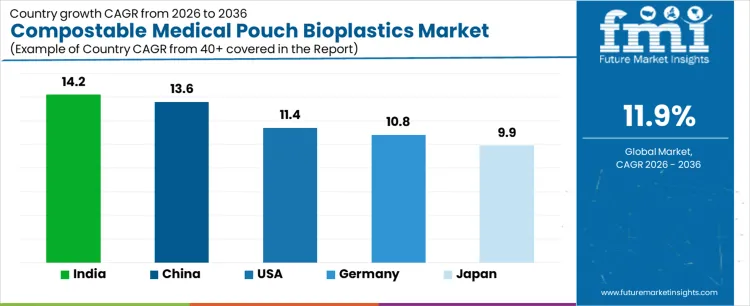
The compostable medical pouch bioplastics market is expanding across key regions. India leads at 14.2%, driven by growing demand for eco-friendly medical packaging solutions and government support for sustainability. China follows at 13.6%, supported by advancements in bioplastics technology and increasing regulatory pressure for sustainable packaging in the healthcare sector. The USA grows at 11.4%, fueled by rising environmental concerns and the shift toward green packaging solutions in the healthcare industry. Germany’s market expands at 10.8%, supported by its strong commitment to environmental sustainability and regulatory frameworks promoting eco-friendly materials. Japan grows at 9.9%, driven by a focus on reducing plastic waste and adopting biodegradable packaging solutions.
What is Driving the Growth of the Compostable Medical Pouch Bioplastics Market in India?
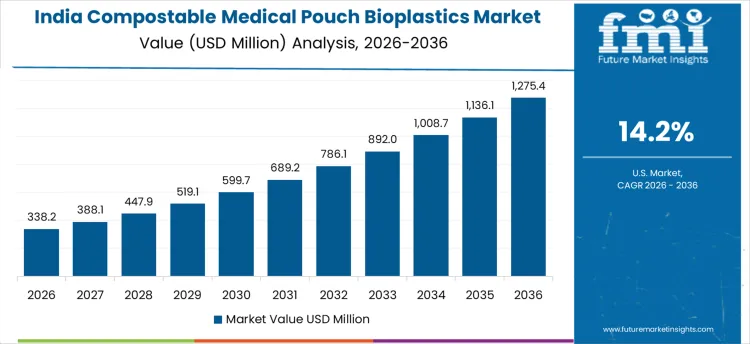
India’s compostable medical pouch bioplastics market is growing at 14.2%, driven by the increasing demand for eco-friendly and sustainable packaging solutions in the healthcare sector. As India’s healthcare industry continues to expand, there is rising pressure to adopt environmentally responsible practices, including the use of compostable materials in medical packaging. The growing concern over plastic waste and the environmental impact of conventional plastics is prompting manufacturers to shift toward bioplastics, which are biodegradable and compostable. Government support for sustainable practices, coupled with the rising awareness among consumers and businesses about reducing plastic waste, is fueling the adoption of compostable bioplastics in the medical packaging industry. As India’s healthcare and bioplastics sectors continue to grow, the demand for compostable medical pouches will likely continue to rise.
How is the Compostable Medical Pouch Bioplastics Market Expanding in China?
China’s compostable medical pouch bioplastics market is growing at 13.6%, supported by the country’s significant advancements in bioplastics technology and the increasing demand for sustainable packaging solutions in the healthcare industry. As China leads in medical device manufacturing and exports, there is growing pressure to reduce the environmental impact of packaging, especially single-use plastics. Compostable bioplastics are gaining popularity for medical pouch packaging, providing a sustainable alternative to traditional plastics. China’s strong regulatory focus on reducing plastic waste, combined with increasing government and industry support for eco-friendly materials, is driving market growth. As China continues to prioritize environmental sustainability and green technologies, the market for compostable medical pouch bioplastics will continue to expand.
How is the Compostable Medical Pouch Bioplastics Market Expanding in the USA?
The compostable medical pouch bioplastics market in the USA is growing at 11.4%, driven by the increasing demand for sustainable, eco-friendly packaging solutions in the healthcare industry. With rising environmental concerns, the healthcare sector in the USA is looking for alternatives to conventional plastics that contribute to pollution. Compostable bioplastics offer a viable solution for medical packaging, as they break down naturally without harming the environment. The growing adoption of green initiatives, stricter environmental regulations, and consumer demand for sustainable practices are pushing healthcare manufacturers to shift toward compostable materials for medical pouches. The USA’s continued push for sustainability and its focus on reducing plastic waste will further fuel the growth of this market.
What is Driving the Growth of the Compostable Medical Pouch Bioplastics Market in Germany?
Germany’s compostable medical pouch bioplastics market is growing at 10.8%, driven by the country’s strong commitment to environmental sustainability and its leadership in the European Union’s green initiatives. Germany’s healthcare sector is increasingly adopting sustainable packaging solutions, including compostable bioplastics, to reduce the environmental footprint of medical device packaging. The German government’s policies and regulations promoting eco-friendly practices, combined with the country’s robust medical device manufacturing industry, are accelerating the adoption of compostable materials. With growing concerns over plastic waste and a rising demand for environmentally responsible packaging, Germany’s market for compostable medical pouches is expected to continue growing as sustainability remains a key focus.
How is the Compostable Medical Pouch Bioplastics Market Expanding in Japan?
Japan’s compostable medical pouch bioplastics market is growing at 9.9%, supported by the country’s focus on sustainability and environmental responsibility in manufacturing. Japan’s healthcare industry is increasingly adopting eco-friendly packaging solutions, including compostable bioplastics, to meet the demand for more sustainable materials in medical packaging. Japan’s regulatory environment, which supports the reduction of plastic waste and encourages the use of biodegradable materials, is a key driver of this market. As Japan continues to focus on environmental issues and develops innovative, eco-friendly technologies, the demand for compostable medical pouch bioplastics will continue to grow, ensuring further market expansion.
How Are Companies Competing in the Compostable Medical Pouch Bioplastics Market?

Competition in the compostable medical pouch bioplastics market is centered on material performance (barrier and seal integrity), regulatory compliance for medical sterilization, scalability for healthcare supply chains, and product sustainability credentials. Amcor (Sustainable Healthcare Packaging) positions its bioplastic pouches with a strong emphasis on consistent barrier performance and compatibility with ethylene oxide and gamma sterilization processes. Its product literature underscores predictable seal strength and reliable protection that help hospitals and device manufacturers meet strict health and safety standards while advancing circular material use.
Berry Global (Healthcare Bioplastics) competes with a suite of compostable film and pouch structures engineered for moisture and oxygen control, marketed with data on controlled degradation and performance retention through storage and sterilization cycles. Berry’s materials highlight manufacturing support and integration with existing pouching lines, helping converters transition to compostable solutions without disrupting production. Sealed Air Corporation and Mondi Group differentiate by offering specialist biopolymer blends and multi-layer constructions that balance performance and end-of-life compostability, their brochures focusing on validation against medical packaging norms and tailored solutions for diverse device profiles.
Constantia Flexibles brings customized flexible pouch solutions that emphasize fit-for-purpose barrier levels and conversion support, with collateral stressing certified compostability and design flexibility for ordering and printing. Others in the market contribute with emerging biopolymer chemistries and regional supply support aimed at niche medical applications. Across all vendors, product materials emphasize barrier reliability, sterilization compatibility, regulatory alignment, and compostability performance as key differentiators that help healthcare OEMs adopt bioplastic pouches without compromising patient safety or supply continuity.
Key Players in Compostable Medical Pouch Bioplastics Market
- Amcor (Sustainable Healthcare Packaging)
- Berry Global (Healthcare Bioplastics)
- Sealed Air Corporation
- Mondi Group
- Constantia Flexibles
- Others
Scope of Report
| Attributes | Description |
|---|---|
| Quantitative Unit (2026) | USD Million |
| Material Type | PLA-Based Bioplastics, PHA-Based Bioplastics, Starch-Based Bioplastics, Cellulose-Based Bioplastics, Others |
| Application | Surgical Instrument Packaging, Diagnostic & Test Kit Packaging, Pharmaceutical Device Packaging, Dental & Disposable Medical Supplies |
| Regions Covered | Asia Pacific, Europe, North America, Latin America, Middle East & Africa |
| Countries Covered | China, Japan, South Korea, India, Australia & New Zealand, ASEAN, Germany, United Kingdom, France, Italy, Spain, Nordic, BENELUX, United States, Canada, Mexico, Brazil, Chile, Turkey, South Africa, Other GCC Countries |
| Key Companies Profiled | Amcor (Sustainable Healthcare Packaging), Berry Global (Healthcare Bioplastics), Sealed Air Corporation, Mondi Group, Constantia Flexibles, Others |
| Additional Attributes | Dollar sales by material type, application, and region; regional CAGR and growth outlook for the compostable medical pouch bioplastics market. |
Compostable Medical Pouch Bioplastics Market by Key Segments
Material Type
- PLA-Based Bioplastics
- PHA-Based Bioplastics
- Starch-Based Bioplastics
- Cellulose-Based Bioplastics
- Others
Application
- Surgical Instrument Packaging
- Diagnostic & Test Kit Packaging
- Pharmaceutical Device Packaging
- Dental & Disposable Medical Supplies
Region
- Asia Pacific
- China
- Japan
- South Korea
- India
- Australia & New Zealand
- ASEAN
- Rest of Asia Pacific
- Europe
- Germany
- United Kingdom
- France
- Italy
- Spain
- Nordic
- BENELUX
- Rest of Europe
- North America
- United States
- Canada
- Mexico
- Latin America
- Brazil
- Chile
- Rest of Latin America
- Middle East & Africa
- Kingdom of Saudi Arabia
- Other GCC Countries
- Turkey
- South Africa
- Other African Union
- Rest of Middle East & Africa
Bibliography
- World Health Organization (WHO). (2024). Decontamination and reprocessing of medical devices in healthcare facilities. World Health Organization.
- European Commission – Joint Research Centre (JRC). (2024). Bio‑based and biodegradable plastics in healthcare packaging applications. Publications Office of the European Union.
- U.S. Food and Drug Administration (FDA). (2024). Packaging materials for medical devices: Sterility, safety, and sustainability considerations. U.S. Department of Health and Human Services.
- International Organization for Standardization (ISO). (2024). ISO 11607‑1: Packaging for terminally sterilized medical devices (latest review). ISO.
- European Environment Agency (EEA). (2025). Biodegradable plastics and waste reduction strategies in healthcare systems. European Environment Agency.
Frequently Asked Questions
How big is the compostable medical pouch bioplastics market in 2026?
The global compostable medical pouch bioplastics market is estimated to be valued at USD 470.0 million in 2026.
What will be the size of compostable medical pouch bioplastics market in 2036?
The market size for the compostable medical pouch bioplastics market is projected to reach USD 1,446.8 million by 2036.
How much will be the compostable medical pouch bioplastics market growth between 2026 and 2036?
The compostable medical pouch bioplastics market is expected to grow at a 11.9% CAGR between 2026 and 2036.
What are the key product types in the compostable medical pouch bioplastics market?
The key product types in compostable medical pouch bioplastics market are pla-based bioplastics, pha-based bioplastics, starch-based bioplastics, cellulose-based bioplastics and others.
Which application segment to contribute significant share in the compostable medical pouch bioplastics market in 2026?
In terms of application, surgical instrument packaging segment to command 36.0% share in the compostable medical pouch bioplastics market in 2026.
Preview the report firsthand - request a free sample
Get SampleGet the brochure for pricing and purchase details.
Get PDFTable of Content
- Executive Summary
- Global Market Outlook
- Demand-side Trends
- Supply-side Trends
- Technology Roadmap Analysis
- Analysis and Recommendations
- Market Overview
- Market Coverage / Taxonomy
- Market Definition / Scope / Limitations
- Market Background
- Market Dynamics
- Drivers
- Restraints
- Opportunity
- Trends
- Scenario Forecast
- Demand in Optimistic Scenario
- Demand in Likely Scenario
- Demand in Conservative Scenario
- Opportunity Map Analysis
- Product Life Cycle Analysis
- Supply Chain Analysis
- Investment Feasibility Matrix
- Value Chain Analysis
- PESTLE and Porter’s Analysis
- Regulatory Landscape
- Regional Parent Market Outlook
- Production and Consumption Statistics
- Import and Export Statistics
- Market Dynamics
- Global Market Analysis 2021 to 2025 and Forecast, 2026 to 2036
- Historical Market Size Value (USD Million) Analysis, 2021 to 2025
- Current and Future Market Size Value (USD Million) Projections, 2026 to 2036
- Y-o-Y Growth Trend Analysis
- Absolute $ Opportunity Analysis
- Global Market Pricing Analysis 2021 to 2025 and Forecast 2026 to 2036
- Global Market Analysis 2021 to 2025 and Forecast 2026 to 2036, By Material Type
- Introduction / Key Findings
- Historical Market Size Value (USD Million) Analysis By Material Type , 2021 to 2025
- Current and Future Market Size Value (USD Million) Analysis and Forecast By Material Type , 2026 to 2036
- PLA-Based Bioplastics
- PHA-Based Bioplastics
- Starch-Based Bioplastics
- Cellulose-Based Bioplastics
- Others
- PLA-Based Bioplastics
- Y-o-Y Growth Trend Analysis By Material Type , 2021 to 2025
- Absolute $ Opportunity Analysis By Material Type , 2026 to 2036
- Global Market Analysis 2021 to 2025 and Forecast 2026 to 2036, By Application
- Introduction / Key Findings
- Historical Market Size Value (USD Million) Analysis By Application, 2021 to 2025
- Current and Future Market Size Value (USD Million) Analysis and Forecast By Application, 2026 to 2036
- Surgical Instrument Packaging
- Diagnostic & Test Kit Packaging
- Pharmaceutical Device Packaging
- Dental & Disposable Medical Supplies
- Surgical Instrument Packaging
- Y-o-Y Growth Trend Analysis By Application, 2021 to 2025
- Absolute $ Opportunity Analysis By Application, 2026 to 2036
- Global Market Analysis 2021 to 2025 and Forecast 2026 to 2036, By Region
- Introduction
- Historical Market Size Value (USD Million) Analysis By Region, 2021 to 2025
- Current Market Size Value (USD Million) Analysis and Forecast By Region, 2026 to 2036
- North America
- Latin America
- Western Europe
- Eastern Europe
- East Asia
- South Asia and Pacific
- Middle East & Africa
- Market Attractiveness Analysis By Region
- North America Market Analysis 2021 to 2025 and Forecast 2026 to 2036, By Country
- Historical Market Size Value (USD Million) Trend Analysis By Market Taxonomy, 2021 to 2025
- Market Size Value (USD Million) Forecast By Market Taxonomy, 2026 to 2036
- By Country
- USA
- Canada
- Mexico
- By Material Type
- By Application
- By Country
- Market Attractiveness Analysis
- By Country
- By Material Type
- By Application
- Key Takeaways
- Latin America Market Analysis 2021 to 2025 and Forecast 2026 to 2036, By Country
- Historical Market Size Value (USD Million) Trend Analysis By Market Taxonomy, 2021 to 2025
- Market Size Value (USD Million) Forecast By Market Taxonomy, 2026 to 2036
- By Country
- Brazil
- Chile
- Rest of Latin America
- By Material Type
- By Application
- By Country
- Market Attractiveness Analysis
- By Country
- By Material Type
- By Application
- Key Takeaways
- Western Europe Market Analysis 2021 to 2025 and Forecast 2026 to 2036, By Country
- Historical Market Size Value (USD Million) Trend Analysis By Market Taxonomy, 2021 to 2025
- Market Size Value (USD Million) Forecast By Market Taxonomy, 2026 to 2036
- By Country
- Germany
- UK
- Italy
- Spain
- France
- Nordic
- BENELUX
- Rest of Western Europe
- By Material Type
- By Application
- By Country
- Market Attractiveness Analysis
- By Country
- By Material Type
- By Application
- Key Takeaways
- Eastern Europe Market Analysis 2021 to 2025 and Forecast 2026 to 2036, By Country
- Historical Market Size Value (USD Million) Trend Analysis By Market Taxonomy, 2021 to 2025
- Market Size Value (USD Million) Forecast By Market Taxonomy, 2026 to 2036
- By Country
- Russia
- Poland
- Hungary
- Balkan & Baltic
- Rest of Eastern Europe
- By Material Type
- By Application
- By Country
- Market Attractiveness Analysis
- By Country
- By Material Type
- By Application
- Key Takeaways
- East Asia Market Analysis 2021 to 2025 and Forecast 2026 to 2036, By Country
- Historical Market Size Value (USD Million) Trend Analysis By Market Taxonomy, 2021 to 2025
- Market Size Value (USD Million) Forecast By Market Taxonomy, 2026 to 2036
- By Country
- China
- Japan
- South Korea
- By Material Type
- By Application
- By Country
- Market Attractiveness Analysis
- By Country
- By Material Type
- By Application
- Key Takeaways
- South Asia and Pacific Market Analysis 2021 to 2025 and Forecast 2026 to 2036, By Country
- Historical Market Size Value (USD Million) Trend Analysis By Market Taxonomy, 2021 to 2025
- Market Size Value (USD Million) Forecast By Market Taxonomy, 2026 to 2036
- By Country
- India
- ASEAN
- Australia & New Zealand
- Rest of South Asia and Pacific
- By Material Type
- By Application
- By Country
- Market Attractiveness Analysis
- By Country
- By Material Type
- By Application
- Key Takeaways
- Middle East & Africa Market Analysis 2021 to 2025 and Forecast 2026 to 2036, By Country
- Historical Market Size Value (USD Million) Trend Analysis By Market Taxonomy, 2021 to 2025
- Market Size Value (USD Million) Forecast By Market Taxonomy, 2026 to 2036
- By Country
- Kingdom of Saudi Arabia
- Other GCC Countries
- Turkiye
- South Africa
- Other African Union
- Rest of Middle East & Africa
- By Material Type
- By Application
- By Country
- Market Attractiveness Analysis
- By Country
- By Material Type
- By Application
- Key Takeaways
- Key Countries Market Analysis
- USA
- Pricing Analysis
- Market Share Analysis, 2025
- By Material Type
- By Application
- Canada
- Pricing Analysis
- Market Share Analysis, 2025
- By Material Type
- By Application
- Mexico
- Pricing Analysis
- Market Share Analysis, 2025
- By Material Type
- By Application
- Brazil
- Pricing Analysis
- Market Share Analysis, 2025
- By Material Type
- By Application
- Chile
- Pricing Analysis
- Market Share Analysis, 2025
- By Material Type
- By Application
- Germany
- Pricing Analysis
- Market Share Analysis, 2025
- By Material Type
- By Application
- UK
- Pricing Analysis
- Market Share Analysis, 2025
- By Material Type
- By Application
- Italy
- Pricing Analysis
- Market Share Analysis, 2025
- By Material Type
- By Application
- Spain
- Pricing Analysis
- Market Share Analysis, 2025
- By Material Type
- By Application
- France
- Pricing Analysis
- Market Share Analysis, 2025
- By Material Type
- By Application
- India
- Pricing Analysis
- Market Share Analysis, 2025
- By Material Type
- By Application
- ASEAN
- Pricing Analysis
- Market Share Analysis, 2025
- By Material Type
- By Application
- Australia & New Zealand
- Pricing Analysis
- Market Share Analysis, 2025
- By Material Type
- By Application
- China
- Pricing Analysis
- Market Share Analysis, 2025
- By Material Type
- By Application
- Japan
- Pricing Analysis
- Market Share Analysis, 2025
- By Material Type
- By Application
- South Korea
- Pricing Analysis
- Market Share Analysis, 2025
- By Material Type
- By Application
- Russia
- Pricing Analysis
- Market Share Analysis, 2025
- By Material Type
- By Application
- Poland
- Pricing Analysis
- Market Share Analysis, 2025
- By Material Type
- By Application
- Hungary
- Pricing Analysis
- Market Share Analysis, 2025
- By Material Type
- By Application
- Kingdom of Saudi Arabia
- Pricing Analysis
- Market Share Analysis, 2025
- By Material Type
- By Application
- Turkiye
- Pricing Analysis
- Market Share Analysis, 2025
- By Material Type
- By Application
- South Africa
- Pricing Analysis
- Market Share Analysis, 2025
- By Material Type
- By Application
- USA
- Market Structure Analysis
- Competition Dashboard
- Competition Benchmarking
- Market Share Analysis of Top Players
- By Regional
- By Material Type
- By Application
- Competition Analysis
- Competition Deep Dive
- Amcor (Sustainable Healthcare Packaging)
- Overview
- Product Portfolio
- Profitability by Market Segments (Product/Age /Sales Channel/Region)
- Sales Footprint
- Strategy Overview
- Marketing Strategy
- Product Strategy
- Channel Strategy
- Berry Global (Healthcare Bioplastics)
- Sealed Air Corporation
- Mondi Group
- Constantia Flexibles
- Others
- Amcor (Sustainable Healthcare Packaging)
- Competition Deep Dive
- Assumptions & Acronyms Used
- Research Methodology


