

- Industry Size (2026)
- USD 1.8 Bn
- Forecast (2036)
- USD 3.2 Bn
- CAGR (2026 to 2036)
- 6.0%
Dilution Control Cleaning Chemical Cartridges Market Forecast and Outlook 2026 to 2036
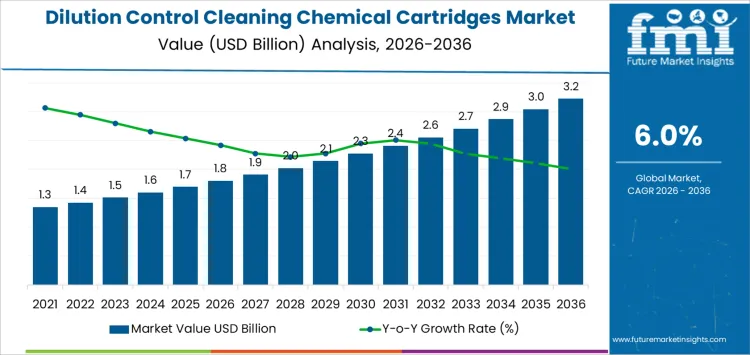
The dilution control cleaning chemical cartridges market reaches a value of USD 1.8 billion in 2026 and is expected to expand to USD 3.2 billion by 2036, reflecting a CAGR of 6.0%. Growth from USD 1.3 billion in 2020 to USD 1.8 billion in 2026 is driven by wider adoption of controlled dosing systems across commercial facilities, healthcare institutions, and hospitality settings. Closed loop cartridge systems account for the largest share as they reduce handling errors and standardize chemical use. Restroom, sanitizer, and general purpose cleaning products anchor early demand through routine janitorial programs.
From 2027 onward, market value increases from USD 1.9 billion to USD 2.3 billion by 2031, then advances steadily toward USD 3.2 billion by 2036. Commercial facilities remain the primary users as centralized dispensing supports consistency across large sites. Healthcare and foodservice environments maintain stable uptake tied to hygiene protocols. Single use pods and dispenser compatible packs gain limited share where flexibility is required. Long term growth reflects expansion of distributor led programs, recurring contract models, and steady replacement cycles rather than increases in overall cleaning frequency.
Quick Stats of the Dilution Control Cleaning Chemical Cartridges Market
- Dilution Control Cleaning Chemical Cartridges Market Value (2026): USD 1.8 billion
- Dilution Control Cleaning Chemical Cartridges Market Forecast Value (2036): USD 3.2 billion
- Dilution Control Cleaning Chemical Cartridges Market Forecast CAGR (2026-2036): 6.0%
- Leading System Type in the Market: Closed-Loop Cartridge Systems (48%)
- Key Growth Regions: China, Brazil, USA, U.K., Germany
- Top Players: Ecolab, Diversey, SC Johnson Professional, Betco, Spartan Chemical, Zep, 3M, Solenis, CloroxPro, P&G Professional
What is the Growth Forecast for the Dilution Control Cleaning Chemical Cartridges Market through 2036?
Between 2026 and 2031, the dilution control cleaning chemical cartridges market expands from USD 1.8 billion to about USD 2.2 billion, reflecting a controlled but consistent rise in adoption. Growth in this phase is shaped by increasing use in hospitality, healthcare, and institutional cleaning where dosing accuracy and waste reduction are operational priorities. Early expansion is driven by replacement of bulk liquid systems and gradual rollout of cartridge-based dispensing in multi-site facilities. Purchasing behavior during this period remains measured, with customers prioritizing reliability, ease of use, and compatibility with existing dispensing equipment.
From 2031 to 2036, the market grows from roughly USD 2.2 billion to USD 3.2 billion, showing a clearer acceleration in value expansion. This phase reflects wider standardization of cartridge systems across large facility networks and contract cleaning operations. Demand strengthens as organizations seek tighter control over chemical usage, consistent cleaning outcomes, and reduced handling risks. Earlier growth relied on incremental system upgrades, while later expansion is driven by broader procurement mandates, repeat cartridge consumption, and deeper integration of dilution control systems into routine facility management practices across commercial and industrial environments.
Dilution Control Cleaning Chemical Cartridges Market Key Takeaways
| Metric | Value |
|---|---|
| Market Value (2026) | USD 1.8 billion |
| Forecast Value (2036) | USD 3.2 billion |
| Forecast CAGR (2026-2036) | 6.0% |
What Is Driving the Demand for the Dilution Control Cleaning Chemical Cartridges Market from 2026 to 2036?
Adoption of dilution control cleaning chemical cartridges expanded as facilities standardized cleaning operations across multi-site portfolios. Hotels, hospitals, food plants, and contract cleaners used cartridge based systems to ensure accurate dosing and reduce handling errors. Historical demand reflected need for consistency, worker safety, and predictable chemical consumption. Centralized procurement favored sealed cartridges that limited spills and simplified staff training. Usage aligned with growth of outsourced cleaning services and compliance driven hygiene programs. Buyers valued compatibility with wall mounted dispensers and reliable supply continuity for routine operations.
From 2026 to 2036 demand is expected to increase as organizations seek tighter control over chemical usage, cost tracking, and compliance reporting. Automated dilution systems support sustainability goals by reducing overuse and wastewater load. Product development focuses on concentrated formulations, RFID tagged cartridges, and dispenser connectivity for usage monitoring. Buyers assess system reliability, refill logistics, and compatibility across chemical ranges. Demand growth depends on expansion of large facility networks, labor turnover management, and adoption of data driven cleaning operations across commercial and institutional environments.
What Is the Demand for the Dilution Control Cleaning Chemical Cartridges Market by System Type and Product Family for 2026 to 2036?
Between 2026 and 2036, the dilution control cleaning chemical cartridges market expands as facilities standardize dosing accuracy, reduce chemical misuse, and control labor variability. Closed-loop cartridge systems hold the largest system share at 48% as organizations prioritize sealed handling and precise dilution. Restroom and sanitizer products lead the product family segment at 30% due to high-frequency usage and strict hygiene expectations across commercial and institutional environments. Demand is shaped by centralized procurement, compliance-driven cleaning protocols, and rising adoption of automated dispensing infrastructure.
Why do closed-loop cartridge systems account for 48% of demand in the dilution control cleaning chemical cartridges market by system type from 2026 to 2036?
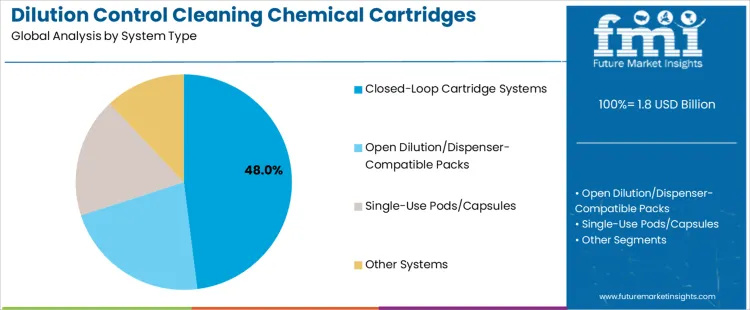
Closed-loop cartridge systems account for 48% of demand because they eliminate manual mixing and limit operator exposure to concentrated chemicals. Consumption intensity remains high in healthcare facilities, corporate offices, hospitality venues, and educational institutions where standardized cleaning outcomes are required across multiple locations. Usage remains consistent as sealed cartridges connect directly to wall-mounted dispensers, ensuring repeatable dilution ratios regardless of user skill. Procurement decisions emphasize worker safety, chemical loss prevention, and consistency across shifts. Buyers favor systems that reduce spills, cross-contamination, and unauthorized chemical substitution. Price sensitivity stays moderate because closed-loop systems lower overall chemical consumption and reduce incident-related costs. Specification control focuses on connector compatibility, cartridge integrity, shelf stability, and accurate metering performance. Demand continues from 2026 to 2036 as multi-site operators expand centralized cleaning programs and adopt systems that simplify training and auditing. Replacement cycles remain predictable since cartridges are consumed at fixed rates aligned with cleaning schedules. Competitive pressure from open systems remains limited where regulatory scrutiny and safety requirements favor sealed delivery formats.
Why do restroom and sanitizer products represent 30% of demand in the dilution control cleaning chemical cartridges market by product family from 2026 to 2036?
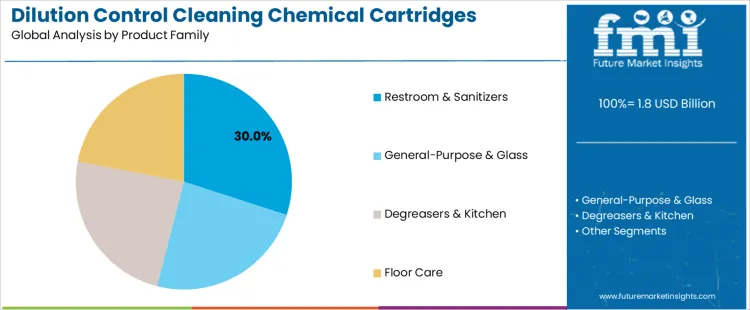
Restroom and sanitizer products represent 30% of demand because these areas require frequent cleaning and disinfection throughout operating hours. Consumption remains high in offices, retail centers, transport hubs, healthcare buildings, and hospitality properties where hygiene perception influences occupant confidence. Usage stays steady as restrooms follow fixed cleaning intervals supported by standardized dilution to maintain efficacy and surface safety. Procurement favors cartridge formats that integrate with foaming, spray, and refill dispensers used across restroom zones. Buyers prioritize formulations that deliver reliable germ reduction while remaining compatible with fixtures, partitions, and drainage systems. Price sensitivity remains moderate since labor time and compliance outcomes weigh more heavily than unit chemical cost. Specification control emphasizes viscosity consistency, foam stability, and performance across varying water hardness. Demand persists from 2026 to 2036 as public hygiene expectations remain elevated and restroom sanitation continues to represent a core component of facility maintenance programs.
How Is Demand for Dilution Control Cleaning Chemical Cartridges Shaped by On Site Cleaning Operations?
Demand forms through facilities that manage frequent cleaning with limited tolerance for mixing errors and chemical waste. Hospitals use cartridge systems to ensure consistent dilution across wards with rotating staff. Large office buildings rely on closed systems to reduce handling time during shift changes. Food service back rooms adopt cartridges to control chemical strength where space is tight. Educational campuses favor them to standardize cleaning outcomes across multiple buildings. These use cases emerge from operational discipline requirements rather than preference shifts, anchoring demand in accuracy, repeatability, and daily efficiency within structured cleaning environments.
What Facility Level Pressures Are Driving Demand for Dilution Control Cleaning Chemical Cartridges?
Drivers arise from the need to control usage, cost, and safety at the point of application. Healthcare facilities adopt cartridges to reduce exposure risk during chemical handling. Contract cleaning firms use them to limit overuse that inflates supply costs across client sites. Food processing plants rely on fixed dilution ratios to meet internal sanitation checks. Public buildings choose cartridges to simplify training for temporary or rotating staff. These pressures reflect local operational realities where consistency, compliance, and cost tracking guide procurement decisions more than branding or formulation changes.
What Practical Constraints Are Limiting Wider Adoption of Dilution Control Cartridge Systems?
Barriers relate to equipment dependency, cost structure, and site compatibility. Smaller facilities avoid cartridge systems due to higher per unit chemical costs. Buildings with mixed dispenser brands face compatibility issues that limit cartridge selection. Maintenance teams report downtime when proprietary cartridges are unavailable, which affects continuity. Older plumbing layouts complicate dispenser installation in some locations. Long standing supplier contracts also delay conversion from bulk concentrates. These constraints slow adoption in environments where flexibility, upfront cost control, or infrastructure limits outweigh benefits tied to precision and waste reduction.
What is the Growth Outlook for Dilution Control Cleaning Chemical Cartridges Across Key Countries?
| Country | CAGR (%) |
|---|---|
| China | 7.0% |
| Brazil | 6.8% |
| USA | 5.7% |
| U.K. | 5.7% |
| Germany | 5.6% |
The dilution control cleaning chemical cartridges segment is growing steadily across institutional and commercial cleaning operations as users seek consistent dosing, reduced chemical waste, and operational efficiency. China leads at 7.0%, supported by expansion of commercial facilities, hospitality infrastructure, and centralized cleaning systems in large buildings. Brazil follows at 6.8%, driven by increased outsourcing of cleaning services and adoption of standardized dispensing systems. The USA and U.K. each post 5.7%, reflecting strong use in healthcare facilities, foodservice, and corporate offices where controlled dilution improves safety and cost management. Germany at 5.6% shows stable growth linked to industrial cleaning compliance and efficiency focused procurement. Overall growth is shaped by automation adoption, labor optimization, and demand for safer handling of concentrated cleaning chemicals.
How Are Standardized Cleaning Systems Supporting Dilution Control Cleaning Chemical Cartridges Demand in the United States?
Dilution control cleaning chemical cartridges demand in the United States is expanding at a CAGR of 5.7% from 2026 to 2036 as commercial facilities, healthcare sites, and institutional users adopt controlled dispensing systems. Facility managers rely on cartridge based systems to ensure accurate chemical dosing and reduce manual handling. Healthcare facilities use dilution control to maintain consistency across sanitation routines. Contract cleaning providers standardize cartridge use to support efficiency across multiple client sites. Growth reflects steady transition toward automated and error reducing cleaning solutions across large facilities.
- Facility managers adopt cartridges to ensure accurate chemical dosing.
- Healthcare facilities rely on dilution control for consistent sanitation.
- Cleaning service providers standardize cartridge systems across sites.
What Is Driving Dilution Control Cartridge Adoption in Germany?
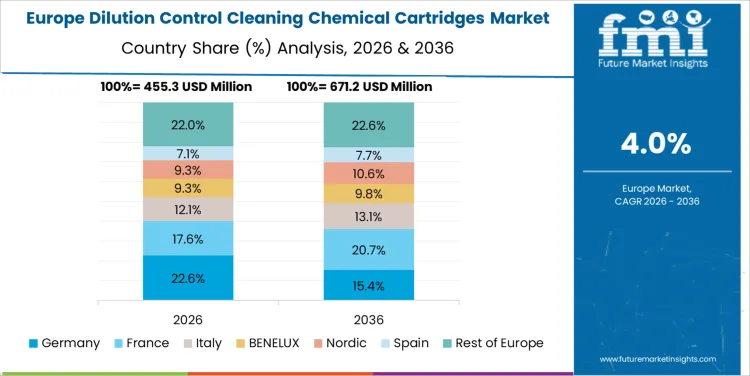
Dilution control cleaning chemical cartridges demand in Germany is growing at a CAGR of 5.6% from 2026 to 2036 as industrial facilities, offices, and public institutions integrate controlled dispensing into cleaning operations. Industrial users select cartridge systems to support precise chemical use in production environments. Office facilities rely on standardized dilution to maintain cleaning quality. Public institutions integrate cartridges into structured maintenance programs. Growth reflects disciplined facility management practices aligned with operational control and safety requirements.
- Industrial facilities use cartridges to support precise chemical handling.
- Offices rely on standardized dilution for consistent cleaning results.
- Public institutions integrate cartridge systems into maintenance routines.
Why Is China Seeing Faster Growth in Dilution Control Cleaning Chemical Cartridges Demand?
Dilution control cleaning chemical cartridges demand in China is increasing at a CAGR of 7.0% from 2026 to 2036 as commercial real estate, manufacturing plants, and service providers expand automated cleaning systems. Commercial buildings adopt cartridge systems to manage large scale operations efficiently. Manufacturing plants use dilution control to reduce chemical waste and support worker safety. Service providers rely on cartridges to standardize cleaning across varied locations. Growth reflects rapid adoption across expanding facilities nationwide.
- Commercial buildings adopt cartridges for efficient large scale cleaning.
- Manufacturing plants use dilution control to reduce chemical waste.
- Service providers rely on cartridges to standardize cleaning practices.
How Are Service Sector Practices Shaping Demand in the United Kingdom?
Dilution control cleaning chemical cartridges demand in the United Kingdom is rising at a CAGR of 5.7% from 2026 to 2036 as offices, healthcare facilities, and hospitality operators adopt controlled dispensing systems. Offices integrate cartridge systems to support consistent cleaning outcomes. Healthcare facilities rely on dilution control to manage sanitation protocols. Hospitality operators use cartridges to maintain efficiency across guest areas. Growth reflects steady adoption across service environments focused on operational consistency.
- Offices integrate cartridges for consistent cleaning outcomes.
- Healthcare facilities rely on dilution control for sanitation protocols.
- Hospitality operators use cartridge systems to improve efficiency.
What Factors Are Supporting Strong Growth in Brazil?
Dilution control cleaning chemical cartridges demand in Brazil is expanding at a CAGR of 6.8% from 2026 to 2036 as commercial facilities, industrial sites, and service companies adopt controlled dispensing solutions. Commercial users implement cartridge systems to reduce chemical misuse. Industrial sites integrate dilution control into maintenance workflows. Service companies rely on cartridges to manage cleaning across multiple facilities. Growth reflects rising focus on efficiency and chemical control across sectors.
- Commercial users implement cartridges to reduce chemical misuse.
- Industrial sites integrate dilution control into maintenance workflows.
- Service companies rely on cartridges for multi-site cleaning operations.
What Is Driving the Demand for Dilution Control Cleaning Chemical Cartridges and Which Companies Shape Institutional Standardization?
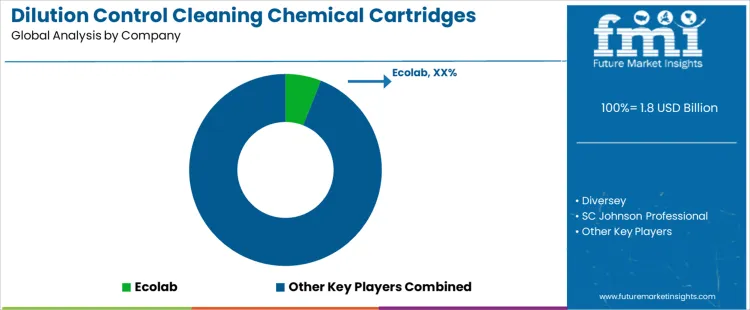
Adoption of dilution control cleaning chemical cartridges is expanding as facilities seek consistent cleaning performance with reduced chemical waste and handling risk. Hospitals, hotels, foodservice operators, and large office buildings rely on closed loop dispensing to ensure accurate dilution and worker safety. Ecolab and Diversey hold strong positions through proprietary cartridge and dispenser systems embedded into long term facility service contracts. SC Johnson Professional supports use in offices, education, and public buildings through simplified wall mounted systems. Betco, Spartan Chemical, and Zep serve contract cleaners that value portability and fast changeover across multiple sites. These systems reduce training requirements and support compliance with internal hygiene protocols.
Purchasing decisions are guided by dilution accuracy, cartridge compatibility, shelf stability, and ease of dispenser maintenance. CloroxPro and P and G Professional influence adoption through branded formulations aligned with standardized cleaning programs. 3M supports specialty surface care where controlled dosing improves consistency. Solenis contributes through industrial cleaning chemistries supplied in cartridge compatible formats for food and process facilities. Facility managers favor systems that lower inventory complexity and minimize spill exposure. Demand visibility tracks outsourcing of cleaning services, expansion of multi site retail and hospitality chains, and continued focus on cost control and safety in high turnover cleaning operations.
Key Players in the Dilution Control Cleaning Chemical Cartridges Market
- Ecolab
- Diversey
- SC Johnson Professional
- Betco
- Spartan Chemical
- Zep
- 3M
- Solenis
- CloroxPro
- P&G Professional
Scope of the Report
| Items | Values |
|---|---|
| Quantitative Units (2026) | USD billion |
| System Type | Closed Loop Cartridge Systems; Open Dilution and Dispenser Compatible Packs; Single Use Pods and Capsules; Other Systems |
| Product Family | Restroom and Sanitizers; General Purpose and Glass Cleaners; Degreasers and Kitchen Cleaners; Floor Care |
| End Use Sector | Commercial Facilities; Healthcare and Institutions; Hospitality and Foodservice; Industrial |
| Contracting Model | Jan San Distributor Programs; Direct Facility Contracts; OEM Tied Programs |
| Regions Covered | Asia Pacific; Europe; North America; Latin America; Middle East and Africa |
| Countries Covered | China; Japan; South Korea; India; Australia and New Zealand; ASEAN; Germany; United Kingdom; France; Italy; Spain; Nordic; BENELUX; United States; Canada; Mexico; Brazil; Chile; Kingdom of Saudi Arabia; Turkey; South Africa; plus 40+ additional countries across Asia Pacific, Europe, Latin America, and Middle East and Africa |
| Key Companies Profiled | Ecolab; Diversey; SC Johnson Professional; Betco; Spartan Chemical; Zep; 3M; Solenis; CloroxPro; P and G Professional |
| Additional Attributes | Dollar by sales across system types, product families, end use sectors, and contracting models; closed loop versus open system adoption patterns; cartridge replacement cycles and consumption frequency; dispenser compatibility and installation considerations; worker safety and spill reduction requirements; inventory control and centralized procurement practices; integration with contract cleaning and outsourced service models; data tracking and compliance reporting capabilities; impact of multi-site facility management on cartridge standardization |
Dilution Control Cleaning Chemical Cartridges Market Segmentation
System Type:
- Closed-Loop Cartridge Systems
- Open Dilution/Dispenser-Compatible Packs
- Single-Use Pods/Capsules
- Other Systems
Product Family:
- Restroom & Sanitizers
- General-Purpose & Glass
- Degreasers & Kitchen
- Floor Care
End-Use Sector:
- Commercial Facilities
- Healthcare & Institutions
- Hospitality & Foodservice
- Industrial
Contracting Model:
- Jan-San Distributor Programs
- Direct Facility Contracts
- OEM-Tied Programs
Region:
- Asia Pacific
- China
- Japan
- South Korea
- India
- Australia & New Zealand
- ASEAN
- Rest of Asia Pacific
- Europe
- Germany
- United Kingdom
- France
- Italy
- Spain
- Nordic
- BENELUX
- Rest of Europe
- North America
- United States
- Canada
- Mexico
- Latin America
- Brazil
- Chile
- Rest of Latin America
- Middle East & Africa
- Kingdom of Saudi Arabia
- Other GCC Countries
- Turkey
- South Africa
- Other African Union
- Rest of Middle East & Africa
Frequently Asked Questions
How big is the dilution control cleaning chemical cartridges market in 2026?
The global dilution control cleaning chemical cartridges market is estimated to be valued at USD 1.8 billion in 2026.
What will be the size of dilution control cleaning chemical cartridges market in 2036?
The market size for the dilution control cleaning chemical cartridges market is projected to reach USD 3.2 billion by 2036.
How much will be the dilution control cleaning chemical cartridges market growth between 2026 and 2036?
The dilution control cleaning chemical cartridges market is expected to grow at a 6.0% CAGR between 2026 and 2036.
What are the key product types in the dilution control cleaning chemical cartridges market?
The key product types in dilution control cleaning chemical cartridges market are closed-loop cartridge systems, open dilution/dispenser-compatible packs, single-use pods/capsules and other systems.
Which product family segment to contribute significant share in the dilution control cleaning chemical cartridges market in 2026?
In terms of product family, restroom & sanitizers segment to command 30.0% share in the dilution control cleaning chemical cartridges market in 2026.
Preview the report firsthand - request a free sample
Get SampleGet the brochure for pricing and purchase details.
Get PDFTable of Content
- Executive Summary
- Global Market Outlook
- Demand-side Trends
- Supply-side Trends
- Technology Roadmap Analysis
- Analysis and Recommendations
- Market Overview
- Market Coverage / Taxonomy
- Market Definition / Scope / Limitations
- Market Background
- Market Dynamics
- Drivers
- Restraints
- Opportunity
- Trends
- Scenario Forecast
- Demand in Optimistic Scenario
- Demand in Likely Scenario
- Demand in Conservative Scenario
- Opportunity Map Analysis
- Product Life Cycle Analysis
- Supply Chain Analysis
- Investment Feasibility Matrix
- Value Chain Analysis
- PESTLE and Porter’s Analysis
- Regulatory Landscape
- Regional Parent Market Outlook
- Production and Consumption Statistics
- Import and Export Statistics
- Market Dynamics
- Global Market Analysis 2021 to 2025 and Forecast, 2026 to 2036
- Historical Market Size Value (USD Million) Analysis, 2021 to 2025
- Current and Future Market Size Value (USD Million) Projections, 2026 to 2036
- Y-o-Y Growth Trend Analysis
- Absolute $ Opportunity Analysis
- Global Market Pricing Analysis 2021 to 2025 and Forecast 2026 to 2036
- Global Market Analysis 2021 to 2025 and Forecast 2026 to 2036, By System Type
- Introduction / Key Findings
- Historical Market Size Value (USD Million) Analysis By System Type , 2021 to 2025
- Current and Future Market Size Value (USD Million) Analysis and Forecast By System Type , 2026 to 2036
- Closed-Loop Cartridge Systems
- Open Dilution/Dispenser-Compatible Packs
- Single-Use Pods/Capsules
- Other Systems
- Y-o-Y Growth Trend Analysis By System Type , 2021 to 2025
- Absolute $ Opportunity Analysis By System Type , 2026 to 2036
- Global Market Analysis 2021 to 2025 and Forecast 2026 to 2036, By Product Family
- Introduction / Key Findings
- Historical Market Size Value (USD Million) Analysis By Product Family, 2021 to 2025
- Current and Future Market Size Value (USD Million) Analysis and Forecast By Product Family, 2026 to 2036
- Restroom & Sanitizers
- General-Purpose & Glass
- Degreasers & Kitchen
- Floor Care
- Y-o-Y Growth Trend Analysis By Product Family, 2021 to 2025
- Absolute $ Opportunity Analysis By Product Family, 2026 to 2036
- Global Market Analysis 2021 to 2025 and Forecast 2026 to 2036, By End-Use Sector
- Introduction / Key Findings
- Historical Market Size Value (USD Million) Analysis By End-Use Sector, 2021 to 2025
- Current and Future Market Size Value (USD Million) Analysis and Forecast By End-Use Sector, 2026 to 2036
- Commercial Facilities
- Healthcare & Institutions
- Hospitality & Foodservice
- Industrial
- Y-o-Y Growth Trend Analysis By End-Use Sector, 2021 to 2025
- Absolute $ Opportunity Analysis By End-Use Sector, 2026 to 2036
- Global Market Analysis 2021 to 2025 and Forecast 2026 to 2036, By Contracting Model
- Introduction / Key Findings
- Historical Market Size Value (USD Million) Analysis By Contracting Model, 2021 to 2025
- Current and Future Market Size Value (USD Million) Analysis and Forecast By Contracting Model, 2026 to 2036
- Jan-San Distributor Programs
- Direct Facility Contracts
- OEM-Tied Programs
- Y-o-Y Growth Trend Analysis By Contracting Model, 2021 to 2025
- Absolute $ Opportunity Analysis By Contracting Model, 2026 to 2036
- Global Market Analysis 2021 to 2025 and Forecast 2026 to 2036, By Region
- Introduction
- Historical Market Size Value (USD Million) Analysis By Region, 2021 to 2025
- Current Market Size Value (USD Million) Analysis and Forecast By Region, 2026 to 2036
- North America
- Latin America
- Western Europe
- Eastern Europe
- East Asia
- South Asia and Pacific
- Middle East & Africa
- Market Attractiveness Analysis By Region
- North America Market Analysis 2021 to 2025 and Forecast 2026 to 2036, By Country
- Historical Market Size Value (USD Million) Trend Analysis By Market Taxonomy, 2021 to 2025
- Market Size Value (USD Million) Forecast By Market Taxonomy, 2026 to 2036
- By Country
- USA
- Canada
- Mexico
- By System Type
- By Product Family
- By End-Use Sector
- By Contracting Model
- By Country
- Market Attractiveness Analysis
- By Country
- By System Type
- By Product Family
- By End-Use Sector
- By Contracting Model
- Key Takeaways
- Latin America Market Analysis 2021 to 2025 and Forecast 2026 to 2036, By Country
- Historical Market Size Value (USD Million) Trend Analysis By Market Taxonomy, 2021 to 2025
- Market Size Value (USD Million) Forecast By Market Taxonomy, 2026 to 2036
- By Country
- Brazil
- Chile
- Rest of Latin America
- By System Type
- By Product Family
- By End-Use Sector
- By Contracting Model
- By Country
- Market Attractiveness Analysis
- By Country
- By System Type
- By Product Family
- By End-Use Sector
- By Contracting Model
- Key Takeaways
- Western Europe Market Analysis 2021 to 2025 and Forecast 2026 to 2036, By Country
- Historical Market Size Value (USD Million) Trend Analysis By Market Taxonomy, 2021 to 2025
- Market Size Value (USD Million) Forecast By Market Taxonomy, 2026 to 2036
- By Country
- Germany
- UK
- Italy
- Spain
- France
- Nordic
- BENELUX
- Rest of Western Europe
- By System Type
- By Product Family
- By End-Use Sector
- By Contracting Model
- By Country
- Market Attractiveness Analysis
- By Country
- By System Type
- By Product Family
- By End-Use Sector
- By Contracting Model
- Key Takeaways
- Eastern Europe Market Analysis 2021 to 2025 and Forecast 2026 to 2036, By Country
- Historical Market Size Value (USD Million) Trend Analysis By Market Taxonomy, 2021 to 2025
- Market Size Value (USD Million) Forecast By Market Taxonomy, 2026 to 2036
- By Country
- Russia
- Poland
- Hungary
- Balkan & Baltic
- Rest of Eastern Europe
- By System Type
- By Product Family
- By End-Use Sector
- By Contracting Model
- By Country
- Market Attractiveness Analysis
- By Country
- By System Type
- By Product Family
- By End-Use Sector
- By Contracting Model
- Key Takeaways
- East Asia Market Analysis 2021 to 2025 and Forecast 2026 to 2036, By Country
- Historical Market Size Value (USD Million) Trend Analysis By Market Taxonomy, 2021 to 2025
- Market Size Value (USD Million) Forecast By Market Taxonomy, 2026 to 2036
- By Country
- China
- Japan
- South Korea
- By System Type
- By Product Family
- By End-Use Sector
- By Contracting Model
- By Country
- Market Attractiveness Analysis
- By Country
- By System Type
- By Product Family
- By End-Use Sector
- By Contracting Model
- Key Takeaways
- South Asia and Pacific Market Analysis 2021 to 2025 and Forecast 2026 to 2036, By Country
- Historical Market Size Value (USD Million) Trend Analysis By Market Taxonomy, 2021 to 2025
- Market Size Value (USD Million) Forecast By Market Taxonomy, 2026 to 2036
- By Country
- India
- ASEAN
- Australia & New Zealand
- Rest of South Asia and Pacific
- By System Type
- By Product Family
- By End-Use Sector
- By Contracting Model
- By Country
- Market Attractiveness Analysis
- By Country
- By System Type
- By Product Family
- By End-Use Sector
- By Contracting Model
- Key Takeaways
- Middle East & Africa Market Analysis 2021 to 2025 and Forecast 2026 to 2036, By Country
- Historical Market Size Value (USD Million) Trend Analysis By Market Taxonomy, 2021 to 2025
- Market Size Value (USD Million) Forecast By Market Taxonomy, 2026 to 2036
- By Country
- Kingdom of Saudi Arabia
- Other GCC Countries
- Turkiye
- South Africa
- Other African Union
- Rest of Middle East & Africa
- By System Type
- By Product Family
- By End-Use Sector
- By Contracting Model
- By Country
- Market Attractiveness Analysis
- By Country
- By System Type
- By Product Family
- By End-Use Sector
- By Contracting Model
- Key Takeaways
- Key Countries Market Analysis
- USA
- Pricing Analysis
- Market Share Analysis, 2025
- By System Type
- By Product Family
- By End-Use Sector
- By Contracting Model
- Canada
- Pricing Analysis
- Market Share Analysis, 2025
- By System Type
- By Product Family
- By End-Use Sector
- By Contracting Model
- Mexico
- Pricing Analysis
- Market Share Analysis, 2025
- By System Type
- By Product Family
- By End-Use Sector
- By Contracting Model
- Brazil
- Pricing Analysis
- Market Share Analysis, 2025
- By System Type
- By Product Family
- By End-Use Sector
- By Contracting Model
- Chile
- Pricing Analysis
- Market Share Analysis, 2025
- By System Type
- By Product Family
- By End-Use Sector
- By Contracting Model
- Germany
- Pricing Analysis
- Market Share Analysis, 2025
- By System Type
- By Product Family
- By End-Use Sector
- By Contracting Model
- UK
- Pricing Analysis
- Market Share Analysis, 2025
- By System Type
- By Product Family
- By End-Use Sector
- By Contracting Model
- Italy
- Pricing Analysis
- Market Share Analysis, 2025
- By System Type
- By Product Family
- By End-Use Sector
- By Contracting Model
- Spain
- Pricing Analysis
- Market Share Analysis, 2025
- By System Type
- By Product Family
- By End-Use Sector
- By Contracting Model
- France
- Pricing Analysis
- Market Share Analysis, 2025
- By System Type
- By Product Family
- By End-Use Sector
- By Contracting Model
- India
- Pricing Analysis
- Market Share Analysis, 2025
- By System Type
- By Product Family
- By End-Use Sector
- By Contracting Model
- ASEAN
- Pricing Analysis
- Market Share Analysis, 2025
- By System Type
- By Product Family
- By End-Use Sector
- By Contracting Model
- Australia & New Zealand
- Pricing Analysis
- Market Share Analysis, 2025
- By System Type
- By Product Family
- By End-Use Sector
- By Contracting Model
- China
- Pricing Analysis
- Market Share Analysis, 2025
- By System Type
- By Product Family
- By End-Use Sector
- By Contracting Model
- Japan
- Pricing Analysis
- Market Share Analysis, 2025
- By System Type
- By Product Family
- By End-Use Sector
- By Contracting Model
- South Korea
- Pricing Analysis
- Market Share Analysis, 2025
- By System Type
- By Product Family
- By End-Use Sector
- By Contracting Model
- Russia
- Pricing Analysis
- Market Share Analysis, 2025
- By System Type
- By Product Family
- By End-Use Sector
- By Contracting Model
- Poland
- Pricing Analysis
- Market Share Analysis, 2025
- By System Type
- By Product Family
- By End-Use Sector
- By Contracting Model
- Hungary
- Pricing Analysis
- Market Share Analysis, 2025
- By System Type
- By Product Family
- By End-Use Sector
- By Contracting Model
- Kingdom of Saudi Arabia
- Pricing Analysis
- Market Share Analysis, 2025
- By System Type
- By Product Family
- By End-Use Sector
- By Contracting Model
- Turkiye
- Pricing Analysis
- Market Share Analysis, 2025
- By System Type
- By Product Family
- By End-Use Sector
- By Contracting Model
- South Africa
- Pricing Analysis
- Market Share Analysis, 2025
- By System Type
- By Product Family
- By End-Use Sector
- By Contracting Model
- USA
- Market Structure Analysis
- Competition Dashboard
- Competition Benchmarking
- Market Share Analysis of Top Players
- By Regional
- By System Type
- By Product Family
- By End-Use Sector
- By Contracting Model
- Competition Analysis
- Competition Deep Dive
- Ecolab
- Overview
- Product Portfolio
- Profitability by Market Segments (Product/Age /Sales Channel/Region)
- Sales Footprint
- Strategy Overview
- Marketing Strategy
- Product Strategy
- Channel Strategy
- Diversey
- SC Johnson Professional
- Betco
- Spartan Chemical
- Zep
- 3M
- Solenis
- CloroxPro
- P&G Professional
- Ecolab
- Competition Deep Dive
- Assumptions & Acronyms Used
- Research Methodology


