

Electric Grills Market Size and Share Forecast Outlook 2025 to 2035
Electric grills market is presently witnessing significant growth as customers seek an extremely convenient, smoke-free, and energy-effective grilling solution. The people who live in apartments, condos, and other homes that have minimal outdoor spaces see electric grills as their best bet for indoor cooking, while urbanization and the indoor cooking boom join as supporting factors. Innovation currently includes smart temperature control, non-stick surfaces, and rapid heating technology.
Brands such as Weber, George Foreman, and Cuisinart share 50% of the market because of brand reputation, technological advancements, and significant retail presence. Independent and regional electric grill manufacturers occupy 30% as they cater to niche markets, like high-end culinary enthusiasts and portable grilling solutions. Finally, startups focusing on smart cooking technology, eco-friendly designs, and high-performance electric grills constitute 20% of the market.
Global Market Share by Top Brands in Outdoor, Indoor, and Smart Electric Grill Categories
| Market Segment | Industry Share (%) |
|---|---|
| Top 3 (Weber, George Foreman, Cuisinart) | 50% |
| Rest of Top 5 (T-fal, Ninja Foodi) | 15% |
| Next 5 of Top 10 (Philips, Char-Broil, Breville, Hamilton Beach, Zojirushi) | 20% |
| Emerging & Regional Brands (smart grills, eco-friendly designs) | 15% |
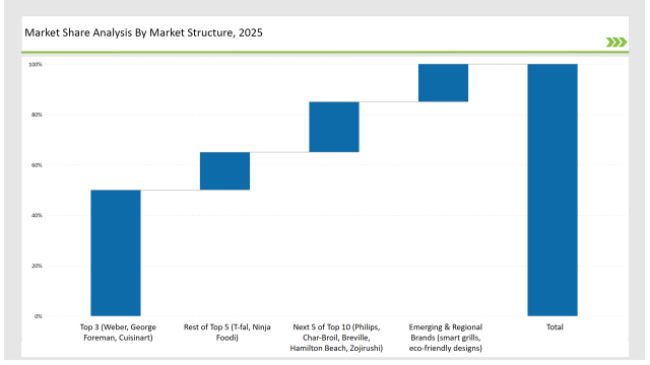
Market Concentration, 2025
The electric grills market in 2025 is moderately concentrated, with the top brands capturing 40% to 60% of the market share. Leading manufacturers such as Weber, George Foreman, and Philips dominate the industry, while regional brands and budget-friendly alternatives sustain competition. The market continues to grow, driven by urbanization, health-conscious consumers, and the shift toward smoke-free cooking solutions.
Segment Analysis
Sales Channels
E-commerce Platforms & Direct-to-Consumer Sales dominate with 55%, driven by online convenience, product reviews, and frequent promotions. Retail Appliance & Home Goods Stores hold 25%, offering in-store demonstrations and instant purchase availability. B2B & Commercial Sales (Restaurants, Hotels, Catering Services) account for 15%, supplying professional-grade electric grills. Smart Home & Tech Stores make up 5%, catering to consumers integrating grills with smart home ecosystems.
Product Type
Indoor & Countertop Electric Grills take the lead with 40%, providing compact, smoke-free cooking for apartment dwellers. Outdoor & High-Performance Electric Grills account for 30%, designed for patio grilling with superior heat distribution. Smart & AI-Powered Electric Grills comprise 20%, with app-controlled temperature settings and automated cooking functions. Portable & Travel-Friendly Electric Grills make up 10%, catering to campers, tailgaters, and small-space users.
Who Shaped the Year
As the preference of customers kept changing, the market leaders and new entrants made strategic choices that changed the electric grills industry.
- Weber: Introduced high-performance electric grills with precision heat control and Bluetooth connectivity.
- George Foreman: Expanded its lineup with smokeless indoor grills and improved non-stick cooking surfaces.
- Cuisinart: Focused on multifunctional grills that offer griddling, grilling, and air-frying in one device.
- Ninja Foodi:Developed smart electric grills with sensors that automatically adjust temperature for controlled cooking.
- Emerging Brands:Breville and Zojirushi have introduced AI-driven grills with optimized cooking time and energy usage.
Key Highlights from the Forecast
- Rising Trend of Smart & AI-Driven Electric Grills:Voice-enabled grilling, apps, and automatic adjustments for optimal heat.
- Increasing Energy-Efficient & Environmentally Friendly Grills:Brands will introduce low-energy consuming, eco-friendly grills in the market.
- Multifunctional Electric Grills:Consumer will need electric grills, which not only grill, roast, and bake but do everything that a single appliance needs to do.
- Customization & Modular Grill Designs:The innovation will come from what can be adjusted in grates, interchangeable plates, and cooking zones.
- Portable & Travel-Ready Electric Grills:The surge will be from compact and foldable grills for on-the-go users who require space-saving, on-the-move cooking device.
Tier-Wise Brand Classification, 2025
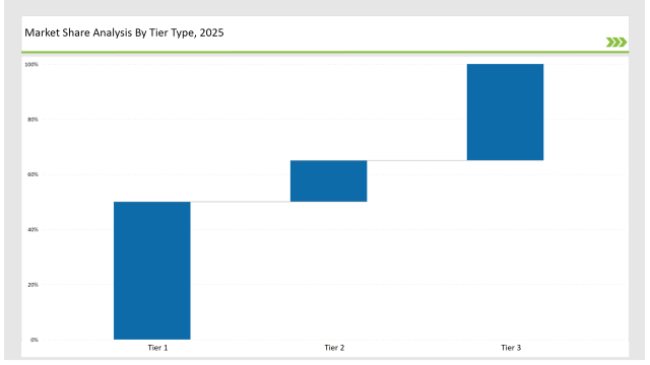
| Tier Type | Tier 1 |
|---|---|
| Example of Key Players | Weber, George Foreman, Cuisinart |
| Market Share (%) | 50% |
| Tier Type | Tier 2 |
|---|---|
| Example of Key Players | T-fal, Ninja Foodi |
| Market Share (%) | 15% |
| Tier Type | Tier 3 |
|---|---|
| Example of Key Players | Philips, Char-Broil, Breville, Hamilton Beach, Zojirushi |
| Market Share (%) | 35% |
Key Brand Initiatives
| Brand | Key Focus Areas |
|---|---|
| Weber | High-performance smart grills & app integration |
| George Foreman | Smokeless & non-stick indoor electric grills |
| Cuisinart | Multifunctional grills with interchangeable plates |
| Ninja Foodi | Smart cooking sensors & automatic heat adjustments |
| Emerging Brands | AI-powered cooking optimization & portable designs |
Recommendations for Brands
- Invest in Smart Cooking Technology: The future belongs to AI-driven temperature control, control through the app, and intelligent cooking modes.
- Improving Sustainability Projects: Energy-saving heating elements, recyclable grill plates, and eco-friendly material usage.
- Increasing Multi-Functional Product Lines: Consumer demand for multiple functions in grills, like griddles, air fryers, and rotisserie models.
- Creating Compact and Portable Models: Space-saving travel grills to suit urbanites and outdoor users.
- Strengthening Digital & Direct-to-Consumer Channels: Subscription-based grill accessories and recipes will help enhance consumer loyalty.
Future Roadmap
The electric grills market is expected to continue its growth trajectory, driven by technological advancements, consumer demand for energy-efficient cooking, and the integration of smart home. Companies focusing on AI-driven cooking, portable designs, and sustainable materials will lead the industry. The future of electric grills is smart, efficient, and tailored for modern lifestyles.
Frequently Asked Questions
Which companies hold the largest market share in the electric grills industry?
Leading players such as Weber, George Foreman, and Cuisinart collectively hold around 50% of the market.
What is the market share of independent and regional electric grill brands?
Independent brands contribute approximately 15% of the market, specializing in portable and high-end culinary grills.
How much market share do smart electric grills hold?
AI-integrated, app-controlled grills hold about 10% of the market, with growth expected in the coming years.
What percentage of the market is controlled by e-commerce and direct-to-consumer sales?
Online sales represent around 55% of the market, as digital shopping and subscription-based grilling solutions expand.
How is market concentration assessed in the electric grills industry for 2025?
High for companies controlling 50%+, medium for 30-50%, and low for those under 30%.
Preview the report firsthand - request a free sample
Get SampleGet the brochure for pricing and purchase details.
Get PDFTable of Content
- Executive Summary
- Market Overview
- Competitive Analysis Outlook for 2025
- Segment Analysis
- Who Shaped the Year
- Key Highlights from the Forecast
- Tier-Wise Brand Classification
- Key Brand Initiatives
- Recommendations for Brands
- Future Roadmap
- FAQs


