

- Industry Size (2026)
- USD 1920.0 Mn
- Forecast (2036)
- USD 6811.8 Mn
- CAGR (2026 to 2036)
- 13.5%
Endpoint-to-Endpoint Traceability Solutions for Recycled Packaging Market Forecast and Outlook 2026 to 2036
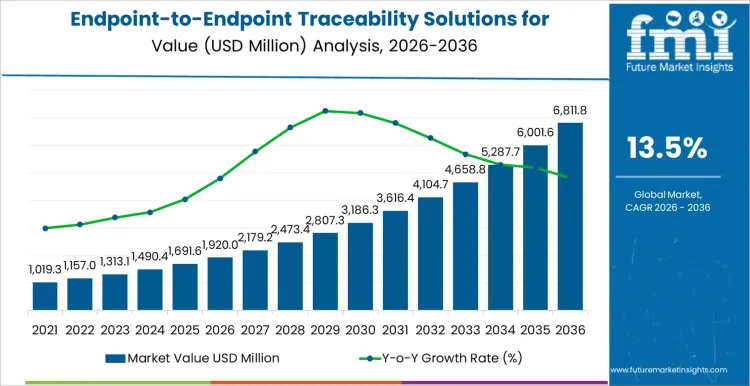
The endpoint-to-endpoint traceability solutions for recycled packaging market is projected to reach USD 1,920.0 million in 2026 and reach USD 6,811.8 million by 2036, at a CAGR of 13.5%, reflecting rising compliance pressure and growing scrutiny of recycled content claims. Packaging manufacturers, brand owners, and recyclers increasingly require digital systems that document material flows from waste collection through recycling, compounding, and final packaging conversion. Traceability solutions enable verification of recycled content percentages, support mass-balance accounting, and generate auditable records aligned with extended producer responsibility frameworks and recycled content mandates across food, beverage, and personal care packaging.
Growth is further supported by complexity within recycled material supply chains, where multiple processing stages increase variability and risk of misreporting. Endpoint-to-endpoint traceability platforms integrate with enterprise resource planning, quality systems, and certification frameworks to provide continuous visibility into material origin, processing history, and custody transfers. Retailer transparency requirements and third-party certification audits strengthen demand for secure, tamper-resistant data capture using serialization, blockchain, and cloud-based architectures. Adoption is driven less by packaging volume expansion and more by governance needs, as traceability becomes a foundational requirement for compliance, brand credibility, and risk management in recycled packaging systems.
Quick Stats for Endpoint-to-Endpoint Traceability Solutions for Recycled Packaging Market
- Endpoint-to-Endpoint Traceability Solutions for Recycled Packaging Market Value (2026): USD 1,920.0 million
- Endpoint-to-Endpoint Traceability Solutions for Recycled Packaging Market Forecast Value (2036): USD 6,811.8 million
- Endpoint-to-Endpoint Traceability Solutions for Recycled Packaging Market Forecast CAGR (2026-2036): 13.5%
- Leading Solution Type by Demand Share: Full lifecycle traceability platforms
- Fastest-Growing Countries: India, China, USA, Germany, Japan
- Top Players in Global Demand: Circularise, Sphera, SAP, IBM, AntChain
Endpoint-to-Endpoint Traceability Solutions for Recycled Packaging Market Key Takeaways
| Metric | Value |
|---|---|
| Market Value (2026) | USD 1,920.0 million |
| Market Forecast Value (2036) | USD 6,811.8 million |
| Forecast CAGR (2026-2036) | 13.5% |
Why is the Demand for Endpoint to Endpoint Traceability Solutions for Recycled Packaging Growing?
Manufacturers and brand owners operating with recycled packaging increasingly require endpoint‑to‑endpoint traceability solutions to document the journey of recycled content from waste collection through conversion and final packaging. Recycled PET, polyolefins, and engineered resins often pass through multiple sorting, cleaning, and compounding stages that introduce variability in material quality and composition. Traceability solutions capture digital records of feedstock source, processing conditions, and batch transformations, enabling converters and brand customers to verify that recycled content claims are accurate and auditable. In food, beverage, and personal care segments where safety and compliance are critical, packaging engineers use this information to support risk assessments and confirm that recycled streams meet barrier, mechanical, and contamination control requirements before adoption on high‑speed production lines.
Regulatory frameworks in several regions mandate documented recycled content percentages or extended producer responsibility reporting, prompting procurement of traceability systems that integrate with enterprise resource planning and supply chain platforms. Retailers and certification bodies increasingly request proof of chain‑of‑custody to validate sustainability claims on labels and in corporate reporting. Digital solutions using blockchain, serialization, and secure data capture help stakeholders track performance metrics and respond to audits or customer inquiries with confidence. Packaging quality teams use traceability data to pinpoint processing deviations and improve consistency in PCR output, supporting broader adoption of recycled packaging across product portfolios.
How Does the Endpoint-to-Endpoint Traceability Solutions for Recycled Packaging Market Evolve Across the Value Chain?
Endpoint-to-endpoint traceability solutions for recycled packaging are becoming a foundational layer in the circular packaging ecosystem. These solutions are designed to follow recycled materials from waste collection and sorting, through recycling and compounding, and into finished packaging formats. Growth is being shaped by tightening regulatory scrutiny, brand sustainability commitments, cross-border trade requirements, and increasing pressure to substantiate recycled content claims with verifiable data rather than declarations.
Why Do Full Lifecycle Traceability Platforms Lead the Market by Solution Type?
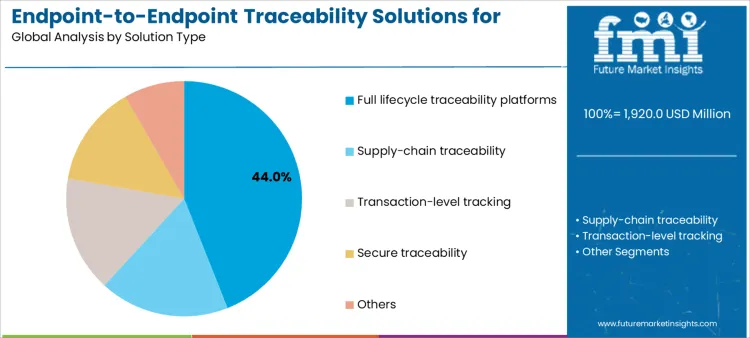
Full lifecycle traceability platforms hold 44.0%, reflecting their ability to integrate data across multiple stages and stakeholders. These platforms provide continuous material visibility, enabling companies to link waste inputs with recycled outputs and final packaging applications. They are particularly valued by large brand owners and converters that manage complex supplier networks and require consolidated reporting for audits and disclosures. Other solution types, including supply-chain traceability tools, transaction-level tracking systems, and secure traceability solutions, are typically deployed to address specific gaps. These tools support volume balancing, custody transfer validation, and fraud mitigation, often complementing broader lifecycle platforms rather than replacing them.
Key Points
- Full lifecycle platforms address regulatory, audit, and reporting needs simultaneously.
- Modular tools support specific functions such as batch tracking or fraud prevention.
- Integration capability is a key differentiator among solution providers.
How Does End Use Influence Adoption of Traceability Solutions for Recycled Packaging?
.webp "Endpoint To Endpoint Traceability Solutions For Recycled Packaging Market Analysis By End Use (2)")
Packaging value chains represent 45.0%, driven by recyclers, resin producers, compounders, and packaging manufacturers that must document recycled content flows with precision. These users rely on traceability systems to align upstream material inputs with downstream packaging outputs, particularly in food, personal care, and regulated consumer goods. Brand transparency initiatives, export packaging, high-trust packaging applications, and emerging traceability use cases reflect growing downstream adoption. Brand owners increasingly require traceability not only for compliance, but also to support sustainability reporting, product labeling, and stakeholder communication across multiple regions.
Key Points
- Core packaging value chains remain the primary adopters.
- Brand-driven transparency expands demand beyond converters and recyclers.
- Export and cross-border packaging increase the need for standardized traceability.
What are the Key Dynamics in the Endpoint to Endpoint Traceability Solutions for Recycled Packaging Market?
Demand in the endpoint‑to‑endpoint traceability solutions for recycled packaging market is driven by brand and regulatory expectations for verifiable recycled content claims and transparent material journeys. As consumer packaged goods companies and packaging converters adopt higher percentages of post‑consumer recycled (PCR) polymers and fibers, secure traceability systems are needed to capture, validate, and report material history from collection through final packaging production. Value in this market arises from solution accuracy, integration with existing enterprise systems, and ability to generate auditable documentation that supports sustainability reporting and compliance with recycled content mandates.
How do brand sustainability commitments and compliance requirements influence solution adoption?
Manufacturers adopting recycled packaging face expectations to demonstrate that materials labeled as containing PCR content are authentic and free of misrepresentation. Traceability solutions capture data at each supply chain stage - from recovery and sorting of feedstock, through reprocessing and compounding, to conversion and finished packaging - enabling brands to substantiate on‑pack claims with granular metadata. In regulated jurisdictions with recycled content targets or extended producer responsibility frameworks, endpoint‑to‑endpoint traceability supports submission of verified material balances required for compliance. Retailers assess packaging sustainability performance as part of broader environmental, social, and governance reporting, making traceable documentation an asset for differentiated positioning. Digital tools that link material identifiers, batch records, and certification data allow rapid response to audits and reduce risk associated with inaccurate claims.
How do data integration challenges and supply chain variability affect market scale?
Market scaling is influenced by the complexity of integrating traceability solutions across diverse actors in the packaging value chain and by variability in supply streams. Collection and recycling segments operate with disparate systems for data capture, often requiring harmonization of identifiers and reporting formats before reliable tracing can occur. Packaging converters and brand owners may operate legacy enterprise resource planning and quality management systems that demand custom interfaces for seamless traceability deployment. Technical challenges arise when tracking mixed material flows, such as batch blending or co‑extruded structures, where proportional attribution of PCR content must be computed with precision. Cost and resource requirements associated with onboarding suppliers and recyclers into traceability systems influence adoption among small and mid‑sized firms. Regional differences in data standards, privacy rules, and verification protocols create hurdles for global traceability frameworks, affecting how quickly solutions are adopted across multinational packaging operations.
How Is Demand for the Endpoint-to-Endpoint Traceability Solutions for Recycled Packaging Market Evolving Globally?
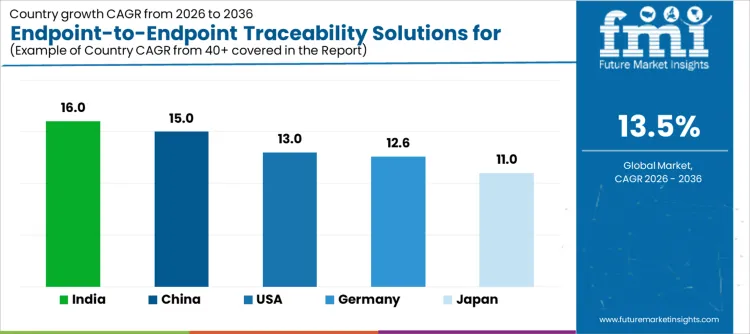
Global demand for endpoint-to-endpoint traceability solutions for recycled packaging is increasing as industries face rising pressure to verify recycled content and ensure transparency across the supply chain. Growth reflects regulatory mandates, consumer demand for sustainability, and the need for reliable tracking of recycled materials from collection to final product packaging. Traceability solutions are essential for maintaining compliance with regulations, reducing fraud, and enabling circular economy models. India records 16.0% CAGR, China records 15.0% CAGR, USA records 13.0% CAGR, Germany records 12.6% CAGR, and Japan records 11.0% CAGR. Adoption is driven by the growing focus on transparency, compliance, and consumer trust.
| Country | CAGR (%) |
|---|---|
| India | 16.0% |
| China | 15.0% |
| USA | 13.0% |
| Germany | 12.6% |
| Japan | 11.0% |
What is driving growth of endpoint-to-endpoint traceability solutions demand for recycled packaging in India?
Demand for endpoint-to-endpoint traceability solutions for recycled packaging in India is expanding rapidly as the government and industries work to improve plastic waste management and sustainability efforts. Growth at 16.0% CAGR reflects increasing regulatory pressure for tracking and verifying recycled content in packaging. As India adopts more circular economy practices, businesses need traceability systems to track recycled material from collection through processing to final product packaging. The demand is further driven by consumer demand for eco-friendly packaging and the need for transparency in the recycling process to build trust and ensure compliance.
- Government regulations on plastic waste management
- Rising consumer demand for transparency in recycled packaging
- Adoption of circular economy practices
- Need for compliance with packaging sustainability mandates
Why is China seeing expansion in endpoint-to-endpoint traceability solutions adoption for recycled packaging?
Endpoint-to-endpoint traceability solutions demand in China is rising as the country pushes forward with sustainability initiatives and regulations aimed at reducing plastic waste. Growth at 15.0% CAGR reflects China's increasing need for tracking recycled content in packaging as the market moves towards more sustainable practices. Regulations on plastic waste reduction and recycling targets are driving businesses to adopt traceability systems to comply with national guidelines. The demand for transparent and verifiable recycling practices is also being fueled by both domestic consumer preferences for eco-friendly products and export markets requiring proof of recycled content.
- Stringent national regulations on plastic waste and recycling
- Growing demand for transparent recycling practices
- Consumer preference for sustainable, eco-friendly products
- Export market requirements for certified recycled content
What factors are shaping endpoint-to-endpoint traceability solutions sales for recycled packaging in the USA?
Sales of endpoint-to-endpoint traceability solutions for recycled packaging in the USA are increasing as industries respond to regulatory pressures and the growing demand for transparency in the recycling process. Growth at 13.0% CAGR reflects the need for accurate tracking of recycled materials in food, beverage, and consumer product packaging. Regulatory pressure to provide documentation of recycled content and the increasing importance of sustainability in corporate strategies are driving adoption. Additionally, consumer demand for sustainable products with verified eco-friendly packaging is pushing brands to implement traceability systems to ensure transparency and build consumer trust.
- Regulatory pressure to provide proof of recycled content
- Consumer demand for sustainable and transparent packaging
- Growth of corporate sustainability initiatives
- Increased focus on waste reduction and recycling compliance
How is Germany supporting growth of endpoint-to-endpoint traceability solutions demand for recycled packaging?
Endpoint-to-endpoint traceability solutions for recycled packaging are gaining traction in Germany due to the country's strong commitment to circular economy principles and sustainability regulations. Growth at 12.6% CAGR reflects Germany's regulatory environment, which requires clear documentation of recycled content in packaging to meet both EU and local sustainability goals. As businesses seek to comply with these regulations and improve their recycling efforts, traceability solutions are becoming essential for tracking materials throughout the supply chain. Consumer demand for sustainable and verifiable packaging solutions also boosts adoption, as Germany leads in eco-conscious packaging innovations.
- Strong regulatory framework for recycled content tracking
- Focus on circular economy and sustainability practices
- Demand for certified and transparent packaging
- Consumer preference for verified eco-friendly products
What is driving expansion of endpoint-to-endpoint traceability solutions demand for recycled packaging in Japan?
Demand for endpoint-to-endpoint traceability solutions for recycled packaging in Japan is rising as the country’s manufacturers and policymakers work to meet stringent sustainability targets. Growth at 11.0% CAGR reflects Japan's growing regulatory requirements around recycling and the need for comprehensive tracking of recycled materials in packaging. As Japan prioritizes reducing plastic waste and increasing material recovery rates, businesses must implement traceability solutions to ensure the integrity and transparency of their recycling efforts. The demand is also fueled by consumer expectations for eco-friendly and verifiable packaging that aligns with national environmental policies.
- Strong government regulations on recycling and waste reduction
- Need for transparency in recycled content tracking
- Rising consumer demand for eco-friendly products
- Government-driven circular economy initiatives
What is the competitive landscape of demand for endpoint-to-endpoint traceability solutions for recycled packaging market globally?
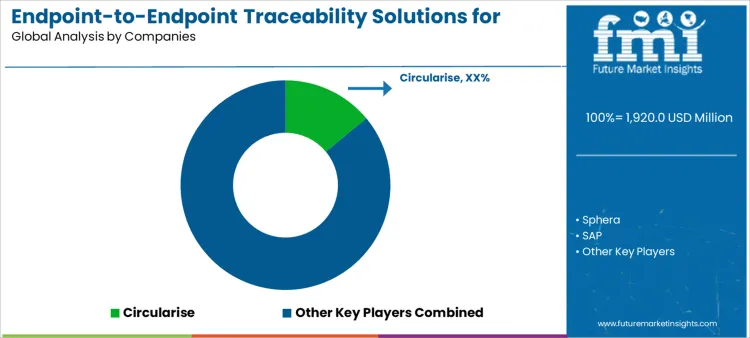
As demand for recycled packaging grows, the need for reliable traceability systems to verify recycled content across the supply chain is intensifying. Brands and recyclers assess software performance, data integration capabilities, scalability, and security in tracking materials from collection through to packaging manufacturing. Buyer evaluation includes ease of use, real-time monitoring, regulatory compliance features, and compatibility with existing enterprise systems. Procurement behavior reflects the growing reliance on blockchain-based solutions for transparency, especially within the packaging sector, and preference for solutions that offer reliable audit trails. Trend in the market reflects increasing adoption of digital traceability systems, especially in the wake of sustainability goals and regulations requiring documented evidence of recycled content.
Circularise leads competitive positioning with its blockchain-based traceability platform that ensures transparency and secure information flow for recycled packaging verification. Sphera competes by providing comprehensive sustainability solutions, including detailed traceability systems that integrate recycled content claims with broader environmental footprint analysis. SAP supports demand by offering enterprise-grade traceability solutions with integration capabilities across packaging supply chains, enabling accurate reporting on recycled material use. IBM stands out by leveraging its blockchain expertise to offer traceability solutions that enhance supply chain transparency and reduce fraud risks in recycled packaging claims. AntChain, Alibaba Cloud, NEC, and Fujitsu all contribute to the market with innovative, scalable traceability systems that cater to specific regional and industry needs, with emphasis on data integrity and global supply chain visibility. Competitive differentiation centers on integration flexibility, scalability, data accuracy, regulatory compliance, and the ability to support circular economy initiatives across multiple industries.
Key Players in the Endpoint-to-Endpoint Traceability Solutions for Recycled Packaging Market
- Circularise
- Sphera
- SAP
- IBM
- AntChain
- Alibaba Cloud
- NEC
- Fujitsu
- Others
Scope of the Report
| Items | Values |
|---|---|
| Quantitative Units | USD million |
| Solution Type | Full lifecycle traceability platforms; Supply-chain traceability; Transaction-level tracking; Secure traceability; Others |
| End-Use | Packaging value chains; Brand transparency; Export packaging; High-trust packaging; Emerging traceability |
| Regions Covered | Asia Pacific, Europe, North America, Latin America, Middle East & Africa |
| Countries Covered | India, China, USA, Germany, Japan, and 40+ countries |
| Key Companies Profiled | Circularise; Sphera; SAP; IBM; AntChain; Alibaba Cloud; NEC; Fujitsu; Others |
| Additional Attributes | Dollar sales by solution type, end-use, and industry application; efficiency in supporting full lifecycle and supply-chain traceability for recycled packaging systems; role of transaction-level tracking in enhancing brand transparency and consumer trust; compliance with global packaging and recycling standards; procurement trends influenced by regulatory adoption of traceability protocols and collaboration with tech giants for secure data-sharing platforms. |
Endpoint-to-Endpoint Traceability Solutions for Recycled Packaging Market by Segment
Solution Type:
- Full lifecycle traceability platforms
- Supply-chain traceability
- Transaction-level tracking
- Secure traceability
- Others
End-Use:
- Packaging value chains
- Brand transparency
- Export packaging
- High-trust packaging
- Emerging traceability
Region:
- Asia Pacific
- China
- Japan
- South Korea
- India
- Australia & New Zealand
- ASEAN
- Rest of Asia Pacific
- Europe
- Germany
- United Kingdom
- France
- Italy
- Spain
- Nordic
- BENELUX
- Rest of Europe
- North America
- United States
- Canada
- Mexico
- Latin America
- Brazil
- Chile
- Rest of Latin America
- Middle East & Africa
- Kingdom of Saudi Arabia
- Other GCC Countries
- Turkey
- South Africa
- Other African Union
- Rest of Middle East & Africa
Bibliography
- International Organization for Standardization. (2023). ISO 22095: Plastics—Recycled plastics—Traceability and assessment of conformity and recycled content. International Organization for Standardization.
- International Organization for Standardization. (2024). ISO 14044: Environmental management—Life cycle assessment—Requirements and guidelines (data traceability and transparency). International Organization for Standardization.
- Organisation for Economic Co-operation and Development. (2023). Transparency, traceability, and digital tools in circular economy supply chains. OECD Publishing.
Frequently Asked Questions
How big is the endpoint-to-endpoint traceability solutions for recycled packaging market in 2026?
The global endpoint-to-endpoint traceability solutions for recycled packaging market is estimated to be valued at USD 1,920.0 million in 2026.
What will be the size of endpoint-to-endpoint traceability solutions for recycled packaging market in 2036?
The market size for the endpoint-to-endpoint traceability solutions for recycled packaging market is projected to reach USD 6,811.8 million by 2036.
How much will be the endpoint-to-endpoint traceability solutions for recycled packaging market growth between 2026 and 2036?
The endpoint-to-endpoint traceability solutions for recycled packaging market is expected to grow at a 13.5% CAGR between 2026 and 2036.
What are the key product types in the endpoint-to-endpoint traceability solutions for recycled packaging market?
The key product types in endpoint-to-endpoint traceability solutions for recycled packaging market are full lifecycle traceability platforms, supply-chain traceability, transaction-level tracking, secure traceability and others.
Which end-use segment to contribute significant share in the endpoint-to-endpoint traceability solutions for recycled packaging market in 2026?
In terms of end-use, packaging value chains segment to command 45.0% share in the endpoint-to-endpoint traceability solutions for recycled packaging market in 2026.
Preview the report firsthand - request a free sample
Get SampleGet the brochure for pricing and purchase details.
Get PDFTable of Content
- Executive Summary
- Global Market Outlook
- Demand-side Trends
- Supply-side Trends
- Technology Roadmap Analysis
- Analysis and Recommendations
- Market Overview
- Market Coverage / Taxonomy
- Market Definition / Scope / Limitations
- Market Background
- Market Dynamics
- Drivers
- Restraints
- Opportunity
- Trends
- Scenario Forecast
- Demand in Optimistic Scenario
- Demand in Likely Scenario
- Demand in Conservative Scenario
- Opportunity Map Analysis
- Product Life Cycle Analysis
- Supply Chain Analysis
- Investment Feasibility Matrix
- Value Chain Analysis
- PESTLE and Porter’s Analysis
- Regulatory Landscape
- Regional Parent Market Outlook
- Production and Consumption Statistics
- Import and Export Statistics
- Market Dynamics
- Global Market Analysis 2021 to 2025 and Forecast, 2026 to 2036
- Historical Market Size Value (USD Million) Analysis, 2021 to 2025
- Current and Future Market Size Value (USD Million) Projections, 2026 to 2036
- Y-o-Y Growth Trend Analysis
- Absolute $ Opportunity Analysis
- Global Market Pricing Analysis 2021 to 2025 and Forecast 2026 to 2036
- Global Market Analysis 2021 to 2025 and Forecast 2026 to 2036, By Solution Type
- Introduction / Key Findings
- Historical Market Size Value (USD Million) Analysis By Solution Type , 2021 to 2025
- Current and Future Market Size Value (USD Million) Analysis and Forecast By Solution Type , 2026 to 2036
- Full lifecycle traceability platforms
- Supply-chain traceability
- Transaction-level tracking
- Secure traceability
- Others
- Full lifecycle traceability platforms
- Y-o-Y Growth Trend Analysis By Solution Type , 2021 to 2025
- Absolute $ Opportunity Analysis By Solution Type , 2026 to 2036
- Global Market Analysis 2021 to 2025 and Forecast 2026 to 2036, By End-Use
- Introduction / Key Findings
- Historical Market Size Value (USD Million) Analysis By End-Use, 2021 to 2025
- Current and Future Market Size Value (USD Million) Analysis and Forecast By End-Use, 2026 to 2036
- Packaging value chains
- Brand transparency
- Export packaging
- High-trust packaging
- Emerging traceability
- Packaging value chains
- Y-o-Y Growth Trend Analysis By End-Use, 2021 to 2025
- Absolute $ Opportunity Analysis By End-Use, 2026 to 2036
- Global Market Analysis 2021 to 2025 and Forecast 2026 to 2036, By Region
- Introduction
- Historical Market Size Value (USD Million) Analysis By Region, 2021 to 2025
- Current Market Size Value (USD Million) Analysis and Forecast By Region, 2026 to 2036
- North America
- Latin America
- Western Europe
- Eastern Europe
- East Asia
- South Asia and Pacific
- Middle East & Africa
- Market Attractiveness Analysis By Region
- North America Market Analysis 2021 to 2025 and Forecast 2026 to 2036, By Country
- Historical Market Size Value (USD Million) Trend Analysis By Market Taxonomy, 2021 to 2025
- Market Size Value (USD Million) Forecast By Market Taxonomy, 2026 to 2036
- By Country
- USA
- Canada
- Mexico
- By Solution Type
- By End-Use
- By Country
- Market Attractiveness Analysis
- By Country
- By Solution Type
- By End-Use
- Key Takeaways
- Latin America Market Analysis 2021 to 2025 and Forecast 2026 to 2036, By Country
- Historical Market Size Value (USD Million) Trend Analysis By Market Taxonomy, 2021 to 2025
- Market Size Value (USD Million) Forecast By Market Taxonomy, 2026 to 2036
- By Country
- Brazil
- Chile
- Rest of Latin America
- By Solution Type
- By End-Use
- By Country
- Market Attractiveness Analysis
- By Country
- By Solution Type
- By End-Use
- Key Takeaways
- Western Europe Market Analysis 2021 to 2025 and Forecast 2026 to 2036, By Country
- Historical Market Size Value (USD Million) Trend Analysis By Market Taxonomy, 2021 to 2025
- Market Size Value (USD Million) Forecast By Market Taxonomy, 2026 to 2036
- By Country
- Germany
- UK
- Italy
- Spain
- France
- Nordic
- BENELUX
- Rest of Western Europe
- By Solution Type
- By End-Use
- By Country
- Market Attractiveness Analysis
- By Country
- By Solution Type
- By End-Use
- Key Takeaways
- Eastern Europe Market Analysis 2021 to 2025 and Forecast 2026 to 2036, By Country
- Historical Market Size Value (USD Million) Trend Analysis By Market Taxonomy, 2021 to 2025
- Market Size Value (USD Million) Forecast By Market Taxonomy, 2026 to 2036
- By Country
- Russia
- Poland
- Hungary
- Balkan & Baltic
- Rest of Eastern Europe
- By Solution Type
- By End-Use
- By Country
- Market Attractiveness Analysis
- By Country
- By Solution Type
- By End-Use
- Key Takeaways
- East Asia Market Analysis 2021 to 2025 and Forecast 2026 to 2036, By Country
- Historical Market Size Value (USD Million) Trend Analysis By Market Taxonomy, 2021 to 2025
- Market Size Value (USD Million) Forecast By Market Taxonomy, 2026 to 2036
- By Country
- China
- Japan
- South Korea
- By Solution Type
- By End-Use
- By Country
- Market Attractiveness Analysis
- By Country
- By Solution Type
- By End-Use
- Key Takeaways
- South Asia and Pacific Market Analysis 2021 to 2025 and Forecast 2026 to 2036, By Country
- Historical Market Size Value (USD Million) Trend Analysis By Market Taxonomy, 2021 to 2025
- Market Size Value (USD Million) Forecast By Market Taxonomy, 2026 to 2036
- By Country
- India
- ASEAN
- Australia & New Zealand
- Rest of South Asia and Pacific
- By Solution Type
- By End-Use
- By Country
- Market Attractiveness Analysis
- By Country
- By Solution Type
- By End-Use
- Key Takeaways
- Middle East & Africa Market Analysis 2021 to 2025 and Forecast 2026 to 2036, By Country
- Historical Market Size Value (USD Million) Trend Analysis By Market Taxonomy, 2021 to 2025
- Market Size Value (USD Million) Forecast By Market Taxonomy, 2026 to 2036
- By Country
- Kingdom of Saudi Arabia
- Other GCC Countries
- Turkiye
- South Africa
- Other African Union
- Rest of Middle East & Africa
- By Solution Type
- By End-Use
- By Country
- Market Attractiveness Analysis
- By Country
- By Solution Type
- By End-Use
- Key Takeaways
- Key Countries Market Analysis
- USA
- Pricing Analysis
- Market Share Analysis, 2025
- By Solution Type
- By End-Use
- Canada
- Pricing Analysis
- Market Share Analysis, 2025
- By Solution Type
- By End-Use
- Mexico
- Pricing Analysis
- Market Share Analysis, 2025
- By Solution Type
- By End-Use
- Brazil
- Pricing Analysis
- Market Share Analysis, 2025
- By Solution Type
- By End-Use
- Chile
- Pricing Analysis
- Market Share Analysis, 2025
- By Solution Type
- By End-Use
- Germany
- Pricing Analysis
- Market Share Analysis, 2025
- By Solution Type
- By End-Use
- UK
- Pricing Analysis
- Market Share Analysis, 2025
- By Solution Type
- By End-Use
- Italy
- Pricing Analysis
- Market Share Analysis, 2025
- By Solution Type
- By End-Use
- Spain
- Pricing Analysis
- Market Share Analysis, 2025
- By Solution Type
- By End-Use
- France
- Pricing Analysis
- Market Share Analysis, 2025
- By Solution Type
- By End-Use
- India
- Pricing Analysis
- Market Share Analysis, 2025
- By Solution Type
- By End-Use
- ASEAN
- Pricing Analysis
- Market Share Analysis, 2025
- By Solution Type
- By End-Use
- Australia & New Zealand
- Pricing Analysis
- Market Share Analysis, 2025
- By Solution Type
- By End-Use
- China
- Pricing Analysis
- Market Share Analysis, 2025
- By Solution Type
- By End-Use
- Japan
- Pricing Analysis
- Market Share Analysis, 2025
- By Solution Type
- By End-Use
- South Korea
- Pricing Analysis
- Market Share Analysis, 2025
- By Solution Type
- By End-Use
- Russia
- Pricing Analysis
- Market Share Analysis, 2025
- By Solution Type
- By End-Use
- Poland
- Pricing Analysis
- Market Share Analysis, 2025
- By Solution Type
- By End-Use
- Hungary
- Pricing Analysis
- Market Share Analysis, 2025
- By Solution Type
- By End-Use
- Kingdom of Saudi Arabia
- Pricing Analysis
- Market Share Analysis, 2025
- By Solution Type
- By End-Use
- Turkiye
- Pricing Analysis
- Market Share Analysis, 2025
- By Solution Type
- By End-Use
- South Africa
- Pricing Analysis
- Market Share Analysis, 2025
- By Solution Type
- By End-Use
- USA
- Market Structure Analysis
- Competition Dashboard
- Competition Benchmarking
- Market Share Analysis of Top Players
- By Regional
- By Solution Type
- By End-Use
- Competition Analysis
- Competition Deep Dive
- Circularise
- Overview
- Product Portfolio
- Profitability by Market Segments (Product/Age /Sales Channel/Region)
- Sales Footprint
- Strategy Overview
- Marketing Strategy
- Product Strategy
- Channel Strategy
- Sphera
- SAP
- IBM
- AntChain
- Alibaba Cloud
- NEC
- Fujitsu
- Others
- Circularise
- Competition Deep Dive
- Assumptions & Acronyms Used
- Research Methodology


