

- Industry Size (2026)
- USD 1.1 Bn
- Forecast (2036)
- USD 2.5 Bn
- CAGR (2026 to 2036)
- 8.5%
Environmental Allergy Panels Market Forecast and Outlook 2026 to 2036
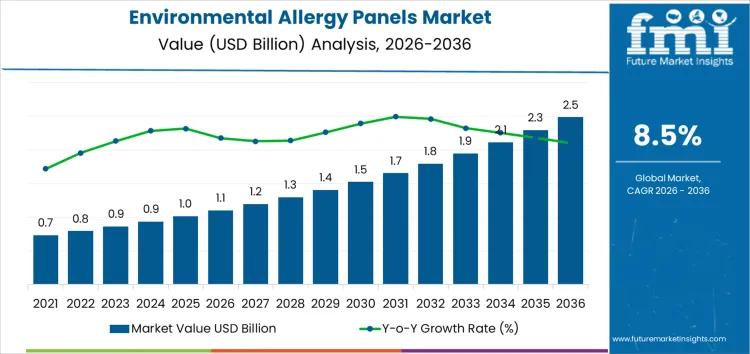
The environmental allergy panels market is expected to grow steadily from 2026 to 2036. In 2026, the market value is projected to be USD 1.1 billion, with steady growth anticipated throughout the forecast period, reaching USD 2.5 billion by 2036. The compound annual growth rate (CAGR) for the market is forecasted at 8.5%, driven by the increasing prevalence of environmental allergies and the growing demand for diagnostic tools to identify allergenic triggers. Environmental allergy panels, which test for allergens like pollen, dust mites, mold, and pet dander, are crucial in helping individuals manage their allergies and improve quality of life. These diagnostic tools are becoming essential in both clinical and home settings, as patients increasingly seek personalized treatments for their allergies.
The growth of the market is supported by increasing awareness of environmental allergies and the rising demand for personalized healthcare solutions. As the number of individuals suffering from allergic conditions continues to rise, particularly in urban areas with higher pollution levels, the demand for effective diagnostic tools such as environmental allergy panels will grow. Additionally, technological advancements in allergy testing and the increasing adoption of home-testing kits will further contribute to market growth. Over the forecast period, the environmental allergy panels market is expected to experience continued expansion driven by these factors.
Quick Stats of the Environmental Allergy Panels Market
- Environmental Allergy Panels Market Value (2026): USD 1.1 billion
- Environmental Allergy Panels Market Forecast Value (2036): USD 2.5 billion
- Environmental Allergy Panels Market Global Forecast CAGR (2026 to 2036): 8.5%
- Environmental Allergy Panels Market Leading Segment: Product (In-vitro IgE panels) 60%
- Key Growth Regions in Environmental Allergy Panels Market: India
- Top Players in Environmental Allergy Panels Market: Thermo Fisher, Siemens Healthineers, Euroimmun, Bio-Rad, Omega Diagnostics
What is the Growth Forecast for the Environmental Allergy Panels Market through 2036?
The growth forecast for the environmental allergy panels market shows a steady upward trend, with a projected CAGR of 8.5%. Starting at USD 1.1 billion in 2026, the market will gradually increase, reaching USD 1.2 billion in 2027, USD 1.3 billion in 2028, and USD 1.4 billion in 2029. By 2030, the market value is projected to rise to USD 1.5 billion, continuing its growth trajectory throughout the forecast period. This steady increase reflects the growing demand for allergy testing services and the increasing adoption of environmental allergy panels in clinical and home environments.
From 2031 to 2036, the market will continue to experience growth, reaching USD 1.6 billion in 2031, USD 1.7 billion in 2032, and USD 1.9 billion in 2033. By 2034, the market is projected to reach USD 2 billion, followed by USD 2.2 billion in 2035 and USD 2.5 billion by 2036. The 10-year growth comparison shows consistent growth, reflecting the increasing adoption of environmental allergy panels and the rising global demand for allergy testing, driven by higher awareness, technological improvements, and the need for personalized treatments for environmental allergies.
Environmental Allergy Panels Market Key Takeaways
| Metric | Value |
|---|---|
| Industry Sales Value (2026) | USD 1.1 billion |
| Industry Forecast Value (2036) | USD 2.5 billion |
| Industry Forecast CAGR (2026 to 2036) | 8.5% |
What Is Driving the Demand for the Environmental Allergy Panels Market Globally?
The global demand for environmental allergy panels is driven by rising prevalence of allergic diseases, increased clinical recognition of environmental triggers, and broader adoption of precision diagnostics in allergy care. Environmental allergens-including pollens, moulds, pet dander, dust mites, and airborne particulates-are major contributors to allergic rhinitis, asthma exacerbations, and related symptoms that affect quality of life and healthcare utilisation worldwide. Changes in climate patterns, urbanisation, and prolonged pollen seasons have heightened exposure to allergenic sources, increasing the incidence and severity of allergy cases in many regions.
Environmental allergy panels, which typically use multiplex immunoassays or component-resolved diagnostics to detect specific IgE responses to a comprehensive set of environmental allergens, enable clinicians to identify sensitisation profiles with greater resolution than traditional single-agent tests.
This supports more targeted management strategies such as environmental control recommendations, immunotherapy selection, and personalised treatment planning. Growth in awareness among patients and healthcare providers about the benefits of accurate allergen identification has reinforced uptake of these panels in outpatient clinics, specialist practices, and diagnostic laboratories. Expansion of healthcare infrastructure and reimbursement mechanisms in emerging markets has also supported access to advanced allergy testing that was previously limited.
Future demand for environmental allergy panels is expected to grow as diagnostic technologies advance and integration with broader respiratory health management expands. Innovations in assay platforms, automation, and data analytics will improve throughput, reduce turnaround time, and enhance sensitivity and specificity, making panels more attractive for routine clinical use. Integration of environmental allergy testing with digital health records and symptom tracking tools will enable longitudinal monitoring, helping clinicians correlate allergen exposure patterns with individual symptom trajectories and optimise care pathways.
Regulatory frameworks that recognise the clinical utility of allergy panels and support standardisation across regions will influence adoption rates, particularly where alignment with quality standards facilitates broader insurance coverage. Growth in telemedicine and remote care models may also increase use of environmental allergy panels as part of comprehensive assessment kits that can be ordered by clinicians and interpreted remotely. As awareness of the interaction between environmental exposures and chronic respiratory disease continues to rise, demand for detailed, systematic allergen profiling is expected to expand steadily across global healthcare settings.
What are the Leading Segments in the Global Environmental Allergy Panels Market?
The global environmental allergy panels market is segmented by product and application. Among products, in-vitro IgE panels dominate the market, holding 60% of the share, followed by skin prick test kits and multiplex panels. In-vitro IgE panels are preferred for their ability to provide accurate, reliable results for identifying specific environmental allergens through blood testing. On the application side, respiratory allergies lead the market, capturing 55% of the share, followed by food & environmental mix and other allergy-related applications. The high prevalence of respiratory allergies, combined with the demand for precise diagnostic tools, drives the growth of this application.
What Drives the Growth of In-Vitro IgE Panels in the Environmental Allergy Panels Market?
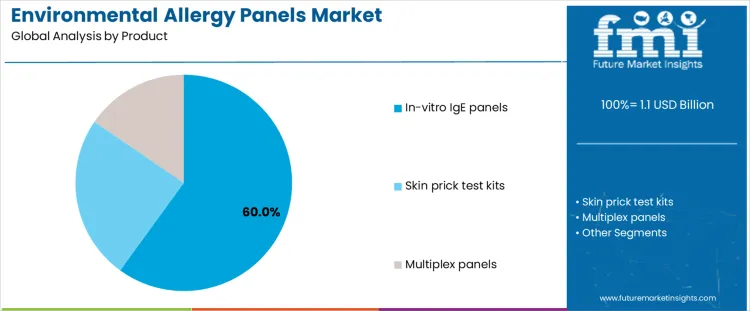
In-vitro IgE panels are the leading product type in the environmental allergy panels market, holding 60% of the share. This growth is driven by the increasing demand for accurate, reliable, and non-invasive allergy testing. In-vitro IgE panels detect specific immunoglobulin E (IgE) antibodies in the blood, which are responsible for allergic reactions, allowing healthcare providers to identify the exact allergens causing respiratory or other environmental allergies. The convenience of blood-based testing, compared to skin prick testing, further supports the popularity of in-vitro IgE panels, as they eliminate the need for skin exposure and are particularly suitable for individuals with severe allergic reactions. With the rising incidence of allergic diseases and the increasing focus on personalized medicine, in-vitro IgE panels are expected to continue to lead the market, providing essential diagnostic insights for the management of environmental allergies.
What is Driving the Demand for Respiratory Allergies in the Environmental Allergy Panels Market?
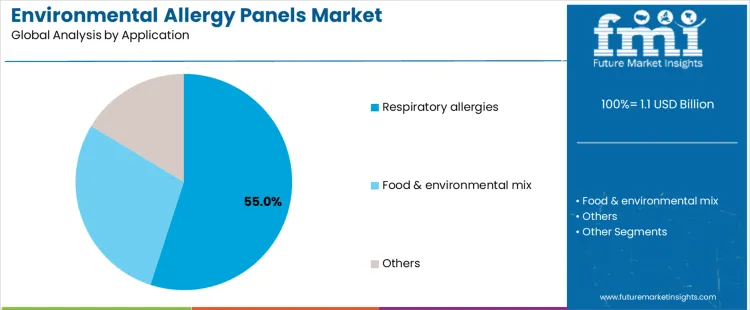
Respiratory allergies are the leading application segment in the environmental allergy panels market, capturing 55% of the share. This segment's dominance is driven by the high prevalence of respiratory conditions such as allergic rhinitis, asthma, and hay fever, which are triggered by common environmental allergens like pollen, dust mites, and mold. Respiratory allergies are among the most common forms of allergies, and with the rising exposure to environmental pollutants, their incidence has been steadily increasing. The demand for diagnostic panels that can accurately identify specific environmental triggers for respiratory symptoms is growing, as individuals seek tailored treatment options to manage their conditions. In addition, the increasing awareness of the role of allergies in respiratory diseases and the need for early detection and prevention are contributing to the demand for environmental allergy panels focused on respiratory allergies. As the burden of allergic respiratory conditions continues to rise, this application segment is expected to remain a key driver of growth in the market.
What are the Key Dynamics in the Global Environmental Allergy Panels Market?
The global environmental allergy panels market is expanding as healthcare providers and diagnostic laboratories adopt advanced testing to identify sensitization to airborne allergens such as pollen, dust mites, mold, animal dander, and insect allergens. These panels support targeted diagnosis and management of allergic rhinitis, asthma and atopic conditions. Growth reflects rising prevalence of allergic disorders, increasing awareness of allergen driven health impacts, and broader access to allergy diagnostics. Adoption spans clinical settings, hospitals, specialty practices and precision medicine initiatives where accurate profiling enables personalized treatment plans and better quality of life for patients.
What are the Key Drivers for the Global Environmental Allergy Panels Market?
A key driver is increasing prevalence of environmental allergies due to urbanization, air pollution, lifestyle changes and genetic predisposition, which boosts demand for reliable diagnostic tools. Allergy panels help clinicians differentiate among multiple triggers and make informed decisions about immunotherapy, avoidance strategies, and pharmacologic interventions. Growing patient awareness of allergy testing benefits motivates physician referrals and self initiated screening. Technological advances in multiplex immunoassays, component resolved diagnostics and rapid, high throughput platforms enhance test accuracy, convenience and clinical utility. Expansion of healthcare infrastructure and greater insurance coverage for diagnostics in some regions further support market uptake.
What are the Restraints for the Global Environmental Allergy Panels Market?
One restraint is variability in reimbursement policies and healthcare spending across regions, which can limit access to allergy panel testing where coverage is restricted or out of pocket costs are high. Some clinicians remain reliant on traditional clinical history and limited single allergen tests, slowing transition to comprehensive panel use. Interpretation of complex panel results requires specialist training, and gaps in clinician expertise can reduce confidence in test guided management. Differences in regional prevalence of allergen sources may necessitate region specific panel customization, adding complexity to product portfolios. Regulatory requirements for diagnostic approval in certain countries may lengthen time to market and increase compliance costs for panel manufacturers.
What are the Key Trends in the Global Environmental Allergy Panels Market?
A key trend is integration of environmental allergy panels with digital health tools, electronic medical records and decision support systems that help clinicians interpret results and personalize care pathways. Use of component resolved diagnostics allows identification of specific allergenic proteins rather than broad categories, supporting precision immunotherapy selection. Innovations in point of care testing and home sample collection kits expand access and reduce barriers to testing. Multiplex assays that cover a wide range of common and region specific allergens are gaining traction, enabling comprehensive screening in a single test. Collaboration between diagnostic developers, allergists and public health entities is advancing education, guideline alignment and broader implementation of standardized allergy panel protocols.
What is the Country-Wise Analysis of the Environmental Allergy Panels Market?
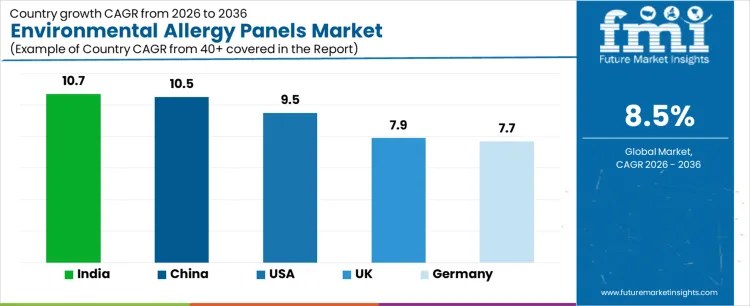
The environmental allergy panels market is expected to grow steadily, driven by increasing awareness of allergies and the growing prevalence of respiratory conditions such as asthma and rhinitis. These allergy panels, which test for common environmental allergens such as pollen, dust mites, mold, and animal dander, play a crucial role in diagnosing allergic reactions and managing allergic conditions. High-growth markets like India and China are seeing strong demand due to large populations, increasing urbanization, and rising awareness of allergy-related health issues. Developed markets such as the USA, UK, and Germany are also experiencing steady growth, supported by healthcare advancements, rising allergy awareness, and an increasing focus on improving quality of life for individuals with environmental allergies.
| Country | CAGR (2026-2036) |
|---|---|
| India | 10.7% |
| China | 10.5% |
| United States | 9.5% |
| United Kingdom | 7.9% |
| Germany | 7.7% |
What is the Growth Outlook for the Environmental Allergy Panels Market in India?
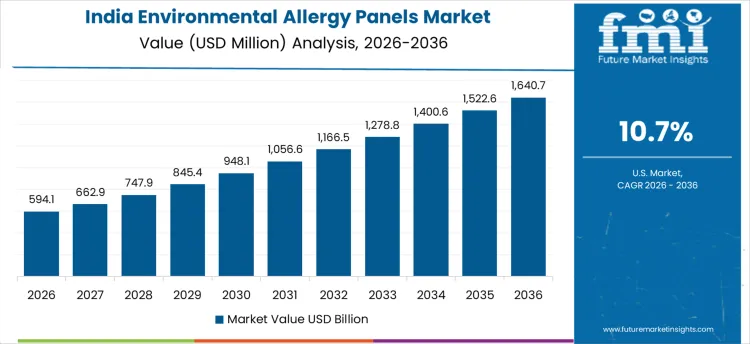
The environmental allergy panels market in India is expected to grow at the highest rate, with a projected CAGR of 10.7%. India’s rapidly growing population and increasing urbanization are key drivers of this market’s expansion. As more people in urban areas are exposed to environmental allergens such as pollution, dust, and pollen, the need for effective allergy diagnosis and management is rising. The country’s expanding healthcare sector, coupled with an increase in healthcare awareness, is contributing to the demand for environmental allergy panels. Additionally, India’s growing middle class, increasing disposable incomes, and greater access to healthcare services are making allergy testing more accessible. As more individuals seek personalized healthcare solutions, the market for allergy panels is expected to grow significantly, particularly in metropolitan cities.
What is the Market Outlook for the Environmental Allergy Panels Market in China?
The environmental allergy panels market in China is projected to grow at a steady pace, with a projected CAGR of 10.5%. China’s rapid urbanization and increasing industrialization are contributing to greater exposure to environmental allergens, which is driving the demand for allergy diagnosis tools. As China’s healthcare system continues to improve and more people seek better healthcare services, the demand for environmental allergy panels is rising. Additionally, rising pollution levels and increased awareness about the risks of environmental allergies are further propelling market growth. The growing focus on preventive healthcare and the increasing number of people seeking treatment for allergic conditions are expected to contribute to steady growth in the market for allergy panels in China. With the country's focus on expanding healthcare access and improving diagnostics, the market is poised for sustained growth.
What is the Growth Forecast for the Environmental Allergy Panels Market in the United States?
The environmental allergy panels market in the United States is expected to grow steadily, with a projected CAGR of 9.5%. The USA has one of the largest healthcare markets globally, and the increasing prevalence of environmental allergies, driven by factors such as climate change, air pollution, and urbanization, is fueling demand for allergy testing. As the healthcare industry shifts toward more personalized treatments, environmental allergy panels are becoming a key diagnostic tool in managing allergic conditions. Increased awareness of allergy-related health issues, combined with advancements in testing technologies, is contributing to the growing adoption of these panels. Additionally, the availability of allergy panels through various healthcare channels, including clinics, hospitals, and online services, is expected to support steady market growth in the U.S. as more people seek early diagnosis and treatment.
What is the Market Outlook for the Environmental Allergy Panels Market in the United Kingdom?
The environmental allergy panels market in the United Kingdom is projected to grow steadily, with a projected CAGR of 7.9%. The UK is experiencing rising levels of allergies, particularly seasonal allergies and allergic rhinitis, due to environmental factors like pollen and pollution. As the prevalence of these conditions increases, the demand for environmental allergy testing is growing. The country’s healthcare system, which has a strong focus on allergy diagnosis and management, is facilitating the adoption of environmental allergy panels. Furthermore, increasing awareness about the impact of allergies on quality of life is contributing to the growth of this market. As more people seek personalized and effective solutions for managing allergies, the demand for these diagnostic tools is expected to continue rising in the UK.
What are the Growth Prospects for the Environmental Allergy Panels Market in Germany?
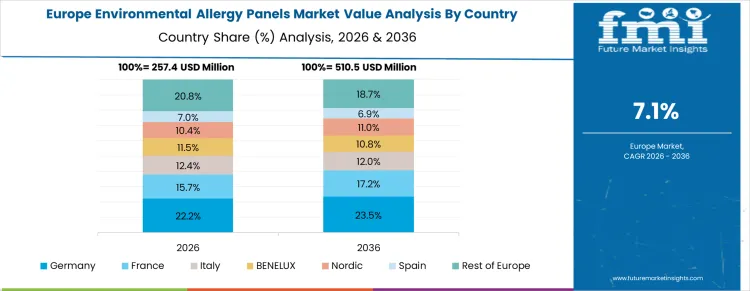
The environmental allergy panels market in Germany is expected to grow at a moderate pace, with a projected CAGR of 7.7%. Germany has one of the most developed healthcare systems in Europe, and as the prevalence of environmental allergies increases, there is a growing demand for accurate and reliable allergy testing. Factors such as rising pollution levels, urbanization, and climate change have contributed to an increase in allergies, particularly among children and the elderly. As a result, there is growing awareness of the need for environmental allergy diagnosis, making allergy panels an essential tool in managing these conditions. The German market is supported by strong healthcare infrastructure, advancements in diagnostic technologies, and increasing consumer awareness of the importance of allergy testing for improving overall health outcomes.
What is the Competitive Landscape for the Environmental Allergy Panels Market?
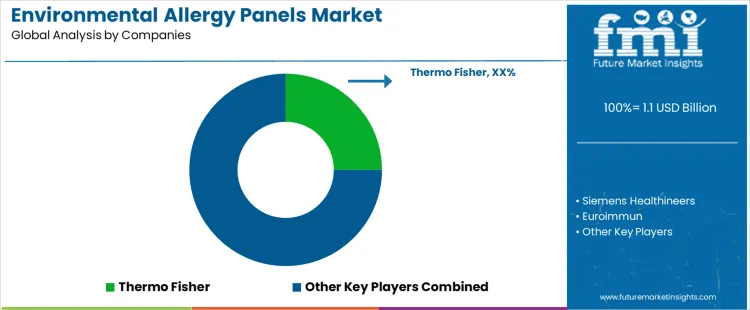
The environmental allergy panels market is expanding as demand grows for diagnostic solutions that enable quick and accurate identification of allergens, especially in individuals suffering from environmental allergies. Thermo Fisher leads the market with its innovative environmental allergy panels, offering high-quality, comprehensive diagnostic solutions that help healthcare providers identify a wide range of allergens. Their strong focus on precision, technology, and research has made them a dominant player in the market. Siemens Healthineers, Euroimmun, and Bio-Rad are key competitors, providing specialized allergy testing panels that focus on detecting allergens in both clinical and laboratory settings. Siemens Healthineers delivers advanced diagnostic platforms, while Euroimmun and Bio-Rad offer reliable allergen-specific test kits with high sensitivity.
Omega Diagnostics and Others further contribute to the competitive landscape by offering their own allergy testing solutions. Omega Diagnostics focuses on providing affordable, accurate allergy testing for environmental allergens, with products designed for both personal and clinical use. Others refers to various emerging and regional companies that offer specialized allergy testing kits for environmental allergens. These companies compete by focusing on product innovation, accuracy, speed, and the ability to deliver accessible diagnostic tools that meet the increasing demand for comprehensive allergy testing solutions. As the prevalence of environmental allergies continues to rise, the market is expected to grow with a focus on improving testing capabilities and enhancing patient care.
Key Players of the Environmental Allergy Panels Market
- Thermo Fisher
- Siemens Healthineers
- Euroimmun
- Bio-Rad
- Omega Diagnostics
- Others
Scope of the Report
| Items | Values |
|---|---|
| Quantitative Units (2026) | USD Billion |
| Product | In-vitro IgE Panels, Skin Prick Test Kits, Multiplex Panels |
| Application | Respiratory Allergies, Food & Environmental Mix, Others |
| End User | Diagnostic Labs, Hospitals, Clinics |
| Companies | Thermo Fisher, Siemens Healthineers, Euroimmun, Bio-Rad, Omega Diagnostics, Others |
| Regions Covered | North America, Latin America, Western Europe, Eastern Europe, South Asia and Pacific, East Asia, Middle East & Africa |
| Countries Covered | United States, Canada, Mexico, Brazil, Argentina, Germany, France, United Kingdom, Italy, Spain, Netherlands, China, India, Japan, South Korea, ANZ, GCC Countries, South Africa |
| Additional Attributes | Dollar by sales by product, application, end user, and region. Includes market trends in environmental allergy panels, focusing on in-vitro IgE panels, skin prick test kits, and multiplex panels. Highlights the role of diagnostic labs, hospitals, and clinics in respiratory and food/environmental allergy testing. Focus on performance, regulatory compliance, cost-effectiveness, and market share of key companies in the allergy diagnostics market. |
Environmental Allergy Panels Market Segmentation
By Product:
- In-vitro IgE panels
- Skin prick test kits
- Multiplex panels
By Application:
- Respiratory allergies
- Food & environmental mix
- Others
By End User:
- Diagnostic labs
- Hospitals
- Clinics
By Region:
- Asia Pacific
- China
- Japan
- South Korea
- India
- Australia & New Zealand
- ASEAN
- Rest of Asia Pacific
- Europe
- Germany
- United Kingdom
- France
- Italy
- Spain
- Nordic
- BENELUX
- Rest of Europe
- North America
- United States
- Canada
- Mexico
- Latin America
- Brazil
- Chile
- Rest of Latin America
- Middle East & Africa
- Kingdom of Saudi Arabia
- Other GCC Countries
- Turkey
- South Africa
- Other African Union
- Rest of Middle East & Africa
Frequently Asked Questions
How big is the environmental allergy panels market in 2026?
The global environmental allergy panels market is estimated to be valued at USD 1.1 billion in 2026.
What will be the size of environmental allergy panels market in 2036?
The market size for the environmental allergy panels market is projected to reach USD 2.5 billion by 2036.
How much will be the environmental allergy panels market growth between 2026 and 2036?
The environmental allergy panels market is expected to grow at a 8.5% CAGR between 2026 and 2036.
What are the key product types in the environmental allergy panels market?
The key product types in environmental allergy panels market are in-vitro ige panels, skin prick test kits and multiplex panels.
Which application segment to contribute significant share in the environmental allergy panels market in 2026?
In terms of application, respiratory allergies segment to command 55.0% share in the environmental allergy panels market in 2026.
Preview the report firsthand - request a free sample
Get SampleGet the brochure for pricing and purchase details.
Get PDFTable of Content
- Executive Summary
- Global Market Outlook
- Demand-side Trends
- Supply-side Trends
- Technology Roadmap Analysis
- Analysis and Recommendations
- Market Overview
- Market Coverage / Taxonomy
- Market Definition / Scope / Limitations
- Market Background
- Market Dynamics
- Drivers
- Restraints
- Opportunity
- Trends
- Scenario Forecast
- Demand in Optimistic Scenario
- Demand in Likely Scenario
- Demand in Conservative Scenario
- Opportunity Map Analysis
- Product Life Cycle Analysis
- Supply Chain Analysis
- Investment Feasibility Matrix
- Value Chain Analysis
- PESTLE and Porter’s Analysis
- Regulatory Landscape
- Regional Parent Market Outlook
- Production and Consumption Statistics
- Import and Export Statistics
- Market Dynamics
- Global Market Analysis 2021 to 2025 and Forecast, 2026 to 2036
- Historical Market Size Value (USD Million) Analysis, 2021 to 2025
- Current and Future Market Size Value (USD Million) Projections, 2026 to 2036
- Y-o-Y Growth Trend Analysis
- Absolute $ Opportunity Analysis
- Global Market Pricing Analysis 2021 to 2025 and Forecast 2026 to 2036
- Global Market Analysis 2021 to 2025 and Forecast 2026 to 2036, By Product
- Introduction / Key Findings
- Historical Market Size Value (USD Million) Analysis By Product , 2021 to 2025
- Current and Future Market Size Value (USD Million) Analysis and Forecast By Product , 2026 to 2036
- In-vitro IgE panels
- Skin prick test kits
- Multiplex panels
- In-vitro IgE panels
- Y-o-Y Growth Trend Analysis By Product , 2021 to 2025
- Absolute $ Opportunity Analysis By Product , 2026 to 2036
- Global Market Analysis 2021 to 2025 and Forecast 2026 to 2036, By Application
- Introduction / Key Findings
- Historical Market Size Value (USD Million) Analysis By Application, 2021 to 2025
- Current and Future Market Size Value (USD Million) Analysis and Forecast By Application, 2026 to 2036
- Respiratory allergies
- Food & environmental mix
- Others
- Respiratory allergies
- Y-o-Y Growth Trend Analysis By Application, 2021 to 2025
- Absolute $ Opportunity Analysis By Application, 2026 to 2036
- Global Market Analysis 2021 to 2025 and Forecast 2026 to 2036, By End User
- Introduction / Key Findings
- Historical Market Size Value (USD Million) Analysis By End User, 2021 to 2025
- Current and Future Market Size Value (USD Million) Analysis and Forecast By End User, 2026 to 2036
- Diagnostic labs
- Hospitals
- Clinics
- Diagnostic labs
- Y-o-Y Growth Trend Analysis By End User, 2021 to 2025
- Absolute $ Opportunity Analysis By End User, 2026 to 2036
- Global Market Analysis 2021 to 2025 and Forecast 2026 to 2036, By Region
- Introduction
- Historical Market Size Value (USD Million) Analysis By Region, 2021 to 2025
- Current Market Size Value (USD Million) Analysis and Forecast By Region, 2026 to 2036
- North America
- Latin America
- Western Europe
- Eastern Europe
- East Asia
- South Asia and Pacific
- Middle East & Africa
- Market Attractiveness Analysis By Region
- North America Market Analysis 2021 to 2025 and Forecast 2026 to 2036, By Country
- Historical Market Size Value (USD Million) Trend Analysis By Market Taxonomy, 2021 to 2025
- Market Size Value (USD Million) Forecast By Market Taxonomy, 2026 to 2036
- By Country
- USA
- Canada
- Mexico
- By Product
- By Application
- By End User
- By Country
- Market Attractiveness Analysis
- By Country
- By Product
- By Application
- By End User
- Key Takeaways
- Latin America Market Analysis 2021 to 2025 and Forecast 2026 to 2036, By Country
- Historical Market Size Value (USD Million) Trend Analysis By Market Taxonomy, 2021 to 2025
- Market Size Value (USD Million) Forecast By Market Taxonomy, 2026 to 2036
- By Country
- Brazil
- Chile
- Rest of Latin America
- By Product
- By Application
- By End User
- By Country
- Market Attractiveness Analysis
- By Country
- By Product
- By Application
- By End User
- Key Takeaways
- Western Europe Market Analysis 2021 to 2025 and Forecast 2026 to 2036, By Country
- Historical Market Size Value (USD Million) Trend Analysis By Market Taxonomy, 2021 to 2025
- Market Size Value (USD Million) Forecast By Market Taxonomy, 2026 to 2036
- By Country
- Germany
- UK
- Italy
- Spain
- France
- Nordic
- BENELUX
- Rest of Western Europe
- By Product
- By Application
- By End User
- By Country
- Market Attractiveness Analysis
- By Country
- By Product
- By Application
- By End User
- Key Takeaways
- Eastern Europe Market Analysis 2021 to 2025 and Forecast 2026 to 2036, By Country
- Historical Market Size Value (USD Million) Trend Analysis By Market Taxonomy, 2021 to 2025
- Market Size Value (USD Million) Forecast By Market Taxonomy, 2026 to 2036
- By Country
- Russia
- Poland
- Hungary
- Balkan & Baltic
- Rest of Eastern Europe
- By Product
- By Application
- By End User
- By Country
- Market Attractiveness Analysis
- By Country
- By Product
- By Application
- By End User
- Key Takeaways
- East Asia Market Analysis 2021 to 2025 and Forecast 2026 to 2036, By Country
- Historical Market Size Value (USD Million) Trend Analysis By Market Taxonomy, 2021 to 2025
- Market Size Value (USD Million) Forecast By Market Taxonomy, 2026 to 2036
- By Country
- China
- Japan
- South Korea
- By Product
- By Application
- By End User
- By Country
- Market Attractiveness Analysis
- By Country
- By Product
- By Application
- By End User
- Key Takeaways
- South Asia and Pacific Market Analysis 2021 to 2025 and Forecast 2026 to 2036, By Country
- Historical Market Size Value (USD Million) Trend Analysis By Market Taxonomy, 2021 to 2025
- Market Size Value (USD Million) Forecast By Market Taxonomy, 2026 to 2036
- By Country
- India
- ASEAN
- Australia & New Zealand
- Rest of South Asia and Pacific
- By Product
- By Application
- By End User
- By Country
- Market Attractiveness Analysis
- By Country
- By Product
- By Application
- By End User
- Key Takeaways
- Middle East & Africa Market Analysis 2021 to 2025 and Forecast 2026 to 2036, By Country
- Historical Market Size Value (USD Million) Trend Analysis By Market Taxonomy, 2021 to 2025
- Market Size Value (USD Million) Forecast By Market Taxonomy, 2026 to 2036
- By Country
- Kingdom of Saudi Arabia
- Other GCC Countries
- Turkiye
- South Africa
- Other African Union
- Rest of Middle East & Africa
- By Product
- By Application
- By End User
- By Country
- Market Attractiveness Analysis
- By Country
- By Product
- By Application
- By End User
- Key Takeaways
- Key Countries Market Analysis
- USA
- Pricing Analysis
- Market Share Analysis, 2025
- By Product
- By Application
- By End User
- Canada
- Pricing Analysis
- Market Share Analysis, 2025
- By Product
- By Application
- By End User
- Mexico
- Pricing Analysis
- Market Share Analysis, 2025
- By Product
- By Application
- By End User
- Brazil
- Pricing Analysis
- Market Share Analysis, 2025
- By Product
- By Application
- By End User
- Chile
- Pricing Analysis
- Market Share Analysis, 2025
- By Product
- By Application
- By End User
- Germany
- Pricing Analysis
- Market Share Analysis, 2025
- By Product
- By Application
- By End User
- UK
- Pricing Analysis
- Market Share Analysis, 2025
- By Product
- By Application
- By End User
- Italy
- Pricing Analysis
- Market Share Analysis, 2025
- By Product
- By Application
- By End User
- Spain
- Pricing Analysis
- Market Share Analysis, 2025
- By Product
- By Application
- By End User
- France
- Pricing Analysis
- Market Share Analysis, 2025
- By Product
- By Application
- By End User
- India
- Pricing Analysis
- Market Share Analysis, 2025
- By Product
- By Application
- By End User
- ASEAN
- Pricing Analysis
- Market Share Analysis, 2025
- By Product
- By Application
- By End User
- Australia & New Zealand
- Pricing Analysis
- Market Share Analysis, 2025
- By Product
- By Application
- By End User
- China
- Pricing Analysis
- Market Share Analysis, 2025
- By Product
- By Application
- By End User
- Japan
- Pricing Analysis
- Market Share Analysis, 2025
- By Product
- By Application
- By End User
- South Korea
- Pricing Analysis
- Market Share Analysis, 2025
- By Product
- By Application
- By End User
- Russia
- Pricing Analysis
- Market Share Analysis, 2025
- By Product
- By Application
- By End User
- Poland
- Pricing Analysis
- Market Share Analysis, 2025
- By Product
- By Application
- By End User
- Hungary
- Pricing Analysis
- Market Share Analysis, 2025
- By Product
- By Application
- By End User
- Kingdom of Saudi Arabia
- Pricing Analysis
- Market Share Analysis, 2025
- By Product
- By Application
- By End User
- Turkiye
- Pricing Analysis
- Market Share Analysis, 2025
- By Product
- By Application
- By End User
- South Africa
- Pricing Analysis
- Market Share Analysis, 2025
- By Product
- By Application
- By End User
- USA
- Market Structure Analysis
- Competition Dashboard
- Competition Benchmarking
- Market Share Analysis of Top Players
- By Regional
- By Product
- By Application
- By End User
- Competition Analysis
- Competition Deep Dive
- Thermo Fisher
- Overview
- Product Portfolio
- Profitability by Market Segments (Product/Age /Sales Channel/Region)
- Sales Footprint
- Strategy Overview
- Marketing Strategy
- Product Strategy
- Channel Strategy
- Siemens Healthineers
- Euroimmun
- Bio-Rad
- Omega Diagnostics
- Others
- Thermo Fisher
- Competition Deep Dive
- Assumptions & Acronyms Used
- Research Methodology


