

- Industry Size (2026)
- USD 116.2 Mn
- Forecast (2036)
- USD 290.6 Mn
- CAGR (2026 to 2036)
- 9.6%
Environmentally Safe Hydraulic Fluids for Offshore Wind Market Forecast and Outlook 2026 to 2036
The global environmentally safe hydraulic fluids for offshore wind market is expanding rapidly, with a market value of USD 116.2 million in 2026, projected to reach USD 127.2 million by 2026 and USD 290.6 million by 2036, growing at a CAGR of 9.6%. Hydraulic fluids are essential for offshore wind turbines, enabling the operation of critical systems such as pitch systems and gearboxes. Traditional hydraulic fluids often contain harmful chemicals that can damage marine ecosystems in case of spills, driving the demand for safer, biodegradable alternatives. These fluids are engineered to maintain high performance, including thermal stability, wear protection, and oxidation resistance, even under extreme offshore conditions, helping to mitigate the environmental impact of offshore operations.
Quick Stats for Environmentally Safe Hydraulic Fluids for Offshore Wind Market
- Environmentally Safe Hydraulic Fluids for Offshore Wind Market Value (2026): USD 116.2 million
- Environmentally Safe Hydraulic Fluids for Offshore Wind Market Forecast Value (2036): USD 290.6 million
- Environmentally Safe Hydraulic Fluids for Offshore Wind Market Forecast CAGR: 9.6%
- Leading Fluid Chemistry in Environmentally Safe Hydraulic Fluids for Offshore Wind Market: Biodegradable synthetic esters (PAE / DEE families)
- Key Growth Regions in Environmentally Safe Hydraulic Fluids for Offshore Wind Market: Asia Pacific, Europe, North America
- Top Players in Environmentally Safe Hydraulic Fluids for Offshore Wind Market: FUCHS / PLANTO / EAL lines, Shell / PANOLIN & Shell EAL ranges, Klüber Lubrication (wind & marine grades), Cargill, TotalEnergies / Castrol
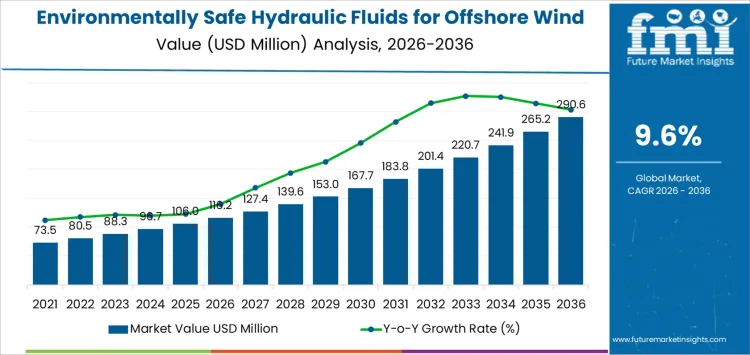
The market for these environmentally safe hydraulic fluids is supported by the increasing demand for renewable energy and offshore wind installations, particularly in Europe, Asia Pacific, and the United States. As offshore wind capacity grows, operators are seeking fluids that deliver reliable performance while meeting stringent environmental standards. Innovations in fluid formulations are enhancing biodegradability and service life, reducing maintenance costs and boosting long-term sustainability. Despite challenges such as higher initial costs and the need for industry-wide performance validation, the continued expansion of offshore wind farms will drive further growth in the demand for safe hydraulic fluids.
Environmentally Safe Hydraulic Fluids for Offshore Wind Market Key Takeaways
| Metric | Value |
|---|---|
| Industry Value (2026) | USD 116.2 million |
| Forecast Value (2036) | USD 290.6 million |
| Forecast CAGR (2026-2036) | 9.6% |
How is the Global Environmentally Safe Hydraulic Fluids for Offshore Wind Sector Advancing?
The global environmentally safe hydraulic fluids for offshore wind market is expanding rapidly as the offshore wind sector grows and stakeholders prioritize operational safety and environmental protection. Hydraulic fluids play a vital role in offshore wind turbines by enabling smooth operation of pitch systems, gearboxes, and other mechanical components. Traditional hydraulic fluids often contain chemicals that can harm marine ecosystems if leaks or spills occur. This has driven demand for environmentally safe alternatives that are biodegradable, low in toxicity, and compliant with stringent environmental regulations in offshore operations.
As offshore wind installations increase worldwide, particularly in Europe, Asia Pacific, and the United States, operators are seeking hydraulic fluids that can deliver reliable performance in harsh marine environments while minimizing ecological risks. Environmentally safe formulations are engineered to maintain performance standards such as thermal stability, oxidation resistance, and wear protection, even under extreme offshore conditions. These fluids reduce the potential impact of accidental releases into sensitive ocean environments, aligning with broader sustainability goals within the renewable energy sector.
The market for environmentally safe hydraulic fluids for offshore wind is poised for continued growth, supported by technological innovations and regulatory drivers. Manufacturers are developing next‑generation fluids with improved biodegradability and longer service life, reducing maintenance frequency and overall lifecycle costs. However, challenges such as higher formulation costs and the need for industry‑wide validation of performance across diverse turbine platforms may impact adoption pace. Continued research and collaboration between turbine OEMs, operators, and fluid manufacturers will be key to driving broader acceptance. As offshore wind capacity expands, these safe hydraulic fluids will play a crucial role in supporting sustainable and reliable turbine operation worldwide.
What Is the Segment-Wise Analysis for the Global Environmentally Safe Hydraulic Fluids for Offshore Wind Market?
The global environmentally safe hydraulic fluids for offshore wind market is segmented by fluid chemistry/base fluid and turbine system/application. Biodegradable synthetic esters (PAE/DEE families) lead the market with a 34% share, offering a sustainable and effective solution for turbine system hydraulics. Other key fluid chemistries include vegetable-ester/rapeseed-based fluids, water-glycol/fire-resistant low-toxicity fluids, high-performance synthetic (EAL-grade PAO blends), and reclaimed/re-refined EAL blends. In terms of turbine system applications, pitch & blade actuation hydraulics hold the largest share at 36%, followed by yaw actuators & nacelle hydraulics, crane/service-lift & deck hydraulics, substructure hydraulics, and auxiliary systems.
Why Do Biodegradable Synthetic Esters Lead the Global Environmentally Safe Hydraulic Fluids Market?
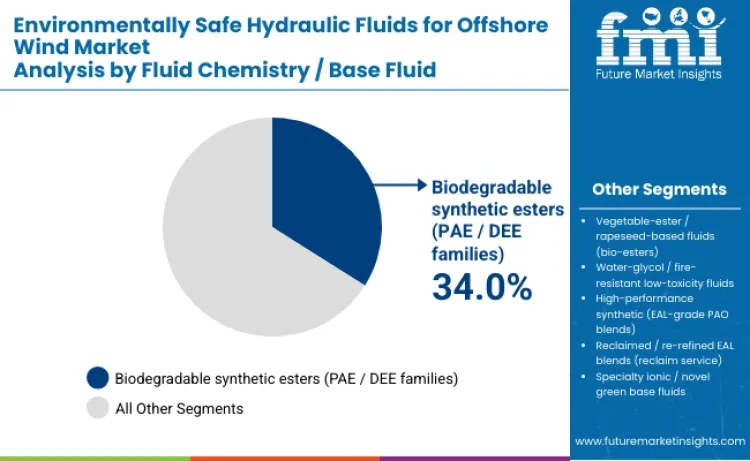
Biodegradable synthetic esters (PAE/DEE families) hold a 34% share in the global environmentally safe hydraulic fluids for offshore wind market due to their excellent biodegradability and high-performance characteristics. These fluids are ideal for offshore wind turbine systems, as they are environmentally friendly and designed to minimize any environmental impact in case of leakage. Biodegradable esters are particularly effective in turbine systems, such as pitch and blade actuation hydraulics, where performance and environmental safety are both critical. As the offshore wind industry prioritizes sustainability, these fluids are becoming the preferred choice for offshore operations, driving their market leadership in hydraulic fluid applications.
Why Do Pitch & Blade Actuation Hydraulics Hold the Largest Share in the Global Market?
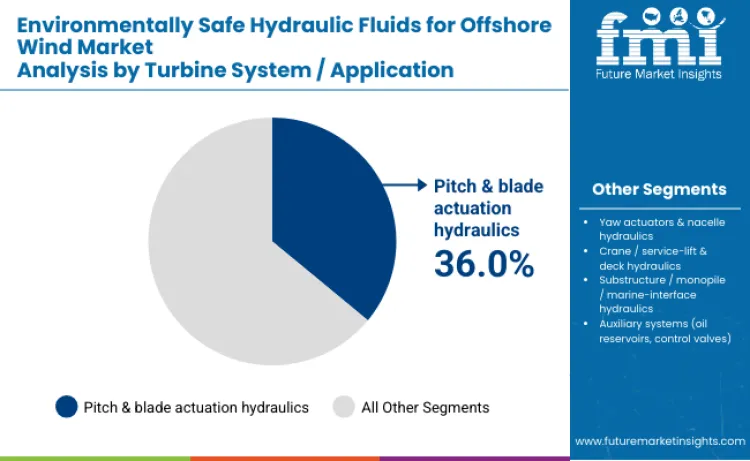
Pitch & blade actuation hydraulics hold the largest share of 36% in the global environmentally safe hydraulic fluids for offshore wind market due to their critical role in controlling the angle of wind turbine blades for optimal energy production. The hydraulic systems used for pitch control must operate reliably under harsh marine conditions, where performance and safety are paramount. Biodegradable synthetic esters are highly effective in these applications, ensuring that any leaks or failures minimize environmental harm. With the growing demand for renewable energy and the importance of offshore wind farms, the use of environmentally safe hydraulic fluids in pitch & blade actuation systems continues to drive market growth.
What is Shaping the Environmentally Safe Hydraulic Fluids for Offshore Wind Market?
The environmentally safe hydraulic fluids for offshore wind market is driven by the rapid build‑out of offshore wind farms and the need to protect marine ecosystems. Hydraulic systems in turbines control pitch, yaw, and braking, requiring reliable fluids that perform under extreme conditions. Traditional petroleum‑based fluids can pose spill and contamination risks, especially in sensitive offshore environments. Stricter environmental regulations, industry sustainability goals, and certifications for marine safety are steering demand toward low‑toxicity, biodegradable hydraulic fluids that minimize ecological impact while delivering high performance and equipment protection.
What Challenges Are Limiting the Adoption of Environmentally Safe Hydraulic Fluids for Offshore Wind?
Adoption barriers include perceived or actual cost differences compared to conventional hydraulic oils. Although eco‑safe fluids bring long‑term environmental and operational advantages, their initial purchase price can be higher, challenging budget‑driven decision makers. Some operators also have concerns about long‑term performance under extreme offshore conditions, such as high humidity, salt spray, and temperature extremes. Compatibility with existing turbine hydraulic systems may require validation, which can delay implementation. Limited standardization of performance benchmarks for “environmentally safe” classifications across regions can also slow widespread adoption.
What Key Trends Are Shaping the Environmentally Safe Hydraulic Fluids for Offshore Wind Market?
Key trends include the development of advanced biodegradable ester‑based and synthetic fluid formulations that offer high thermal stability, low pour points, and excellent wear protection. Manufacturers are focusing on fluids with enhanced oxidation resistance to extend service intervals and reduce maintenance costs. Offshore wind developers are increasingly specifying eco‑certified hydraulic fluids in tender and procurement requirements, driven by sustainability commitments and regulatory incentives. There is also growing emphasis on fluids compatible with cold climate operations and high‑RPM turbine systems. Digital monitoring of fluid condition for predictive maintenance is emerging, improving reliability and reducing environmental risk.
What is the Growth Outlook for the Environmentally Safe Hydraulic Fluids for Offshore Wind Market by Country?
| Country | CAGR (%) |
|---|---|
| China | 12.0% |
| UK | 10.0% |
| USA | 9.0% |
| Germany | 9.5% |
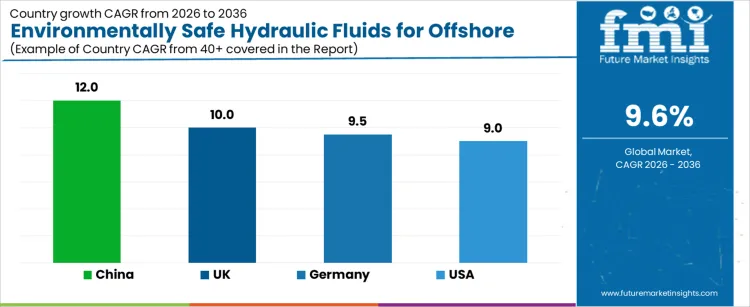
The environmentally safe hydraulic fluids for offshore wind market is growing rapidly, with China leading at a 12.0% CAGR, driven by the country's significant offshore wind energy expansion and focus on sustainable technologies. The United Kingdom follows with a 10.0% growth rate, supported by its established offshore wind industry and strong commitment to environmental sustainability. The United States shows steady growth at 9.0%, fueled by rising offshore wind energy projects and the increasing adoption of eco-friendly fluid solutions. Germany’s market grows at 9.5%, supported by its commitment to renewable energy and environmental protection in offshore wind installations.
Why is China Leading in the Environmentally Safe Hydraulic Fluids for Offshore Wind Market?
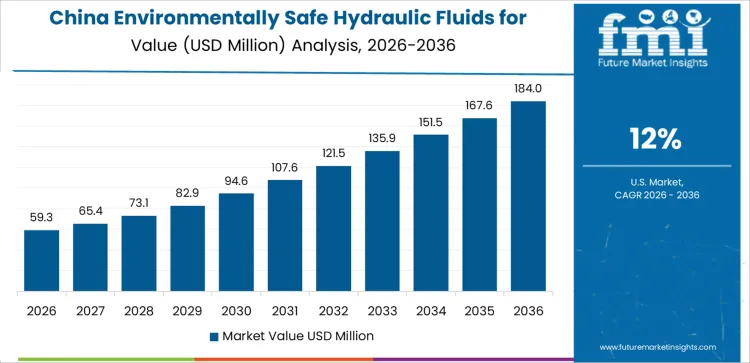
China’s environmentally safe hydraulic fluids for offshore wind market is growing at 12.0%, driven by the country’s aggressive expansion of offshore wind energy installations and its commitment to reducing environmental impacts. As China leads in offshore wind power capacity and aims to become more sustainable in energy production, the demand for eco-friendly hydraulic fluids is rising. China’s offshore wind industry is adopting safer hydraulic fluids to meet stringent environmental regulations, ensuring minimal harm to marine ecosystems. Government policies supporting renewable energy and clean technologies are further accelerating the adoption of environmentally safe fluids. As China continues to lead in offshore wind energy development, the market for these fluids is set for continued robust growth.
What is Driving the Growth of the Environmentally Safe Hydraulic Fluids for Offshore Wind Market in the United Kingdom?
The United Kingdom’s environmentally safe hydraulic fluids for offshore wind market is growing at 10.0%, fueled by the country’s leadership in offshore wind energy development and commitment to environmental sustainability. The UK is one of the world’s largest producers of offshore wind energy, and as the industry continues to expand, there is an increasing need for safe and eco-friendly hydraulic fluids to minimize environmental risks. The UK government’s strong support for renewable energy, including offshore wind projects, is driving the adoption of environmentally safe fluids in turbine maintenance and operations. As offshore wind projects in the UK continue to grow, the demand for environmentally safe hydraulic fluids is expected to rise steadily.
How is the Environmentally Safe Hydraulic Fluids for Offshore Wind Market Expanding in the United States?
The United States’ environmentally safe hydraulic fluids for offshore wind market is growing at 9.0%, driven by the country’s increasing offshore wind energy projects and focus on sustainable energy solutions. As the US invests heavily in expanding offshore wind energy capacity along its coastlines, the demand for environmentally safe hydraulic fluids is rising to ensure minimal environmental impact. Hydraulic fluids used in offshore turbines must meet stringent environmental standards to prevent marine contamination. With government incentives promoting clean energy and offshore wind development, the market for these eco-friendly fluids is expected to grow steadily. The US offshore wind industry’s focus on reducing environmental risks associated with turbine operations and maintenance supports the continued adoption of safe hydraulic fluids.
What is Contributing to the Growth of the Environmentally Safe Hydraulic Fluids for Offshore Wind Market in Germany?
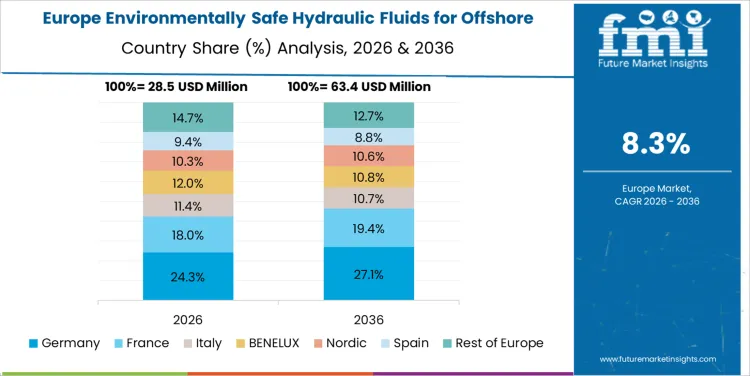
Germany’s environmentally safe hydraulic fluids for offshore wind market is growing at 9.5%, supported by the country’s commitment to renewable energy and environmental sustainability. Germany is a leader in the offshore wind sector, with numerous large-scale offshore wind farms operating off its coasts. The growing focus on reducing environmental risks and promoting sustainable technologies in offshore wind installations is driving the demand for environmentally safe hydraulic fluids. Germany’s stringent environmental regulations, which emphasize the use of non-toxic, eco-friendly fluids in offshore operations, further fuel the adoption of these products. As Germany continues to expand its offshore wind capacity, the market for safe and sustainable hydraulic fluids is expected to grow steadily.
How Are Companies Competing in the Environmentally Safe Hydraulic Fluids for Offshore Wind Market?
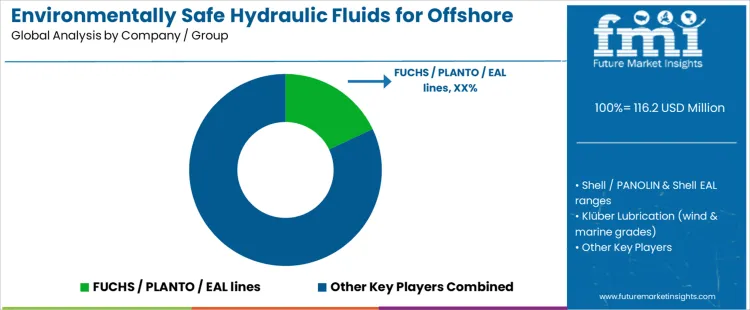
FUCHS with its PLANTO and EAL lines, Shell with PANOLIN and Shell EAL ranges, Klüber Lubrication with wind and marine grades, Cargill as a bio‑ester base supplier, and TotalEnergies with Castrol EAL product lines are positioned with eco‑focused hydraulic fluid solutions tailored for offshore wind. FUCHS brochures highlight biodegradable PLANTO fluids engineered for leak‑sensitive environments and extended service intervals. Shell materials present PANOLIN and EAL products with performance data on wear protection and environmental acceptability, designed for remote offshore applications where fluid loss risk is critical. Klüber Lubrication emphasizes specialized wind and marine grades that blend low toxicity with reliable viscosity across wide temperature swings, backed by technical guidance for turbine OEMs and service crews.
Cargill’s collateral focuses on bio‑ester base stocks that serve as foundations for fully biodegradable hydraulic fluids, with messaging centered on renewable inputs and reduced ecotoxicity. TotalEnergies / Castrol information showcases EAL fluid lines engineered to meet stringent biodegradability criteria while supporting high‑pressure systems and long drain intervals. Across all firms, product literature stresses biodegradability, low aquatic toxicity, and compliance with international environmental standards. Competitive strategies rely on innovation in base chemistries, detailed performance data, global support networks, and clear specification guidance aimed at wind farm operators prioritizing both reliability and environmental safety.
Key Players in Environmentally Safe Hydraulic Fluids for Offshore Wind Market
- FUCHS / PLANTO / EAL lines
- Shell / PANOLIN & Shell EAL ranges
- Klüber Lubrication (wind & marine grades)
- Cargill / bio-ester base suppliers (industrial biofluids)
- TotalEnergies / Castrol (EAL product lines)
Scope of Report
| Items | Values |
|---|---|
| Quantitative Units (2026) | USD million |
| Turbine System / Application | Pitch & Blade Actuation Hydraulics, Yaw Actuators & Nacelle Hydraulics, Crane / Service-Lift & Deck Hydraulics, Substructure / Monopile / Marine-Interface Hydraulics, Auxiliary Systems (Oil Reservoirs, Control Valves) |
| Fluid Chemistry / Base Fluid | Biodegradable Synthetic Esters (PAE / DEE Families), Vegetable-Ester / Rapeseed-Based Fluids (Bio-Esters), Water-Glycol / Fire-Resistant Low-Toxicity Fluids, High-Performance Synthetic (EAL-Grade PAO Blends), Reclaimed / Re-Refined EAL Blends (Reclaim Service), Specialty Ionic / Novel Green Base Fluids |
| Regions Covered | Asia Pacific, Europe, North America, Latin America, Middle East & Africa |
| Countries Covered | USA, China, Japan, South Korea, India, Australia & New Zealand, ASEAN, Germany, UK, France, Italy, Spain, Nordic, BENELUX, Brazil, Chile, Mexico, Saudi Arabia, Other GCC Countries, Turkey, South Africa, Other African Union |
| Key Companies Profiled | FUCHS / PLANTO / EAL Lines, Shell / PANOLIN & Shell EAL Ranges, Klüber Lubrication (Wind & Marine Grades), Cargill / Bio-Ester Base Suppliers (Industrial Biofluids), TotalEnergies / Castrol (EAL Product Lines) |
| Additional Attributes | Dollar sales by fluid chemistry/base fluid, turbine system/application, and region; regional CAGR and growth outlook; distribution channels including service providers, turbine manufacturers, and maintenance teams; innovation trends in biodegradable and synthetic esters; competitive positioning of global vs regional suppliers. |
Environmentally Safe Hydraulic Fluids for Offshore Wind Market by Segments
Fluid Chemistry / Base Fluid
- Biodegradable synthetic esters (PAE / DEE families)
- Vegetable-ester / rapeseed-based fluids (bio-esters)
- Water-glycol / fire-resistant low-toxicity fluids
- High-performance synthetic (EAL-grade PAO blends)
- Reclaimed / re-refined EAL blends (reclaim service)
- Specialty ionic / novel green base fluids
Turbine System / Application
- Pitch & blade actuation hydraulics
- Yaw actuators & nacelle hydraulics
- Crane / service-lift & deck hydraulics
- Substructure / monopile / marine-interface hydraulics
- Auxiliary systems (oil reservoirs, control valves)
Region
- Asia Pacific
- China
- Japan
- South Korea
- India
- Australia & New Zealand
- ASEAN
- Rest of Asia Pacific
- Europe
- Germany
- United Kingdom
- France
- Italy
- Spain
- Nordic
- BENELUX
- Rest of Europe
- North America
- United States
- Canada
- Mexico
- Latin America
- Brazil
- Chile
- Rest of Latin America
- Middle East & Africa
- Kingdom of Saudi Arabia
- Other GCC Countries
- Turkey
- South Africa
- Other African Union
- Rest of Middle East & Africa
Frequently Asked Questions
How big is the environmentally safe hydraulic fluids for offshore wind market in 2026?
The global environmentally safe hydraulic fluids for offshore wind market is estimated to be valued at USD 116.2 million in 2026.
What will be the size of environmentally safe hydraulic fluids for offshore wind market in 2036?
The market size for the environmentally safe hydraulic fluids for offshore wind market is projected to reach USD 290.6 million by 2036.
How much will be the environmentally safe hydraulic fluids for offshore wind market growth between 2026 and 2036?
The environmentally safe hydraulic fluids for offshore wind market is expected to grow at a 9.6% CAGR between 2026 and 2036.
What are the key product types in the environmentally safe hydraulic fluids for offshore wind market?
The key product types in environmentally safe hydraulic fluids for offshore wind market are biodegradable synthetic esters (pae / dee families), vegetable-ester / rapeseed-based fluids (bio-esters), water-glycol / fire-resistant low-toxicity fluids, high-performance synthetic (eal-grade pao blends), reclaimed / re-refined eal blends (reclaim service) and specialty ionic / novel green base fluids.
Which turbine system / application segment to contribute significant share in the environmentally safe hydraulic fluids for offshore wind market in 2026?
In terms of turbine system / application, pitch & blade actuation hydraulics segment to command 36.0% share in the environmentally safe hydraulic fluids for offshore wind market in 2026.
Preview the report firsthand - request a free sample
Get SampleGet the brochure for pricing and purchase details.
Get PDFTable of Content
- Executive Summary
- Global Market Outlook
- Demand-side Trends
- Supply-side Trends
- Technology Roadmap Analysis
- Analysis and Recommendations
- Market Overview
- Market Coverage / Taxonomy
- Market Definition / Scope / Limitations
- Market Background
- Market Dynamics
- Drivers
- Restraints
- Opportunity
- Trends
- Scenario Forecast
- Demand in Optimistic Scenario
- Demand in Likely Scenario
- Demand in Conservative Scenario
- Opportunity Map Analysis
- Product Life Cycle Analysis
- Supply Chain Analysis
- Investment Feasibility Matrix
- Value Chain Analysis
- PESTLE and Porter’s Analysis
- Regulatory Landscape
- Regional Parent Market Outlook
- Production and Consumption Statistics
- Import and Export Statistics
- Market Dynamics
- Global Market Analysis 2021 to 2025 and Forecast, 2026 to 2036
- Historical Market Size Value (USD Million) Analysis, 2021 to 2025
- Current and Future Market Size Value (USD Million) Projections, 2026 to 2036
- Y-o-Y Growth Trend Analysis
- Absolute $ Opportunity Analysis
- Global Market Pricing Analysis 2021 to 2025 and Forecast 2026 to 2036
- Global Market Analysis 2021 to 2025 and Forecast 2026 to 2036, By Fluid Chemistry / Base Fluid
- Introduction / Key Findings
- Historical Market Size Value (USD Million) Analysis By Fluid Chemistry / Base Fluid , 2021 to 2025
- Current and Future Market Size Value (USD Million) Analysis and Forecast By Fluid Chemistry / Base Fluid , 2026 to 2036
- Biodegradable synthetic esters (PAE / DEE families)
- Vegetable-ester / rapeseed-based fluids (bio-esters)
- Water-glycol / fire-resistant low-toxicity fluids
- High-performance synthetic (EAL-grade PAO blends)
- Reclaimed / re-refined EAL blends (reclaim service)
- Specialty ionic / novel green base fluids
- Y-o-Y Growth Trend Analysis By Fluid Chemistry / Base Fluid , 2021 to 2025
- Absolute $ Opportunity Analysis By Fluid Chemistry / Base Fluid , 2026 to 2036
- Global Market Analysis 2021 to 2025 and Forecast 2026 to 2036, By Turbine System / Application
- Introduction / Key Findings
- Historical Market Size Value (USD Million) Analysis By Turbine System / Application, 2021 to 2025
- Current and Future Market Size Value (USD Million) Analysis and Forecast By Turbine System / Application, 2026 to 2036
- Pitch & blade actuation hydraulics
- Yaw actuators & nacelle hydraulics
- Crane / service-lift & deck hydraulics
- Substructure / monopile / marine-interface hydraulics
- Auxiliary systems (oil reservoirs, control valves)
- Y-o-Y Growth Trend Analysis By Turbine System / Application, 2021 to 2025
- Absolute $ Opportunity Analysis By Turbine System / Application, 2026 to 2036
- Global Market Analysis 2021 to 2025 and Forecast 2026 to 2036, By Region
- Introduction
- Historical Market Size Value (USD Million) Analysis By Region, 2021 to 2025
- Current Market Size Value (USD Million) Analysis and Forecast By Region, 2026 to 2036
- North America
- Latin America
- Western Europe
- Eastern Europe
- East Asia
- South Asia and Pacific
- Middle East & Africa
- Market Attractiveness Analysis By Region
- North America Market Analysis 2021 to 2025 and Forecast 2026 to 2036, By Country
- Historical Market Size Value (USD Million) Trend Analysis By Market Taxonomy, 2021 to 2025
- Market Size Value (USD Million) Forecast By Market Taxonomy, 2026 to 2036
- By Country
- USA
- Canada
- Mexico
- By Fluid Chemistry / Base Fluid
- By Turbine System / Application
- By Country
- Market Attractiveness Analysis
- By Country
- By Fluid Chemistry / Base Fluid
- By Turbine System / Application
- Key Takeaways
- Latin America Market Analysis 2021 to 2025 and Forecast 2026 to 2036, By Country
- Historical Market Size Value (USD Million) Trend Analysis By Market Taxonomy, 2021 to 2025
- Market Size Value (USD Million) Forecast By Market Taxonomy, 2026 to 2036
- By Country
- Brazil
- Chile
- Rest of Latin America
- By Fluid Chemistry / Base Fluid
- By Turbine System / Application
- By Country
- Market Attractiveness Analysis
- By Country
- By Fluid Chemistry / Base Fluid
- By Turbine System / Application
- Key Takeaways
- Western Europe Market Analysis 2021 to 2025 and Forecast 2026 to 2036, By Country
- Historical Market Size Value (USD Million) Trend Analysis By Market Taxonomy, 2021 to 2025
- Market Size Value (USD Million) Forecast By Market Taxonomy, 2026 to 2036
- By Country
- Germany
- UK
- Italy
- Spain
- France
- Nordic
- BENELUX
- Rest of Western Europe
- By Fluid Chemistry / Base Fluid
- By Turbine System / Application
- By Country
- Market Attractiveness Analysis
- By Country
- By Fluid Chemistry / Base Fluid
- By Turbine System / Application
- Key Takeaways
- Eastern Europe Market Analysis 2021 to 2025 and Forecast 2026 to 2036, By Country
- Historical Market Size Value (USD Million) Trend Analysis By Market Taxonomy, 2021 to 2025
- Market Size Value (USD Million) Forecast By Market Taxonomy, 2026 to 2036
- By Country
- Russia
- Poland
- Hungary
- Balkan & Baltic
- Rest of Eastern Europe
- By Fluid Chemistry / Base Fluid
- By Turbine System / Application
- By Country
- Market Attractiveness Analysis
- By Country
- By Fluid Chemistry / Base Fluid
- By Turbine System / Application
- Key Takeaways
- East Asia Market Analysis 2021 to 2025 and Forecast 2026 to 2036, By Country
- Historical Market Size Value (USD Million) Trend Analysis By Market Taxonomy, 2021 to 2025
- Market Size Value (USD Million) Forecast By Market Taxonomy, 2026 to 2036
- By Country
- China
- Japan
- South Korea
- By Fluid Chemistry / Base Fluid
- By Turbine System / Application
- By Country
- Market Attractiveness Analysis
- By Country
- By Fluid Chemistry / Base Fluid
- By Turbine System / Application
- Key Takeaways
- South Asia and Pacific Market Analysis 2021 to 2025 and Forecast 2026 to 2036, By Country
- Historical Market Size Value (USD Million) Trend Analysis By Market Taxonomy, 2021 to 2025
- Market Size Value (USD Million) Forecast By Market Taxonomy, 2026 to 2036
- By Country
- India
- ASEAN
- Australia & New Zealand
- Rest of South Asia and Pacific
- By Fluid Chemistry / Base Fluid
- By Turbine System / Application
- By Country
- Market Attractiveness Analysis
- By Country
- By Fluid Chemistry / Base Fluid
- By Turbine System / Application
- Key Takeaways
- Middle East & Africa Market Analysis 2021 to 2025 and Forecast 2026 to 2036, By Country
- Historical Market Size Value (USD Million) Trend Analysis By Market Taxonomy, 2021 to 2025
- Market Size Value (USD Million) Forecast By Market Taxonomy, 2026 to 2036
- By Country
- Kingdom of Saudi Arabia
- Other GCC Countries
- Turkiye
- South Africa
- Other African Union
- Rest of Middle East & Africa
- By Fluid Chemistry / Base Fluid
- By Turbine System / Application
- By Country
- Market Attractiveness Analysis
- By Country
- By Fluid Chemistry / Base Fluid
- By Turbine System / Application
- Key Takeaways
- Key Countries Market Analysis
- USA
- Pricing Analysis
- Market Share Analysis, 2025
- By Fluid Chemistry / Base Fluid
- By Turbine System / Application
- Canada
- Pricing Analysis
- Market Share Analysis, 2025
- By Fluid Chemistry / Base Fluid
- By Turbine System / Application
- Mexico
- Pricing Analysis
- Market Share Analysis, 2025
- By Fluid Chemistry / Base Fluid
- By Turbine System / Application
- Brazil
- Pricing Analysis
- Market Share Analysis, 2025
- By Fluid Chemistry / Base Fluid
- By Turbine System / Application
- Chile
- Pricing Analysis
- Market Share Analysis, 2025
- By Fluid Chemistry / Base Fluid
- By Turbine System / Application
- Germany
- Pricing Analysis
- Market Share Analysis, 2025
- By Fluid Chemistry / Base Fluid
- By Turbine System / Application
- UK
- Pricing Analysis
- Market Share Analysis, 2025
- By Fluid Chemistry / Base Fluid
- By Turbine System / Application
- Italy
- Pricing Analysis
- Market Share Analysis, 2025
- By Fluid Chemistry / Base Fluid
- By Turbine System / Application
- Spain
- Pricing Analysis
- Market Share Analysis, 2025
- By Fluid Chemistry / Base Fluid
- By Turbine System / Application
- France
- Pricing Analysis
- Market Share Analysis, 2025
- By Fluid Chemistry / Base Fluid
- By Turbine System / Application
- India
- Pricing Analysis
- Market Share Analysis, 2025
- By Fluid Chemistry / Base Fluid
- By Turbine System / Application
- ASEAN
- Pricing Analysis
- Market Share Analysis, 2025
- By Fluid Chemistry / Base Fluid
- By Turbine System / Application
- Australia & New Zealand
- Pricing Analysis
- Market Share Analysis, 2025
- By Fluid Chemistry / Base Fluid
- By Turbine System / Application
- China
- Pricing Analysis
- Market Share Analysis, 2025
- By Fluid Chemistry / Base Fluid
- By Turbine System / Application
- Japan
- Pricing Analysis
- Market Share Analysis, 2025
- By Fluid Chemistry / Base Fluid
- By Turbine System / Application
- South Korea
- Pricing Analysis
- Market Share Analysis, 2025
- By Fluid Chemistry / Base Fluid
- By Turbine System / Application
- Russia
- Pricing Analysis
- Market Share Analysis, 2025
- By Fluid Chemistry / Base Fluid
- By Turbine System / Application
- Poland
- Pricing Analysis
- Market Share Analysis, 2025
- By Fluid Chemistry / Base Fluid
- By Turbine System / Application
- Hungary
- Pricing Analysis
- Market Share Analysis, 2025
- By Fluid Chemistry / Base Fluid
- By Turbine System / Application
- Kingdom of Saudi Arabia
- Pricing Analysis
- Market Share Analysis, 2025
- By Fluid Chemistry / Base Fluid
- By Turbine System / Application
- Turkiye
- Pricing Analysis
- Market Share Analysis, 2025
- By Fluid Chemistry / Base Fluid
- By Turbine System / Application
- South Africa
- Pricing Analysis
- Market Share Analysis, 2025
- By Fluid Chemistry / Base Fluid
- By Turbine System / Application
- USA
- Market Structure Analysis
- Competition Dashboard
- Competition Benchmarking
- Market Share Analysis of Top Players
- By Regional
- By Fluid Chemistry / Base Fluid
- By Turbine System / Application
- Competition Analysis
- Competition Deep Dive
- FUCHS / PLANTO / EAL lines
- Overview
- Product Portfolio
- Profitability by Market Segments (Product/Age /Sales Channel/Region)
- Sales Footprint
- Strategy Overview
- Marketing Strategy
- Product Strategy
- Channel Strategy
- Shell / PANOLIN & Shell EAL ranges
- Klüber Lubrication (wind & marine grades)
- Cargill / bio-ester base suppliers (industrial biofluids)
- TotalEnergies / Castrol (EAL product lines)
- FUCHS / PLANTO / EAL lines
- Competition Deep Dive
- Assumptions & Acronyms Used
- Research Methodology


