

Corrosion-Safe Chemicals for Wind Turbine Maintenance Market Forecast and Outlook 2026 to 2036
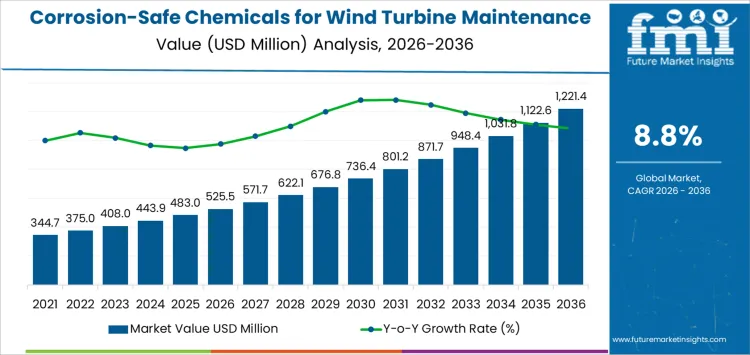
The corrosion-safe chemicals for wind turbine maintenance market is experiencing significant growth, with a market value of USD 525.5 million in 2026, USD 1,221.4 million by 2036, growing at a CAGR of 8.8%. Driven by the increasing number of wind energy installations and the need for effective protection against corrosion, especially in offshore conditions, corrosion-safe chemicals are crucial to extending the lifespan and improving the performance of turbine components. Maintenance touch-up coatings/repair lacquers hold a dominant market share (28%) as they help protect turbines from environmental elements like salt and moisture. In terms of delivery models, O&M service provider-supplied consumables (55%) are prevalent due to their cost-effective nature for large-scale wind farm operators.
Quick Stats for Corrosion-Safe Chemicals for Wind Turbine Maintenance Market
- Corrosion-Safe Chemicals for Wind Turbine Maintenance Market Value (2026): USD 525.5 million
- Corrosion-Safe Chemicals for Wind Turbine Maintenance Market Forecast Value (2036): USD 1,221.4 million
- Corrosion-Safe Chemicals for Wind Turbine Maintenance Market Forecast CAGR: 8.8%
- Leading Product Type in Corrosion-Safe Chemicals for Wind Turbine Maintenance Market: Maintenance touch-up coatings / repair lacquers
- Key Growth Regions in Corrosion-Safe Chemicals for Wind Turbine Maintenance Market: Asia Pacific, Europe, North America
- Top Players in Corrosion-Safe Chemicals for Wind Turbine Maintenance Market: Jotun, Hempel, AkzoNobel, Sherwin-Williams, CRC
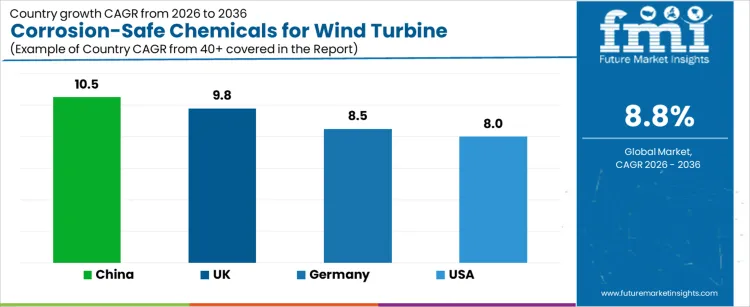
China is leading the market with a 10.5% CAGR, fueled by its rapid expansion in wind energy installations and a strong emphasis on sustainability. The United Kingdom follows closely at 9.8%, driven by its offshore wind energy sector and focus on extending turbine lifespan. The United States sees steady growth at 8.0%, supported by expanding wind farms and the need for efficient maintenance. Germany, with its strong renewable energy policies, shows an 8.5% growth rate, driven by both onshore and offshore wind energy projects. As the wind energy sector continues to expand globally, the demand for corrosion-safe chemicals will remain strong, ensuring turbines operate efficiently and sustainably.
Corrosion-Safe Chemicals for Wind Turbine Maintenance Market Key Takeaways
| Metric | Value |
|---|---|
| Industry Value (2026) | USD 525.5 million |
| Forecast Value (2036) | USD 1,221.4 million |
| Forecast CAGR (2026–2036) | 8.8% |
How is the Global Corrosion-Safe Chemicals for Wind Turbine Maintenance Sector Advancing?
The global corrosion-safe chemicals for wind turbine maintenance market is growing due to the increasing adoption of wind energy and the need for effective maintenance solutions to protect turbine components from corrosion. Wind turbines, particularly those in offshore environments, are exposed to harsh weather conditions, which can lead to significant corrosion and reduced performance. Corrosion-safe chemicals are designed to prevent rust, degradation, and material wear, extending the lifespan and improving the efficiency of wind turbines. Initially, these chemicals were primarily used for offshore turbines, but with the rapid expansion of wind farms, both onshore and offshore, the market for these maintenance solutions is expanding globally.
Looking ahead, the market is expected to continue its growth, driven by the rising number of wind energy installations and the push for more sustainable and cost-effective maintenance practices. Innovations in corrosion-safe chemical formulations that improve performance and reduce environmental impact will further fuel demand. However, challenges such as the high cost of specialized chemicals, regulatory compliance, and the need for widespread adoption across global wind energy markets may affect market dynamics. As the demand for renewable energy increases, corrosion-safe chemicals will play a critical role in ensuring the longevity and efficiency of wind turbines worldwide.
What Is the Segment-Wise Analysis for the Global Corrosion-Safe Chemicals for Wind Turbine Maintenance Market?
The global corrosion-safe chemicals for wind turbine maintenance market is driven by product types and delivery models. Maintenance touch-up coatings/repair lacquers lead the market with a 28% share, due to their role in preventing corrosion and maintaining the structural integrity of wind turbines. Other significant products include corrosion inhibitor liquids & sprays, surface cleaning & de-contamination chemistries, inhibitor-laden greases & lubricants, and cathodic protection consumables. In terms of delivery models, O&M (Operations & Maintenance) service provider-supplied consumables in service contracts dominate with a 55% share, followed by OEM-approved consumables and direct purchases by asset owners or site maintenance teams.
Why Do Maintenance Touch-Up Coatings / Repair Lacquers Lead the Global Corrosion-Safe Chemicals Market?
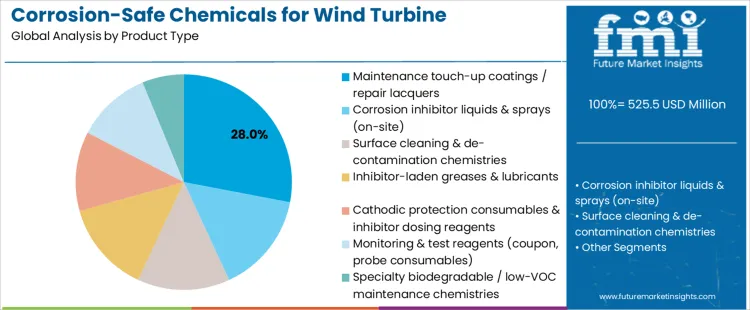
Maintenance touch-up coatings/repair lacquers hold a 28% share in the global corrosion-safe chemicals for wind turbine maintenance market due to their essential role in protecting turbines from corrosion, particularly after maintenance or repairs. These coatings provide an effective barrier against environmental elements like moisture, salt, and wind, which can lead to rust and deterioration over time. With wind turbines exposed to harsh outdoor conditions, the need for long-lasting protection has driven the demand for touch-up coatings and repair lacquers. These products help ensure the longevity and efficiency of turbines, making them crucial for maintenance teams and turbine operators.
Why Do O&M Service Providers Hold the Largest Market Share in the Global Corrosion-Safe Chemicals Market?
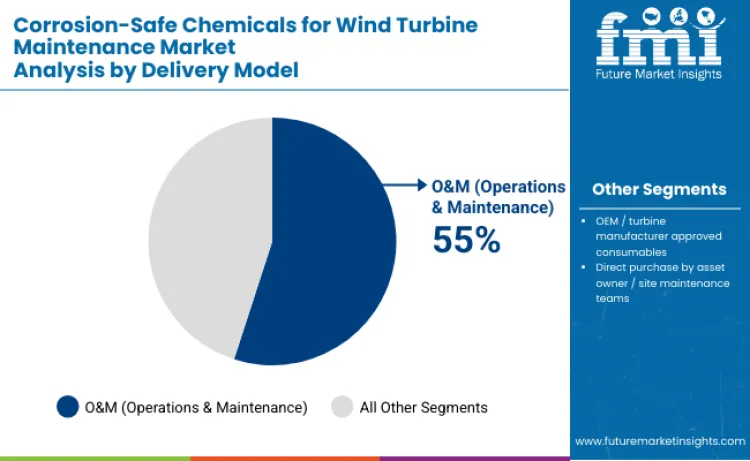
O&M (Operations & Maintenance) service providers account for 55% of the global corrosion-safe chemicals for wind turbine maintenance market due to their central role in maintaining turbine health and performance. These service providers supply consumables as part of long-term service contracts, ensuring turbines remain in optimal condition. By offering a comprehensive package that includes corrosion-safe chemicals and maintenance services, O&M providers help turbine operators avoid costly downtimes and repairs. This model is particularly effective for large-scale wind farm operators, who rely on these services for routine maintenance and efficient operation of their assets, contributing to the dominance of O&M service providers in the market.
What is Shaping the Corrosion-Safe Chemicals for Wind Turbine Maintenance Market?
The corrosion safe chemicals for wind turbine maintenance market is shaped by the rapid global expansion of wind energy installations and the critical need to protect turbines from corrosion and environmental wear. Wind turbines operate in harsh environments offshore, coastal, and high humidity locations where metal components are exposed to salt, moisture, and temperature fluctuations. Corrosion safe chemicals such as inhibitors, protective coatings, and specialty cleaners help extend turbine life, improve reliability, and reduce costly downtime. Regulatory focus on asset longevity and maintenance efficiency in renewable energy infrastructure is also influencing market demand.
What Challenges Are Limiting the Adoption of Corrosion Safe Chemicals for Wind Turbine Maintenance?
Adoption barriers include cost considerations and formulation performance uncertainty. Specialized corrosion safe chemicals, particularly high performance inhibitors and advanced coatings, can carry higher upfront costs compared with generic alternatives, which some operators may resist. Variable environmental conditions across turbine sites can make it difficult to choose one solution that performs optimally everywhere, requiring tailored chemical strategies. Regulatory compliance for environmental safety and proper application training are also necessary, which can increase operational complexity for maintenance teams at smaller wind farms.
What Key Trends Are Shaping the Corrosion Safe Chemicals for Wind Turbine Maintenance Market?
Key trends include the development of eco friendly and low VOC corrosion inhibitors and coatings that meet stringent environmental regulations and appeal to sustainability focused operators. There is rising use of nano enhanced and multifunctional chemicals that combine corrosion protection with additional benefits such as self healing properties or improved lubrication. Integration with predictive maintenance platforms where chemical condition data feeds into digital monitoring systems is gaining traction to forecast corrosion risk and optimize chemical use. Growth in offshore wind projects continues to drive innovation in long lasting, marine grade maintenance chemistries.
What is the Growth Outlook for the Corrosion-Safe Chemicals for Wind Turbine Maintenance Market by Country?
| Country | CAGR (%) |
|---|---|
| China | 10.5% |
| UK | 9.8% |
| USA | 8.0% |
| Germany | 8.5% |
The corrosion-safe chemicals for wind turbine maintenance market is growing steadily across major regions, with China leading at a 10.5% CAGR, driven by its rapid expansion of wind energy capacity and increasing focus on durable, eco-friendly maintenance solutions. The United Kingdom follows with a 9.8% growth rate, supported by its leadership in offshore wind energy production and focus on extending the lifespan of turbines. The United States shows steady growth at 8.0%, fueled by the expansion of wind farms and the need for efficient corrosion protection. Germany’s market grows at 8.5%, underpinned by its commitment to renewable energy and stringent environmental regulations.
Why is China Leading in the Corrosion-Safe Chemicals for Wind Turbine Maintenance Market?
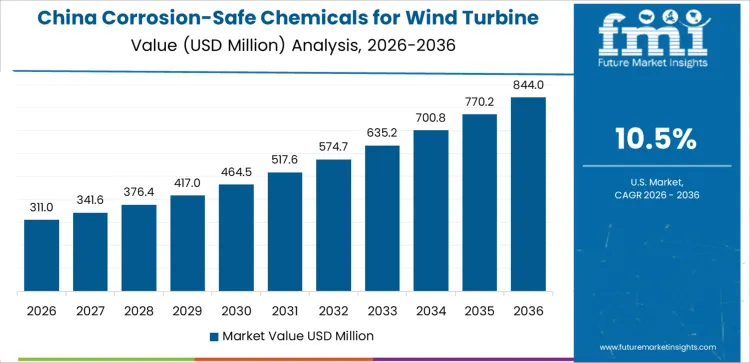
China’s corrosion-safe chemicals for wind turbine maintenance market is growing at 10.5%, driven by the country’s rapid expansion of wind energy installations and its focus on long-term durability and sustainability. As the largest producer of wind turbines and one of the biggest markets for wind energy, China is increasingly adopting corrosion-safe chemicals to enhance the efficiency and lifespan of turbines, particularly in harsh operating conditions. The government’s strong support for renewable energy and commitment to reducing carbon emissions further drive the demand for these chemicals. As China continues to lead in the global renewable energy transition, the need for effective corrosion protection solutions for wind turbines will remain high, ensuring steady market growth.
What is Driving the Growth of the Corrosion-Safe Chemicals for Wind Turbine Maintenance Market in the United Kingdom?
The United Kingdom’s corrosion-safe chemicals for wind turbine maintenance market is growing at 9.8%, driven by the country’s leadership in offshore wind energy generation. As the UK continues to expand its offshore wind farms, corrosion protection is becoming an increasingly important concern due to the harsh marine environment. The growing demand for solutions that extend turbine lifespan and improve operational efficiency is fueling the adoption of corrosion-safe chemicals. The UK government’s commitment to achieving net-zero emissions by 2050 and its continued investment in renewable energy are key drivers of market growth. As the offshore wind sector continues to expand, the demand for these maintenance chemicals is expected to grow steadily.
How is the Corrosion-Safe Chemicals for Wind Turbine Maintenance Market Expanding in the United States?
The United States’ corrosion-safe chemicals for wind turbine maintenance market is growing at 8.0%, supported by the country’s expanding wind energy capacity, particularly in onshore wind farms. As the demand for renewable energy continues to rise, the need for long-lasting and efficient maintenance solutions is driving the adoption of corrosion-safe chemicals. The US wind industry is increasingly focused on improving turbine performance and durability, especially in regions with challenging weather conditions. Government incentives for renewable energy projects, along with rising awareness of the importance of long-term turbine maintenance, are further contributing to market growth. As wind energy adoption accelerates, the demand for these chemicals is expected to continue to rise steadily.
What is Contributing to the Growth of the Corrosion-Safe Chemicals for Wind Turbine Maintenance Market in Germany?
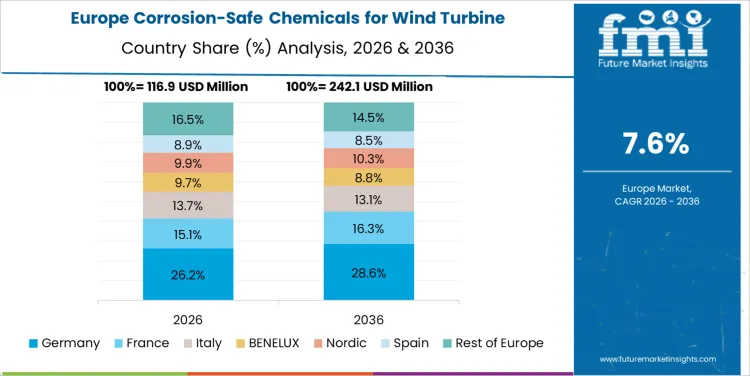
Germany’s corrosion-safe chemicals for wind turbine maintenance market is growing at 8.5%, driven by the country’s strong commitment to renewable energy and sustainability. Germany is a key player in both onshore and offshore wind energy production, and as the wind industry continues to expand, so does the need for effective corrosion protection solutions. The country’s focus on increasing the efficiency and lifespan of wind turbines, combined with its stringent environmental regulations, is fueling the demand for corrosion-safe chemicals. Germany’s significant investment in clean energy infrastructure and the growing adoption of green technologies are expected to continue driving the market for wind turbine maintenance chemicals. With the ongoing growth of the wind sector, Germany's market is set for continued expansion.
How Are Companies Competing in the Corrosion‑Safe Chemicals for Wind Turbine Maintenance Market?
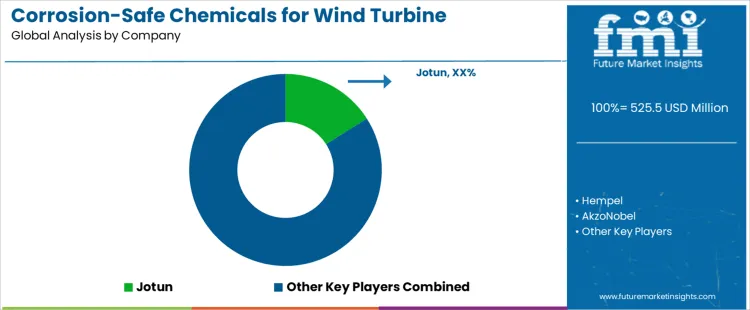
Jotun, Hempel, AkzoNobel, Sherwin‑Williams, and CRC each position corrosion‑safe chemicals with distinct strategies aimed at protecting wind turbine assets and extending service life. Jotun brochures highlight advanced coatings and corrosion inhibitors formulated for offshore and onshore turbine structures, with performance data on salt spray resistance and long‑term durability. Hempel emphasizes tailored protective systems that combine primers, intermediate layers, and topcoats designed to withstand UV exposure and harsh marine conditions while meeting environmental standards. AkzoNobel focuses on high‑performance chemistries and innovative binders that deliver corrosion protection with reduced environmental impact and improved application ease on complex turbine geometries.
Sherwin‑Williams positions its wind turbine maintenance chemicals around comprehensive solutions that include surface preparation products and corrosion‑inhibiting coatings backed by technical support for applicators. CRC differentiates with maintenance‑oriented chemical agents such as rust converters, protective sprays, and specialty corrosion inhibitors that address hard‑to‑reach components like bolts, bearings, and nacelle interiors. Across all firms, product brochures stress key performance metrics, compatibility with composite and metal substrates, and compliance with evolving industry standards for longevity and environmental safety.
Competitive strategies include innovation in formulation technology, global distribution networks to serve expanding wind energy markets, and clear technical guidance to maintenance teams. Emphasis on long‑term protection, ease of application, and demonstrated performance data seeks to influence procurement decisions for wind farm operators focused on reducing downtime and lifecycle costs.
Key Players in Corrosion-Safe Chemicals for Wind Turbine Maintenance Market
- Jotun
- Hempel
- AkzoNobel
- Sherwin-Williams
- CRC
Scope of Report
| Items | Values |
|---|---|
| Quantitative Units (2025) | USD million |
| Product Type | Maintenance Touch-Up Coatings / Repair Lacquers, Corrosion Inhibitor Liquids & Sprays, Surface Cleaning & De-Contamination Chemistries, Inhibitor-Laden Greases & Lubricants, Cathodic Protection Consumables, Monitoring & Test Reagents, Specialty Biodegradable / Low-VOC Chemistries |
| Delivery Model | O&M Service Provider Supplied (Consumables in Service Contracts), OEM / Turbine Manufacturer Approved Consumables, Direct Purchase by Asset Owner / Site Maintenance Teams |
| Regions Covered | Asia Pacific, Europe, North America, Latin America, Middle East & Africa |
| Countries Covered | USA, China, Japan, South Korea, India, Australia & New Zealand, ASEAN, Germany, UK, France, Italy, Spain, Nordic, BENELUX, Brazil, Chile, Mexico, Saudi Arabia, Other GCC Countries, Turkey, South Africa, Other African Union |
| Key Companies Profiled | Jotun, Hempel, AkzoNobel, Sherwin-Williams, CRC |
| Additional Attributes | Dollar sales by product type, delivery model, and region; regional CAGR and growth outlook; distribution channels including service providers, OEMs, and asset owners; innovation trends in biodegradable and low-VOC chemistries; competitive positioning of global vs regional suppliers. |
Corrosion-Safe Chemicals for Wind Turbine Maintenance Market by Segments\
Product Type
- Maintenance touch-up coatings / repair lacquers
- Corrosion inhibitor liquids & sprays (on-site)
- Surface cleaning & de-contamination chemistries
- Inhibitor-laden greases & lubricants
- Cathodic protection consumables & inhibitor dosing reagents
- Monitoring & test reagents (coupon, probe consumables)
- Specialty biodegradable / low-VOC maintenance chemistries
Delivery Model
- O&M service provider supplied (consumables in service contracts)
- OEM / turbine manufacturer approved consumables
- Direct purchase by asset owner / site maintenance teams
Region
- Asia Pacific
- China
- Japan
- South Korea
- India
- Australia & New Zealand
- ASEAN
- Rest of Asia Pacific
- Europe
- Germany
- United Kingdom
- France
- Italy
- Spain
- Nordic
- BENELUX
- Rest of Europe
- North America
- United States
- Canada
- Mexico
- Latin America
- Brazil
- Chile
- Rest of Latin America
- Middle East & Africa
- Kingdom of Saudi Arabia
- Other GCC Countries
- Turkey
- South Africa
- Other African Union
- Rest of Middle East & Africa
Frequently Asked Questions
How big is the corrosion-safe chemicals for wind turbine maintenance market in 2026?
The global corrosion-safe chemicals for wind turbine maintenance market is estimated to be valued at USD 525.5 million in 2026.
What will be the size of corrosion-safe chemicals for wind turbine maintenance market in 2036?
The market size for the corrosion-safe chemicals for wind turbine maintenance market is projected to reach USD 1,221.4 million by 2036.
How much will be the corrosion-safe chemicals for wind turbine maintenance market growth between 2026 and 2036?
The corrosion-safe chemicals for wind turbine maintenance market is expected to grow at a 8.8% CAGR between 2026 and 2036.
What are the key product types in the corrosion-safe chemicals for wind turbine maintenance market?
The key product types in corrosion-safe chemicals for wind turbine maintenance market are maintenance touch-up coatings / repair lacquers, corrosion inhibitor liquids & sprays (on-site), surface cleaning & de-contamination chemistries, inhibitor-laden greases & lubricants, cathodic protection consumables & inhibitor dosing reagents, monitoring & test reagents (coupon, probe consumables) and specialty biodegradable / low-voc maintenance chemistries.
Which delivery model segment to contribute significant share in the corrosion-safe chemicals for wind turbine maintenance market in 2026?
In terms of delivery model, o&m service provider supplied (consumables in service contracts) segment to command 30.0% share in the corrosion-safe chemicals for wind turbine maintenance market in 2026.
Preview the report firsthand - request a free sample
Get SampleGet the brochure for pricing and purchase details.
Get PDFTable of Content
- Executive Summary
- Global Market Outlook
- Demand-side Trends
- Supply-side Trends
- Technology Roadmap Analysis
- Analysis and Recommendations
- Market Overview
- Market Coverage / Taxonomy
- Market Definition / Scope / Limitations
- Market Background
- Market Dynamics
- Drivers
- Restraints
- Opportunity
- Trends
- Scenario Forecast
- Demand in Optimistic Scenario
- Demand in Likely Scenario
- Demand in Conservative Scenario
- Opportunity Map Analysis
- Product Life Cycle Analysis
- Supply Chain Analysis
- Investment Feasibility Matrix
- Value Chain Analysis
- PESTLE and Porter’s Analysis
- Regulatory Landscape
- Regional Parent Market Outlook
- Production and Consumption Statistics
- Import and Export Statistics
- Market Dynamics
- Global Market Analysis 2021 to 2025 and Forecast, 2026 to 2036
- Historical Market Size Value (USD Million) Analysis, 2021 to 2025
- Current and Future Market Size Value (USD Million) Projections, 2026 to 2036
- Y-o-Y Growth Trend Analysis
- Absolute $ Opportunity Analysis
- Global Market Pricing Analysis 2021 to 2025 and Forecast 2026 to 2036
- Global Market Analysis 2021 to 2025 and Forecast 2026 to 2036, By Product Type
- Introduction / Key Findings
- Historical Market Size Value (USD Million) Analysis By Product Type , 2021 to 2025
- Current and Future Market Size Value (USD Million) Analysis and Forecast By Product Type , 2026 to 2036
- Maintenance touch-up coatings / repair lacquers
- Corrosion inhibitor liquids & sprays (on-site)
- Surface cleaning & de-contamination chemistries
- Inhibitor-laden greases & lubricants
- Cathodic protection consumables & inhibitor dosing reagents
- Monitoring & test reagents (coupon, probe consumables)
- Specialty biodegradable / low-VOC maintenance chemistries
- Y-o-Y Growth Trend Analysis By Product Type , 2021 to 2025
- Absolute $ Opportunity Analysis By Product Type , 2026 to 2036
- Global Market Analysis 2021 to 2025 and Forecast 2026 to 2036, By Delivery Model
- Introduction / Key Findings
- Historical Market Size Value (USD Million) Analysis By Delivery Model, 2021 to 2025
- Current and Future Market Size Value (USD Million) Analysis and Forecast By Delivery Model, 2026 to 2036
- O&M service provider supplied (consumables in service contracts)
- OEM / turbine manufacturer approved consumables
- Direct purchase by asset owner / site maintenance teams
- Y-o-Y Growth Trend Analysis By Delivery Model, 2021 to 2025
- Absolute $ Opportunity Analysis By Delivery Model, 2026 to 2036
- Global Market Analysis 2021 to 2025 and Forecast 2026 to 2036, By Region
- Introduction
- Historical Market Size Value (USD Million) Analysis By Region, 2021 to 2025
- Current Market Size Value (USD Million) Analysis and Forecast By Region, 2026 to 2036
- North America
- Latin America
- Western Europe
- Eastern Europe
- East Asia
- South Asia and Pacific
- Middle East & Africa
- Market Attractiveness Analysis By Region
- North America Market Analysis 2021 to 2025 and Forecast 2026 to 2036, By Country
- Historical Market Size Value (USD Million) Trend Analysis By Market Taxonomy, 2021 to 2025
- Market Size Value (USD Million) Forecast By Market Taxonomy, 2026 to 2036
- By Country
- USA
- Canada
- Mexico
- By Product Type
- By Delivery Model
- By Country
- Market Attractiveness Analysis
- By Country
- By Product Type
- By Delivery Model
- Key Takeaways
- Latin America Market Analysis 2021 to 2025 and Forecast 2026 to 2036, By Country
- Historical Market Size Value (USD Million) Trend Analysis By Market Taxonomy, 2021 to 2025
- Market Size Value (USD Million) Forecast By Market Taxonomy, 2026 to 2036
- By Country
- Brazil
- Chile
- Rest of Latin America
- By Product Type
- By Delivery Model
- By Country
- Market Attractiveness Analysis
- By Country
- By Product Type
- By Delivery Model
- Key Takeaways
- Western Europe Market Analysis 2021 to 2025 and Forecast 2026 to 2036, By Country
- Historical Market Size Value (USD Million) Trend Analysis By Market Taxonomy, 2021 to 2025
- Market Size Value (USD Million) Forecast By Market Taxonomy, 2026 to 2036
- By Country
- Germany
- UK
- Italy
- Spain
- France
- Nordic
- BENELUX
- Rest of Western Europe
- By Product Type
- By Delivery Model
- By Country
- Market Attractiveness Analysis
- By Country
- By Product Type
- By Delivery Model
- Key Takeaways
- Eastern Europe Market Analysis 2021 to 2025 and Forecast 2026 to 2036, By Country
- Historical Market Size Value (USD Million) Trend Analysis By Market Taxonomy, 2021 to 2025
- Market Size Value (USD Million) Forecast By Market Taxonomy, 2026 to 2036
- By Country
- Russia
- Poland
- Hungary
- Balkan & Baltic
- Rest of Eastern Europe
- By Product Type
- By Delivery Model
- By Country
- Market Attractiveness Analysis
- By Country
- By Product Type
- By Delivery Model
- Key Takeaways
- East Asia Market Analysis 2021 to 2025 and Forecast 2026 to 2036, By Country
- Historical Market Size Value (USD Million) Trend Analysis By Market Taxonomy, 2021 to 2025
- Market Size Value (USD Million) Forecast By Market Taxonomy, 2026 to 2036
- By Country
- China
- Japan
- South Korea
- By Product Type
- By Delivery Model
- By Country
- Market Attractiveness Analysis
- By Country
- By Product Type
- By Delivery Model
- Key Takeaways
- South Asia and Pacific Market Analysis 2021 to 2025 and Forecast 2026 to 2036, By Country
- Historical Market Size Value (USD Million) Trend Analysis By Market Taxonomy, 2021 to 2025
- Market Size Value (USD Million) Forecast By Market Taxonomy, 2026 to 2036
- By Country
- India
- ASEAN
- Australia & New Zealand
- Rest of South Asia and Pacific
- By Product Type
- By Delivery Model
- By Country
- Market Attractiveness Analysis
- By Country
- By Product Type
- By Delivery Model
- Key Takeaways
- Middle East & Africa Market Analysis 2021 to 2025 and Forecast 2026 to 2036, By Country
- Historical Market Size Value (USD Million) Trend Analysis By Market Taxonomy, 2021 to 2025
- Market Size Value (USD Million) Forecast By Market Taxonomy, 2026 to 2036
- By Country
- Kingdom of Saudi Arabia
- Other GCC Countries
- Turkiye
- South Africa
- Other African Union
- Rest of Middle East & Africa
- By Product Type
- By Delivery Model
- By Country
- Market Attractiveness Analysis
- By Country
- By Product Type
- By Delivery Model
- Key Takeaways
- Key Countries Market Analysis
- USA
- Pricing Analysis
- Market Share Analysis, 2025
- By Product Type
- By Delivery Model
- Canada
- Pricing Analysis
- Market Share Analysis, 2025
- By Product Type
- By Delivery Model
- Mexico
- Pricing Analysis
- Market Share Analysis, 2025
- By Product Type
- By Delivery Model
- Brazil
- Pricing Analysis
- Market Share Analysis, 2025
- By Product Type
- By Delivery Model
- Chile
- Pricing Analysis
- Market Share Analysis, 2025
- By Product Type
- By Delivery Model
- Germany
- Pricing Analysis
- Market Share Analysis, 2025
- By Product Type
- By Delivery Model
- UK
- Pricing Analysis
- Market Share Analysis, 2025
- By Product Type
- By Delivery Model
- Italy
- Pricing Analysis
- Market Share Analysis, 2025
- By Product Type
- By Delivery Model
- Spain
- Pricing Analysis
- Market Share Analysis, 2025
- By Product Type
- By Delivery Model
- France
- Pricing Analysis
- Market Share Analysis, 2025
- By Product Type
- By Delivery Model
- India
- Pricing Analysis
- Market Share Analysis, 2025
- By Product Type
- By Delivery Model
- ASEAN
- Pricing Analysis
- Market Share Analysis, 2025
- By Product Type
- By Delivery Model
- Australia & New Zealand
- Pricing Analysis
- Market Share Analysis, 2025
- By Product Type
- By Delivery Model
- China
- Pricing Analysis
- Market Share Analysis, 2025
- By Product Type
- By Delivery Model
- Japan
- Pricing Analysis
- Market Share Analysis, 2025
- By Product Type
- By Delivery Model
- South Korea
- Pricing Analysis
- Market Share Analysis, 2025
- By Product Type
- By Delivery Model
- Russia
- Pricing Analysis
- Market Share Analysis, 2025
- By Product Type
- By Delivery Model
- Poland
- Pricing Analysis
- Market Share Analysis, 2025
- By Product Type
- By Delivery Model
- Hungary
- Pricing Analysis
- Market Share Analysis, 2025
- By Product Type
- By Delivery Model
- Kingdom of Saudi Arabia
- Pricing Analysis
- Market Share Analysis, 2025
- By Product Type
- By Delivery Model
- Turkiye
- Pricing Analysis
- Market Share Analysis, 2025
- By Product Type
- By Delivery Model
- South Africa
- Pricing Analysis
- Market Share Analysis, 2025
- By Product Type
- By Delivery Model
- USA
- Market Structure Analysis
- Competition Dashboard
- Competition Benchmarking
- Market Share Analysis of Top Players
- By Regional
- By Product Type
- By Delivery Model
- Competition Analysis
- Competition Deep Dive
- Jotun
- Overview
- Product Portfolio
- Profitability by Market Segments (Product/Age /Sales Channel/Region)
- Sales Footprint
- Strategy Overview
- Marketing Strategy
- Product Strategy
- Channel Strategy
- Hempel
- AkzoNobel
- Sherwin-Williams
- CRC
- Jotun
- Competition Deep Dive
- Assumptions & Acronyms Used
- Research Methodology


