

- Industry Size (2026)
- USD 3.2 Bn
- Forecast (2036)
- USD 8.0 Bn
- CAGR (2026 to 2036)
- 9.60%
EV Chassis Megamolding Thermoplastics Market Forecast and Outlook 2026 to 2036
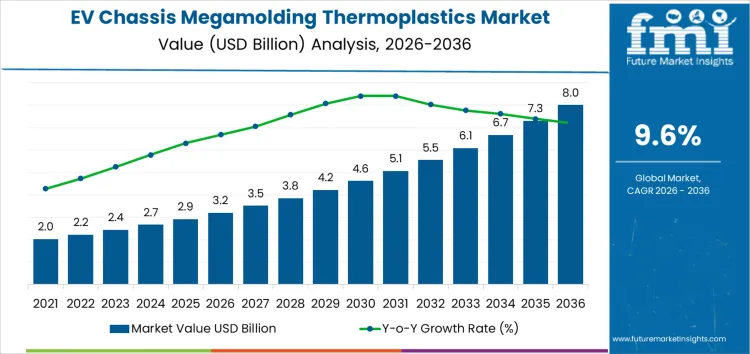
The global EV chassis megamolding thermoplastics market is projected to reach USD 3.2 billion in 2026 and USD 8.0 billion by 2036, growing at a CAGR of 9.60%. Decision-makers must recognize the growing significance of lightweight, cost-effective, and eco-friendly materials in electric vehicle (EV) production, particularly as the shift towards electric mobility accelerates.
The demand for megamolding thermoplastics is driven by the need to reduce vehicle weight and enhance battery efficiency critical factors in the EV sector. Timing is crucial, as companies that capitalize on this shift to eco-friendly materials early can gain a competitive edge, especially in markets with aggressive renewability goals. Furthermore, as regulatory pressures and consumer demand for green technologies intensify, prioritizing the adoption of high-performance thermoplastics will ensure long-term resilience and alignment with the evolving automotive landscape.
Quick Stats for EV Chassis Megamolding Thermoplastics Market
- EV Chassis Megamolding Thermoplastics Market Value (2026): USD 3.2 Billion
- EV Chassis Megamolding Thermoplastics Market Forecast Value (2036): USD 8.0 Billion
- EV Chassis Megamolding Thermoplastics Market Forecast CAGR 2026 to 2036: 9.60%
- Leading Thermoplastic Type in EV Chassis Megamolding Thermoplastics Market: Polypropylene (PP)
- Key Growth Regions in EV Chassis Megamolding Thermoplastics Market: Asia Pacific, North America
- Top Key Players in EV Chassis Megamolding Thermoplastics Market: BASF SE, Covestro AG, LANXESS AG, Sabic, Celanese Corporation
EV Chassis Megamolding Thermoplastics Market Key Takeaways
| Metric | Value |
|---|---|
| Industry Value (2026) | USD 3.2 Billion |
| Forecast Value (2036) | USD 8.0 Billion |
| Forecast CAGR 2026 to 2036 | 9.60% |
How Is the Global EV Chassis Megamolding Thermoplastics Market Advancing?
The global EV chassis megamolding thermoplastics market is experiencing substantial growth, driven by the rising demand for lightweight, durable, and cost-effective materials in electric vehicle (EV) production. Megamolding thermoplastics, used in the manufacturing of EV chassis components, offer several advantages over traditional materials, including reduced weight, enhanced structural integrity, and the ability to mold complex shapes with high precision. These thermoplastics are becoming an essential part of the automotive industry's push toward reducing vehicle weight and improving fuel efficiency, which is particularly important for EVs, where range and performance are critical.
A major driver for the market is the growing adoption of electric vehicles and the need to enhance vehicle performance through innovative materials. As the EV market expands, automakers are increasingly focusing on optimizing vehicle weight to improve battery efficiency and range. Megamolding thermoplastics provide a solution by enabling the production of lightweight, strong chassis components that reduce the overall weight of the vehicle, contributing to improved energy efficiency and extended battery life. These materials are highly versatile and can be molded into complex shapes, offering greater design flexibility for automotive manufacturers.
Technological advancements in polymer science and injection molding technologies are further fueling market growth. New generations of thermoplastics with superior mechanical properties, heat resistance, and durability are being developed to meet the rigorous demands of EV chassis components. The ability to produce large, complex parts with a single molding process also reduces manufacturing time and costs, making it an attractive option for automakers looking to streamline production. As the EV industry continues to grow and focus on renewability, the market for EV chassis megamolding thermoplastics is expected to expand significantly, offering a key material solution for the next generation of electric vehicles.
What Is the Segment-Wise Analysis for the EV Chassis Megamolding Thermoplastics Market?
The EV chassis megamolding thermoplastics market is segmented by thermoplastic type and application. Polypropylene (PP) leads the thermoplastic type segment with a 37% share, followed by polyamide (PA), polycarbonate (PC), thermoplastic olefins (TPO), and other types. PP is commonly used due to its balance of cost, strength, and lightweight properties, making it ideal for various automotive applications. In terms of application, EV chassis structural parts lead with a 43% share, followed by bumpers & reinforcements, battery housing & supports, crash management systems, and other applications.
Why Does Polypropylene (PP) Lead the EV Chassis Megamolding Thermoplastics Market?
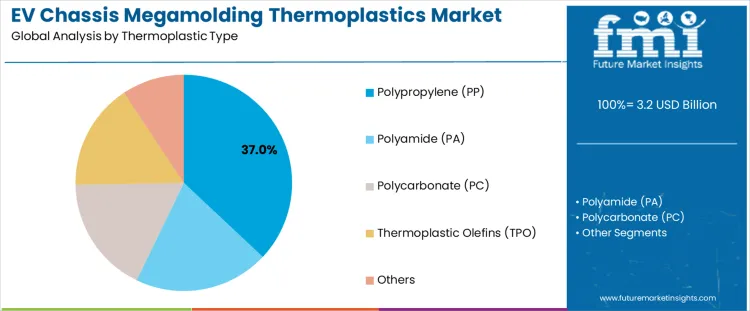
Polypropylene (PP) leads the EV chassis megamolding thermoplastics market with a 37% share due to its optimal combination of strength, affordability, and lightweight properties. PP is extensively used in automotive structural components because of its impact resistance, low density, and ease of processing, which make it ideal for high-volume manufacturing. PP’s recyclability aligns with the growing emphasis on renewability in the electric vehicle (EV) industry. As manufacturers focus on reducing vehicle weight to improve energy efficiency and driving range, PP’s versatility and cost-effectiveness make it the material of choice in EV chassis applications, solidifying its dominance in the market. Its adaptability and performance under demanding conditions make PP essential for the growing EV sector.
How Does the EV Chassis Structural Parts Application Contribute to the Market?
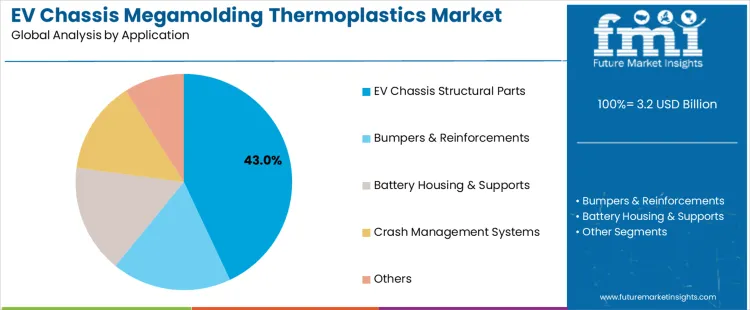
The EV chassis structural parts application accounts for 43% of the end-user segment in the EV chassis megamolding thermoplastics market. Structural parts are crucial for ensuring the overall safety, durability, and performance of electric vehicles (EVs). As EV manufacturers aim to reduce vehicle weight for improved energy efficiency and driving range, the adoption of lightweight thermoplastics like polypropylene in chassis parts has grown significantly. These materials provide a balance between low weight and necessary strength, ensuring the vehicle’s structural integrity. The increasing demand for eco-friendly manufacturing practices and the rapid adoption of electric vehicles continue to drive the need for thermoplastics in EV chassis structural components, contributing to market growth.
What Are the Key Dynamics for the EV Chassis Megamolding Thermoplastics Market?
Megamolding thermoplastics are ideal for manufacturing large, complex components such as chassis parts, as they offer strength, rigidity, and the ability to be molded into intricate shapes. These thermoplastics reduce the overall weight of the vehicle, enhancing battery performance and range. As the EV market grows, there is a strong push toward reducing weight, improving energy efficiency, and optimizing production processes, all of which are driving the adoption of thermoplastics in chassis manufacturing.
Why Is the EV Chassis Megamolding Thermoplastics Market Growing?
The EV chassis megamolding thermoplastics market is growing due to the rising adoption of electric vehicles and the need to meet energy efficiency and renewability targets. As automakers seek to reduce the weight of EVs to improve battery life and range, thermoplastics offer a more lightweight and cost-effective alternative to traditional materials like metals. The demand for larger, complex, and integrated chassis components that can be produced with high precision and efficiency is fueling the adoption of megamolding thermoplastics. These materials also align with the push toward greener manufacturing practices, as they can be more easily recycled than metals.
How Are the Key Drivers Shaping the EV Chassis Megamolding Thermoplastics Market?
Key drivers for the EV chassis megamolding thermoplastics market include the growing demand for lightweight and durable materials that improve EV performance and reduce manufacturing costs. Automakers are increasingly focusing on reducing the weight of vehicles to enhance battery efficiency and overall energy consumption. Megamolding thermoplastics enable manufacturers to produce large, intricate parts with a strong strength-to-weight ratio, making them suitable for chassis applications. The automotive industry's focus on renewability, with an emphasis on reducing carbon footprints and using recyclable materials, is accelerating the use of thermoplastics in EV chassis production.
What is the Growth Outlook for the EV Chassis Megamolding Thermoplastics Market by Country?
| Country | CAGR (%) |
|---|---|
| China | 10.3% |
| USA | 9.8% |
| Germany | 9.0% |
| South Korea | 8.7% |
| Japan | 8.5% |
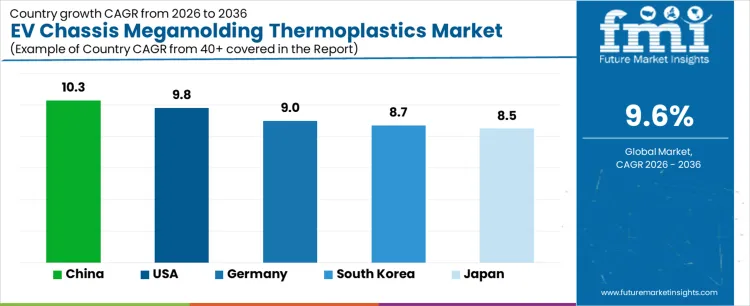
The EV chassis megamolding thermoplastics market is expanding across key regions. China leads at 10.3%, driven by rapid EV adoption and a push for lightweight, eco-friendly materials. The USA grows at 9.8%, supported by regulatory pressures for renewability and the demand for affordable, high-performance EV components. Germany’s market expands at 9.0%, fueled by its automotive industry’s focus on energy efficiency and renewability. South Korea grows at 8.7%, supported by its leadership in EV manufacturing and technological advancements in lightweight materials. Japan grows at 8.5%, driven by its automotive industry’s commitment to carbon neutrality and renewability.
What is Driving the Growth of the EV Chassis Megamolding Thermoplastics Market in China?
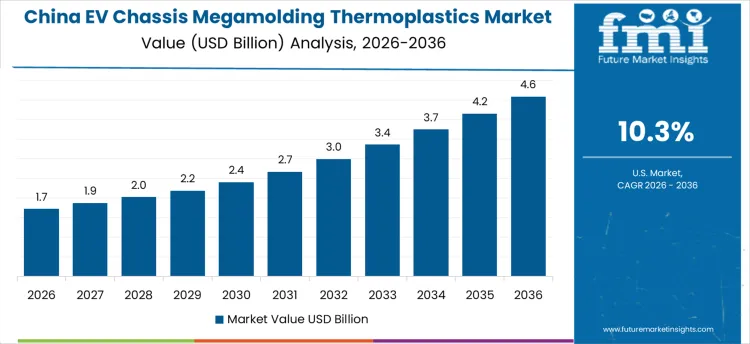
China’s EV chassis megamolding thermoplastics market is growing at 10.3%, driven by the country’s rapid adoption of electric vehicles (EVs) and increasing demand for lightweight materials in automotive manufacturing. As China becomes a global leader in EV production, the need for innovative, cost-effective, and eco-friendly materials for EV chassis has risen. Megamolding thermoplastics are gaining traction due to their lightweight properties, which contribute to improved vehicle efficiency and range. The Chinese government’s strong push for green technologies, subsidies for EV manufacturers, and the country’s commitment to reducing carbon emissions are accelerating the adoption of thermoplastics in EV manufacturing. As the demand for EVs continues to rise, China’s market for EV chassis megamolding thermoplastics will continue to expand, driven by both government policies and consumer preferences for eco-friendly vehicles.
How is the EV Chassis Megamolding Thermoplastics Market Expanding in the USA?
The EV chassis megamolding thermoplastics market in the USA is growing at 9.8%, supported by the increasing adoption of electric vehicles and the need for advanced materials to reduce vehicle weight and enhance performance. As the USA pushes toward renewability and energy efficiency in the automotive sector, EV manufacturers are turning to lightweight thermoplastics to improve the energy efficiency of their vehicles. The use of thermoplastics in EV chassis helps reduce weight without compromising strength, making them a popular choice for manufacturers looking to extend vehicle range. Government regulations aimed at reducing emissions, combined with the demand for affordable and environmentally friendly vehicles, are fueling the growth of this market. With the USA's ongoing transition to electric mobility, the demand for high-performance thermoplastics in EV chassis manufacturing is expected to continue growing.
How is the EV Chassis Megamolding Thermoplastics Market Expanding in Germany?
Germany’s EV chassis megamolding thermoplastics market is growing at 9.0%, driven by the country’s strong automotive industry and commitment to renewability. Germany is a leader in electric vehicle manufacturing, and the demand for lightweight, high-performance materials in EV chassis is rising. Megamolding thermoplastics are being increasingly used in the production of EV chassis due to their ability to reduce weight and improve energy efficiency without sacrificing safety or durability. Germany’s regulatory focus on reducing carbon emissions and promoting green technologies is accelerating the use of thermoplastics in automotive manufacturing. As Germany continues to prioritize eco-friendly mobility and energy efficiency in the automotive industry, the adoption of thermoplastics in EV chassis manufacturing is expected to grow, further driving market expansion.
What is Driving the Growth of the EV Chassis Megamolding Thermoplastics Market in South Korea?
South Korea’s EV chassis megamolding thermoplastics market is growing at 8.7%, fueled by the country’s leadership in EV manufacturing and the increasing demand for lightweight materials in automotive design. South Korea is home to some of the world’s largest EV manufacturers, and there is rising interest in eco-friendly and efficient materials for EV production. Thermoplastics are favored in EV chassis manufacturing due to their lightweight nature, which helps increase vehicle efficiency and reduce energy consumption. South Korea’s strong focus on innovation and technological advancements in materials science, along with government initiatives to support the green energy transition, is driving the adoption of thermoplastics in EV chassis manufacturing. As the country ramps up its EV production capacity and transitions to eco-friendlier vehicles, the demand for megamolding thermoplastics in the automotive sector is expected to grow significantly.
How is the EV Chassis Megamolding Thermoplastics Market Expanding in Japan?
Japan’s EV chassis megamolding thermoplastics market is growing at 8.5%, driven by the country’s strong automotive industry and commitment to reducing environmental impact. Japan’s automotive sector is increasingly focusing on electric vehicles as part of its strategy to achieve carbon neutrality. Thermoplastics are being used in EV chassis to reduce weight, enhance fuel efficiency, and improve overall vehicle performance. The growing demand for lightweight and eco-friendly materials in automotive manufacturing is driving the market for thermoplastics. Japan’s focus on renewability, government incentives for EV manufacturers, and advancements in polymer technology are accelerating the adoption of thermoplastics in EV chassis production. As Japan continues to push for innovative, environmentally friendly solutions in the automotive sector, the market for EV chassis megamolding thermoplastics is expected to continue to expand.
How Are Companies Competing in the EV Chassis Megamolding Thermoplastics Market?
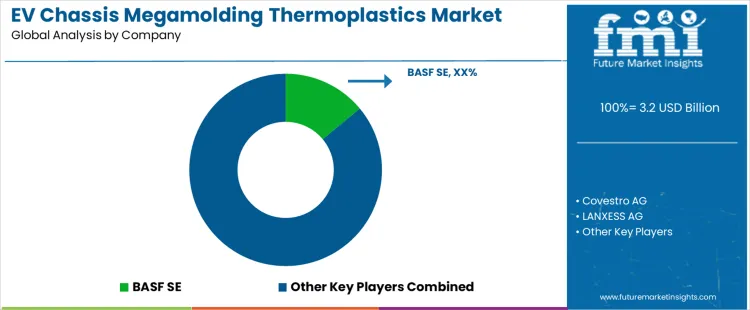
Competition in the EV chassis megamolding thermoplastics market is driven by material performance (impact strength, stiffness, thermal resistance), lightweighting potential, processability in large format molding, and compliance with automotive safety standards. BASF SE positions its thermoplastic solutions with engineered blends tailored for high load structural parts, and its product materials emphasize balanced mechanical properties and thermal stability that support large, integrated chassis components while contributing to vehicle weight reduction.
Covestro AG competes with high-performance thermoplastic systems designed for excellent toughness and impact resistance, with collateral focused on fit with megamolding processes and long term durability under automotive service conditions. LANXESS AG differentiates through specialty polymer compounds engineered for high flow and dimensional control, marketed for consistent processing behavior in large tools and robust end use performance.
Sabic and Celanese Corporation bring versatile thermoplastic portfolios that balance lightweight design, structural integrity, and thermal endurance, with documentation highlighting automotive OEM qualification support and global supply reliability. Their materials are often presented as drop in solutions for glass fiber reinforced components that meet EV chassis safety and performance targets.
Others in the market contribute with niche polymer grades and tailored compounding services for specific design or regional requirements. Across all vendors, product literature underscores impact strength, thermal resistance, megamolding process compatibility, and alignment with automotive safety and durability standards as key differentiators that help EV manufacturers adopt thermoplastic solutions for large, integrated chassis applications.
Key Players in EV Chassis Megamolding Thermoplastics Market
- BASF SE
- Covestro AG
- LANXESS AG
- Sabic
- Celanese Corporation
- Others
Scope of Report
| Attributes | Description |
|---|---|
| Quantitative Unit (2026) | USD Billion |
| Thermoplastic Type | Polypropylene (PP), Polyamide (PA), Polycarbonate (PC), Thermoplastic Olefins (TPO), Others |
| Application | EV Chassis Structural Parts, Bumpers & Reinforcements, Battery Housing & Supports, Crash Management Systems, Others |
| Regions Covered | Asia Pacific, Europe, North America, Latin America, Middle East & Africa |
| Countries Covered | China, Japan, South Korea, India, Australia & New Zealand, ASEAN, Germany, United Kingdom, France, Italy, Spain, Nordic, BENELUX, United States, Canada, Mexico, Brazil, Chile, Turkey, South Africa, Other GCC Countries |
| Key Companies Profiled | BASF SE, Covestro AG, LANXESS AG, Sabic, Celanese Corporation, Others |
| Additional Attributes | Dollar sales by thermoplastic type, application, and region; regional CAGR and growth outlook for EV chassis megamolding thermoplastics market. |
EV Chassis Megamolding Thermoplastics Market by Key Segments
Thermoplastic Type
- Polypropylene (PP)
- Polyamide (PA)
- Polycarbonate (PC)
- Thermoplastic Olefins (TPO)
- Others
Application
- EV Chassis Structural Parts
- Bumpers & Reinforcements
- Battery Housing & Supports
- Crash Management Systems
- Others
Region
- Asia Pacific
- China
- Japan
- South Korea
- India
- Australia & New Zealand
- ASEAN
- Rest of Asia Pacific
- Europe
- Germany
- United Kingdom
- France
- Italy
- Spain
- Nordic
- BENELUX
- Rest of Europe
- North America
- United States
- Canada
- Mexico
- Latin America
- Brazil
- Chile
- Rest of Latin America
- Middle East & Africa
- Kingdom of Saudi Arabia
- Other GCC Countries
- Turkey
- South Africa
- Other African Union
- Rest of Middle East & Africa
Bibliography
- International Energy Agency (IEA). (2024). Materials demand and lightweighting pathways in electric vehicle manufacturing. IEA Energy Technology Perspectives Programme.
- European Commission – Joint Research Centre (JRC). (2024). Advanced polymer materials and large‑format molding for electric vehicle structural components. Publications Office of the European Union.
- United States Department of Energy (DOE). (2024). Lightweight materials for next‑generation electric vehicle structures. Vehicle Technologies Office.
- International Organization for Standardization (ISO). (2024). Thermoplastics for automotive structural applications — performance, recyclability, and safety considerations. ISO Technical Committee on Plastics.
- Organisation for Economic Co‑operation and Development (OECD). (2025). Sustainable polymers and lightweight materials in transport electrification. OECD Environment, Health and Safety Programme.
Frequently Asked Questions
How big is the ev chassis megamolding thermoplastics market in 2026?
The global ev chassis megamolding thermoplastics market is estimated to be valued at USD 3.2 billion in 2026.
What will be the size of ev chassis megamolding thermoplastics market in 2036?
The market size for the ev chassis megamolding thermoplastics market is projected to reach USD 8.0 billion by 2036.
How much will be the ev chassis megamolding thermoplastics market growth between 2026 and 2036?
The ev chassis megamolding thermoplastics market is expected to grow at a 9.6% CAGR between 2026 and 2036.
What are the key product types in the ev chassis megamolding thermoplastics market?
The key product types in ev chassis megamolding thermoplastics market are polypropylene (pp), polyamide (pa), polycarbonate (pc), thermoplastic olefins (tpo) and others.
Which application segment to contribute significant share in the ev chassis megamolding thermoplastics market in 2026?
In terms of application, ev chassis structural parts segment to command 43.0% share in the ev chassis megamolding thermoplastics market in 2026.
Preview the report firsthand - request a free sample
Get SampleGet the brochure for pricing and purchase details.
Get PDFTable of Content
- Executive Summary
- Global Market Outlook
- Demand-side Trends
- Supply-side Trends
- Technology Roadmap Analysis
- Analysis and Recommendations
- Market Overview
- Market Coverage / Taxonomy
- Market Definition / Scope / Limitations
- Market Background
- Market Dynamics
- Drivers
- Restraints
- Opportunity
- Trends
- Scenario Forecast
- Demand in Optimistic Scenario
- Demand in Likely Scenario
- Demand in Conservative Scenario
- Opportunity Map Analysis
- Product Life Cycle Analysis
- Supply Chain Analysis
- Investment Feasibility Matrix
- Value Chain Analysis
- PESTLE and Porter’s Analysis
- Regulatory Landscape
- Regional Parent Market Outlook
- Production and Consumption Statistics
- Import and Export Statistics
- Market Dynamics
- Global Market Analysis 2021 to 2025 and Forecast, 2026 to 2036
- Historical Market Size Value (USD Million) Analysis, 2021 to 2025
- Current and Future Market Size Value (USD Million) Projections, 2026 to 2036
- Y-o-Y Growth Trend Analysis
- Absolute $ Opportunity Analysis
- Global Market Pricing Analysis 2021 to 2025 and Forecast 2026 to 2036
- Global Market Analysis 2021 to 2025 and Forecast 2026 to 2036, By Thermoplastic Type
- Introduction / Key Findings
- Historical Market Size Value (USD Million) Analysis By Thermoplastic Type , 2021 to 2025
- Current and Future Market Size Value (USD Million) Analysis and Forecast By Thermoplastic Type , 2026 to 2036
- Polypropylene (PP)
- Polyamide (PA)
- Polycarbonate (PC)
- Thermoplastic Olefins (TPO)
- Others
- Polypropylene (PP)
- Y-o-Y Growth Trend Analysis By Thermoplastic Type , 2021 to 2025
- Absolute $ Opportunity Analysis By Thermoplastic Type , 2026 to 2036
- Global Market Analysis 2021 to 2025 and Forecast 2026 to 2036, By Application
- Introduction / Key Findings
- Historical Market Size Value (USD Million) Analysis By Application, 2021 to 2025
- Current and Future Market Size Value (USD Million) Analysis and Forecast By Application, 2026 to 2036
- EV Chassis Structural Parts
- Bumpers & Reinforcements
- Battery Housing & Supports
- Crash Management Systems
- Others
- EV Chassis Structural Parts
- Y-o-Y Growth Trend Analysis By Application, 2021 to 2025
- Absolute $ Opportunity Analysis By Application, 2026 to 2036
- Global Market Analysis 2021 to 2025 and Forecast 2026 to 2036, By Region
- Introduction
- Historical Market Size Value (USD Million) Analysis By Region, 2021 to 2025
- Current Market Size Value (USD Million) Analysis and Forecast By Region, 2026 to 2036
- North America
- Latin America
- Western Europe
- Eastern Europe
- East Asia
- South Asia and Pacific
- Middle East & Africa
- Market Attractiveness Analysis By Region
- North America Market Analysis 2021 to 2025 and Forecast 2026 to 2036, By Country
- Historical Market Size Value (USD Million) Trend Analysis By Market Taxonomy, 2021 to 2025
- Market Size Value (USD Million) Forecast By Market Taxonomy, 2026 to 2036
- By Country
- USA
- Canada
- Mexico
- By Thermoplastic Type
- By Application
- By Country
- Market Attractiveness Analysis
- By Country
- By Thermoplastic Type
- By Application
- Key Takeaways
- Latin America Market Analysis 2021 to 2025 and Forecast 2026 to 2036, By Country
- Historical Market Size Value (USD Million) Trend Analysis By Market Taxonomy, 2021 to 2025
- Market Size Value (USD Million) Forecast By Market Taxonomy, 2026 to 2036
- By Country
- Brazil
- Chile
- Rest of Latin America
- By Thermoplastic Type
- By Application
- By Country
- Market Attractiveness Analysis
- By Country
- By Thermoplastic Type
- By Application
- Key Takeaways
- Western Europe Market Analysis 2021 to 2025 and Forecast 2026 to 2036, By Country
- Historical Market Size Value (USD Million) Trend Analysis By Market Taxonomy, 2021 to 2025
- Market Size Value (USD Million) Forecast By Market Taxonomy, 2026 to 2036
- By Country
- Germany
- UK
- Italy
- Spain
- France
- Nordic
- BENELUX
- Rest of Western Europe
- By Thermoplastic Type
- By Application
- By Country
- Market Attractiveness Analysis
- By Country
- By Thermoplastic Type
- By Application
- Key Takeaways
- Eastern Europe Market Analysis 2021 to 2025 and Forecast 2026 to 2036, By Country
- Historical Market Size Value (USD Million) Trend Analysis By Market Taxonomy, 2021 to 2025
- Market Size Value (USD Million) Forecast By Market Taxonomy, 2026 to 2036
- By Country
- Russia
- Poland
- Hungary
- Balkan & Baltic
- Rest of Eastern Europe
- By Thermoplastic Type
- By Application
- By Country
- Market Attractiveness Analysis
- By Country
- By Thermoplastic Type
- By Application
- Key Takeaways
- East Asia Market Analysis 2021 to 2025 and Forecast 2026 to 2036, By Country
- Historical Market Size Value (USD Million) Trend Analysis By Market Taxonomy, 2021 to 2025
- Market Size Value (USD Million) Forecast By Market Taxonomy, 2026 to 2036
- By Country
- China
- Japan
- South Korea
- By Thermoplastic Type
- By Application
- By Country
- Market Attractiveness Analysis
- By Country
- By Thermoplastic Type
- By Application
- Key Takeaways
- South Asia and Pacific Market Analysis 2021 to 2025 and Forecast 2026 to 2036, By Country
- Historical Market Size Value (USD Million) Trend Analysis By Market Taxonomy, 2021 to 2025
- Market Size Value (USD Million) Forecast By Market Taxonomy, 2026 to 2036
- By Country
- India
- ASEAN
- Australia & New Zealand
- Rest of South Asia and Pacific
- By Thermoplastic Type
- By Application
- By Country
- Market Attractiveness Analysis
- By Country
- By Thermoplastic Type
- By Application
- Key Takeaways
- Middle East & Africa Market Analysis 2021 to 2025 and Forecast 2026 to 2036, By Country
- Historical Market Size Value (USD Million) Trend Analysis By Market Taxonomy, 2021 to 2025
- Market Size Value (USD Million) Forecast By Market Taxonomy, 2026 to 2036
- By Country
- Kingdom of Saudi Arabia
- Other GCC Countries
- Turkiye
- South Africa
- Other African Union
- Rest of Middle East & Africa
- By Thermoplastic Type
- By Application
- By Country
- Market Attractiveness Analysis
- By Country
- By Thermoplastic Type
- By Application
- Key Takeaways
- Key Countries Market Analysis
- USA
- Pricing Analysis
- Market Share Analysis, 2025
- By Thermoplastic Type
- By Application
- Canada
- Pricing Analysis
- Market Share Analysis, 2025
- By Thermoplastic Type
- By Application
- Mexico
- Pricing Analysis
- Market Share Analysis, 2025
- By Thermoplastic Type
- By Application
- Brazil
- Pricing Analysis
- Market Share Analysis, 2025
- By Thermoplastic Type
- By Application
- Chile
- Pricing Analysis
- Market Share Analysis, 2025
- By Thermoplastic Type
- By Application
- Germany
- Pricing Analysis
- Market Share Analysis, 2025
- By Thermoplastic Type
- By Application
- UK
- Pricing Analysis
- Market Share Analysis, 2025
- By Thermoplastic Type
- By Application
- Italy
- Pricing Analysis
- Market Share Analysis, 2025
- By Thermoplastic Type
- By Application
- Spain
- Pricing Analysis
- Market Share Analysis, 2025
- By Thermoplastic Type
- By Application
- France
- Pricing Analysis
- Market Share Analysis, 2025
- By Thermoplastic Type
- By Application
- India
- Pricing Analysis
- Market Share Analysis, 2025
- By Thermoplastic Type
- By Application
- ASEAN
- Pricing Analysis
- Market Share Analysis, 2025
- By Thermoplastic Type
- By Application
- Australia & New Zealand
- Pricing Analysis
- Market Share Analysis, 2025
- By Thermoplastic Type
- By Application
- China
- Pricing Analysis
- Market Share Analysis, 2025
- By Thermoplastic Type
- By Application
- Japan
- Pricing Analysis
- Market Share Analysis, 2025
- By Thermoplastic Type
- By Application
- South Korea
- Pricing Analysis
- Market Share Analysis, 2025
- By Thermoplastic Type
- By Application
- Russia
- Pricing Analysis
- Market Share Analysis, 2025
- By Thermoplastic Type
- By Application
- Poland
- Pricing Analysis
- Market Share Analysis, 2025
- By Thermoplastic Type
- By Application
- Hungary
- Pricing Analysis
- Market Share Analysis, 2025
- By Thermoplastic Type
- By Application
- Kingdom of Saudi Arabia
- Pricing Analysis
- Market Share Analysis, 2025
- By Thermoplastic Type
- By Application
- Turkiye
- Pricing Analysis
- Market Share Analysis, 2025
- By Thermoplastic Type
- By Application
- South Africa
- Pricing Analysis
- Market Share Analysis, 2025
- By Thermoplastic Type
- By Application
- USA
- Market Structure Analysis
- Competition Dashboard
- Competition Benchmarking
- Market Share Analysis of Top Players
- By Regional
- By Thermoplastic Type
- By Application
- Competition Analysis
- Competition Deep Dive
- BASF SE
- Overview
- Product Portfolio
- Profitability by Market Segments (Product/Age /Sales Channel/Region)
- Sales Footprint
- Strategy Overview
- Marketing Strategy
- Product Strategy
- Channel Strategy
- Covestro AG
- LANXESS AG
- Sabic
- Celanese Corporation
- Others
- BASF SE
- Competition Deep Dive
- Assumptions & Acronyms Used
- Research Methodology


