

- Industry Size (2026)
- USD 1.1 Bn
- Forecast (2036)
- USD 1.1 Bn
- CAGR (2026 to 2036)
- 9.8%
Noise & Vibration Control PCR Material Market Forecast and Outlook 2026 to 2036
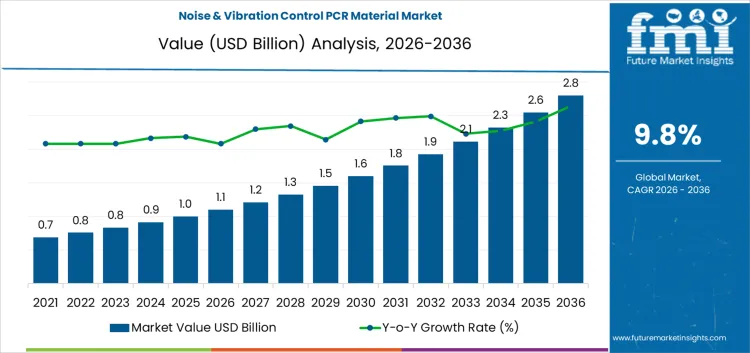
The noise and vibration control PCR material market is projected to reach USD 1.1 billion in 2026 and is likely to grow to USD 2.8 billion by 2036, with a CAGR of 9.8%. This growth is fueled by the increasing demand for effective noise and vibration control solutions across industries such as automotive, construction, and industrial manufacturing. PCR materials, derived from post-consumer recycled content, are becoming increasingly popular due to their ability to meet performance standards while contributing to more efficient material use.
As industries strive to improve product performance and environmental impact, noise and vibration control materials that offer both durability and recyclability are in high demand. PCR materials are particularly valuable in automotive applications, where noise reduction is critical for vehicle comfort and safety. With advancements in material science, the development of noise and vibration control PCR materials is set to improve the acoustic properties of products while meeting stricter regulatory requirements. The market will continue to expand as demand increases for products that combine performance with efficient resource utilization, driving innovation and adoption across multiple sectors.
Quick Stats of the Noise & Vibration Control PCR Material Market
- Noise & Vibration Control PCR Material Market Value (2026): USD 1.1 billion
- Noise & Vibration Control PCR Material Market Forecast Value (2036): USD 2.8 billion
- Noise & Vibration Control PCR Material Market Forecast CAGR 2026 to 2036: 9.8%
- Noise & Vibration Control PCR Material Market Leading Material Type: Nonwovens & foams (45 % share)
- Noise & Vibration Control PCR Material Market Key Growth Regions: Asia Pacific, North America, Europe, Latin America, Middle East & Africa
- Noise & Vibration Control PCR Material Market Top Players: Freudenberg, BASF, Shandong Nonwovens, Supreme Nonwovens, Local Tier-1s, Toray, Autoneum, Kingfa
What is the Growth Forecast for Noise & Vibration Control PCR Material Market through 2036?
The noise and vibration control PCR material market is anticipated to reach USD 1.1 billion in 2026 and expand to USD 2.8 billion by 2036, reflecting a compound annual growth rate (CAGR) of 9.8%. The market experiences gradual growth, increasing from USD 0.6 billion in 2020 to USD 1.1 billion by 2026. This expansion is primarily driven by the increasing adoption of PCR materials in noise and vibration reduction solutions for automotive, construction, and manufacturing sectors. As regulatory standards become stricter and the demand for environmentally friendly alternatives grows, PCR materials are positioned as a sustainable solution to meet industry requirements for both performance and sustainability.
From 2026 to 2036, the market will continue to demonstrate steady growth, reaching USD 2.8 billion by 2036. Demand for noise and vibration control materials is expected to rise as industries such as automotive and industrial machinery embrace PCR-based solutions to meet noise reduction regulations and sustainability goals. Innovations in PCR material technology, particularly in terms of enhanced durability and performance, will drive market adoption. Furthermore, with increasing environmental awareness, the shift towards recycled content in various industrial applications will continue to support market growth. By 2034, the market is expected to reach USD 2.3 billion, solidifying PCR materials as a key component in noise control solutions.
Noise & Vibration Control PCR Material Market Key Takeaways
| Metric | Value |
|---|---|
| Market Value (2026) | USD 1.1 billion |
| Forecast Value (2036) | USD 2.8 billion |
| Forecast CAGR 2026 to 2036 | 9.8% |
What Are the Key Drivers Behind Growth in the Noise & Vibration Control PCR Material Market?
The Noise & Vibration Control PCR Material Market is experiencing notable growth as industries such as automotive, construction, and manufacturing seek improved methods for controlling sound and vibration. In the automotive sector, particularly with the rise of electric vehicles (EVs), there is an increasing emphasis on minimizing cabin noise and vibration. As EVs operate with quieter engines, the need for materials that efficiently absorb sound and reduce vibrations within the vehicle has become a priority. PCR materials, derived from recycled plastics, are being utilized in various automotive components, including door panels, dashboards, and undercarriage parts, to achieve effective noise and vibration management.
The growth of this market is also attributed to the growing demand for waste reduction and resource optimization across industries. PCR materials are being recognized for their ability to deliver performance similar to traditional materials at a lower environmental cost. In sectors such as industrial machinery and construction, these materials are being integrated into applications like soundproof panels and flooring. With increasing pressure to address waste management concerns while maintaining product quality, PCR materials are gaining preference for applications requiring reliable noise and vibration control, offering a sustainable and cost-effective alternative to conventional materials.
What Are the Key Segments in the Noise & Vibration Control PCR Material Market?
The Noise & Vibration Control PCR Material Market consists of two primary segments: Material Type and Polymer and Fibre. The Nonwovens & foams segment leads in the material type category, holding 45% of the market share, while PCR-PET and PCR-PP fibres dominate the polymer and fibre segment, accounting for 55%. These segments reflect the increasing demand for noise and vibration-damping materials that also meet sustainability goals in various industries, including automotive and manufacturing. The adoption of PCR materials is poised to grow as companies prioritize both environmental and functional performance.
How Do Nonwovens & Foams Contribute to Noise & Vibration Control in PCR Materials?
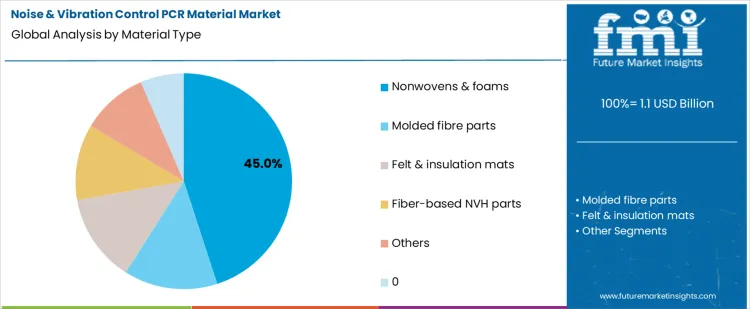
The Nonwovens & foams segment in the Noise & Vibration Control PCR Material Market commands a significant 45% market share. These materials are essential for reducing noise and vibration in a wide range of applications, including automotive interiors, industrial equipment, and consumer products. Nonwovens, often made from fibers or polymers, offer excellent sound absorption properties, while foams contribute additional vibration-damping benefits. The flexibility and lightweight nature of nonwoven fabrics and foams make them versatile for various uses, from insulation mats to acoustic panels.
The demand for nonwovens and foams is driven by their high efficiency in reducing unwanted noise, making them indispensable in industries focused on improving product comfort and performance. As environmental concerns rise, the shift toward sustainable materials such as PCR nonwovens and foams is increasing. While they offer substantial benefits, challenges related to cost, consistency in quality, and performance in extreme conditions can limit their adoption. Nevertheless, the growing interest in sustainable manufacturing and the need to meet noise regulations are expected to fuel continued growth in this segment, particularly in automotive and industrial applications.
What Role Do PCR Fibres Play in Noise & Vibration Control Applications?
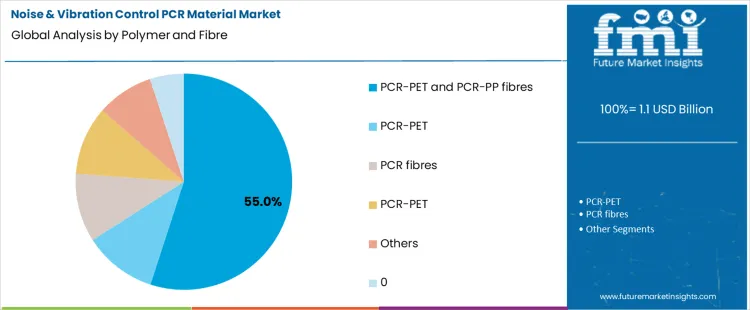
The Polymer and Fibre Segment in the Noise & Vibration Control PCR Material Market is driven by PCR-PET and PCR-PP fibres, which account for 55% of the market share. These fibres are prized for their durability, flexibility, and excellent noise and vibration control properties. PCR-PET fibres, derived from recycled polyethylene terephthalate, are particularly suitable for automotive applications due to their ability to withstand high temperatures and provide long-lasting performance. PCR-PP fibres offer similar advantages, including resilience and ease of processing, making them ideal for a range of noise-damping applications.
Adoption of PCR-PET and PCR-PP fibres is mainly influenced by the demand for more sustainable materials in the automotive and manufacturing industries. These fibres provide an eco-friendly alternative to virgin polymers, helping manufacturers reduce their carbon footprint. Additionally, the growth of the recycling industry has enabled better availability and quality control of PCR materials, further promoting their use in noise and vibration control applications. However, challenges such as ensuring consistency in material performance and overcoming cost barriers associated with high-quality recycled materials remain. As recycling technologies advance, the role of PCR fibres in this market is set to expand, offering both sustainability and high performance.
What Performance and Specification Needs Are Driving Demand for Noise & Vibration Control PCR Materials?
In the automotive and industrial sectors, OEMs are focused on materials that can effectively reduce noise, vibration, and harshness (NVH) in products like vehicle cabins, machinery enclosures, and HVAC systems. Noise & vibration control PCR materials with specific damping characteristics help meet NVH targets while adhering to recycled content requirements. Engineers assess key factors like dynamic stiffness and frequency-dependent attenuation during the design phase. Procurement teams are prioritizing recyclers that provide reliable PCR grades with proven acoustic performance. These materials are increasingly sought after by industries aiming to create quieter products while meeting regulatory noise limits.
What Material and Supply Limitations Are Restricting Growth of Noise & Vibration Control PCR Materials?
One of the key barriers in the noise and vibration control PCR material market is the variability in acoustic performance due to inconsistent feedstock. Variations in polymer composition can lead to unpredictable damping behavior, complicating the design and validation process. Achieving reliable loss factors across specific frequency ranges often requires fine-tuning formulations with impact modifiers and fillers, which adds complexity to production. Furthermore, meeting industry certification standards, such as those for automotive components, extends production timelines and increases costs. Logistical challenges in sourcing and transporting PCR feedstock add additional supply chain risks that manufacturers need to manage.
How Are Approaches and Application Patterns Shaping Trends in Noise & Vibration Control PCR Materials?
New methods in polymer blending and compatibilization are improving the uniformity of NVH performance in PCR materials. Techniques for selectively processing recycled materials allow for the production of polymers with specific viscoelastic properties suited for various frequency ranges. Designers are now using advanced acoustic simulation tools to predict how materials will perform under different conditions, helping to select the best materials for parts like body panels and mounting systems. There is also growing collaboration across industries to standardize testing and qualification procedures for new grades, making it easier and faster to bring new materials to market. Predictive modeling is becoming more common, allowing manufacturers to adjust formulations early in the design phase to ensure optimal NVH performance.
What Are the Growth Trends for Noise & Vibration Control PCR Materials by Country?
| Country | CAGR (%) |
|---|---|
| Germany | 8.6% |
| USA | 8.2% |
| China | 12.2% |
| India | 13.0% |
| Brazil | 8.2% |
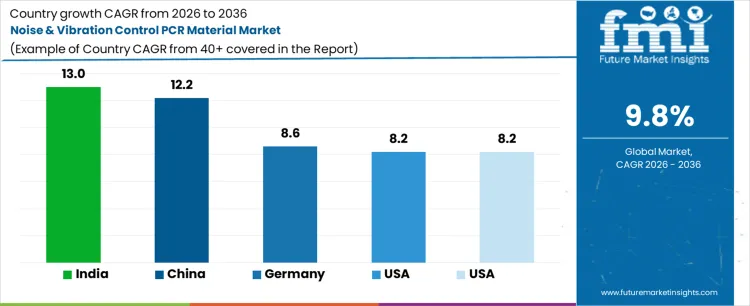
The demand for noise and vibration control post-consumer recycled (PCR) materials is seeing steady growth across various countries. India leads with a 13.0% CAGR, driven by increasing industrial activities, automotive production, and growing awareness of sustainability in manufacturing processes. China follows with a 12.2% CAGR, fueled by the rapid expansion of its automotive and construction sectors, along with government initiatives promoting recycling and material efficiency. Germany records a solid growth rate of 8.6%, supported by strict environmental standards and the integration of PCR materials in noise and vibration control solutions. The USA, with an 8.2% CAGR, shows steady demand, driven by a focus on sustainable materials in industries like automotive and construction. Brazil also experiences a similar growth rate of 8.2%, with increasing adoption of noise and vibration control technologies across various sectors.
How Is Germany Shaping the Future of Noise & Vibration Control PCR Materials?
Demand for noise and vibration control PCR materials in Germany is projected to grow at a CAGR of 8.6%. The country’s strong automotive and manufacturing sectors are key drivers of this market, as industries seek durable, cost-effective, and eco-friendly materials to manage noise and vibration in vehicles and machinery. Germany’s emphasis on sustainability and environmental regulations is pushing for increased use of recycled materials, including PCR materials. Furthermore, the growing trend toward electric vehicles (EVs) and the need for noise reduction in these vehicles is further fueling the demand. Germany’s commitment to innovation and recycling technologies ensures that the market will continue to expand in the coming years.
- The automotive sector increases the demand for noise control materials.
- Environmental regulations push for more sustainable material solutions.
- Technological advancements in material production foster market growth.
What Is Powering the Growth of Noise & Vibration Control PCR Materials in the USA?
In the USA, the noise and vibration control PCR materials market is growing at a CAGR of 8.2%. With the automotive industry’s increasing focus on sustainability, the demand for recycled materials that meet high performance standards is rising. The need to reduce noise and vibration in electric vehicles (EVs) is another major driver of the market. USA government regulations promoting recycling and reducing environmental impact further support the growth of the market. Additionally, the development of advanced materials and technologies is enhancing the efficiency of noise control solutions, making the market in the USA increasingly attractive to manufacturers and consumers alike.
- Electric vehicle production increases demand for vibration control materials.
- USA regulations on sustainability foster market growth.
- Advances in material technology improve product performance.
What Are the Key Forces Driving China’s Noise & Vibration Control PCR Materials Market?
Noise and vibration control PCR materials market in China is projected to grow at a CAGR of 12.2%. As the world’s largest electric vehicle manufacturer, the country is seeing substantial increases in demand for fire-resistant, eco-friendly plastics. The government’s push for circular economy practices and environmental sustainability is accelerating the use of recycled materials in automotive production. With regulatory frameworks focusing on reducing plastic waste and enhancing safety standards, China is leading the way in adopting fire safe PCR plastics. The continuous development of recycling infrastructure and advancements in polymer technology are key factors that will drive the market’s expansion over the coming years.
- Electric vehicle production expansion drives demand for fire-resistant plastics.
- Government regulations accelerate the use of recycled, sustainable materials.
- Advances in polymer technology fuel market growth.
What Is Driving the Surge in Noise & Vibration Control PCR Materials Demand in India?
Noise and vibration control PCR materials market in India is set to grow at a CAGR of 13%. The country's growing electric vehicle market is creating significant demand for materials that are both fire-resistant and environmentally friendly. As India increasingly prioritizes sustainability in manufacturing, the use of recycled plastics in electric vehicle production is gaining traction. Government policies supporting recycling and waste management, along with rising consumer awareness of environmental issues, are key factors driving the adoption of fire safe PCR plastics. With continued growth in the electric vehicle industry, the demand for these materials is expected to continue rising sharply in India.
- Growing electric vehicle market increases demand for fire-safe plastics.
- Government policies support recycling and sustainable material use.
- Consumer awareness of environmental impacts accelerates adoption.
What Is Driving Brazil’s Growth in Noise & Vibration Control PCR Materials?
In Brazil, the noise and vibration control PCR materials market is expected to grow at a CAGR of 8.2%. The country’s automotive sector is increasingly focusing on electric vehicle production, fueling the demand for fire-resistant, sustainable materials. As Brazil strengthens its recycling policies and promotes the use of eco-friendly materials, the adoption of fire safe PCR plastics in the electric vehicle market is gaining momentum. Local manufacturers are investing in new technologies to produce high-performance, fire-resistant plastics that also meet sustainability standards. With growing consumer demand for green products and a supportive regulatory environment, Brazil is poised for steady growth in this market.
- Electric vehicle market expansion drives demand for sustainable materials.
- Government incentives support the use of recycled fire-safe plastics.
- Technological advancements in polymer production boost market prospects.
What Differentiates Competitors in Noise & Vibration Control PCR Material Market?
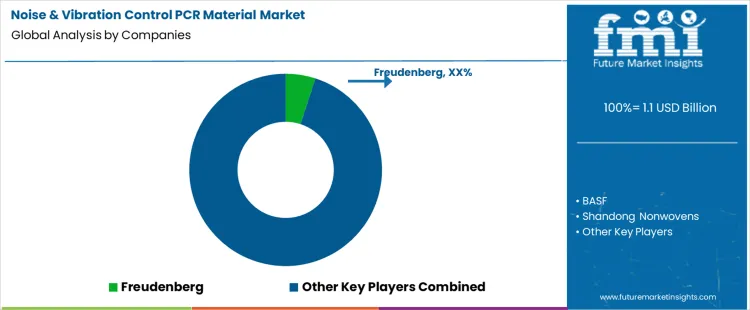
Freudenberg competes with tailored nonwoven PCR materials engineered for noise and vibration damping in automotive interiors and underbody components. Its Vectomat® PCR range uses post consumer recycled fibers combined with proprietary needling and bonding process to achieve consistent acoustic attenuation across targeted frequencies. Freudenberg emphasizes validated performance data correlating material structure with sound reduction metrics in EV and ICE applications. BASF offers acoustic foam and polymer composites with integrated PCR content that target broad band noise control. Its solutions focus on thermal stability and aging resistance while maintaining dampening efficiency, positioning them for use in floor panels and wheel arch liners where temperature swings are substantial.
Shandong Nonwovens and Supreme Nonwovens supply varied PCR nonwoven matting for tier 1 integrators, with product lines that balance cost efficiency and acoustic performance. Shandong promotes scalable production of spunbond and needlepunch products with defined fiber orientation to support consistent vibration resistance. Supreme positions its recycled nonwovens alongside customizable thickness options that suit interior trim and headliner noise control. Toray brings high performance PCR blended fibers designed to improve sound absorption in mid frequency bands of cabin noise. Autoneum leverages its longstanding acoustic expertise to integrate layered PCR composite systems with differentiated viscoelastic damping layers. Kingfa applies polymer modification techniques to tune stiffness and damping ratios of PCR compounds, supporting NVH targets in EV battery enclosures and door modules. Local tier 1 suppliers compete by offering regionally tailored production and shorter lead times, enabling engineers to iterate designs rapidly. Competitive emphasis rests on validated test results, ease of integration into existing assembly processes, and the ability to meet both acoustic performance targets and sustainability mandates without trade offs in mechanical durability.
Key Players in the Noise & Vibration Control PCR Material Market
- Freudenberg
- BASF
- Shandong Nonwovens
- Supreme Nonwovens
- Local Tier-1s
- Toray
- Autoneum
- Kingfa
Scope of the Report
| Items | Values |
|---|---|
| Quantitative Units (2026) | USD billion |
| End-use | Dash, Floor & Door NVH Parts, Powertrain & Cabin NVH, High-Volume Vehicles, Entry-Level Vehicles, Automotive Interiors, Precision NVH Systems |
| Material Type | Nonwovens & Foams, Molded Fibre Parts, Felt & Insulation Mats, Fiber-Based NVH Parts, Others |
| Polymer and Fibre | PCR-PET and PCR-PP Fibres, PCR-PET, PCR Fibres, Others |
| Technology | Acoustic Tuning & Multilayer Lamination, Thermo-Acoustic Optimisation, High-Speed Nonwoven Processing, Cost-Efficient Acoustic Design, Others |
| Regions Covered | Asia Pacific, Europe, North America, Latin America, Middle East & Africa |
| Countries Covered | China, Japan, South Korea, India, Australia & New Zealand, ASEAN, Germany, United Kingdom, France, Italy, Spain, Nordic, BENELUX, United States, Canada, Mexico, Brazil, Chile, Saudi Arabia, Turkey, South Africa, and other regional markets |
| Key Companies Profiled | Freudenberg, BASF, Shandong Nonwovens, Supreme Nonwovens, Toray, Autoneum, Kingfa, Local Tier-1 Suppliers |
| Additional Attributes | Dollar sales by end-use, material type, polymer and fibre, and technology, nonwovens and foams representing the largest material type segment due to strong sound absorption and vibration damping performance, PCR-PET and PCR-PP fibres representing the leading polymer and fibre category because of durability and processing flexibility, demand driven by stricter vehicle NVH requirements and growth of electric vehicles with higher sensitivity to cabin noise, performance economics shaped by viscoelastic tuning, multilayer structures, and feedstock consistency, increasing use in dashboards, floor systems, door panels, and powertrain enclosures, and competitive positioning based on validated acoustic test data, ease of integration into OEM assembly processes, and ability to meet both NVH targets and recycled content mandates. |
Noise & Vibration Control PCR Material Market Segmentation
End-use:
- Dash, floor & door NVH parts
- Powertrain & cabin NVH
- High-volume vehicles
- Entry-level vehicles
- Automotive interiors
- Precision NVH systems
Material Type:
- Nonwovens & foams
- Molded fibre parts
- Felt & insulation mats
- Fiber-based NVH parts
- Others
Polymer and Fibre:
- PCR-PET and PCR-PP fibres
- PCR-PET
- PCR fibres
- PCR-PET
- Others
Technology:
- Acoustic tuning & multilayer lamination
- Thermo-acoustic optimisation
- High-speed nonwoven processing
- Cost-efficient acoustic design
- Others
Region
- Asia Pacific
- China
- Japan
- South Korea
- India
- Australia & New Zealand
- ASEAN
- Rest of Asia Pacific
- Europe
- Germany
- United Kingdom
- France
- Italy
- Spain
- Nordic
- BENELUX
- Rest of Europe
- North America
- United States
- Canada
- Mexico
- Latin America
- Brazil
- Chile
- Rest of Latin America
- Middle East & Africa
- Kingdom of Saudi Arabia
- Other GCC Countries
- Turkey
- South Africa
- Other African Union
- Rest of Middle East & Africa
Bibliography
- Organisation for Economic Co-operation and Development. (2024). Policy scenarios for eliminating plastic pollution by 2040. OECD Publishing.
- United Nations Environment Programme. (2024). Global waste management outlook 2024. UNEP.
- European Commission. (2023). Proposal for a regulation of the European Parliament and of the Council on circularity requirements for vehicle design and on management of end-of-life vehicles (COM/2023/451 final). European Union.
Frequently Asked Questions
How big is the noise & vibration control pcr material market in 2026?
The global noise & vibration control pcr material market is estimated to be valued at USD 1.1 billion in 2026.
What will be the size of noise & vibration control pcr material market in 2036?
The market size for the noise & vibration control pcr material market is projected to reach USD 2.8 billion by 2036.
How much will be the noise & vibration control pcr material market growth between 2026 and 2036?
The noise & vibration control pcr material market is expected to grow at a 9.8% CAGR between 2026 and 2036.
What are the key product types in the noise & vibration control pcr material market?
The key product types in noise & vibration control pcr material market are dash, floor & door nvh parts, powertrain & cabin nvh, high-volume vehicles, entry-level vehicles, automotive interiors, precision nvh systems and end-use.
Which material type segment to contribute significant share in the noise & vibration control pcr material market in 2026?
In terms of material type, nonwovens & foams segment to command 45.0% share in the noise & vibration control pcr material market in 2026.
Preview the report firsthand - request a free sample
Get SampleGet the brochure for pricing and purchase details.
Get PDFTable of Content
- Executive Summary
- Global Market Outlook
- Demand-side Trends
- Supply-side Trends
- Technology Roadmap Analysis
- Analysis and Recommendations
- Market Overview
- Market Coverage / Taxonomy
- Market Definition / Scope / Limitations
- Market Background
- Market Dynamics
- Drivers
- Restraints
- Opportunity
- Trends
- Scenario Forecast
- Demand in Optimistic Scenario
- Demand in Likely Scenario
- Demand in Conservative Scenario
- Opportunity Map Analysis
- Product Life Cycle Analysis
- Supply Chain Analysis
- Investment Feasibility Matrix
- Value Chain Analysis
- PESTLE and Porter’s Analysis
- Regulatory Landscape
- Regional Parent Market Outlook
- Production and Consumption Statistics
- Import and Export Statistics
- Market Dynamics
- Global Market Analysis 2021 to 2025 and Forecast, 2026 to 2036
- Historical Market Size Value (USD Million) Analysis, 2021 to 2025
- Current and Future Market Size Value (USD Million) Projections, 2026 to 2036
- Y-o-Y Growth Trend Analysis
- Absolute $ Opportunity Analysis
- Global Market Pricing Analysis 2021 to 2025 and Forecast 2026 to 2036
- Global Market Analysis 2021 to 2025 and Forecast 2026 to 2036, By End-use
- Introduction / Key Findings
- Historical Market Size Value (USD Million) Analysis By End-use , 2021 to 2025
- Current and Future Market Size Value (USD Million) Analysis and Forecast By End-use , 2026 to 2036
- Dash, floor & door NVH parts
- Powertrain & cabin NVH
- High-volume vehicles
- Entry-level vehicles
- Automotive interiors
- Precision NVH systems
- Dash, floor & door NVH parts
- Y-o-Y Growth Trend Analysis By End-use , 2021 to 2025
- Absolute $ Opportunity Analysis By End-use , 2026 to 2036
- Global Market Analysis 2021 to 2025 and Forecast 2026 to 2036, By Material Type
- Introduction / Key Findings
- Historical Market Size Value (USD Million) Analysis By Material Type, 2021 to 2025
- Current and Future Market Size Value (USD Million) Analysis and Forecast By Material Type, 2026 to 2036
- Nonwovens & foams
- Molded fibre parts
- Felt & insulation mats
- Fiber-based NVH parts
- Others
- Nonwovens & foams
- Y-o-Y Growth Trend Analysis By Material Type, 2021 to 2025
- Absolute $ Opportunity Analysis By Material Type, 2026 to 2036
- Global Market Analysis 2021 to 2025 and Forecast 2026 to 2036, By Polymer and Fibre
- Introduction / Key Findings
- Historical Market Size Value (USD Million) Analysis By Polymer and Fibre, 2021 to 2025
- Current and Future Market Size Value (USD Million) Analysis and Forecast By Polymer and Fibre, 2026 to 2036
- PCR-PET and PCR-PP fibres
- PCR-PET
- PCR fibres
- PCR-PET
- Others
- PCR-PET and PCR-PP fibres
- Y-o-Y Growth Trend Analysis By Polymer and Fibre, 2021 to 2025
- Absolute $ Opportunity Analysis By Polymer and Fibre, 2026 to 2036
- Global Market Analysis 2021 to 2025 and Forecast 2026 to 2036, By Technology
- Introduction / Key Findings
- Historical Market Size Value (USD Million) Analysis By Technology, 2021 to 2025
- Current and Future Market Size Value (USD Million) Analysis and Forecast By Technology, 2026 to 2036
- Acoustic tuning & multilayer lamination
- Thermo-acoustic optimisation
- High-speed nonwoven processing
- Cost-efficient acoustic design
- Others
- Acoustic tuning & multilayer lamination
- Y-o-Y Growth Trend Analysis By Technology, 2021 to 2025
- Absolute $ Opportunity Analysis By Technology, 2026 to 2036
- Global Market Analysis 2021 to 2025 and Forecast 2026 to 2036, By 0.36
- Introduction / Key Findings
- Historical Market Size Value (USD Million) Analysis By 0.36, 2021 to 2025
- Current and Future Market Size Value (USD Million) Analysis and Forecast By 0.36, 2026 to 2036
- 0.28
- 0.22
- 0.1
- 0.02
- 0.02
- 0.28
- Y-o-Y Growth Trend Analysis By 0.36, 2021 to 2025
- Absolute $ Opportunity Analysis By 0.36, 2026 to 2036
- Global Market Analysis 2021 to 2025 and Forecast 2026 to 2036, By Region
- Introduction
- Historical Market Size Value (USD Million) Analysis By Region, 2021 to 2025
- Current Market Size Value (USD Million) Analysis and Forecast By Region, 2026 to 2036
- North America
- Latin America
- Western Europe
- Eastern Europe
- East Asia
- South Asia and Pacific
- Middle East & Africa
- Market Attractiveness Analysis By Region
- North America Market Analysis 2021 to 2025 and Forecast 2026 to 2036, By Country
- Historical Market Size Value (USD Million) Trend Analysis By Market Taxonomy, 2021 to 2025
- Market Size Value (USD Million) Forecast By Market Taxonomy, 2026 to 2036
- By Country
- USA
- Canada
- Mexico
- By End-use
- By Material Type
- By Polymer and Fibre
- By Technology
- By 0.36
- By Country
- Market Attractiveness Analysis
- By Country
- By End-use
- By Material Type
- By Polymer and Fibre
- By Technology
- By 0.36
- Key Takeaways
- Latin America Market Analysis 2021 to 2025 and Forecast 2026 to 2036, By Country
- Historical Market Size Value (USD Million) Trend Analysis By Market Taxonomy, 2021 to 2025
- Market Size Value (USD Million) Forecast By Market Taxonomy, 2026 to 2036
- By Country
- Brazil
- Chile
- Rest of Latin America
- By End-use
- By Material Type
- By Polymer and Fibre
- By Technology
- By 0.36
- By Country
- Market Attractiveness Analysis
- By Country
- By End-use
- By Material Type
- By Polymer and Fibre
- By Technology
- By 0.36
- Key Takeaways
- Western Europe Market Analysis 2021 to 2025 and Forecast 2026 to 2036, By Country
- Historical Market Size Value (USD Million) Trend Analysis By Market Taxonomy, 2021 to 2025
- Market Size Value (USD Million) Forecast By Market Taxonomy, 2026 to 2036
- By Country
- Germany
- UK
- Italy
- Spain
- France
- Nordic
- BENELUX
- Rest of Western Europe
- By End-use
- By Material Type
- By Polymer and Fibre
- By Technology
- By 0.36
- By Country
- Market Attractiveness Analysis
- By Country
- By End-use
- By Material Type
- By Polymer and Fibre
- By Technology
- By 0.36
- Key Takeaways
- Eastern Europe Market Analysis 2021 to 2025 and Forecast 2026 to 2036, By Country
- Historical Market Size Value (USD Million) Trend Analysis By Market Taxonomy, 2021 to 2025
- Market Size Value (USD Million) Forecast By Market Taxonomy, 2026 to 2036
- By Country
- Russia
- Poland
- Hungary
- Balkan & Baltic
- Rest of Eastern Europe
- By End-use
- By Material Type
- By Polymer and Fibre
- By Technology
- By 0.36
- By Country
- Market Attractiveness Analysis
- By Country
- By End-use
- By Material Type
- By Polymer and Fibre
- By Technology
- By 0.36
- Key Takeaways
- East Asia Market Analysis 2021 to 2025 and Forecast 2026 to 2036, By Country
- Historical Market Size Value (USD Million) Trend Analysis By Market Taxonomy, 2021 to 2025
- Market Size Value (USD Million) Forecast By Market Taxonomy, 2026 to 2036
- By Country
- China
- Japan
- South Korea
- By End-use
- By Material Type
- By Polymer and Fibre
- By Technology
- By 0.36
- By Country
- Market Attractiveness Analysis
- By Country
- By End-use
- By Material Type
- By Polymer and Fibre
- By Technology
- By 0.36
- Key Takeaways
- South Asia and Pacific Market Analysis 2021 to 2025 and Forecast 2026 to 2036, By Country
- Historical Market Size Value (USD Million) Trend Analysis By Market Taxonomy, 2021 to 2025
- Market Size Value (USD Million) Forecast By Market Taxonomy, 2026 to 2036
- By Country
- India
- ASEAN
- Australia & New Zealand
- Rest of South Asia and Pacific
- By End-use
- By Material Type
- By Polymer and Fibre
- By Technology
- By 0.36
- By Country
- Market Attractiveness Analysis
- By Country
- By End-use
- By Material Type
- By Polymer and Fibre
- By Technology
- By 0.36
- Key Takeaways
- Middle East & Africa Market Analysis 2021 to 2025 and Forecast 2026 to 2036, By Country
- Historical Market Size Value (USD Million) Trend Analysis By Market Taxonomy, 2021 to 2025
- Market Size Value (USD Million) Forecast By Market Taxonomy, 2026 to 2036
- By Country
- Kingdom of Saudi Arabia
- Other GCC Countries
- Turkiye
- South Africa
- Other African Union
- Rest of Middle East & Africa
- By End-use
- By Material Type
- By Polymer and Fibre
- By Technology
- By 0.36
- By Country
- Market Attractiveness Analysis
- By Country
- By End-use
- By Material Type
- By Polymer and Fibre
- By Technology
- By 0.36
- Key Takeaways
- Key Countries Market Analysis
- USA
- Pricing Analysis
- Market Share Analysis, 2025
- By End-use
- By Material Type
- By Polymer and Fibre
- By Technology
- By 0.36
- Canada
- Pricing Analysis
- Market Share Analysis, 2025
- By End-use
- By Material Type
- By Polymer and Fibre
- By Technology
- By 0.36
- Mexico
- Pricing Analysis
- Market Share Analysis, 2025
- By End-use
- By Material Type
- By Polymer and Fibre
- By Technology
- By 0.36
- Brazil
- Pricing Analysis
- Market Share Analysis, 2025
- By End-use
- By Material Type
- By Polymer and Fibre
- By Technology
- By 0.36
- Chile
- Pricing Analysis
- Market Share Analysis, 2025
- By End-use
- By Material Type
- By Polymer and Fibre
- By Technology
- By 0.36
- Germany
- Pricing Analysis
- Market Share Analysis, 2025
- By End-use
- By Material Type
- By Polymer and Fibre
- By Technology
- By 0.36
- UK
- Pricing Analysis
- Market Share Analysis, 2025
- By End-use
- By Material Type
- By Polymer and Fibre
- By Technology
- By 0.36
- Italy
- Pricing Analysis
- Market Share Analysis, 2025
- By End-use
- By Material Type
- By Polymer and Fibre
- By Technology
- By 0.36
- Spain
- Pricing Analysis
- Market Share Analysis, 2025
- By End-use
- By Material Type
- By Polymer and Fibre
- By Technology
- By 0.36
- France
- Pricing Analysis
- Market Share Analysis, 2025
- By End-use
- By Material Type
- By Polymer and Fibre
- By Technology
- By 0.36
- India
- Pricing Analysis
- Market Share Analysis, 2025
- By End-use
- By Material Type
- By Polymer and Fibre
- By Technology
- By 0.36
- ASEAN
- Pricing Analysis
- Market Share Analysis, 2025
- By End-use
- By Material Type
- By Polymer and Fibre
- By Technology
- By 0.36
- Australia & New Zealand
- Pricing Analysis
- Market Share Analysis, 2025
- By End-use
- By Material Type
- By Polymer and Fibre
- By Technology
- By 0.36
- China
- Pricing Analysis
- Market Share Analysis, 2025
- By End-use
- By Material Type
- By Polymer and Fibre
- By Technology
- By 0.36
- Japan
- Pricing Analysis
- Market Share Analysis, 2025
- By End-use
- By Material Type
- By Polymer and Fibre
- By Technology
- By 0.36
- South Korea
- Pricing Analysis
- Market Share Analysis, 2025
- By End-use
- By Material Type
- By Polymer and Fibre
- By Technology
- By 0.36
- Russia
- Pricing Analysis
- Market Share Analysis, 2025
- By End-use
- By Material Type
- By Polymer and Fibre
- By Technology
- By 0.36
- Poland
- Pricing Analysis
- Market Share Analysis, 2025
- By End-use
- By Material Type
- By Polymer and Fibre
- By Technology
- By 0.36
- Hungary
- Pricing Analysis
- Market Share Analysis, 2025
- By End-use
- By Material Type
- By Polymer and Fibre
- By Technology
- By 0.36
- Kingdom of Saudi Arabia
- Pricing Analysis
- Market Share Analysis, 2025
- By End-use
- By Material Type
- By Polymer and Fibre
- By Technology
- By 0.36
- Turkiye
- Pricing Analysis
- Market Share Analysis, 2025
- By End-use
- By Material Type
- By Polymer and Fibre
- By Technology
- By 0.36
- South Africa
- Pricing Analysis
- Market Share Analysis, 2025
- By End-use
- By Material Type
- By Polymer and Fibre
- By Technology
- By 0.36
- USA
- Market Structure Analysis
- Competition Dashboard
- Competition Benchmarking
- Market Share Analysis of Top Players
- By Regional
- By End-use
- By Material Type
- By Polymer and Fibre
- By Technology
- By 0.36
- Competition Analysis
- Competition Deep Dive
- Freudenberg
- Overview
- Product Portfolio
- Profitability by Market Segments (Product/Age /Sales Channel/Region)
- Sales Footprint
- Strategy Overview
- Marketing Strategy
- Product Strategy
- Channel Strategy
- BASF
- Shandong Nonwovens
- Supreme Nonwovens
- Local Tier-1s
- Toray
- Autoneum
- Kingfa
- Freudenberg
- Competition Deep Dive
- Assumptions & Acronyms Used
- Research Methodology


