

- Market Size (2026)
- USD 639.3 Mn
- Forecast (2036)
- USD 955.4 Mn
- CAGR (2026 to 2036)
- 4.1%
Fibre Film Market Size, Market Forecast and Outlook By FMI
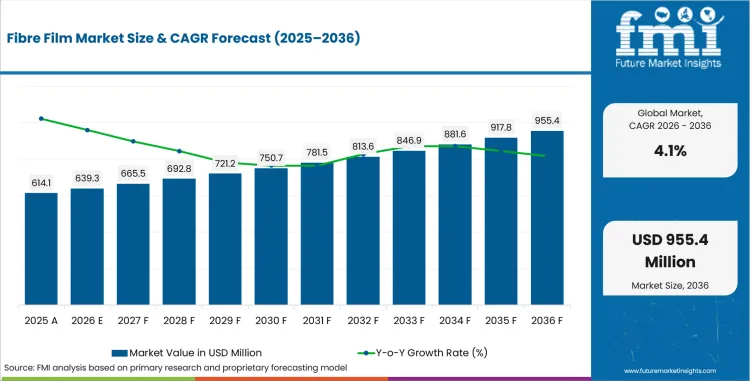
The fibre film market was valued at USD 614.1 million in 2025. The market is set to reach USD 639.3 million by 2026-end and grow at a CAGR of 4.1% between 2026-2036 to reach USD 955.4 million by 2036. Automatic Wrapping Fibre Films will dominate with a 34.6% share, while Fibre Films Below 10 Microns will lead with a 29.8% share.
Key Takeaways, Market Size, and Forecast
- 2026 Market Size: USD 639.3 million
- 2036 Market Size: USD 955.4 million
- Forecast CAGR: 4.1% from 2026 to 2036
- Leading Technology: Automatic Wrapping Fibre Films
- Automatic Wrapping Fibre Films Share in 2026: 34.6%
- Leading End-use Industry: Food and Beverages
- Food and Beverages Share in 2026: 33.4%
- Fastest-growing Country: South Korea
- South Korea CAGR: 6.9% through 2036
| Parameter | Details |
|---|---|
| Market Size in 2025 (Value) | USD 614.1 million |
| Market Forecast in 2036 (Value) | USD 955.4 million |
| CAGR (2026-2036) | 4.1% |
| Years Considered | 2021-2036 |
| Base Year | 2025 |
| Forecast Period | 2026-2036 |
| Units Considered | Value (USD Mn) |
| Leading Sub-Region | South Korea |
Summary of the Fibre Film Market
- Demand and Growth Drivers
- Sustainability-led packaging reformulation is likely to support demand for fibre film products as producers seek alternatives to conventional plastic wrapping solutions that meet recyclability and performance requirements.
- E-commerce logistics growth is likely to remain a key driver as fibre film applications in protective packaging, pallet stabilization, and load containment gain relevance in high-volume fulfillment operations.
- Regulatory pressure on single-use plastics and the shift toward compostable packaging materials are expected to support adoption of bio-based and recyclable fibre film variants during the forecast period.
- Product and Segment View
- Automatic Wrapping Fibre Films is likely to account for 34.6% of the technology segment, supported by established demand across primary end-use applications.
- Food and Beverages is likely to lead the end-use industry segment at 33.4%, reflecting procurement patterns across commercial and industrial buyers.
- Fibre Films Below 10 Microns is likely to hold 29.8% share in the thickness segment, reflecting established application requirements.
- Geography and Competitive Outlook
- South Korea is likely to remain a key market at 6.9% CAGR, reflecting the scale of domestic demand and investment in capacity expansion.
- UK is likely to sustain growth at 6.8% CAGR on account of regulatory compliance requirements and end-use sector modernization.
- Companies that can combine cost competitiveness with specification compliance across key geographies are likely to strengthen positioning during the forecast period.
- Analyst Opinion
- The fibre film market is evolving from a fragmented supplier landscape toward consolidated procurement patterns as end-use industries prioritize specification compliance and supply chain reliability.
- Adoption is being shaped by regulatory developments, sustainability mandates, and cost-performance optimization across key application segments.
- Demand is further supported by replacement cycles in mature markets and capacity expansion in high-growth regions.
- Companies that can improve cost competitiveness while delivering consistent performance across primary applications are likely to strengthen their position over the forecast period.
Fibre Film Market Definition
The fibre film market encompasses products and solutions classified by technology, thickness, end-use industry, film structure, material type, functionality, packaging format. The market scope covers commercially traded products across the full value chain, from production and processing through distribution and end-use application.
Fibre Film Market Inclusions
Market scope encompasses all commercially traded fibre film products categorized by technology (Automatic Wrapping Fibre Films, Handheld Fibre Films), thickness (Fibre Films Below 10 Microns, Fibre Films Between 10 to 50 Microns, Fibre Films 50 Microns and Above), end-use industry (Food and Beverages, Pharmaceuticals, Chemical and Fertilizers, Home and Personal Care), film structure (Mono Layer Fibre Films, Multi Layer Fibre Films, Co-Extruded Fibre Films), material type (Polyethylene Based Films, Polypropylene Based Films, PET Based Films), functionality (Protective Fibre Films, Stretchable Fibre Films, Anti Static Fibre Films), packaging format (Roll Form Films, Sheet Form Films, Pouch Integrated Films). The revenue range covers the forecast period from 2026 to 2036.
Fibre Film Market Exclusions
The scope does not include conventional plastic films without fibre reinforcement, raw fibre materials sold without processing into film format, or non-commercial research-stage materials not available for industrial procurement.
Fibre Film Market Research Methodology
- Primary Research: FMI analysts conducted interviews with manufacturers, distributors, procurement specialists, and end-use industry experts across major markets.
- Desk Research: Combined industry data, regulatory filings, certification requirements, trade statistics, and manufacturer disclosures.
- Market Sizing and Forecasting: Bottom-up aggregation across segments and regions, triangulated with trade data, production volumes, and company disclosures.
- Data Validation: Cross-checked quarterly against production data, import-export statistics, and primary interview findings.
Why is the Fibre Film Market Growing?
- Structural demand shifts and end-use sector modernization are creating sustained procurement requirements for fibre film products across established and emerging markets.
- South Korea leads growth at 6.9%, reflecting the scale of domestic demand and investment in capacity expansion across primary application segments.
The fibre film market is expanding as regulatory pressure on conventional materials and consumer preference for sustainable alternatives reshape procurement specifications across food and beverage, personal care, and industrial packaging sectors. Adoption reflects a broader shift toward functional performance requirements that balance cost, compliance, and environmental considerations.
Growth reflects established demand in mature markets where replacement cycles and specification upgrades generate steady procurement volumes, combined with expansion in developing economies where organized retail growth, e-commerce logistics, and rising consumer purchasing power are widening the addressable market for commercially processed products.
Market Segmentation Analysis
- Automatic Wrapping Fibre Films accounts for 34.6% of the technology segment, reflecting established procurement patterns and application requirements.
- Food and Beverages holds 33.4% share in the end-use industry segment, indicating demand concentration in primary commercial applications.
- Mono Layer Fibre Films leads the film structure segment at 31.2%, supported by technology maturity and installed base.
The fibre film market is segmented by technology, thickness, end-use industry, film structure, material type, functionality, packaging format. Each classification reflects distinct procurement patterns, application requirements, and competitive dynamics that shape demand allocation across the forecast period.
Insights into the Technology Segment
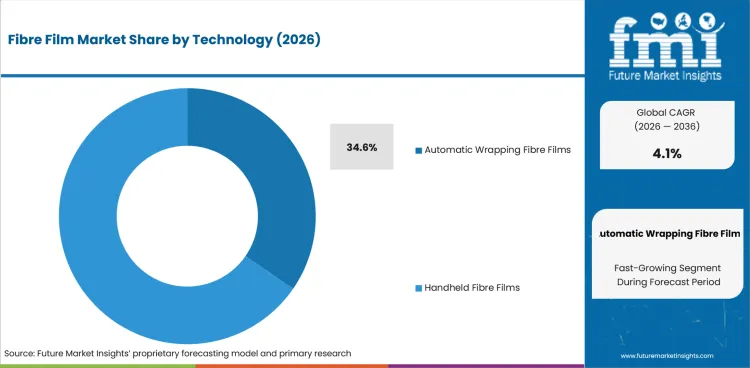
In 2026, automatic wrapping fibre films is projected to account for 34.6% of the technology segment. Demand is concentrated in established applications where performance requirements, cost structures, and supply chain reliability favor proven product formats. Growth reflects specification upgrades and procurement cycle timing across primary end-use industries.
Insights into the End-Use Industry Segment
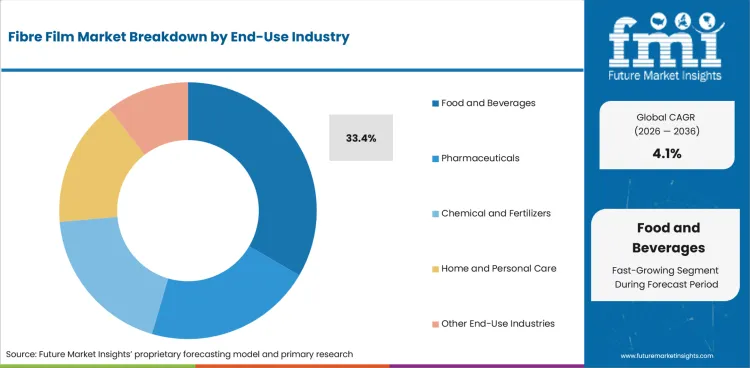
Food and Beverages is projected to hold 33.4% of the end-use industry segment in 2026. Procurement is shaped by regulatory compliance requirements, volume-driven pricing structures, and end-user preference for established application formats. Growth in this segment is attributable to expanding commercial adoption and standardization of procurement specifications.
Fibre Film Market Drivers, Restraints, and Opportunities
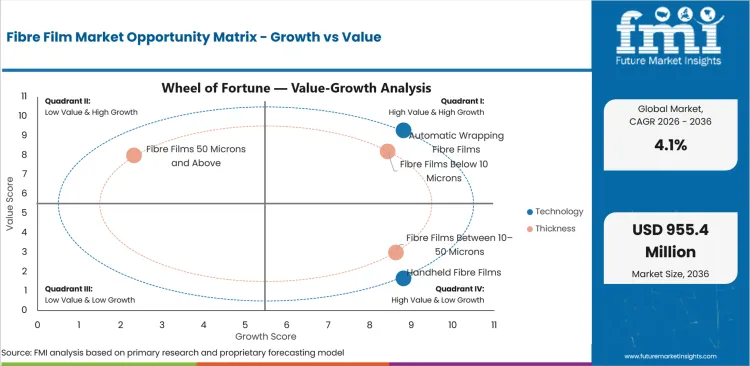
- Regulatory compliance mandates and sustainability requirements are creating structured demand for specification-compliant products across primary end-use sectors.
- Higher production costs relative to conventional alternatives constrain adoption in price-sensitive segments, concentrating growth in premium and compliance-driven applications.
- Replacement cycles and facility modernization programs are accelerating procurement of upgraded product variants with improved performance characteristics.
The fibre film market continues to expand, supported by regulatory requirements, end-use sector investment, and specification evolution. Constraints including production costs, scaling challenges, and competitive pressure from conventional alternatives are balanced by growth opportunities in compliance-driven procurement, geographic expansion, and technology-enabled performance improvement.
Regulatory and Compliance-Driven Demand
Growth reflects regulatory mandates that require specification upgrades across primary end-use applications. Compliance timelines and certification requirements are creating structured procurement pipelines that favor suppliers with established quality management systems and product documentation.
Cost and Scalability Constraints
Adoption is constrained by production costs that exceed conventional alternatives, limiting penetration in price-sensitive commodity segments. Growth is concentrated in applications where compliance requirements, performance specifications, or brand positioning justify the cost premium.
Technology and Performance Improvement
Investment in process optimization, material science, and digital manufacturing is improving product performance characteristics while reducing unit costs. Companies integrating advanced manufacturing capabilities are gaining specification advantages in competitive procurement processes.
Geographic Expansion Opportunities
Market expansion in developing economies is supported by infrastructure investment, manufacturing capacity growth, and evolving regulatory frameworks that create new procurement requirements. Companies establishing regional distribution and technical support capabilities are positioned to capture incremental demand.
Analysis of Fibre Film Market By Key Countries
.webp "Top Country Growth Comparison Fibre Film Market Cagr (2026 2036)")
| Country | CAGR |
|---|---|
| South Korea | 6.9% |
| UK | 6.8% |
| Japan | 6.5% |
| China | 5.54% |
| India | 5.13% |
| Germany | 4.72% |
Source: FMI analysis based on primary research and proprietary forecasting model
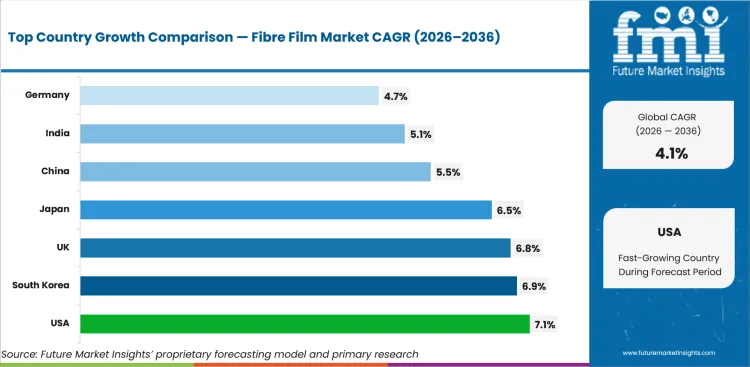
- South Korea leads with a 6.9% CAGR, reflecting the scale of domestic demand, investment in capacity expansion, and evolving regulatory requirements.
- UK at 6.8% shows sustained demand supported by compliance requirements, end-use sector modernization, and established procurement infrastructure.
- Japan (6.5%) and China (5.54%) continue to expand on account of regulatory frameworks and industrial investment programs.
The global fibre film market is projected to expand at a CAGR of 4.1% from 2026 to 2036. The analysis covers more than 30 countries, with key markets highlighted below.
Demand Outlook for Fibre Film Market in the South Korea
High-technology industry demand and government R&D support are shaping procurement of fibre film in South Korea. The market is estimated to grow at a CAGR of 6.9% through 2036, reflecting semiconductor, display, and EV battery sector requirements, smart manufacturing investment, and quality and after-sales support priorities.
- Semiconductor and display industry requirements are driving demand for high-specification automatic wrapping fibre films meeting cleanroom and precision standards.
- Government R&D support programs and smart manufacturing initiatives are accelerating adoption of advanced product variants.
- Stable supplier relationships and quality-first procurement culture are sustaining demand from established domestic industrial groups.
Future Outlook for Fibre Film Market in the UK
Post-Brexit packaging regulations and retailer sustainability targets are shaping demand for fibre film in the United Kingdom. The market is estimated to expand at a CAGR of 6.8% through 2036, supported by the UK Plastics Tax, evolving retailer sustainability commitments, and consumer preference for premium and functional product formats.
- The UK Plastics Tax is accelerating material substitution toward recycled and bio-based content in packaging applications.
- Retailer consolidation is concentrating purchasing power and raising specification requirements for automatic wrapping fibre films.
- Premium product positioning and clean-label consumer trends are supporting demand for higher-value formulations.
Opportunity Analysis of Fibre Film Market in Japan
Strict JIS compliance requirements, long qualification cycles, and an aging facility replacement pipeline are sustaining demand for fibre film in Japan. The market is estimated to grow at a CAGR of 6.5% through 2036, reflecting supplier loyalty structures, labor shortage mitigation through automation, and high-specification product requirements across electronics and automotive sectors.
- JIS compliance and strict quality standards are maintaining high entry barriers and favoring established suppliers of automatic wrapping fibre films.
- Aging facility replacement cycles in manufacturing and healthcare are generating steady procurement demand for upgraded equipment.
- Labor shortage mitigation through automation investment is supporting adoption of digitally integrated and higher-efficiency product variants.
In-depth Analysis of Fibre Film Market in China
The scale of China's consumer market and e-commerce logistics infrastructure is creating high-volume demand for fibre film. Growth is estimated at a CAGR of 5.54% through 2036, reflecting cost advantages of local manufacturers, food delivery ecosystem expansion, and export channel development across Southeast Asia.
- E-commerce logistics scale and food delivery infrastructure are generating consistent demand for automatic wrapping fibre films across consumer categories.
- Cost advantage of domestic manufacturers is strengthening competitive positioning in both domestic and export markets.
- Government food safety standards and packaging quality regulations are raising specification requirements for commercial-grade products.
Sales Analysis of Fibre Film Market in India
Urbanization, organized retail expansion, and e-commerce channel development are driving demand for fibre film across India. Growth is estimated at a CAGR of 5.13% through 2036, reflecting tier-2 and tier-3 city distribution network expansion, domestic manufacturing scaling under government programs, and rising consumer purchasing power.
- Organized retail expansion and e-commerce penetration are widening distribution access for automatic wrapping fibre films across urban and semi-urban markets.
- Domestic manufacturing scaling under PLI schemes is reducing import dependency and improving cost competitiveness.
- Tier-2 and tier-3 city distribution infrastructure development is creating incremental demand for packaged and branded product formats.
Growth Analysis of Fibre Film Market in Germany
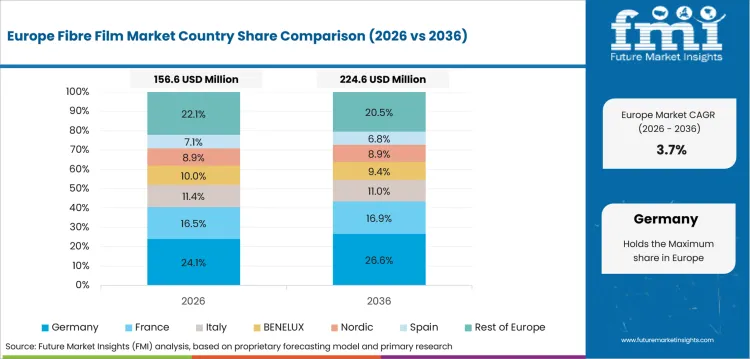
DIN and EU CE standards compliance, Industrie 4.0 integration priorities, and lifecycle cost optimization are shaping demand for fibre film in Germany. The market is estimated to expand at a CAGR of 4.72% through 2036, supported by EU sustainability mandates, extended producer responsibility frameworks, and certified service network requirements.
- EU packaging and sustainability regulations are accelerating adoption of alternative materials and automatic wrapping fibre films specifications.
- Industrie 4.0 integration priorities are driving procurement of digitally enabled and IoT-compatible product variants.
- Energy cost pressures and circular economy mandates are influencing sourcing decisions and material selection across industrial sectors.
Competitive Landscape and Strategic Positioning
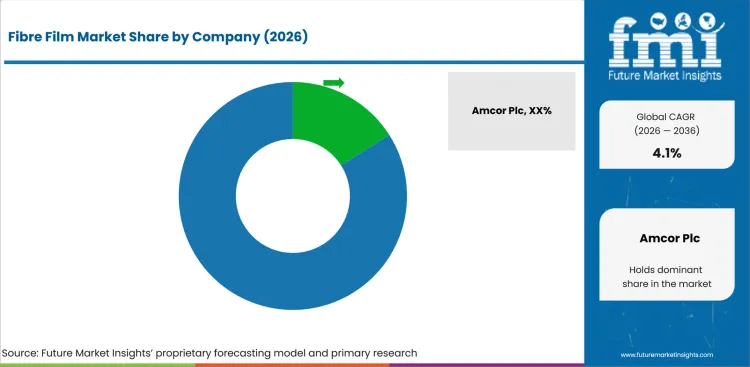
- Amcor Plc holds a leading position through established manufacturing infrastructure, broad product coverage, and global distribution networks.
- Mondi Group and Avery Dennison Corporation offer diversified product portfolios combining standard and specialty variants across multiple end-use applications.
- Emerging players are focusing on specialized applications, regional distribution, and technology differentiation to establish market position.
Amcor Plc maintains a leading position through integrated manufacturing capabilities, established customer relationships, and broad geographic coverage. Mondi Group offers a diversified product portfolio across standard and specialty segments.
Avery Dennison Corporation and Tetra Pak have developed complementary capabilities in specific product categories and regional markets. Barriers to entry include capital intensity, regulatory approval timelines, customer qualification requirements, and established supply chain relationships.
Strategic priorities across the competitive landscape include cost reduction, specification compliance, geographic expansion, and partnership development with end-use sector procurement organizations.
Key Companies in the Fibre Film Market
Key global companies leading the fibre film market include:
- Amcor Plc, Mondi Group, Avery Dennison Corporation, Tetra Pak maintain strong manufacturing infrastructure, established end-user relationships, and broad product portfolios spanning standard and specialty categories.
- DS Smith Plc, Sealed Air Corporation, Berry Global Group have established regional leadership through focused product strategies, local manufacturing capability, and application-specific expertise.
- Smurfit Kappa Group, Huhtamaki Oyj, Stora Enso represent emerging and specialty participants developing capabilities in advanced product categories, new application segments, and technology-differentiated solutions.
Competitive Benchmarking: Fibre Film Market
| Company | Product Breadth | Brand Positioning | Distribution Reach | Geographic Footprint |
|---|---|---|---|---|
| Amcor Plc | High | High | Strong | Global |
| Mondi Group | High | High | Strong | Global |
| Avery Dennison Corporation | High | Medium | Strong | Global |
| Tetra Pak | Medium | High | Moderate | Regional |
| DS Smith Plc | Medium | High | Moderate | Regional |
| Sealed Air Corporation | Medium | High | Moderate | Asia |
| Berry Global Group | Medium | Medium | Low | Regional |
| Smurfit Kappa Group | Medium | Medium | Low | Regional |
| Huhtamaki Oyj | Medium | Medium | Low | Regional |
| Stora Enso | Medium | Medium | Low | Regional |
Source: Future Market Insights competitive analysis, 2026.
Key Developments in Fibre Film Market
- In 2025, Amcor Plc expanded its product portfolio with an advanced variant targeting compliance-driven procurement in North America and Europe.
- In 2025, Mondi Group announced capacity expansion at its primary manufacturing facility to address growing demand across Asia-Pacific markets.
Key Players in the Fibre Film Market
Major Global Players
- Amcor Plc
- Mondi Group
- Avery Dennison Corporation
- Tetra Pak
- DS Smith Plc
- Sealed Air Corporation
- Berry Global Group
Emerging Players/Startups
- Smurfit Kappa Group
- Huhtamaki Oyj
- Stora Enso
Report Scope and Coverage
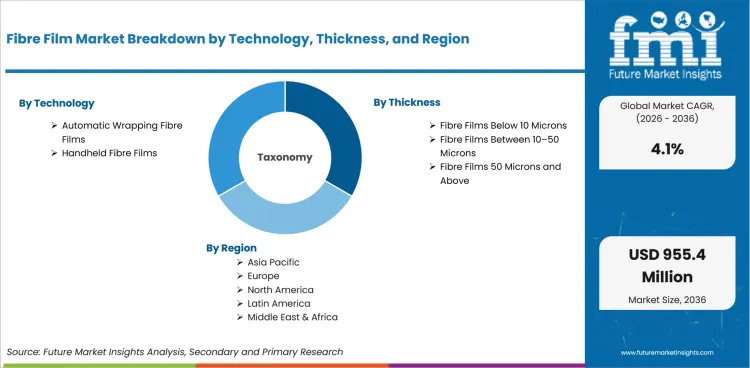
| Parameter | Details |
|---|---|
| Market size by 2036 | USD 955.43 million |
| Growth rate | 4.1% CAGR (2026-2036) |
| Forecast period | 2026 to 2036 |
| Base year value (2026) | USD 639.28 million |
| By technology | Automatic Wrapping Fibre Films, Handheld Fibre Films |
| By thickness | Fibre Films Below 10 Microns, Fibre Films Between 10-50 Microns, Fibre Films 50 Microns and Above |
| By end-use industry | Food and Beverages, Pharmaceuticals, Chemical and Fertilizers, Home and Personal Care, Other End-Use Industries |
| By film structure | Mono Layer Fibre Films, Multi Layer Fibre Films, Co-Extruded Fibre Films |
| By material type | Polyethylene Based Films, Polypropylene Based Films, PET Based Films |
| By functionality | Protective Fibre Films, Stretchable Fibre Films, Anti Static Fibre Films |
| By packaging format | Roll Form Films, Sheet Form Films, Pouch Integrated Films |
| Regions covered | North America, Latin America, Europe, East Asia, South Asia and Pacific, Middle East and Africa |
| Countries covered | South Korea, UK, Japan, China, India, Germany, 30 plus countries |
| Key companies profiled | Amcor Plc, Mondi Group, Avery Dennison Corporation, Tetra Pak, DS Smith Plc, Sealed Air Corporation, Berry Global Group, Smurfit Kappa Group, Huhtamaki Oyj, Stora Enso |
| Approach | Hybrid bottom-up and top-down methodology starting with verified transaction data, projecting adoption velocity across segments and regions. |
Market Segmentation Analysis
Fibre Film Market Segmented by Technology:
- Automatic Wrapping Fibre Films
- High Speed Wrapping Systems
- Industrial Packaging Films
- Handheld Fibre Films
- Manual Wrapping Films
- Portable Packaging Films
Fibre Film Market Segmented by Thickness:
- Fibre Films Below 10 Microns
- Ultra Thin Protective Films
- High Clarity Packaging Films
- Fibre Films Between 10-50 Microns
- Standard Packaging Films
- Flexible Industrial Films
- Fibre Films 50 Microns and Above
- Heavy Duty Films
- Industrial Grade Protective Films
Fibre Film Market Segmented by End-Use Industry:
- Food and Beverages
- Food Packaging Films
- Beverage Wrapping Solutions
- Pharmaceuticals
- Medical Packaging Films
- Sterile Barrier Films
- Chemical and Fertilizers
- Industrial Chemical Packaging
- Protective Chemical Wrapping
- Home and Personal Care
- Consumer Goods Packaging
- Hygiene Product Films
- Other End-Use Industries
- Industrial Applications
- Specialty Packaging Uses
Fibre Film Market Segmented by Film Structure:
- Mono Layer Fibre Films
- Single Layer Packaging Films
- Basic Protection Films
- Multi Layer Fibre Films
- High Barrier Laminated Films
- Advanced Protection Structures
- Co-Extruded Fibre Films
- Multi Polymer Films
- Enhanced Strength Films
Fibre Film Market Segmented by Material Type:
- Polyethylene Based Films
- LDPE Films
- HDPE Films
- Flexible Packaging Films
- Polypropylene Based Films
- BOPP Films
- High Clarity Films
- PET Based Films
- High Strength Polyester Films
- Thermal Resistant Films
Fibre Film Market Segmented by Functionality:
- Protective Fibre Films
- Scratch Resistant Films
- Impact Protection Films
- Barrier Protection Films
- Stretchable Fibre Films
- Elastic Packaging Films
- Shrink Wrap Solutions
- Anti Static Fibre Films
- Electronic Packaging Films
- Sensitive Product Protection
Fibre Film Market Segmented by Packaging Format:
- Roll Form Films
- Industrial Rolls
- Bulk Packaging Rolls
- Sheet Form Films
- Pre Cut Sheets
- Retail Packaging Sheets
- Pouch Integrated Films
- Flexible Pouch Structures
- Stand Up Packaging Films
Fibre Film Market by Region:
- North America
- USA
- Canada
- Mexico
- Latin America
- Brazil
- Chile
- Rest of Latin America
- Western Europe
- Germany
- UK
- Italy
- Spain
- France
- Nordic
- BENELUX
- Rest of Western Europe
- Eastern Europe
- Russia
- Poland
- Hungary
- Balkan & Baltic
- Rest of Eastern Europe
- East Asia
- China
- Japan
- South Korea
- South Asia and Pacific
- India
- ASEAN
- Australia & New Zealand
- Rest of South Asia and Pacific
- Middle East & Africa
- Kingdom of Saudi Arabia
- Other GCC Countries
- Turkiye
- South Africa
- Other African Union
- Rest of Middle East & Africa
Research Sources and Bibliography
- 1. Food and Agriculture Organization. (2025). FAO Global Food and Agriculture Statistics. FAO.
- 2. European Commission. (2025). EU Packaging and Packaging Waste Directive Updates. EC.
- 3. USA Department of Agriculture. (2025). USDA Economic Research Service Food Markets Report. USDA.
- 4. World Bank. (2025). World Bank Global Consumer Markets Database. World Bank.
- 5. International Organization for Standardization. (2025). ISO Food Safety and Packaging Standards. ISO.
This bibliography is provided for reader reference. The full Future Market Insights report contains the complete reference list with publication dates, URLs, and supporting data for all cited works.
This Report Answers
- Estimating the market size and revenue opportunity from 2026 to 2036.
- Segmentation analysis across technology, thickness, end-use industry, film structure, material type.
- Regional and country-level insights covering more than 30 markets.
- Competitive landscape assessment and company benchmarking.
- Identification of investment opportunities across primary application segments.
- Supply chain and procurement structure analysis.
- Technology and specification trend assessment.
- Data delivery in PDF and Excel formats.
Frequently Asked Questions
How big is the fibre film market in 2026?
The global fibre film market is estimated to be valued at USD 639.3 million in 2026.
What will be the size of fibre film market in 2036?
The market size for the fibre film market is projected to reach USD 955.4 million by 2036.
How much will be the fibre film market growth between 2026 and 2036?
The fibre film market is expected to grow at a 4.1% CAGR between 2026 and 2036.
What are the key product types in the fibre film market?
The key product types in fibre film market are automatic wrapping fibre films and handheld fibre films
Which thickness segment is expected to contribute significant share in the fibre film market in 2026?
In terms of thickness, fibre films below 10 microns segment is expected to command 29.8% share in the fibre film market in 2026.
Preview the report firsthand - request a free sample
Get SampleGet the brochure for pricing and purchase details.
Get PDFTable of Content
- Executive Summary
- Global Market Outlook
- Demand-side Trends
- Supply-side Trends
- Technology Roadmap Analysis
- Analysis and Recommendations
- Market Overview
- Market Coverage / Taxonomy
- Market Definition / Scope / Limitations
- Research Methodology
- Chapter Orientation
- Analytical Lens and Working Hypotheses
- Market Structure, Signals, and Trend Drivers
- Benchmarking and Cross-market Comparability
- Market Sizing, Forecasting, and Opportunity Mapping
- Research Design and Evidence Framework
- Desk Research Programme (Secondary Evidence)
- Company Annual and Sustainability Reports
- Peer-reviewed Journals and Academic Literature
- Corporate Websites, Product Literature, and Technical Notes
- Earnings Decks and Investor Briefings
- Statutory Filings and Regulatory Disclosures
- Technical White Papers and Standards Notes
- Trade Journals, Industry Magazines, and Analyst Briefs
- Conference Proceedings, Webinars, and Seminar Materials
- Government Statistics Portals and Public Data Releases
- Press Releases and Reputable Media Coverage
- Specialist Newsletters and Curated Briefings
- Sector Databases and Reference Repositories
- FMI Internal Proprietary Databases and Historical Market Datasets
- Subscription Datasets and Paid Sources
- Social Channels, Communities, and Digital Listening Inputs
- Additional Desk Sources
- Expert Input and Fieldwork (Primary Evidence)
- Primary Modes
- Qualitative Interviews and Expert Elicitation
- Quantitative Surveys and Structured Data Capture
- Blended Approach
- Why Primary Evidence is Used
- Field Techniques
- Interviews
- Surveys
- Focus Groups
- Observational and In-context Research
- Social and Community Interactions
- Stakeholder Universe Engaged
- C-suite Leaders
- Board Members
- Presidents and Vice Presidents
- R&D and Innovation Heads
- Technical Specialists
- Domain Subject-matter Experts
- Scientists
- Physicians and Other Healthcare Professionals
- Governance, Ethics, and Data Stewardship
- Research Ethics
- Data Integrity and Handling
- Primary Modes
- Tooling, Models, and Reference Databases
- Desk Research Programme (Secondary Evidence)
- Data Engineering and Model Build
- Data Acquisition and Ingestion
- Cleaning, Normalisation, and Verification
- Synthesis, Triangulation, and Analysis
- Quality Assurance and Audit Trail
- Market Background
- Market Dynamics
- Drivers
- Restraints
- Opportunity
- Trends
- Scenario Forecast
- Demand in Optimistic Scenario
- Demand in Likely Scenario
- Demand in Conservative Scenario
- Opportunity Map Analysis
- Product Life Cycle Analysis
- Supply Chain Analysis
- Investment Feasibility Matrix
- Value Chain Analysis
- PESTLE and Porter’s Analysis
- Regulatory Landscape
- Regional Parent Market Outlook
- Production and Consumption Statistics
- Import and Export Statistics
- Market Dynamics
- Global Market Analysis 2021 to 2025 and Forecast, 2026 to 2036
- Historical Market Size Value (USD Million) Analysis, 2021 to 2025
- Current and Future Market Size Value (USD Million) Projections, 2026 to 2036
- Y-o-Y Growth Trend Analysis
- Absolute $ Opportunity Analysis
- Global Market Pricing Analysis 2021 to 2025 and Forecast 2026 to 2036
- Global Market Analysis 2021 to 2025 and Forecast 2026 to 2036, By Technology
- Introduction / Key Findings
- Historical Market Size Value (USD Million) Analysis By Technology, 2021 to 2025
- Current and Future Market Size Value (USD Million) Analysis and Forecast By Technology, 2026 to 2036
- Automatic Wrapping Fibre Films
- High Speed Wrapping Systems
- Industrial Packaging Films
- Handheld Fibre Films
- Manual Wrapping Films
- Portable Packaging Films
- Automatic Wrapping Fibre Films
- Y-o-Y Growth Trend Analysis By Technology, 2021 to 2025
- Absolute $ Opportunity Analysis By Technology, 2026 to 2036
- Global Market Analysis 2021 to 2025 and Forecast 2026 to 2036, By Thickness
- Introduction / Key Findings
- Historical Market Size Value (USD Million) Analysis By Thickness, 2021 to 2025
- Current and Future Market Size Value (USD Million) Analysis and Forecast By Thickness, 2026 to 2036
- Fibre Films Below 10 Microns
- Ultra Thin Protective Films
- High Clarity Packaging Films
- Fibre Films Between 10–50 Microns
- Standard Packaging Films
- Flexible Industrial Films
- Fibre Films 50 Microns and Above
- Heavy Duty Films
- Industrial Grade Protective Films
- Fibre Films Below 10 Microns
- Y-o-Y Growth Trend Analysis By Thickness, 2021 to 2025
- Absolute $ Opportunity Analysis By Thickness, 2026 to 2036
- Global Market Analysis 2021 to 2025 and Forecast 2026 to 2036, By End-Use Industry
- Introduction / Key Findings
- Historical Market Size Value (USD Million) Analysis By End-Use Industry, 2021 to 2025
- Current and Future Market Size Value (USD Million) Analysis and Forecast By End-Use Industry, 2026 to 2036
- Food and Beverages
- Food Packaging Films
- Beverage Wrapping Solutions
- Pharmaceuticals
- Medical Packaging Films
- Sterile Barrier Films
- Chemical and Fertilizers
- Industrial Chemical Packaging
- Protective Chemical Wrapping
- Home and Personal Care
- Consumer Goods Packaging
- Hygiene Product Films
- Other End-Use Industries
- Industrial Applications
- Specialty Packaging Uses
- Food and Beverages
- Y-o-Y Growth Trend Analysis By End-Use Industry, 2021 to 2025
- Absolute $ Opportunity Analysis By End-Use Industry, 2026 to 2036
- Global Market Analysis 2021 to 2025 and Forecast 2026 to 2036, By Film Structure
- Introduction / Key Findings
- Historical Market Size Value (USD Million) Analysis By Film Structure, 2021 to 2025
- Current and Future Market Size Value (USD Million) Analysis and Forecast By Film Structure, 2026 to 2036
- Mono Layer Fibre Films
- Single Layer Packaging Films
- Basic Protection Films
- Multi Layer Fibre Films
- High Barrier Laminated Films
- Advanced Protection Structures
- Co-Extruded Fibre Films
- Multi Polymer Films
- Enhanced Strength Films
- Mono Layer Fibre Films
- Y-o-Y Growth Trend Analysis By Film Structure, 2021 to 2025
- Absolute $ Opportunity Analysis By Film Structure, 2026 to 2036
- Global Market Analysis 2021 to 2025 and Forecast 2026 to 2036, By Material Type
- Introduction / Key Findings
- Historical Market Size Value (USD Million) Analysis By Material Type, 2021 to 2025
- Current and Future Market Size Value (USD Million) Analysis and Forecast By Material Type, 2026 to 2036
- Polyethylene Based Films
- LDPE Films
- HDPE Films
- Flexible Packaging Films
- Polypropylene Based Films
- BOPP Films
- High Clarity Films
- PET Based Films
- High Strength Polyester Films
- Thermal Resistant Films
- Polyethylene Based Films
- Y-o-Y Growth Trend Analysis By Material Type, 2021 to 2025
- Absolute $ Opportunity Analysis By Material Type, 2026 to 2036
- Global Market Analysis 2021 to 2025 and Forecast 2026 to 2036, By Functionality
- Introduction / Key Findings
- Historical Market Size Value (USD Million) Analysis By Functionality, 2021 to 2025
- Current and Future Market Size Value (USD Million) Analysis and Forecast By Functionality, 2026 to 2036
- Protective Fibre Films
- Scratch Resistant Films
- Impact Protection Films
- Barrier Protection Films
- Stretchable Fibre Films
- Elastic Packaging Films
- Shrink Wrap Solutions
- Anti Static Fibre Films
- Electronic Packaging Films
- Sensitive Product Protection
- Protective Fibre Films
- Y-o-Y Growth Trend Analysis By Functionality, 2021 to 2025
- Absolute $ Opportunity Analysis By Functionality, 2026 to 2036
- Global Market Analysis 2021 to 2025 and Forecast 2026 to 2036, By Packaging Format
- Introduction / Key Findings
- Historical Market Size Value (USD Million) Analysis By Packaging Format, 2021 to 2025
- Current and Future Market Size Value (USD Million) Analysis and Forecast By Packaging Format, 2026 to 2036
- Roll Form Films
- Industrial Rolls
- Bulk Packaging Rolls
- Sheet Form Films
- Pre Cut Sheets
- Retail Packaging Sheets
- Pouch Integrated Films
- Flexible Pouch Structures
- Stand Up Packaging Films
- Roll Form Films
- Y-o-Y Growth Trend Analysis By Packaging Format, 2021 to 2025
- Absolute $ Opportunity Analysis By Packaging Format, 2026 to 2036
- Global Market Analysis 2021 to 2025 and Forecast 2026 to 2036, By Region
- Introduction
- Historical Market Size Value (USD Million) Analysis By Region, 2021 to 2025
- Current Market Size Value (USD Million) Analysis and Forecast By Region, 2026 to 2036
- North America
- Latin America
- Western Europe
- Eastern Europe
- East Asia
- South Asia and Pacific
- Middle East & Africa
- Market Attractiveness Analysis By Region
- North America Market Analysis 2021 to 2025 and Forecast 2026 to 2036, By Country
- Historical Market Size Value (USD Million) Trend Analysis By Market Taxonomy, 2021 to 2025
- Market Size Value (USD Million) Forecast By Market Taxonomy, 2026 to 2036
- By Country
- USA
- Canada
- Mexico
- By Technology
- By Thickness
- By End-Use Industry
- By Film Structure
- By Material Type
- By Functionality
- By Packaging Format
- By Country
- Market Attractiveness Analysis
- By Country
- By Technology
- By Thickness
- By End-Use Industry
- By Film Structure
- By Material Type
- By Functionality
- By Packaging Format
- Key Takeaways
- Latin America Market Analysis 2021 to 2025 and Forecast 2026 to 2036, By Country
- Historical Market Size Value (USD Million) Trend Analysis By Market Taxonomy, 2021 to 2025
- Market Size Value (USD Million) Forecast By Market Taxonomy, 2026 to 2036
- By Country
- Brazil
- Chile
- Rest of Latin America
- By Technology
- By Thickness
- By End-Use Industry
- By Film Structure
- By Material Type
- By Functionality
- By Packaging Format
- By Country
- Market Attractiveness Analysis
- By Country
- By Technology
- By Thickness
- By End-Use Industry
- By Film Structure
- By Material Type
- By Functionality
- By Packaging Format
- Key Takeaways
- Western Europe Market Analysis 2021 to 2025 and Forecast 2026 to 2036, By Country
- Historical Market Size Value (USD Million) Trend Analysis By Market Taxonomy, 2021 to 2025
- Market Size Value (USD Million) Forecast By Market Taxonomy, 2026 to 2036
- By Country
- Germany
- UK
- Italy
- Spain
- France
- Nordic
- BENELUX
- Rest of Western Europe
- By Technology
- By Thickness
- By End-Use Industry
- By Film Structure
- By Material Type
- By Functionality
- By Packaging Format
- By Country
- Market Attractiveness Analysis
- By Country
- By Technology
- By Thickness
- By End-Use Industry
- By Film Structure
- By Material Type
- By Functionality
- By Packaging Format
- Key Takeaways
- Eastern Europe Market Analysis 2021 to 2025 and Forecast 2026 to 2036, By Country
- Historical Market Size Value (USD Million) Trend Analysis By Market Taxonomy, 2021 to 2025
- Market Size Value (USD Million) Forecast By Market Taxonomy, 2026 to 2036
- By Country
- Russia
- Poland
- Hungary
- Balkan & Baltic
- Rest of Eastern Europe
- By Technology
- By Thickness
- By End-Use Industry
- By Film Structure
- By Material Type
- By Functionality
- By Packaging Format
- By Country
- Market Attractiveness Analysis
- By Country
- By Technology
- By Thickness
- By End-Use Industry
- By Film Structure
- By Material Type
- By Functionality
- By Packaging Format
- Key Takeaways
- East Asia Market Analysis 2021 to 2025 and Forecast 2026 to 2036, By Country
- Historical Market Size Value (USD Million) Trend Analysis By Market Taxonomy, 2021 to 2025
- Market Size Value (USD Million) Forecast By Market Taxonomy, 2026 to 2036
- By Country
- China
- Japan
- South Korea
- By Technology
- By Thickness
- By End-Use Industry
- By Film Structure
- By Material Type
- By Functionality
- By Packaging Format
- By Country
- Market Attractiveness Analysis
- By Country
- By Technology
- By Thickness
- By End-Use Industry
- By Film Structure
- By Material Type
- By Functionality
- By Packaging Format
- Key Takeaways
- South Asia and Pacific Market Analysis 2021 to 2025 and Forecast 2026 to 2036, By Country
- Historical Market Size Value (USD Million) Trend Analysis By Market Taxonomy, 2021 to 2025
- Market Size Value (USD Million) Forecast By Market Taxonomy, 2026 to 2036
- By Country
- India
- ASEAN
- Australia & New Zealand
- Rest of South Asia and Pacific
- By Technology
- By Thickness
- By End-Use Industry
- By Film Structure
- By Material Type
- By Functionality
- By Packaging Format
- By Country
- Market Attractiveness Analysis
- By Country
- By Technology
- By Thickness
- By End-Use Industry
- By Film Structure
- By Material Type
- By Functionality
- By Packaging Format
- Key Takeaways
- Middle East & Africa Market Analysis 2021 to 2025 and Forecast 2026 to 2036, By Country
- Historical Market Size Value (USD Million) Trend Analysis By Market Taxonomy, 2021 to 2025
- Market Size Value (USD Million) Forecast By Market Taxonomy, 2026 to 2036
- By Country
- Kingdom of Saudi Arabia
- Other GCC Countries
- Turkiye
- South Africa
- Other African Union
- Rest of Middle East & Africa
- By Technology
- By Thickness
- By End-Use Industry
- By Film Structure
- By Material Type
- By Functionality
- By Packaging Format
- By Country
- Market Attractiveness Analysis
- By Country
- By Technology
- By Thickness
- By End-Use Industry
- By Film Structure
- By Material Type
- By Functionality
- By Packaging Format
- Key Takeaways
- Key Countries Market Analysis
- USA
- Pricing Analysis
- Market Share Analysis, 2025
- By Technology
- By Thickness
- By End-Use Industry
- By Film Structure
- By Material Type
- By Functionality
- By Packaging Format
- Canada
- Pricing Analysis
- Market Share Analysis, 2025
- By Technology
- By Thickness
- By End-Use Industry
- By Film Structure
- By Material Type
- By Functionality
- By Packaging Format
- Mexico
- Pricing Analysis
- Market Share Analysis, 2025
- By Technology
- By Thickness
- By End-Use Industry
- By Film Structure
- By Material Type
- By Functionality
- By Packaging Format
- Brazil
- Pricing Analysis
- Market Share Analysis, 2025
- By Technology
- By Thickness
- By End-Use Industry
- By Film Structure
- By Material Type
- By Functionality
- By Packaging Format
- Chile
- Pricing Analysis
- Market Share Analysis, 2025
- By Technology
- By Thickness
- By End-Use Industry
- By Film Structure
- By Material Type
- By Functionality
- By Packaging Format
- Germany
- Pricing Analysis
- Market Share Analysis, 2025
- By Technology
- By Thickness
- By End-Use Industry
- By Film Structure
- By Material Type
- By Functionality
- By Packaging Format
- UK
- Pricing Analysis
- Market Share Analysis, 2025
- By Technology
- By Thickness
- By End-Use Industry
- By Film Structure
- By Material Type
- By Functionality
- By Packaging Format
- Italy
- Pricing Analysis
- Market Share Analysis, 2025
- By Technology
- By Thickness
- By End-Use Industry
- By Film Structure
- By Material Type
- By Functionality
- By Packaging Format
- Spain
- Pricing Analysis
- Market Share Analysis, 2025
- By Technology
- By Thickness
- By End-Use Industry
- By Film Structure
- By Material Type
- By Functionality
- By Packaging Format
- France
- Pricing Analysis
- Market Share Analysis, 2025
- By Technology
- By Thickness
- By End-Use Industry
- By Film Structure
- By Material Type
- By Functionality
- By Packaging Format
- India
- Pricing Analysis
- Market Share Analysis, 2025
- By Technology
- By Thickness
- By End-Use Industry
- By Film Structure
- By Material Type
- By Functionality
- By Packaging Format
- ASEAN
- Pricing Analysis
- Market Share Analysis, 2025
- By Technology
- By Thickness
- By End-Use Industry
- By Film Structure
- By Material Type
- By Functionality
- By Packaging Format
- Australia & New Zealand
- Pricing Analysis
- Market Share Analysis, 2025
- By Technology
- By Thickness
- By End-Use Industry
- By Film Structure
- By Material Type
- By Functionality
- By Packaging Format
- China
- Pricing Analysis
- Market Share Analysis, 2025
- By Technology
- By Thickness
- By End-Use Industry
- By Film Structure
- By Material Type
- By Functionality
- By Packaging Format
- Japan
- Pricing Analysis
- Market Share Analysis, 2025
- By Technology
- By Thickness
- By End-Use Industry
- By Film Structure
- By Material Type
- By Functionality
- By Packaging Format
- South Korea
- Pricing Analysis
- Market Share Analysis, 2025
- By Technology
- By Thickness
- By End-Use Industry
- By Film Structure
- By Material Type
- By Functionality
- By Packaging Format
- Russia
- Pricing Analysis
- Market Share Analysis, 2025
- By Technology
- By Thickness
- By End-Use Industry
- By Film Structure
- By Material Type
- By Functionality
- By Packaging Format
- Poland
- Pricing Analysis
- Market Share Analysis, 2025
- By Technology
- By Thickness
- By End-Use Industry
- By Film Structure
- By Material Type
- By Functionality
- By Packaging Format
- Hungary
- Pricing Analysis
- Market Share Analysis, 2025
- By Technology
- By Thickness
- By End-Use Industry
- By Film Structure
- By Material Type
- By Functionality
- By Packaging Format
- Kingdom of Saudi Arabia
- Pricing Analysis
- Market Share Analysis, 2025
- By Technology
- By Thickness
- By End-Use Industry
- By Film Structure
- By Material Type
- By Functionality
- By Packaging Format
- Turkiye
- Pricing Analysis
- Market Share Analysis, 2025
- By Technology
- By Thickness
- By End-Use Industry
- By Film Structure
- By Material Type
- By Functionality
- By Packaging Format
- South Africa
- Pricing Analysis
- Market Share Analysis, 2025
- By Technology
- By Thickness
- By End-Use Industry
- By Film Structure
- By Material Type
- By Functionality
- By Packaging Format
- USA
- Market Structure Analysis
- Competition Dashboard
- Competition Benchmarking
- Market Share Analysis of Top Players
- By Regional
- By Technology
- By Thickness
- By End-Use Industry
- By Film Structure
- By Material Type
- By Functionality
- By Packaging Format
- Competition Analysis
- Competition Deep Dive
- Amcor Plc
- Overview
- Product Portfolio
- Profitability by Market Segments (Product/Age /Sales Channel/Region)
- Sales Footprint
- Strategy Overview
- Marketing Strategy
- Product Strategy
- Channel Strategy
- Mondi Group
- Avery Dennison Corporation
- Tetra Pak
- DS Smith Plc
- Sealed Air Corporation
- Berry Global Group
- Smurfit Kappa Group
- Huhtamaki Oyj
- Stora Enso
- Amcor Plc
- Competition Deep Dive
- Assumptions & Acronyms Used


