

- Market Size (2026)
- USD 248.5 Mn
- Forecast (2036)
- USD 470.9 Mn
- CAGR (2026 to 2036)
- 6.6%
How big is Guillain Barre Syndrome Diagnostics Market size?
USD 248.5 million in 2026 and USD 470.9 million by 2036 at a 6.6% CAGR.
Demand for guillain barre syndrome diagnostics is projected to expand at 6.6% CAGR between 2026 and 2036, increasing valuation from USD 248.5 million in 2026 to USD 470.9 million by 2036. Physicians initiate diagnostic testing as soon as patients exhibit progressive muscle weakness and diminishing reflexes. Hospital medical teams combine nerve-conduction studies with cerebrospinal-fluid analyses to evaluate these neurological symptoms. In July 2024, researchers John and Mathew reported that neurologists confirmed a final Guillain-Barré syndrome diagnosis in 44 out of 70 suspected very-early cases. Early nerve-conduction tests allow emergency medical staff to distinguish genuine cases from other conditions that mimic the disease.
Medical teams across Canada and Italy focus on coordinated patient referrals and rapid access to specialist testing. Healthcare networks in the United States and Japan maintain strict safety surveillance and execute rigorous serial-testing protocols. In October 2025, the World Health Organization reported breathing-muscle involvement in approximately one third of patients. This significant clinical risk compels hospital staff to pair prompt diagnostic confirmation with continuous respiratory monitoring and intensive-care readiness.
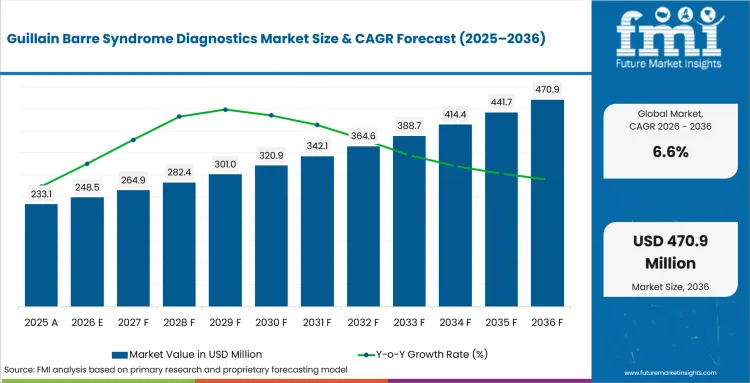
Key Takeaways for the Guillain Barre Syndrome Diagnostics Market
- Demand for guillain barre syndrome diagnostics is driven by urgent weakness assessment. Hospitals combine clinical examination with electrodiagnostic and laboratory evidence during differential diagnosis.
- Acute inflammatory demyelinating polyneuropathy is expected to garner 63.0% share of disease type in 2026, helped by established demyelinating criteria supporting repeat nerve-study interpretation across hospital neurophysiology services.
- Hospitals are estimated to lead end user with 51.0% share in 2026, backed by neurology consultation, lumbar puncture access, respiratory observation, and intensive-care escalation.
- Early normal studies and unequal neurophysiology access represent primary barriers. Both conditions increase repeat-test requirements and extend diagnostic confirmation.
- Competition focuses on Natus Medical Incorporated, Nihon Kohden Corporation, Cadwell Industries, Inc., EB Neuro S.p.A., Neurosoft Ltd., DEYMED Diagnostic s.r.o., Siemens Healthineers AG, and F. Hoffmann-La Roche Ltd. Providers differentiate through signal quality, workflow support, assay depth, and service coverage.
Analyst Perspective
“Progress in guillain barre syndrome diagnostics are likely to depend on how effectively healthcare systems connect early clinical judgment with standardized electrodiagnostic and cerebrospinal-fluid evidence. Diagnostic platforms supporting consistent interpretation and timely repeat testing can reduce uncertainty during rapidly evolving neurological presentations. Leadership is likely to come from solutions strengthening coordination across laboratory and intensive-care teams.”
- Anurag Sharma, Principal Analyst for Healthcare at Future Market Insights
How is Guillain Barre Syndrome Diagnostics Market segmented?
The guillain barre syndrome diagnostics sector is segmented by diagnostic test, disease type, end user, technology, sample type, and region.
The guillain barre syndrome diagnostics industry is segmented by diagnostic test, disease type, end user, technology, sample type, and region. Diagnostic test coverage includes nerve conduction studies, cerebrospinal fluid analysis, electromyography, and laboratory & immunological tests. disease type coverage includes acute inflammatory demyelinating polyneuropathy, acute motor axonal neuropathy, acute motor sensory axonal neuropathy, and miller fisher syndrome. End user coverage spans hospitals, diagnostic laboratories, specialty neurology clinics, and academic & research institutes. Technology coverage includes electrophysiological diagnostics, laboratory diagnostics, and imaging techniques. Sample type coverage includes cerebrospinal fluid, blood, and nerve tissue & others. Regional coverage includes North America, Europe, East Asia, South Asia and Pacific, Latin America, and Middle East and Africa.
How do nerve conduction studies shape diagnostic test demand?
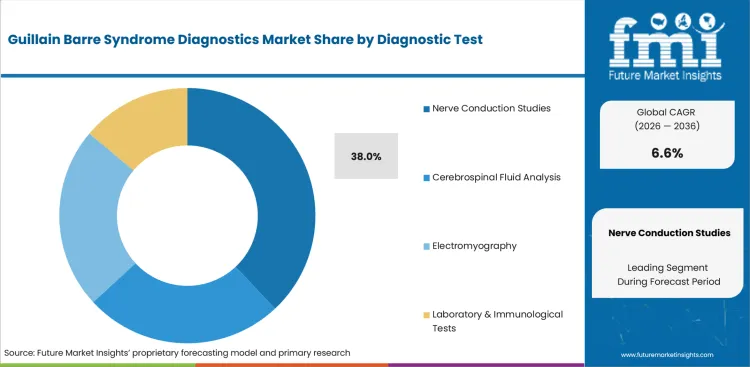
Nerve Conduction Studies measure motor and sensory abnormalities across demyelinating and axonal presentations. Serial testing strengthens classification whenever early patterns lack decisive features. In February 2026, Arends et al. reviewed 469 patients. Subtype changes reached 37.8% under Hadden criteria and 44.7% under Rajabally criteria. Repeat-study functionality therefore influences electromyography devices and neurophysiology capacity.
- Based on diagnostic test, nerve conduction studies are set to represent 38.0% share in 2026 as it is led by direct measurement of amplitude and late responses. Clinical teams also value preserved waveforms and criterion-specific calculations during repeat examinations.
- Cerebrospinal fluid analysis and laboratory & immunological tests supply complementary evidence. Alternative tests help exclude competing disorders and clarify cases lacking decisive early conduction patterns. Combined access reduces reliance on any isolated result during clinical review.
What keeps acute inflammatory demyelinating polyneuropathy prominent within disease type?
Acute inflammatory demyelinating polyneuropathy presents recognizable abnormalities across conduction velocity and temporal dispersion. Diagnostic teams interpret those findings with clinical progression and cerebrospinal-fluid evidence. In October 2024, Yang et al. assessed 47 patients, including 19 with AIDP. Cerebrospinal-fluid protein was higher among demyelinating cases. Combined testing strengthens subtype documentation during evolving presentations.
- In 2026, acute inflammatory demyelinating polyneuropathy is anticipated to account for 63.0% share owing to frequent demyelinating classification and established testing criteria. Suppliers need transparent protocols across distal latency and F-wave review.
- Acute motor axonal neuropathy and miller fisher syndrome require distinct interpretation. Cranial-nerve assessment and repeat examinations improve separation across atypical presentations. Flexible reporting supports specialist review without forcing one subtype conclusion.
What supports hospitals across end user demand?
Centralized access reduces handoff delays across progressive presentations. In September 2025, Majumder et al. studied 68 patients. Laboratory autonomic dysfunction appeared in 79%, reinforcing inpatient monitoring for patients without obvious symptoms. Hospital purchasing therefore favors systems supporting bedside studies and structured multidisciplinary review. Hospitals coordinate emergency assessment and intensive-care transfer.
- By end user, hospitals are likely to hold 51.0% share in 2026 since being guided by concentrated neurologic expertise and rapid access to escalation services. Equipment selection also reflects portable configurations and report availability across care units.
- Diagnostic laboratories and academic & research institutes contribute through referral testing and specialist interpretation. Academic centers support biomarker validation and complex-case review.
What supports electrophysiological diagnostics within technology?
Electrophysiological diagnostics translate weakness and areflexia into measurable peripheral-nerve abnormalities. Nerve studies remain central, with imaging supplying additional structural context for selected cases. In January 2026, Cao et al. compared 36 patients with 36 healthy volunteers. The study combined MR neurography with electrophysiology. Correlated assessment supports combined brain imaging and neuroimaging review without replacing nerve-conduction evidence.
- Electrophysiological diagnostics are estimated to secure 47.0% share of technology in 2026, backed by nerve-conduction and electromyography findings supporting confirmation and subtype review. Buyers examine measurement transparency and report reproducibility during system evaluation.
- Laboratory Diagnostics and Imaging Techniques support differential diagnosis across selected presentations. Integrated review improves clinical confidence without treating supportive methods as definitive substitutes.
Why does cerebrospinal fluid lead sample type demand?
Cerebrospinal fluid supports diagnosis through protein and cell-count interpretation with clinical and electrophysiological evidence. Age-adjusted thresholds influence sensitivity and severity association. In January 2025, Thatikonda et al. studied 71 patients. Age-adjusted protein limits reduced albuminocytologic-dissociation sensitivity by 20%. Laboratory systems gain value through traceable results and aligns with CSF and plasma biomarker workflows.
- Cerebrospinal fluid is projected to represent 42.0% share in 2026, aided by protein analysis and cell-count testing during albuminocytologic-dissociation review. Laboratories need clear reference intervals and specimen-quality documentation for dependable interpretation.
- Blood and nerve tissue & others extend testing across antibodies and selected research specimens. Nerve tissue remains restricted to exceptional differential-diagnosis or research circumstances.
What are drivers, restraints, and opportunities in Guillain Barre Syndrome Diagnostics Market?
Urgent neurologic assessment supports diagnostic demand, and uncertain early findings slow confirmation. Biomarker research creates expansion potential across established clinical pathways.
- Driver: Rapidly progressive weakness requires timely neurologic assessment and respiratory-risk review. Coordinated access to nerve studies and laboratory evidence supports earlier clinical decisions.
- Restraint: Early tests may remain normal or inconclusive during evolving disease. Uneven specialist access increases referral time and repeat-testing requirements.
- Opportunity: Portable electrophysiology and validated biomarkers may strengthen serial assessment. Structured reports connect hospital findings across emergency and intensive-care teams.
Severe presentations create immediate demand for neurologic and respiratory assessment. In May 2025, Chen et al. evaluated 95 patients with severe Guillain-Barré syndrome. The study connected nerve-conduction findings with short-term prognosis. Hospital pathways therefore benefit from rapid access to nerve monitoring devices and structured electrophysiological reports.
Diagnostic interpretation remains constrained by heterogeneous presentations and shifting electrophysiological features. In May 2024, Bellanti and Rinaldi reported approximately 5% mortality. Their review emphasized clinical features supported by laboratory findings and electrophysiology. Suppliers face adoption barriers whenever reporting tools hide uncertainty or obstruct multidisciplinary review.
Neurological biomarkers offer an additional evidence layer for diagnosis and prognosis. In September 2025, Siconolfi et al. evaluated nine neurofilament light-chain studies. The systematic review and meta-analysis addressed Guillain-Barré syndrome. Commercial expansion requires reproducible assays and use with established clinical testing.
How are country CAGRs aligned in Guillain Barre Syndrome Diagnostics Market?
| Country or Market | CAGR |
|---|---|
| Canada | 8.5% |
| Italy | 8.1% |
| France | 7.6% |
| Germany | 6.8% |
| UK | 5.6% |
| USA | 5.2% |
| Japan | 4.8% |
Source: Future Market Insights analysis, 2026.
How do country-level CAGRs compare in Guillain Barre Syndrome Diagnostics Market?
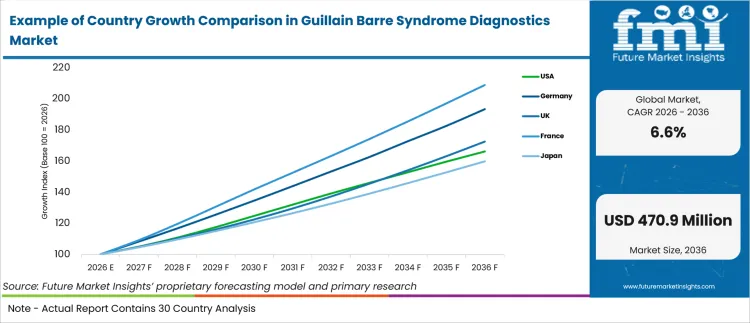
Country comparison shows a gradual step-down across profiled markets. Canada occupies the upper position, followed by Italy and France. Germany forms the middle forecast point. UK, USA, and Japan complete the disclosed comparison. A 3.7 percentage-point spread separates Canada from Japan. National rates reflect distinct referral systems and diagnostic access conditions.
- Canada is anticipated to lead the comparison and place North America at the upper forecast position.
- Italy is likely to follow Canada through specialist hospital cohorts and structured outcome assessment.
- France is expected to form the next rate band through pharmacovigilance review and neurologic confirmation pathways.
- Germany is projected to occupy the middle position under documentation-intensive electrophysiology practices.
- UK, USA, and Japan complete the comparison through different surveillance and service-access models.
Markets carrying similar CAGRs are expected to present different entry conditions through referral timing and service coverage. Full report coverage extends across North America, Europe, East Asia, South Asia and Pacific, Latin America, and Middle East and Africa.
Country-wise Analysis
- Guillain barre syndrome diagnostics adoption in Canada is set to scale at 8.5% CAGR between 2026 and 2036, led by coordinated diagnostic records across provincial care. Improved interoperability may reduce handoff loss between emergency assessment and laboratory review. Canadian Medical Association reported in April 2026 that 99% of physicians faced disconnected systems obstructing record or test-result sharing.
- An Italian study published in May 2026 evaluated 230 adults with Guillain-Barré syndrome, demonstrating an established hospital cohort for structured outcome assessment. Cohort-based practice supports repeat measurements and standardized reports across neurology units. Demand in Italy is estimated to rise at 8.1% CAGR during the study period, aided by specialist neurology services and respiratory-risk documentation.
- Pharmacovigilance review strengthens demand for documented chronology and confirmatory neurologic testing across France. Sector in France is projected to record 7.6% CAGR from 2026 to 2036, reflecting specialist investigation of suspected neurologic events. A French analysis published in March 2025 retained 375 reports of Guillain-Barré syndrome for assessment.
- Sales in Germany are anticipated to scale at 6.8% CAGR during the forecast period, led by structured neurophysiology practice. A July 2024 international study included 44 German patients, demonstrating participation in multicountry electrodiagnostic comparison. German buyers emphasize transparent electrophysiological criteria and preserved waveform evidence during platform review.
- UK Health Security Agency reported 10 acute flaccid paralysis or myelitis cases during 2025 in its June 2026 analysis. Formal surveillance supports prompt referral and exclusion of infectious or non-infectious causes. Industry in the United Kingdom is predicted to grow at 5.6% CAGR during the assessment period, backed by specialist neuromuscular services.
- United States diagnostic activity reflects active safety surveillance and established electrodiagnostic services. Sector in the United States is projected to record 5.2% CAGR during the assessment period, reflecting formal investigation of new weakness or sensory symptoms. Food and Drug Administration reported a 42-day risk interval in January 2025 following two RSV vaccines.
- Guillain barre syndrome diagnostics market in Japan is forecast to expand at 4.8% CAGR between 2026 and 2036, influenced by national epidemiological evidence for hospital planning. Consistent classification supports comparable electrophysiology and laboratory reporting across participating centers. A nationwide study published in April 2026 estimated 1,885 newly diagnosed cases annually during its reference period.
Who are notable companies in Guillain Barre Syndrome Diagnostics Market?
Natus Medical Incorporated, Nihon Kohden Corporation, Cadwell Industries, Inc., EB Neuro S.p.A., Neurosoft Ltd., DEYMED Diagnostic s.r.o., Siemens Healthineers AG, and F. Hoffmann-La Roche Ltd. are prominent companies influencing the market.
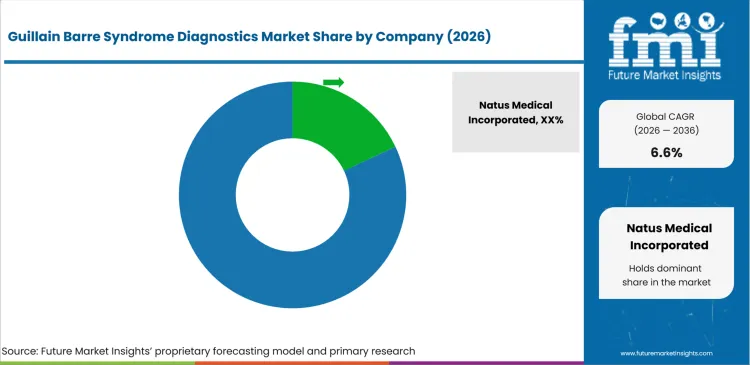
Competition in the industry centers on electrodiagnostic systems and imaging support. Device groups focus on portable configurations and specialist training. Laboratory participants emphasize reference interpretation and consistent turnaround. Imaging providers support differential diagnosis without replacing clinical examination or electrophysiological confirmation.
- Natus Medical Incorporated and Nihon Kohden Corporation compete depending on hospital neurodiagnostic portfolios and established service networks. Buyers assess protocol coverage and integration with clinical records.
- Cadwell Industries, Inc. and EB Neuro S.p.A. compete based on focused electromyography devices and nerve-conduction platforms. Clinical teams examine ultrasound compatibility and technical support.
- Neurosoft Ltd. and DEYMED Diagnostic s.r.o. address specialist electrodiagnostic use through configurable systems and training. Regional buyers examine software usability and distributor responsiveness.
- Siemens Healthineers AG and F. Hoffmann-La Roche Ltd. contribute imaging and in vitro diagnostics capabilities used during differential diagnosis. Hospital selection reflects instrument availability and established service relationships.
Competitive Benchmarking: Guillain Barre Syndrome Diagnostics Market
| Company | Electrodiagnostic Depth | Laboratory or Imaging Support | Service Support | Service Reach |
|---|---|---|---|---|
| Natus Medical Incorporated | High | Medium | High | Global |
| Nihon Kohden Corporation | High | Medium | High | Global |
| Cadwell Industries, Inc. | High | Medium | High | Multi-country |
| EB Neuro S.p.A. | High | Focused | Medium | Multi-country |
| Neurosoft Ltd. | High | Focused | Medium | Multi-country |
| DEYMED Diagnostic s.r.o. | High | Focused | Medium | Multi-country |
| Siemens Healthineers AG | Medium | High | High | Global |
| F. Hoffmann-La Roche Ltd. | Focused | High | High | Global |
Source: Future Market Insights competitive analysis, 2026.
Key Developments in Guillain Barre Syndrome Diagnostics Market
- In February 2025, DEYMED Diagnostic s.r.o. presented TruTrace EMG with NCS, EMG, autonomic, and evoked-potential examination support. Configurations spanning portable and cart-based use extend testing flexibility across neurophysiology practices.
- In April 2025, Cadwell Industries, Inc. released Sierra software supporting synchronized EMG and ultrasound acquisition. Combined electrophysiological and structural review may improve selected neuromuscular examinations and specialist reporting.
- In May 2025, Neurosoft Ltd. delivered a two-day EMG course covering NCS techniques, needle EMG, and software workflows. Structured training supports consistent test execution and interpretation across distributed users.
Guillain Barre Syndrome Diagnostics Market Report Scope
| Coverage field | Report scope |
|---|---|
| Market breakdown | Guillain barre syndrome diagnostics market breakdown by diagnostic test, disease type, end user, technology, sample type, and region |
| Quantitative Units | Revenue in USD million and CAGR in %. |
| Market Definition | Electrophysiology, cerebrospinal-fluid testing, serology, imaging, and clinical assessment used to support diagnosis and subtype classification of Guillain-Barré syndrome |
| Regions Covered | North America, Europe, East Asia, South Asia and Pacific, Latin America, and Middle East and Africa |
| Countries Covered | Canada, Italy, France, Germany, UK, USA, and Japan |
| Key Companies Profiled | Natus Medical Incorporated, Nihon Kohden Corporation, Cadwell Industries, Inc., EB Neuro S.p.A., Neurosoft Ltd., DEYMED Diagnostic s.r.o., Siemens Healthineers AG, and F. Hoffmann-La Roche Ltd. |
| Forecast Period | 2026 to 2036 |
| Approach | Hybrid bottom-up and top-down methodology uses segment shares and country CAGRs. Company activity, primary interviews, and diagnostic evidence support final reconciliation. |
Source: Future Market Insights analysis, 2026.
Guillain Barre Syndrome Diagnostics Market - Research Methodology
| Method | Approach |
|---|---|
| Primary Research | FMI analysts gathered input from manufacturers, service providers, technology developers, distributors, end users, procurement teams, and subject-matter experts. Interviews examined purchasing decisions, product or service evaluation, adoption barriers, approval requirements, pricing considerations, and expectations for technical or commercial support. Respondents were also asked what evidence is required before a trial, pilot, or initial order develops into regular purchasing. |
| Desk Research | Desk research covered government statistics, regulatory publications, trade data, industry associations, technical literature, standards, company filings, product information, and official corporate announcements. Sources were reviewed for relevance, publication date, geographic coverage, and consistency with the defined market scope. Claims relating to performance, applications, approvals, capacity, investment, and commercial activity were retained only when supported by credible public evidence. |
| Market Sizing and Forecasting | The market model combined the baseline value with historical performance, segment structure, pricing and volume indicators, adoption levels, company participation, and country-level demand conditions. Forecast assumptions considered economic activity, investment trends, regulatory developments, technology adoption, purchasing cycles, supply availability, and barriers to wider market use. Segment and regional estimates were reconciled before the final market total was calculated. |
| Data Validation | Estimates were checked against multiple independent indicators, including public data, company activity, trade patterns, industry developments, and findings from primary interviews. Validation also tested whether products, services, applications, and company revenues fell within the defined market boundaries. Adjacent categories, unsupported claims, overlapping revenues, and activities without direct market relevance were excluded to reduce double counting and maintain consistency across segments and countries. |
Source: Future Market Insights analysis, 2026.
Guillain Barre Syndrome Diagnostics Market by Segments
Guillain Barre Syndrome Diagnostics Market segmented by Diagnostic Test:
- Nerve Conduction Studies
- Cerebrospinal Fluid Analysis
- Electromyography
- Laboratory & Immunological Tests
Guillain Barre Syndrome Diagnostics Market segmented by Disease Type:
- Acute Inflammatory Demyelinating Polyneuropathy
- Acute Motor Axonal Neuropathy
- Acute Motor Sensory Axonal Neuropathy
- Miller Fisher Syndrome
Guillain Barre Syndrome Diagnostics Market segmented by End User:
- Hospitals
- Diagnostic Laboratories
- Specialty Neurology Clinics
- Academic & Research Institutes
Guillain Barre Syndrome Diagnostics Market segmented by Technology:
- Electrophysiological Diagnostics
- Laboratory Diagnostics
- Imaging Techniques
Guillain Barre Syndrome Diagnostics Market segmented by Sample Type:
- Cerebrospinal Fluid
- Blood
- Nerve Tissue & Others
Guillain Barre Syndrome Diagnostics Market segmented by Region:
- North America
- United States
- Canada
- Latin America
- Brazil
- Mexico
- Argentina
- Chile
- Western Europe
- Germany
- France
- United Kingdom
- Italy
- Spain
- Benelux
- Nordics
- Eastern Europe
- Poland
- Czech Republic
- Romania
- Hungary
- East Asia
- China
- Japan
- South Korea
- South Asia and Pacific
- India
- ASEAN
- Australia and New Zealand
- Middle East and Africa
- GCC Countries
- South Africa
- Türkiye
- Israel
Research Sources and Bibliography
- Arends, S., de Koning, L., Drenthen, J., et al. (2026, February 8). Dynamics of nerve conduction studies in patients with Guillain-Barré syndrome. Muscle & Nerve, 73(5), 832-842.
- Arends, S., Drenthen, J., de Koning, L., et al. (2024, July 4). Electrodiagnostic subtyping in Guillain-Barré syndrome patients in the International Guillain-Barré Outcome Study. European Journal of Neurology, 31(9), e16335.
- Bellanti, R., & Rinaldi, S. (2024, May 30). Guillain-Barré syndrome: A comprehensive review. European Journal of Neurology, 31(8), e16365.
- Cadwell Industries, Inc. (2025, April 2). Next generation Sierra software delivers fully-synchronized EMG and ultrasound.
- Canadian Medical Association. (2026, April 21). Doctors report false health information, lack of health data sharing put patient care at risk.
- Cao, J., Wang, S., Gong, T., Zheng, W., Sun, P., & Wang, G. (2026, January 23). MR neurography of tibial and common peroneal nerves in patients with Guillain-Barre syndrome and electrophysiological correlation. BMC Neurology, 26, 118.
- Chen, L., Yang, H., Wang, C., Wu, H., Zhu, Z., & Shi, Z. (2025, May 18). Clinical and electrophysiological characteristics and blood markers for short-term prognosis prediction in severe Guillain-Barré syndrome: A retrospective cohort study. Multiple Sclerosis and Related Disorders, 100, 106532.
- DEYMED Diagnostic s.r.o. (2025, February 27). TruTrace EMG - The perfect choice for your neurophysiological practice and research.
- Food and Drug Administration. (2025, January 7). FDA requires Guillain-Barré syndrome warning in the prescribing information for RSV vaccines Abrysvo and Arexvy: FDA safety communication.
- Gligorov, M., Lebrun-Vignes, B., Masmoudi, K., Vial, T., Junot, H., Pourcher, V., Demeret, S., Weiss, N., & Bihan, K. (2025, March 3). Vaccines and the risk of Guillain-Barré syndrome: A French pharmacovigilance analysis. Therapie, 80(5), 580-588.
- John, T., & Mathew, A. E. (2024, July 3). Utilizing nerve conduction studies to identify very early Guillain-Barré syndrome and distinguish it from mimics in emergency settings. Muscle & Nerve, 70(5), 929-936.
- Majumder, P., Tripathi, M., Srivastava, A. K., Srivastava, M. V. P., Pandit, A. K., Radhakrishnan, D. M., Vishnu, V. Y., Upadhyay, A. D., & Das, A. (2025, September 15). Characterization of autonomic involvement in various subtypes of Guillain-Barré syndrome and association with electrophysiological parameters. Muscle & Nerve, 72(6), 1235-1241.
- Mazzoli, M., Ariatti, A., Benuzzi, F., et al. (2026, May 25). Prognostic value of modified Erasmus Guillaiun Barre’ syndrome outcome score in an Italian cohort of patients: Challenges, insights and limitations. Neurological Sciences, 47, 520.
- Neurosoft Ltd. (2025, May 28). Neurosoft Academy: EMG course.
- Siconolfi, G., Vitali, F., Sciarrone, M. A., Guglielmino, V., Primiano, G., & Luigetti, M. (2025, September 21). Neurofilament light chain levels as diagnostic and prognostic biomarkers in Guillain-Barré syndrome: An updated systematic review and meta-analysis. Neurology and Therapy, 14(6), 2387-2410.
- Suichi, T., Misawa, S., Ukita, S., Shibuya, K., Ogushi, M., Sato, Y., & Kuwabara, S. (2026, April 22). The impact of the COVID-19 pandemic on the incidence and clinical profiles of Guillain-Barré syndrome in Japan. Brain, awag144.
- Thatikonda, N., Lerint, A., Takle, C., Fang, X., & Patel, C. (2025, January 24). Albuminocytologic dissociation and the impact of age-adjusted cerebrospinal fluid protein levels in Guillain-Barré syndrome. Neurology International, 17(2), 18.
- UK Health Security Agency. (2026, June 2). Analysis of acute flaccid paralysis and myelitis: Analysis of data up to 2025.
- World Health Organization. (2025, October 24). Guillain-Barré syndrome.
- Yang, S., Chen, N., Zhang, L., Wang, Y., Chen, L., Jian, F., Zhang, Z., Wang, Y., & Pan, H. (2024, October). The initial clinical and electrophysiological characteristics of different subtypes of Guillain-Barré syndrome diagnosed based on serial electrophysiological examinations. Brain and Behavior, 14(10), e70068.
This bibliography is provided for reader reference and is not exhaustive. The full report contains the complete reference list and detailed citations.
This Report Answers
- How do diagnostic test and disease type segments influence demand for guillain barre syndrome diagnostics?
- What criteria guide hospitals evaluating electrodiagnostic systems for suspected guillain-barré syndrome?
- Why does acute inflammatory demyelinating polyneuropathy lead disease type assessment?
- Why do hospitals lead end user demand across urgent diagnostic pathways?
- How do electrophysiology and cerebrospinal-fluid testing support combined clinical review?
- What barriers delay confirmation during uncertain early presentations?
- How do country CAGRs differ across profiled national markets?
- What companies compete through electrodiagnostic and imaging capabilities?
- How are forecasts validated through bottom-up and top-down analysis?
- What evidence supports recurring system use across hospital neurophysiology services?
Frequently Asked Questions
How big is the Guillain Barre Syndrome Diagnostics Market in 2026?
The guillain barre syndrome diagnostics market is valued at USD 248.5 million in 2026 and is forecast to reach USD 470.9 million by 2036. Growth is supported by urgent weakness assessment that sustains recurring demand for nerve-conduction studies and cerebrospinal-fluid analysis across hospital neurology pathways.
What is the CAGR of the Guillain Barre Syndrome Diagnostics Market from 2026 to 2036?
The guillain barre syndrome diagnostics market grows at a CAGR of 6.6% between 2026 and 2036, supported by hospitals combining electrodiagnostic and laboratory evidence during differential diagnosis once progressive weakness and diminishing reflexes prompt urgent neurologic and respiratory-risk assessment.
Which disease type leads the Guillain Barre Syndrome Diagnostics Market?
Acute inflammatory demyelinating polyneuropathy accounts for 63.0% of the guillain barre syndrome diagnostics market by disease type in 2026, driven by recognizable conduction velocity and temporal dispersion abnormalities that established testing criteria interpret alongside clinical progression and cerebrospinal-fluid evidence.
How much will the Guillain Barre Syndrome Diagnostics Market add between 2026 and 2036?
The guillain barre syndrome diagnostics market is set to add USD 222.4 million between 2026 and 2036, growing from USD 248.5 million to USD 470.9 million as hospitals expand coordinated electrophysiological and laboratory testing across urgent neurologic care pathways.
Who are the leading companies in the Guillain Barre Syndrome Diagnostics Market?
Eight companies lead the guillain barre syndrome diagnostics market, including Natus Medical Incorporated, Nihon Kohden Corporation, Cadwell Industries Inc., EB Neuro S.p.A., Neurosoft Ltd., DEYMED Diagnostic s.r.o., Siemens Healthineers AG, and F. Hoffmann-La Roche Ltd., competing through electrodiagnostic depth and service coverage.
Preview the report firsthand - request a free sample
Get SampleGet the brochure for pricing and purchase details.
Get PDFTable of Content
- Key Takeaways
- Market Size and CAGR
- Top Growth Driver
- Fastest Growing Segment
- Leading Region
- Key Companies
- Emerging Opportunities
- Executive Summary
- Global Market Outlook
- Demand-side Trends
- Supply-side Trends
- Technology Roadmap Analysis
- Analysis and Recommendations
- Analyst Perspective (What is happening? Why now? What should investors know?)
- Key Questions Answered
- How large is the market?
- What is the CAGR?
- What are key trends?
- Which region dominates?
- Who are the leaders?
- Market Overview
- Market Coverage / Taxonomy
- Market Definition / Scope / Limitations
- Research Methodology
- Chapter Orientation
- Analytical Lens and Working Hypotheses
- Market Structure, Signals, and Trend Drivers
- Benchmarking and Cross-market Comparability
- Market Sizing, Forecasting, and Opportunity Mapping
- Research Design and Evidence Framework
- Desk Research Programme (Secondary Evidence)
- Expert Input and Fieldwork (Primary Evidence)
- Tooling, Models, and Reference Databases
- Data Engineering and Model Build
- Quality Assurance and Audit Trail
- Market Background
- Market Dynamics (Drivers, Restraints, Opportunity, Trends)
- Scenario Forecast (Optimistic, Likely, Conservative)
- Impact Analysis
- AI Impact
- Sustainability Impact
- Regulatory Impact
- Technology Impact
- Consumer / Buyer Analysis
- Purchase Drivers
- Adoption Barriers
- Buyer Journey
- Opportunity Map Analysis
- Product Life Cycle Analysis
- Supply Chain Analysis
- Investment Feasibility Matrix
- Value Chain Analysis
- PESTLE and Porter's Analysis
- Regulatory Landscape
- Regional Parent Market Outlook
- Production and Consumption Statistics
- Import and Export Statistics
- Global Market Analysis and Forecast, 2021 to 2036
- Historical Market Size Value (USD Million) Analysis, 2021 to 2025
- Current and Future Market Size Value (USD Million) Projections, 2026 to 2036
- Y-o-Y Growth Trend Analysis
- Absolute $ Opportunity Analysis
- Global Market Pricing Analysis, 2021 to 2036
- Global Market Analysis and Forecast, By Diagnostic Test, 2021 to 2036
- Introduction / Key Findings
- Historical Market Size Value (USD Million) Analysis By Diagnostic Test, 2021 to 2025
- Current and Future Market Size Value (USD Million) Analysis and Forecast By Diagnostic Test, 2026 to 2036
- Nerve Conduction Studies
- Motor Nerve Conduction Tests
- Sensory Nerve Conduction Tests
- F-wave Studies
- Cerebrospinal Fluid Analysis
- Protein Analysis
- Cell Count Testing
- Biochemical Analysis
- Electromyography
- Needle Electromyography
- Surface Electromyography
- Motor Value (USD Million) Analysis
- Laboratory & Immunological Tests
- Anti-ganglioside Antibody Testing
- Blood Biomarker Testing
- Molecular Diagnostics
- Nerve Conduction Studies
- Y-o-Y Growth Trend Analysis By Diagnostic Test, 2021 to 2025
- Absolute $ Opportunity Analysis By Diagnostic Test, 2026 to 2036
- Global Market Analysis and Forecast, By Disease Type, 2021 to 2036
- Introduction / Key Findings
- Historical Market Size Value (USD Million) Analysis By Disease Type, 2021 to 2025
- Current and Future Market Size Value (USD Million) Analysis and Forecast By Disease Type, 2026 to 2036
- Acute Inflammatory Demyelinating Polyneuropathy
- Classic AIDP
- Post-infectious AIDP
- Severe AIDP
- Acute Motor Axonal Neuropathy
- Pediatric AMAN
- Adult AMAN
- Rapid-onset AMAN
- Acute Motor Sensory Axonal Neuropathy
- Early-stage AMSAN
- Advanced AMSAN
- Recurrent AMSAN
- Miller Fisher Syndrome
- Classic Miller Fisher Syndrome
- Overlap Syndrome
- Atypical Variants
- Acute Inflammatory Demyelinating Polyneuropathy
- Y-o-Y Growth Trend Analysis By Disease Type, 2021 to 2025
- Absolute $ Opportunity Analysis By Disease Type, 2026 to 2036
- Global Market Analysis and Forecast, By End User, 2021 to 2036
- Introduction / Key Findings
- Historical Market Size Value (USD Million) Analysis By End User, 2021 to 2025
- Current and Future Market Size Value (USD Million) Analysis and Forecast By End User, 2026 to 2036
- Hospitals
- Tertiary Care Hospitals
- General Hospitals
- Neurology Departments
- Diagnostic Laboratories
- Independent Diagnostic Labs
- Hospital Laboratories
- Reference Laboratories
- Specialty Neurology Clinics
- Neuromuscular Clinics
- Outpatient Neurology Centers
- Rehabilitation Clinics
- Academic & Research Institutes
- Medical Universities
- Clinical Research Centers
- Government Research Institutes
- Hospitals
- Y-o-Y Growth Trend Analysis By End User, 2021 to 2025
- Absolute $ Opportunity Analysis By End User, 2026 to 2036
- Global Market Analysis and Forecast, By Technology, 2021 to 2036
- Introduction / Key Findings
- Historical Market Size Value (USD Million) Analysis By Technology, 2021 to 2025
- Current and Future Market Size Value (USD Million) Analysis and Forecast By Technology, 2026 to 2036
- Electrophysiological Diagnostics
- Digital EMG Systems
- Portable EMG Systems
- AI-assisted Signal Analysis
- Laboratory Diagnostics
- Immunoassays
- Molecular Testing
- Biomarker Detection
- Imaging Techniques
- MRI
- High-resolution Ultrasound
- Nerve Imaging
- Electrophysiological Diagnostics
- Y-o-Y Growth Trend Analysis By Technology, 2021 to 2025
- Absolute $ Opportunity Analysis By Technology, 2026 to 2036
- Global Market Analysis and Forecast, By Sample Type, 2021 to 2036
- Introduction / Key Findings
- Historical Market Size Value (USD Million) Analysis By Sample Type, 2021 to 2025
- Current and Future Market Size Value (USD Million) Analysis and Forecast By Sample Type, 2026 to 2036
- Cerebrospinal Fluid
- Lumbar Puncture Samples
- Stored CSF Samples
- Research Samples
- Blood
- Whole Blood
- Serum
- Plasma
- Nerve Tissue & Others
- Nerve Biopsy
- Genetic Samples
- Clinical Research Specimens
- Cerebrospinal Fluid
- Y-o-Y Growth Trend Analysis By Sample Type, 2021 to 2025
- Absolute $ Opportunity Analysis By Sample Type, 2026 to 2036
- Global Market Analysis and Forecast, By Region, 2021 to 2036
- Introduction
- Historical Market Size Value (USD Million) Analysis By Region, 2021 to 2025
- Current Market Size Value (USD Million) Analysis and Forecast By Region, 2026 to 2036
- North America
- Latin America
- Western Europe
- Eastern Europe
- East Asia
- South Asia and Pacific
- Middle East & Africa
- Market Attractiveness Analysis By Region
- North America Market Analysis and Forecast, By Country, 2021 to 2036
- Historical Market Size Value (USD Million) Trend Analysis By Market Taxonomy, 2021 to 2025
- Market Size Value (USD Million) Forecast By Market Taxonomy, 2026 to 2036
- By Country
- USA
- Canada
- By Diagnostic Test
- By Disease Type
- By End User
- By Technology
- By Sample Type
- By Country
- Market Attractiveness Analysis
- By Country
- By Diagnostic Test
- By Disease Type
- By End User
- By Technology
- By Sample Type
- Key Takeaways
- Latin America Market Analysis and Forecast, By Country
- Historical Market Size Value (USD Million) Trend Analysis By Market Taxonomy, 2021 to 2025
- Market Size Value (USD Million) Forecast By Market Taxonomy, 2026 to 2036
- By Country
- Brazil
- Mexico
- Chile
- Rest of Latin America
- By Diagnostic Test
- By Disease Type
- By End User
- By Technology
- By Sample Type
- By Country
- Market Attractiveness Analysis
- By Country
- By Diagnostic Test
- By Disease Type
- By End User
- By Technology
- By Sample Type
- Key Takeaways
- Western Europe Market Analysis and Forecast, By Country
- Historical Market Size Value (USD Million) Trend Analysis By Market Taxonomy, 2021 to 2025
- Market Size Value (USD Million) Forecast By Market Taxonomy, 2026 to 2036
- By Country
- Germany
- UK
- Italy
- Spain
- France
- Nordic
- BENELUX
- Rest of Western Europe
- By Diagnostic Test
- By Disease Type
- By End User
- By Technology
- By Sample Type
- By Country
- Market Attractiveness Analysis
- By Country
- By Diagnostic Test
- By Disease Type
- By End User
- By Technology
- By Sample Type
- Key Takeaways
- Eastern Europe Market Analysis and Forecast, By Country
- Historical Market Size Value (USD Million) Trend Analysis By Market Taxonomy, 2021 to 2025
- Market Size Value (USD Million) Forecast By Market Taxonomy, 2026 to 2036
- By Country
- Russia
- Poland
- Hungary
- Balkan & Baltic
- Rest of Eastern Europe
- By Diagnostic Test
- By Disease Type
- By End User
- By Technology
- By Sample Type
- By Country
- Market Attractiveness Analysis
- By Country
- By Diagnostic Test
- By Disease Type
- By End User
- By Technology
- By Sample Type
- Key Takeaways
- East Asia Market Analysis and Forecast, By Country
- Historical Market Size Value (USD Million) Trend Analysis By Market Taxonomy, 2021 to 2025
- Market Size Value (USD Million) Forecast By Market Taxonomy, 2026 to 2036
- By Country
- China
- Japan
- South Korea
- By Diagnostic Test
- By Disease Type
- By End User
- By Technology
- By Sample Type
- By Country
- Market Attractiveness Analysis
- By Country
- By Diagnostic Test
- By Disease Type
- By End User
- By Technology
- By Sample Type
- Key Takeaways
- South Asia and Pacific Market Analysis and Forecast, By Country
- Historical Market Size Value (USD Million) Trend Analysis By Market Taxonomy, 2021 to 2025
- Market Size Value (USD Million) Forecast By Market Taxonomy, 2026 to 2036
- By Country
- India
- ASEAN
- Australia & New Zealand
- Rest of South Asia and Pacific
- By Diagnostic Test
- By Disease Type
- By End User
- By Technology
- By Sample Type
- By Country
- Market Attractiveness Analysis
- By Country
- By Diagnostic Test
- By Disease Type
- By End User
- By Technology
- By Sample Type
- Key Takeaways
- Middle East & Africa Market Analysis and Forecast, By Country
- Historical Market Size Value (USD Million) Trend Analysis By Market Taxonomy, 2021 to 2025
- Market Size Value (USD Million) Forecast By Market Taxonomy, 2026 to 2036
- By Country
- Kingdom of Saudi Arabia
- Other GCC Countries
- Türkiye
- South Africa
- Other African Union
- Rest of Middle East & Africa
- By Diagnostic Test
- By Disease Type
- By End User
- By Technology
- By Sample Type
- By Country
- Market Attractiveness Analysis
- By Country
- By Diagnostic Test
- By Disease Type
- By End User
- By Technology
- By Sample Type
- Key Takeaways
- Key Countries Market Analysis
- USA
- Pricing Analysis
- Market Share Analysis, 2025
- By Diagnostic Test
- By Disease Type
- By End User
- By Technology
- By Sample Type
- Canada
- Pricing Analysis
- Market Share Analysis, 2025
- By Diagnostic Test
- By Disease Type
- By End User
- By Technology
- By Sample Type
- Mexico
- Pricing Analysis
- Market Share Analysis, 2025
- By Diagnostic Test
- By Disease Type
- By End User
- By Technology
- By Sample Type
- Brazil
- Pricing Analysis
- Market Share Analysis, 2025
- By Diagnostic Test
- By Disease Type
- By End User
- By Technology
- By Sample Type
- Chile
- Pricing Analysis
- Market Share Analysis, 2025
- By Diagnostic Test
- By Disease Type
- By End User
- By Technology
- By Sample Type
- Germany
- Pricing Analysis
- Market Share Analysis, 2025
- By Diagnostic Test
- By Disease Type
- By End User
- By Technology
- By Sample Type
- UK
- Pricing Analysis
- Market Share Analysis, 2025
- By Diagnostic Test
- By Disease Type
- By End User
- By Technology
- By Sample Type
- Italy
- Pricing Analysis
- Market Share Analysis, 2025
- By Diagnostic Test
- By Disease Type
- By End User
- By Technology
- By Sample Type
- Spain
- Pricing Analysis
- Market Share Analysis, 2025
- By Diagnostic Test
- By Disease Type
- By End User
- By Technology
- By Sample Type
- France
- Pricing Analysis
- Market Share Analysis, 2025
- By Diagnostic Test
- By Disease Type
- By End User
- By Technology
- By Sample Type
- India
- Pricing Analysis
- Market Share Analysis, 2025
- By Diagnostic Test
- By Disease Type
- By End User
- By Technology
- By Sample Type
- ASEAN
- Pricing Analysis
- Market Share Analysis, 2025
- By Diagnostic Test
- By Disease Type
- By End User
- By Technology
- By Sample Type
- Australia & New Zealand
- Pricing Analysis
- Market Share Analysis, 2025
- By Diagnostic Test
- By Disease Type
- By End User
- By Technology
- By Sample Type
- China
- Pricing Analysis
- Market Share Analysis, 2025
- By Diagnostic Test
- By Disease Type
- By End User
- By Technology
- By Sample Type
- Japan
- Pricing Analysis
- Market Share Analysis, 2025
- By Diagnostic Test
- By Disease Type
- By End User
- By Technology
- By Sample Type
- South Korea
- Pricing Analysis
- Market Share Analysis, 2025
- By Diagnostic Test
- By Disease Type
- By End User
- By Technology
- By Sample Type
- Russia
- Pricing Analysis
- Market Share Analysis, 2025
- By Diagnostic Test
- By Disease Type
- By End User
- By Technology
- By Sample Type
- Poland
- Pricing Analysis
- Market Share Analysis, 2025
- By Diagnostic Test
- By Disease Type
- By End User
- By Technology
- By Sample Type
- Hungary
- Pricing Analysis
- Market Share Analysis, 2025
- By Diagnostic Test
- By Disease Type
- By End User
- By Technology
- By Sample Type
- Kingdom of Saudi Arabia
- Pricing Analysis
- Market Share Analysis, 2025
- By Diagnostic Test
- By Disease Type
- By End User
- By Technology
- By Sample Type
- Türkiye
- Pricing Analysis
- Market Share Analysis, 2025
- By Diagnostic Test
- By Disease Type
- By End User
- By Technology
- By Sample Type
- South Africa
- Pricing Analysis
- Market Share Analysis, 2025
- By Diagnostic Test
- By Disease Type
- By End User
- By Technology
- By Sample Type
- USA
- Market Structure Analysis
- Competition Dashboard
- Competition Benchmarking
- Market Share Analysis of Top Players
- By Regional
- By Diagnostic Test
- By Disease Type
- By End User
- By Technology
- By Sample Type
- Emerging Startups
- Innovation Benchmarking
- Competition Analysis
- Competition Deep Dive
- Natus Medical Incorporated
- Overview
- Product Portfolio
- Profitability by Market Segments
- Sales Footprint
- Strategy Overview
- Marketing Strategy
- Product Strategy
- Channel Strategy
- Nihon Kohden Corporation
- Cadwell Industries
- Medtronic plc
- Bionen Medical Devices
- RMS Canada
- Siemens Healthineers
- F. Hoffmann-La Roche Ltd.
- Quest Diagnostics
- Mayo Clinic Laboratories
- Natus Medical Incorporated
- Case Studies
- Success Stories
- Recent Developments
- Competition Deep Dive
- Assumptions & Acronyms Used


