

- Market Size (2026)
- USD 260.0 Mn
- Forecast (2036)
- USD 3584.0 Mn
- CAGR (2026 to 2036)
- 30.0%
How big is the Harbor & Coastal Autonomous Patrol Market in 2026?
USD 260.0 million in 2026 and USD 3,584.0 million by 2036 at a 30.0% CAGR.
Sales of harbor and coastal autonomous patrol are estimated to rise at 30.0% CAGR through 2036. Industry revenue is projected to increase from USD 260.0 million in 2026 to USD 3,584.0 million by 2036. Keeping watch over busy shipping lanes for hours is exhausting, leading the port security teams to focus on continuous patrol coverage protecting crew members from long shifts. Managing these coastal waters becomes tougher when vessel traffic changes unpredictably. UNCTAD reported in September 2025 stating for maritime trade having grown 2.2% in 2024 and forecasted expansion slowing to 0.5% in 2025. Such changing shipping volumes influence offshore operators to adopt autonomous tools being easy to monitor ports and review accidents automatically.
Sourcing preferences vary widely between the United States and the European Union. United States programs prefer systems backed by official inspection history and military test results. European Union organizations favor certified surveillance tools sharing data easily across national borders. High-performing technology in neighboring aviation sectors sets a clear benchmark for such watercraft. European Maritime Safety Agency listed RPAS services in June 2026 with aircraft endurance of up to 12 hours and a range of 600 km. Long-range capability milestones heavily shape design standards for autonomous coastal patrol vessels worldwide.
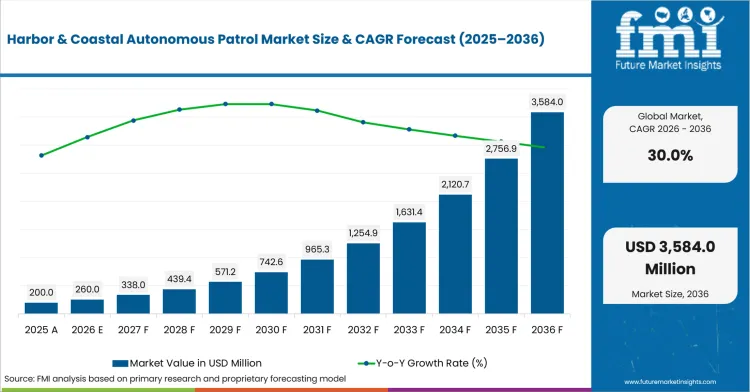
Key Takeaways of Harbor & Coastal Autonomous Patrol Market
- Demand for harbor and coastal autonomous patrol systems is driven by maritime teams' need for persistent coverage and safer incident review, with account decisions reflecting command-control readiness and field service access.
- By component, platforms are expected to lead with 50.0% share in 2026, as physical vehicle purchases guide early fleet buildout.
- Coast guards & navies are the dominant end-user segment, projected to hold 46.0% share in 2026, led by patrol continuity and maritime security use cases.
- Autonomous patrol boats are estimated to lead the product category with 52.0% share in 2026, driven by familiar vessel formats and easier mission acceptance.
- Payload capacity, command view, and maintenance depth remain critical to supplier evaluation, alongside the ability to reduce crew exposure around remote assets.
- The United States and the European Union are expected to form the higher-growth region tier, advancing at 31.0% and 29.0% CAGR respectively through 2036, supported by port inspection loads, unmanned maritime trials, and coastal safety priorities.
- Competition centers on Marine AI, Saronic Technologies, Ocean Infinity, SeaSats, Saildrone, and AutoNaut, with vendors differentiating through mission planning, command-control capability, and endurance-led platform performance.
Analyst Perspective
"The harbor and coastal autonomous patrol market is progressing as maritime agencies seek platforms that deliver dependable surveillance while reducing operational risk for personnel. Procurement decisions are influenced by proven mission performance, reliable autonomous navigation, and seamless integration with existing maritime security operations. Suppliers that combine robust platform engineering with mission planning expertise, operator training, and responsive local service are likely to strengthen long-term relationships with port authorities and coast guard organizations."
- Nikhil Kaitwade, Principal Consultant for Industrial Automation at Future Market Insights
Source: Future Market Insights analysis, 2026.
How is Harbor & Coastal Autonomous Patrol Market segmented?
The harbor & coastal autonomous patrol industry is segmented by platform, application, component, end user, business model and region.
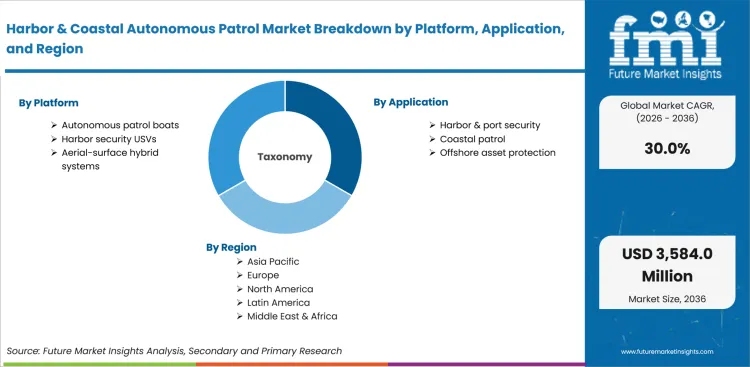
The harbor & coastal autonomous patrol market covers five parent segments. Platform coverage includes autonomous patrol boats alongside harbor security USVs and aerial-surface hybrid systems. Application coverage includes harbor & port security, coastal patrol and offshore asset protection. Component coverage includes platforms, autonomy & C2 software and services. End-user coverage includes coast guards & navies, port authorities and offshore operators. Business model coverage includes procurement, patrol-as-a-service and lease models. Regional coverage includes North America and Latin America. Coverage also includes Europe, East Asia, South Asia, Oceania and Middle East and Africa.
How do autonomous patrol boats shape platform purchasing?
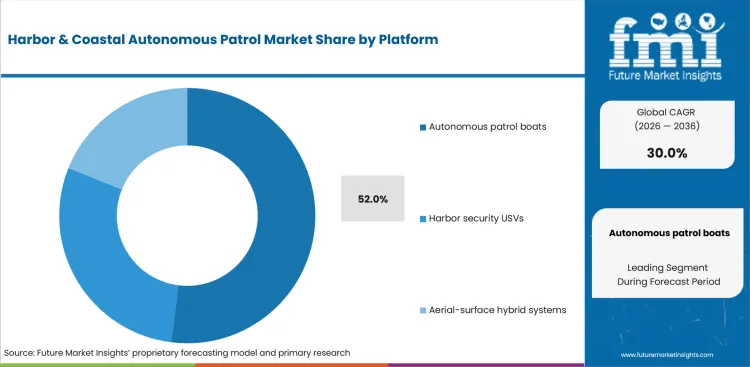
Autonomous patrol boats are estimated to lead platform purchasing as maritime teams prefer vessel formats resembling crewed patrol assets. Buyers value familiar harbor maneuvering and mission logging before moving from demonstrations to fleet review. Saildrone announced in April 2026 stating Spectre measured 52 meters, weighed 250 tonnes and reached up to 30 knots. Large unmanned vessel capability strengthens buyer review of autonomous patrol boats for longer coastal and naval missions.
- Based on platform, autonomous patrol boats are anticipated to represent 52.0% share in 2026 due to familiar vessel design and easier operator acceptance. Buyers prefer boat-based systems depending on payload and recovery evidence are documented.
- Harbor security USVs and aerial-surface hybrid systems support specialized missions across confined port zones and mixed-sensor patrol paths. Autonomous patrol boats retain selection strength after agencies need recognizable vessel formats for recurring deployment.
How do platforms support component demand?
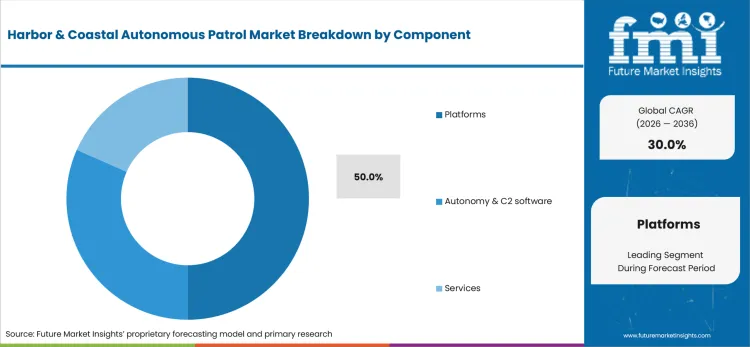
International Maritime Organization reported in May 2026 stating the MASS Code are expected to take effect from July 2026 and development of a mandatory code is planned for 2028. Such staged safety work is expected to raise review standards for autonomy software and service records. Platforms are anticipated to guide component purchasing as buyers first establish deployable vehicle fleets before adding larger software and service layers. Physical vessel readiness and maintainability remain central to early program acceptance.
- In 2026, platforms are set to account for 50.0% share in 2026 since early spending concentrates on patrol vehicles and payload-ready hulls. Buyers approve platform orders on remote control and maintenance evidence matching mission needs.
- Autonomy & C2 software and services support later program depth depending on buyers being able to expand from pilot projects to managed fleets. Platform demand gains account attention by physical assets proving mission readiness in harbor and coastal conditions.
How do coast guards and navies shape end-user demand?
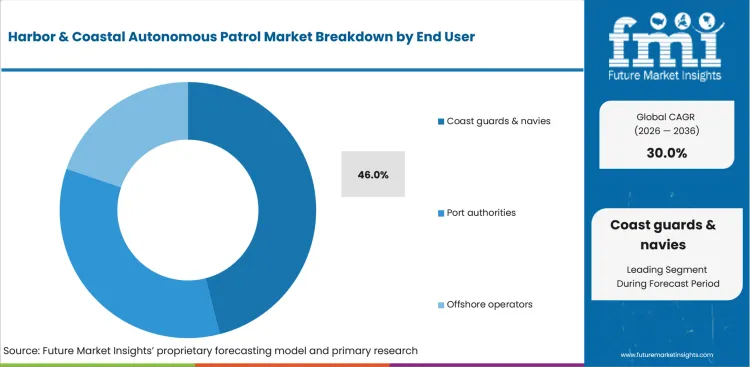
Mission teams review vessel control and evidence files before approval. Saildrone reported in June 2025 claiming 4 Voyager USVs were deployed for a 3-month mission with Denmark’s defense acquisition organization. Operational defense trials strengthen acceptance paths for coast guard and navy autonomous patrol programs. Coast guards and navies are expected to lead end-user demand as maritime security agencies need continuous coverage without keeping crewed patrol assets active across every watch cycle.
- Coast guards & navies are estimated to secure 46.0% share of end-user demand in 2026, backed by port security and maritime domain awareness needs. Agencies prefer platforms based on mission logs and payload records promoting formal review.
- Port authorities and offshore operators generate sustained demand for perimeter monitoring and asset surveillance. Coast guard and navy demand remains central due to national security missions requiring validated autonomy and dependable field response.
Why does harbor and port security influence application demand?
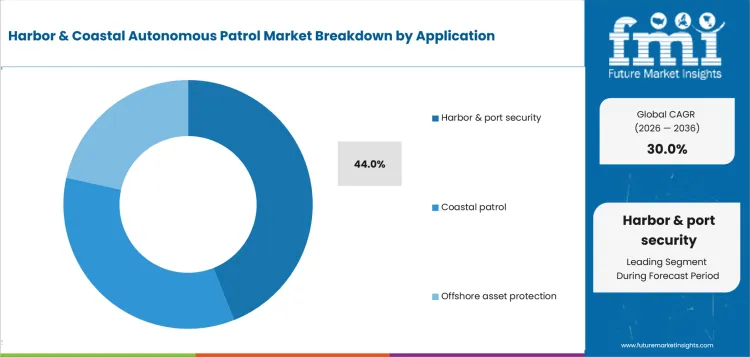
Harbor and port security is anticipated to support application demand as ports concentrate vessels and restricted waters within dense operating zones. Buyers assess patrol persistence and alert handoff before approving autonomous systems. Bureau of Transportation Statistics reported in January 2026 noting the top 25 USA container ports operated 583 ship-to-shore gantry cranes in 2025. Waterside asset density supports interest in autonomous harbor monitoring around container terminals and restricted zones.
- Harbor & port security is predicted to garner 44.0% share in 2026, helped by concentrated infrastructure and vessel traffic inside port waters. Buyers prefer patrol systems due to platforms demonstrating reliable perimeter monitoring and incident documentation.
- Coastal patrol and offshore asset protection support additional use cases across wider waters and remote installations. Harbor and port security keeps selection strength led by attracting buyers seeking continuous watch around berths and restricted areas.
How does procurement support business model demand?
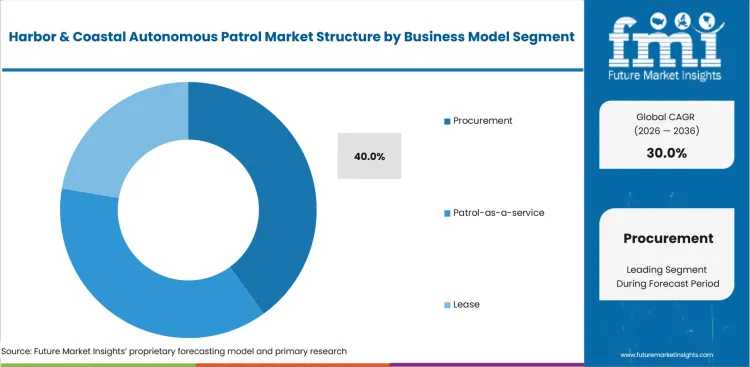
procurement is anticipated to support business model demand as government and port buyers seek asset control, mission discretion and long-term fleet planning. Ownership models allow buyers to manage payload upgrades and deployment schedules. Australian Defence Ministers announced on March 2026 noting for 40 new Bluebottle uncrewed surface vessels likely to expand the navy fleet to 55. Such fleet expansion reinforces procurement appeal for agencies needing sovereign control and persistent surveillance capability.
- By business model, procurement is projected to capture 40.0% share in 2026 as coast guards and port authorities prefer ownership control. Buyers approve procurement driven by mission authority and maintenance planning being aligned.
- Patrol-as-a-service and lease models support budget flexibility for ports and offshore operators testing limited missions. procurement gains preference based on agencies needing complete control over sensitive patrol data and operating schedules.
What are drivers, restraints, and opportunities in Harbor & Coastal Autonomous Patrol Market?
Purchasing decisions are shaped by patrol continuity and approval readiness as outlined below.
- Driver: Harbor security teams are replacing periodic crewed patrol coverage with persistent autonomous monitoring linked to vessel detection and incident response.
- Restraint: Adoption slows as buyers review communications reliability and platform suitability before approval.
- Opportunity: Developers offering mission planning software and local service teams improve approval chances across maritime accounts.
Port security teams are expected to invest in autonomous patrol coverage as waterfront infrastructure gains density and harder to monitor through crewed patrols alone. Bureau of Transportation Statistics reported in January 2026 announcing for East Coast ports having reached a peak of 30 containerships waiting in February 2025. Anchorage pressure strengthens demand for persistent harbor observation and vessel-position awareness before incident response.
Adoption is likely to face approval delays as regulators and buyers align safety assurance with operational autonomy. Saildrone stated in June 2025 claiming Mission Control tracks USV operations 24/7/365 and collision avoidance holds station during intercepting vessel courses. Continuous supervision needs may raise buyer review of communication reliability and operating handover practices.
Opportunity is projected to improve for vendors combining payload integration and low-crew operation support. MARTAC stated in June 2026 noting its manufacturing partnership positioned the company to build 200-300 unmanned surface vessels per year. Scaled production capacity is likely to support patrol programs requiring repeat deliveries and faster fleet expansion.
What country CAGRs are Profiled in Harbor & Coastal Autonomous Patrol Market?
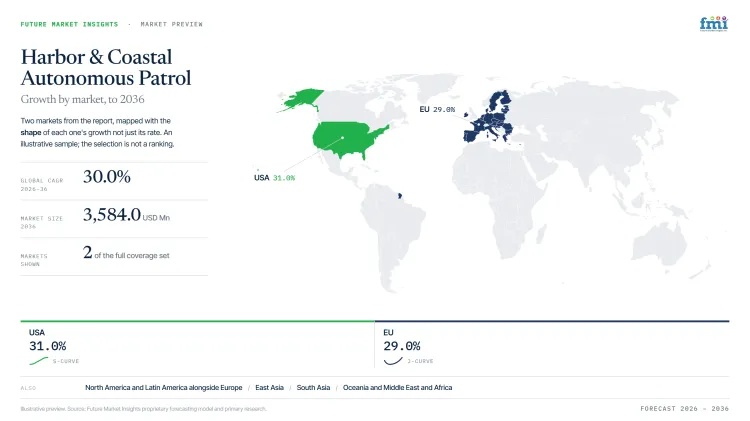
| Country | CAGR |
|---|---|
| EU | 29.0% |
| USA | 31.0% |
Source: Future Market Insights analysis, 2026.
How do country-level CAGRs compare in harbor & coastal autonomous patrol market?
The country comparison spans 2.0 percentage points and reflects a closely aligned growth outlook across the Harbor & Coastal Autonomous Patrol Market. The United States leads the comparison at 31.0% CAGR, while the European Union follows at 29.0%, leaving only a 2.0-point difference between the two markets. Growth in both regions is supported by increasing investment in autonomous maritime surveillance, port security and protection of coastal infrastructure, although adoption priorities differ across the two markets.
-
The United States records the highest CAGR at 31.0% as coast guard modernization programs, naval investment in unmanned surface vessels and growing emphasis on continuous monitoring of ports, shipping lanes and critical maritime assets accelerate adoption. Demand is also supported by increasing use of autonomous systems for harbor security, border surveillance and maritime domain awareness.
-
The European Union follows 2.0 percentage points behind the United States. Expansion is driven by coordinated maritime surveillance initiatives, protection of offshore energy infrastructure and increasing deployment of autonomous technologies for coastal monitoring across member states. Differences in procurement cycles, national security priorities and implementation timelines across individual countries contribute to variation within the regional market.
Comparable CAGRs can still produce different market entry conditions. Differences in maritime security strategies, naval modernization programs, regulatory frameworks and investment in autonomous vessel technologies influence deployment timelines and long-term commercial opportunities. The full report provides country-level CAGR analysis across North America, Latin America, Europe, East Asia, South Asia, Oceania and the Middle East and Africa.
Country-wise Analysis
Country outlooks point to adoption shaped by port agency inspection responsibilities and defense experimentation. EU demand is expected to reflect cross-border maritime surveillance needs. USA demand is projected to move faster as port-state inspection activity and unmanned naval programs support stronger buyer review.
-
Industry in the EU is anticipated to expand at 29.0% CAGR between 2026 and 2036, helped by maritime surveillance coordination across ports, coast guards and offshore asset operators. Agency experience with remote aerial monitoring is expected to guide autonomous surface patrol review. European Maritime Safety Agency reported in July 2024 noting for RPAS services supporting maritime surveillance from 2017 to 2023, reinforcing multi-year operational experience around aerial maritime monitoring and coastal agency support.
- Inspection workload creates a practical review path for patrol platforms able to record vessel activity across busy waters. USA Coast Guard reported in May 2026 stating the 8,999 SOLAS safety exams and 77 detentions were completed in 2025, reinforcing interest in patrol tools able to document vessel movement before agency review. Harbor & coastal autonomous patrol sector adoption in the United States is projected to scale at 31.0% CAGR during the forecast period as inspection loads and defense experimentation strengthen autonomous platform trials.
Who are notable companies in Harbor & Coastal Autonomous Patrol Market?
Marine AI Ltd and Saronic Technologies are expected to shape market direction. Ocean Infinity and SeaSats add unmanned vessel operations depth. Saildrone, Inc. and Maritime Tactical Systems, Inc. support patrol platform breadth. Ocius Technology Ltd and AutoNaut Ltd add persistent unmanned vessel capability. L3Harris Technologies and Elbit Systems Ltd add defense mission system support.
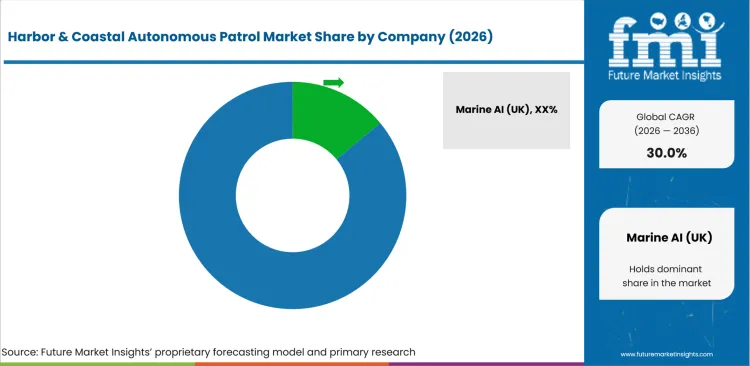
Competition in harbor and coastal autonomous patrol is anticipated to center on vessel endurance and mission command. Sensor payload integration and local service response guide final vendor review. Account teams are likely to compare vendors based on mission proof files and support for repeat patrol programs after first approval. Marine AI Ltd and Saronic Technologies are expected to receive review attention due to autonomy software depth.
Ocean Infinity is anticipated to add remote operations support. Saildrone, Inc. and SeaSats are projected to compete led by unmanned surface vessel endurance. Maritime Tactical Systems, Inc. is estimated to compete based on tactical platform breadth. Ocius Technology Ltd and AutoNaut Ltd are forecast to support account demand due to persistent monitoring. L3Harris Technologies and Elbit Systems Ltd are likely to add defense integration relationships.
- Marine AI Ltd and Saronic Technologies are expected to gain account attention based on autonomy software and mission-control knowledge. Command system experience is likely to promote programs needing technical files and repeated operating discipline.
- Ocean Infinity and Saildrone, Inc. are anticipated to compete driven by unmanned vessel operating depth. SeaSats is projected to improve vendor review as agencies assess long-duration surface platforms before patrol release.
- Maritime Tactical Systems, Inc. and Ocius Technology Ltd are forecast to support demand due to USV engineering. AutoNaut Ltd is expected to help buyers compare low-energy patrol options through specialized vessel design.
- L3Harris Technologies and Elbit Systems Ltd are estimated to gain review strength through defense electronics and mission payload integration. Vendor attention is likely to improve as maritime security buyers need tested autonomous arrangements.
Competitive Benchmarking: Harbor & Coastal Autonomous Patrol Market
| Company | Portfolio Depth | Platform Match | Mission Support | Service Reach |
|---|---|---|---|---|
| Marine AI Ltd | High | Medium | High | Europe |
| Saronic Technologies | High | High | High | United States |
| Ocean Infinity | High | High | High | Global |
| SeaSats | Medium | High | Medium | United States |
| Saildrone, Inc. | High | High | High | Global |
| Maritime Tactical Systems, Inc. | Medium | High | Medium | United States |
| Ocius Technology Ltd | Medium | High | Medium | Australia |
| AutoNaut Ltd | Medium | Medium | Medium | Europe |
| L3Harris Technologies | High | Medium | High | Global |
| Elbit Systems Ltd | High | Medium | High | Global |
Source: Future Market Insights competitive analysis, 2026.
Key Developments in Harbor & Coastal Autonomous Patrol Market
- In January 2025, Marine AI Ltd and Water Witch announced a partnership to develop next-generation autonomous vessels for marine litter collection workboats. Marine AI Ltd stated the program combined Guardian autonomy with Water Witch vessel design, influencing software-led patrol and environmental monitoring use cases in harbor waters.
- In July 2025, Saronic Technologies unveiled Echelon as a unified platform for mission planning, simulation and command-control of autonomous surface vessels. Saronic Technologies stated one operator could plan and execute complex missions across multiple autonomous assets, impacting fleet-level patrol review.
- In December 2025, Ocean Infinity completed delivery of the final vessel in its 14-vessel Armada fleet program. Ocean Infinity stated 12 vessels were live and 2 vessels were following close behind, improving remote maritime operating depth for offshore robotic vessel programs.
Key Players in Harbor & Coastal Autonomous Patrol Market
Autonomy software and mission-control developers
- Marine AI Ltd
- Saronic Technologies
- L3Harris Technologies
- Elbit Systems Ltd
Unmanned surface vessel and remote operations specialists
- Ocean Infinity
- Saildrone, Inc.
- SeaSats
- Maritime Tactical Systems, Inc.
Persistent monitoring and patrol platform developers
- Ocius Technology Ltd
- AutoNaut Ltd
Harbor & Coastal Autonomous Patrol Market - Report Scope
| Coverage field | Report scope |
|---|---|
| Market breakdown | Harbor & Coastal Autonomous Patrol Market breakdown by platform alongside application, component, end user, business model and region |
| Quantitative Units | USD million in 2026 to USD million by 2036 at a CAGR |
| Market Definition | Harbor and coastal autonomous patrol includes unmanned surface vessels, autonomy software, command-control systems and services used for port, coastal and offshore patrol missions. |
| Regions Covered | North America and Latin America alongside Europe, East Asia, South Asia, Oceania and Middle East and Africa |
| Countries Covered | United States and EU alongside Canada, Brazil, Mexico, Germany, United Kingdom, France, Italy, Spain, China, Japan, South Korea, India, Australia, New Zealand, GCC countries, South Africa and Türkiye |
| Key Companies Profiled | Marine AI Ltd and Saronic Technologies alongside Ocean Infinity, SeaSats, Saildrone, Inc., Maritime Tactical Systems, Inc., Ocius Technology Ltd, AutoNaut Ltd, L3Harris Technologies and Elbit Systems Ltd |
| Forecast Period | 2026 to 2036 |
| Approach | Hybrid bottom-up and top-down methodology using segment share, country CAGR, maritime surveillance needs, platform performance, autonomy readiness, company portfolio depth and service exposure |
Source: Future Market Insights analysis, 2026.
Harbor & Coastal Autonomous Patrol Market - Research Methodology
| Method | Approach |
|---|---|
| Primary Research | FMI analysts gathered input from manufacturers, service providers, technology developers, distributors, end users, procurement teams, and subject-matter experts. Interviews examined purchasing decisions, product or service evaluation, adoption barriers, approval requirements, pricing considerations, and expectations for technical or commercial support. Respondents were also asked what evidence is required before a trial, pilot, or initial order develops into regular purchasing. |
| Desk Research | Desk research covered government statistics, regulatory publications, trade data, industry associations, technical literature, standards, company filings, product information, and official corporate announcements. Sources were reviewed for relevance, publication date, geographic coverage, and consistency with the defined market scope. Claims relating to performance, applications, approvals, capacity, investment, and commercial activity were retained only when supported by credible public evidence. |
| Market Sizing and Forecasting | The market model combined the baseline value with historical performance, segment structure, pricing and volume indicators, adoption levels, company participation, and country-level demand conditions. Forecast assumptions considered economic activity, investment trends, regulatory developments, technology adoption, purchasing cycles, supply availability, and barriers to wider market use. Segment and regional estimates were reconciled before the final market total was calculated. |
| Data Validation | Estimates were checked against multiple independent indicators, including public data, company activity, trade patterns, industry developments, and findings from primary interviews. Validation also tested whether products, services, applications, and company revenues fell within the defined market boundaries. Adjacent categories, unsupported claims, overlapping revenues, and activities without direct market relevance were excluded to reduce double counting and maintain consistency across segments and countries. |
Source: Future Market Insights analysis, 2026.
Harbor & Coastal Autonomous Patrol Market by Segments
Harbor & Coastal Autonomous Patrol Market segmented by Platform:
- Autonomous patrol boats
- Harbor security USVs
- Aerial-surface hybrid systems
Harbor & Coastal Autonomous Patrol Market segmented by Application:
- Harbor & port security
- Coastal patrol
- Offshore asset protection
Harbor & Coastal Autonomous Patrol Market segmented by Component:
- Platforms
- Autonomy & C2 software
- Services
Harbor & Coastal Autonomous Patrol Market segmented by End User:
- Coast guards & navies
- Port authorities
- Offshore operators
Harbor & Coastal Autonomous Patrol Market segmented by Business Model:
- Direct purchase
- Patrol-as-a-service
- Lease
Harbor & Coastal Autonomous Patrol Market by Region:
- North America
- United States
- Canada
- Latin America
- Brazil
- Mexico
- Argentina
- Europe
- Germany
- United Kingdom
- France
- Italy
- Spain
- East Asia
- China
- Japan
- South Korea
- South Asia
- India
- Thailand
- Indonesia
- Oceania
- Australia
- New Zealand
- Middle East and Africa
- GCC countries
- South Africa
- Türkiye
Research Sources and Bibliography
- Australian Defence Ministers. (2026, March 11). Albanese Government invests $176 million in new fleet of Australian-made uncrewed vessels.
- Bureau of Transportation Statistics. (2026, January). Port Performance Freight Statistics: 2026 Annual Report.
- European Maritime Safety Agency. (2024, July 25). EMSA RPAS Services for Maritime Surveillance 2017-2023.
- European Maritime Safety Agency. (2026, June 12). RPAS on board oil spill recovery vessel infosheet.
- International Maritime Organization. (2026, May 22). IMO adopts first global Code for autonomous ships.
- Marine AI Ltd. (2025, January 15). Water Witch, pioneering manufacturer of marine litter collection workboats, announces partnership with Marine AI to develop next generation autonomous vessels.
- MARTAC. (2026, June 17). MARTAC and Intrepid Powerboats announce manufacturing partnership to scale autonomous surface vessel production.
- Ocean Infinity. (2025, December 15). Ocean Infinity completes Armada fleet milestone with delivery of final vessel.
- Saildrone. (2025, June 16). Saildrone launches the future of maritime surveillance in the Baltic Sea.
- Saildrone. (2026, April 20). Introducing Saildrone Spectre: Next-generation USV for anti-submarine warfare and VLS strike.
- Saronic Technologies. (2025, July 30). Saronic unveils Echelon: A unified platform for mission planning, simulation, and command-control of autonomous surface vessels.
- UNCTAD. (2025, September 24). Review of Maritime Transport 2025: Staying the course in turbulent waters.
- USA Coast Guard. (2026, May 19). 2025 Port State Control Annual Report Posted.
This bibliography is provided for reader reference and is not exhaustive. The full report contains the complete reference list and detailed citations.
This Report Answers
- What segments shape demand across platform, application, component, end user and business model?
- How do maritime buyers evaluate harbor and coastal autonomous patrol before replacing crewed watch routines?
- How do country CAGRs differ across profiled markets?
- What companies compete through autonomous vessel depth and mission-control service?
- How are forecasts validated using a hybrid bottom-up and top-down approach?
- What factors do account teams address before larger account expansion?
- How do safety files and mission evidence affect vendor selection?
- What limits return on investment for teams adding autonomous patrol platforms?
- How do endurance records and payload guidance influence account approval?
- What vendor capabilities improve long-term account confidence?
Frequently Asked Questions
What supports demand in harbor & coastal autonomous patrol market?
Demand is likely to be supported by maritime teams needing patrol systems protecting port view and operational continuity during long watch cycles. Accounts are expected to prefer vendors combining mission evidence and service response.
Who are key players in harbor & coastal autonomous patrol market?
Key companies are anticipated to include Marine AI Ltd and Saronic Technologies among others to support competition. Competition is likely to be based on autonomous vessel evidence and regional mission support coverage.
What restraint affects harbor & coastal autonomous patrol market?
A major restraint is the proof burden created during autonomy safety review and communications reliability checks across approval teams. Accounts slow adoption if platforms lack acceptance evidence or vendor response needed for mission approval.
Why do executives track harbor & coastal autonomous patrol market?
Executives are expected to track harbor and coastal autonomous patrol as patrol coverage choices affect mission continuity and crew safety. Factors such as mission handover and vendor support shape buyer reviews.
What business problem does harbor & coastal autonomous patrol market address?
Harbor and coastal autonomous patrol market addresses the operational gap created by large waterside areas needing persistent watch and dependable incident records. Port authorities and maritime agencies need autonomous systems supporting repeatable monitoring and field-ready service evidence.
What do account teams evaluate before selecting vendors?
Account teams are likely to evaluate platform endurance and repeat-mission reliability before vendor approval. Payload integration support and technical documentation are expected to guide final vendor review.
What limits return on investment for purchasing teams?
Return on investment weakens if mission performance or account acceptance is not proven before deployment. Rework and delayed approvals reduce expected margin gains.
How do vendors build long-term account confidence?
Vendors build account confidence by providing consistent platform quality and evidence specific to harbor and coastal autonomous patrol. Installation records and responsive troubleshooting support are expected to influence repeat-order trust.
Preview the report firsthand - request a free sample
Get SampleGet the brochure for pricing and purchase details.
Get PDFTable of Content
- Key Takeaways
- Market Size and CAGR
- Top Growth Driver
- Fastest Growing Segment
- Leading Region
- Key Companies
- Emerging Opportunities
- Executive Summary
- Global Market Outlook
- Demand-side Trends
- Supply-side Trends
- Technology Roadmap Analysis
- Analysis and Recommendations
- Analyst Perspective (What is happening? Why now? What should investors know?)
- Key Questions Answered
- How large is the market?
- What is the CAGR?
- What are key trends?
- Which region dominates?
- Who are the leaders?
- Market Overview
- Market Coverage / Taxonomy
- Market Definition / Scope / Limitations
- Research Methodology
- Chapter Orientation
- Analytical Lens and Working Hypotheses
- Market Structure, Signals, and Trend Drivers
- Benchmarking and Cross-market Comparability
- Market Sizing, Forecasting, and Opportunity Mapping
- Research Design and Evidence Framework
- Desk Research Programme (Secondary Evidence)
- Expert Input and Fieldwork (Primary Evidence)
- Tooling, Models, and Reference Databases
- Data Engineering and Model Build
- Quality Assurance and Audit Trail
- Market Background
- Market Dynamics (Drivers, Restraints, Opportunity, Trends)
- Scenario Forecast (Optimistic, Likely, Conservative)
- Impact Analysis
- AI Impact
- Sustainability Impact
- Regulatory Impact
- Technology Impact
- Consumer / Buyer Analysis
- Purchase Drivers
- Adoption Barriers
- Buyer Journey
- Opportunity Map Analysis
- Product Life Cycle Analysis
- Supply Chain Analysis
- Investment Feasibility Matrix
- Value Chain Analysis
- PESTLE and Porter's Analysis
- Regulatory Landscape
- Regional Parent Market Outlook
- Production and Consumption Statistics
- Import and Export Statistics
- Global Market Analysis and Forecast, 2021 to 2036
- Historical Market Size Value (USD Million) Analysis, 2021 to 2025
- Current and Future Market Size Value (USD Million) Projections, 2026 to 2036
- Y-o-Y Growth Trend Analysis
- Absolute $ Opportunity Analysis
- Global Market Pricing Analysis, 2021 to 2036
- Global Market Analysis and Forecast, By Platform, 2021 to 2036
- Introduction / Key Findings
- Historical Market Size Value (USD Million) Analysis By Platform, 2021 to 2025
- Current and Future Market Size Value (USD Million) Analysis and Forecast By Platform, 2026 to 2036
- Autonomous patrol boats
- Harbor security USVs
- Aerial-surface hybrid systems
- Autonomous patrol boats
- Y-o-Y Growth Trend Analysis By Platform, 2021 to 2025
- Absolute $ Opportunity Analysis By Platform, 2026 to 2036
- Global Market Analysis and Forecast, By Application, 2021 to 2036
- Introduction / Key Findings
- Historical Market Size Value (USD Million) Analysis By Application, 2021 to 2025
- Current and Future Market Size Value (USD Million) Analysis and Forecast By Application, 2026 to 2036
- Harbor & port security
- Coastal patrol
- Offshore asset protection
- Harbor & port security
- Y-o-Y Growth Trend Analysis By Application, 2021 to 2025
- Absolute $ Opportunity Analysis By Application, 2026 to 2036
- Global Market Analysis and Forecast, By Component, 2021 to 2036
- Introduction / Key Findings
- Historical Market Size Value (USD Million) Analysis By Component, 2021 to 2025
- Current and Future Market Size Value (USD Million) Analysis and Forecast By Component, 2026 to 2036
- Platforms
- Autonomy & C2 software
- Services
- Platforms
- Y-o-Y Growth Trend Analysis By Component, 2021 to 2025
- Absolute $ Opportunity Analysis By Component, 2026 to 2036
- Global Market Analysis and Forecast, By End User, 2021 to 2036
- Introduction / Key Findings
- Historical Market Size Value (USD Million) Analysis By End User, 2021 to 2025
- Current and Future Market Size Value (USD Million) Analysis and Forecast By End User, 2026 to 2036
- Coast guards & navies
- Port authorities
- Offshore operators
- Coast guards & navies
- Y-o-Y Growth Trend Analysis By End User, 2021 to 2025
- Absolute $ Opportunity Analysis By End User, 2026 to 2036
- Global Market Analysis and Forecast, By Business Model, 2021 to 2036
- Introduction / Key Findings
- Historical Market Size Value (USD Million) Analysis By Business Model, 2021 to 2025
- Current and Future Market Size Value (USD Million) Analysis and Forecast By Business Model, 2026 to 2036
- Procurement
- Patrol-as-a-service
- Lease
- Procurement
- Y-o-Y Growth Trend Analysis By Business Model, 2021 to 2025
- Absolute $ Opportunity Analysis By Business Model, 2026 to 2036
- Global Market Analysis and Forecast, By Region, 2021 to 2036
- Introduction
- Historical Market Size Value (USD Million) Analysis By Region, 2021 to 2025
- Current Market Size Value (USD Million) Analysis and Forecast By Region, 2026 to 2036
- North America
- Latin America
- Western Europe
- Eastern Europe
- East Asia
- South Asia and Pacific
- Middle East & Africa
- Market Attractiveness Analysis By Region
- North America Market Analysis and Forecast, By Country, 2021 to 2036
- Historical Market Size Value (USD Million) Trend Analysis By Market Taxonomy, 2021 to 2025
- Market Size Value (USD Million) Forecast By Market Taxonomy, 2026 to 2036
- By Country
- USA
- Canada
- By Platform
- By Application
- By Component
- By End User
- By Business Model
- By Country
- Market Attractiveness Analysis
- By Country
- By Platform
- By Application
- By Component
- By End User
- By Business Model
- Key Takeaways
- Latin America Market Analysis and Forecast, By Country
- Historical Market Size Value (USD Million) Trend Analysis By Market Taxonomy, 2021 to 2025
- Market Size Value (USD Million) Forecast By Market Taxonomy, 2026 to 2036
- By Country
- Brazil
- Mexico
- Chile
- Rest of Latin America
- By Platform
- By Application
- By Component
- By End User
- By Business Model
- By Country
- Market Attractiveness Analysis
- By Country
- By Platform
- By Application
- By Component
- By End User
- By Business Model
- Key Takeaways
- Western Europe Market Analysis and Forecast, By Country
- Historical Market Size Value (USD Million) Trend Analysis By Market Taxonomy, 2021 to 2025
- Market Size Value (USD Million) Forecast By Market Taxonomy, 2026 to 2036
- By Country
- Germany
- UK
- Italy
- Spain
- France
- Nordic
- BENELUX
- Rest of Western Europe
- By Platform
- By Application
- By Component
- By End User
- By Business Model
- By Country
- Market Attractiveness Analysis
- By Country
- By Platform
- By Application
- By Component
- By End User
- By Business Model
- Key Takeaways
- Eastern Europe Market Analysis and Forecast, By Country
- Historical Market Size Value (USD Million) Trend Analysis By Market Taxonomy, 2021 to 2025
- Market Size Value (USD Million) Forecast By Market Taxonomy, 2026 to 2036
- By Country
- Russia
- Poland
- Hungary
- Balkan & Baltic
- Rest of Eastern Europe
- By Platform
- By Application
- By Component
- By End User
- By Business Model
- By Country
- Market Attractiveness Analysis
- By Country
- By Platform
- By Application
- By Component
- By End User
- By Business Model
- Key Takeaways
- East Asia Market Analysis and Forecast, By Country
- Historical Market Size Value (USD Million) Trend Analysis By Market Taxonomy, 2021 to 2025
- Market Size Value (USD Million) Forecast By Market Taxonomy, 2026 to 2036
- By Country
- China
- Japan
- South Korea
- By Platform
- By Application
- By Component
- By End User
- By Business Model
- By Country
- Market Attractiveness Analysis
- By Country
- By Platform
- By Application
- By Component
- By End User
- By Business Model
- Key Takeaways
- South Asia and Pacific Market Analysis and Forecast, By Country
- Historical Market Size Value (USD Million) Trend Analysis By Market Taxonomy, 2021 to 2025
- Market Size Value (USD Million) Forecast By Market Taxonomy, 2026 to 2036
- By Country
- India
- ASEAN
- Australia & New Zealand
- Rest of South Asia and Pacific
- By Platform
- By Application
- By Component
- By End User
- By Business Model
- By Country
- Market Attractiveness Analysis
- By Country
- By Platform
- By Application
- By Component
- By End User
- By Business Model
- Key Takeaways
- Middle East & Africa Market Analysis and Forecast, By Country
- Historical Market Size Value (USD Million) Trend Analysis By Market Taxonomy, 2021 to 2025
- Market Size Value (USD Million) Forecast By Market Taxonomy, 2026 to 2036
- By Country
- Kingdom of Saudi Arabia
- Other GCC Countries
- Türkiye
- South Africa
- Other African Union
- Rest of Middle East & Africa
- By Platform
- By Application
- By Component
- By End User
- By Business Model
- By Country
- Market Attractiveness Analysis
- By Country
- By Platform
- By Application
- By Component
- By End User
- By Business Model
- Key Takeaways
- Key Countries Market Analysis
- USA
- Pricing Analysis
- Market Share Analysis, 2025
- By Platform
- By Application
- By Component
- By End User
- By Business Model
- Canada
- Pricing Analysis
- Market Share Analysis, 2025
- By Platform
- By Application
- By Component
- By End User
- By Business Model
- Mexico
- Pricing Analysis
- Market Share Analysis, 2025
- By Platform
- By Application
- By Component
- By End User
- By Business Model
- Brazil
- Pricing Analysis
- Market Share Analysis, 2025
- By Platform
- By Application
- By Component
- By End User
- By Business Model
- Chile
- Pricing Analysis
- Market Share Analysis, 2025
- By Platform
- By Application
- By Component
- By End User
- By Business Model
- Germany
- Pricing Analysis
- Market Share Analysis, 2025
- By Platform
- By Application
- By Component
- By End User
- By Business Model
- UK
- Pricing Analysis
- Market Share Analysis, 2025
- By Platform
- By Application
- By Component
- By End User
- By Business Model
- Italy
- Pricing Analysis
- Market Share Analysis, 2025
- By Platform
- By Application
- By Component
- By End User
- By Business Model
- Spain
- Pricing Analysis
- Market Share Analysis, 2025
- By Platform
- By Application
- By Component
- By End User
- By Business Model
- France
- Pricing Analysis
- Market Share Analysis, 2025
- By Platform
- By Application
- By Component
- By End User
- By Business Model
- India
- Pricing Analysis
- Market Share Analysis, 2025
- By Platform
- By Application
- By Component
- By End User
- By Business Model
- ASEAN
- Pricing Analysis
- Market Share Analysis, 2025
- By Platform
- By Application
- By Component
- By End User
- By Business Model
- Australia & New Zealand
- Pricing Analysis
- Market Share Analysis, 2025
- By Platform
- By Application
- By Component
- By End User
- By Business Model
- China
- Pricing Analysis
- Market Share Analysis, 2025
- By Platform
- By Application
- By Component
- By End User
- By Business Model
- Japan
- Pricing Analysis
- Market Share Analysis, 2025
- By Platform
- By Application
- By Component
- By End User
- By Business Model
- South Korea
- Pricing Analysis
- Market Share Analysis, 2025
- By Platform
- By Application
- By Component
- By End User
- By Business Model
- Russia
- Pricing Analysis
- Market Share Analysis, 2025
- By Platform
- By Application
- By Component
- By End User
- By Business Model
- Poland
- Pricing Analysis
- Market Share Analysis, 2025
- By Platform
- By Application
- By Component
- By End User
- By Business Model
- Hungary
- Pricing Analysis
- Market Share Analysis, 2025
- By Platform
- By Application
- By Component
- By End User
- By Business Model
- Kingdom of Saudi Arabia
- Pricing Analysis
- Market Share Analysis, 2025
- By Platform
- By Application
- By Component
- By End User
- By Business Model
- Türkiye
- Pricing Analysis
- Market Share Analysis, 2025
- By Platform
- By Application
- By Component
- By End User
- By Business Model
- South Africa
- Pricing Analysis
- Market Share Analysis, 2025
- By Platform
- By Application
- By Component
- By End User
- By Business Model
- USA
- Market Structure Analysis
- Competition Dashboard
- Competition Benchmarking
- Market Share Analysis of Top Players
- By Regional
- By Platform
- By Application
- By Component
- By End User
- By Business Model
- Emerging Startups
- Innovation Benchmarking
- Competition Analysis
- Competition Deep Dive
- Marine AI (UK)
- Overview
- Product Portfolio
- Profitability by Market Segments
- Sales Footprint
- Strategy Overview
- Marketing Strategy
- Product Strategy
- Channel Strategy
- Saronic (US)
- Ocean Infinity (UK-NO)
- SeaSats (US)
- Marine AI (UK)
- Case Studies
- Success Stories
- Recent Developments
- Competition Deep Dive
- Assumptions & Acronyms Used


