

- Industry Size (2025)
- USD 552 Mn
- Forecast (2035)
- USD 2240 Mn
- CAGR (2025 to 2035)
- 15%
High-Voltage EV Connector Insulation Coatings Market Forecast and Outlook 2026 to 2036
The global high-voltage EV connector insulation coatings market is experiencing growth driven by the increasing use of electric vehicles (EVs) and the demand for enhanced safety and durability in high-voltage systems. Epoxy-based insulation coatings, which account for 30% of the coating type market share, are preferred due to their excellent insulating properties, strong adhesion, and resistance to electrical breakdown.
Automotive high-voltage connectors, representing 35% of the application segment, dominate the market as they are critical components in EV power systems. These connectors require reliable insulation to ensure safety and prevent electrical failures. The growth is further supported by the automotive industry's shift toward electric mobility and the need for advanced, durable solutions to protect high-voltage electrical systems in EVs.
Quick Stats for High-Voltage EV Connector Insulation Coatings Market
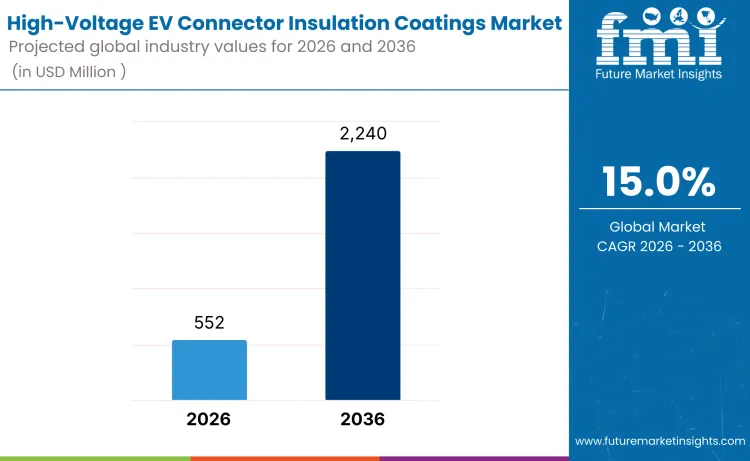
- High-Voltage EV Connector Insulation Coatings Market Value (2026): USD 552 million
- High-Voltage EV Connector Insulation Coatings Market Forecast Value (2036): USD 2,240 million
- High-Voltage EV Connector Insulation Coatings Market Global Forecast CAGR: 15%
- Leading Application in High-Voltage EV Connector Insulation Coatings Market: Automotive high-voltage connectors (35%)
- Key Growth Regions in High-Voltage EV Connector Insulation Coatings Market: China, India, USA, UK, Japan
- Top Players in High-Voltage EV Connector Insulation Coatings Market: PPG Industries, AkzoNobel, Henkel, 3M, DuPont, Axalta Coating Systems, H.B. Fuller Company, Sika AG, Wacker Chemie AG, Momentive Performance Materials Inc., Elantas (Altana AG), Dow Chemical Company, BASF, Shin-Etsu Chemical Co., Electrolube (HK Wentworth Ltd.)
High-Voltage EV Connector Insulation Coatings Market Key Takeaways
| Metric | Value |
|---|---|
| Industry Sales Value (2026) | USD 552 million |
| Industry Forecast Value (2036) | USD 2,240 million |
| Industry Forecast CAGR (2036-2036) | 15% |
What Is Driving the Demand for High Voltage EV Connector Insulation Coatings Globally?
The demand for high‑voltage EV connector insulation coatings is driven by the rapid growth of the electric vehicle market and the need for reliable safety in high‑voltage systems. High‑voltage connectors link EV battery packs, inverters, motors, and charging interfaces, requiring insulation coatings to prevent electrical leakage and protect against environmental factors. As EV adoption increases globally, especially in markets like North America, Europe, and China, manufacturers prioritize materials that meet stringent electrical, thermal, and environmental performance standards. These coatings must provide consistent dielectric protection, resist heat, and maintain mechanical integrity in challenging conditions. Growth in EV production and fast‑charging infrastructure further boosts the need for robust insulation coatings that can handle repeated electrical stresses.
Future demand for high‑voltage EV connector insulation coatings is expected to rise as battery capacity and powertrain voltages increase. Advances in coating technology will be crucial to meeting evolving requirements for dielectric strength, heat resistance, and long‑term reliability. As EV platforms expand, regulatory safety standards and OEM preferences for efficient manufacturing will drive the adoption of high‑performance insulation coatings. The market will continue to grow as the demand for coatings that offer electrical insulation, environmental protection, and compatibility with automated production processes rises.
What Are the Key Segments in High Voltage EV Connector Insulation Coatings Market?
The high‑voltage EV connector insulation coatings market is segmented by coating type and application. Epoxy‑based insulation coatings account for 30% of the market, reflecting their widespread use. Automotive high‑voltage connectors represent 35% of the application share, driven by the rise of electric vehicles (EVs) and the need for safe, efficient power distribution.
Which Coating Type Drives High‑Voltage EV Connector Insulation Coatings Demand Globally?

Epoxy‑based insulation coatings represent 30% of the market share. Epoxy coatings are popular for their strong electrical insulation properties, excellent adhesion, and resistance to heat and moisture. These coatings protect connectors in EVs from electrical faults, preventing short circuits and failures. Their durability makes them ideal for high‑voltage applications where connectors are exposed to high temperatures, mechanical stress, and environmental contaminants. As EV adoption grows, the demand for reliable and long‑lasting insulation solutions for high‑voltage connectors increases. Epoxy coatings are a top choice for these applications due to their proven performance in challenging environments. The continued shift toward electric vehicles and the evolving regulatory landscape around EV safety are driving growth in the use of epoxy coatings in high‑voltage connectors.
Which Application Drives High‑Voltage EV Connector Insulation Coatings Demand Globally?
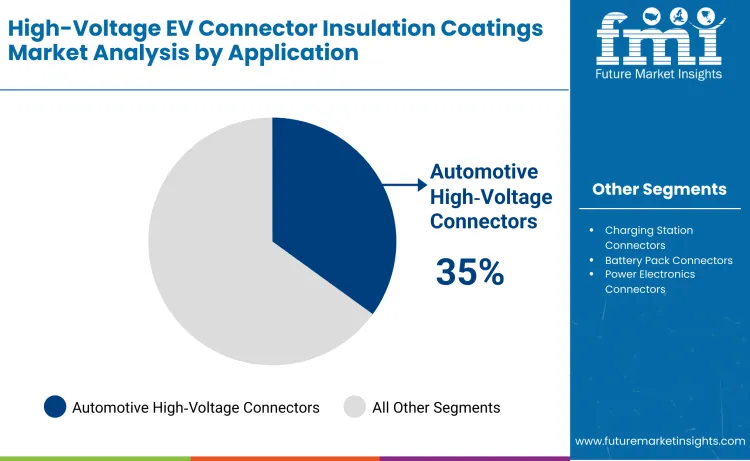
Automotive high‑voltage connectors account for 35% of the market. These connectors are essential for transmitting power between key EV components, such as the battery, inverter, and motor. High‑voltage connectors require effective insulation to prevent electrical failures, especially in high‑current, high‑voltage environments. As electric vehicles become more common, the demand for durable, high‑performance coatings for connectors is increasing. Epoxy coatings are favored for their ability to provide reliable insulation, ensuring the safety and efficiency of power transmission systems in EVs. The growing global shift towards electric mobility continues to support the demand for high‑voltage connectors and their protective coatings.
What is the Summary of the Global High Voltage EV Connector Insulation Coatings Market?
The global high‑voltage EV connector insulation coatings market is expanding in response to rapid electric vehicle adoption and the growing need for advanced electrical protection in high‑voltage systems. Insulation coatings for connectors in EV powertrains, battery packs, inverters, and charging interfaces ensure safe, reliable performance by preventing electrical leakage, enhancing dielectric strength, and protecting against heat, moisture, and vibration. As EV manufacturers strive for greater efficiency, durability, and safety in electrified drivetrains and charging infrastructure, demand for high‑performance insulation coatings is rising across automotive and commercial EV segments.
What are the Key Drivers for the Global High‑Voltage EV Connector Insulation Coatings Market?
One key driver is the accelerating production and deployment of electric vehicles worldwide, which increases the requirement for reliable high‑voltage electrical insulation solutions for connectors and power distribution components. Safety standards and regulatory requirements for high‑voltage systems in automotive and commercial applications encourage the use of advanced coatings that prevent dielectric breakdown and protect against environmental stressors. Demand is supported by technological advancements in insulation materials that deliver higher dielectric strength, thermal resistance and long‑term reliability. Growth in EV charging infrastructure also contributes to demand as connectors outside the vehicle require robust protections.
What are the Restraints for the Global High‑Voltage EV Connector Insulation Coatings Market?
One restraint is the technical challenge and cost associated with developing and qualifying coatings that meet stringent performance criteria for high dielectric strength, thermal stability, and environmental resistance in demanding automotive conditions. Research and validation of new materials can be time‑intensive and capital‑intensive, which may slow product innovation and market penetration. Higher cost of advanced insulation coatings relative to traditional materials can deter adoption in price‑sensitive vehicle segments or lower‑cost EV models. Variability in global standards and differing regulatory timelines across regions can also complicate harmonised adoption of new coating technologies.
What is the Global Demand Outlook for High-Voltage EV Connector Insulation Coatings?
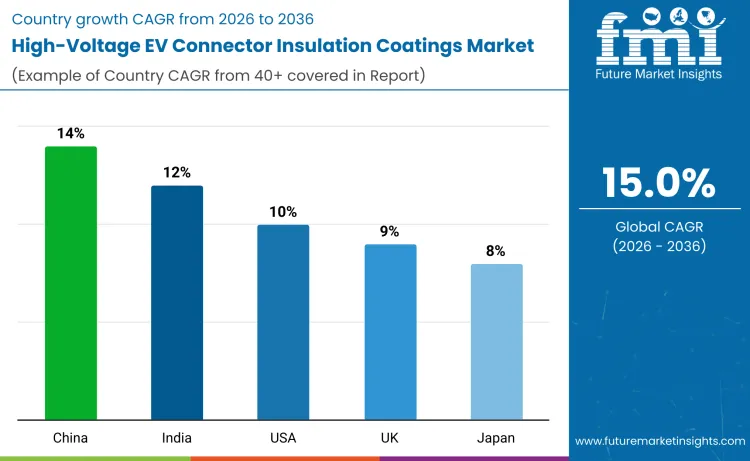
The demand for high-voltage EV connector insulation coatings is expected to grow steadily across various countries, with China leading the market at a projected CAGR of 14%. India follows with a growth rate of 12%, while the USA is expected to grow at 10%. The UK is projected to grow at 9%, and Japan at 8%. As the global electric vehicle (EV) market expands, the need for advanced insulation solutions to ensure the safety and reliability of high-voltage connectors in EVs is driving demand. These coatings help enhance the durability and performance of connectors used in high-voltage systems, which are critical for efficient energy transfer in EV batteries.
| Country | CAGR (2026-2036) |
|---|---|
| China | 14% |
| India | 12% |
| USA | 10% |
| UK | 9% |
| Japan | 8% |
What is Driving the Growth of High-Voltage EV Connector Insulation Coatings in China?
China is projected to experience the highest growth in the high-voltage EV connector insulation coatings market, with a projected CAGR of 14%. As the world’s largest producer and consumer of electric vehicles, China is driving much of the global demand for EV components, including high-voltage connectors. The rapid growth of the EV market in China is creating a significant need for reliable and efficient insulation coatings that ensure safety, performance, and durability in high-voltage systems. The Chinese government’s strong support for the EV sector, coupled with its increasing focus on green technology and reducing emissions, is driving manufacturers to adopt advanced materials for energy-efficient and safe vehicle components. As China continues to lead the global EV revolution, the demand for high-voltage EV connector insulation coatings is expected to grow at an accelerated rate.
Why is the High-Voltage EV Connector Insulation Coatings Market Expanding in India?
In India, the high-voltage EV connector insulation coatings market is projected to grow at a CAGR of 12%. India’s electric vehicle industry is experiencing rapid growth, driven by government initiatives to promote electric mobility and reduce the environmental impact of transportation. As the demand for electric vehicles increases, so does the need for high-performance components such as connectors that ensure safe and efficient energy transfer. High-voltage EV connectors are integral to the battery systems of electric vehicles, and the need for reliable insulation coatings to protect these connectors from heat, moisture, and environmental factors is growing. India’s focus on sustainability and the transition to clean energy solutions will continue to drive the demand for advanced insulation coatings in the automotive sector.
How is the High-Voltage EV Connector Insulation Coatings Market Growing in the USA?
In the USA, the high-voltage EV connector insulation coatings market is projected to grow at a CAGR of 10%. The USA, with its expanding electric vehicle market, is increasingly focused on enhancing the performance and safety of EV components. High-voltage connectors are essential for ensuring efficient power transfer between the battery and other vehicle systems, and the use of advanced insulation coatings plays a key role in preventing electrical failures and enhancing safety. The USA’s growing regulatory focus on EV safety standards, combined with the increasing consumer demand for eco-friendly and sustainable products, is driving the adoption of high-quality insulation coatings. As the electric vehicle market continues to expand, the demand for high-voltage EV connector insulation coatings will continue to rise.
What is Contributing to the Growth of High-Voltage EV Connector Insulation Coatings in the UK?
In the UK, the high-voltage EV connector insulation coatings market is projected to grow at a CAGR of 9%. The UK’s commitment to reducing carbon emissions and its push for widespread electric vehicle adoption are key factors driving this growth. As the UK strives to meet its ambitious goals for carbon neutrality, the demand for electric vehicles and the associated infrastructure, including high-voltage connectors, is increasing. These connectors require advanced insulation coatings to ensure their performance, safety, and longevity. The UK’s regulatory environment, which is becoming more stringent regarding the use of hazardous materials, is pushing manufacturers to adopt safer, more efficient materials, further contributing to the market’s growth. With the UK’s expanding EV market, the demand for high-voltage EV connector insulation coatings is expected to continue to rise.
What is Influencing the Growth of High-Voltage EV Connector Insulation Coatings in Japan?
In Japan, the high-voltage EV connector insulation coatings market is projected to grow at a CAGR of 8%. Japan is home to some of the largest and most advanced automotive manufacturers in the world, and the country is at the forefront of the global shift to electric mobility. As the adoption of electric vehicles in Japan continues to grow, the demand for high-voltage EV components, including connectors, is increasing. High-voltage connectors require effective insulation coatings to ensure safety and performance, especially in the harsh operating conditions of EV batteries. Japan’s focus on innovation in automotive technology, combined with its strong regulatory framework focused on sustainability and safety, is driving the growth of the high-voltage EV connector insulation coatings market in the country
What is the Competitive Landscape for the Global High Voltage EV Connector Insulation Coatings Market?
Global demand for high‑voltage EV connector insulation coatings is growing strongly as electric vehicle production expands and automakers place greater emphasis on electrical safety, reliability and performance. High‑voltage connectors carry significant current between battery packs, inverters and motors, and require advanced insulation to prevent arcing, improve durability, resist heat and vibration, and ensure long‑term operational safety. Growth in EV sales worldwide, stricter safety regulations, and rising consumer expectations for performance and longevity of electric drivetrains drive uptake of specialised insulation coatings. These materials help EV manufacturers meet safety standards for high‑voltage systems while also enabling lighter designs and higher power density. The trend toward electrification, combined with broader investment in charging infrastructure and electrified fleets, supports continued expansion of insulation coating demand across regions including North America, Europe and Asia Pacific.
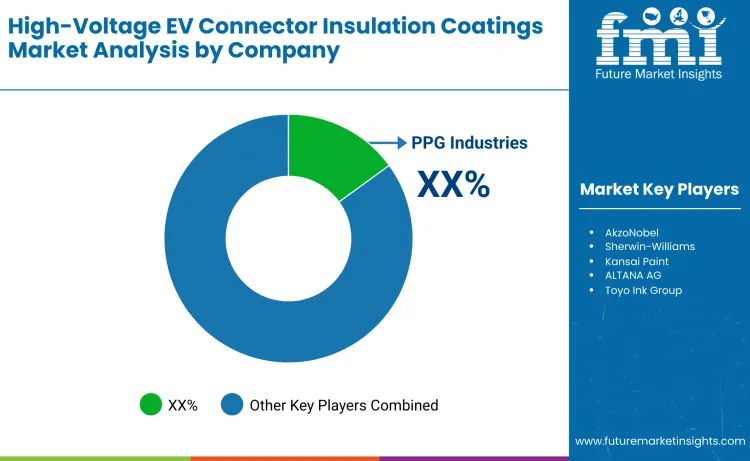
On the supply side, a broad group of global coatings, materials and speciality‑chemical companies compete to serve this niche market. PPG Industries is recognised as a leading supplier with a strong portfolio of advanced coating technologies tailored for high‑voltage electrical systems. Other significant competitors include AkzoNobel, Henkel, 3M, DuPont, Axalta Coating Systems, H.B. Fuller Company, Sika AG, Wacker Chemie AG, Momentive Performance Materials Inc., Elantas (Altana AG), Dow Chemical Company, BASF, Shin‑Etsu Chemical Co. and Electrolube (HK Wentworth Ltd.). These firms offer insulation coatings and related materials designed for adhesion, dielectric strength, thermal stability and compatibility with automated EV assembly. Competition among suppliers focuses on coating performance under high voltage and temperature, ease of application in production lines, regulatory compliance for automotive safety, and support for global EV manufacturers. Companies with strong research and development, high‑performance formulations and reliable supply chains are best positioned to capture growth as EV adoption continues to rise.
Key Players
- PPG Industries
- AkzoNobel
- Henkel
- 3M
- DuPont
- Axalta Coating Systems
- H.B. Fuller Company
- Sika AG
- Wacker Chemie AG
- Momentive Performance Materials Inc.
- Elantas (Altana AG)
- Dow Chemical Company
- BASF
- Shin‑Etsu Chemical Co.
- Electrolube (HK Wentworth Ltd.)
Scope of the Report
| Items | Values |
|---|---|
| Quantitative Units (2036) | USD Million |
| Coating Type | Epoxy-based insulation coatings, Polyurethane insulation coatings, Silicone insulation coatings, Ceramic-based insulation coatings, Polyimide insulation coatings |
| Application | Automotive high-voltage connectors, Charging station connectors, Battery pack connectors, Power electronics connectors, Auxiliary high-voltage connectors |
| End-Use | Electric cars, Electric buses, Electric trucks, Electric two-wheelers, Electric commercial vehicles |
| Sales Channel | Direct OEM supply, Distributor channels, Aftermarket suppliers |
| Companies | PPG Industries, AkzoNobel, Henkel, 3M, DuPont, Axalta Coating Systems, H.B. Fuller Company, Sika AG, Wacker Chemie AG, Momentive Performance Materials Inc., Elantas (Altana AG), Dow Chemical Company, BASF, Shin-Etsu Chemical Co., Electrolube (HK Wentworth Ltd.) |
| Regions Covered | North America, Latin America, Western Europe, Eastern Europe, South Asia and Pacific, East Asia, Middle East & Africa |
| Countries Covered | United States, Canada, Mexico, Brazil, Argentina, Germany, France, United Kingdom, Italy, Spain, Netherlands, China, India, Japan, South Korea, ANZ, GCC Countries, South Africa |
| Additional Attributes | Dollar by sales by coating type, application, end-use, sales channel, and region. Includes performance of insulation coatings in various high-voltage applications, cost-effectiveness, sustainability practices, market trends in high-voltage connectors for electric vehicles, regulatory compliance, impact of advanced insulation coatings on connector performance and safety, market share and competitive positioning of key companies, and the role of coatings in enhancing the durability, efficiency, and safety of high-voltage systems in electric vehicles. |
Key Segments in the High-Voltage EV Connector Insulation Coatings Market
Coating Type:
- Epoxy‑based insulation coatings
- Polyurethane insulation coatings
- Silicone insulation coatings
- Ceramic‑based insulation coatings
- Polyimide insulation coatings
Application:
- Automotive high‑voltage connectors
- Charging station connectors
- Battery pack connectors
- Power electronics connectors
- Auxiliary high‑voltage connectors
End Use:
- Electric cars
- Electric buses
- Electric trucks
- Electric two‑wheelers
- Electric commercial vehicles
Sales Channel:
- Direct OEM supply
- Distributor channels
- Aftermarket suppliers
Region:
- Asia Pacific
- China
- India
- Japan
- South Korea
- ASEAN
- Rest of Asia Pacific
- Europe
- Germany
- United Kingdom
- France
- Italy
- Spain
- Nordic
- BENELUX
- Rest of Europe
- North America
- United States
- Canada
- Mexico
- Latin America
- Brazil
- Chile
- Rest of Latin America
- Middle East & Africa
- Kingdom of Saudi Arabia
- Other GCC Countries
- Turkey
- South Africa
- Other African Union
- Rest of Middle East & Africa
Frequently Asked Questions
How big is the High-Voltage EV Connector Insulation Coatings market?
The market is valued at USD 552 million in 2036 and is expected to grow at a CAGR of 15%, reaching USD 2.24 billion by 2036.
What is the growth outlook for the High-Voltage EV Connector Insulation Coatings market?
The market is projected to grow at a CAGR of 15% from 2036 to 2036.
Which region is expected to experience the fastest growth in the High-Voltage EV Connector Insulation Coatings market?
China is expected to lead with a growth rate of 14%, driven by increasing demand for electric vehicles and the need for high-performance insulation solutions.
What are the key applications of High-Voltage EV Connector Insulation Coatings?
High-Voltage EV Connector Insulation Coatings are primarily used in automotive high-voltage connectors to ensure safety, electrical insulation, and durability in electric vehicles.
Who is the major player in the High-Voltage EV Connector Insulation Coatings market?
The leading player in the market is PPG Industries.
Preview the report firsthand - request a free sample
Get SampleGet the brochure for pricing and purchase details.
Get PDFTable of Content
- Executive Summary
- Market Overview
- Global Market Value, 2020-2025
- Global Market Forecast, 2026-2036
- Market Dynamics
- Drivers
- Restraints
- Opportunities
- Regulatory & Standards Landscape
- Technology & Material Innovation Outlook
- Market Segmentation Analysis
- By Coating Type
- Epoxy-Based Insulation Coatings
- Polyurethane Insulation Coatings
- Silicone Insulation Coatings
- Ceramic-Based Insulation Coatings
- Polyimide Insulation Coatings
- By Application
- Automotive High-Voltage Connectors
- Charging Station Connectors
- Battery Pack Connectors
- Power Electronics Connectors
- Auxiliary High-Voltage Connectors
- By End-Use
- Electric Cars
- Electric Buses
- Electric Trucks
- Electric Two-Wheelers
- Electric Commercial Vehicles
- By Sales Channel
- Direct OEM Supply
- Distributor Channels
- Aftermarket Suppliers
- By Coating Type
- Regional Outlook
- North America
- Latin America
- Western Europe
- Eastern Europe
- South Asia & Pacific
- East Asia
- Middle East & Africa
- Country-Level Outlook
- United States
- Canada
- Mexico
- Brazil
- Argentina
- Germany
- France
- United Kingdom
- Italy
- Spain
- Netherlands
- China
- India
- Japan
- South Korea
- ANZ
- GCC Countries
- South Africa
- Competitive Landscape
- Market Structure Overview
- Company Positioning
- Strategic Initiatives
- Key Player Profiles


