

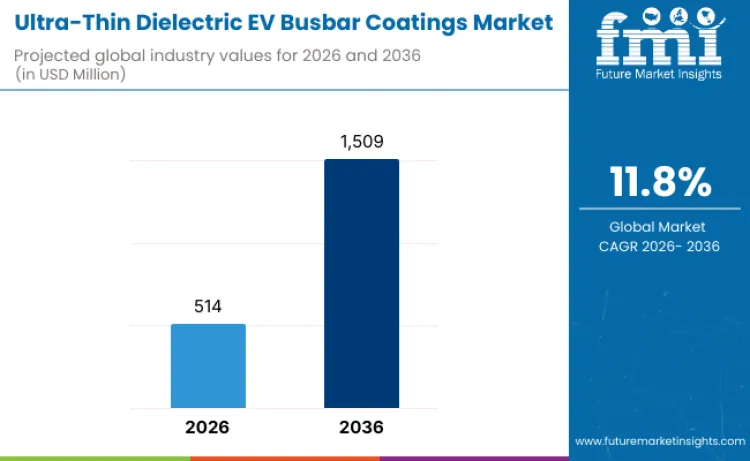
- Industry Size (2026)
- USD 514 Mn
- Forecast (2036)
- USD 1509 Mn
- CAGR (2026 to 2036)
- 11.8%
Ultra-Thin Dielectric EV Busbar Coatings Market Forecast and Outlook 2026 to 2036
The global ultra-thin dielectric EV busbar coatings market is driven by the growing adoption of electric vehicles (EVs) and the demand for improved safety and performance in high-voltage components. Fluoropolymer-free dielectric coatings, which account for 30% of the coating type market share, are gaining traction due to their excellent electrical insulation properties and environmental benefits, as they eliminate the need for fluoropolymer materials.
Flat busbars, representing 30% of the busbar type segment, are widely used in EV battery systems due to their efficient energy distribution and compact design. The market growth is further fueled by the increasing focus on developing more energy-efficient and cost-effective solutions for EV components, as well as the ongoing push for safer, environmentally friendly alternatives in the automotive industry.
Quick Stats for Ultra-Thin Dielectric EV Busbar Coatings Market
- Ultra-Thin Dielectric EV Busbar Coatings Market Value (2026): USD 514 million
- Ultra-Thin Dielectric EV Busbar Coatings Market Forecast Value (2036): USD 1,509 million
- Ultra-Thin Dielectric EV Busbar Coatings Market Global Forecast CAGR: 11.80%
- Leading Coating Type in Ultra-Thin Dielectric EV Busbar Coatings Market: Fluoropolymer-free dielectric coatings (30%)
- Key Growth Regions in Ultra-Thin Dielectric EV Busbar Coatings Market: China, India, USA, UK, Japan
- Top Players in Ultra-Thin Dielectric EV Busbar Coatings Market: AkzoNobel, PPG Industries, Axalta Coating Systems, Henkel, 3M, Elantas (Altana AG), DuPont, Evonik Industries AG, Aremco Products Inc., Von Roll Holding AG, H.B. Fuller Company, Momentive Performance Materials Inc., Sika AG, SolEpoxy Inc., Electrolube (HK Wentworth Ltd.), Wacker Chemie AG
Ultra Thin Dielectric EV Busbar Coatings Market Key Takeaways
| Metric | Value |
|---|---|
| Industry Sales Value (2026) | USD 514 million |
| Industry Forecast Value (2036) | USD 1,509 million |
| Industry Forecast CAGR (2026 to 2036) | 11.8% |
What Is Driving the Demand for Ultra Thin Dielectric EV Busbar Coatings Globally?
Global demand for ultra‑thin dielectric EV busbar coatings is shaped by rapid growth of electric vehicle production and the push for higher performance and efficiency in power distribution systems. Electric vehicles use busbars to conduct high currents between battery cells, inverters, and motors. Coatings that provide dielectric insulation and protect against corrosion, tracking, and electrical loss are essential for reliable power delivery and safety. Ultra‑thin dielectric coatings enable effective insulation while minimising weight and space, which aligns with EV design priorities for range and energy efficiency. Growth of EV manufacturing in major automotive markets such as North America, Europe, China and other parts of Asia has expanded demand for advanced electrical insulation materials. At the same time, performance expectations for thermal stability, durability under vibration and environmental exposure push formulators to adopt specialised coating chemistries that can be applied in thin, uniform films and withstand rigorous service conditions without degrading.
Future demand for ultra‑thin dielectric EV busbar coatings is expected to increase as EV adoption continues and powertrain architectures evolve. Continued innovation in coating technologies will improve electrical insulation performance, heat resistance, and manufacturability, which will make these coatings more attractive to busbar producers and EV manufacturers. Demand will also be supported by efforts to reduce production costs and increase assembly automation, because coatings that cure rapidly and apply reliably in high‑volume lines help lower manufacturing complexity. As EV battery systems and power electronics become more advanced, requirements for thinner, high‑performance dielectric layers will grow, further supporting market expansion. The pace of adoption will depend on how quickly coating developers can match evolving performance standards, regulatory safety criteria, and integration with automated application methods at scale. The balance between performance, cost, and manufacturability will shape how widely ultra‑thin dielectric busbar coatings are used in future electric vehicle platforms.
What Are the Key Segments in Ultra Thin Dielectric EV Busbar Coatings Market?
The global ultra‑thin dielectric EV busbar coatings market is segmented by coating type and busbar type. Fluoropolymer‑free dielectric coatings account for 30% of the market share, reflecting a shift toward safer, regulatory-compliant alternative to traditional coatings. Flat busbars also represent 30% of the market, driven by their efficiency, space optimization, and thermal management properties in electric vehicle systems. The demand for these coatings is growing as electric vehicles evolve with higher voltage and more compact designs, requiring advanced insulation and performance standards.
Which Coating Type Drives Ultra‑Thin Dielectric EV Busbar Coatings Demand Globally?
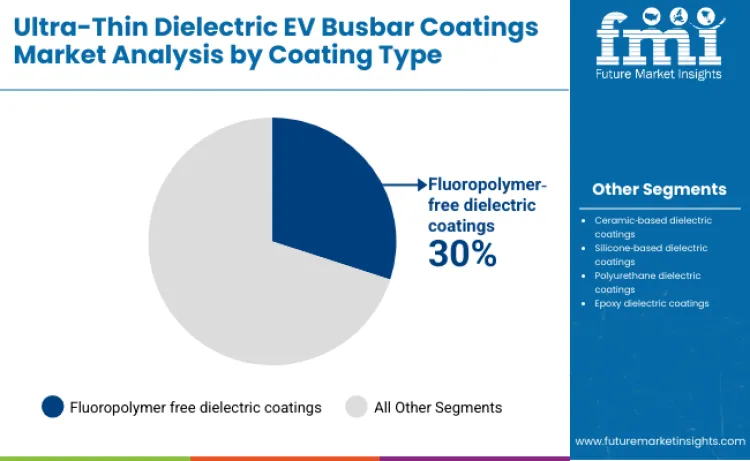
Fluoropolymer‑free dielectric coatings represent 30% of the ultra‑thin dielectric coatings market for EV busbars. Fluoropolymers, such as PTFE and PFA, were once the go‑to materials for dielectric coatings due to their excellent insulating properties and resistance to temperature fluctuations. However, due to environmental and regulatory pressures, industries are seeking alternatives to avoid the potential hazards of PFAS (per‑ and polyfluoroalkyl substances) used in traditional fluoropolymer coatings. Fluoropolymer‑free dielectric coatings have emerged as an effective solution, offering similar electrical insulation properties without the use of harmful substances. These coatings are made from a variety of non‑fluorinated materials, including polymeric resins and inorganic compounds, which provide dielectric strength and improve the reliability of EV powertrain systems.
Fluoropolymer‑free coatings have become a preferred choice due to their ability to meet both safety and environmental regulations. These coatings are applied to busbars, connectors, and other high‑voltage components in electric vehicles where efficient insulation is crucial for preventing electrical short circuits and thermal runaway. The growing trend toward sustainability, driven by consumer demand and stricter regulations, is pushing manufacturers to adopt PFAS‑free solutions in EV systems. In addition, fluoropolymer‑free coatings help reduce the overall environmental impact of manufacturing, disposal, and recycling processes, making them more desirable in the green technology market.
Which Busbar Type Drives Ultra‑Thin Dielectric EV Busbar Coatings Demand Globally?
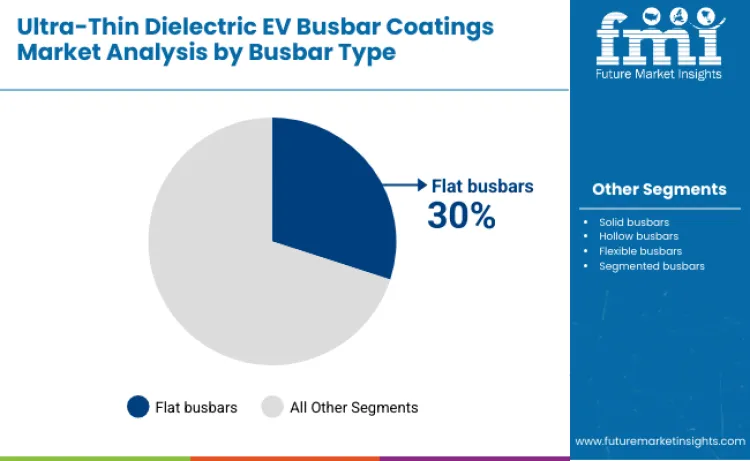
Flat busbars are the leading application for ultra‑thin dielectric coatings in the EV industry, accounting for 30% of the market share. In electric vehicles, busbars are used to distribute high currents between key components, such as the battery pack, inverter, and motor. The need for efficient, compact, and flexible busbar solutions has driven the adoption of flat busbars over traditional round conductors. Flat busbars are particularly beneficial in electric vehicle designs because they offer better heat dissipation, lower impedance, and improved space utilization. Their flat, compact shape allows them to be more easily integrated into modern, high‑density battery systems, which require precise power management and efficient electrical distribution.
The use of ultra‑thin dielectric coatings on flat busbars is critical to ensure safe operation and minimize the risk of electrical faults or fires. These coatings not only provide electrical insulation but also protect the busbars from environmental factors, such as corrosion and wear, while maintaining high electrical conductivity. As EVs continue to evolve with larger batteries and higher voltages, the demand for flat busbars, paired with reliable dielectric coatings, is expected to grow. The lightweight and compact nature of flat busbars is particularly suited to the automotive industry's focus on improving vehicle efficiency and reducing overall weight. Moreover, the continuous development of advanced coatings with higher dielectric strength and thermal resistance ensures that flat busbars remain a key component in the design of high‑performance EVs.
What are the Key Trends of the Global Ultra Thin Dielectric EV Busbar Coatings Market?
The global ultra‑thin dielectric EV busbar coatings market is expanding as electric vehicle adoption accelerates and manufacturers seek advanced insulation and protection solutions for busbars in battery packs, power electronics and high‑voltage systems. Ultra‑thin dielectric coatings provide electrical insulation, corrosion resistance, thermal stability and improved reliability while supporting compact, lightweight designs required in modern EV architectures. Demand is underpinned by the shift to electrification in automotive and commercial vehicles, the need for enhanced safety and durability of powertrain components, and increasing focus on energy efficiency and performance optimization in EV systems.
What are the Key Drivers for the Global Ultra‑Thin Dielectric EV Busbar Coatings Market?
One key driver is the rapid growth in electric vehicle production and sales worldwide, which increases requirement for protective materials that ensure safe and efficient electrical performance. Ultra‑thin dielectric coatings help reduce insulation thickness while maintaining high dielectric strength, enabling more compact and lightweight busbar assemblies. Rising emphasis on battery safety, thermal management, and durability in high‑voltage systems encourages adoption of advanced coating solutions. Technological advancements in coating chemistry that improve adhesion, heat resistance and long‑term reliability further support market demand. Regulatory focus on vehicle safety and environmental performance also drives uptake of advanced electrical insulation materials.
What are the Restraints for the Global Ultra‑Thin Dielectric EV Busbar Coatings Market?
One restraint is the technical complexity involved in formulating coatings that provide high dielectric performance with ultra‑thin profiles while also withstanding thermal cycling and harsh automotive environments. Development and qualification of such coatings require significant research, testing and validation, which can extend product development timelines and costs. Higher cost of advanced coating materials compared to conventional insulation solutions may limit adoption in cost‑sensitive segments. Supply chain challenges for specialty raw materials and variability in regional standards for high‑voltage components may also slow global harmonization and widespread use of ultra‑thin dielectric coatings for EV busbars.
What is the Global Demand Outlook for Ultra-Thin Dielectric EV Busbar Coatings?
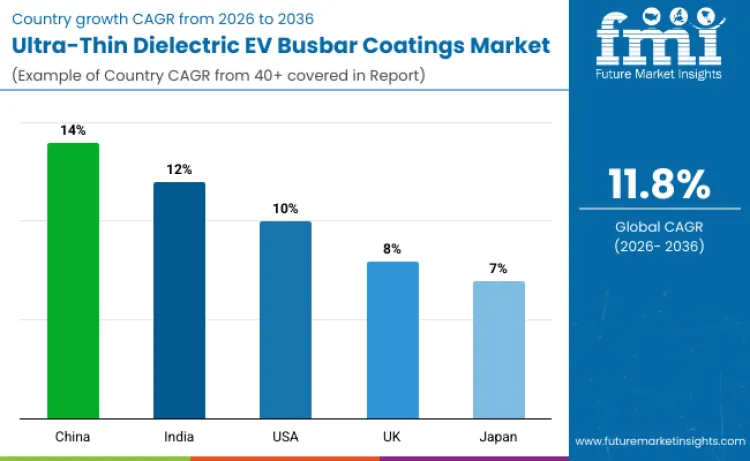
The demand for ultra-thin dielectric EV busbar coatings is projected to grow significantly across various countries, with China leading the market at a projected CAGR of 14%. India follows with a growth rate of 12%, while the USA is expected to grow at 10%. The UK is projected to grow at 8%, and Japan at 7%. The rising adoption of electric vehicles (EVs), coupled with the increasing need for advanced and efficient power distribution solutions, is driving the demand for dielectric coatings. These coatings play a critical role in enhancing the performance and safety of busbars used in EVs by providing insulation, preventing overheating, and improving energy efficiency.
| Country | CAGR (2026-2036) |
|---|---|
| China | 14% |
| India | 12% |
| USA | 10% |
| UK | 8% |
| Japan | 7% |
What is Driving the Growth of Ultra-Thin Dielectric EV Busbar Coatings in China?
China is projected to experience the highest growth in the ultra-thin dielectric EV busbar coatings market, with a projected CAGR of 14%. China has emerged as the global leader in electric vehicle production and adoption, and this trend is expected to continue. The country’s rapidly expanding EV market is driving the demand for advanced power management solutions, including ultra-thin dielectric coatings for busbars, which are critical for ensuring optimal power distribution and efficiency. Additionally, China’s growing focus on reducing carbon emissions and promoting clean energy solutions is further propelling the demand for EVs, which in turn fuels the need for advanced coatings that enhance the performance and safety of EV battery systems. As China continues to lead the EV revolution, the demand for ultra-thin dielectric EV busbar coatings will continue to rise.
Why is the Ultra-Thin Dielectric EV Busbar Coatings Market Expanding in India?
In India, the ultra-thin dielectric EV busbar coatings market is projected to grow at a CAGR of 12%. India is experiencing rapid growth in its electric vehicle market, driven by government initiatives such as subsidies, incentives for EV manufacturers, and a growing focus on reducing carbon emissions. As the country seeks to accelerate its transition to electric mobility, the need for advanced power management technologies, including efficient busbar coatings, is increasing. Ultra-thin dielectric coatings are particularly valuable in India’s burgeoning EV market, as they improve energy efficiency, prevent overheating, and enhance the overall safety of EV battery systems. With the expansion of India’s EV infrastructure and the increasing adoption of electric vehicles, the demand for ultra-thin dielectric coatings is expected to grow steadily.
How is the Ultra-Thin Dielectric EV Busbar Coatings Market Growing in the USA?
In the USA, the ultra-thin dielectric EV busbar coatings market is projected to grow at a CAGR of 10%. The USA, with its rapidly growing electric vehicle market, is driving the adoption of advanced technologies that improve the performance and safety of EVs. As automakers in the USA increasingly focus on enhancing battery performance and reducing energy losses in EV systems, the demand for ultra-thin dielectric coatings for busbars is on the rise. These coatings provide improved insulation and safety, crucial for EV battery systems, which are becoming more complex and high-powered. With the USA’s commitment to transitioning to electric mobility and addressing sustainability challenges, the market for dielectric coatings in EVs is expected to continue to grow at a strong pace.
What is Contributing to the Growth of Ultra-Thin Dielectric EV Busbar Coatings in the UK?
In the UK, the demand for ultra-thin dielectric EV busbar coatings is projected to grow at a CAGR of 8%. The UK’s push for cleaner, more sustainable transportation solutions is driving the rapid adoption of electric vehicles. As the UK continues to enforce stringent emissions regulations and set ambitious targets for reducing fossil fuel consumption, the demand for EVs is expected to rise. This, in turn, drives the need for high-performance power distribution solutions like ultra-thin dielectric coatings. These coatings are essential for enhancing the efficiency and safety of EV battery systems by providing superior insulation and preventing overheating. As the UK focuses on transitioning to a greener future, the market for these advanced coatings is expected to continue its upward trajectory.
What is Influencing the Growth of Ultra-Thin Dielectric EV Busbar Coatings in Japan?
In Japan, the demand for ultra-thin dielectric EV busbar coatings is projected to grow at a CAGR of 7%. Japan’s automotive industry is known for its strong focus on innovation and the development of new technologies, including electric mobility solutions. With the increasing adoption of electric vehicles in Japan, the demand for advanced busbar coatings that improve battery efficiency and safety is also growing. Japan’s regulatory focus on sustainability and environmental standards is encouraging automakers to adopt advanced technologies like ultra-thin dielectric coatings. As the country continues to invest in green technologies and transition to more sustainable transportation, the demand for these coatings is expected to grow steadily.
What is the Competitive Landscape for the Global Ultra Thin Dielectric EV Busbar Coatings Market?
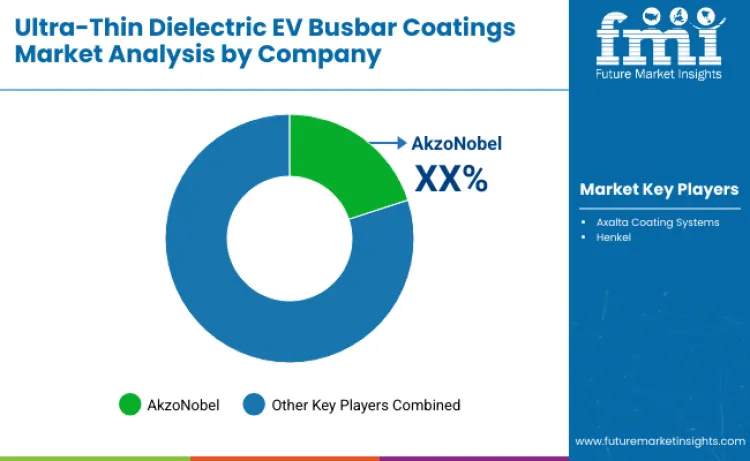
Global demand for ultra‑thin dielectric EV busbar coatings has been rising rapidly as electric vehicle (EV) adoption accelerates and automakers prioritise efficiency, reliability and thermal management in high‑voltage electrical systems. Busbars conduct large currents within EV battery packs and powertrains, and ultra‑thin dielectric coatings provide essential insulation, protection against corrosion, improved electrical performance and enhanced thermal stability. As EV production scales worldwide - especially in North America, Europe and Asia‑Pacific - the need for advanced coating solutions that support higher current densities, lightweight designs and safety standards grows. The shift toward electrification, coupled with regulatory emphasis on vehicle safety and durability, strengthens uptake of specialised formulations that balance insulation performance with minimal thickness.
On the supply side, a diverse group of global materials, coatings and speciality chemical firms compete to serve this niche but expanding market. AkzoNobel is recognised as a leading supplier with strong presence and expertise in advanced coating technologies. Other key competitors include PPG Industries, Axalta Coating Systems, Henkel, 3M, Elantas (Altana AG), DuPont, Evonik Industries AG, Aremco Products Inc., Von Roll Holding AG, H.B. Fuller Company, Momentive Performance Materials Inc., Sika AG, SolEpoxy Inc., Electrolube (HK Wentworth Ltd.), and Wacker Chemie AG. These companies offer a range of ultra‑thin dielectric and high‑performance insulating coatings designed for EV busbars, electrical components and power electronics. Competition among them is shaped by factors such as dielectric strength, adhesion to metal substrates, thermal stability under continuous load, ease of application in automated manufacturing, regulatory compliance for automotive safety, and global supply‑chain support. Suppliers that combine high‑performance coating formulations, strong R&D capabilities, breadth of application support and reliable delivery are best positioned to lead as EV manufacturers increasingly prioritise advanced dielectric solutions in next‑generation electric powertrain designs.
Key Players
- AkzoNobel
- PPG Industries
- Axalta Coating Systems
- Henkel
- 3M
- Elantas (Altana AG)
- DuPont
- Evonik Industries AG
- Aremco Products Inc.
- Von Roll Holding AG
- H.B. Fuller Company
- Momentive Performance Materials Inc.
- Sika AG
- SolEpoxy Inc.
- Electrolube (HK Wentworth Ltd.)
- Wacker Chemie AG
Scope of the Report
| Items | Values |
|---|---|
| Quantitative Units (2026) | USD Million |
| Coating Type | Fluoropolymer-free dielectric coatings, Ceramic-based dielectric coatings, Silicone-based dielectric coatings, Polyurethane dielectric coatings, Epoxy dielectric coatings |
| Busbar Type | Flat busbars, Solid busbars, Hollow busbars, Flexible busbars, Segmented busbars |
| Application | Trunk busbars, Battery pack busbars, Charging system busbars, High-voltage distribution busbars, Auxiliary system busbars |
| End-Use | Electric cars, Electric buses, Electric trucks, Electric two-wheelers, Electric commercial vehicles |
| Sales Channel | Direct OEM supply, Distributors, Aftermarket suppliers |
| Companies | AkzoNobel, PPG Industries, Axalta Coating Systems, Henkel, 3M, Elantas (Altana AG), DuPont, Evonik Industries AG, Aremco Products Inc., Von Roll Holding AG, H.B. Fuller Company, Momentive Performance Materials Inc., Sika AG, SolEpoxy Inc., Electrolube (HK Wentworth Ltd.), Wacker Chemie AG |
| Regions Covered | North America, Latin America, Western Europe, Eastern Europe, South Asia and Pacific, East Asia, Middle East & Africa |
| Countries Covered | United States, Canada, Mexico, Brazil, Argentina, Germany, France, United Kingdom, Italy, Spain, Netherlands, China, India, Japan, South Korea, ANZ, GCC Countries, South Africa |
| Additional Attributes | Dollar by sales by coating type, busbar type, application, end-use, sales channel, and region. Includes market trends towards fluoropolymer-free and other advanced dielectric coatings, performance in various busbar applications, cost-effectiveness, sustainability practices, regulatory compliance, market share and competitive positioning of key companies, and the role of dielectric coatings in enhancing the durability, safety, and efficiency of busbars in electric vehicles and systems. |
Key Segments in the Ultra-Thin Dielectric EV Busbar Coatings Market
Coating Type
- Fluoropolymer‑free dielectric coatings
- Ceramic‑based dielectric coatings
- Silicone‑based dielectric coatings
- Polyurethane dielectric coatings
- Epoxy dielectric coatings
Busbar Type
- Flat busbars
- Solid busbars
- Hollow busbars
- Flexible busbars
- Segmented busbars
Application
- Trunk busbars
- Battery pack busbars
- Charging system busbars
- High‑voltage distribution busbars
- Auxiliary system busbars
End Use
- Electric cars
- Electric buses
- Electric trucks
- Electric two‑wheelers
- Electric commercial vehicles
Sales Channel
- Direct OEM supply
- Distributors
- Aftermarket suppliers
Region
- Asia Pacific
- China
- India
- Japan
- South Korea
- ASEAN
- Rest of Asia Pacific
- Europe
- Germany
- United Kingdom
- France
- Italy
- Spain
- Nordic
- BENELUX
- Rest of Europe
- North America
- United States
- Canada
- Mexico
- Latin America
- Brazil
- Chile
- Rest of Latin America
- Middle East & Africa
- Kingdom of Saudi Arabia
- Other GCC Countries
- Turkey
- South Africa
- Other African Union
- Rest of Middle East & Africa
Frequently Asked Questions
How big is the Ultra-Thin Dielectric EV Busbar Coatings market?
The market is valued at USD 514 million in 2026 and is expected to grow at a CAGR of 11.80%, reaching USD 1.509 billion by 2036.
What is the growth outlook for the Ultra-Thin Dielectric EV Busbar Coatings market?
The market is projected to grow at a CAGR of 11.80% from 2026 to 2036.
Which region is expected to experience the fastest growth in the Ultra-Thin Dielectric EV Busbar Coatings market?
China is expected to lead with a growth rate of 14%, driven by the increasing demand for electric vehicle components and advanced coating solutions.
What are the key applications of Ultra-Thin Dielectric EV Busbar Coatings?
Ultra-Thin Dielectric EV Busbar Coatings are primarily used in electric vehicle (EV) busbars for electrical insulation and performance enhancement.
Who are the major players in the Ultra-Thin Dielectric EV Busbar Coatings market?
Leading players include AkzoNobel, PPG Industries, Axalta Coating Systems, Henkel, 3M, Elantas (Altana AG), DuPont, Evonik Industries AG, Aremco Products Inc., Von Roll Holding AG, H.B. Fuller Company, Momentive Performance Materials Inc., Sika AG, SolEpoxy Inc., Electrolube (HK Wentworth Ltd.), and Wacker Chemie AG.
Preview the report firsthand - request a free sample
Get SampleGet the brochure for pricing and purchase details.
Get PDFTable of Content
- Executive Summary
- Global Market Overview
- Quick Stats
- Regional Growth Snapshot
- Key Player Landscape
- Analysis and Recommendations
- Market Overview
- Market Coverage / Taxonomy
- Market Definition / Scope / Limitations
- Market Background
- Market Dynamics
- Drivers
- Restraints
- Opportunities
- Trends
- Scenario Forecast
- Demand in Optimistic Scenario
- Demand in Likely Scenario
- Demand in Conservative Scenario
- Opportunity Map Analysis
- Product Life Cycle Analysis
- Supply Chain Analysis
- Investment Feasibility Matrix
- Value Chain Analysis
- PESTLE and Porter’s Five Forces Analysis
- Regulatory Landscape
- Regional Parent Market Outlook
- Production and Consumption Statistics
- Import and Export Statistics
- Market Dynamics
- Global Market Analysis 2020-2025 and Forecast 2026-2036
- Historical Market Size (USD Million), 2020-2025
- Forecast Market Size (USD Million), 2026-2036
- Y-o-Y Growth Trend Analysis
- Absolute Dollar Opportunity Analysis
- Global Market Pricing Analysis 2020-2025 and Forecast 2026-2036
- Global Market Analysis by Coating Type
- Introduction / Key Findings
- Historical Market Size by Coating Type, 2020-2025
- Forecast Market Size by Coating Type, 2026-2036
- Fluoropolymer-free dielectric coatings
- Ceramic-based dielectric coatings
- Silicone-based dielectric coatings
- Polyurethane dielectric coatings
- Epoxy dielectric coatings
- Y-o-Y Growth Trend by Coating Type
- Absolute Dollar Opportunity by Coating Type
- Global Market Analysis by Busbar Type
- Introduction / Key Findings
- Historical Market Size by Busbar Type, 2020-2025
- Forecast Market Size by Busbar Type, 2026-2036
- Flat busbars
- Solid busbars
- Hollow busbars
- Flexible busbars
- Segmented busbars
- Y-o-Y Growth Trend by Busbar Type
- Absolute Dollar Opportunity by Busbar Type
- Global Market Analysis by Application
- Introduction / Key Findings
- Historical Market Size by Application, 2020-2025
- Forecast Market Size by Application, 2026-2036
- Trunk busbars
- Battery pack busbars
- Charging system busbars
- High-voltage distribution busbars
- Auxiliary system busbars
- Y-o-Y Growth Trend by Application
- Absolute Dollar Opportunity by Application
- Global Market Analysis by End-Use
- Introduction / Key Findings
- Historical Market Size by End-Use, 2020-2025
- Forecast Market Size by End-Use, 2026-2036
- Electric cars
- Electric buses
- Electric trucks
- Electric two-wheelers
- Electric commercial vehicles
- Y-o-Y Growth Trend by End-Use
- Absolute Dollar Opportunity by End-Use
- Global Market Analysis by Sales Channel
- Introduction / Key Findings
- Historical Market Size by Sales Channel, 2020-2025
- Forecast Market Size by Sales Channel, 2026-2036
- Direct OEM supply
- Distributors
- Aftermarket suppliers
- Y-o-Y Growth Trend by Sales Channel
- Absolute Dollar Opportunity by Sales Channel
- Regional Analysis
- North America Market Analysis
- Latin America Market Analysis
- Western Europe Market Analysis
- Eastern Europe Market Analysis
- South Asia & Pacific Market Analysis
- East Asia Market Analysis
- Middle East & Africa Market Analysis
- Market Structure Analysis
- Competition Dashboard
- Competition Benchmarking
- Market Share Analysis by Key Players
- Competition Analysis
- Competition Deep Dive
- AkzoNobel
- PPG Industries
- Axalta Coating Systems
- Henkel
- 3M
- Elantas (Altana AG)
- DuPont
- Evonik Industries AG
- Aremco Products Inc.
- Von Roll Holding AG
- H.B. Fuller Company
- Momentive Performance Materials Inc.
- Sika AG
- SolEpoxy Inc.
- Electrolube (HK Wentworth Ltd.)
- Wacker Chemie AG
- Competition Deep Dive
- Assumptions & Acronyms Used
- Research Methodology


