

- Industry Size (2026)
- USD 1.3 Bn
- Forecast (2036)
- USD 4.8 Bn
- CAGR (2026 to 2036)
- 14.9%
EVOH-Free Modified Atmosphere Meat Trays Market Forecast and Outlook By FMI
In 2025, the EVOH-free modified atmosphere meat trays market was valued at USD 1.2 billion. Based on Future Market Insights' analysis, demand for EVOH-free MAP trays is estimated to grow to USD 1.3 billion in 2026 and USD 4.8 billion by 2036. FMI projects a CAGR of 14.9% during the forecast period.
Absolute dollar growth of USD 3.5 billion over the decade represents a structural transformation rather than incremental expansion. This acceleration reflects mandatory phase-out timelines for EVOH in contact-sensitive packaging across major meat-consuming regions, alongside retailer-led sustainability mandates that prioritize monomaterial recyclability. Despite premium pricing relative to conventional EVOH-barrier trays, manufacturers absorb higher unit costs to maintain shelf access as major grocery chains enforce recyclable-packaging-only policies for chilled protein cases.
Summary of EVOH-Free Modified Atmosphere Meat Trays Market
- EVOH-Free Modified Atmosphere Meat Trays Market Definition
- The industry covers recyclable thermoformed trays utilising non-EVOH barrier technologies to maintain modified atmosphere conditions for chilled meat shelf-life extension.
- Demand Drivers in the Market
- Extended Producer Responsibility legislation across the EU and North America mandates monomaterial recyclable formats by 2025 to 2030.
- Retailer sustainability commitments eliminate EVOH-barrier packaging from chilled meat categories to enable curbside recycling participation.
- Asian export-oriented processors adopt European recyclability standards to maintain market access for poultry and seafood shipments.
- Key Segments Analysed in the FMI Report
- Material Platform: Dominant PP trays (54%) versus PET, fibre-based, and bio-based alternatives.
- Barrier Approach: Water-based barrier coatings (44%) leading oxide and sol-gel systems.
- Meat Application: Poultry (39%) driving volume ahead of beef, pork, and processed meats.
- Analyst Opinion at FMI
- Ismail Sutaria, senior consultant at Future Market Insights, opines, "In the updated version of the EVOH-Free Modified Atmosphere Meat Trays Market Report for 2026 to 2036, packaging executives will find critical insights into regulatory phase-out timelines that create compliance urgency. My findings indicate that oxide-barrier formulation inconsistencies challenge shelf-life parity with EVOH, while water-based coatings face adhesion variability under high-humidity cold storage, which could restrict global rollout without standardised application protocols."
- Strategic Implications / Executive Takeaways
- Secure long-term coating supply agreements to hedge against formulation patent concentration and raw material price volatility.
- Invest in application precision equipment to minimize barrier variability and reduce quality-related shelf-life failures.
- Prioritize PP-based platforms to maximize compatibility with existing recycling infrastructure and minimize contamination risk.
- Methodology
- Validated through direct engagement with tray converters and retail packaging procurement teams across major markets.
- Zero reliance on commercial packaging research aggregators or unverified secondary sources.
- Based on verifiable converter capacity data, regulatory compliance timelines, and retail policy commitments.
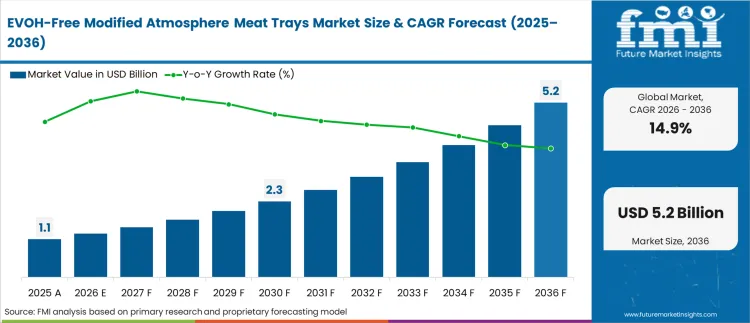
| Metric | Value |
|---|---|
| Market Size (2026) | USD 1.3 Billion |
| Forecast Value (2036) | USD 4.8 Billion |
| CAGR (2026-2036) | 14.9% |
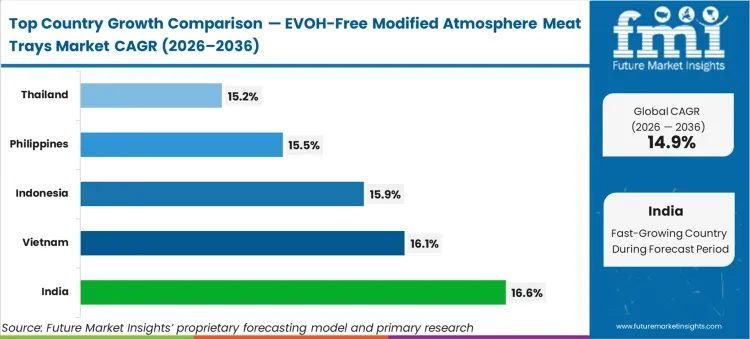
India (16.6% CAGR) and Vietnam (16.1% CAGR) drive the fastest growth through organised retail penetration and cold-chain infrastructure buildout that enables MAP adoption for previously ambient-distributed proteins. Indonesia (15.9% CAGR) and the Philippines (15.5% CAGR) benefit from regulatory alignment with EU recyclability standards to preserve seafood and poultry export competitiveness. Thailand (15.2% CAGR) expands capacity via proximity to major Japanese and South Korean importers, enforcing strict packaging compliance. Mature markets such as the United States, Germany, and France generate replacement demand rather than net expansion, with volume growth constrained by per-capita consumption plateaus and higher compliance costs for barrier coating formulations.
EVOH-Free Modified Atmosphere Meat Trays Market Definition
The EVOH-free modified atmosphere meat trays market comprises production and trade of thermoformed trays utilizing barrier technologies that exclude ethylene vinyl alcohol copolymer layers. These trays maintain oxygen and moisture control for chilled meat through inorganic oxide coatings, sol-gel hybrid barriers, water-based barrier coatings, or active-barrier systems. The market serves retailers and processors requiring recyclable packaging solutions that comply with Extended Producer Responsibility mandates and achieve shelf life comparable to conventional EVOH-barrier formats.
EVOH-Free Modified Atmosphere Meat Trays Market Inclusions
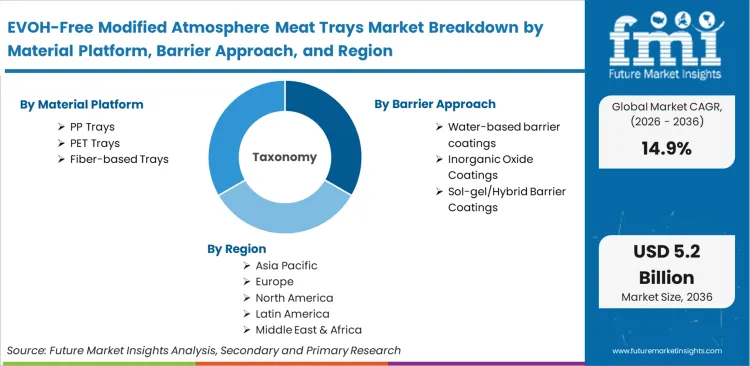
The report includes comprehensive analysis of market dynamics, featuring Global and Regional Market Sizes in both volume (million units) and value (USD billion) with a 10-year Forecast from 2026 to 2036. Coverage encompasses segmental breakdowns by material platform (PP, PET, fiber-based, bio-based plastics), barrier approach (oxide coatings, sol-gel, water-based, active), and meat application (poultry, beef, pork, processed meats).
EVOH-Free Modified Atmosphere Meat Trays Market Exclusions
The scope excludes EVOH-containing multilayer trays regardless of recyclability claims, as well as vacuum skin packaging, flow-wrap films, and non-MAP ambient trays. It omits downstream prepared meals or retail-ready protein products, focusing strictly on the primary thermoformed tray and its barrier coating or treatment. Non-food MAP applications and laboratory or pilot-scale barrier trials with negligible commercial deployment are not covered.
EVOH-Free Modified Atmosphere Meat Trays Market Research Methodology
- Primary Research: Interviews were conducted with tray converters, meat processors, MAP equipment suppliers, barrier coating manufacturers, and retail procurement teams across North America, Europe, and the Asia Pacific regions.
- Desk Research: Production data from national packaging associations, UN Comtrade trade codes for thermoformed trays, and meat industry trade statistics supported volume benchmarking and cross-validation.
- Market-Sizing and Forecasting: A hybrid top-down and bottom-up model was developed. Demand was reconstructed from chilled meat production volumes, MAP adoption rates, and regulatory compliance timelines, then validated against converter capacity data and retail packaging specifications.
- Data Validation and Update Cycle: Outputs undergo anomaly screening, variance checks across production and trade datasets, and structured peer review with industry stakeholders prior to release.
Segmental Analysis
EVOH-Free Modified Atmosphere Meat Trays Market Analysis by Material Platform
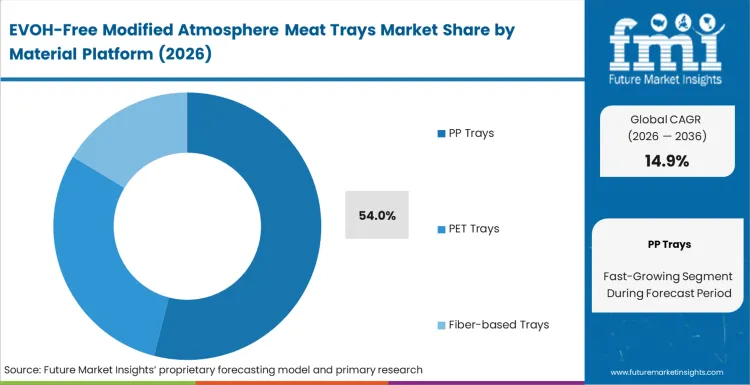
Based on FMI's EVOH-free modified atmosphere meat trays market report, consumption of PP trays is estimated to hold 54% share in 2026. Growth in demand for PP trays comes from compatibility with established polyolefin recycling streams and lower contamination risk compared to PET or fiber-based alternatives. PP maintains superior puncture resistance and thermoforming consistency at lower basis weights, reducing material costs while meeting retailer recyclability mandates.
- Barrier Coating Innovation: Berry Global and Mitsubishi Gas Chemical Company announced a partnership in March 2024 to introduce recyclable, EVOH-free barrier coating for food packaging applications, specifically targeting thermoformed tubes, jars, and bottles using Mitsubishi's MXD6 barrier resin validated for polypropylene recycling streams with Critical Guidance recognition from the Association of Plastics Recyclers. [2]
- Recycling Recognition Program Expansion: The Association of Plastic Recyclers expanded its Design Guide for Plastics Recyclability recognition program in January 2024 to include six new polypropylene packaging categories, providing third-party validation that PP-based products are compatible with North American recycling systems and have achieved Preferred status according to APR recyclability criteria. [3]
- Scientific Validation of Alternatives: A peer-reviewed study published in the Journal of Food Science in 2025 evaluated cellulose-based trays coated with PE/EVOH for MAP of salmon, chicken, and beef, finding that while recyclable PET trays served as suitable controls, fully separable cellulose and coating layers enable mechanical recyclability when coating weight remains below critical thresholds. [1]
EVOH-Free Modified Atmosphere Meat Trays Market Analysis by Meat Application
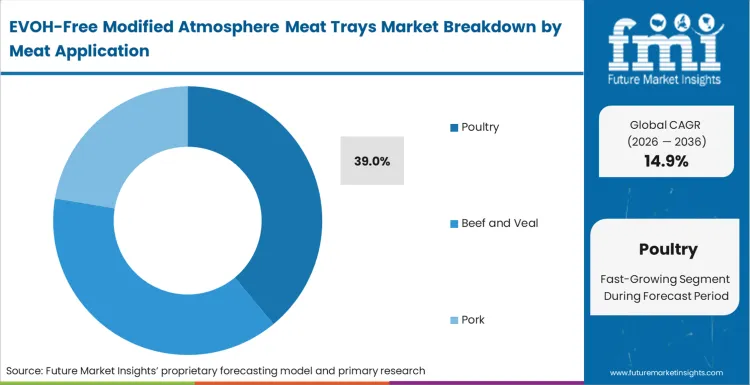
Poultry's 39% market share in 2026 stems from its position as the highest-volume MAP meat category globally, combined with shorter shelf-life requirements that enable simpler oxide-barrier formulations compared to red meat applications. The segment's reliance on high-volume retail distribution creates structural pressure to adopt recyclable formats ahead of regulatory deadlines, while processor margin sensitivity to packaging cost increases limits premium PET or bio-based tray adoption.
- Compostable Alternative Development: Sealed Air Corporation introduced its CRYOVAC brand compostable overwrap tray at the International Production and Processing Expo in January 2024, made from biobased resin with USDA certification of 54% biobased content derived from wood cellulose, designed as a drop-in replacement for expanded polystyrene trays used in fresh poultry and red meat packaging. [4]
- Recycling Infrastructure Compatibility: As per FMI analysis, the shift toward PP-based MAP trays for poultry applications accelerated in 2024 as converters prioritized materials with established collection and sorting infrastructure, avoiding complications associated with fiber-based alternatives that face grease contamination challenges in material recovery facilities.
- Performance Standards Evolution: Research published in 2024 examining alternative oxygen barrier coatings for flexible PP films found that water-based barrier coatings, ORMOCER hybrid coatings, and vapor-deposited oxide coatings on PP substrates achieved oxygen transmission rates below 0.1 cm³/m²/day, establishing technical feasibility for EVOH replacement in meat packaging applications. [5]
EVOH-Free Modified Atmosphere Meat Trays Market Drivers, Restraints, and Opportunities
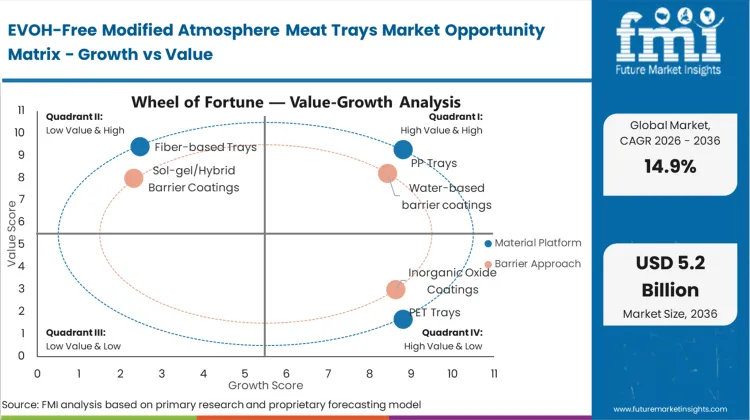
Future Market Insights analysis indicates that historical patterns point to a market entering rapid expansion as regulatory mandates and retailer commitments eliminate EVOH-barrier packaging from chilled meat categories. The 2026 valuation represents the initial compliance wave as major European and North American retailers transition existing tray specifications to recyclable alternatives. While conventional EVOH-barrier trays maintain cost advantages in the near term, regulatory deadlines and retailer delisting threats create non-negotiable transition timelines regardless of price premiums.
Growth trajectory reflects simultaneous volume expansion through MAP adoption in emerging markets and value growth through premium pricing for barrier-coated formats in mature markets. Standard PP thermoformed trays without barrier coatings cannot maintain required shelf life for chilled meat, while oxide and water-based barrier formulations command 15% to 25% price premiums over conventional EVOH alternatives. This pricing gap narrows as coating application efficiency improves and regulatory compliance becomes universal baseline rather than premium option, stabilizing market growth around sustainable infrastructure replacement cycles.
- Extended Producer Responsibility Enforcement: The European Union Packaging and Packaging Waste Regulation (EU) 2025/40 entered into force on February 11, 2025, requiring all packaging on the EU market to be recyclable in an economically viable way by 2030, with mandatory minimum recycled content thresholds between 30% and 65% for plastic packaging taking effect from 2030. [6]
- Retailer Sustainability Commitments: As per FMI analysis, major grocery chains across North America and Europe committed to 100% recyclable own-brand packaging by 2025 to 2030, eliminating EVOH-barrier trays from procurement specifications and forcing supplier base conversion to oxide or water-based alternatives to maintain shelf access.
- Technical Barrier Development: Research published in 2024 demonstrated that bio-based barrier coatings derived from polysaccharides such as xylan and mannan achieve oxygen barrier properties comparable to EVOH while maintaining mechanical strength similar to petroleum-based materials, though practical cost-effective industrial manufacturing methods require further development. [7]
Regional Analysis
Based on regional analysis, the EVOH-free modified atmosphere meat trays market is segmented into North America, Latin America, Europe, East Asia, South Asia, Oceania, and Middle East and Africa across 30+ countries. The full report offers market attractiveness analysis based on regulatory compliance timelines, recycling infrastructure maturity, and chilled meat consumption trends.
.webp "Top Country Growth Comparison Evoh Free Modified Atmosphere Meat Trays Market Cagr (2026 2036)")
| Country | CAGR (2026 to 2036) |
|---|---|
| India | 16.6% |
| Vietnam | 16.1% |
| Indonesia | 15.9% |
| Philippines | 15.5% |
| Thailand | 15.2% |
Source: Future Market Insights (FMI) analysis, based on proprietary forecasting model and primary research
Asia Pacific EVOH-Free Modified Atmosphere Meat Trays Market Analysis
Asia Pacific represents the fastest-growing region globally, leveraging organized retail expansion and export compliance requirements to drive MAP adoption and EVOH-free format transitions. Key regional players include Sealed Air Corporation serving multinational processor networks, Winpak Ltd operating coating facilities in China, and regional converters Berry Global Group and Coveris expanding capacity to meet Japanese and European export specifications.
- India: Domestic demand accelerates at 16.6% CAGR, supported by organized retail expansion adding thousands of chilled display cases annually and government food safety modernization programs. As per FMI analysis, Indian poultry processors face dual specifications, maintaining EVOH trays for export markets while transitioning domestic supply to alternative barrier formats as cold chain infrastructure matures. Scientific research published in 2024 examining sustainable biodegradable coatings for food packaging found that protein-based and polysaccharide-based barrier coatings from renewable sources show promise for replacing petroleum-based materials, though commercial viability requires addressing performance gaps in moisture resistance and mechanical strength. [7]
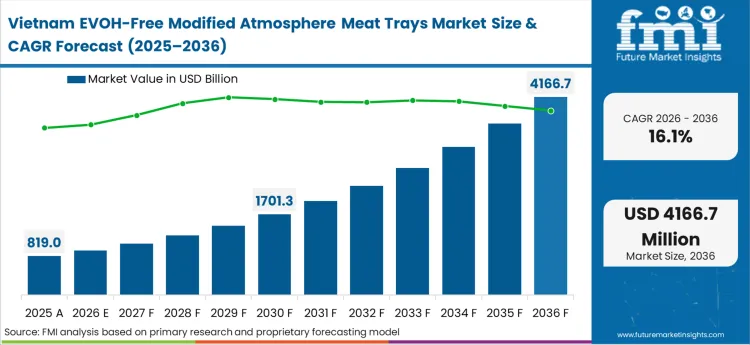
- Vietnam: Projected growth of 16.1% CAGR through 2036 is driven by export-oriented poultry processors adopting European recyclability standards to preserve market access. As per FMI analysis, domestic Vietnamese consumption remains dominated by ambient distribution, limiting MAP adoption outside urban centers and premium retail formats. Export dependency creates bifurcated production runs, with significant Vietnamese poultry tray capacity dedicated to recyclable formats for international markets while domestic sales utilize conventional thermoformed trays without advanced barrier coatings.
- Indonesia: Demand for EVOH-free MAP trays in Indonesia is projected to rise at 15.9% CAGR through 2036, fueled by organised retail penetration in Jakarta and major metropolitan markets, combined with halal certification requirements driving hygienic packaging adoption. As per FMI analysis, Indonesian meat processors serving modern trade channels transition from traditional wet market distribution using diverse container types to standardized MAP tray systems aligned with supermarket quality specifications and cold chain logistics protocols. Japanese retail chains operating in Indonesia establish supplier packaging standards requiring recyclable tray formats compatible with home market recycling systems, creating technical specification alignment with international best practices despite nascent domestic collection infrastructure.
- Philippines: Growth of 15.5% CAGR through 2036 is supported by fast-food chain expansion driving standardized meat packaging requirements and government food safety initiatives encouraging modern cold chain practices. As per FMI analysis, Filipino poultry processors supplying quick-service restaurant chains and organized retail adopt MAP tray systems to meet shelf-life requirements for chilled distribution, with Metro Manila concentration of modern trade infrastructure supporting pooling of converter services and washing facilities for reusable transport packaging. Export-oriented seafood processors serving United States and European markets implement EVOH-free recyclable tray specifications to comply with importer sustainability requirements, though domestic consumption patterns favor smaller package sizes and shorter distribution distances limiting MAP adoption penetration outside major urban markets.
- Thailand: Demand for EVOH-free MAP trays in Thailand is rising at 15.2% CAGR through 2036, driven by position as major poultry exporter to Japan and Middle Eastern markets requiring packaging compliance with importing country recyclability standards. As per FMI analysis, Thai poultry processors maintain dual packaging lines serving export markets with EVOH-free recyclable trays while utilizing conventional barrier formats for domestic distribution, with export volume representing significant share of total production creating economies of scale for recyclable tray procurement. Japanese retail chains sourcing Thai poultry establish detailed packaging specifications including material composition, barrier performance metrics, and recyclability certifications, driving converter investment in coating application equipment and quality testing capabilities to maintain supplier qualification status.
The full report analyses the EVOH-free MAP trays market across East and South Asia from 2021 to 2036, covering pricing dynamics, regulatory developments, and cold chain infrastructure expansion in India, Vietnam, Indonesia, Thailand, the Philippines, China, Japan, South Korea, and Malaysia. The assessment highlights export compliance drivers and organized retail penetration trends dictating regional tray demand and barrier technology selection.
Competitive Aligners for Market Players
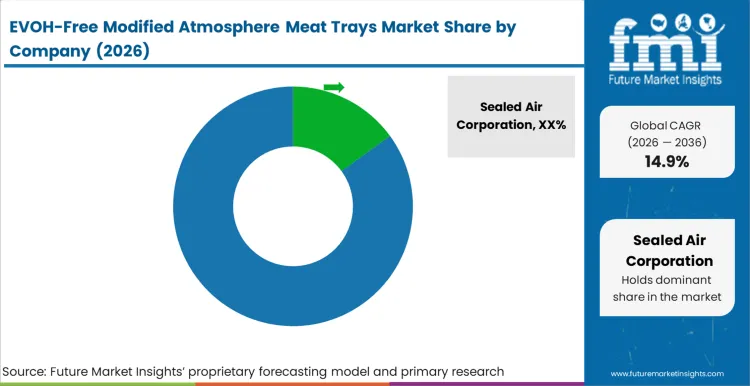
Market structure remains concentrated among vertically integrated converters and barrier coating specialists capable of meeting retail shelf-life requirements and regulatory compliance timelines. Approximately 40% of global capacity sits with integrated suppliers operating coating lines alongside thermoforming assets, while remaining capacity depends on toll coating arrangements that introduce quality variability and supply chain complexity. Primary competitive variable is barrier performance consistency rather than price, as shelf-life failures create immediate retailer delisting risk.
Converters with captive coating formulations and application expertise absorb barrier performance variability more effectively than toll processors relying on third-party coating suppliers. Integrated players maintain direct relationships with meat processors and retailers, securing long-term volume commitments that justify coating line capital investment. Non-integrated converters face margin compression as coating suppliers capture value through proprietary formulations, limiting pricing flexibility during raw material cost increases.
Regulatory compliance narrows the competitive field as oxide and water-based barrier formulations require precise application control and quality testing infrastructure. Converters unable to demonstrate consistent oxygen transmission rates below 3 cm³/m²/day lose retail specifications as buyers consolidate supplier bases to minimise shelf-life risk. Customer concentration reinforces buyer leverage, with top North American and European grocery chains controlling significant chilled meat retail volume and dictating packaging specifications through private label procurement.
Recent Developments
- In March 2024, Berry Global and Mitsubishi Gas Chemical Company announced a partnership to introduce recyclable, EVOH-free barrier coating for food packaging applications using Mitsubishi's MXD6 barrier resin, validated for polypropylene recycling streams with Critical Guidance recognition from the Association of Plastics Recyclers. [2]
- In January 2024, Sealed Air Corporation introduced its CRYOVAC brand compostable overwrap tray at the International Production and Processing Expo in Atlanta, made from biobased resin certified with 54% biobased content derived from wood cellulose as an alternative to expanded polystyrene and PET trays. [4]
Key Players in EVOH-Free Modified Atmosphere Meat Trays Market
- Sealed Air Corporation
- Faerch A/S
- Klöckner Pentaplast
- Greiner Packaging International
- Winpak Ltd.
- ILIP S.r.l.
- Coveris
- Berry Global Group, Inc.
- Groupe Guillin
- Amcor plc
Scope of the Report
| Metric | Value |
|---|---|
| Quantitative Units | USD 1.3 billion (2026) to USD 4.8 billion (2036), at a CAGR of 14.9% |
| Market Definition | The EVOH-free modified atmosphere meat trays market comprises production and trade of thermoformed trays utilizing barrier technologies that exclude ethylene vinyl alcohol copolymer layers, primarily serving retailers and processors requiring recyclable packaging solutions for chilled meat shelf-life extension. |
| Material Platform Segmentation | PP Trays, PET Trays, Fiber-based Trays, Bio-based Plastic Trays |
| Barrier Approach Segmentation | Inorganic Oxide Coatings, Sol-gel/Hybrid Barrier Coatings, Water-based Barrier Coatings, Active-barrier Systems |
| Meat Application Segmentation | Poultry, Beef and Veal, Pork, Processed Chilled Meats |
| Regions Covered | North America, Latin America, Europe, East Asia, South Asia, Oceania, Middle East and Africa |
| Countries Covered | United States, Canada, Mexico, Brazil, Argentina, Germany, France, United Kingdom, Italy, Spain, Netherlands, Belgium, China, India, Japan, South Korea, Vietnam, Indonesia, Thailand, Philippines, Malaysia, Australia and 30 plus countries |
| Key Companies Profiled | Sealed Air Corporation, Faerch A/S, Klöckner Pentaplast, Greiner Packaging International, Winpak Ltd., ILIP S.r.l., Coveris, Berry Global Group Inc., Groupe Guillin, Amcor plc |
| Forecast Period | 2026 to 2036 |
| Approach | Hybrid top-down and bottom-up market modeling validated through primary interviews with tray converters, meat processors, and retail procurement teams, supported by regulatory compliance timeline tracking and converter capacity verification |
EVOH-Free Modified Atmosphere Meat Trays Market Analysis by Segments
Material Platform
- PP Trays
- PET Trays
- Fiber-based Trays
- Bio-based Plastic Trays
EVOH-free Barrier Approach
- Inorganic Oxide Coatings
- Sol-gel/Hybrid Barrier Coatings
- Water-based Barrier Coatings
- Active-barrier Systems
Meat Application
- Poultry
- Beef and Veal
- Pork
- Processed Chilled Meats
Region
- North America
- Latin America
- Europe
- East Asia
- South Asia
- Oceania
- Middle East and Africa
Bibliography
- [1] Lindstad, L., et al. (2025). Suitability of Cellulose-Based Trays With PE/EVOH Coating for Modified Atmosphere Packaging of Salmon, Chicken, and Beef. Journal of Food Science, 90(1).
- [2] Packaging Europe. (2024). Berry Global and Mitsubishi introduce EVOH-free barrier coating for recyclable food packaging. Packaging Europe, March 2024.
- [3] Plastics Technology. (2024). APR Expands Design Guide for Plastics Recyclability With Polypropylene Categories. Plastics Technology, January 2024.
- [4] Plastics Today. (2024). Compostable Tray Nudges EPS From the Meat Case. Plastics Today, November 2024.
- [5] Coatings Journal. (2024). Investigation and Comparison of Alternative Oxygen Barrier Coatings for Flexible PP Films as Food Packaging Material. Coatings, 14(9), August 2024.
- [6] European Commission. (2025). Regulation (EU) 2025/40 on packaging and packaging waste. Official Journal of the European Union, January 2025.
- [7] Royal Society of Chemistry. (2024). Sustainable biodegradable coatings for food packaging: challenges and opportunities. Green Chemistry, 26(7), April 2024.
- [8] Association of Plastic Recyclers. (2024). APR Design Guide for Plastics Recyclability. APR Design Hub, July 2024.
- [9] European Commission. (2025). Packaging and Packaging Waste Regulation - Official Summary. EUR-Lex, February 2025.
- [10] California Legislative Information. (2024). Senate Bill 343 - Environmental advertising: recycling symbol: recyclability. California State Legislature.
This bibliography is provided for the reader's reference and is not exhaustive. The full report contains the complete reference list and detailed citations.
This Report Addresses
- Market intelligence to enable structured strategic decision making across recyclable packaging transitions and regulatory compliance planning
- Market size estimation and 10 year revenue forecasts from 2026 to 2036, supported by validated converter capacity and regulatory timeline benchmarks
- Growth opportunity mapping across PP, PET, fiber-based, and bio-based platforms with emphasis on oxide and water-based barrier technology adoption
- Segment and regional revenue forecasts covering poultry, beef, pork, and processed meat applications across North America, Europe, and Asia Pacific markets
- Competition strategy assessment including coating line integration models, barrier performance consistency positioning, and retail procurement relationship management
- Barrier technology development tracking including oxide coating formulations, water-based barrier adhesion improvements, and sol-gel hybrid systems
- Regulatory impact analysis covering EVOH phase-out timelines, Extended Producer Responsibility mandates, and retailer recyclability commitments
- Market report delivery in PDF, Excel, PPT, and interactive dashboard formats for executive and operational use
Frequently Asked Questions
How large is the demand for EVOH-Free Modified Atmosphere Meat Trays in the global market in 2026?
Demand for EVOH-free modified atmosphere meat trays in the global market is estimated to be valued at USD 1.3 billion in 2026.
What will be the market size of EVOH-Free Modified Atmosphere Meat Trays in the global market by 2036?
Market size for EVOH-free modified atmosphere meat trays is projected to reach USD 4.8 billion by 2036.
What is the expected demand growth for EVOH-Free Modified Atmosphere Meat Trays in the global market between 2026 and 2036?
Demand for EVOH-free modified atmosphere meat trays in the global market is expected to grow at a CAGR of 14.9% between 2026 and 2036.
Which Material Platform is poised to lead global sales by 2026?
PP trays are expected to be the dominant material platform, capturing approximately 54% of global market share in 2026 due to recycling infrastructure compatibility and cost advantages.
How significant is the role of Poultry Application in driving EVOH-Free MAP Tray adoption in 2026?
Poultry represents the leading meat application segment, projected to hold approximately 39% share of the total market in 2026 as high-volume retail distribution drives recyclable format adoption.
What is Driving EVOH-Free MAP Tray Demand in Europe?
Mandatory recyclability requirements under the EU Packaging and Packaging Waste Regulation combined with retailer sustainability mandates are driving EVOH phase-out and alternative barrier adoption.
What Compliance Standards are Referenced for the United States Market?
California SB 343 recyclability labeling requirements and retailer-led sustainability commitments requiring recyclable packaging are referenced as key compliance benchmarks.
What is the India Growth Outlook in this Report?
India is projected to grow at a CAGR of 16.6% during 2026 to 2036, driven by organized retail expansion and cold chain infrastructure development.
Why is Asia Pacific the Fastest Growing Region in this Report?
Growth is driven by export compliance requirements to maintain European and Japanese market access combined with domestic organized retail penetration enabling MAP adoption for previously ambient-distributed proteins.
What are EVOH-Free Modified Atmosphere Meat Trays and What are They Used For?
EVOH-free modified atmosphere meat trays are thermoformed packaging utilizing non-EVOH barrier technologies such as oxide coatings or water-based barriers to maintain chilled meat shelf life while enabling monomaterial recyclability.
What does EVOH-Free Modified Atmosphere Meat Trays Market Mean in this Report?
The market refers to global production, trade, and industrial consumption of recyclable thermoformed meat trays utilizing barrier approaches that exclude ethylene vinyl alcohol copolymer layers.
What is Included in the Scope of this EVOH-Free Modified Atmosphere Meat Trays Market Report?
Scope covers material platforms (PP, PET, fiber-based, bio-based), barrier approaches (oxide, sol-gel, water-based, active), meat applications (poultry, beef, pork, processed meats), and regional analysis across 30+ countries.
What is Excluded from the Scope of this Report?
EVOH-containing multilayer trays, vacuum skin packaging, flow-wrap films, non-MAP ambient trays, and downstream prepared meals are excluded from coverage.
How does FMI Build and Validate the EVOH-Free Modified Atmosphere Meat Trays Market Forecast?
Forecast is developed using hybrid top-down and bottom-up modeling validated through converter capacity data, retail packaging specifications, regulatory compliance timelines, and primary interviews with industry stakeholders.
Preview the report firsthand - request a free sample
Get SampleGet the brochure for pricing and purchase details.
Get PDFTable of Content
- Executive Summary
- Global Market Outlook
- Demand-side Trends
- Supply-side Trends
- Technology Roadmap Analysis
- Analysis and Recommendations
- Market Overview
- Market Coverage / Taxonomy
- Market Definition / Scope / Limitations
- Research Methodology
- Chapter Orientation
- Analytical Lens and Working Hypotheses
- Market Structure, Signals, and Trend Drivers
- Benchmarking and Cross-market Comparability
- Market Sizing, Forecasting, and Opportunity Mapping
- Research Design and Evidence Framework
- Desk Research Programme (Secondary Evidence)
- Company Annual and Sustainability Reports
- Peer-reviewed Journals and Academic Literature
- Corporate Websites, Product Literature, and Technical Notes
- Earnings Decks and Investor Briefings
- Statutory Filings and Regulatory Disclosures
- Technical White Papers and Standards Notes
- Trade Journals, Industry Magazines, and Analyst Briefs
- Conference Proceedings, Webinars, and Seminar Materials
- Government Statistics Portals and Public Data Releases
- Press Releases and Reputable Media Coverage
- Specialist Newsletters and Curated Briefings
- Sector Databases and Reference Repositories
- FMI Internal Proprietary Databases and Historical Market Datasets
- Subscription Datasets and Paid Sources
- Social Channels, Communities, and Digital Listening Inputs
- Additional Desk Sources
- Expert Input and Fieldwork (Primary Evidence)
- Primary Modes
- Qualitative Interviews and Expert Elicitation
- Quantitative Surveys and Structured Data Capture
- Blended Approach
- Why Primary Evidence is Used
- Field Techniques
- Interviews
- Surveys
- Focus Groups
- Observational and In-context Research
- Social and Community Interactions
- Stakeholder Universe Engaged
- C-suite Leaders
- Board Members
- Presidents and Vice Presidents
- R&D and Innovation Heads
- Technical Specialists
- Domain Subject-matter Experts
- Scientists
- Physicians and Other Healthcare Professionals
- Governance, Ethics, and Data Stewardship
- Research Ethics
- Data Integrity and Handling
- Primary Modes
- Tooling, Models, and Reference Databases
- Desk Research Programme (Secondary Evidence)
- Data Engineering and Model Build
- Data Acquisition and Ingestion
- Cleaning, Normalisation, and Verification
- Synthesis, Triangulation, and Analysis
- Quality Assurance and Audit Trail
- Market Background
- Market Dynamics
- Drivers
- Restraints
- Opportunity
- Trends
- Scenario Forecast
- Demand in Optimistic Scenario
- Demand in Likely Scenario
- Demand in Conservative Scenario
- Opportunity Map Analysis
- Product Life Cycle Analysis
- Supply Chain Analysis
- Investment Feasibility Matrix
- Value Chain Analysis
- PESTLE and Porter’s Analysis
- Regulatory Landscape
- Regional Parent Market Outlook
- Production and Consumption Statistics
- Import and Export Statistics
- Market Dynamics
- Global Market Analysis 2021 to 2025 and Forecast, 2026 to 2036
- Historical Market Size Value (USD Million) Analysis, 2021 to 2025
- Current and Future Market Size Value (USD Million) Projections, 2026 to 2036
- Y-o-Y Growth Trend Analysis
- Absolute $ Opportunity Analysis
- Global Market Pricing Analysis 2021 to 2025 and Forecast 2026 to 2036
- Global Market Analysis 2021 to 2025 and Forecast 2026 to 2036, By Material Platform
- Introduction / Key Findings
- Historical Market Size Value (USD Million) Analysis By Material Platform , 2021 to 2025
- Current and Future Market Size Value (USD Million) Analysis and Forecast By Material Platform , 2026 to 2036
- PP Trays
- PET Trays
- Fiber-based Trays
- PP Trays
- Y-o-Y Growth Trend Analysis By Material Platform , 2021 to 2025
- Absolute $ Opportunity Analysis By Material Platform , 2026 to 2036
- Global Market Analysis 2021 to 2025 and Forecast 2026 to 2036, By Barrier Approach
- Introduction / Key Findings
- Historical Market Size Value (USD Million) Analysis By Barrier Approach, 2021 to 2025
- Current and Future Market Size Value (USD Million) Analysis and Forecast By Barrier Approach, 2026 to 2036
- Water-based barrier coatings
- Inorganic Oxide Coatings
- Sol-gel/Hybrid Barrier Coatings
- Water-based barrier coatings
- Y-o-Y Growth Trend Analysis By Barrier Approach, 2021 to 2025
- Absolute $ Opportunity Analysis By Barrier Approach, 2026 to 2036
- Global Market Analysis 2021 to 2025 and Forecast 2026 to 2036, By Meat Application
- Introduction / Key Findings
- Historical Market Size Value (USD Million) Analysis By Meat Application, 2021 to 2025
- Current and Future Market Size Value (USD Million) Analysis and Forecast By Meat Application, 2026 to 2036
- Poultry
- Beef and Veal
- Pork
- Poultry
- Y-o-Y Growth Trend Analysis By Meat Application, 2021 to 2025
- Absolute $ Opportunity Analysis By Meat Application, 2026 to 2036
- Global Market Analysis 2021 to 2025 and Forecast 2026 to 2036, By Region
- Introduction
- Historical Market Size Value (USD Million) Analysis By Region, 2021 to 2025
- Current Market Size Value (USD Million) Analysis and Forecast By Region, 2026 to 2036
- North America
- Latin America
- Western Europe
- Eastern Europe
- East Asia
- South Asia and Pacific
- Middle East & Africa
- Market Attractiveness Analysis By Region
- North America Market Analysis 2021 to 2025 and Forecast 2026 to 2036, By Country
- Historical Market Size Value (USD Million) Trend Analysis By Market Taxonomy, 2021 to 2025
- Market Size Value (USD Million) Forecast By Market Taxonomy, 2026 to 2036
- By Country
- USA
- Canada
- Mexico
- By Material Platform
- By Barrier Approach
- By Meat Application
- By Country
- Market Attractiveness Analysis
- By Country
- By Material Platform
- By Barrier Approach
- By Meat Application
- Key Takeaways
- Latin America Market Analysis 2021 to 2025 and Forecast 2026 to 2036, By Country
- Historical Market Size Value (USD Million) Trend Analysis By Market Taxonomy, 2021 to 2025
- Market Size Value (USD Million) Forecast By Market Taxonomy, 2026 to 2036
- By Country
- Brazil
- Chile
- Rest of Latin America
- By Material Platform
- By Barrier Approach
- By Meat Application
- By Country
- Market Attractiveness Analysis
- By Country
- By Material Platform
- By Barrier Approach
- By Meat Application
- Key Takeaways
- Western Europe Market Analysis 2021 to 2025 and Forecast 2026 to 2036, By Country
- Historical Market Size Value (USD Million) Trend Analysis By Market Taxonomy, 2021 to 2025
- Market Size Value (USD Million) Forecast By Market Taxonomy, 2026 to 2036
- By Country
- Germany
- UK
- Italy
- Spain
- France
- Nordic
- BENELUX
- Rest of Western Europe
- By Material Platform
- By Barrier Approach
- By Meat Application
- By Country
- Market Attractiveness Analysis
- By Country
- By Material Platform
- By Barrier Approach
- By Meat Application
- Key Takeaways
- Eastern Europe Market Analysis 2021 to 2025 and Forecast 2026 to 2036, By Country
- Historical Market Size Value (USD Million) Trend Analysis By Market Taxonomy, 2021 to 2025
- Market Size Value (USD Million) Forecast By Market Taxonomy, 2026 to 2036
- By Country
- Russia
- Poland
- Hungary
- Balkan & Baltic
- Rest of Eastern Europe
- By Material Platform
- By Barrier Approach
- By Meat Application
- By Country
- Market Attractiveness Analysis
- By Country
- By Material Platform
- By Barrier Approach
- By Meat Application
- Key Takeaways
- East Asia Market Analysis 2021 to 2025 and Forecast 2026 to 2036, By Country
- Historical Market Size Value (USD Million) Trend Analysis By Market Taxonomy, 2021 to 2025
- Market Size Value (USD Million) Forecast By Market Taxonomy, 2026 to 2036
- By Country
- China
- Japan
- South Korea
- By Material Platform
- By Barrier Approach
- By Meat Application
- By Country
- Market Attractiveness Analysis
- By Country
- By Material Platform
- By Barrier Approach
- By Meat Application
- Key Takeaways
- South Asia and Pacific Market Analysis 2021 to 2025 and Forecast 2026 to 2036, By Country
- Historical Market Size Value (USD Million) Trend Analysis By Market Taxonomy, 2021 to 2025
- Market Size Value (USD Million) Forecast By Market Taxonomy, 2026 to 2036
- By Country
- India
- ASEAN
- Australia & New Zealand
- Rest of South Asia and Pacific
- By Material Platform
- By Barrier Approach
- By Meat Application
- By Country
- Market Attractiveness Analysis
- By Country
- By Material Platform
- By Barrier Approach
- By Meat Application
- Key Takeaways
- Middle East & Africa Market Analysis 2021 to 2025 and Forecast 2026 to 2036, By Country
- Historical Market Size Value (USD Million) Trend Analysis By Market Taxonomy, 2021 to 2025
- Market Size Value (USD Million) Forecast By Market Taxonomy, 2026 to 2036
- By Country
- Kingdom of Saudi Arabia
- Other GCC Countries
- Turkiye
- South Africa
- Other African Union
- Rest of Middle East & Africa
- By Material Platform
- By Barrier Approach
- By Meat Application
- By Country
- Market Attractiveness Analysis
- By Country
- By Material Platform
- By Barrier Approach
- By Meat Application
- Key Takeaways
- Key Countries Market Analysis
- USA
- Pricing Analysis
- Market Share Analysis, 2025
- By Material Platform
- By Barrier Approach
- By Meat Application
- Canada
- Pricing Analysis
- Market Share Analysis, 2025
- By Material Platform
- By Barrier Approach
- By Meat Application
- Mexico
- Pricing Analysis
- Market Share Analysis, 2025
- By Material Platform
- By Barrier Approach
- By Meat Application
- Brazil
- Pricing Analysis
- Market Share Analysis, 2025
- By Material Platform
- By Barrier Approach
- By Meat Application
- Chile
- Pricing Analysis
- Market Share Analysis, 2025
- By Material Platform
- By Barrier Approach
- By Meat Application
- Germany
- Pricing Analysis
- Market Share Analysis, 2025
- By Material Platform
- By Barrier Approach
- By Meat Application
- UK
- Pricing Analysis
- Market Share Analysis, 2025
- By Material Platform
- By Barrier Approach
- By Meat Application
- Italy
- Pricing Analysis
- Market Share Analysis, 2025
- By Material Platform
- By Barrier Approach
- By Meat Application
- Spain
- Pricing Analysis
- Market Share Analysis, 2025
- By Material Platform
- By Barrier Approach
- By Meat Application
- France
- Pricing Analysis
- Market Share Analysis, 2025
- By Material Platform
- By Barrier Approach
- By Meat Application
- India
- Pricing Analysis
- Market Share Analysis, 2025
- By Material Platform
- By Barrier Approach
- By Meat Application
- ASEAN
- Pricing Analysis
- Market Share Analysis, 2025
- By Material Platform
- By Barrier Approach
- By Meat Application
- Australia & New Zealand
- Pricing Analysis
- Market Share Analysis, 2025
- By Material Platform
- By Barrier Approach
- By Meat Application
- China
- Pricing Analysis
- Market Share Analysis, 2025
- By Material Platform
- By Barrier Approach
- By Meat Application
- Japan
- Pricing Analysis
- Market Share Analysis, 2025
- By Material Platform
- By Barrier Approach
- By Meat Application
- South Korea
- Pricing Analysis
- Market Share Analysis, 2025
- By Material Platform
- By Barrier Approach
- By Meat Application
- Russia
- Pricing Analysis
- Market Share Analysis, 2025
- By Material Platform
- By Barrier Approach
- By Meat Application
- Poland
- Pricing Analysis
- Market Share Analysis, 2025
- By Material Platform
- By Barrier Approach
- By Meat Application
- Hungary
- Pricing Analysis
- Market Share Analysis, 2025
- By Material Platform
- By Barrier Approach
- By Meat Application
- Kingdom of Saudi Arabia
- Pricing Analysis
- Market Share Analysis, 2025
- By Material Platform
- By Barrier Approach
- By Meat Application
- Turkiye
- Pricing Analysis
- Market Share Analysis, 2025
- By Material Platform
- By Barrier Approach
- By Meat Application
- South Africa
- Pricing Analysis
- Market Share Analysis, 2025
- By Material Platform
- By Barrier Approach
- By Meat Application
- USA
- Market Structure Analysis
- Competition Dashboard
- Competition Benchmarking
- Market Share Analysis of Top Players
- By Regional
- By Material Platform
- By Barrier Approach
- By Meat Application
- Competition Analysis
- Competition Deep Dive
- Sealed Air Corporation
- Overview
- Product Portfolio
- Profitability by Market Segments (Product/Age /Sales Channel/Region)
- Sales Footprint
- Strategy Overview
- Marketing Strategy
- Product Strategy
- Channel Strategy
- Faerch A/S
- Klöckner Pentaplast
- Greiner Packaging International
- Winpak Ltd.
- ILIP S.r.l.
- Coveris
- Sealed Air Corporation
- Competition Deep Dive
- Assumptions & Acronyms Used


