

- Market Size (2026)
- USD 8.4 Bn
- Forecast (2036)
- USD 14.8 Bn
- CAGR (2026 to 2036)
- 5.8%
How big is Hospital-Acquired Pneumonia Market in 2026?
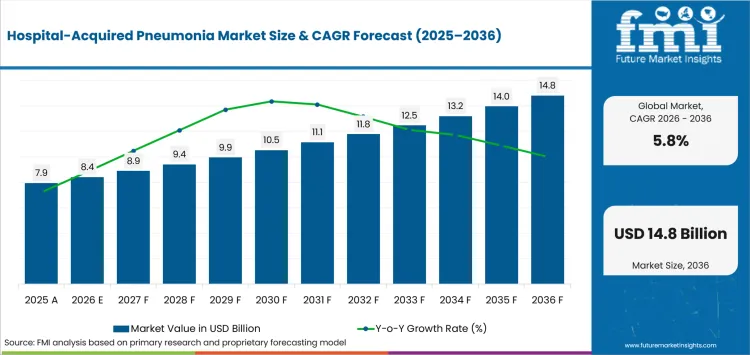
USD 8.4 billion in 2026 and USD 14.8 billion by 2036 at a 5.8% CAGR.
Sales in hospital-acquired pneumonia market are projected to rise from USD 8.4 billion in 2026 to USD 14.8 billion by 2036 at a 5.8% CAGR. Treatment demand continues to be shaped by drug-resistant Gram-negative pathogens that remain a priority for hospital infection control programs. The WHO's May 2024 bacterial priority pathogens list retained carbapenem-resistant Acinetobacter baumannii and Pseudomonas aeruginosa, underscoring the need for effective antimicrobial therapies against hospital-acquired infections. The persistence of resistant pathogens continues to influence antibiotic development and prescribing strategies.
Country performance reflects differences in surveillance systems and treatment practices. Japan is forecast to expand at a 5.9% CAGR compared with 5.4% for the United States. CDC reported in January 2026 that ventilator-associated events declined by 2% during 2024. Lower complication rates can reduce treatment volumes associated with preventable hospital infections, although ongoing surveillance and diagnostic testing remain integral to pneumonia management.
Key Takeaways of Hospital-Acquired Pneumonia Market
- Resistant Gram-negative infections sustain early empiric treatment followed by susceptibility-guided narrowing within hospital stewardship programs.
- Antibiotics are projected at 64.0% in 2026 because active treatment remains central to suspected bacterial hospital infections.
- Ventilator-associated pneumonia is estimated at 56.0% in 2026 owing to concentrated diagnosis and treatment within critical-care pathways.
- Injectable therapies are forecast at 72.0% in 2026 as controlled exposure and supervised dosing remain essential.
- Diagnostic uncertainty delays treatment matching, while stewardship rules limit prolonged exposure to reserve and broad-spectrum antibiotics.
- Merck & Co., Inc., Pfizer Inc., Shionogi & Co., Ltd., Innoviva Specialty Therapeutics, Inc., Basilea Pharmaceutica Ltd., ADVANZ PHARMA Holdco Limited, Allecra Therapeutics GmbH and A. Menarini Industrie Farmaceutiche Riunite S.r.l. are some notable players.
Analyst Perspective
"Hospital formulary committees should compare pathogen coverage, local susceptibility evidence and infusion workload before approving therapy. Commercial value depends on effective early treatment alongside rapid de-escalation and documented reserve-agent use nationwide."
- Anurag Sharma, Associate Vice President, Future Market Insights
How is the Hospital-Acquired Pneumonia Market segmented?
The Hospital-Acquired Pneumonia Market is segmented by drug class, infection type, route of administration, end user, distribution channel and region.
Drug class covers antibiotics, combination therapy, adjunctive therapies and pipeline therapies, while infection type includes ventilator-associated, non-ventilator and drug-resistant pneumonia. Routes include injectable, oral and inhaled therapy, while hospitals, respiratory centers and long-term care facilities obtain medicines through hospital, retail and online pharmacies.
Why do antibiotics lead demand within the drug class category?
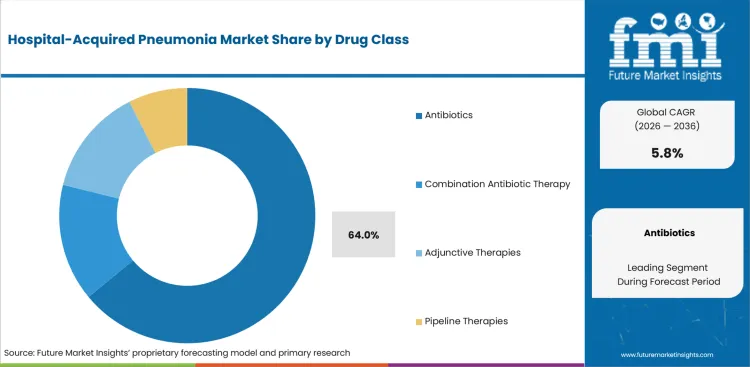
Clinicians start antibiotic drugs for severe inpatient pneumonia before complete susceptibility results become available, then culture review narrows coverage according to organism risk and clinical response.
- By drug class, antibiotics are estimated to hold 64.0% in 2026 owing to their direct role in suspected bacterial infection.
- Combination regimens extend empiric coverage or inhibit beta-lactamases, whereas adjunctive and pipeline approaches supplement treatment without replacing active antibacterial therapy.
Why does ventilator-associated pneumonia lead the infection type category?
Ventilator-associated pneumonia follows critical-care drug pathways combining respiratory support and microbiology review, while device-specific surveillance concentrates diagnosis and treatment inside intensive care units.
- In 2026, ventilator-associated pneumonia is expected to lead infection type with 56.0% share because ventilated patients require intensive monitoring and treatment.
- Non-ventilator disease spans surgical and general wards, whereas resistant cases require organism-specific selection for MRSA, Pseudomonas aeruginosa or Acinetobacter baumannii.
Why do injectable therapies lead the route of administration category?
Severe inpatient pneumonia relies on injectable drugs for controlled dosing and pharmacy oversight, with regulatory records documenting intravenous pathways for Recarbrio, Fetroja, Xacduro and Exblifep.
- Injectable therapies are projected to hold 72.0% share in 2026 owing to predictable exposure, renal adjustment and supervised administration.
- Oral therapy supports selected step-down care, whereas inhaled treatment remains an adjunct route requiring device compatibility, regimen evidence and respiratory support.
Why do hospital pharmacies lead the distribution channel category?
Hospital pharmacies connect formulary access with renal review and infusion preparation, while pharmacy automation supports dispensing control under clinical stewardship authorization.
- The distribution channel category is forecast to be led by hospital pharmacies at 69.0% share in 2026 due to supervised inpatient dispensing.
- Retail and online pharmacies mainly support discharge or step-down therapy, whereas severe hospital-acquired disease requires supervised first-line treatment and infusion management.
What are the drivers, restraints and opportunities in the Hospital-Acquired Pneumonia Market?
Resistant pathogens sustain demand, stewardship limits unrestricted use and faster diagnostics support better treatment matching.
- Driver: Resistant Gram-negative organisms reduce effective empiric options and increase need for pathogen-directed hospital antibiotics.
- Restraint: Diagnostic uncertainty and stewardship rules restrict prolonged broad-spectrum exposure once microbiology supports a narrower regimen.
- Opportunity: Faster organism identification improves treatment matching for resistant-pathogen therapies with approved coverage and practical infusion routes.
The growing prevalence of resistant Gram-negative organisms has narrowed the range of antibiotics capable of providing effective early empiric coverage. Hospital infection-control programs increasingly evaluate local pathogen prevalence alongside antimicrobial susceptibility data before reserving newer intravenous therapies for appropriate use.
Guidance issued by the National Institute for Health and Care Excellence (NICE) in September 2025 recommends reviewing intravenous antibiotic therapy within 48 hours, ensuring that continued treatment is supported by documented clinical need and adjusted to narrower-spectrum options when microbiological evidence permits.
Rapid infectious-disease diagnostic technologies are reducing the time between empiric treatment initiation and pathogen-specific therapy selection. By delivering actionable laboratory results within the treatment window, these tools strengthen the clinical and formulary rationale for targeted therapies against resistant pathogens while supporting antimicrobial stewardship objectives.
Which country CAGRs are profiled in the Hospital-Acquired Pneumonia Market?
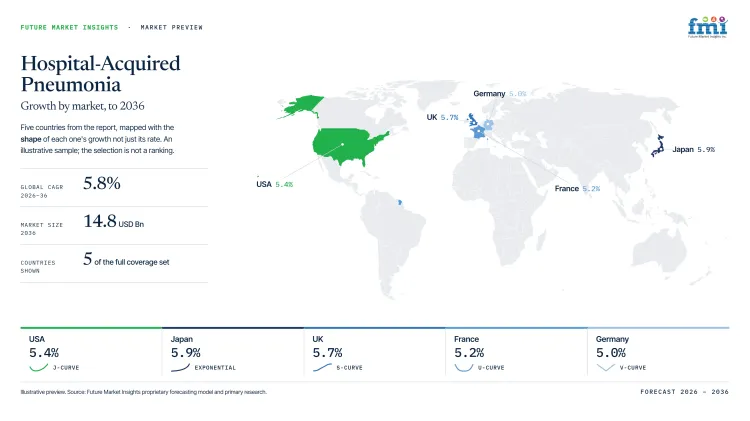
| Country | CAGR |
|---|---|
| Japan | 5.9% |
| United Kingdom | 5.7% |
| United States | 5.4% |
| France | 5.2% |
| Germany | 5.0% |
How do country-level CAGRs compare in the Hospital-Acquired Pneumonia Market?
The country forecasts span 0.9 percentage point between Japan and Germany, but similar rates mask different surveillance, prescribing and access conditions.
- Japan’s pace reflects extensive inpatient susceptibility surveillance that informs empiric protocols and hospital formulary review.
- The United Kingdom combines national treatment guidance with monitored secondary-care antibiotic use and mandatory intravenous review.
- The United States combines resistant-pathogen approvals with prevention programs that reduce selected device-associated infection events.
- France links hospital antibiotic surveillance with stronger review of broad-spectrum prescribing and resistance patterns.
- Germany relies on national reference laboratories and strict prescribing controls for multidrug-resistant Gram-negative infections.
Comparable CAGRs reflect surveillance and stewardship differences across North America, Latin America, Europe, East Asia, South Asia, Oceania, Middle East and Africa.
Country-wise Analysis
- Japan is projected to expand at a 5.9% CAGR through 2036 as surveillance data remain closely integrated with hospital prescribing decisions. JANIS supplies participating hospitals with antimicrobial susceptibility information that supports empiric treatment selection. JANIS recorded 8.75 million inpatient specimens from 2,958 facilities during 2024. The dataset helps clinicians align therapy with local resistance patterns. Participation remains voluntary and does not capture activity across every Japanese hospital.
- The United Kingdom is anticipated to grow at a 5.7% CAGR over the assessment period because antimicrobial use is monitored through national stewardship programs. Secondary-care hospitals operate within established prescribing surveillance frameworks. UKHSA reported a 2.7% increase in inpatient antibiotic consumption between 2019 and 2024. Utilization data help identify treatment needs while reinforcing targeted prescribing practices. Stewardship reviews continue to limit broad-spectrum antibiotic use.
- The United States is expected to record a 5.4% CAGR during the forecast period due to the availability of approved therapies for resistant hospital-acquired infections. Several antibacterial products hold labeled positions in hospital-acquired and ventilator-associated pneumonia treatment pathways. CDC reported in February 2026 that 97% of acute-care hospitals met all seven stewardship core elements during 2024. High stewardship adoption places greater emphasis on clinical evidence before reserve antibiotics are prescribed. Formulary controls remain an important consideration for manufacturers.
- France is forecast to expand at a 5.2% CAGR through 2036 as hospital prescribing is increasingly informed by resistance and utilization benchmarking. The SPARES program provides participating institutions with comparative antibiotic-use and resistance data. Santé publique France reported 322 defined daily doses per 1,000 hospital days across 1,392 facilities during 2024. Access to consistent surveillance data creates a more predictable prescribing environment. Broad-spectrum antibiotic use remains subject to tighter clinical review.
- Germany is estimated to post a 5.0% CAGR over the forecast period because laboratory evidence plays a central role in antibiotic selection. National surveillance systems provide clinicians with data on resistant pathogens circulating in healthcare settings. The national reference center received 10,681 multidrug-resistant Gram-negative isolates in 2024. Rising isolate volumes keep resistance monitoring central to treatment decisions. Strict prescribing standards continue to influence uptake of newer antibiotics.
Who are the notable companies in the Hospital-Acquired Pneumonia Market?
Merck & Co., Inc., Pfizer Inc., Shionogi & Co., Ltd., Innoviva Specialty Therapeutics, Inc., Basilea Pharmaceutica Ltd., ADVANZ PHARMA Holdco Limited, Allecra Therapeutics GmbH and A. Menarini Industrie Farmaceutiche Riunite S.r.l. are the notable companies included in this market assessment.
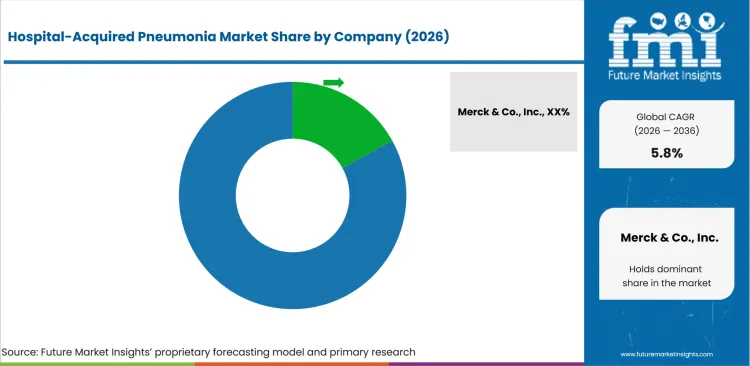
Industry combines approved intravenous drug delivery with specialist licensing networks, where entry depends on pathogen coverage and territory-specific approval. Multinational antibiotic API scale cannot replace clinical evidence for hospital pneumonia indications in regulated markets.
- Merck, Pfizer and Shionogi combine approved HAP or VAP labels with multinational hospital distribution networks.
- Innoviva and Basilea focus on resistant pathogens, although Basilea’s approved HAP position excludes VAP in selected markets.
- ADVANZ and Allecra commercialize Exblifep in Europe, while Menarini holds development-stage rights for cefepime-taniborbactam across 96 countries.
Competitive Benchmarking: Hospital-Acquired Pneumonia Market
| Company | HAP/VAP Regulatory Position | Resistance-targeted Coverage | Inpatient Delivery Readiness | Geographic Reach |
|---|---|---|---|---|
| Merck & Co., Inc. | High | High | High | United States and European Union |
| Pfizer Inc. | High | High | High | European Union |
| Shionogi & Co., Ltd. | High | High | High | United States |
| Innoviva Specialty Therapeutics, Inc. | High | High | High | United States and licensed international territories |
| Basilea Pharmaceutica Ltd. | Medium | Medium | High | Europe and selected international markets |
| ADVANZ PHARMA Holdco Limited | High | High | High | European Union, United Kingdom, Switzerland and Norway |
| Allecra Therapeutics GmbH | High | High | Medium | Europe and licensed partner territories |
| A. Menarini Industrie Farmaceutiche Riunite S.r.l. | Medium | High | Medium | 96 countries across Europe, Latin America, the Middle East, North Africa and CIS |
Key Developments in the Hospital-Acquired Pneumonia Market
- In June 2026, Innoviva Specialty Therapeutics signed an exclusive Xacduro distribution and licensing agreement with Dr. Reddy’s Laboratories covering South and Central America, the Caribbean, Russia and CIS countries subject to local approvals.
- In April 2026, Shionogi received a USA BARDA Project BioShield contract covering Fetroja procurement, domestic manufacturing, pediatric HAP or VAP development, and advancement of Fetroja against high-priority biothreat pathogens.
- In December 2025, Merck received USA FDA approval for pediatric Recarbrio labeling in HAP or VAP patients weighing at least 2 kilograms.
Key Players in the Hospital-Acquired Pneumonia Market
Approved Multinational Anti-infective Platforms
- Merck & Co., Inc.
- Pfizer Inc.
- Shionogi & Co., Ltd.
Focused Hospital Anti-infective Specialists
- Innoviva Specialty Therapeutics, Inc.
- Basilea Pharmaceutica Ltd.
Licensed Commercialization and Development Partners
- ADVANZ PHARMA Holdco Limited
- Allecra Therapeutics GmbH
- A. Menarini Industrie Farmaceutiche Riunite S.r.l.
Hospital-Acquired Pneumonia Market - Report Scope
| Coverage field | Report scope |
|---|---|
| Market breakdown | By drug class, infection type, route of administration, end user, distribution channel and region. |
| Quantitative Units | Revenie in USD billion and CAGR in %. |
| Market Definition | Commercial therapies and hospital distribution used for hospital-acquired pneumonia and ventilator-associated pneumonia across approved applications. |
| Regions Covered | North America, Latin America, Western Europe, Eastern Europe, East Asia, South Asia and Pacific, and Middle East and Africa. |
| Countries Covered | Japan, United Kingdom, United States, France and Germany, and 20+ countries included in the full report. |
| Key Companies Profiled | Merck & Co., Inc., Pfizer Inc., Shionogi & Co., Ltd., Innoviva Specialty Therapeutics, Inc., Basilea Pharmaceutica Ltd., ADVANZ PHARMA Holdco Limited, Allecra Therapeutics GmbH and A. Menarini Industrie Farmaceutiche Riunite S.r.l. |
| Forecast Period | 2026 to 2036. |
| Approach | Primary and secondary research with market triangulation. |
Hospital-Acquired Pneumonia Market - Research Methodology
| Method | Approach |
|---|---|
| Primary Research | FMI analysts gathered input from manufacturers, service providers, technology developers, distributors, end users, procurement teams, and subject-matter experts. Interviews examined purchasing decisions, product or service evaluation, adoption barriers, approval requirements, pricing considerations, and expectations for technical or commercial support. Respondents were also asked what evidence is required before a trial, pilot, or initial order develops into regular purchasing. |
| Desk Research | Desk research covered government statistics, regulatory publications, trade data, industry associations, technical literature, standards, company filings, product information, and official corporate announcements. Sources were reviewed for relevance, publication date, geographic coverage, and consistency with the defined market scope. Claims relating to performance, applications, approvals, capacity, investment, and commercial activity were retained only when supported by credible public evidence. |
| Market Sizing and Forecasting | The market model combined the baseline value with historical performance, segment structure, pricing and volume indicators, adoption levels, company participation, and country-level demand conditions. Forecast assumptions considered economic activity, investment trends, regulatory developments, technology adoption, purchasing cycles, supply availability, and barriers to wider market use. Segment and regional estimates were reconciled before the final market total was calculated. |
| Data Validation | Estimates were checked against multiple independent indicators, including public data, company activity, trade patterns, industry developments, and findings from primary interviews. Validation also tested whether products, services, applications, and company revenues fell within the defined market boundaries. Adjacent categories, unsupported claims, overlapping revenues, and activities without direct market relevance were excluded to reduce double counting and maintain consistency across segments and countries. |
Hospital-Acquired Pneumonia Market by Segments
Hospital-Acquired Pneumonia Market segmented by Drug Class:
- Antibiotics
- Beta-lactam Antibiotics
- Glycopeptide Antibiotics
- Oxazolidinones
- Combination Antibiotic Therapy
- Beta-lactam - Beta-lactamase Inhibitors
- Dual Antibiotic Therapy
- Broad-spectrum Combinations
- Adjunctive Therapies
- Immunomodulators
- Aerosolized Antibiotics
- Supportive Respiratory Therapy
- Pipeline Therapies
- Novel Antimicrobials
- Bacteriophage Therapy
- Anti-virulence Agents
Hospital-Acquired Pneumonia Market segmented by Infection Type:
- Ventilator-associated Pneumonia
- Early-onset Ventilator-associated Pneumonia
- Late-onset Ventilator-associated Pneumonia
- Multidrug-resistant Ventilator-associated Pneumonia
- Non-ventilator Hospital-acquired Pneumonia
- Post-surgical Pneumonia
- ICU-acquired Pneumonia
- General Ward Pneumonia
- Drug-resistant Hospital-acquired Pneumonia
- MRSA-associated Pneumonia
- Pseudomonas aeruginosa Pneumonia
- Acinetobacter baumannii Pneumonia
Hospital-Acquired Pneumonia Market segmented by Route of Administration:
- Injectable
- Intravenous Antibiotics
- Intramuscular Antibiotics
- Hospital-administered Therapy
- Oral
- Tablets
- Capsules
- Step-down Therapy
- Inhalation
- Nebulized Antibiotics
- Aerosol Therapy
- Respiratory Drug Delivery
Hospital-Acquired Pneumonia Market segmented by End User:
- Hospitals
- Intensive Care Units
- General Hospitals
- Tertiary Care Hospitals
- Specialty Respiratory Centers
- Pulmonology Clinics
- Infectious Disease Centers
- Critical Care Centers
- Long-term Care Facilities
- Rehabilitation Hospitals
- Nursing Homes
- Extended Care Facilities
Hospital-Acquired Pneumonia Market segmented by Distribution Channel:
- Hospital Pharmacies
- Inpatient Pharmacies
- Critical Care Pharmacies
- Antimicrobial Stewardship Programs
- Retail Pharmacies
- Chain Pharmacies
- Independent Pharmacies
- Post-discharge Therapy
- Online Pharmacies
- E-prescription Platforms
- Home Delivery Services
- Digital Pharmacy Services
Hospital-Acquired Pneumonia Market by Region:
- North America
- United States
- Canada
- Mexico
- Latin America
- Brazil
- Chile
- Rest of Latin America
- Western Europe
- Germany
- United Kingdom
- Italy
- Spain
- France
- Nordics
- Benelux
- Rest of Western Europe
- Eastern Europe
- Russia
- Poland
- Hungary
- Balkan and Baltic States
- Rest of Eastern Europe
- East Asia
- China
- Japan
- South Korea
- South Asia and Pacific
- India
- ASEAN
- Australia and New Zealand
- Rest of South Asia and Pacific
- Middle East and Africa
- Kingdom of Saudi Arabia
- Other GCC Countries
- Türkiye
- South Africa
- Other African Union Countries
- Rest of Middle East and Africa
Research Sources and Bibliography
- World Health Organization. (2024, May 17). WHO bacterial priority pathogens list, 2024.
- Centers for Disease Control and Prevention. (2026, January 30). HAIs: Reports and Data.
- USA Food and Drug Administration. (2025, December 9). NDA 212819/S-008: Supplement approval and fulfillment of postmarketing requirement.
- Shionogi & Co., Ltd. (2026, April 8). Shionogi Receives Contract with USA Government Through BARDA’s Project BioShield to Enhance National Preparedness for Drug-Resistant Bacterial Threats.
- Innoviva Specialty Therapeutics. (2026, June 16). Innoviva Specialty Therapeutics Announces Distribution and Licensing Agreement with Dr. Reddy’s for XACDURO® in Select International Markets.
- ADVANZ PHARMA. (2024, March 27). ADVANZ PHARMA and Allecra Therapeutics announce approval in the European Union for the new antibiotic combination EXBLIFEP® (cefepime/enmetazobactam) for the treatment of severe infections.
- National Institute for Health and Care Excellence. (2025, September 2). Pneumonia: diagnosis and management.
- Ministry of Health, Labour and Welfare, Japan. (2025, August 21). Annual Open Report 2024 (All Facilities).
- UK Health Security Agency. (2026, May 13). ESPAUR report 2024 to 2025: extended summary.
- Santé publique France. (2026, March 27). Monitoring of Antibiotic and Antifungal Use and Bacterial Resistance in Healthcare Facilities. SPARES Project. 2024 Results.
- Robert Koch Institute. (2025, May 15). Bericht des Nationalen Referenzzentrums für gramnegative Krankenhauserreger für das Jahr 2024.
- European Medicines Agency. (2024, November 14). Zavicefta.
- Basilea Pharmaceutica Ltd. (2024, December 16). Basilea announces agreement with Innoviva Specialty Therapeutics for the commercialization of antibiotic Zevtera® (ceftobiprole) in the United States.
- Menarini Group. (2024, January 9). Venatorx Pharmaceuticals and Menarini Group Enter Commercial Agreement for Cefepime-Taniborbactam in 96 Countries.
- Centers for Disease Control and Prevention. (2026, February 9). Antibiotic Use and Stewardship in the United States, 2025 Update: Progress and Opportunities.
This bibliography is provided for reader reference and is not exhaustive. The full report contains the complete reference list and detailed citations
This Report Answers
- How large is the Hospital-Acquired Pneumonia Market in 2026 and 2036?
- Which resistant pathogens support hospital treatment demand?
- Which drug class accounts for 64.0% in 2026?
- Why do injectable therapies represent 72.0%?
- How do profiled country forecasts differ?
- Which companies hold approved or licensed positions?
- What limits formulary expansion and improves treatment matching?
- Which recent actions changed competitive access?
Frequently Asked Questions
How big is the Hospital-Acquired Pneumonia Market in 2026?
The Hospital-Acquired Pneumonia Market is estimated at USD 8.4 billion globally in 2026. Hospital demand for active antibacterial treatment is projected to raise the market to USD 14.8 billion by 2036 as clinicians address inpatient infections under stewardship controls.
What is the CAGR of the Hospital-Acquired Pneumonia Market from 2026 to 2036?
The Hospital-Acquired Pneumonia Market is projected to expand at a 5.8% CAGR between 2026 and 2036. Resistant pathogens support targeted treatment demand, while microbiology review and formulary controls restrict unnecessary broad-spectrum exposure across regulated inpatient settings.
Which drug class is projected to account for 64.0% of the Hospital-Acquired Pneumonia Market?
Antibiotics are estimated to account for 64.0% of the Hospital-Acquired Pneumonia Market in 2026. Their position reflects active treatment against suspected bacterial pathogens, followed by narrower selection as culture and susceptibility evidence becomes available during inpatient review.
How much absolute opportunity will the Hospital-Acquired Pneumonia Market add between 2026 and 2036?
The Hospital-Acquired Pneumonia Market is projected to add USD 6.4 billion between 2026 and 2036. The increase reflects persistent treatment needs for resistant inpatient infections, although stewardship and diagnostic evidence determine how quickly approved therapies gain routine hospital use.
Which companies are active in the Hospital-Acquired Pneumonia Market?
The Hospital-Acquired Pneumonia Market includes Merck & Co., Inc., Pfizer Inc., Shionogi & Co., Ltd., Innoviva Specialty Therapeutics, Inc., Basilea Pharmaceutica Ltd., ADVANZ PHARMA Holdco Limited, Allecra Therapeutics GmbH and A. Menarini Industrie Farmaceutiche Riunite S.r.l., whose positions differ by approval scope and reach.
Preview the report firsthand - request a free sample
Get SampleGet the brochure for pricing and purchase details.
Get PDFTable of Content
- Key Takeaways
- Market Size and CAGR
- Top Growth Driver
- Fastest Growing Segment
- Leading Region
- Key Companies
- Emerging Opportunities
- Executive Summary
- Global Market Outlook
- Demand-side Trends
- Supply-side Trends
- Technology Roadmap Analysis
- Analysis and Recommendations
- Analyst Perspective (What is happening? Why now? What should investors know?)
- Key Questions Answered
- How large is the market?
- What is the CAGR?
- What are key trends?
- Which region dominates?
- Who are the leaders?
- Market Overview
- Market Coverage / Taxonomy
- Market Definition / Scope / Limitations
- Research Methodology
- Chapter Orientation
- Analytical Lens and Working Hypotheses
- Market Structure, Signals, and Trend Drivers
- Benchmarking and Cross-market Comparability
- Market Sizing, Forecasting, and Opportunity Mapping
- Research Design and Evidence Framework
- Desk Research Programme (Secondary Evidence)
- Expert Input and Fieldwork (Primary Evidence)
- Tooling, Models, and Reference Databases
- Data Engineering and Model Build
- Quality Assurance and Audit Trail
- Market Background
- Market Dynamics (Drivers, Restraints, Opportunity, Trends)
- Scenario Forecast (Optimistic, Likely, Conservative)
- Impact Analysis
- AI Impact
- Sustainability Impact
- Regulatory Impact
- Technology Impact
- Consumer / Buyer Analysis
- Purchase Drivers
- Adoption Barriers
- Buyer Journey
- Opportunity Map Analysis
- Product Life Cycle Analysis
- Supply Chain Analysis
- Investment Feasibility Matrix
- Value Chain Analysis
- PESTLE and Porter's Analysis
- Regulatory Landscape
- Regional Parent Market Outlook
- Production and Consumption Statistics
- Import and Export Statistics
- Global Market Analysis and Forecast, 2021 to 2036
- Historical Market Size Value (USD Billion) Analysis, 2021 to 2025
- Current and Future Market Size Value (USD Billion) Projections, 2026 to 2036
- Y-o-Y Growth Trend Analysis
- Absolute $ Opportunity Analysis
- Global Market Pricing Analysis, 2021 to 2036
- Global Market Analysis and Forecast, By Drug Class, 2021 to 2036
- Introduction / Key Findings
- Historical Market Size Value (USD Billion) Analysis By Drug Class, 2021 to 2025
- Current and Future Market Size Value (USD Billion) Analysis and Forecast By Drug Class, 2026 to 2036
- Antibiotics
- Beta-lactam Antibiotics
- Glycopeptide Antibiotics
- Oxazolidinones
- Combination Antibiotic Therapy
- Beta-lactam - Beta-lactamase Inhibitors
- Dual Antibiotic Therapy
- Broad-spectrum Combinations
- Adjunctive Therapies
- Immunomodulators
- Aerosolized Antibiotics
- Supportive Respiratory Therapy
- Pipeline Therapies
- Novel Antimicrobials
- Bacteriophage Therapy
- Anti-virulence Agents
- Antibiotics
- Y-o-Y Growth Trend Analysis By Drug Class, 2021 to 2025
- Absolute $ Opportunity Analysis By Drug Class, 2026 to 2036
- Global Market Analysis and Forecast, By Infection Type, 2021 to 2036
- Introduction / Key Findings
- Historical Market Size Value (USD Billion) Analysis By Infection Type, 2021 to 2025
- Current and Future Market Size Value (USD Billion) Analysis and Forecast By Infection Type, 2026 to 2036
- Ventilator-associated Pneumonia
- Early-onset Ventilator-associated Pneumonia
- Late-onset Ventilator-associated Pneumonia
- Multidrug-resistant Ventilator-associated Pneumonia
- Non-ventilator Hospital-acquired Pneumonia
- Post-surgical Pneumonia
- ICU-acquired Pneumonia
- General Ward Pneumonia
- Drug-resistant Hospital-acquired Pneumonia
- MRSA-associated Pneumonia
- Pseudomonas aeruginosa Pneumonia
- Acinetobacter baumannii Pneumonia
- Ventilator-associated Pneumonia
- Y-o-Y Growth Trend Analysis By Infection Type, 2021 to 2025
- Absolute $ Opportunity Analysis By Infection Type, 2026 to 2036
- Global Market Analysis and Forecast, By Route of Administration, 2021 to 2036
- Introduction / Key Findings
- Historical Market Size Value (USD Billion) Analysis By Route of Administration, 2021 to 2025
- Current and Future Market Size Value (USD Billion) Analysis and Forecast By Route of Administration, 2026 to 2036
- Injectable
- Intravenous Antibiotics
- Intramuscular Antibiotics
- Hospital-administered Therapy
- Oral
- Tablets
- Capsules
- Step-down Therapy
- Inhalation
- Nebulized Antibiotics
- Aerosol Therapy
- Respiratory Drug Delivery
- Injectable
- Y-o-Y Growth Trend Analysis By Route of Administration, 2021 to 2025
- Absolute $ Opportunity Analysis By Route of Administration, 2026 to 2036
- Global Market Analysis and Forecast, By End User, 2021 to 2036
- Introduction / Key Findings
- Historical Market Size Value (USD Billion) Analysis By End User, 2021 to 2025
- Current and Future Market Size Value (USD Billion) Analysis and Forecast By End User, 2026 to 2036
- Hospitals
- Intensive Care Units
- General Hospitals
- Tertiary Care Hospitals
- Specialty Respiratory Centers
- Pulmonology Clinics
- Infectious Disease Centers
- Critical Care Centers
- Long-term Care Facilities
- Rehabilitation Hospitals
- Nursing Homes
- Extended Care Facilities
- Hospitals
- Y-o-Y Growth Trend Analysis By End User, 2021 to 2025
- Absolute $ Opportunity Analysis By End User, 2026 to 2036
- Global Market Analysis and Forecast, By Distribution Channel, 2021 to 2036
- Introduction / Key Findings
- Historical Market Size Value (USD Billion) Analysis By Distribution Channel, 2021 to 2025
- Current and Future Market Size Value (USD Billion) Analysis and Forecast By Distribution Channel, 2026 to 2036
- Hospital Pharmacies
- Inpatient Pharmacies
- Critical Care Pharmacies
- Antimicrobial Stewardship Programs
- Retail Pharmacies
- Chain Pharmacies
- Independent Pharmacies
- Post-discharge Therapy
- Online Pharmacies
- E-prescription Platforms
- Home Delivery Services
- Digital Pharmacy Services
- Hospital Pharmacies
- Y-o-Y Growth Trend Analysis By Distribution Channel, 2021 to 2025
- Absolute $ Opportunity Analysis By Distribution Channel, 2026 to 2036
- Global Market Analysis and Forecast, By Region, 2021 to 2036
- Introduction
- Historical Market Size Value (USD Billion) Analysis By Region, 2021 to 2025
- Current Market Size Value (USD Billion) Analysis and Forecast By Region, 2026 to 2036
- North America
- Latin America
- Western Europe
- Eastern Europe
- East Asia
- South Asia and Pacific
- Middle East & Africa
- Market Attractiveness Analysis By Region
- North America Market Analysis and Forecast, By Country, 2021 to 2036
- Historical Market Size Value (USD Billion) Trend Analysis By Market Taxonomy, 2021 to 2025
- Market Size Value (USD Billion) Forecast By Market Taxonomy, 2026 to 2036
- By Country
- USA
- Canada
- By Drug Class
- By Infection Type
- By Route of Administration
- By End User
- By Distribution Channel
- By Country
- Market Attractiveness Analysis
- By Country
- By Drug Class
- By Infection Type
- By Route of Administration
- By End User
- By Distribution Channel
- Key Takeaways
- Latin America Market Analysis and Forecast, By Country
- Historical Market Size Value (USD Billion) Trend Analysis By Market Taxonomy, 2021 to 2025
- Market Size Value (USD Billion) Forecast By Market Taxonomy, 2026 to 2036
- By Country
- Brazil
- Mexico
- Chile
- Rest of Latin America
- By Drug Class
- By Infection Type
- By Route of Administration
- By End User
- By Distribution Channel
- By Country
- Market Attractiveness Analysis
- By Country
- By Drug Class
- By Infection Type
- By Route of Administration
- By End User
- By Distribution Channel
- Key Takeaways
- Western Europe Market Analysis and Forecast, By Country
- Historical Market Size Value (USD Billion) Trend Analysis By Market Taxonomy, 2021 to 2025
- Market Size Value (USD Billion) Forecast By Market Taxonomy, 2026 to 2036
- By Country
- Germany
- UK
- Italy
- Spain
- France
- Nordic
- BENELUX
- Rest of Western Europe
- By Drug Class
- By Infection Type
- By Route of Administration
- By End User
- By Distribution Channel
- By Country
- Market Attractiveness Analysis
- By Country
- By Drug Class
- By Infection Type
- By Route of Administration
- By End User
- By Distribution Channel
- Key Takeaways
- Eastern Europe Market Analysis and Forecast, By Country
- Historical Market Size Value (USD Billion) Trend Analysis By Market Taxonomy, 2021 to 2025
- Market Size Value (USD Billion) Forecast By Market Taxonomy, 2026 to 2036
- By Country
- Russia
- Poland
- Hungary
- Balkan & Baltic
- Rest of Eastern Europe
- By Drug Class
- By Infection Type
- By Route of Administration
- By End User
- By Distribution Channel
- By Country
- Market Attractiveness Analysis
- By Country
- By Drug Class
- By Infection Type
- By Route of Administration
- By End User
- By Distribution Channel
- Key Takeaways
- East Asia Market Analysis and Forecast, By Country
- Historical Market Size Value (USD Billion) Trend Analysis By Market Taxonomy, 2021 to 2025
- Market Size Value (USD Billion) Forecast By Market Taxonomy, 2026 to 2036
- By Country
- China
- Japan
- South Korea
- By Drug Class
- By Infection Type
- By Route of Administration
- By End User
- By Distribution Channel
- By Country
- Market Attractiveness Analysis
- By Country
- By Drug Class
- By Infection Type
- By Route of Administration
- By End User
- By Distribution Channel
- Key Takeaways
- South Asia and Pacific Market Analysis and Forecast, By Country
- Historical Market Size Value (USD Billion) Trend Analysis By Market Taxonomy, 2021 to 2025
- Market Size Value (USD Billion) Forecast By Market Taxonomy, 2026 to 2036
- By Country
- India
- ASEAN
- Australia & New Zealand
- Rest of South Asia and Pacific
- By Drug Class
- By Infection Type
- By Route of Administration
- By End User
- By Distribution Channel
- By Country
- Market Attractiveness Analysis
- By Country
- By Drug Class
- By Infection Type
- By Route of Administration
- By End User
- By Distribution Channel
- Key Takeaways
- Middle East & Africa Market Analysis and Forecast, By Country
- Historical Market Size Value (USD Billion) Trend Analysis By Market Taxonomy, 2021 to 2025
- Market Size Value (USD Billion) Forecast By Market Taxonomy, 2026 to 2036
- By Country
- Kingdom of Saudi Arabia
- Other GCC Countries
- Türkiye
- South Africa
- Other African Union
- Rest of Middle East & Africa
- By Drug Class
- By Infection Type
- By Route of Administration
- By End User
- By Distribution Channel
- By Country
- Market Attractiveness Analysis
- By Country
- By Drug Class
- By Infection Type
- By Route of Administration
- By End User
- By Distribution Channel
- Key Takeaways
- Key Countries Market Analysis
- USA
- Pricing Analysis
- Market Share Analysis, 2025
- By Drug Class
- By Infection Type
- By Route of Administration
- By End User
- By Distribution Channel
- Canada
- Pricing Analysis
- Market Share Analysis, 2025
- By Drug Class
- By Infection Type
- By Route of Administration
- By End User
- By Distribution Channel
- Mexico
- Pricing Analysis
- Market Share Analysis, 2025
- By Drug Class
- By Infection Type
- By Route of Administration
- By End User
- By Distribution Channel
- Brazil
- Pricing Analysis
- Market Share Analysis, 2025
- By Drug Class
- By Infection Type
- By Route of Administration
- By End User
- By Distribution Channel
- Chile
- Pricing Analysis
- Market Share Analysis, 2025
- By Drug Class
- By Infection Type
- By Route of Administration
- By End User
- By Distribution Channel
- Germany
- Pricing Analysis
- Market Share Analysis, 2025
- By Drug Class
- By Infection Type
- By Route of Administration
- By End User
- By Distribution Channel
- UK
- Pricing Analysis
- Market Share Analysis, 2025
- By Drug Class
- By Infection Type
- By Route of Administration
- By End User
- By Distribution Channel
- Italy
- Pricing Analysis
- Market Share Analysis, 2025
- By Drug Class
- By Infection Type
- By Route of Administration
- By End User
- By Distribution Channel
- Spain
- Pricing Analysis
- Market Share Analysis, 2025
- By Drug Class
- By Infection Type
- By Route of Administration
- By End User
- By Distribution Channel
- France
- Pricing Analysis
- Market Share Analysis, 2025
- By Drug Class
- By Infection Type
- By Route of Administration
- By End User
- By Distribution Channel
- India
- Pricing Analysis
- Market Share Analysis, 2025
- By Drug Class
- By Infection Type
- By Route of Administration
- By End User
- By Distribution Channel
- ASEAN
- Pricing Analysis
- Market Share Analysis, 2025
- By Drug Class
- By Infection Type
- By Route of Administration
- By End User
- By Distribution Channel
- Australia & New Zealand
- Pricing Analysis
- Market Share Analysis, 2025
- By Drug Class
- By Infection Type
- By Route of Administration
- By End User
- By Distribution Channel
- China
- Pricing Analysis
- Market Share Analysis, 2025
- By Drug Class
- By Infection Type
- By Route of Administration
- By End User
- By Distribution Channel
- Japan
- Pricing Analysis
- Market Share Analysis, 2025
- By Drug Class
- By Infection Type
- By Route of Administration
- By End User
- By Distribution Channel
- South Korea
- Pricing Analysis
- Market Share Analysis, 2025
- By Drug Class
- By Infection Type
- By Route of Administration
- By End User
- By Distribution Channel
- Russia
- Pricing Analysis
- Market Share Analysis, 2025
- By Drug Class
- By Infection Type
- By Route of Administration
- By End User
- By Distribution Channel
- Poland
- Pricing Analysis
- Market Share Analysis, 2025
- By Drug Class
- By Infection Type
- By Route of Administration
- By End User
- By Distribution Channel
- Hungary
- Pricing Analysis
- Market Share Analysis, 2025
- By Drug Class
- By Infection Type
- By Route of Administration
- By End User
- By Distribution Channel
- Kingdom of Saudi Arabia
- Pricing Analysis
- Market Share Analysis, 2025
- By Drug Class
- By Infection Type
- By Route of Administration
- By End User
- By Distribution Channel
- Türkiye
- Pricing Analysis
- Market Share Analysis, 2025
- By Drug Class
- By Infection Type
- By Route of Administration
- By End User
- By Distribution Channel
- South Africa
- Pricing Analysis
- Market Share Analysis, 2025
- By Drug Class
- By Infection Type
- By Route of Administration
- By End User
- By Distribution Channel
- USA
- Market Structure Analysis
- Competition Dashboard
- Competition Benchmarking
- Market Share Analysis of Top Players
- By Regional
- By Drug Class
- By Infection Type
- By Route of Administration
- By End User
- By Distribution Channel
- Emerging Startups
- Innovation Benchmarking
- Competition Analysis
- Competition Deep Dive
- Merck & Co., Inc.
- Overview
- Product Portfolio
- Profitability by Market Segments
- Sales Footprint
- Strategy Overview
- Marketing Strategy
- Product Strategy
- Channel Strategy
- Pfizer Inc.
- GSK plc
- Shionogi & Co., Ltd.
- Paratek Pharmaceuticals, Inc.
- Nabriva Therapeutics plc
- Basilea Pharmaceutica Ltd.
- Innoviva, Inc.
- Venatorx Pharmaceuticals, Inc.
- AbbVie Inc.
- Merck & Co., Inc.
- Case Studies
- Success Stories
- Recent Developments
- Competition Deep Dive
- Assumptions & Acronyms Used


