

- Industry Size (2026)
- USD 227 Mn
- Forecast (2036)
- USD 805.3 Mn
- CAGR (2026 to 2036)
- 13.5%
Intumescent Sealants for EV Battery Fire Barriers Market Forecast and Outlook 2026 to 2036
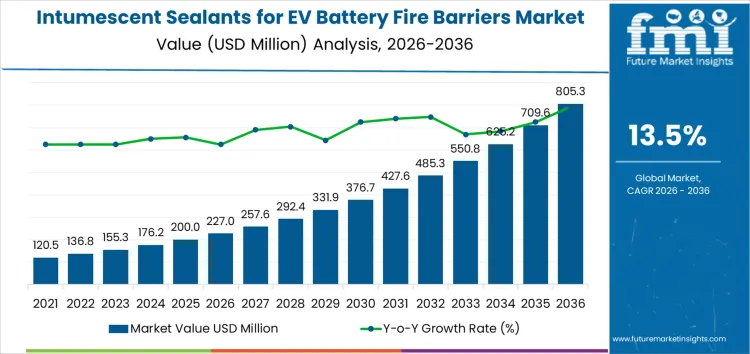
The intumescent sealants for EV battery fire barriers market is valued at USD 227 million in 2026 and is projected to reach USD 805.3 million by 2036, reflecting a CAGR of 13.5%. Pricing power is defended by suppliers whose products are embedded in certified battery safety architectures. Once sealants are validated through abuse testing and fire propagation trials, replacement risk becomes commercially unattractive. Dominant players leverage deep test data, program history, and early design participation to resist price erosion. Costs tied to fire testing, formulation stability, and liability exposure reinforce premium positioning. These factors allow leading suppliers to protect margins despite rising competitive interest.
Between 2026 and 2036, entry barriers remain high due to certification expense, long validation timelines, and OEM reluctance to requalify safety critical materials. Fragmentation persists because battery designs vary widely across platforms, chemistries, and enclosure layouts, preventing full standardization. Smaller specialists survive by targeting niche voltage classes or regional programs. At the same time, consolidation occurs within high volume platforms where scale supports repeated qualification investment. Geographic proximity to battery manufacturing hubs also shapes competitive access. The structure narrows selectively, favoring firms that balance regulatory depth, application support, and disciplined expansion without diluting safety credentials.
Quick Stats for Intumescent Sealants for EV Battery Fire Barriers Market
- Intumescent Sealants for EV Battery Fire Barriers Market Value (2026): USD 227 million
- Intumescent Sealants for EV Battery Fire Barriers Market Forecast Value (2036): USD 805.3 million
- Intumescent Sealants for EV Battery Fire Barriers Market Forecast CAGR (2026–2036): 13.5%
- Leading Type in Intumescent Sealants for EV Battery Fire Barriers Market: Intumescent coatings
- Key Growth Regions in Intumescent Sealants for EV Battery Fire Barriers Market: Asia Pacific, Europe, North America
- Top Players in Intumescent Sealants for EV Battery Fire Barriers Market: Sika AG, Pyrophobic Systems Ltd., Elkem ASA, H.B. Fuller Company, Dürr AG
What Is the Growth Forecast for Intumescent Sealants for EV Battery Fire Barriers Market through 2036?
Thermal runaway mitigation requirements and battery safety validation cycles shape the early growth phase of the intumescent sealants for EV battery fire barriers market between 2026 and 2031. During this period, the market expands from USD 227 million to USD 373 million, adding USD 146 million in value. Annual progression from USD 122 million to USD 227 million reflects rising integration of passive fire protection materials within battery packs as EV production scales. Historical growth was constrained by limited pack level fire barrier adoption and evolving safety standards. Forward expansion in this phase is supported by stricter fire containment expectations, increased use of cell to pack architectures, and wider qualification of intumescent sealants across battery enclosure designs.
Pack architecture evolution and regulatory tightening drive growth from 2031 to 2036. Over this period, the market increases from USD 373 million to USD 805.3 million, adding USD 432 million and representing the faster expansion window. Annual values rise from USD 422 million to USD 805.3 million, indicating strong year over year compounding. Earlier demand focused on premium EV platforms, while future growth reflects broader deployment across mass market electric vehicles. Higher energy density batteries, longer vehicle lifecycles, and increased emphasis on fire propagation control support sustained expansion as intumescent sealants become standard components of EV battery fire barrier systems.
Intumescent Sealants for EV Battery Fire Barriers Market Key Takeaways
| Metric | Value |
|---|---|
| Market Value (2026) | USD 227 million |
| Forecast Value (2036) | USD 805.3 million |
| Forecast CAGR (2026–2036) | 13.5% |
What Is Driving Demand in the Intumescent Sealants for EV Battery Fire Barriers Market?
Demand for intumescent sealants in electric vehicle (EV) battery fire barriers is driven by evolving safety challenges inherent to high-energy battery systems rather than general sealant demand. Lithium-ion and related chemistries used in EV packs can undergo thermal runaway under abuse, leading to rapid temperature escalation and flammable gas release. Conventional sealants often lack the reactive expansion and insulating properties needed to slow heat transfer and block flame propagation between adjacent cells or modules. Early adoption of intumescent sealants occurred where prototype battery systems exhibited safety failures in thermal tests, prompting adoption of materials that expand under heat to form char layers that protect adjacent structures. Demand therefore arose from specific safety performance gaps in early battery designs rather than broad bonding requirements.
Future growth will be shaped by formalised battery safety standards, certification protocols, and integration into EV pack design specifications rather than incremental fire risk mitigation measures alone. Regulators and standards bodies are defining performance thresholds for thermal barrier systems, including how cells are isolated to prevent cascade failures. Automakers and battery manufacturers are specifying intumescent sealants as part of multi-layer fire barrier architectures that include structural supports, phase change materials, and venting channels. Advances in reactive polymer formulations are improving expansion control, adhesion to diverse substrates, and stability under vibration and thermal cycling. Market expansion will follow documented compliance with fire safety tests and certification outcomes rather than experimental use, positioning intumescent sealants as integral components of defined EV battery safety systems.
What Factors Are Affecting the Demand for Intumescent Sealants for EV Battery Fire Barriers Market in Terms of Coating Type and Application?
The intumescent sealants market for EV battery fire barriers is driven by thermal runaway risk, evolving battery safety regulations, and higher energy density pack designs. Demand focuses on materials that expand predictably under heat to delay fire propagation and protect adjacent components. Adoption depends on fire resistance certification, compatibility with battery assembly processes, and durability under vibration and thermal cycling. Market leadership reflects validated fire performance and integration reliability rather than coating thickness or material novelty.
What Is Driving Leadership by Coating Type in the Intumescent Sealants for EV Battery Fire Barriers Market?
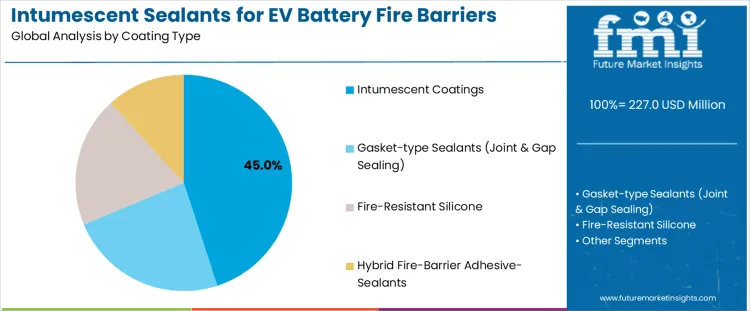
intumescent coatings account for about 45% of demand because they provide active fire protection by expanding rapidly when exposed to high temperatures. This expansion forms an insulating char layer that slows heat transfer and flame spread between battery cells. EV manufacturers favor intumescent coatings due to their predictable activation behavior and ability to be applied as thin layers without adding significant weight. These coatings integrate well with wraps, films, and coated barriers used inside battery packs. Established fire testing data and growing regulatory acceptance reinforce adoption. Their effectiveness in delaying thermal runaway propagation supports use across multiple pack designs, positioning intumescent coatings as the primary fire barrier material.
Gasket-type sealants, fire-resistant silicones, and hybrid adhesive-sealants serve complementary roles. Gasket sealants address joint sealing rather than active expansion. Silicone systems provide heat resistance but limited intumescence. Hybrid systems combine sealing and fire resistance but are applied selectively. These alternatives support specific design needs but do not replace intumescent coatings as the primary fire barrier solution. Coating leadership therefore reflects active protection capability, certification readiness, and adaptability across battery architectures rather than passive heat resistance alone.
What Is Driving Leadership by Application in the Intumescent Sealants for EV Battery Fire Barriers Market?
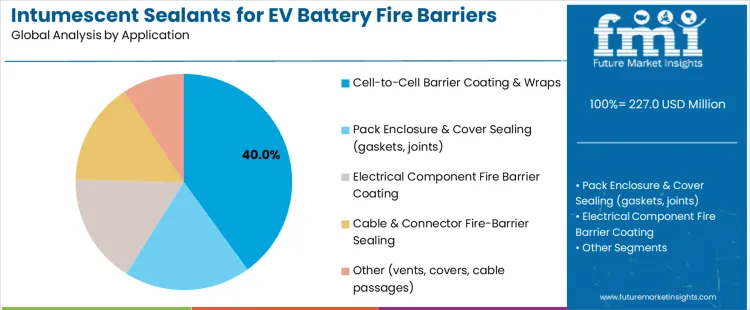
Cell-to-cell barrier coatings and wraps represent about 40% of demand because preventing fire propagation between adjacent cells is a central safety objective. Thermal runaway typically originates at the cell level, making localized barriers critical. Intumescent materials applied between cells expand during failure events, creating separation that slows escalation. High cell counts in modern battery packs increase reliance on this application. Manufacturers prioritize solutions that can be applied consistently during module assembly without disrupting production flow.
Pack enclosure sealing, electrical component barriers, and cable sealing represent secondary applications. These areas focus on containing fire within the pack and protecting surrounding systems. While essential for overall safety, they involve smaller material volumes and are often addressed after cell-level protection is established. Application leadership therefore reflects proximity to thermal runaway origin and volume of deployment rather than total number of fire barrier locations within the battery system.
How Are Intumescent Sealants for EV Battery Fire Barriers Being Applied Across Electric Vehicle Manufacturing?
Use appears in electric vehicle battery packs where fire safety is critical to protect cells and modules from thermal runaway. Manufacturers adopt intumescent sealants to expand under high temperature, creating a barrier that slows heat and flame propagation. OEMs integrate these sealants around battery enclosures, junctions, and high-voltage components to enhance passenger safety and meet regulatory fire standards. These applications reflect operational and safety priorities rather than aesthetic objectives, with adoption driven by thermal protection, compliance, and battery system reliability.
What Operational and Material Conditions Support Adoption of Intumescent Sealants for EV Battery Fire Barriers?
Selection aligns with battery packs requiring adhesion to metals, plastics, and composites while maintaining thermal and chemical stability. Sealants are optimized for expansion rate, char formation, and mechanical flexibility under vibration and thermal cycling. Assembly lines monitor precise application, curing, and uniform coverage to ensure barrier integrity. Quality control evaluates fire resistance, thermal insulation, and adhesion performance in compliance with ISO, UL, or regional automotive safety standards. These conditions emerge from operational reliability, fire safety, and regulatory compliance priorities in structured EV manufacturing workflows.
Which Practical Considerations Limit Wider Use of Intumescent Sealants for EV Battery Fire Barriers?
High material and processing costs restrict adoption to premium or high-performance EVs. Compatibility with diverse battery pack materials, adhesives, and coatings must be verified. Precise application, curing, and inspection are required to maintain performance. Regulatory approvals for fire safety certification vary by region and battery type. These factors lead to selective deployment where thermal protection, battery safety, and compliance justify incremental cost and operational oversight.
What is the Demand for Intumescent Sealants for EV Battery Fire Barriers by Country?
| Country | CAGR (%) |
|---|---|
| China | 15.0% |
| USA | 12.0% |
| Germany | 11.2% |
| Japan | 10.5% |
| South Korea | 10.0% |
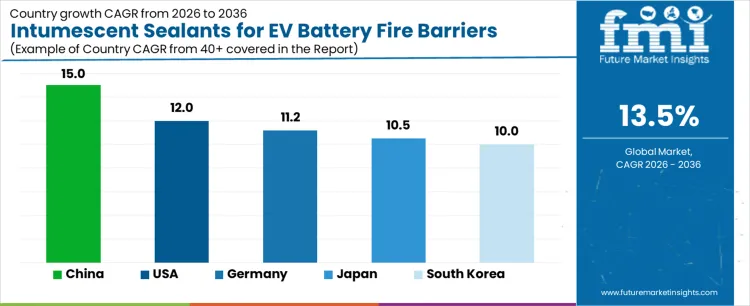
The demand for intumescent sealants for EV battery fire barriers varies across countries, driven by electric vehicle adoption, battery safety regulations, and fire protection requirements. China leads with a 15.0% CAGR, supported by rapid EV production, government safety regulations, and growing adoption of advanced fire barrier technologies. The USA follows at 12.0%, driven by EV manufacturing, safety compliance, and adoption of protective materials in battery assemblies. Germany records 11.2%, shaped by automotive electrification, regulatory requirements, and fire safety standards. Japan posts 10.5%, supported by EV production and battery safety initiatives. South Korea grows at 10.0%, reflecting industrial EV battery manufacturing and fire protection adoption.
How Are Intumescent Sealants for EV Battery Fire Barriers Expanding in China?
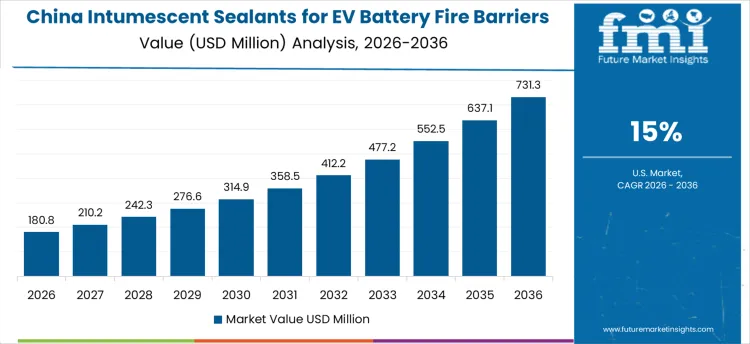
In China, the Intumescent Sealants for EV Battery Fire Barriers Market is growing at a CAGR of 15% through 2036, fueled by rapid expansion of electric vehicle production and stringent battery safety requirements. Manufacturers are integrating intumescent sealants to enhance fire resistance, prevent thermal runaway, and maintain structural integrity in battery modules. Demand is concentrated in automotive EV hubs, battery manufacturing clusters, and industrial adhesive suppliers. Compared to the USA, China emphasizes large-scale industrial integration and high-volume adoption. Domestic suppliers provide high-performance, thermally reactive sealants suitable for recurring battery assembly and rigorous safety testing cycles.
- Automotive EV hubs, battery manufacturing clusters, and industrial adhesive suppliers drive adoption
- Sealants improve fire resistance, thermal protection, and structural integrity
- Domestic suppliers provide high-performance, thermally reactive solutions
- Recurring battery assembly and safety testing cycles sustain rapid adoption
How Are EV Production and Regulatory Standards Driving Growth in the United States?
In the United States, revenue is growing at a CAGR of 12% through 2036, supported by increasing EV manufacturing, industrial battery production, and stringent fire safety regulations. OEMs and tier-one suppliers are adopting intumescent sealants to mitigate fire risk, ensure thermal stability, and meet compliance standards in battery packs. Demand is concentrated in automotive manufacturing hubs, battery production facilities, and EV component assembly plants. Compared to Germany, adoption in the U.S. balances operational efficiency with regulatory compliance. Domestic suppliers provide high-performance sealants compatible with automated assembly lines and recurring battery production cycles.
- Automotive hubs, battery production facilities, and EV assembly plants drive adoption
- Sealants enhance fire resistance and thermal stability
- Domestic suppliers provide high-performance, automated-compatible solutions
- Recurring battery production cycles sustain adoption
How Are Safety Standards and EV Manufacturing Driving Adoption in Germany?
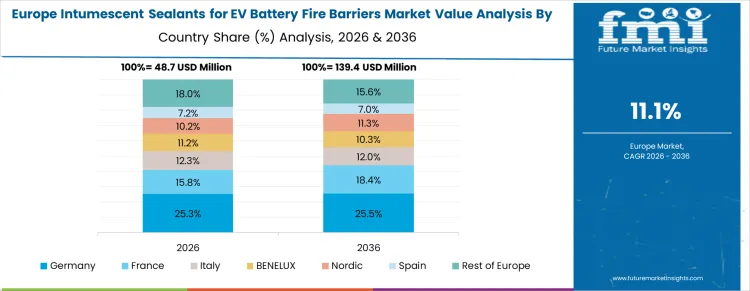
In Germany, the market is expanding at a CAGR of 11.2% through 2036, driven by strict EU fire safety standards, automotive battery regulations, and industrial compliance mandates. Manufacturers are integrating intumescent sealants in EV battery modules to ensure thermal protection, fire containment, and structural integrity. Demand is concentrated in automotive hubs, battery production clusters, and industrial adhesive facilities. Compared to China, adoption is more compliance-focused than volume-focused. Domestic suppliers provide high-quality, EU-certified sealants compatible with recurring battery pack assembly and safety inspection processes.
- Automotive hubs, battery production clusters, and industrial adhesive facilities drive adoption
- Sealants ensure thermal protection, fire containment, and structural integrity
- Domestic suppliers provide EU-certified, high-performance solutions
- Recurring assembly and inspection cycles sustain adoption
How Are EV Battery Safety and Industrial Standards Driving Adoption in Japan?
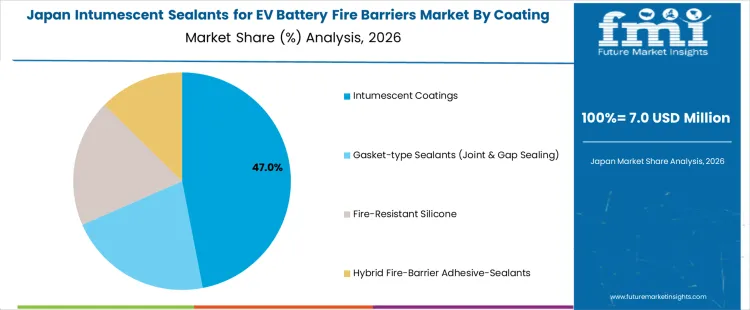
In Japan, revenue is growing at a CAGR of 10.5% through 2036, supported by growth in electric vehicle manufacturing, industrial battery production, and domestic fire safety regulations. Manufacturers are adopting intumescent sealants to enhance fire resistance, prevent thermal runaway, and maintain reliability in battery modules. Demand is concentrated in automotive EV hubs, battery assembly facilities, and industrial adhesive suppliers. Compared to China, adoption focuses more on precision, regulatory compliance, and product reliability than large-scale volume. Domestic suppliers provide high-performance, chemically compatible sealants suitable for recurring battery assembly and safety verification cycles.
- Automotive EV hubs, battery assembly facilities, and industrial adhesive suppliers drive adoption
- Sealants improve fire resistance, thermal stability, and module reliability
- Domestic suppliers provide high-performance, chemically compatible solutions
- Recurring assembly and verification cycles sustain adoption
How Are Industrial Hubs and EV Manufacturing Supporting Market Growth in South Korea?
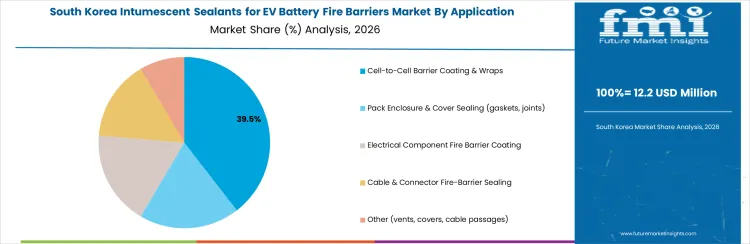
In South Korea, the market is expanding at a CAGR of 10% through 2036, driven by increasing production of EVs, industrial battery manufacturing, and renewable energy adoption. Manufacturers are integrating intumescent sealants in battery modules to ensure thermal protection, structural integrity, and fire resistance. Demand is concentrated in automotive EV hubs, battery production facilities, and industrial adhesive supply centers. Compared to Japan, adoption emphasizes industrial-scale integration and high-volume production. Domestic suppliers provide high-performance, chemically compatible sealants suitable for recurring battery pack assembly and rigorous safety testing cycles.
- Automotive EV hubs, battery production facilities, and industrial adhesive centers drive adoption
- Sealants ensure thermal protection, structural integrity, and fire resistance
- Domestic suppliers provide high-performance, chemically compatible solutions
- Recurring battery assembly and safety testing cycles sustain adoption
Which Strategic Approaches Define Competition in the Intumescent Sealants for EV Battery Fire Barriers Market under Thermal Runaway Scenarios?
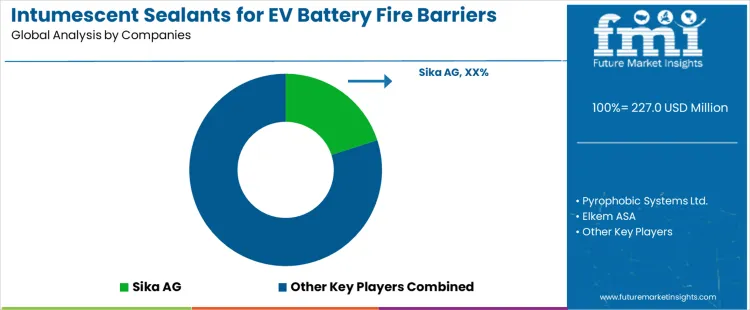
Competition in the intumescent sealants for EV battery fire barriers market is defined by response behavior during failure events rather than routine sealing performance. Sika AG and H.B. Fuller Company position their sealants around controlled expansion, adhesion retention, and gap sealing when exposed to rapid heat escalation. Their strategies focus on predictable intumescence onset temperatures and stable char formation that maintains compartmentalization during thermal runaway. Qualification is driven by propagation delay, smoke control contribution, and compatibility with battery pack materials rather than conventional fire ratings alone. OEMs evaluate suppliers based on repeatability across test protocols and confidence that sealants will perform consistently across pack geometries and cell configurations.
Specialist and system oriented players apply distinct competitive approaches. Pyrophobic Systems Ltd. emphasizes fire barrier performance derived from materials engineered specifically for extreme heat exposure, prioritizing expansion reliability over multifunctionality. Elkem ASA competes through silicone based chemistries that combine intumescence with long term elasticity, supporting durability across thermal cycling before any fire event occurs. Dürr AG participates from a systems perspective, aligning sealants with automated application, curing, and quality control processes used in battery assembly lines. Across the market, strategies favor early engagement in battery pack design, extensive abuse testing, and conservative formulation changes. Competitive advantage depends on demonstrated performance during worst case scenarios, integration with manufacturing workflows, and validation depth rather than breadth of sealant portfolios.
Key Players in the Intumescent Sealants for EV Battery Fire Barriers Market
- Sika AG
- Pyrophobic Systems Ltd.
- Elkem ASA
- H.B. Fuller Company
- Dürr AG
Scope of the Report
| Items | Values |
|---|---|
| Quantitative Units (2026) | USD million |
| Type | Intumescent Coatings, Gasket-Type Sealants for Joints and Gaps, Fire-Resistant Silicone Sealants, Hybrid Fire-Barrier Adhesive Sealants |
| Application | Cell-to-Cell Barrier Coatings and Wraps, Pack Enclosure and Cover Sealing, Electrical Component Fire Barrier Coatings, Cable and Connector Fire-Barrier Sealing, Other Battery Vent and Passage Barriers |
| End Users | EV OEMs, Battery Pack Manufacturers, Tier-1 Battery System Integrators, Automotive Fire Safety Component Suppliers |
| Regions Covered | Asia Pacific, Europe, North America, Latin America, Middle East and Africa |
| Countries Covered | China, United States, Germany, Japan, South Korea, India, United Kingdom, France, Italy, Canada, Mexico, Brazil, ASEAN countries, GCC countries, and other global regions |
| Key Companies Profiled | Sika AG, Pyrophobic Systems Ltd., Elkem ASA, H.B. Fuller Company, Dürr AG |
| Additional Attributes | Dollar by sales across coating type and application, fire propagation and thermal runaway test requirements, battery safety certification and validation timelines, integration with EV battery pack assembly workflows, regional demand trends across passenger and commercial electric vehicles |
Intumescent Sealants for EV Battery Fire Barriers Market Segmentation
Coating Type:
- Intumescent Coatings
- Gasket-type Sealants (Joint & Gap Sealing)
- Fire-Resistant Silicone
- Hybrid Fire-Barrier Adhesive-Sealants
Application:
- Cell-to-Cell Barrier Coating & Wraps
- Pack Enclosure & Cover Sealing (gaskets, joints)
- Electrical Component Fire Barrier Coating
- Cable & Connector Fire-Barrier Sealing
- Other (vents, covers, cable passages)
Vehicle Type:
- Battery Electric Vehicles (BEVs)
- Plug-in Hybrid EVs (PHEVs)
- Commercial EVs (Buses, Vans, Trucks)
- Other
Region
Asia Pacific
- China
- Japan
- South Korea
- India
- Australia & New Zealand
- ASEAN
- Rest of Asia Pacific
Europe
- Germany
- United Kingdom
- France
- Italy
- Spain
- Nordic
- BENELUX
- Rest of Europe
North America
- United States
- Canada
- Mexico
Latin America
- Brazil
- Chile
- Rest of Latin America
Middle East & Africa
- Kingdom of Saudi Arabia
- Other GCC Countries
- Turkey
- South Africa
- Other African Union
- Rest of Middle East & Africa
Frequently Asked Questions
How big is the intumescent sealants for EV battery fire barriers market in 2026?
The global intumescent sealants for EV battery fire barriers market is estimated to be valued at USD 227.0 million in 2026.
What will be the size of intumescent sealants for EV battery fire barriers market in 2036?
The market size for the intumescent sealants for EV battery fire barriers market is projected to reach USD 805.3 million by 2036.
How much will be the intumescent sealants for EV battery fire barriers market growth between 2026 and 2036?
The intumescent sealants for EV battery fire barriers market is expected to grow at a 13.5% CAGR between 2026 and 2036.
What are the key product types in the intumescent sealants for EV battery fire barriers market?
The key product types in intumescent sealants for EV battery fire barriers market are intumescent coatings , gasket-type sealants (joint & gap sealing), fire-resistant silicone and hybrid fire-barrier adhesive-sealants .
Which application segment to contribute significant share in the intumescent sealants for EV battery fire barriers market in 2026?
In terms of application, cell-to-cell barrier coating & wraps segment to command 40.0% share in the intumescent sealants for EV battery fire barriers market in 2026.
Preview the report firsthand - request a free sample
Get SampleGet the brochure for pricing and purchase details.
Get PDFTable of Content
- Executive Summary
- Global Market Outlook
- Demand-side Trends
- Supply-side Trends
- Technology Roadmap Analysis
- Analysis and Recommendations
- Market Overview
- Market Coverage / Taxonomy
- Market Definition / Scope / Limitations
- Market Background
- Market Dynamics
- Drivers
- Restraints
- Opportunity
- Trends
- Scenario Forecast
- Demand in Optimistic Scenario
- Demand in Likely Scenario
- Demand in Conservative Scenario
- Opportunity Map Analysis
- Product Life Cycle Analysis
- Supply Chain Analysis
- Investment Feasibility Matrix
- Value Chain Analysis
- PESTLE and Porter’s Analysis
- Regulatory Landscape
- Regional Parent Market Outlook
- Production and Consumption Statistics
- Import and Export Statistics
- Market Dynamics
- Global Market Analysis 2021 to 2025 and Forecast, 2026 to 2036
- Historical Market Size Value (USD Million) Analysis, 2021 to 2025
- Current and Future Market Size Value (USD Million) Projections, 2026 to 2036
- Y-o-Y Growth Trend Analysis
- Absolute $ Opportunity Analysis
- Global Market Pricing Analysis 2021 to 2025 and Forecast 2026 to 2036
- Global Market Analysis 2021 to 2025 and Forecast 2026 to 2036, By Coating Type
- Introduction / Key Findings
- Historical Market Size Value (USD Million) Analysis By Coating Type , 2021 to 2025
- Current and Future Market Size Value (USD Million) Analysis and Forecast By Coating Type , 2026 to 2036
- Intumescent Coatings
- Gasket-type Sealants (Joint & Gap Sealing)
- Fire-Resistant Silicone
- Hybrid Fire-Barrier Adhesive-Sealants
- Intumescent Coatings
- Y-o-Y Growth Trend Analysis By Coating Type , 2021 to 2025
- Absolute $ Opportunity Analysis By Coating Type , 2026 to 2036
- Global Market Analysis 2021 to 2025 and Forecast 2026 to 2036, By Application
- Introduction / Key Findings
- Historical Market Size Value (USD Million) Analysis By Application, 2021 to 2025
- Current and Future Market Size Value (USD Million) Analysis and Forecast By Application, 2026 to 2036
- Cell-to-Cell Barrier Coating & Wraps
- Pack Enclosure & Cover Sealing (gaskets, joints)
- Electrical Component Fire Barrier Coating
- Cable & Connector Fire-Barrier Sealing
- Other (vents, covers, cable passages)
- Cell-to-Cell Barrier Coating & Wraps
- Y-o-Y Growth Trend Analysis By Application, 2021 to 2025
- Absolute $ Opportunity Analysis By Application, 2026 to 2036
- Global Market Analysis 2021 to 2025 and Forecast 2026 to 2036, By Vehicle Type
- Introduction / Key Findings
- Historical Market Size Value (USD Million) Analysis By Vehicle Type, 2021 to 2025
- Current and Future Market Size Value (USD Million) Analysis and Forecast By Vehicle Type, 2026 to 2036
- Battery Electric Vehicles (BEVs)
- Plug-in Hybrid EVs (PHEVs)
- Commercial EVs (Buses, Vans, Trucks)
- Other
- Battery Electric Vehicles (BEVs)
- Y-o-Y Growth Trend Analysis By Vehicle Type, 2021 to 2025
- Absolute $ Opportunity Analysis By Vehicle Type, 2026 to 2036
- Global Market Analysis 2021 to 2025 and Forecast 2026 to 2036, By Region
- Introduction
- Historical Market Size Value (USD Million) Analysis By Region, 2021 to 2025
- Current Market Size Value (USD Million) Analysis and Forecast By Region, 2026 to 2036
- North America
- Latin America
- Western Europe
- Eastern Europe
- East Asia
- South Asia and Pacific
- Middle East & Africa
- Market Attractiveness Analysis By Region
- North America Market Analysis 2021 to 2025 and Forecast 2026 to 2036, By Country
- Historical Market Size Value (USD Million) Trend Analysis By Market Taxonomy, 2021 to 2025
- Market Size Value (USD Million) Forecast By Market Taxonomy, 2026 to 2036
- By Country
- USA
- Canada
- Mexico
- By Coating Type
- By Application
- By Vehicle Type
- By Country
- Market Attractiveness Analysis
- By Country
- By Coating Type
- By Application
- By Vehicle Type
- Key Takeaways
- Latin America Market Analysis 2021 to 2025 and Forecast 2026 to 2036, By Country
- Historical Market Size Value (USD Million) Trend Analysis By Market Taxonomy, 2021 to 2025
- Market Size Value (USD Million) Forecast By Market Taxonomy, 2026 to 2036
- By Country
- Brazil
- Chile
- Rest of Latin America
- By Coating Type
- By Application
- By Vehicle Type
- By Country
- Market Attractiveness Analysis
- By Country
- By Coating Type
- By Application
- By Vehicle Type
- Key Takeaways
- Western Europe Market Analysis 2021 to 2025 and Forecast 2026 to 2036, By Country
- Historical Market Size Value (USD Million) Trend Analysis By Market Taxonomy, 2021 to 2025
- Market Size Value (USD Million) Forecast By Market Taxonomy, 2026 to 2036
- By Country
- Germany
- UK
- Italy
- Spain
- France
- Nordic
- BENELUX
- Rest of Western Europe
- By Coating Type
- By Application
- By Vehicle Type
- By Country
- Market Attractiveness Analysis
- By Country
- By Coating Type
- By Application
- By Vehicle Type
- Key Takeaways
- Eastern Europe Market Analysis 2021 to 2025 and Forecast 2026 to 2036, By Country
- Historical Market Size Value (USD Million) Trend Analysis By Market Taxonomy, 2021 to 2025
- Market Size Value (USD Million) Forecast By Market Taxonomy, 2026 to 2036
- By Country
- Russia
- Poland
- Hungary
- Balkan & Baltic
- Rest of Eastern Europe
- By Coating Type
- By Application
- By Vehicle Type
- By Country
- Market Attractiveness Analysis
- By Country
- By Coating Type
- By Application
- By Vehicle Type
- Key Takeaways
- East Asia Market Analysis 2021 to 2025 and Forecast 2026 to 2036, By Country
- Historical Market Size Value (USD Million) Trend Analysis By Market Taxonomy, 2021 to 2025
- Market Size Value (USD Million) Forecast By Market Taxonomy, 2026 to 2036
- By Country
- China
- Japan
- South Korea
- By Coating Type
- By Application
- By Vehicle Type
- By Country
- Market Attractiveness Analysis
- By Country
- By Coating Type
- By Application
- By Vehicle Type
- Key Takeaways
- South Asia and Pacific Market Analysis 2021 to 2025 and Forecast 2026 to 2036, By Country
- Historical Market Size Value (USD Million) Trend Analysis By Market Taxonomy, 2021 to 2025
- Market Size Value (USD Million) Forecast By Market Taxonomy, 2026 to 2036
- By Country
- India
- ASEAN
- Australia & New Zealand
- Rest of South Asia and Pacific
- By Coating Type
- By Application
- By Vehicle Type
- By Country
- Market Attractiveness Analysis
- By Country
- By Coating Type
- By Application
- By Vehicle Type
- Key Takeaways
- Middle East & Africa Market Analysis 2021 to 2025 and Forecast 2026 to 2036, By Country
- Historical Market Size Value (USD Million) Trend Analysis By Market Taxonomy, 2021 to 2025
- Market Size Value (USD Million) Forecast By Market Taxonomy, 2026 to 2036
- By Country
- Kingdom of Saudi Arabia
- Other GCC Countries
- Turkiye
- South Africa
- Other African Union
- Rest of Middle East & Africa
- By Coating Type
- By Application
- By Vehicle Type
- By Country
- Market Attractiveness Analysis
- By Country
- By Coating Type
- By Application
- By Vehicle Type
- Key Takeaways
- Key Countries Market Analysis
- USA
- Pricing Analysis
- Market Share Analysis, 2025
- By Coating Type
- By Application
- By Vehicle Type
- Canada
- Pricing Analysis
- Market Share Analysis, 2025
- By Coating Type
- By Application
- By Vehicle Type
- Mexico
- Pricing Analysis
- Market Share Analysis, 2025
- By Coating Type
- By Application
- By Vehicle Type
- Brazil
- Pricing Analysis
- Market Share Analysis, 2025
- By Coating Type
- By Application
- By Vehicle Type
- Chile
- Pricing Analysis
- Market Share Analysis, 2025
- By Coating Type
- By Application
- By Vehicle Type
- Germany
- Pricing Analysis
- Market Share Analysis, 2025
- By Coating Type
- By Application
- By Vehicle Type
- UK
- Pricing Analysis
- Market Share Analysis, 2025
- By Coating Type
- By Application
- By Vehicle Type
- Italy
- Pricing Analysis
- Market Share Analysis, 2025
- By Coating Type
- By Application
- By Vehicle Type
- Spain
- Pricing Analysis
- Market Share Analysis, 2025
- By Coating Type
- By Application
- By Vehicle Type
- France
- Pricing Analysis
- Market Share Analysis, 2025
- By Coating Type
- By Application
- By Vehicle Type
- India
- Pricing Analysis
- Market Share Analysis, 2025
- By Coating Type
- By Application
- By Vehicle Type
- ASEAN
- Pricing Analysis
- Market Share Analysis, 2025
- By Coating Type
- By Application
- By Vehicle Type
- Australia & New Zealand
- Pricing Analysis
- Market Share Analysis, 2025
- By Coating Type
- By Application
- By Vehicle Type
- China
- Pricing Analysis
- Market Share Analysis, 2025
- By Coating Type
- By Application
- By Vehicle Type
- Japan
- Pricing Analysis
- Market Share Analysis, 2025
- By Coating Type
- By Application
- By Vehicle Type
- South Korea
- Pricing Analysis
- Market Share Analysis, 2025
- By Coating Type
- By Application
- By Vehicle Type
- Russia
- Pricing Analysis
- Market Share Analysis, 2025
- By Coating Type
- By Application
- By Vehicle Type
- Poland
- Pricing Analysis
- Market Share Analysis, 2025
- By Coating Type
- By Application
- By Vehicle Type
- Hungary
- Pricing Analysis
- Market Share Analysis, 2025
- By Coating Type
- By Application
- By Vehicle Type
- Kingdom of Saudi Arabia
- Pricing Analysis
- Market Share Analysis, 2025
- By Coating Type
- By Application
- By Vehicle Type
- Turkiye
- Pricing Analysis
- Market Share Analysis, 2025
- By Coating Type
- By Application
- By Vehicle Type
- South Africa
- Pricing Analysis
- Market Share Analysis, 2025
- By Coating Type
- By Application
- By Vehicle Type
- USA
- Market Structure Analysis
- Competition Dashboard
- Competition Benchmarking
- Market Share Analysis of Top Players
- By Regional
- By Coating Type
- By Application
- By Vehicle Type
- Competition Analysis
- Competition Deep Dive
- Sika AG
- Overview
- Product Portfolio
- Profitability by Market Segments (Product/Age /Sales Channel/Region)
- Sales Footprint
- Strategy Overview
- Marketing Strategy
- Product Strategy
- Channel Strategy
- Pyrophobic Systems Ltd.
- Elkem ASA
- H.B. Fuller Company
- Dürr AG
- Sika AG
- Competition Deep Dive
- Assumptions & Acronyms Used
- Research Methodology


