

- Industry Size (2026)
- USD 2400.0 Mn
- Forecast (2036)
- USD 6225.0 Mn
- CAGR (2026 to 2036)
- 10.0%
Battery Pack Foils Market Size, Market Forecast and Outlook By FMI
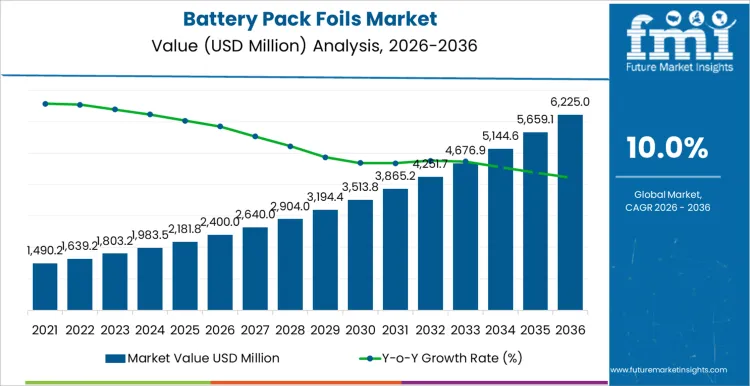
The battery pack foils market represents a critical materials segment within the rapidly expanding electric vehicle and energy storage ecosystem, positioned for substantial growth from USD 2,400.0 million in 2026 to USD 6,225.0 million by 2036, achieving a compound annual growth rate of 10.0% throughout the forecast period. This specialized market encompasses engineered metallic foil products that serve essential functions within lithium-ion battery pack assemblies including thermal management, electromagnetic interference shielding, safety containment, and structural reinforcement. The market's expansion reflects the increasing sophistication of battery pack designs that require specialized foil solutions to address thermal runaway risks, electromagnetic compatibility requirements, and mechanical protection challenges inherent in high-energy-density battery systems.
Summary of Battery Pack Foils Market
- Market Introduction
- The Battery Pack Foils Market is valued at USD 2,400.0 million in 2026.
- The Battery Pack Foils Market is projected to reach USD 6,225.0 million by 2036 at a CAGR of 10.0%.
- Battery pack foils are engineered metallic products used in lithium-ion battery assemblies for thermal management, EMI shielding, safety containment, and structural reinforcement.
- Demand and Growth Drivers
- Thermal management complexity in high-energy-density battery packs drives demand for specialized foil solutions.
- Electric vehicle adoption and energy storage expansion are key growth drivers for the Battery Pack Foils Market.
- Automotive safety standards such as FMVSS 305 require foil materials to meet crash, thermal, and electrical safety tests.
- Product and Segment View
- Aluminum pack foils hold the largest share at 44.0% due to thermal conductivity and EMI shielding properties.
- Thermal interface and heat spreading applications represent 34.0% of the market.
- Coil and roll supply formats account for 58.0% of the market for efficient manufacturing integration.
- Electric vehicle packs dominate end use with a 66.0% share.
- Geography and Competitive Outlook
- China leads with a CAGR of 11.2%, followed by the USA at 9.8% and the U.K. at 9.7%.
- Germany’s market grows at 9.6% CAGR, while Japan’s expands at 8.5% CAGR.
- Key companies include Hydro, Novelis, UACJ, Nippon Foil, and Showa Denko Materials, competing on performance, scale, and technical support.
Battery pack foils differ fundamentally from electrode foils used within individual cells, instead focusing on pack-level applications where mechanical properties, thermal conductivity, electromagnetic shielding effectiveness, and manufacturing compatibility become paramount considerations. Modern electric vehicle battery packs contain hundreds or thousands of individual cells that generate substantial heat during operation while requiring protection from electromagnetic interference and mechanical damage. Advanced foil solutions enable battery pack designers to manage these challenges through carefully engineered material properties including controlled thermal conductivity, electromagnetic shielding characteristics, and mechanical strength optimized for specific pack architectures and operating environments.
Battery Pack Foils Market Key Takeaways
| Metric | Value |
|---|---|
| Market Value (2026) | USD 2,400.0 million |
| Market Forecast Value (2036) | USD 6,225.0 million |
| Forecast CAGR 2026 to 2036 | 10.0% |
Why Is Thermal Management Complexity Driving Foil Innovation?
The exponential increase in battery pack energy densities creates unprecedented thermal management challenges that conventional cooling systems cannot address effectively without specialized foil solutions engineered for high-performance heat distribution and thermal interface applications.
Modern electric vehicle battery packs generate heat loads approaching 50 kW during fast charging and aggressive acceleration scenarios while requiring temperature uniformity within 5°C across hundreds of cells to prevent capacity imbalances and safety risks. Traditional thermal management approaches using cooling plates and fins prove inadequate for managing these thermal loads without sophisticated foil-based thermal interface materials that distribute heat efficiently while maintaining electrical isolation between high-voltage components.
How Is the Market Structured Across Functional Requirements?
The battery pack foils market demonstrates sophisticated segmentation reflecting diverse functional requirements within modern battery pack architectures where multiple foil types address specific engineering challenges related to thermal management, electromagnetic compatibility, mechanical protection, and manufacturing optimization.
Market structure encompasses foil type categories representing different material solutions, application classifications addressing specific functional requirements, and supply form categories enabling various manufacturing and installation strategies. This multidimensional segmentation reflects the specialized nature of battery pack applications where generic foil solutions prove inadequate for addressing specific performance and safety requirements.
Which Foil Material Platform Dominates Applications?
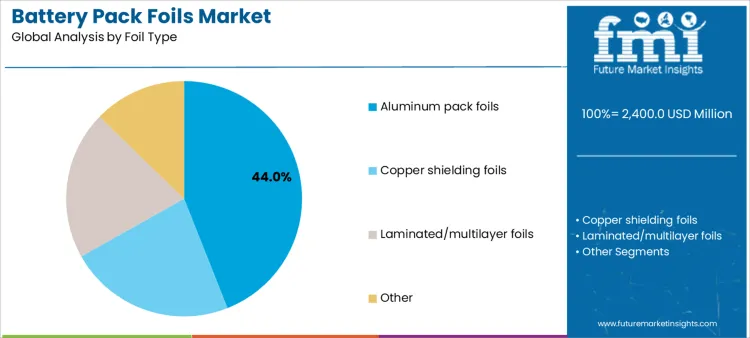
Aluminum pack foils command 44.0% market share, representing the largest segment due to aluminum's exceptional combination of thermal conductivity, electromagnetic shielding effectiveness, corrosion resistance, and cost efficiency for diverse battery pack applications.
Aluminum foils provide thermal conductivity approaching 200 W/mK while offering excellent formability that enables complex geometries required for battery pack thermal management systems. The material's natural oxide layer provides corrosion protection while specialized alloy compositions optimize mechanical properties for specific application requirements including thermal interface materials, EMI shielding, and structural reinforcement.
Which Application Category Drives Market Demand?
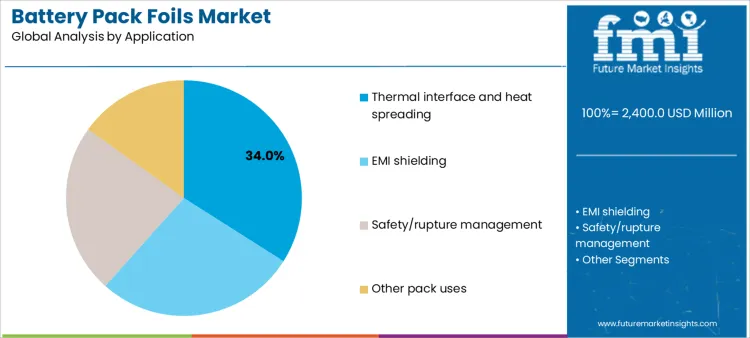
Thermal interface and heat spreading applications dominate with 34.0% market share, reflecting the critical importance of thermal management in modern battery pack designs where inadequate heat distribution can compromise performance, safety, and component life.
These applications require foils with exceptional thermal conductivity, mechanical conformability, and long-term stability under thermal cycling conditions typical of automotive battery operation. Thermal interface foils fill gaps between battery modules and cooling systems while distributing heat across large surfaces to prevent hotspot formation that can trigger thermal runaway events.
Which Supply Format Optimizes Manufacturing Integration?
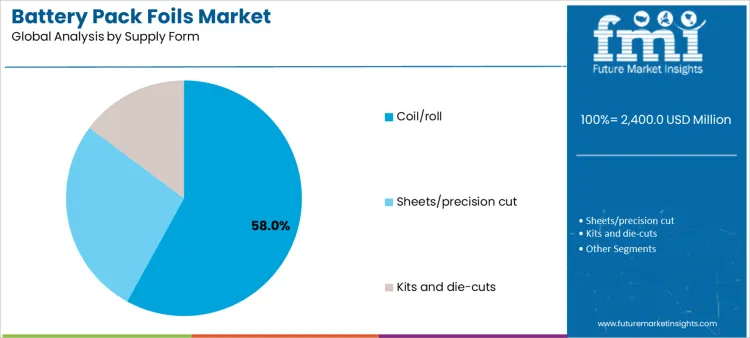
Coil and roll formats dominate with 58.0% market share, representing the preferred supply method due to manufacturing efficiency advantages including automated handling, continuous processing capability, and optimized material utilization during battery pack assembly operations.
Roll-form foils enable high-speed processing through automated cutting, forming, and placement systems that reduce labor costs while improving consistency and quality control. The continuous supply format minimizes material waste while enabling just-in-time inventory management that reduces working capital requirements.
Which End Use Segment Leads Market Expansion?
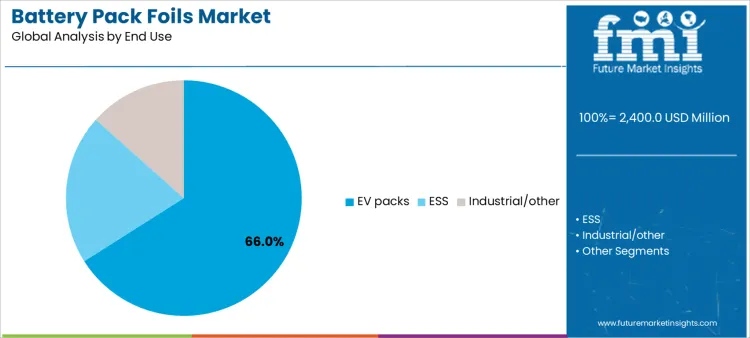
Electric vehicle packs dominate with 66.0% market share, reflecting the automotive industry's massive investment in electric vehicle development and the demanding requirements for battery pack thermal management, electromagnetic shielding, and safety protection in automotive applications.
EV battery packs require foil solutions that meet automotive quality standards including long-term reliability, environmental resistance, and safety performance under extreme operating conditions. Automotive applications drive the largest volume demand while requiring the most sophisticated foil technologies due to safety, performance, and durability requirements.
How are Automotive Safety Standards Reshaping Foil Requirements?
The evolution of automotive safety standards for electric vehicles creates increasingly stringent requirements for battery pack foil applications that address thermal runaway containment, electromagnetic compatibility, and mechanical protection under crash conditions. New regulatory frameworks including FMVSS 305 and equivalent international standards mandate comprehensive testing of battery pack materials including foils under abuse conditions that simulate real-world emergency scenarios. These standards require demonstration of controlled failure modes, hazard containment, and emergency response compatibility that influence foil selection and design approaches.
Advanced safety testing protocols evaluate foil performance under conditions including mechanical crushing, thermal exposure, electrical overload, and environmental contamination that can occur during vehicle accidents or component failures. Foil suppliers must provide comprehensive test data demonstrating material behavior under these extreme conditions while maintaining normal operation characteristics during routine use. Safety standard compliance often requires specialized material formulations and testing capabilities that create barriers to entry while rewarding suppliers with proven safety performance.
Do Manufacturing Scale Requirements Drive Technology Innovation?
The transition from prototype to mass production in electric vehicle manufacturing creates unprecedented demands for foil suppliers to achieve consistent quality, high throughput, and competitive costs across gigawatt-hour scale battery production facilities. Manufacturing scale requirements drive innovation in foil production technologies including continuous processing methods, automated quality control systems, and integrated supply chain solutions that support automotive production volumes while maintaining consistent material properties.
High-volume manufacturing demands for battery pack foils include dimensional consistency, surface quality control, and mechanical property uniformity that require sophisticated production methods and quality assurance systems. Suppliers must demonstrate capability for sustained production at automotive volumes while maintaining quality standards essential for safety and performance. Scale manufacturing often favors suppliers with established production infrastructure and proven capability for managing complex supply chain requirements typical of automotive industry relationships.
How do Cost Pressures Influence Material Selection?
The intense cost pressure facing battery pack manufacturers as they pursue mass-market electric vehicle pricing creates complex trade-offs between foil performance optimization and material cost minimization that influence technology development and supplier selection criteria. Battery pack foils represent a relatively small portion of total pack costs but can significantly impact overall performance and safety characteristics that affect vehicle competitiveness. Manufacturers must balance material costs against performance benefits while considering total cost implications including assembly complexity and reliability impacts.
Cost optimization drives development of simplified foil solutions that provide essential functionality while minimizing material costs and processing complexity. Suppliers who can demonstrate cost-effective solutions while maintaining performance requirements gain competitive advantages in price-sensitive automotive markets. Material substitution opportunities and alternative processing methods create opportunities for cost reduction while maintaining essential performance characteristics required for battery pack applications.
How Is the Battery Pack Foils Market Expected to Evolve Across Major Nations?
The global battery pack foils market exhibits distinct regional development patterns reflecting varying approaches to electric vehicle manufacturing, battery technology development, and materials supply chain strategies.
Regional market evolution encompasses both established automotive manufacturing centers implementing electric vehicle production and emerging markets developing domestic battery pack capabilities for strategic technology independence and economic development.
The geographic distribution reflects complex interactions between automotive industry presence, materials manufacturing capabilities, government policies supporting electric vehicle adoption, and access to aluminum and copper supply chains.
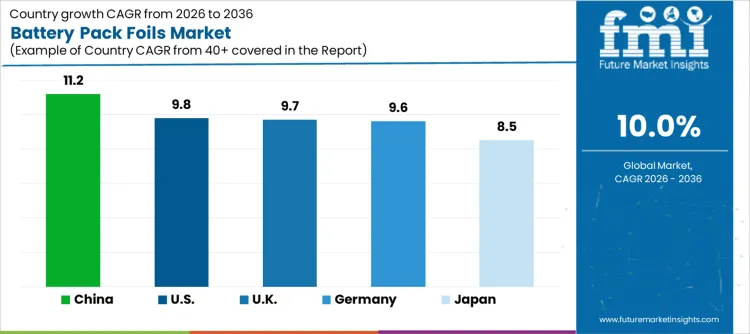
| Country | CAGR (%) |
|---|---|
| China | 11.2% |
| USA. | 9.8% |
| U.K. | 9.7% |
| Germany | 9.6% |
| Japan | 8.5% |
What Drives China's Market Dominance?
China's battery pack foils market is projected to achieve a CAGR of 11.2%, representing the highest growth rate globally and reflecting the country's leadership in electric vehicle production, battery manufacturing, and materials supply chain integration.
Chinese manufacturers benefit from comprehensive government support for electric vehicle development, substantial investments in battery pack production capacity, and established aluminum and copper foil processing industries that support domestic foil production. The market expansion is driven by major Chinese automotive companies including BYD, NIO, and others implementing large-scale electric vehicle production while sourcing components from domestic suppliers.
How Are US Manufacturing Incentives Driving Domestic Capacity?
The United States battery pack foils market is projected to record a CAGR of 9.8%, reflecting substantial government investments in domestic battery manufacturing through the Inflation Reduction Act and strategic initiatives aimed at reducing dependence on foreign battery supply chains.
American foil suppliers benefit from established aluminum and copper processing industries while developing specialized capabilities for battery pack applications that meet automotive quality standards. The market growth is supported by major automotive manufacturers including Ford, General Motors, and Tesla implementing domestic battery pack production facilities that require local supplier support.
What Drives the UK's Technology Focus?
The United Kingdom's battery pack foils market is estimated to expand at a CAGR of 9.7%, supported by government initiatives promoting electric vehicle adoption, automotive industry transformation, and advanced materials development through research institutions and industrial partnerships.
British development benefits from established automotive manufacturing presence, advanced materials research capabilities, and strategic initiatives supporting battery technology development including the Faraday Institution and automotive transformation funding. The market reflects growing investments in battery pack production capabilities and supply chain localization efforts.
How Does Germany's Engineering Excellence Shape Requirements?
Germany's battery pack foils market is likely to rise at a CAGR of 9.6%, reflecting the country's leadership in automotive engineering and systematic approach to electric vehicle development through major manufacturers including Volkswagen, BMW, and Mercedes-Benz.
German development benefits from established automotive supply chain relationships, advanced materials expertise, and comprehensive testing and validation capabilities that ensure foil solutions meet stringent automotive requirements. The market reflects substantial investments in domestic battery pack production and supply chain development efforts.
Why Does Japan's Quality Culture Drive Premium Applications?
Japan's battery pack foils market is likely to expand at a CAGR of 8.5%, reflecting the country's emphasis on precision manufacturing, quality excellence, and systematic technology development that creates demand for premium foil solutions meeting exceptional performance standards.
Japanese development benefits from established automotive and electronics manufacturing expertise, advanced materials capabilities, and commitment to long-term technology development that supports sustainable competitive advantages. The market reflects Japanese automotive manufacturers' focus on hybrid and electric vehicle technologies while maintaining traditional quality standards.
How Are Manufacturers Securing Market Share?
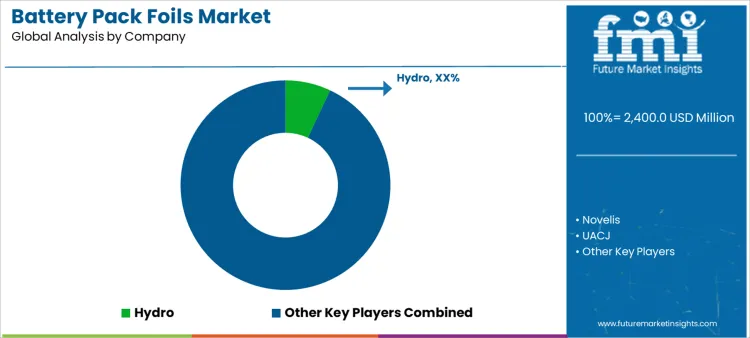
The competitive landscape for battery pack foils is characterized by intense competition among established aluminum and copper producers, specialized materials suppliers, and emerging technology companies developing innovative solutions for battery pack applications.
Market participants compete based on material performance characteristics, manufacturing scalability, cost competitiveness, and ability to provide comprehensive technical support for battery pack design and assembly operations. Strategic partnerships between foil suppliers and battery pack manufacturers become essential for technology development, volume supply agreements, and long-term market positioning in rapidly growing electric vehicle markets.
Innovation cycles in battery pack foils focus on developing specialized formulations, processing methods, and surface treatments that optimize performance for specific battery pack applications while maintaining cost competitiveness essential for automotive markets.
Leading companies invest in research facilities, application development capabilities, and manufacturing capacity expansion that support growing demand while maintaining technological leadership. Mergers and acquisitions activity focuses on acquiring specialized capabilities, manufacturing capacity, and customer relationships that provide competitive advantages in expanding battery pack markets.
Key Players in the Battery Pack Foils Market
- Hydro
- Novelis
- UACJ
- Nippon Foil
- Showa Denko Materials
- Nanshan Aluminum
- Aleris
- Gränges
- LOTTE Aluminum
- Zhejiang Dingsheng
Scope of Report
| Items | Values |
|---|---|
| Quantitative Units | USD Million |
| Foil Type Segments | Aluminum Pack Foils; Copper Shielding Foils; Laminated/Multilayer Foils; Other |
| Application Categories | Thermal Interface and Heat Spreading; EMI Shielding; Safety/Rupture Management; Other Pack Uses |
| Supply Form Types | Coil/Roll; Sheets/Precision Cut; Kits and Die-cuts |
| End Use Segments | EV Packs; ESS; Industrial/Other |
| Regions Covered | North America, Europe, Asia Pacific, Latin America, Middle East & Africa |
| Key Countries | USA, Germany, China, U.K., Japan |
| Key Companies Profiled | Hydro, Novelis, UACJ, Nippon Foil, Showa Denko Materials, and others |
Battery Pack Foils Market by Segments
By Foil Type :
- Aluminum Pack Foils
- Copper Shielding Foils
- Laminated/Multilayer Foils
- Other
By Application :
- Thermal Interface and Heat Spreading
- EMI Shielding
- Safety/Rupture Management
- Other Pack Uses
By Supply Form :
- Coil/Roll
- Sheets/Precision Cut
- Kits and Die-cuts
By End Use :
- EV Packs
- ESS
- Industrial/Other
Bibliography
- International Energy Agency. (2024). Global EV data explorer: Battery pack thermal management technologies. OECD Publishing.
- Kim, S., Park, J., & Lee, H. (2024). Electromagnetic interference shielding effectiveness of metal foils in electric vehicle battery packs. IEEE Transactions on Electromagnetic Compatibility, 66(2), 445-452.
- Society of Automotive Engineers. (2024). SAE J2929: Electric vehicle battery pack safety and thermal management. SAE International.
Frequently Asked Questions
How big is the battery pack foils market in 2026?
The global battery pack foils market is estimated to be valued at USD 2,400.0 million in 2026.
What will be the size of battery pack foils market in 2036?
The market size for the battery pack foils market is projected to reach USD 6,225.0 million by 2036.
How much will be the battery pack foils market growth between 2026 and 2036?
The battery pack foils market is expected to grow at a 10.0% CAGR between 2026 and 2036.
What are the key product types in the battery pack foils market?
The key product types in battery pack foils market are aluminum pack foils, copper shielding foils, laminated/multilayer foils and other.
Which application segment to contribute significant share in the battery pack foils market in 2026?
In terms of application, thermal interface and heat spreading segment to command 34.0% share in the battery pack foils market in 2026.
Preview the report firsthand - request a free sample
Get SampleGet the brochure for pricing and purchase details.
Get PDFTable of Content
- Executive Summary
- Global Market Outlook
- Demand-side Trends
- Supply-side Trends
- Technology Roadmap Analysis
- Analysis and Recommendations
- Market Overview
- Market Coverage / Taxonomy
- Market Definition / Scope / Limitations
- Market Background
- Market Dynamics
- Drivers
- Restraints
- Opportunity
- Trends
- Scenario Forecast
- Demand in Optimistic Scenario
- Demand in Likely Scenario
- Demand in Conservative Scenario
- Opportunity Map Analysis
- Product Life Cycle Analysis
- Supply Chain Analysis
- Investment Feasibility Matrix
- Value Chain Analysis
- PESTLE and Porter’s Analysis
- Regulatory Landscape
- Regional Parent Market Outlook
- Production and Consumption Statistics
- Import and Export Statistics
- Market Dynamics
- Global Market Analysis 2021 to 2025 and Forecast, 2026 to 2036
- Historical Market Size Value (USD Million) Analysis, 2021 to 2025
- Current and Future Market Size Value (USD Million) Projections, 2026 to 2036
- Y-o-Y Growth Trend Analysis
- Absolute $ Opportunity Analysis
- Global Market Pricing Analysis 2021 to 2025 and Forecast 2026 to 2036
- Global Market Analysis 2021 to 2025 and Forecast 2026 to 2036, By Foil Type
- Introduction / Key Findings
- Historical Market Size Value (USD Million) Analysis By Foil Type , 2021 to 2025
- Current and Future Market Size Value (USD Million) Analysis and Forecast By Foil Type , 2026 to 2036
- Aluminum pack foils
- Copper shielding foils
- Laminated/multilayer foils
- Other
- Aluminum pack foils
- Y-o-Y Growth Trend Analysis By Foil Type , 2021 to 2025
- Absolute $ Opportunity Analysis By Foil Type , 2026 to 2036
- Global Market Analysis 2021 to 2025 and Forecast 2026 to 2036, By Application
- Introduction / Key Findings
- Historical Market Size Value (USD Million) Analysis By Application, 2021 to 2025
- Current and Future Market Size Value (USD Million) Analysis and Forecast By Application, 2026 to 2036
- Thermal interface and heat spreading
- EMI shielding
- Safety/rupture management
- Other pack uses
- Thermal interface and heat spreading
- Y-o-Y Growth Trend Analysis By Application, 2021 to 2025
- Absolute $ Opportunity Analysis By Application, 2026 to 2036
- Global Market Analysis 2021 to 2025 and Forecast 2026 to 2036, By Supply Form
- Introduction / Key Findings
- Historical Market Size Value (USD Million) Analysis By Supply Form, 2021 to 2025
- Current and Future Market Size Value (USD Million) Analysis and Forecast By Supply Form, 2026 to 2036
- Coil/roll
- Sheets/precision cut
- Kits and die-cuts
- Coil/roll
- Y-o-Y Growth Trend Analysis By Supply Form, 2021 to 2025
- Absolute $ Opportunity Analysis By Supply Form, 2026 to 2036
- Global Market Analysis 2021 to 2025 and Forecast 2026 to 2036, By End Use
- Introduction / Key Findings
- Historical Market Size Value (USD Million) Analysis By End Use, 2021 to 2025
- Current and Future Market Size Value (USD Million) Analysis and Forecast By End Use, 2026 to 2036
- EV packs
- ESS
- Industrial/other
- EV packs
- Y-o-Y Growth Trend Analysis By End Use, 2021 to 2025
- Absolute $ Opportunity Analysis By End Use, 2026 to 2036
- Global Market Analysis 2021 to 2025 and Forecast 2026 to 2036, By Region
- Introduction
- Historical Market Size Value (USD Million) Analysis By Region, 2021 to 2025
- Current Market Size Value (USD Million) Analysis and Forecast By Region, 2026 to 2036
- North America
- Latin America
- Western Europe
- Eastern Europe
- East Asia
- South Asia and Pacific
- Middle East & Africa
- Market Attractiveness Analysis By Region
- North America Market Analysis 2021 to 2025 and Forecast 2026 to 2036, By Country
- Historical Market Size Value (USD Million) Trend Analysis By Market Taxonomy, 2021 to 2025
- Market Size Value (USD Million) Forecast By Market Taxonomy, 2026 to 2036
- By Country
- USA
- Canada
- Mexico
- By Foil Type
- By Application
- By Supply Form
- By End Use
- By Country
- Market Attractiveness Analysis
- By Country
- By Foil Type
- By Application
- By Supply Form
- By End Use
- Key Takeaways
- Latin America Market Analysis 2021 to 2025 and Forecast 2026 to 2036, By Country
- Historical Market Size Value (USD Million) Trend Analysis By Market Taxonomy, 2021 to 2025
- Market Size Value (USD Million) Forecast By Market Taxonomy, 2026 to 2036
- By Country
- Brazil
- Chile
- Rest of Latin America
- By Foil Type
- By Application
- By Supply Form
- By End Use
- By Country
- Market Attractiveness Analysis
- By Country
- By Foil Type
- By Application
- By Supply Form
- By End Use
- Key Takeaways
- Western Europe Market Analysis 2021 to 2025 and Forecast 2026 to 2036, By Country
- Historical Market Size Value (USD Million) Trend Analysis By Market Taxonomy, 2021 to 2025
- Market Size Value (USD Million) Forecast By Market Taxonomy, 2026 to 2036
- By Country
- Germany
- UK
- Italy
- Spain
- France
- Nordic
- BENELUX
- Rest of Western Europe
- By Foil Type
- By Application
- By Supply Form
- By End Use
- By Country
- Market Attractiveness Analysis
- By Country
- By Foil Type
- By Application
- By Supply Form
- By End Use
- Key Takeaways
- Eastern Europe Market Analysis 2021 to 2025 and Forecast 2026 to 2036, By Country
- Historical Market Size Value (USD Million) Trend Analysis By Market Taxonomy, 2021 to 2025
- Market Size Value (USD Million) Forecast By Market Taxonomy, 2026 to 2036
- By Country
- Russia
- Poland
- Hungary
- Balkan & Baltic
- Rest of Eastern Europe
- By Foil Type
- By Application
- By Supply Form
- By End Use
- By Country
- Market Attractiveness Analysis
- By Country
- By Foil Type
- By Application
- By Supply Form
- By End Use
- Key Takeaways
- East Asia Market Analysis 2021 to 2025 and Forecast 2026 to 2036, By Country
- Historical Market Size Value (USD Million) Trend Analysis By Market Taxonomy, 2021 to 2025
- Market Size Value (USD Million) Forecast By Market Taxonomy, 2026 to 2036
- By Country
- China
- Japan
- South Korea
- By Foil Type
- By Application
- By Supply Form
- By End Use
- By Country
- Market Attractiveness Analysis
- By Country
- By Foil Type
- By Application
- By Supply Form
- By End Use
- Key Takeaways
- South Asia and Pacific Market Analysis 2021 to 2025 and Forecast 2026 to 2036, By Country
- Historical Market Size Value (USD Million) Trend Analysis By Market Taxonomy, 2021 to 2025
- Market Size Value (USD Million) Forecast By Market Taxonomy, 2026 to 2036
- By Country
- India
- ASEAN
- Australia & New Zealand
- Rest of South Asia and Pacific
- By Foil Type
- By Application
- By Supply Form
- By End Use
- By Country
- Market Attractiveness Analysis
- By Country
- By Foil Type
- By Application
- By Supply Form
- By End Use
- Key Takeaways
- Middle East & Africa Market Analysis 2021 to 2025 and Forecast 2026 to 2036, By Country
- Historical Market Size Value (USD Million) Trend Analysis By Market Taxonomy, 2021 to 2025
- Market Size Value (USD Million) Forecast By Market Taxonomy, 2026 to 2036
- By Country
- Kingdom of Saudi Arabia
- Other GCC Countries
- Turkiye
- South Africa
- Other African Union
- Rest of Middle East & Africa
- By Foil Type
- By Application
- By Supply Form
- By End Use
- By Country
- Market Attractiveness Analysis
- By Country
- By Foil Type
- By Application
- By Supply Form
- By End Use
- Key Takeaways
- Key Countries Market Analysis
- USA
- Pricing Analysis
- Market Share Analysis, 2025
- By Foil Type
- By Application
- By Supply Form
- By End Use
- Canada
- Pricing Analysis
- Market Share Analysis, 2025
- By Foil Type
- By Application
- By Supply Form
- By End Use
- Mexico
- Pricing Analysis
- Market Share Analysis, 2025
- By Foil Type
- By Application
- By Supply Form
- By End Use
- Brazil
- Pricing Analysis
- Market Share Analysis, 2025
- By Foil Type
- By Application
- By Supply Form
- By End Use
- Chile
- Pricing Analysis
- Market Share Analysis, 2025
- By Foil Type
- By Application
- By Supply Form
- By End Use
- Germany
- Pricing Analysis
- Market Share Analysis, 2025
- By Foil Type
- By Application
- By Supply Form
- By End Use
- UK
- Pricing Analysis
- Market Share Analysis, 2025
- By Foil Type
- By Application
- By Supply Form
- By End Use
- Italy
- Pricing Analysis
- Market Share Analysis, 2025
- By Foil Type
- By Application
- By Supply Form
- By End Use
- Spain
- Pricing Analysis
- Market Share Analysis, 2025
- By Foil Type
- By Application
- By Supply Form
- By End Use
- France
- Pricing Analysis
- Market Share Analysis, 2025
- By Foil Type
- By Application
- By Supply Form
- By End Use
- India
- Pricing Analysis
- Market Share Analysis, 2025
- By Foil Type
- By Application
- By Supply Form
- By End Use
- ASEAN
- Pricing Analysis
- Market Share Analysis, 2025
- By Foil Type
- By Application
- By Supply Form
- By End Use
- Australia & New Zealand
- Pricing Analysis
- Market Share Analysis, 2025
- By Foil Type
- By Application
- By Supply Form
- By End Use
- China
- Pricing Analysis
- Market Share Analysis, 2025
- By Foil Type
- By Application
- By Supply Form
- By End Use
- Japan
- Pricing Analysis
- Market Share Analysis, 2025
- By Foil Type
- By Application
- By Supply Form
- By End Use
- South Korea
- Pricing Analysis
- Market Share Analysis, 2025
- By Foil Type
- By Application
- By Supply Form
- By End Use
- Russia
- Pricing Analysis
- Market Share Analysis, 2025
- By Foil Type
- By Application
- By Supply Form
- By End Use
- Poland
- Pricing Analysis
- Market Share Analysis, 2025
- By Foil Type
- By Application
- By Supply Form
- By End Use
- Hungary
- Pricing Analysis
- Market Share Analysis, 2025
- By Foil Type
- By Application
- By Supply Form
- By End Use
- Kingdom of Saudi Arabia
- Pricing Analysis
- Market Share Analysis, 2025
- By Foil Type
- By Application
- By Supply Form
- By End Use
- Turkiye
- Pricing Analysis
- Market Share Analysis, 2025
- By Foil Type
- By Application
- By Supply Form
- By End Use
- South Africa
- Pricing Analysis
- Market Share Analysis, 2025
- By Foil Type
- By Application
- By Supply Form
- By End Use
- USA
- Market Structure Analysis
- Competition Dashboard
- Competition Benchmarking
- Market Share Analysis of Top Players
- By Regional
- By Foil Type
- By Application
- By Supply Form
- By End Use
- Competition Analysis
- Competition Deep Dive
- Hydro
- Overview
- Product Portfolio
- Profitability by Market Segments (Product/Age /Sales Channel/Region)
- Sales Footprint
- Strategy Overview
- Marketing Strategy
- Product Strategy
- Channel Strategy
- Novelis
- UACJ
- Nippon Foil
- Showa Denko Materials
- Nanshan Aluminum
- Aleris
- Gränges
- LOTTE Aluminum
- Zhejiang Dingsheng
- Hydro
- Competition Deep Dive
- Assumptions & Acronyms Used
- Research Methodology


